




Odissi Dance — Complete Guide to Odisha’s Ancient Classical Dance Form: Origin, History, Tribhangi, Abhinaya, Lasya & Tandava Style, Mudras, Adavus, Compositions & Gotipua Traditions, Traditional Costume & Makeup, the Divine Grace of Indian Classical Dance | Draupadi’s Mahabharata : An Iconic Odissi Dance Drama Performance by the Nrityantar Dance Ensemble (Updated)
– one of eight major classical indian dances from eastern coast
| CasualWalker’s Rating for Draupadi’s Mahabharata : An Iconic Odissi Dance Drama Performance by the Nrityantar Dance Ensemble : | |

9.9 – Rhythmic Elegance |
|


For lovers of Indian classical dance, Odissi – the classical dance tradition of Odisha on India’s eastern coast holds a singular place. It is deeply sensuous and profoundly spiritual rooted in Indian temple tradition yet vibrantly alive in contemporary performance spaces.
Odissi’s History – Temple Origins
Odissi was born in the temples of Odisha, particularly within the sacred precincts of the Jagannath Temple in Puri. Here, trained female dancers known as maharis performed daily rituals of dance as an act of devotion not performance in the modern sense, but seva, sacred service offered to the deity. These women were considered married to Lord Jagannath himself, and their dance was prayer made visible.
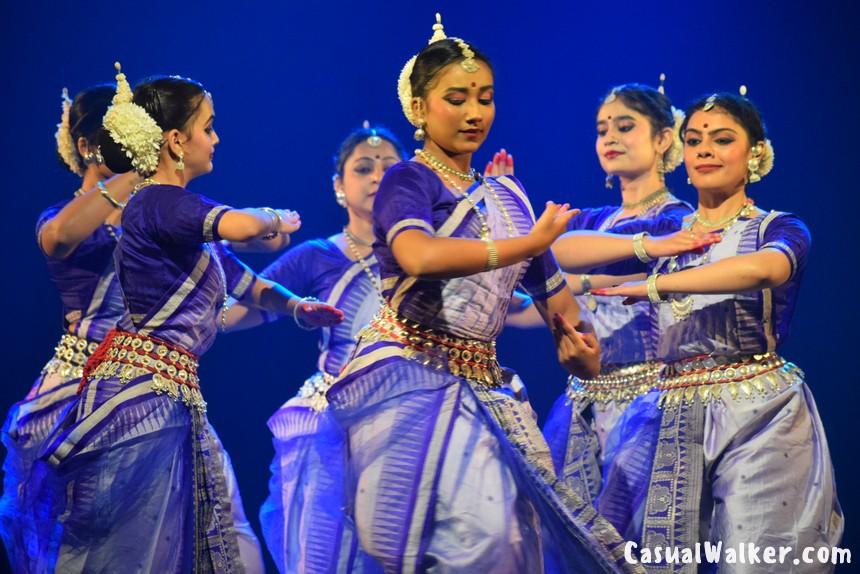
Alongside the maharis, another tradition flourished: the gotipua. Young boys dressed in female costume trained rigorously in acrobatic and devotional dance to perform in temple courtyards and at festivals. The gotipua tradition served as a bridge between the private sanctity of temple dance and the more public, theatrical expression that Odissi would eventually become.
Sculptural Evidence
One of the most remarkable aspects of Odissi’s lineage is its documentation in stone. The Udayagiri caves near Bhubaneswar, carved in the first century, contain early depictions of dance in postures that are unmistakably Odissi the characteristic tribhangi, or triple bend of the body, already present in ancient carvings. Later, the magnificent Konark Sun Temple is covered in sculptural panels depicting dancers in postures that correspond directly to the classical Odissi vocabulary. Konark is, in effect, a visual textbook of the form.
Colonial legislation in the late nineteenth and early twentieth centuries suppressed temple dance traditions across India, and Odissi risked being lost entirely. Its survival is owed to a remarkable group of visionaries in the 1950s Guru Kelucharan Mohapatra, Guru Pankaj Charan Das, Guru Deba Prasad Das, and Guru Mayadhar Raut who painstakingly reconstructed the vocabulary of the dance from surviving practitioners, temple sculptures, and ancient texts. Their work gave Odissi a second life, and it has since grown into a thriving global tradition.
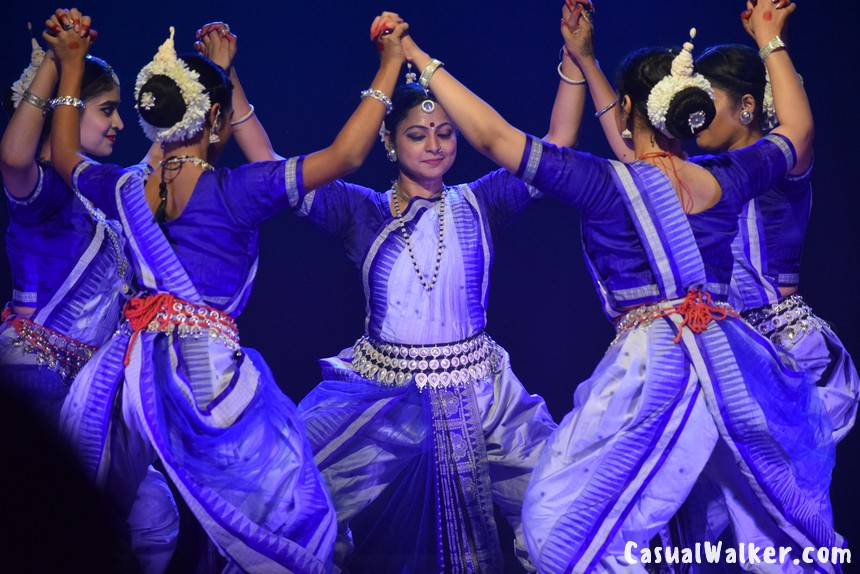
Tribhangi: The Triple Bend
The tribhangi the triple deflection of the body at the neck, torso, and knee is the defining visual identity of Odissi. Where many classical forms emphasise a straight spine, Odissi celebrates the gentle S-curve of the body, echoing the voluptuous forms found in Indian sculpture and the iconic posture of Lord Krishna in temple iconography.
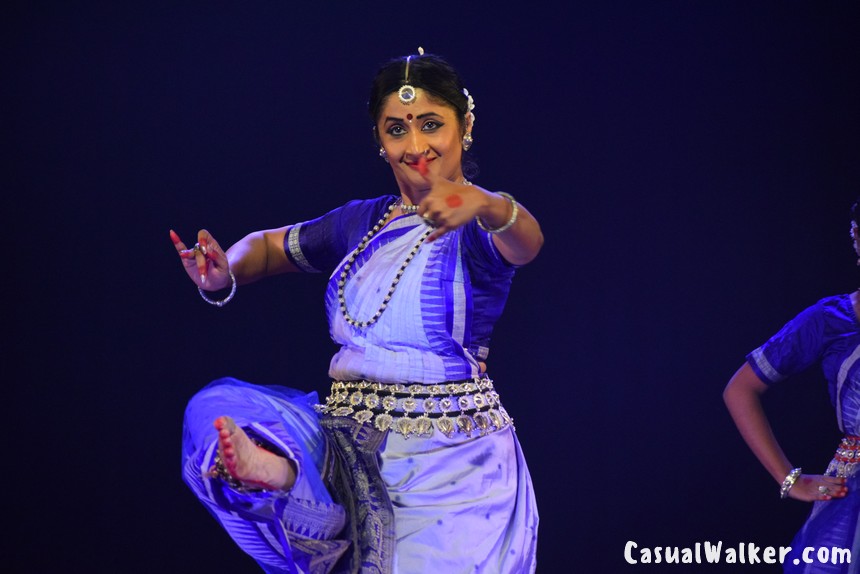
Chauka: The Square Stance
In contrast to the flowing tribhangi, the chauka is a powerful square stance feet turned outward, knees bent, body held symmetrically. The interplay between the liquid tribhangi and the grounded chauka creates a dynamic counterpoint that is one of Odissi’s most distinctive pleasures.
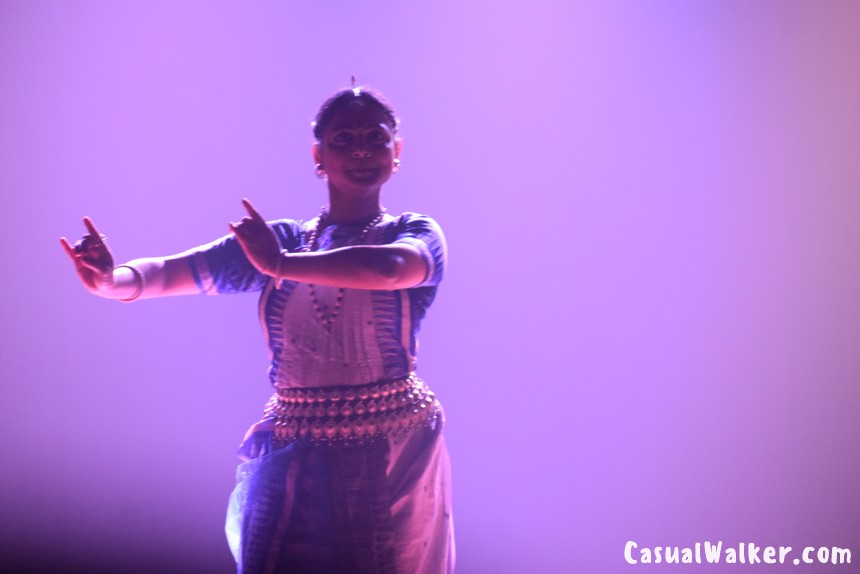
Abhinaya: The Art of Expression
Odissi’s abhinaya tradition the art of expressive communication through face, eyes, hands, and body is among the most sophisticated in Indian classical dance. A seasoned Odissi dancer can convey an entire emotional landscape without a single spoken word. The face, particularly the eyes, becomes the primary instrument of storytelling. Without abhinaya, technique is beautiful but hollow. With it, even the simplest gesture can stop the heart.
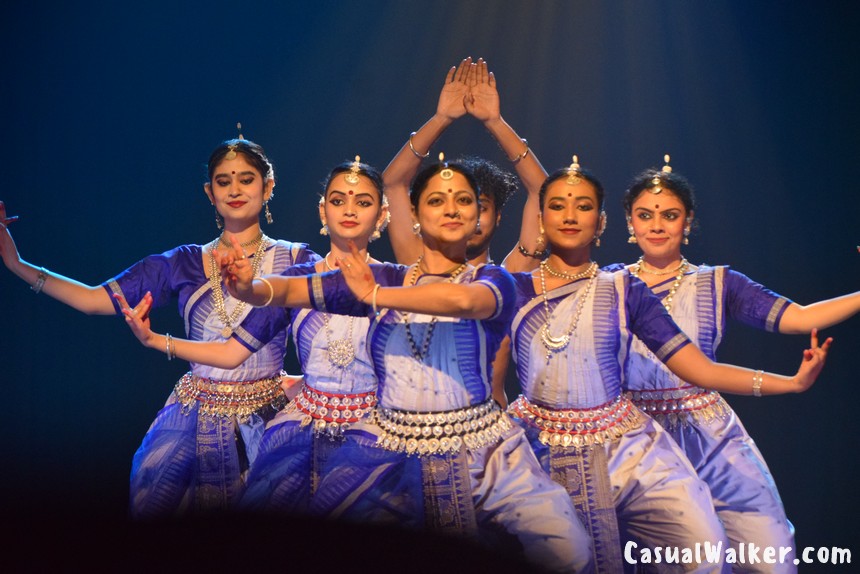
Compositions
A full Odissi recital follows a structured sequence, each composition with its own character and purpose.
Mangalacharan The recital opens with an invocation offered to the earth, the deity, the guru, and the audience. Serene and devotional, it sets the spiritual tone for everything that follows.
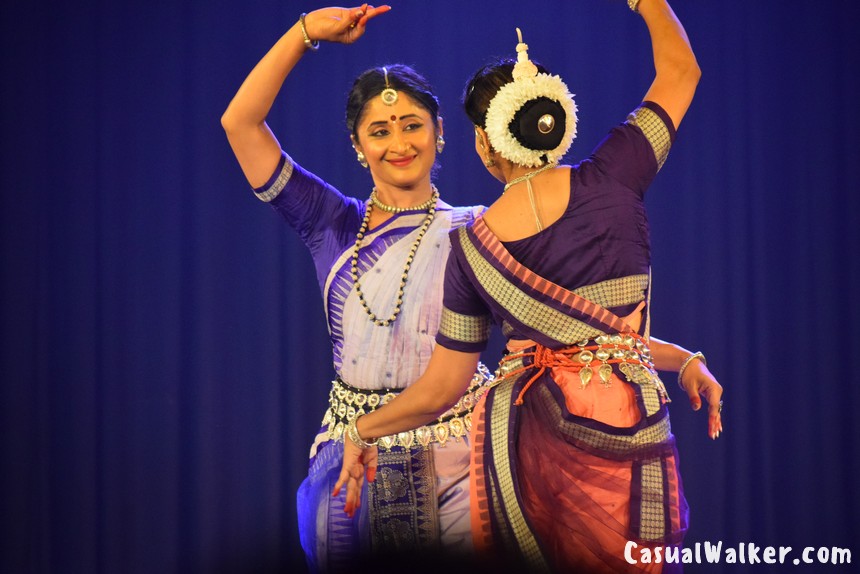
Batu Nritya A pure dance offering to Lord Shiva, abstract and rhythmically complex, showcasing the dancer’s technical command without narrative content. The beauty here lies entirely in precision and elegance.
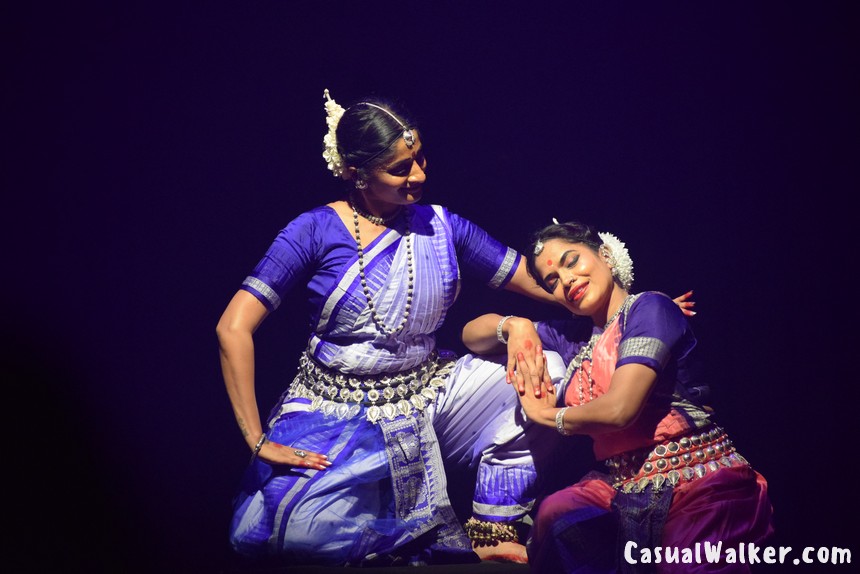
Pallavi Often considered the lyrical heart of an Odissi recital. Beginning slowly, like a flower opening, the pallavi unfolds through expanding rhythmic and melodic cycles rooted in a particular raga. Watching a great pallavi is one of the transcendent experiences of Indian classical performance.
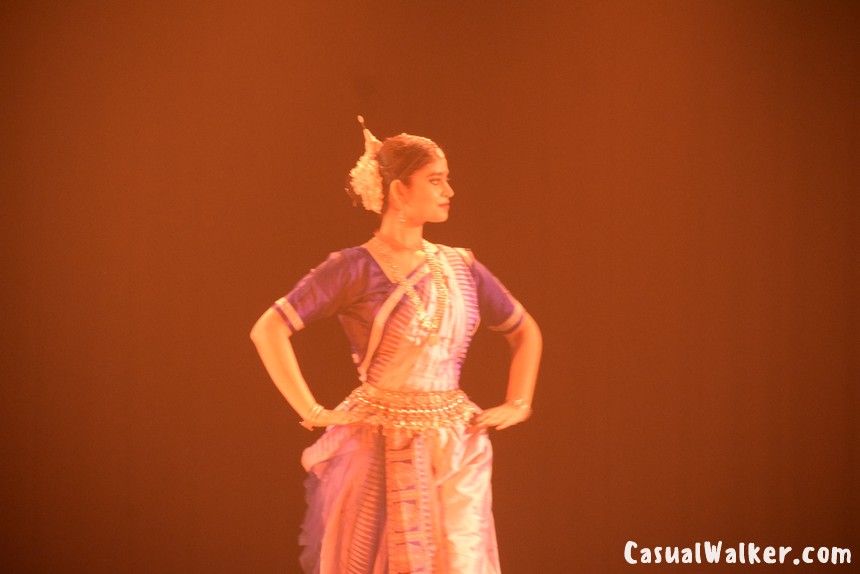
Abhinaya The dancer becomes storyteller and actor, drawing from the devotional poetry of Odisha particularly the Gita Govinda of the twelfth-century poet Jayadeva to give expressive life to songs of divine love, longing, and devotion.
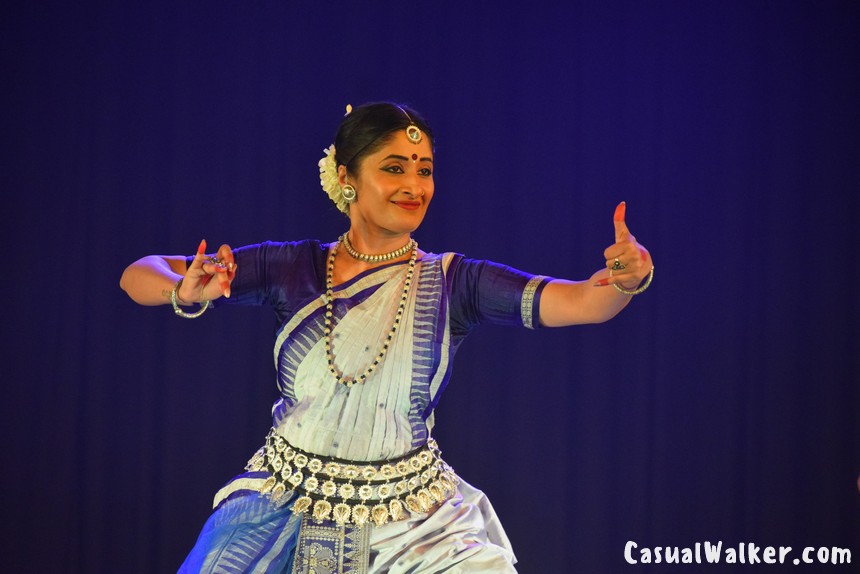
Moksha The recital concludes with a composition of pure, abstract movement suggesting spiritual liberation. The choreography builds to an ecstatic crescendo before dissolving into stillness a quietly devastating end to the recital arc.
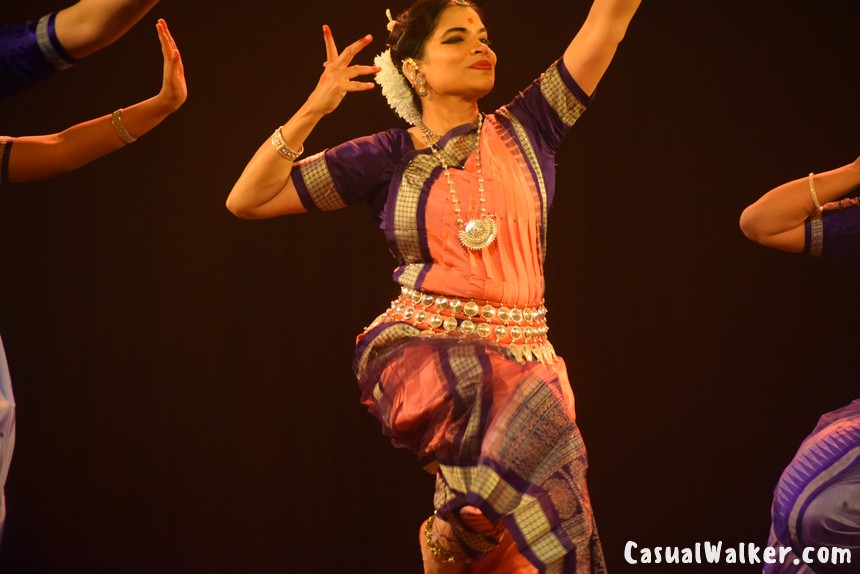
Costume and Makeup
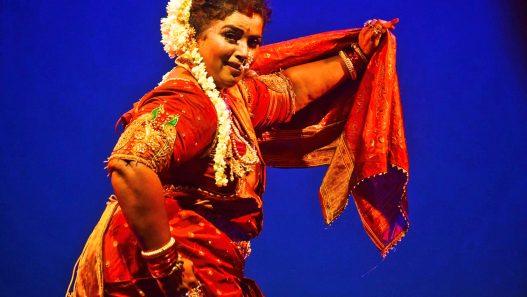
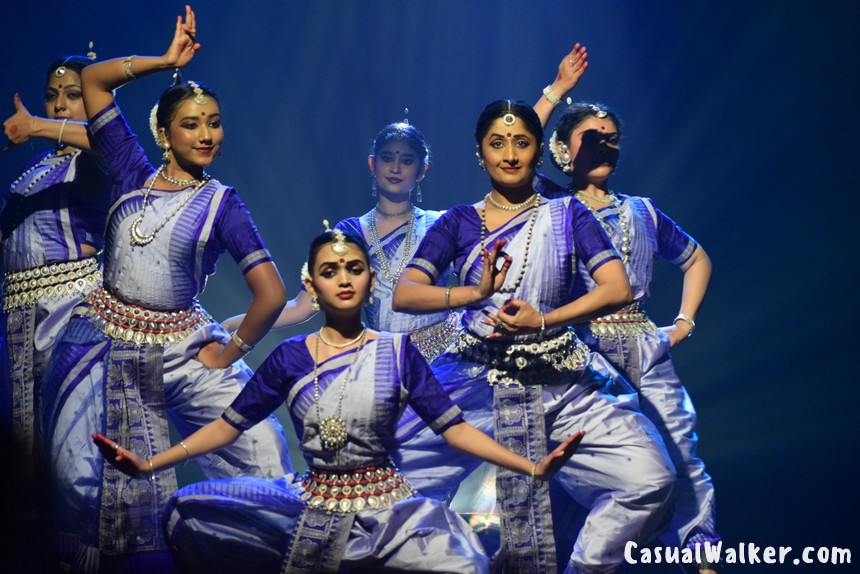
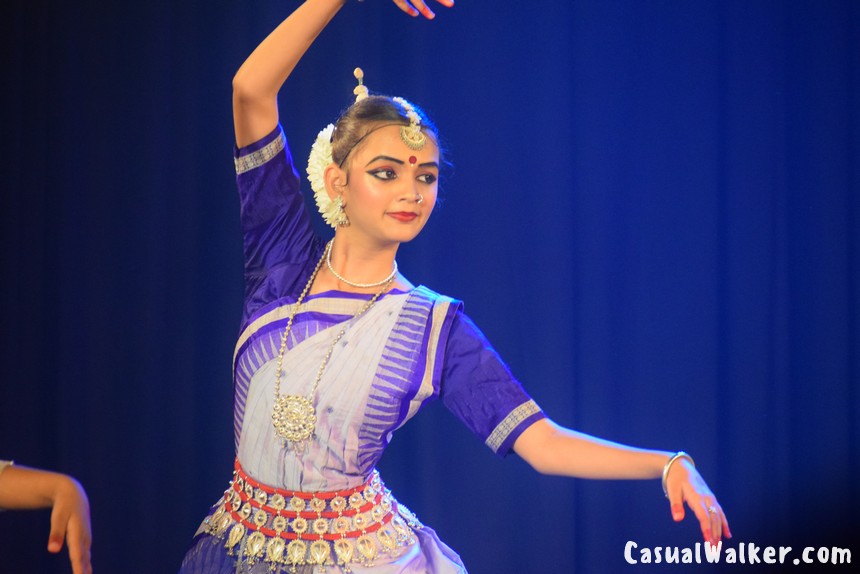
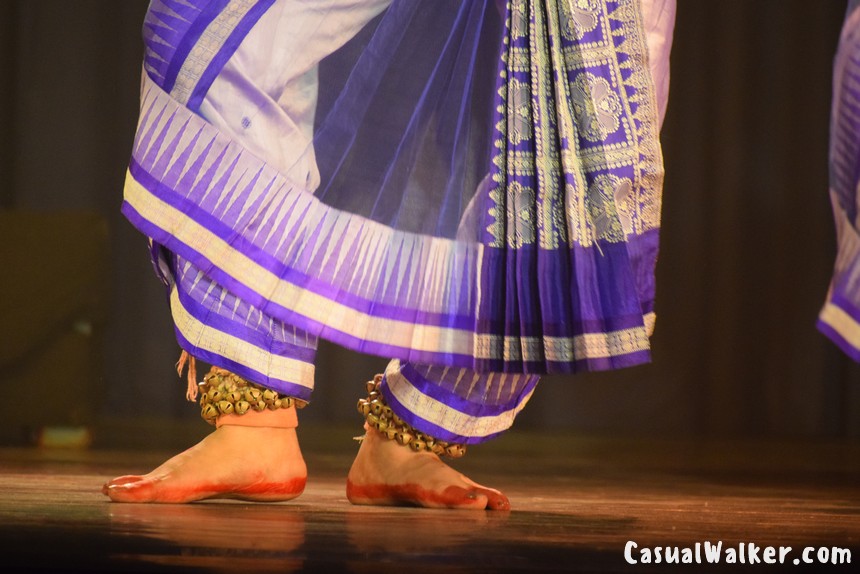
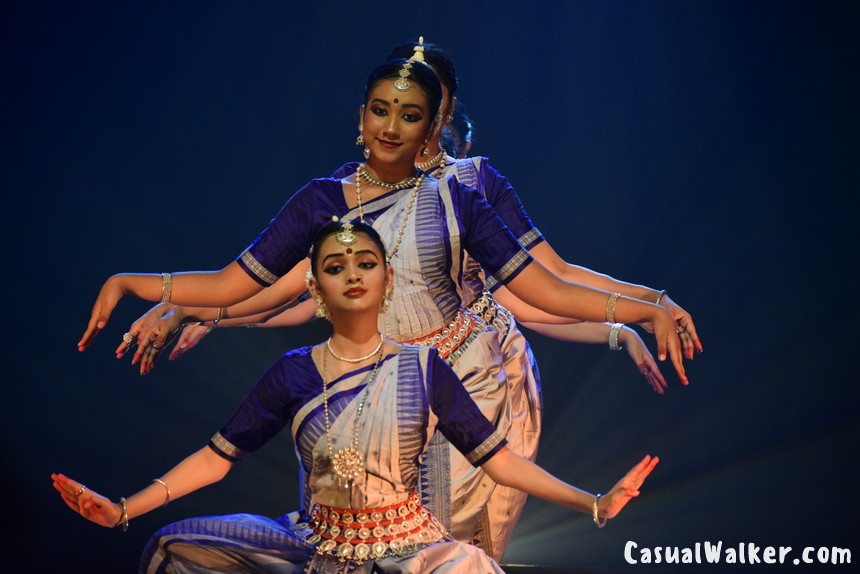
The traditional Odissi costume uses Sambalpuri or Bomkai silk from Odisha in rich colours saffron, emerald, deep red with gold borders. The fabric is draped and pleated in a style unique to the form, allowing freedom of movement for wide-kneed stances while creating a silhouette that echoes the temple sculptures. Jewellery is traditionally silver with gold plating: a crown (mukut), elaborate earrings, layered necklaces, armlets, a waistband that accentuates the tribhangi, and ankle ornaments above the ghungroo bells.
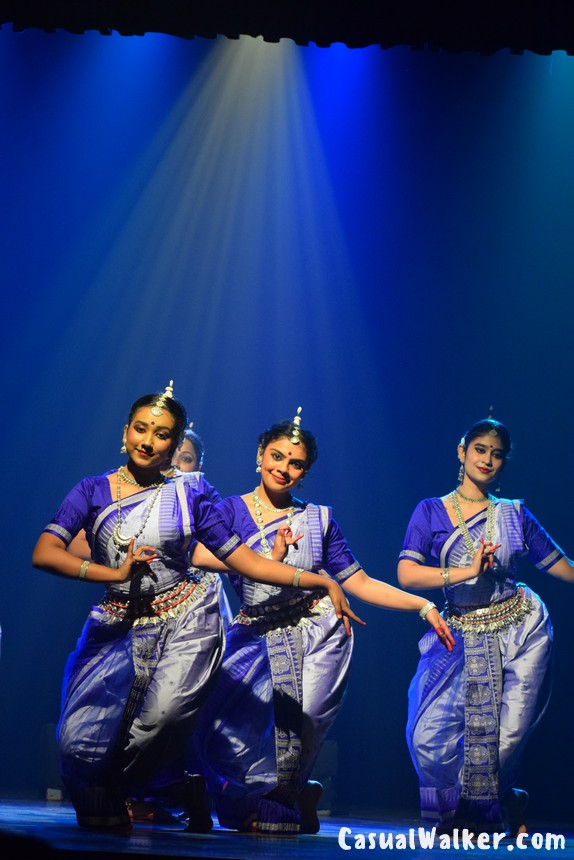
Makeup is theatrical and precise. The eyes are heavily lined with kohl and elongated beyond their natural corners in the manner of temple carvings. The hands and feet are painted with alta red lac dye which makes the mudras and footwork beautifully visible from across the performance space. The overall effect is of a dancer who has stepped directly from the temple walls. This is, of course, precisely the intention.
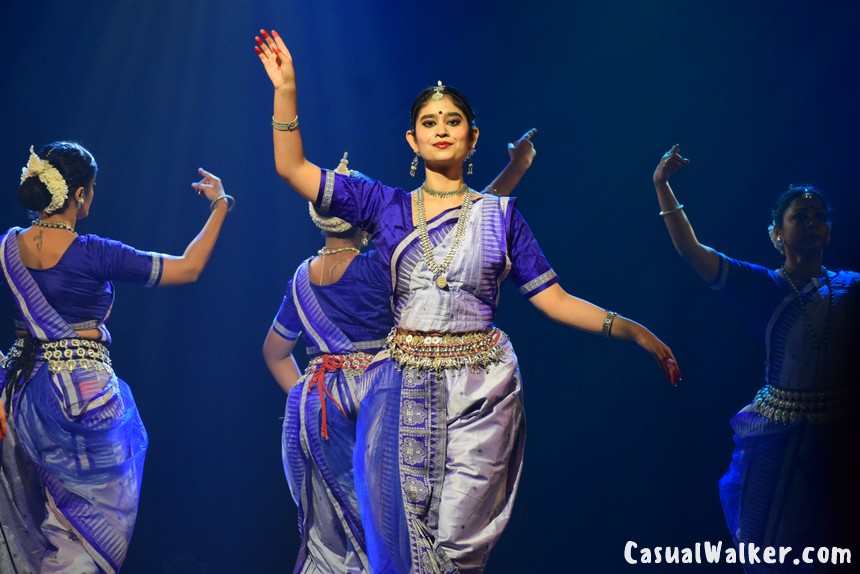
Mudras
Odissi employs a rich vocabulary of hand gestures drawn from classical texts. Each mudra carries specific meaning the alapadma (fingers spread like a lotus) can represent a flower, the moon, or beauty itself; the pataka (open flat hand) can signify a cloud, a forest, or a royal declaration. In skilled hands, these gestures become a precise communicative system capable of conveying complex narrative and feeling with remarkable economy. Crucially, a hand gesture without its corresponding eye movement is considered incomplete the gaze always leads.
Adavus
The adavus are the fundamental movement units of Odissi its grammar. Each is a sequence of footwork, body position, and arm movement that can be combined to create the larger choreographic vocabulary of the form. The interplay between footwork (which engages the rhythmic cycle through the ankle bells) and upper-body movement (which carries melody and expression) is one of Odissi’s great technical pleasures two independent conversations happening simultaneously in a single body.
Dance Style
Odissi is often described as the most lyrical of India’s classical dance forms. Where Bharatanatyam is architectural and geometric, Odissi has the quality of water: it flows, curves, and rushes. The body moves through space with a characteristic undulation a gentle wave through the spine and limbs that gives even demanding passages a quality of natural ease.
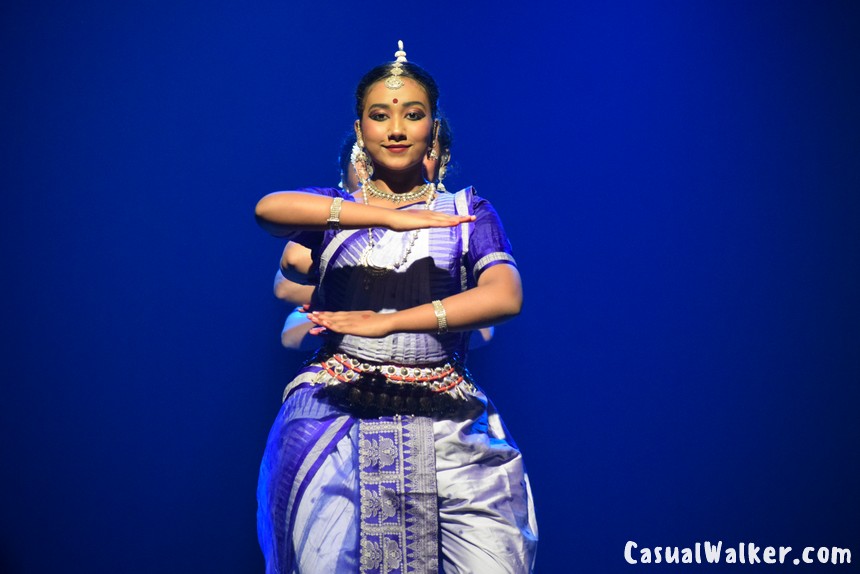
At the centre of everything is bhava the inner feeling that gives outer form its life. Without it, even the most impeccable performance remains beautiful but empty. With it, the simplest gesture can move an audience to tears.
Draupadi’s Mahabharata – An Odissi Dance Drama Presentation Performed by the Nrityantar Dance Ensemble
Nrityantar is a Bengaluru-based Odissi dance institution founded by Smt. Madhulita Mohapatra. The name means “within the dance” and it reflects the institution’s core philosophy: that the inner quality of attention, feeling, and devotion is what separates classical dance at its highest from mere technical execution.
As a teacher and choreographer, Madhulita Mohapatra has built Nrityantar into one of the most respected Odissi training institutions in southern India. The ensemble dancers trained under her reflect that standard: they move with an internal coherence that speaks to years of rigorous, thoughtful practice shaped by a teacher who believes that technique must always be in service of expression, and expression in service of truth.
Nrityantar’s productions are characterised by their willingness to engage with complex material without reduction or sensationalism. Draupadi’s Mahabharata is the most ambitious realization of that commitment to date a full-scale dance drama that takes one of the world’s great epics and trusts it, fully, to speak for itself.
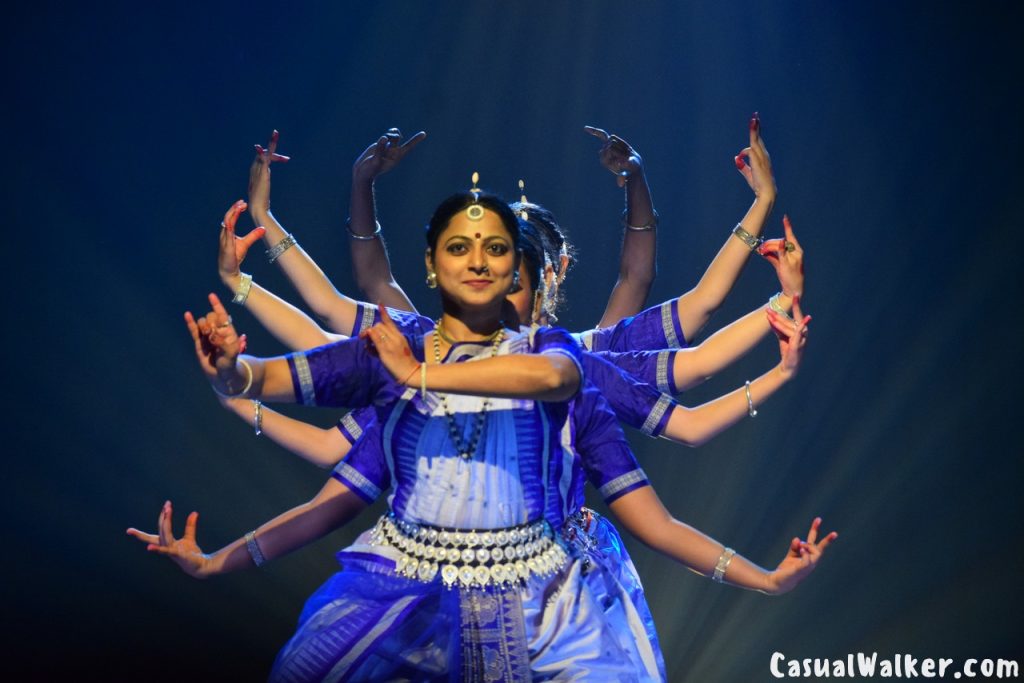
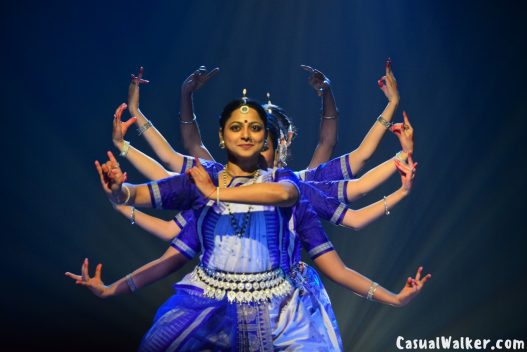
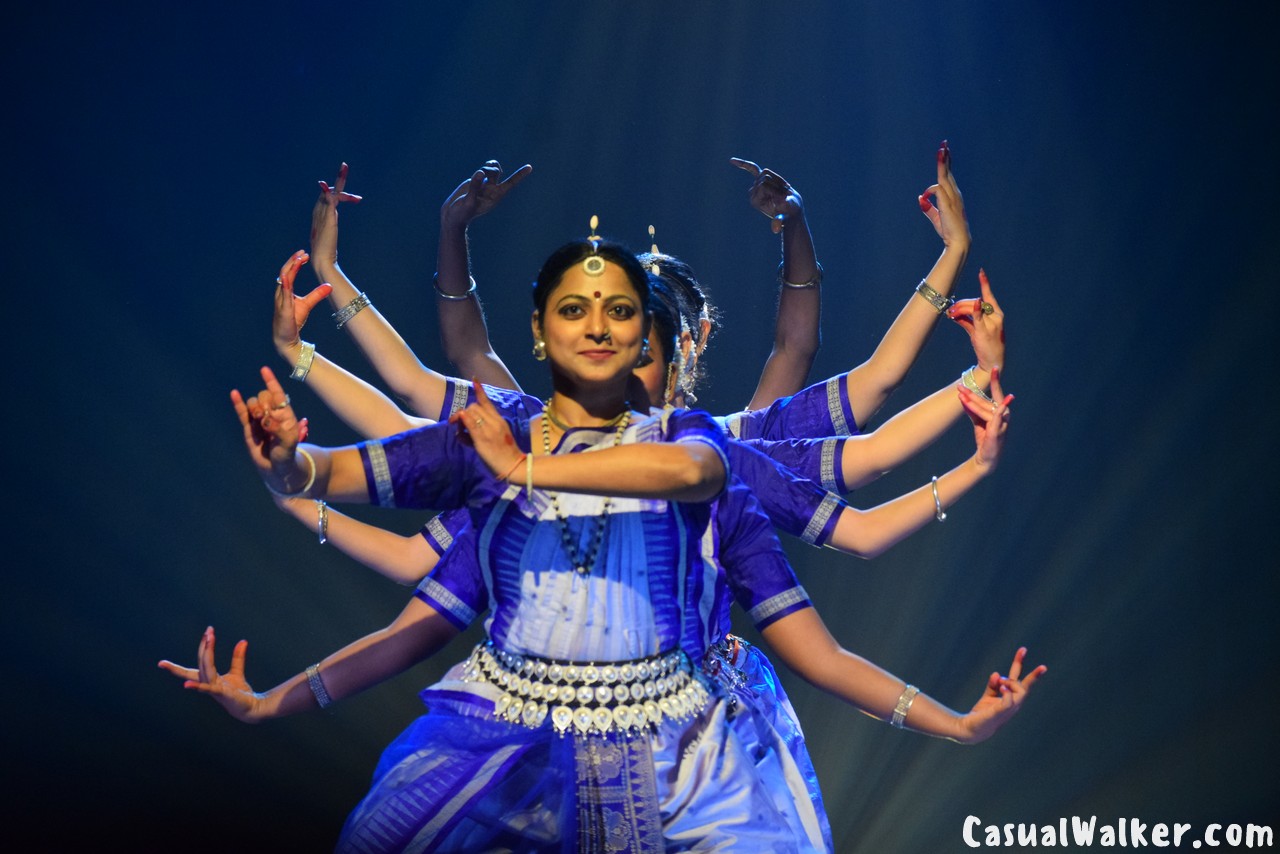
The ensemble opened with Draupadi’s birth her emergence from ritual fire, called into existence with a purpose already written into her. The choreography was both abstract and viscerally felt: arms moving through the air with the quality of heat and light, something coming into being against the natural order of things.
Game of Dice – Odissi Interpretation from the Mahabharata
The choreography avoided spectacle, relying instead on stillness, pauses, and expressive abhinaya. Every movement felt intentional, drawing the audience into the emotional and ethical tension of the royal court.
Invitation to the Game – The Beginning of Destiny
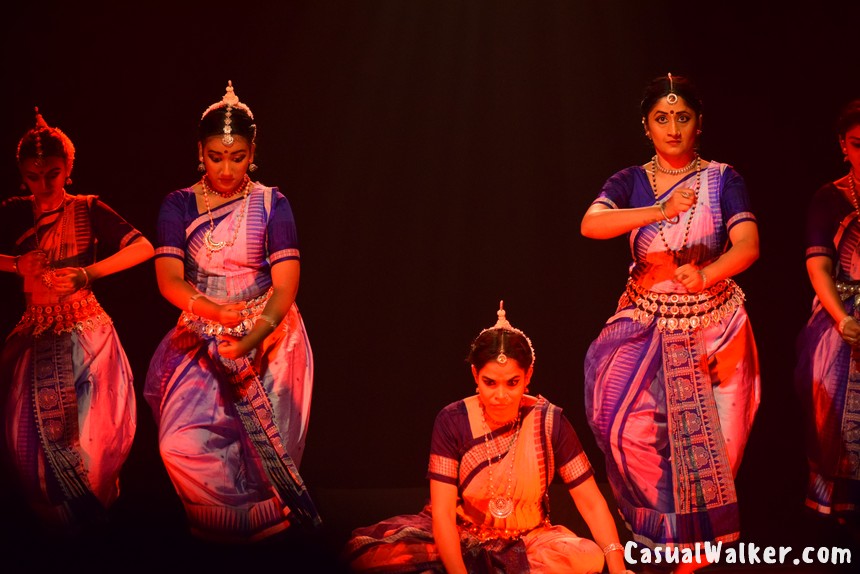
The episode opened with the subtle introduction of deceit. The invitation extended by Shakuni to Yudhishthira was not shown as mere dialogue but as an unfolding inevitability. The dancer suggested the pull of fate through controlled footwork and inward glances. Yudhishthira’s internal conflict between adherence to dharma and susceptibility to weakness was delicately portrayed, reminding the audience that tragedy often begins with a single moral compromise.
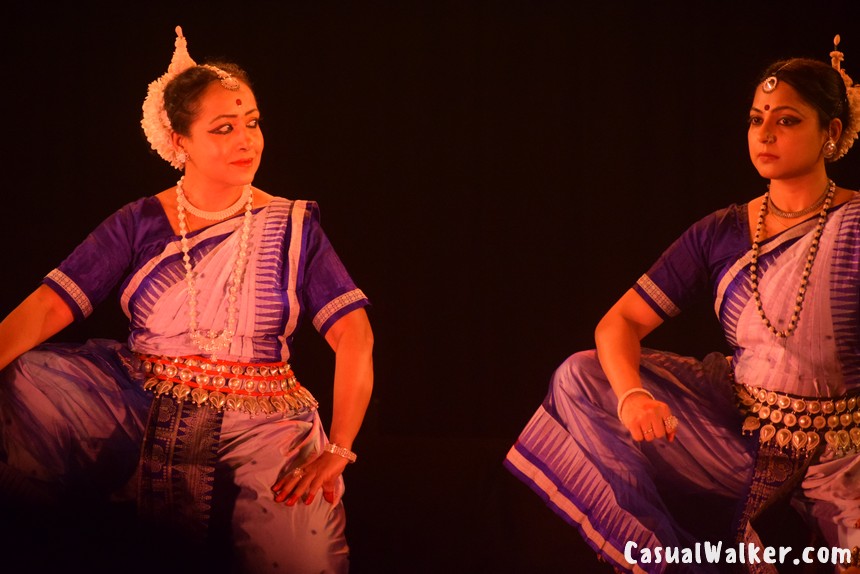
The narrative shifted quietly, yet decisively, into the game of dice the moral turning point of the Mahabharata. Presented with remarkable restraint, this Odissi dance performance transformed a well-known episode into a deeply internal, philosophical experience.
Game Begins – Seduction of Chance
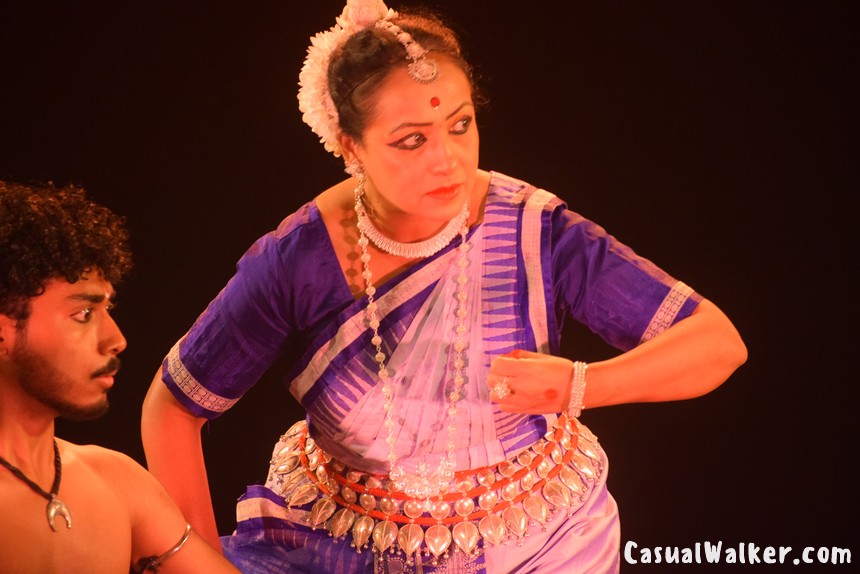
The rhythmic patterns intensified as the game commenced. Without literal props, the rolling of dice was evoked through mnemonic syllables and hand gestures. The dancer captured the deceptive calm of the early rounds, where confidence masked impending ruin. The presence of Duryodhana was felt through sharp, angular movements suggesting control, calculation, and quiet malice.
Stakes Escalate – Loss Beyond Wealth
As the game progressed, the choreography shifted from external rhythm to internal collapse. Yudhishthira’s losses kingdom, wealth, brothers were not enumerated but embodied. Each loss manifested as a diminishing physicality, a contraction of space. The transition from material loss to existential crisis was seamless, culminating in the unthinkable: the staking of Draupadi.
Draupadi Summoned to the Court – The Question of Dharma
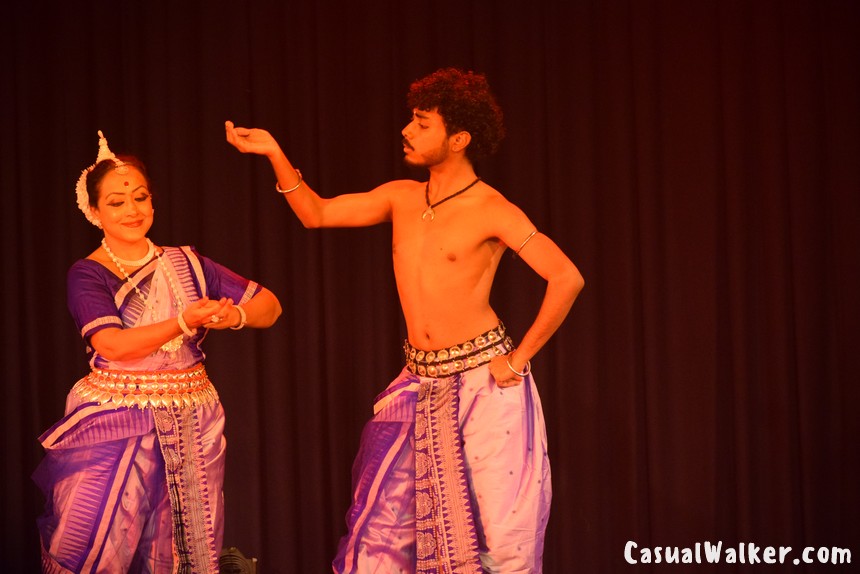
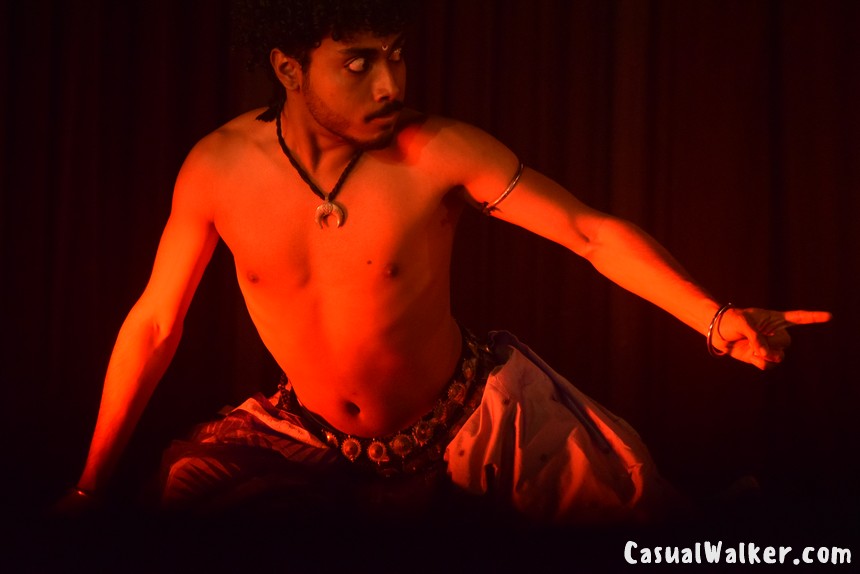
This moment marked a profound tonal shift. Draupadi’s entry was not immediate; it was resisted. The dancer portrayed her refusal, her confusion, and above all, her questioning intellect. Through powerful abhinaya, she asked the timeless question: “Whom did you lose first yourself or me?” This was not merely a narrative moment it was a philosophical rupture. The silence of the court became a character in itself.
Court’s Silence – Collective Moral Failure
The stillness that followed was among the most powerful segments of the performance. The elders Bhishma, Drona, and others were evoked through minimal gestures, yet their inaction filled the space with unbearable weight. The dancer’s gaze moved from one to another, each glance deepening the sense of abandonment. Silence here was not absence it was complicity.
Humiliation of Draupadi – Inner Landscape of Suffering
The court humiliation that followed was depicted not through dramatic externality but through Draupadi’s interiority. The audience stayed with her face, her hands, her breath feeling the experience as she felt it. The abhinaya in this sequence was among the finest seen in recent memory: grief, fury, dignity, and a terrifying clarity held simultaneously.
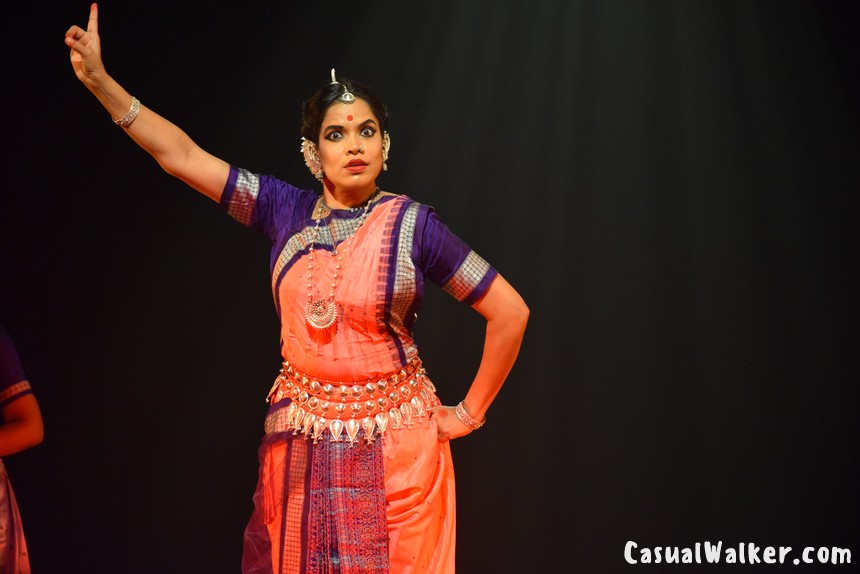
There was no exaggeration, no theatrical excess only a deeply internalized portrayal of a woman confronting the collapse of justice around her.
Invocation of Divine Grace – Transcendence Beyond Despair
In a subtle yet deeply moving transition, Draupadi’s surrender to the divine was suggested through a shift in energy rather than overt dramatization. The invocation of Krishna was almost abstract felt rather than seen. The dancer’s upward gaze, the softening of the body, and the stilling of breath conveyed a movement from despair to surrender, from isolation to grace.
Performance Insight – Odissi Abhinaya & Expression
The portrayal of Draupadi stood out for its depth and intelligence. She was not a passive figure but a thinking, questioning presence navigating injustice.
Ensemble: Bodies in Conversation
This performance did not dramatize the Mahabharata episode; it interpreted it. The focus remained on dharma, silence, injustice, and inner strength.
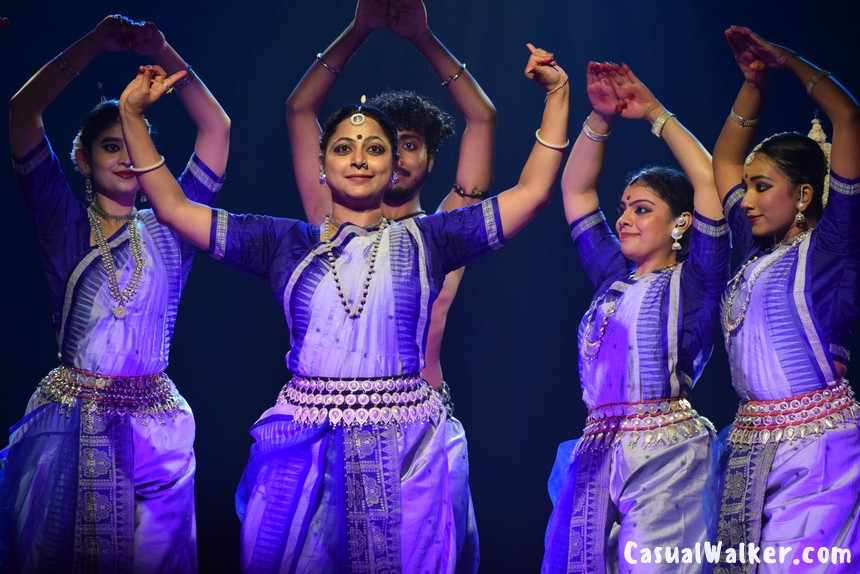
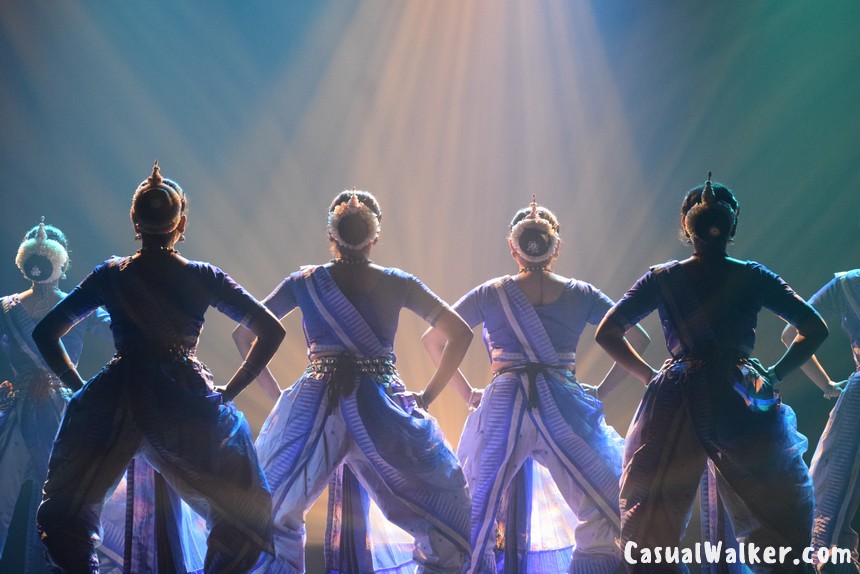
The dancers of Nrityantar were not background figures; they were the world through which Draupadi moved. In the war sequences, the geometries of the group communicated the chaos and enormity of Kurukshetra with an economy that would have impressed a far larger production.
What struck me most was the quality of internal listening. These dancers were not performing independently and sharing a stage; they were genuinely in conversation adjusting, responding, holding space for one another. That quality of ensemble attentiveness is rare and speaks to the depth of training behind this company.
After the War: The Silence That Remains
The production’s final movement was its most ambitious and most successful. The lead dancer stood in the aftermath of victory, and the choreography asked what the Mahabharata itself has always asked: what is victory when everyone you loved is gone? What does justice feel like when its price has been this?
The movement became very slow, very spare. The percussion quieted. And Draupadi born of fire, who had questioned and endured and held her dignity through everything stood with the grief and the memory of it all. There was no resolution. No comfort. Only the truth: that great events leave great wounds, and some questions do not get answered. They only get asked, again and again, by different voices in different times.
Draupadi’s Mahabharata is a production of rare integrity and emotional power classical Odissi dance at its most purposeful. Technically magnificent, choreographically inventive, musically rich, and above all deeply honest in its storytelling.
It does not simplify the Mahabharata. It does not sentimentalise Draupadi. What it offers instead is rarer: an encounter with a story that has waited centuries to be told from this particular vantage point a woman’s eyes, a woman’s silence, a woman’s unflinching questions.
Thanks for exploring this photo guide! We’d love to hear your feedback, stories, corrections, or any updates. Email us.
Follow our photo walks on Instagram: @hicasualwalker
Keep exploring: Browse 650+ Travel & Culture Photo Guides

More Related Photo Stories & Guides
- Mohiniyattam : An Enchanting Traditional Classical Dance Form of Kerala / Mohiniyattam Origin, History, Compositions & Costume / Kalaimamani Gopika Varma’s Kandien Swapnam (I Saw a Dream) – An Mesmerizing Mohiniyattam Dance Performance
- Exploring Kathakali : Origin, History, Elements, and Costumes of India’s Major Traditional Classical Dance Form / Unveiling Kalyana Sougandhikam : A Mesmerizing Kathakali Play by Kalakshetra Foundation Depicting Bhima’s Quest for the Rare Fragrance Flower for His Wife Draupadi
- Nangiarkoothu / Nangiar Koothu : A 1500-Year Old Traditional Solo Sanskrit Dance & Theatre Art Form from Kerala – History, Types, and the Epic Tale of Poothana Moksham from Life of Lord Krishna, A Spectacular Nangiar Koothu Performance
- Kathak Dance : A Major Traditional Classical Dance Form in India – Exploring Kathak’s Origin, History, Elements, Costumes, and its Connection to the Bhakti Movement / Cosmic Resonance: A Mesmerizing Kathak Dance Performance by Devaniya – Dakshin Gharana, Kathak Dance School
- Raas Leela / Rasa Lila : Complete Guide to Krishna and Radha’s Divine Dance — History, Bhagavata Purana, Gopis, Peacock Performance, Manipuri Raas Leela, Mayuri Dance, Costumes, Janmashtami Celebrations & Where to Watch in Braj, Mathura, Vrindavan & Manipuri
- Mohiniyattam: An Enchanting Traditional Classical Dance Form of Kerala | A Mesmerizing Mohiniyattam Dance Performance by Famous Mohiniyattam Dancer Gopika Varma & Her Disciples, Featuring Maharaja Swathi Thirunal’s Compositions : Kuchelavrutham – Krishna & Kuselan, A Tale of Friendship & Humility / Kanakamayam Ayidum – A Playful Game of Guessing the Divine Lord Padmanabha