





Japanese Bonsai & Suiseki Exhibition in Chennai | 120+ Japanese Bonsai & Miniature Bonsai Trees, Japanese Water Stones on Display — Exploring the History of Japanese Bonsai, Tropical Bonsai Species, Bonsai Art in India & Indo-Japan Culture
– exploring ancient art of bonsai & the beauty of suiseki water stones

A two-day Bonsai and Suiseki exhibition in Chennai showcased over 120 bonsai trees and suiseki stones, making it one of the most significant displays of Japanese living art. This event was organised by the Indo-Japan Chamber of Commerce & Industry (IJCCI) and inaugurated by the Hon’ble Mr. Takahashi Muneo san, Consul-General of Japan, Chennai.
Ancient Art of Bonsai: A Japanese Legacy Born from the Soil
The Bonsai traditional art traces its origins to China over a thousand years ago, where it was known as penjing or penzai the cultivation of trees in shallow containers to evoke the grandeur of nature in miniature. Japanese Buddhist monks brought this practice back from China around the Kamakura period (1185–1333), and what followed was a slow, remarkable transformation. 
In Japan, bonsai evolved from a monk’s meditative practice into a refined art form embraced by the samurai class and later by the general public. By the Edo period (1603–1868), bonsai culture had blossomed across Japan. Specialized nurseries, dedicated tools, and distinct regional styles emerged. The Japanese didn’t merely copy the Chinese form they infused it with Zen aesthetics, stripping it of ornamentation, emphasising negative space, asymmetry, and the beauty of age (wabi-sabi).
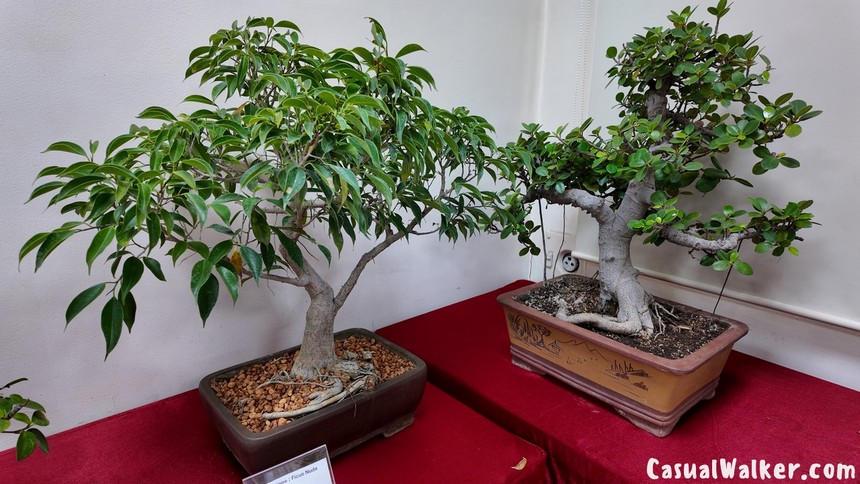
The word Bonsai itself (盆栽) means “planted in a container” but that simple translation hides a world of complexity. A masterful bonsai isn’t just a small tree in a pot. It is a living sculpture that tells the story of time: of wind, of storms survived, of decades of careful human guidance meeting natural will.
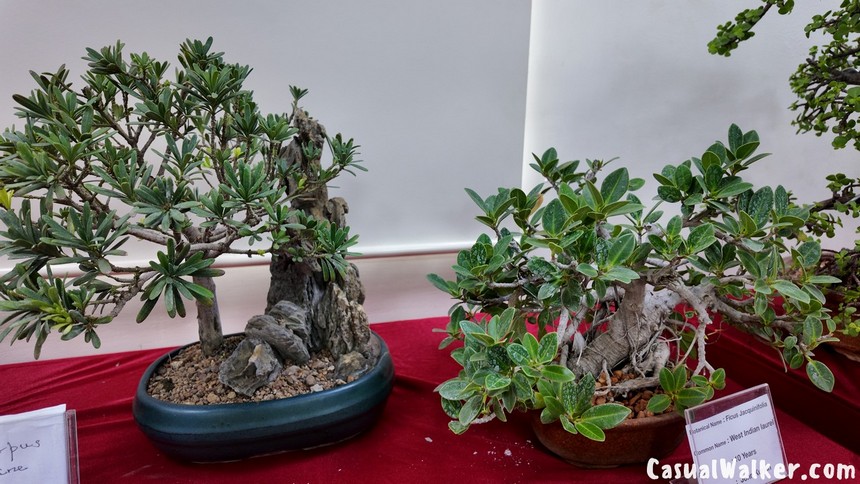
Japan’s Bonsai tradition gave the world iconic styles Chokkan (formal upright), Moyogi (informal upright), Kengai (cascade), Fukinagashi (windswept) each evoking a specific moment in nature, as if freezing a mountain pine or a cliff-edge cedar in a ceramic tray. Major bonsai centres like Omiya Bonsai Village in Saitama, established in the early 20th century, became pilgrimage sites for enthusiasts worldwide.
Walking Into the Exhibition: 120 Trees, Infinite Stories
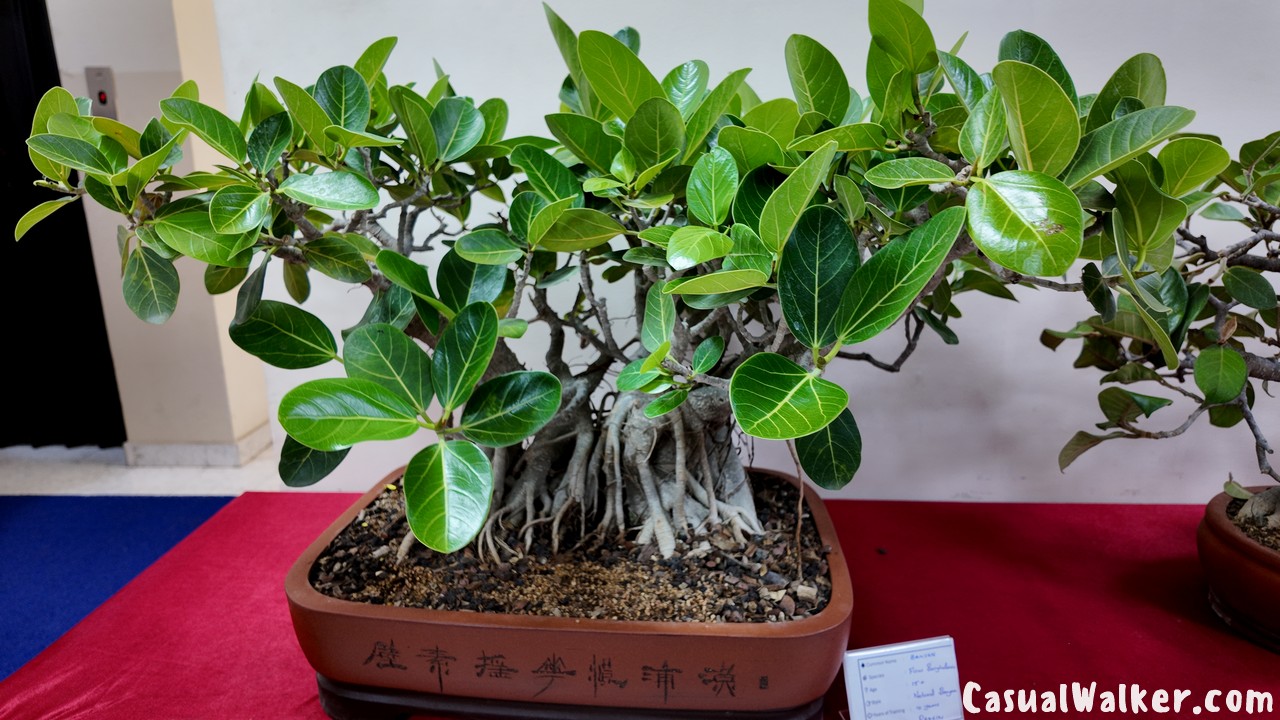
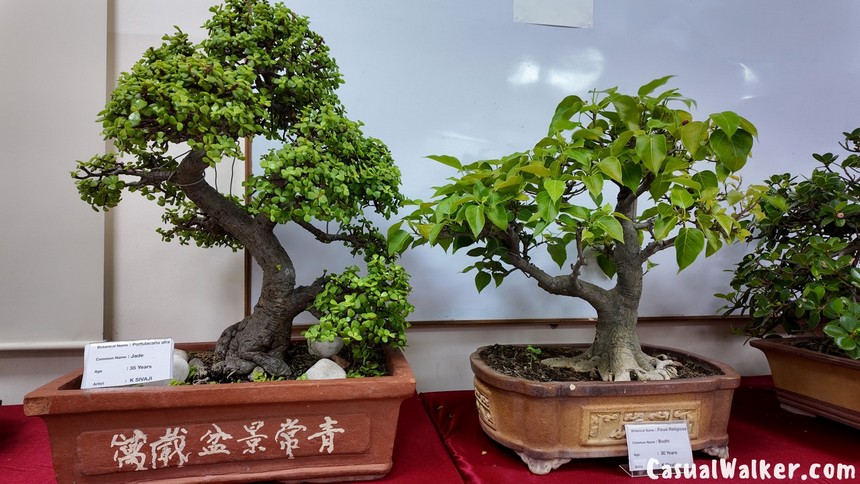
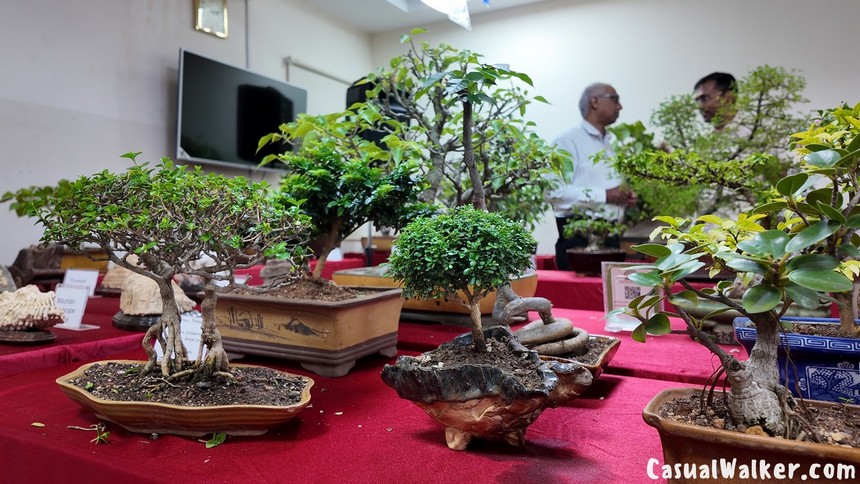
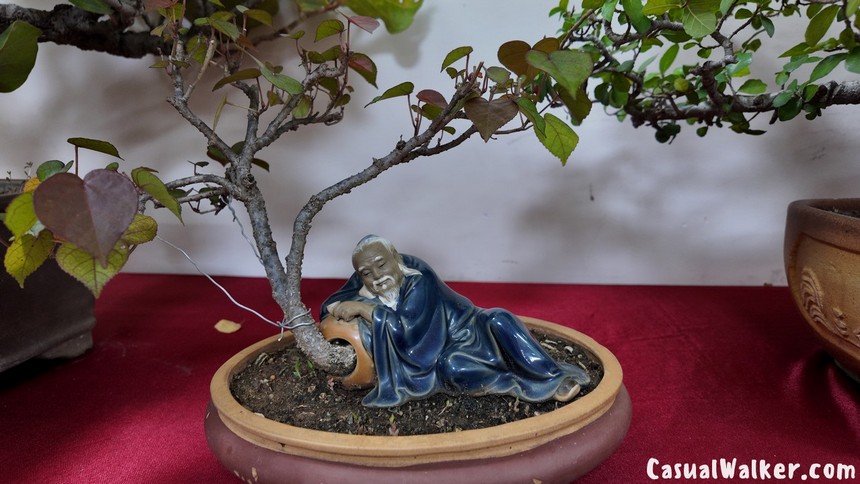
Stepping into the Bonsai exhibition was, for me, like stepping briefly into Japan. The air smelled faintly of soil and bark. Trees sat on low wooden platforms, each one a universe unto itself. What made the collection even more extraordinary was the age of the trees most ranging between 8 to 10 years old, silent witnesses to decades of patient, devoted care.
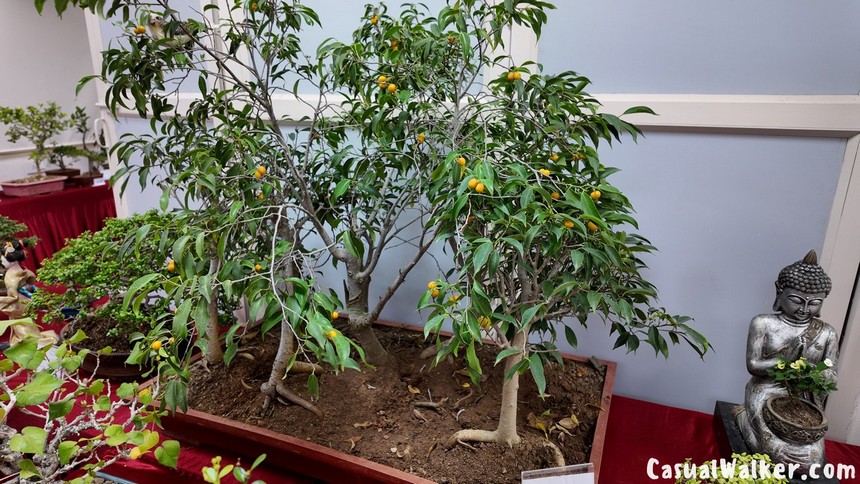
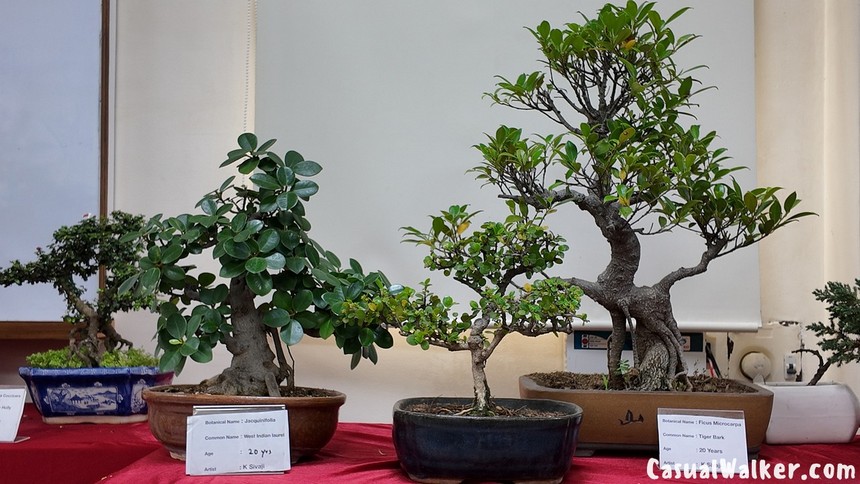
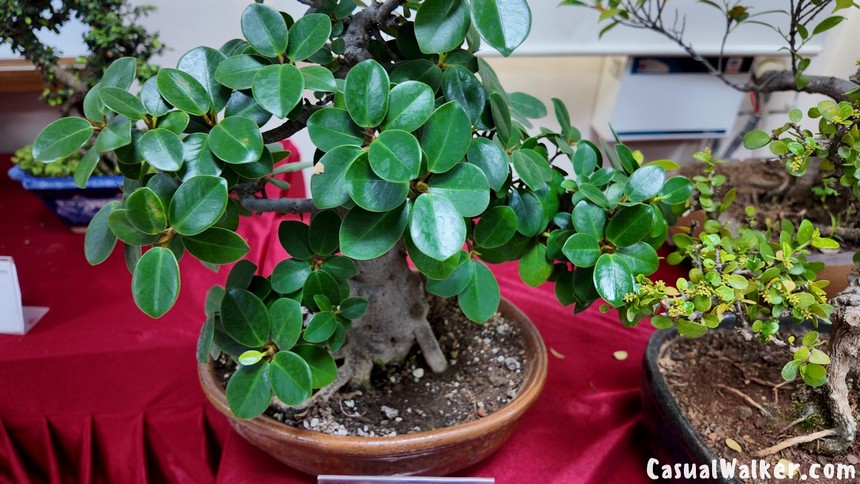
The collection was extraordinarily diverse, a celebration of both tropical and temperate species adapted for the Indian climate as well as traditional Japanese varieties. Among the trees on display:
- Peepal (Ficus religiosa) sacred to both Hindu and Buddhist traditions, its aerial roots lending themselves beautifully to dramatic, ancient-looking bonsai forms
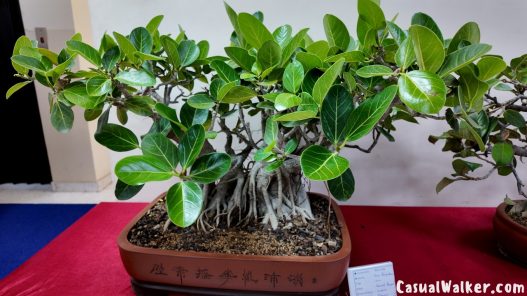
- Fig (Ficus carica and related species) among the most popular choices for Chennai artists, given their vigorous growth and malleable trunks
- Tamarind (Tamarindus indica) a South Indian native that, when trained over decades, develops gloriously textured bark
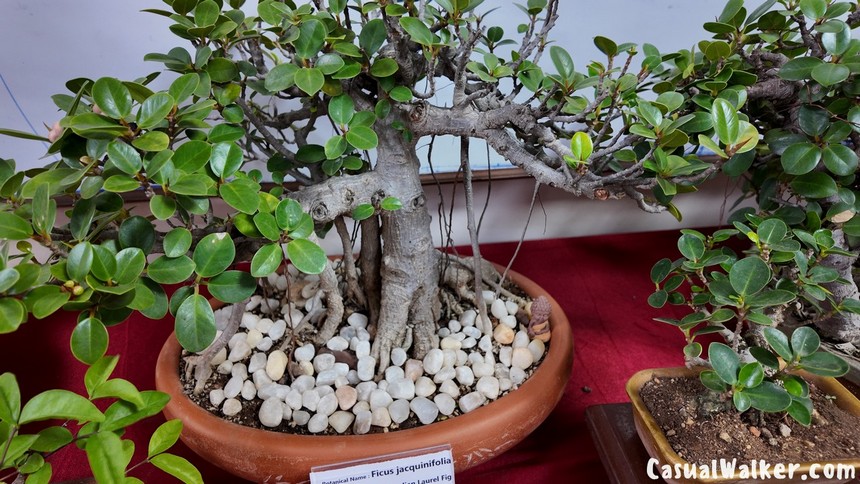
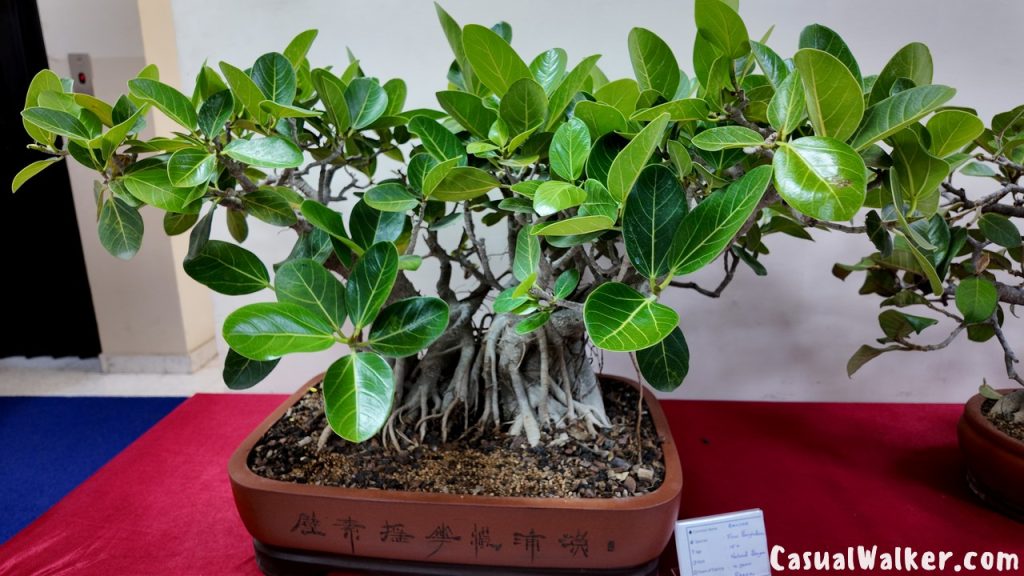
- Banyan (Ficus benghalensis) the aerial root systems of banyan bonsai are absolutely mesmerising, evoking primordial forests
- Adenium (Desert Rose) with swollen, sculptural caudexes, these are a favourite for their dramatic visual impact
- Bougainvillea riot of colour against gnarled wood, these are a staple of tropical bonsai collections
- Carmona (Fukien Tea) a classic Asian bonsai species, prized for its small leaves and delicate white flowers
- Jade Plant (Crassula ovata) a succulent species increasingly popular among Chennai bonsai practitioners
Stones That Speak: Suiseki at the Exhibition
Displayed alongside the bonsai trees, and every bit as captivating, were the suiseki and if you walked past them quickly, you missed the entire point.
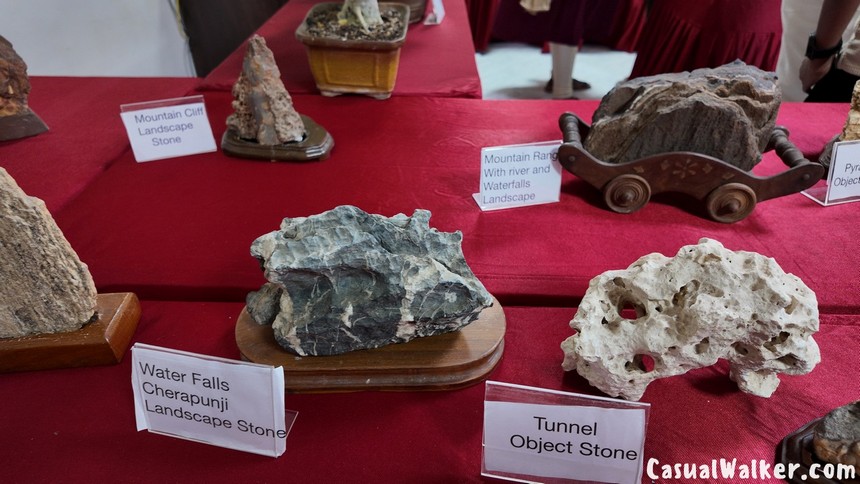
Suiseki (水石), literally “water stones,” are naturally formed rocks collected from riverbeds, mountain slopes, and coastlines, prized entirely in their unaltered state. No carving, no painting, no intervention the art lies in the collector’s eye, in the ability to see a mountain range in a grey river pebble, or a distant island in a flat, wave-smoothed stone. In Japan, suiseki appreciation (suiseki-do) has been practiced for over a thousand years, and it sits in perfect philosophical harmony with bonsai: both arts ask you to find the infinite within the small, the monumental within the modest.
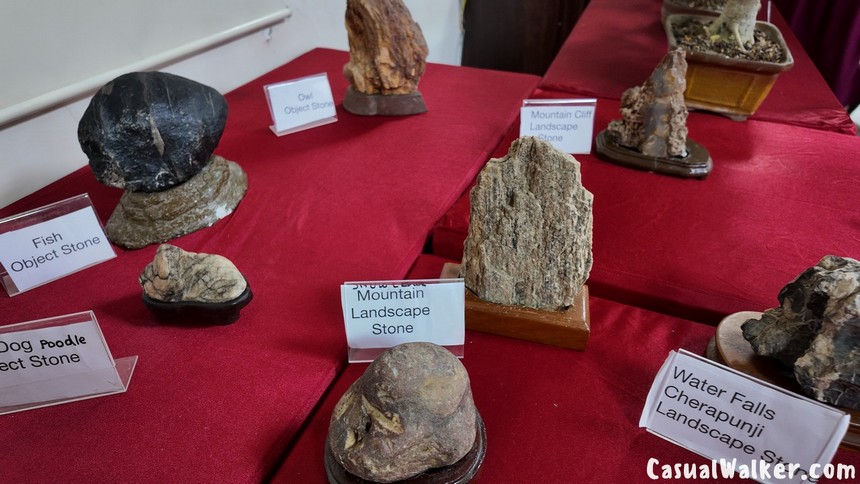
At this exhibition, the suiseki on display ranged from stones suggestive of misty mountain peaks to flat, plateau-like forms evoking wide landscapes each one presented on a hand-carved wooden daiza (display stand) in the traditional Japanese manner. Spending time with them felt meditative. There were no labels telling you what to see. You had to bring your own imagination, your own stillness and that, really, is the whole practice.
A Master Among the Trees: K. Sivaji
Among the exhibitors, one name stood out for those who follow the Chennai bonsai world closely K. Sivaji, founder of Sivaji Bonsai, who has been practicing this art since 1960 and is widely regarded as one of India’s foremost bonsai masters. What makes his journey remarkable is its breadth: Sivaji has learned from internationally acclaimed masters in Japan, Vietnam, Indonesia, the Philippines, and England, and is one of only 17 graduates of the Tropical Bonsai School founded by the legendary Puerto Rican master Pedro Morales.
His trees at the exhibition carried that rare quality you sense in work made by someone for whom bonsai is not a hobby but a way of life each one shaped with quiet authority, each one a conversation between the artist and decades of patient growth.
A retired Joint Secretary to the Government of Tamil Nadu, Sivaji’s parallel life as a bonsai artist is itself a kind of lesson: that the most enduring creative work often happens quietly, outside the spotlight, one careful cut at a time. He has conducted workshops and exhibitions across India from Mumbai to Lucknow to Mysore and has trained hundreds of students, ensuring that this Japanese art continues to find deep roots in Indian soil.
What strikes me most about bonsai is that it demands presence. You cannot automate it. Every watering, every small cut, every repositioning of a branch is a conversation between the artist and the living tree. It is, in this way, the ultimate antidote to the noise of modern urban life a practice that slows you down and teaches you to look closely.
Exhibitions like this one, bring Japan a little closer, and remind us that the most profound art forms are not those that shout the loudest but those that ask you to be still, to pay attention, and to appreciate the extraordinary within the small.

Thanks for exploring this Casual Walker photo guide — India’s most visual cultural travel guide and a curious discovery journal finding authentic photo stories, guides, and tips across travel, culture, arts, temples, heritage, and food.
- Keep exploring: Browse 650+ Travel & Culture Photo Guides
- We’d love to hear your feedback, stories, corrections, and updates — Email us.
- Follow our photo walks on Instagram: @hicasualwalker
More Related Photo Stories & Guides
- Minichestra : Beyond Borders ~ Japan Anime Classic Concert – A extraordinary musical orchestra performance of famous Japanese anime classics & traditional melodies in Chennai in collaboration with the Consulate-General of Japan
- I Love Sushi – An Traveling Exhibition by Japan Foundation in Chennai : Exploring All about the Sushi’s Brief History & Origin, Timeline, Evolution, Cultural & Types of Sushi / Narezushi – Japan’s Most Famous Cuisine
- Manga Hokusai Manga – An Japanese Manga Comics Exhibition in Chennai : Approaching the Master’s Compendium from the Perspective of Contemporary Comics
- The Japan Foundation’s Contemporary Wood-Carved Netsuke – An Japanese Miniature Sculptures Art Exhibition, Chennai
- Hinamatsuri – Doll’s Day or Girls’ Day, A Japan Doll Festival for Girl’s Health and Happiness – Japan Dolls Exhibition in Chennai & Doll festival Similar to Navarathri / Golu Dolls Festivals in India