





Raas Leela / Rasa Lila : Complete Guide to Krishna and Radha’s Divine Dance — History, Bhagavata Purana, Gopis, Peacock Performance, Manipuri Raas Leela, Mayuri Dance, Costumes, Janmashtami Celebrations & Where to Watch in Braj, Mathura, Vrindavan & Manipuri (Updated)
– sacred indian folk dance tradition of uttar pradesh

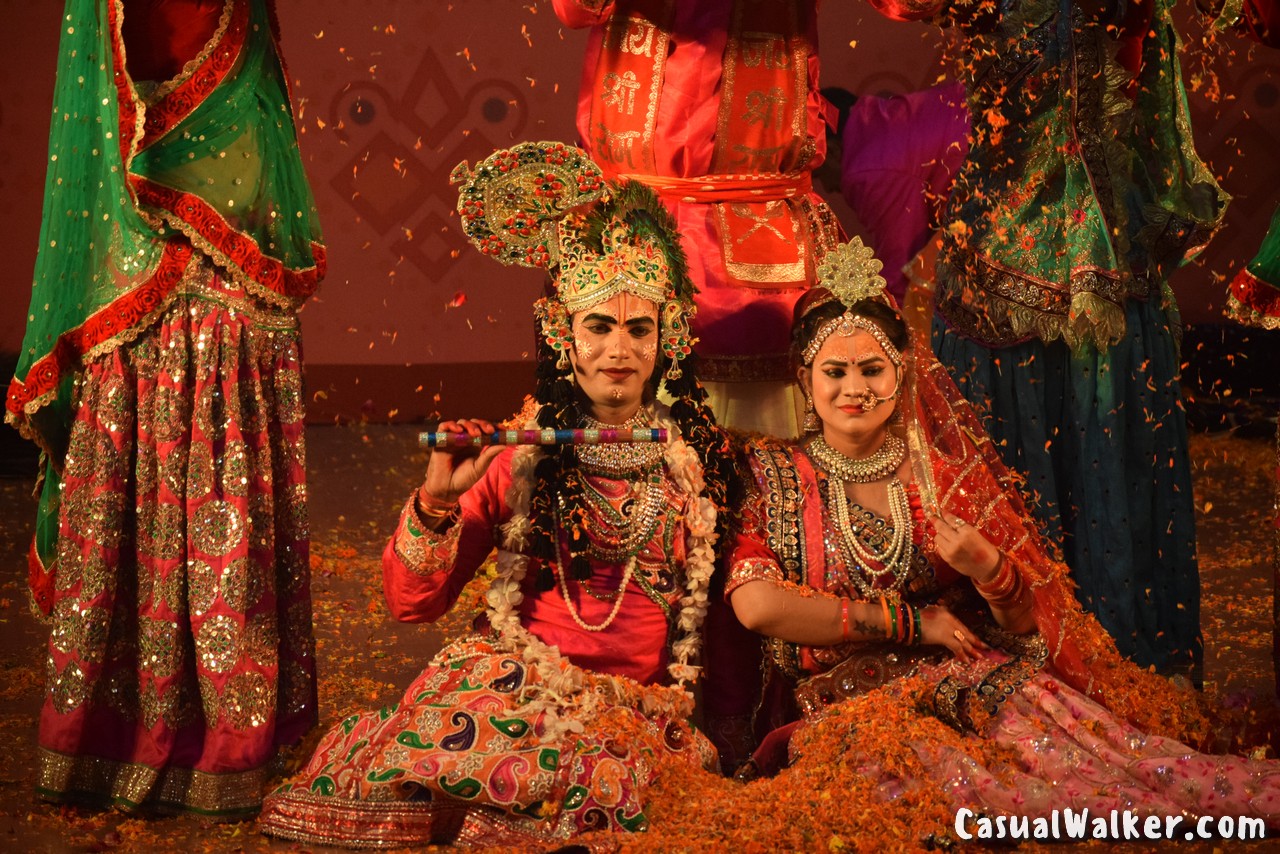
Raas Leela is one of India’s most spiritually rich and culturally beloved dance forms. Rooted in the holy cities of Mathura and Vrindavan, it brings to life the divine romance between Lord Krishna, Radha, and the gopis, the cowherd maidens of Braj. More than just a performance, Raas Leela is a living tradition that has been passed down through centuries, carrying deep devotional meaning for millions across India and beyond.
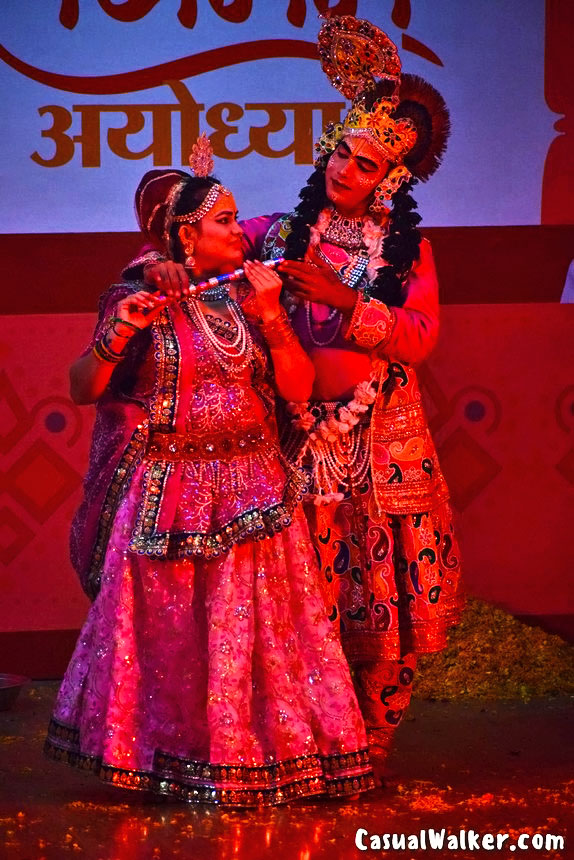
The name itself tells the story. “Raas” comes from the Sanskrit word meaning nectar, emotion, or sweet taste. “Leela” means act, play, or dance. Together, they translate to the “Dance of Divine Love”, a fitting description for a form that celebrates spiritual devotion through movement, music, and storytelling. 
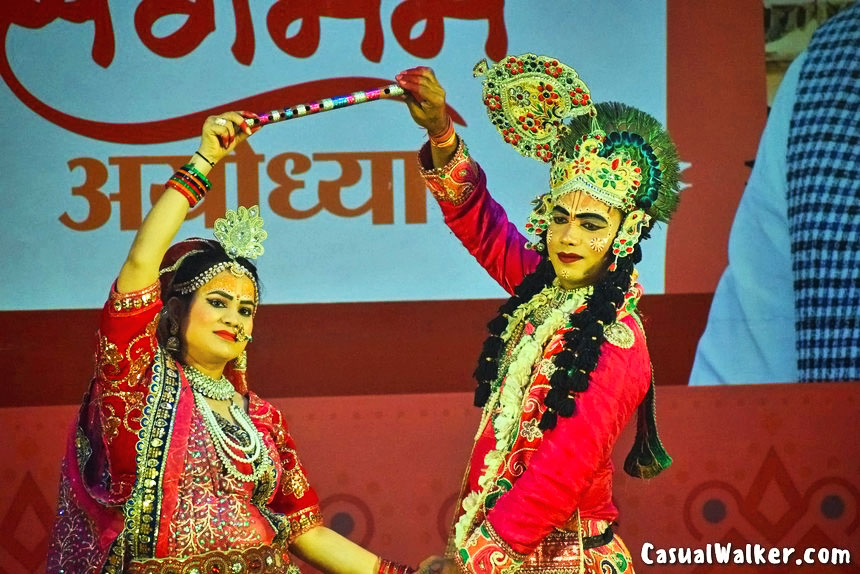
Raas Leela Devotional Experience
Raas Leela is far more than a folk performance. It is a devotional experience that connects audiences to the core teachings of Vaishnavism, the idea that human love is a reflection of the soul’s deeper longing for the divine. Festivals like Janmashtami and Holi in Mathura and Vrindavan draw thousands of visitors specifically to witness this dance form performed in its most authentic setting.
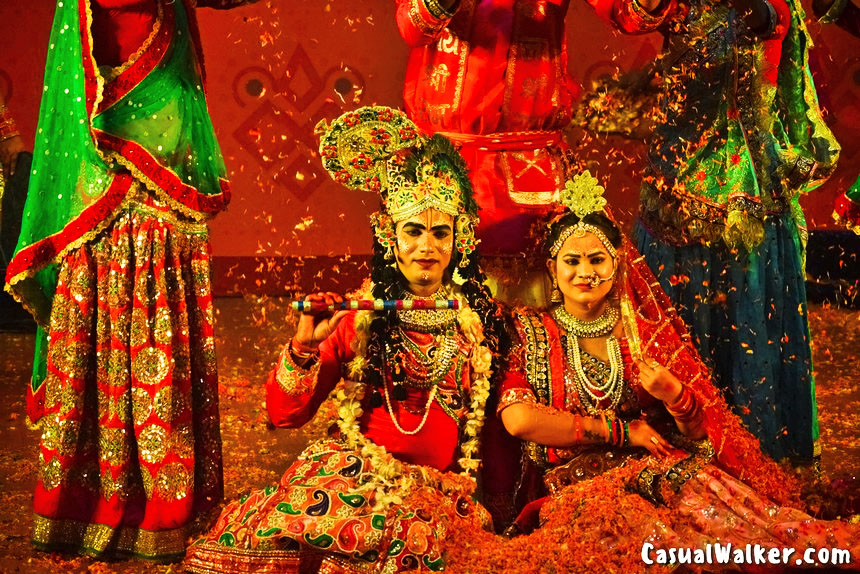
Today, over 100 raas mandalis, performance troupes, tour across India and abroad. Every year during August and September, they gather on the sacred land of Braj to perform in the region stretching between Kosi and Agra. The tradition remains alive, relevant, and deeply moving for both devotees and cultural enthusiasts alike.
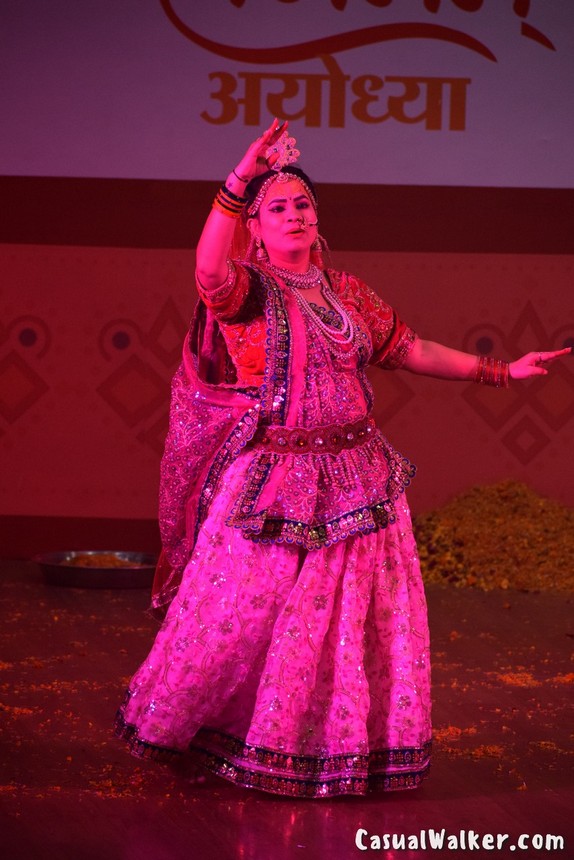
Raas Leela History
The roots of Raas Leela stretch back to ancient Hindu scriptures, particularly the Bhagavata Purana and the Gita Govinda. According to legend, one night the gopis of Vrindavan heard the enchanting sound of Lord Krishna’s flute and slipped away from their homes into the forest to dance with him. Lord Krishna supernaturally extended that night to the length of one kalpa, a Hindu unit of time equivalent to approximately 4.32 billion years, so that the divine dance could continue without end.
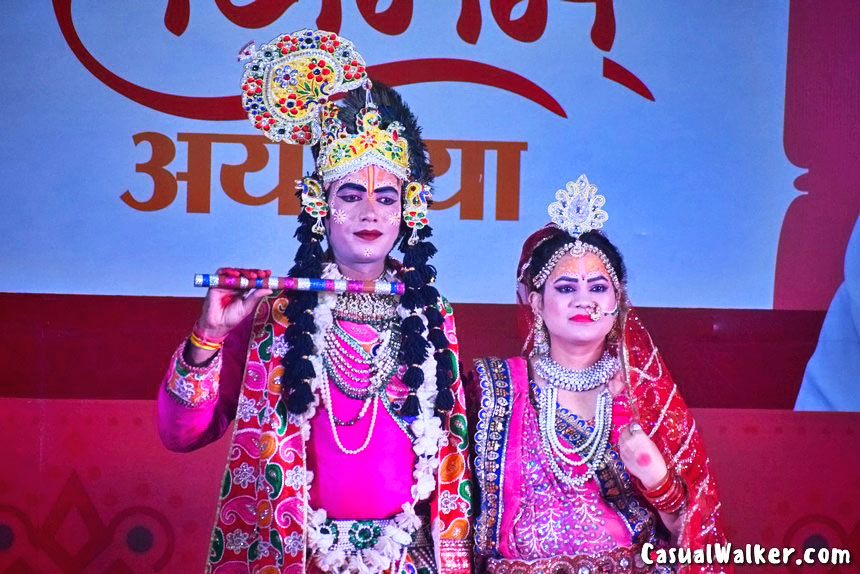
The first historically recorded performance of Raas Leela took place in the 16th century at Vishram Ghat in Mathura, under the guidance of Guru Vallabhacharya and his disciples. Shortly after, in the early 15th century, Swami Sri Uddhavaghamanda Devacharya formally began staging Raas Leela in Vrindavan. He trained young brahmacharins to enact scenes from the Vani literature of Vraja, giving visual form to the spiritual stories. Though met with initial scepticism, tradition holds that Lord Krishna himself appeared to bless the performers, affirming the sanctity of the practice.
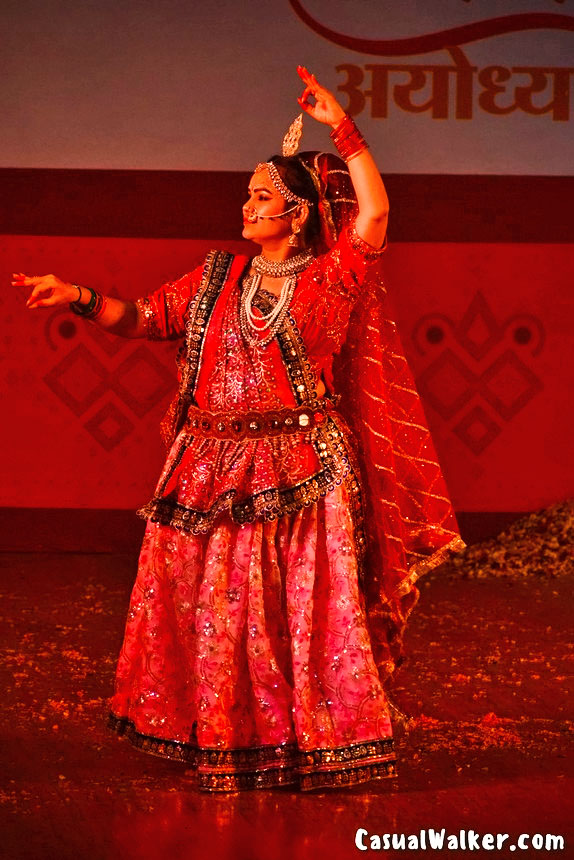
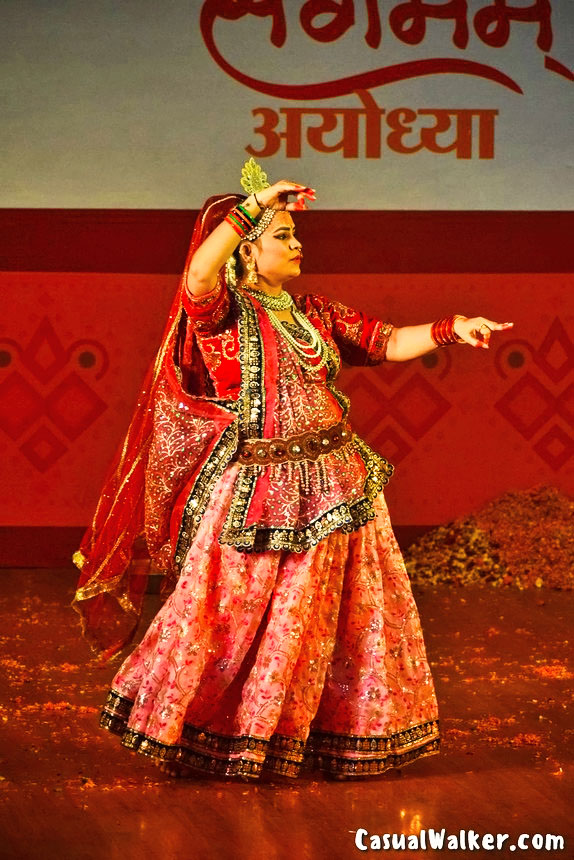
I remember watching a Raas Leela performance during a visit to Uttar Pradesh. The atmosphere was unlike anything I had experienced before, the soft glow of lamps, the rhythm of cymbals, and the graceful movements of performers dressed in vibrant yellows and reds. It did not feel like a show. It felt like a prayer. That evening left a lasting impression and deepened my appreciation for how art and devotion can exist as one.
Raas Leela Key Features
The story begins when Lord Krishna plays his flute late at night in the forests of Vrindavan. Drawn by the music, the gopis leave their homes and gather around him. Lord Krishna playfully disappears and reappears, then performs the rasalila individually with each gopi, assuming multiple forms simultaneously. The story ends as the gopis, refreshed and transformed, reluctantly return home. Scholars like Graham Schweig note that this story symbolises intense devotion to God, not worldly desire, and the Bhagavata Purana itself states that anyone who faithfully hears this story attains Lord Krishna’s pure loving devotion.
Gopis and Their Sacred Role
The gopis are not simply background characters in Raas Leela, they are its spiritual heartbeat. Each gopi represents an individual soul completely surrendered in devotion to the divine. Their unconditional love for Lord Krishna, which leads them to abandon all worldly obligations and rush into the forest at the sound of his flute, is considered the highest expression of bhakti in Vaishnava tradition.
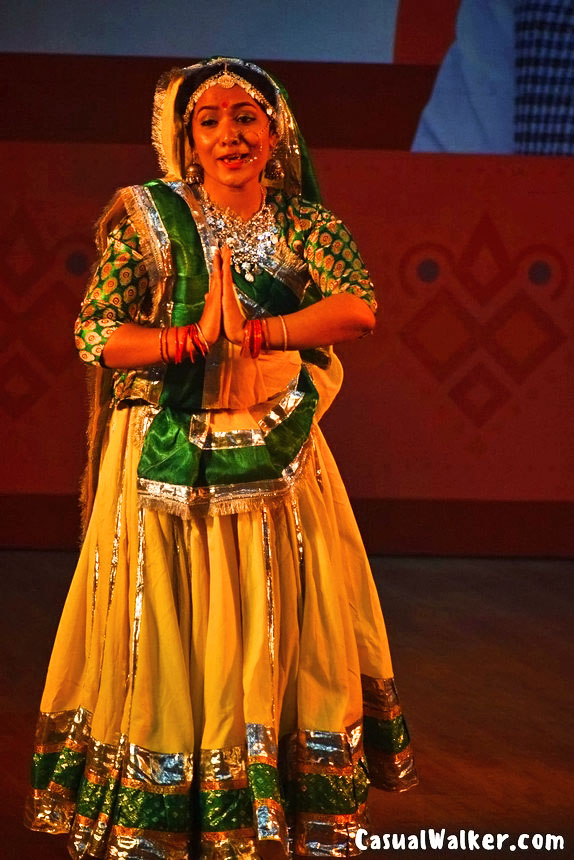
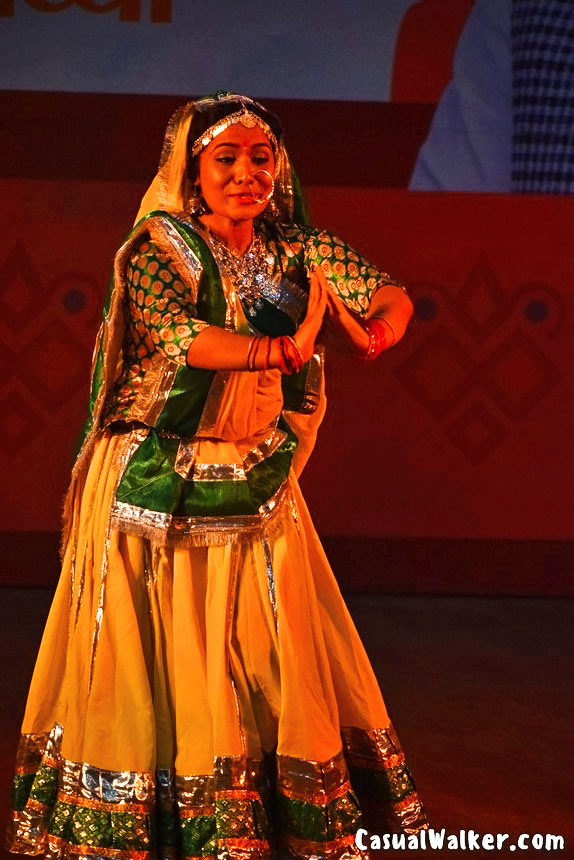
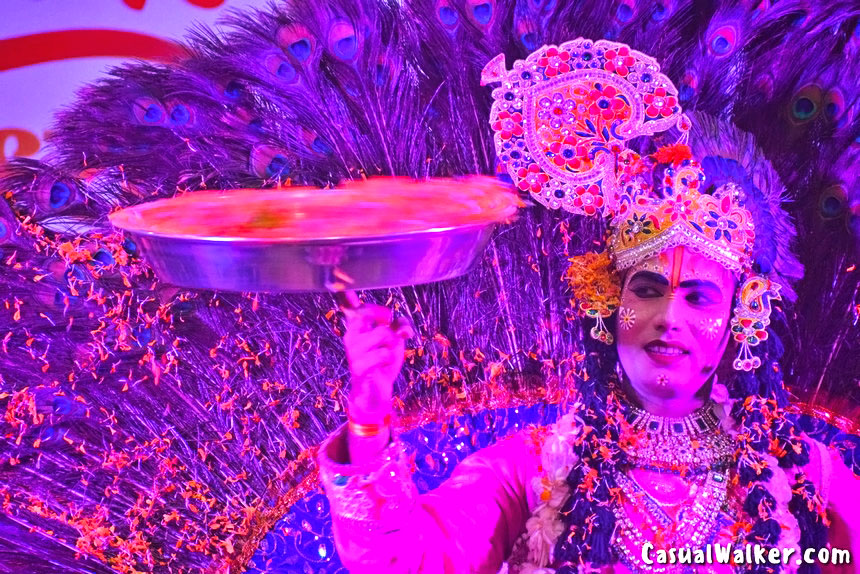
One of the most visually striking moments in a Raas Leela Lord Krishna’s performance holding a beautifully decorated plate filled with fresh flowers and spins it gracefully, mirroring the motion of the Sudarshana Chakra, the divine spinning disc of Lord Vishnu. The plate rotates in perfect rhythm with the music, petals catching the light as they swirl outward in every direction. This act is both an offering and a visual prayer, a powerful reminder of Lord Krishna’s inseparable connection to the divine cosmic order, and his role not just as a beloved cowherd but as the Supreme Being himself.
Mayuri Dance, Krishna’s Peacock Tribute
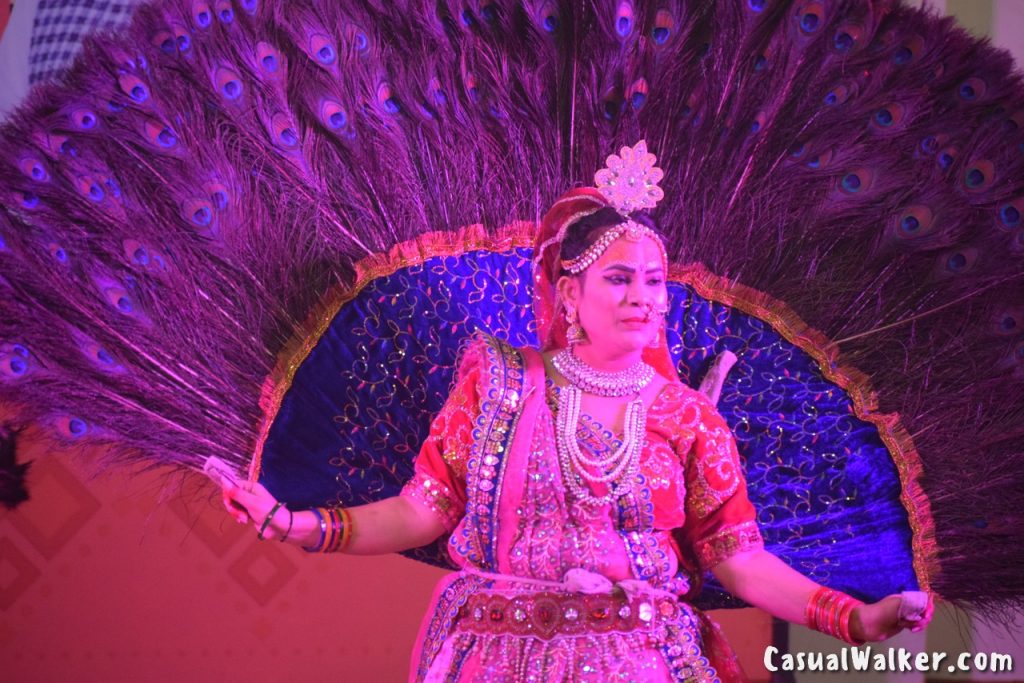
Among the many highlights of a Raas Leela performance, the Mayuri dance, the peacock dance, stands apart in its sheer visual splendour. Inspired by Lord Krishna’s deep affinity with peacocks, this dance form imitates the graceful movements and proud display of a peacock in full bloom. Performers wear elaborate costumes featuring wide, fan-shaped skirts designed to resemble a peacock’s magnificent tail feathers, often shimmering in blues, greens, and golds.
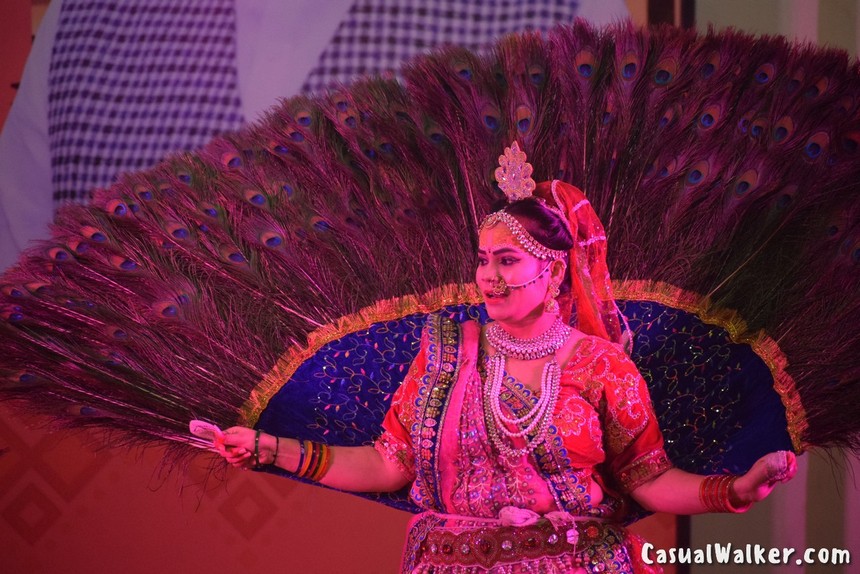
As the music rises, the dancers spread their costumes wide and spin in sweeping circles, recreating the image of a peacock dancing in the rain, a scene forever associated with Lord Krishna’s playful spirit in Vrindavan. The peacock feather in Lord Krishna’s crown is not merely decorative; it is a symbol of his bond with nature and his divine joy. The Mayuri dance brings that symbolism to life on stage, drawing loud appreciation from audiences and carrying a message of pure, unbounded celebration.
Raas Leela as a Dance Drama
Raas Leela in Uttar Pradesh blends classical music, folk tradition, and dramatic storytelling into one seamless performance. The focus is on bhava, the mood or sentiment conveyed through song, music, and movement. Emotions like friendship, parental love, humor, devotion, and awe are all woven into the performance. Although basic scripts exist, performers have room for improvisation, making each show unique and alive.
The central emphasis is on darshan, experiencing the divine through sound and sight. The visual elements enhance the experience, but it is the music and emotional energy that carry the performance.
Influence on Classical Indian Dance
Raas Leela has shaped several major Indian classical dance forms. Kathak, also known as Natwari Nritya, evolved directly from the Raslila of Braj and was revived in the 1960s by celebrated dancer Uma Sharma. Manipuri Raas Leela, Bharatanatyam, Odissi, and Kuchipudi have all drawn from its themes and spiritual vocabulary. In this way, Raas Leela sits at the foundation of much of India’s classical dance heritage.
Costumes and Presentation
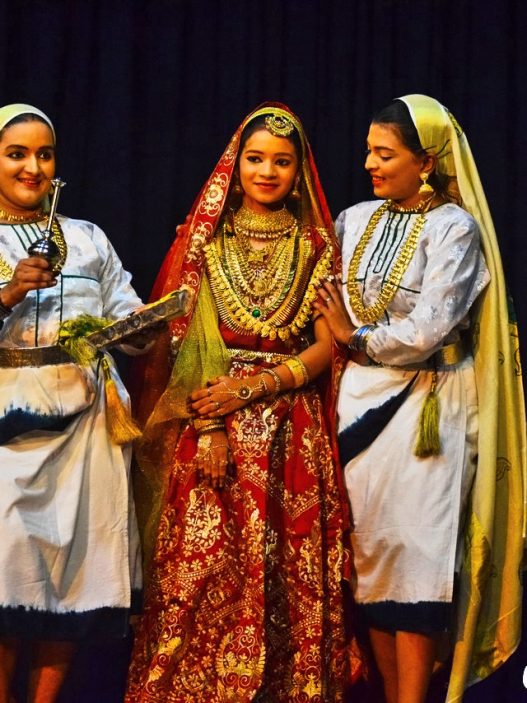
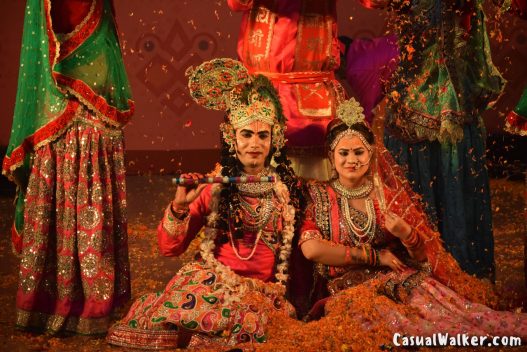
Costumes in Raas Leela closely mirror traditional Vrindavan attire. Men wear yellow dhotis, heavy jewelry, and turbans adorned with peacock feathers, reflecting Lord Krishna’s iconic appearance. Women dress in ghagra-choli with a dupatta draped gracefully. Performances are held in large decorated gardens or halls with ornate mandaps. Drums and cymbals provide the musical backdrop, creating a rhythmic, melodious atmosphere. Notably, all performers are traditionally male, a practice maintained since the very first Raas Leela performance 500 years ago at Vishram Ghat.
Spiritual Meaning
At its deepest level, Raas Leela represents the union of the individual soul with the Supreme Being. The gopis symbolise individual souls bound by worldly responsibilities. Lord Krishna’s flute represents the divine call that draws the soul toward the Supreme. In Manipuri Raas Leela especially, this symbolic dimension is central, the dance is understood as a depiction of the soul’s spiritual journey when guided by true faith and devotion.
Raas Leela is not simply a dance, it is a devotional art form that has shaped Indian culture, spirituality, and classical performance for centuries. Whether it is the graceful spin of flower-filled plates echoing the Sudarshana Chakra, the breathtaking spread of the Mayuri dance, or the gopis’ pure surrender in devotion, every element carries meaning far beyond the stage. From the banks of the Yamuna to stages across the world, Raas Leela continues to inspire and move audiences with its timeless message of love, devotion, and divine connection. As long as Lord Krishna’s flute plays in the hearts of devotees, Raas Leela will continue to dance.

Where to Witness Raas Leela in India
Mathura and Vrindavan: The most authentic and spiritually immersive Raas Leela performances can be experienced in Mathura and Vrindavan in Uttar Pradesh, the very land where Lord Krishna lived and the tradition was born. During Janmashtami and the months of August and September, the entire region transforms into a devotional festival ground, with raas mandalis performing nightly across temples, open courtyards, and decorated mandaps. The ISKCON Temple in Vrindavan and the Dwarkadheesh Temple in Mathura are particularly known for hosting elaborate and well-organized performances that draw both pilgrims and cultural visitors from across the world.
Manipur: Beyond Uttar Pradesh, Manipur stands as another landmark destination for Raas Leela lovers. The Manipuri Raas Leela, performed during the full moon night of Kartik mont, usually in November, is a UNESCO-recognised tradition of exceptional grace and refinement. Imphal and its surrounding regions host grand performances that blend classical Manipuri dance with deep spiritual devotion. Assam also celebrates Raas Leela as an official state festival, with performances held across the Barpeta Satra and other Vaishnavite monasteries. For anyone wishing to experience this divine dance form in its truest form, these destinations offer something no stage production elsewhere can replicate — the feeling of being present on sacred ground.
Thanks for exploring this photo guide! We’d love to hear your feedback, stories, corrections, or any updates. Email us.
Follow our photo walks on Instagram: @hicasualwalker
Keep exploring: Browse 650+ Travel & Culture Photo Guides