




Jaffna Fort / Yazhpanam Kottai / Dutch Fort, Gurunagar, Jaffna, Sri Lanka – The Complete Visitor Guide | History, Architecture, Entry Fee, Opening Hours, How to Get There & Everything You Need to Know About Sri Lanka’s Second Largest & Most Significant Colonial Military Fortress and Living Symbol of Northern Heritage
– majestic fort of sri Lanka’s colonial past

Jaffna Fort / Yazhpanam Kottai / Dutch Fort is one of Sri Lanka’s most historically significant landmarks and the second-largest fort on the island. Located on the southern edge of the Jaffna Peninsula, this ancient military fortification overlooks the stunning Jaffna Lagoon and stands as a powerful symbol of the region’s layered colonial past. Originally built by the Portuguese in 1618 and dramatically expanded by the Dutch into a masterpiece of 17th-century military architecture, the fort passed through British hands before becoming a key battleground during Sri Lanka’s civil war.
Today, it is one of the top things to do in Jaffna and a must-visit destination in Sri Lanka‘s Northern Province drawing history enthusiasts, architecture lovers, and travellers seeking to understand the complex story of this remarkable corner of the island. Whether you’re planning a Jaffna travel itinerary, researching Sri Lanka historical sites, or simply looking for the best places to visit in northern Sri Lanka, Jaffna Fort belongs at the very top of your list. 
The Sri Lanka Army maintains an active garrison inside the fort, and has done so continuously since recapturing it in 1995. It is, simultaneously, a functioning military installation and one of the most visited historical destinations in Sri Lanka’s Northern Province. That combination shapes your experience in subtle but meaningful ways certain areas are off-limits, there are uniformed personnel around, and the whole place carries an atmosphere that sits somewhere between museum and checkpoint.
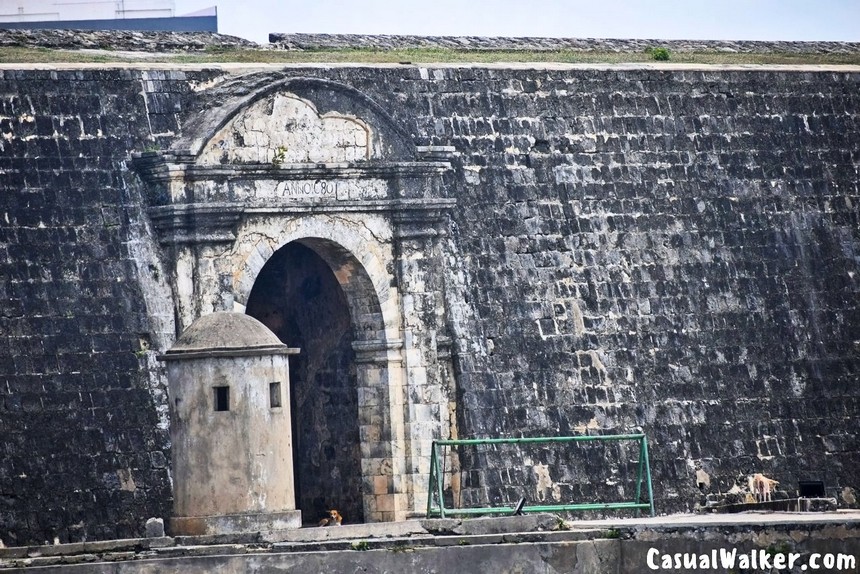
Second Largest Fort in Sri Lanka
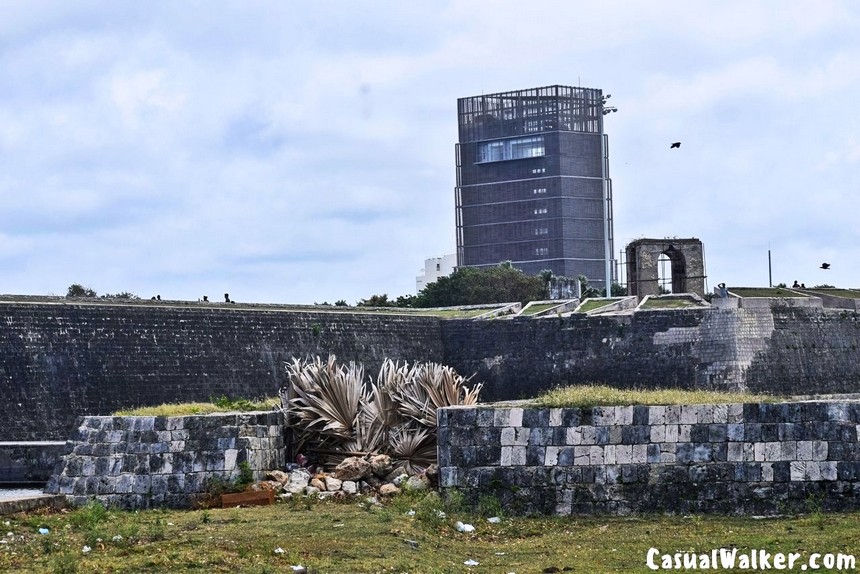
Jaffna Fort is the second-largest fort in Sri Lanka, and once you’re standing at its base, that statistic makes complete sense. The scale is genuinely impressive. For anyone researching Dutch forts in Sri Lanka or colonial architecture in South Asia, this place is in a category of its own.
Jaffna Fort History: A Story Written Across Three Colonial Eras
To understand Jaffna Fort, you need to understand that you are looking at three separate chapters of colonial history stacked on top of one another, each one literally built over the ruins of the last. It is one of the finest examples of colonial military architecture in Asia, and its history stretches back long before any European power arrived on the island.
Jaffna Before the Europeans: The Ancient Kingdom of Nagadipa
Before any European ship appeared on the horizon, Jaffna was already one of the most strategically significant places in South Asia. The Jaffna Peninsula also historically known as Nagadipa controlled the narrow sea channel between India and Sri Lanka, making it the linchpin of a thriving maritime trade network.
Elephants and pearls were the great exports of the north; spices and textiles moved through in the other direction. When the ancient kingdom of Polonnaruwa collapsed in the 13th century, Jaffna emerged as an independent political and cultural centre, building its own kingdom the Kingdom of Jaffna that would endure for centuries. The region had also carried deep Buddhist heritage in earlier eras, though by the time the Portuguese arrived, it had become the heartland of Hindu-Tamil culture a character it retains to this day.
It was precisely this strategic position on the Indian Ocean trade route that put Jaffna in the crosshairs of every European colonial power that came hunting for dominance in the region.
Portuguese Fort in Jaffna: 1618
In 1591, the Portuguese General André Furtado de Mendonça led the conquest of the Jaffna Kingdom. Construction of the Portuguese fort in Jaffna began in 1618 under Philip de Oliveira, who raised a sturdy square structure with four corner bastions practical, efficient, and entirely typical of Portuguese colonial military architecture of the period.
They named it the Fortress of Our Lady of Miracles of Jafanapatão, after a nearby church dedicated to the Virgin Mary. Accounts suggest that stories of miracles attributed to the church’s statue spread widely enough to make the name stick. It’s a wonderfully human detail a military fortress named after miracles.
Dutch Fort in Jaffna: From Square to Pentagonal Masterpiece
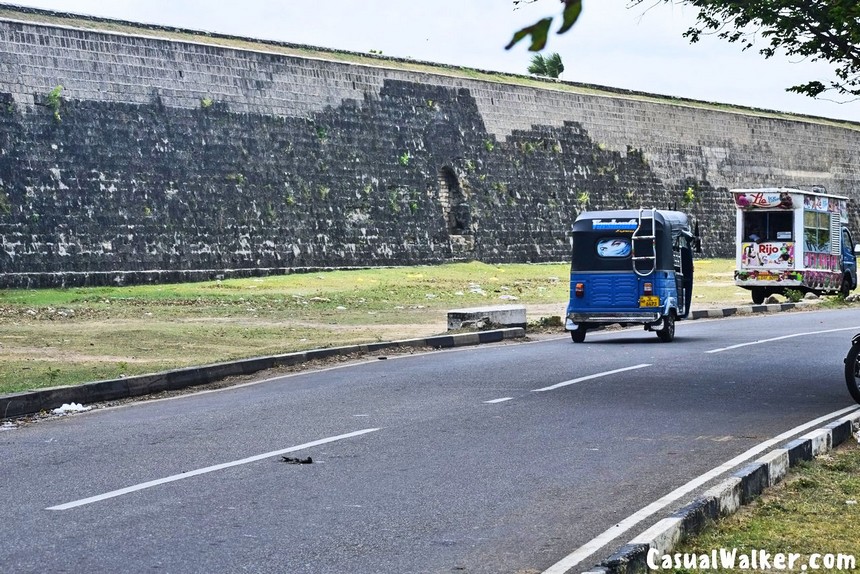
The real transformation of Jaffna Fort came in 1658, when Dutch commander Rijcklof van Goens led his forces in capturing the fort from the Portuguese. The Dutch weren’t interested in maintaining what they found. They tore the square fort almost entirely down and rebuilt from the ground up, engineering something far more ambitious and what resulted is the reason historians and travellers still come here today.
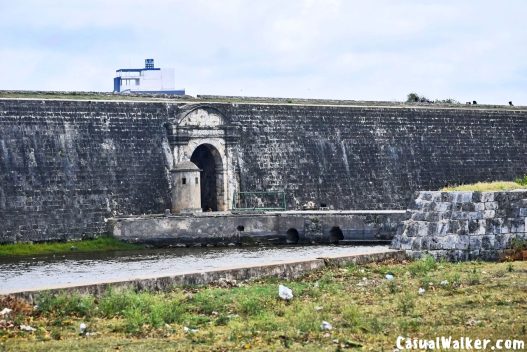
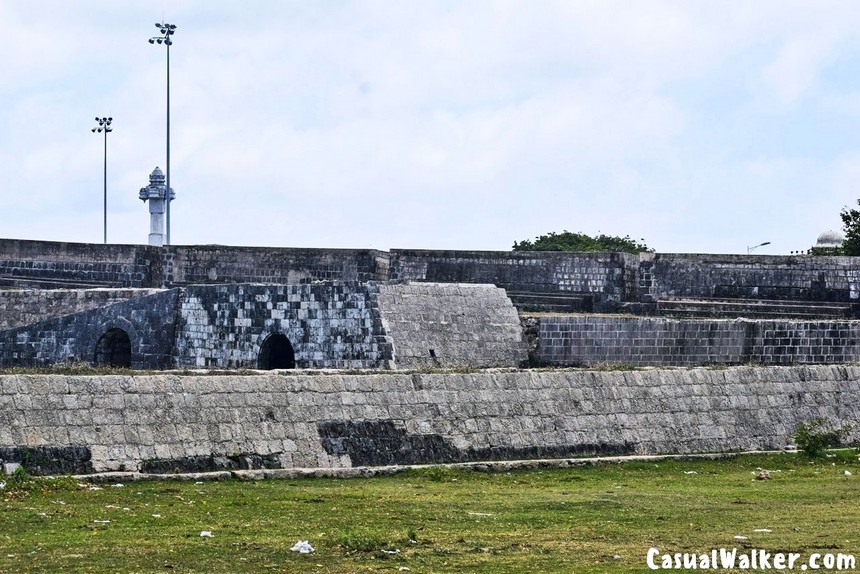
The inner fortification featured five massive bastions, each named after a Dutch province: Holland, Zeeland, Gelderland, Utrecht, and Friesland. Beyond these walls, the Dutch added an outer circuit of defences glacis, ravelins, and covered ways that made the fort essentially impregnable by the military standards of the era. A wide, deep moat surrounded the whole structure, and local legend cheerfully insists it was once stocked with crocodiles.
The Dutch fort construction materials are worth examining up close. The builders worked with stone, brick, mortar, and coral and even today you can see coral fragments embedded in the ancient walls, giving them a texture unlike anything I’ve encountered in other historical forts in Sri Lanka. The final fort was completed in 1792, though it had been evolving continuously for over a century before that.
Military historian Nelson, writing in his landmark study Dutch Forts of Sri Lanka, declared that the result was nothing less than “the strongest fortress in the East” comparable technically only to the great fortifications at Berwick, Fort George near Inverness, and Tilbury Fort on the Thames. For anyone interested in Dutch colonial history in Sri Lanka, this assessment alone makes Jaffna Fort essential visiting.
British Control: A Bloodless Handover in 1795
After all of that engineering brilliance, the end of Dutch control was almost anticlimactic. On September 28, 1795, Jaffna Fort was surrendered to the British without a single shot being fired. The Dutch had pulled most of their garrison south to defend Colombo, leaving the Jaffna detachment too small to mount any meaningful resistance. The British simply walked in and raised their flag. The fort remained a British colonial garrison in Sri Lanka until the island gained independence in 1948.
Sri Lankan Civil War and Jaffna Fort: Scars That Haven’t Healed
After independence, the fort became a garrison for the Ceylon Army. When Sri Lanka’s devastating civil war escalated through the 1980s, Jaffna Fort found itself at the centre of some of the conflict’s fiercest fighting. The fort changed hands as part of the broader military struggle that tore through the northern peninsula between 1985 and 1995, enduring multiple sieges and heavy artillery bombardments across this brutal decade. In 1995, the Sri Lanka Army recaptured it after a gruelling 50-day siege during Operation Riviresa and has maintained uninterrupted control of the fort ever since.
The Sri Lankan civil war lasted thirty years and left deep marks across the entire north of the island. Jaffna Fort distills all of that loss into a single, walkable space and in doing so, it becomes one of the most powerful war history sites in Sri Lanka.
Walking Jaffna Fort: A Self-Guided Tour of the Best Things to See
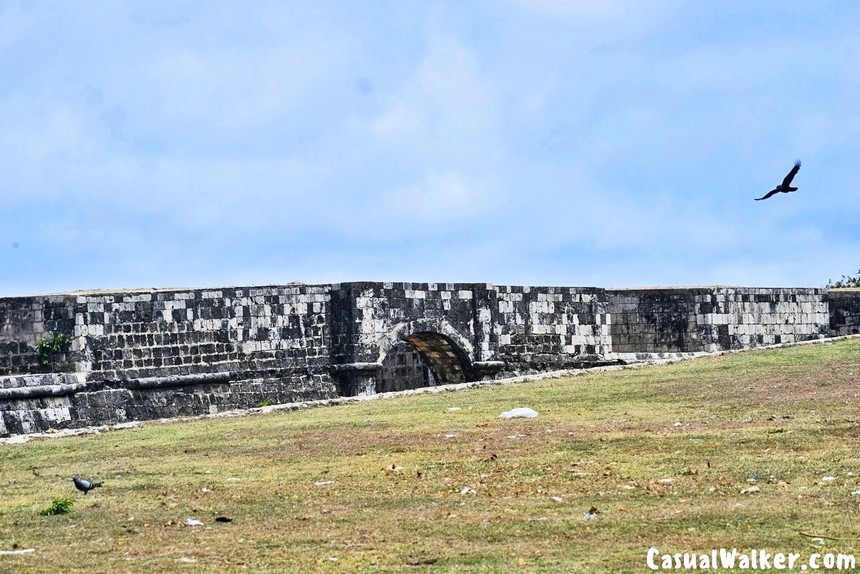
What I’d recommend for any first-time visitor is to start at the outer walls. The path to the first line of defence zigzags in the classic military fort fashion designed to slow any attacking force and expose them to fire from multiple directions. As you follow it, you’ll reach the top of the outer rampart, where the full genius of the Dutch fortification design becomes apparent. Below you, the moat stretches out; beyond it, the distinctive pointed corners of the ravelins jut out like arrowheads. These triangular outworks were the fort’s critical first line of defence anyone trying to reach the main gates would have to cross open ground while defenders fired from multiple angles above.
The sloping walls what military engineers call glacis ensured that artillery had a clear line of sight and that attackers had no cover as they approached. It’s elegant in a brutal sort of way, and it’s one of the architectural features that makes this fort unique in Sri Lanka.
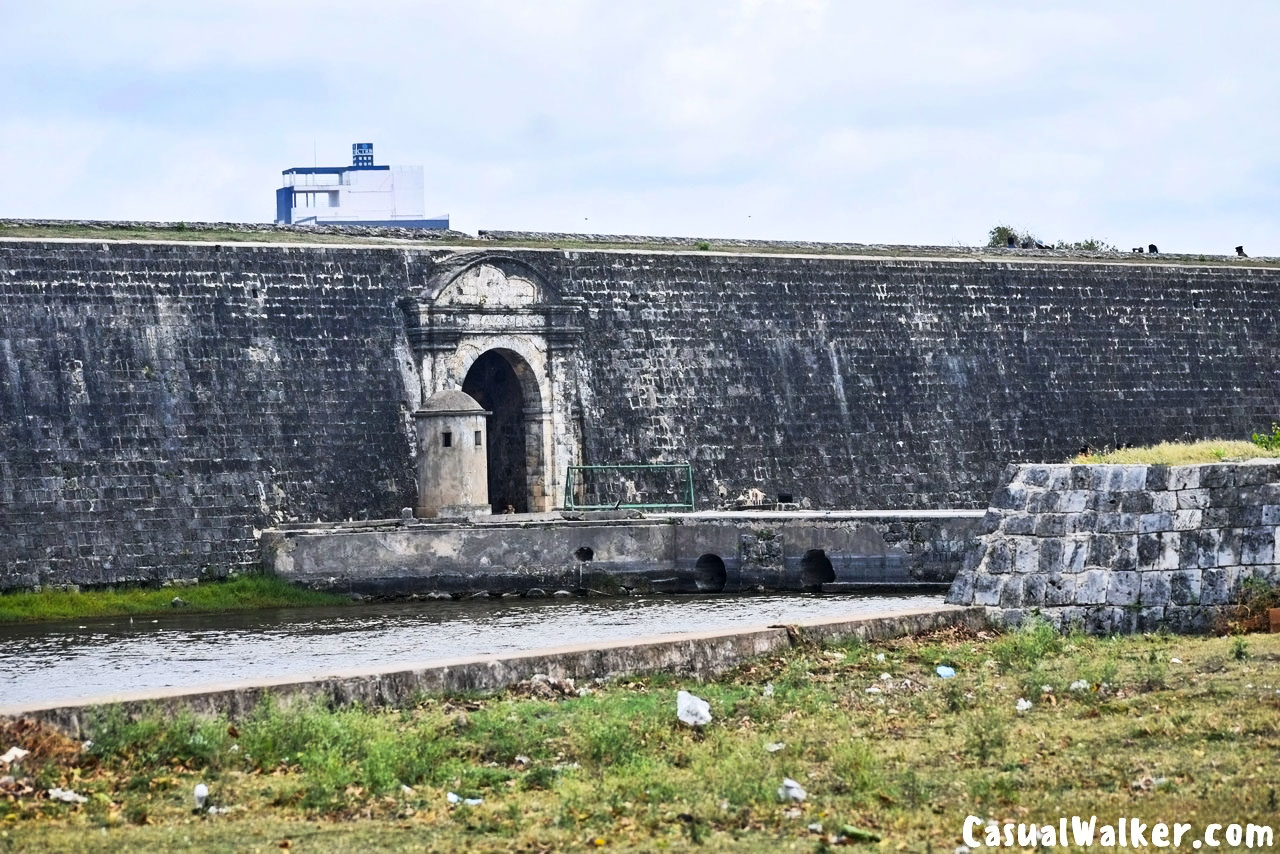
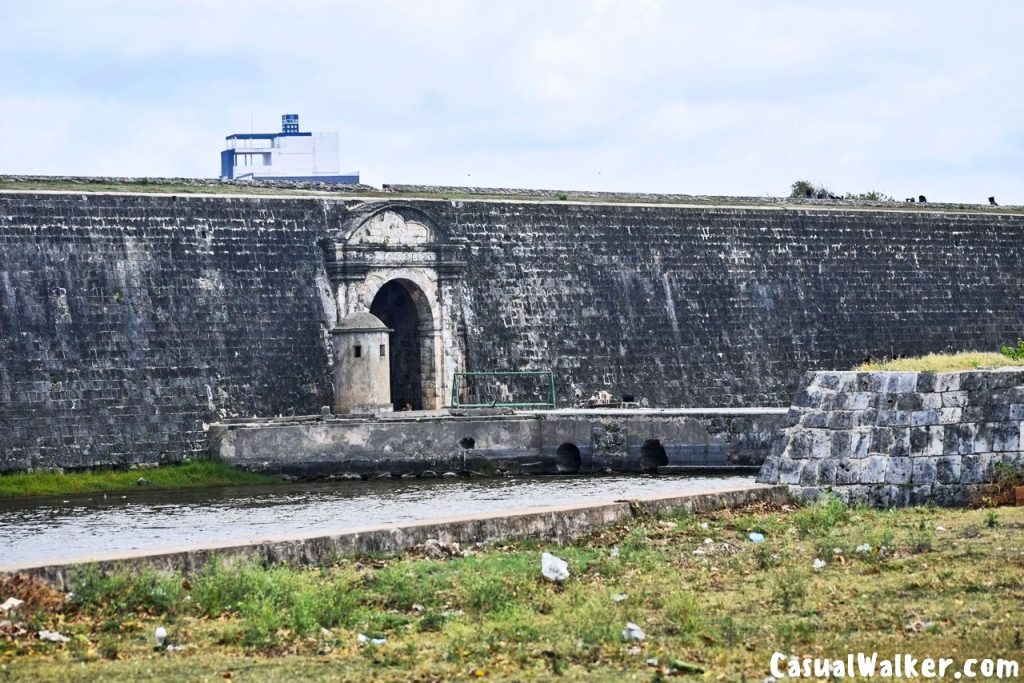
Cross the drawbridge. There are technically three entry points to the inner fort, but only one is currently accessible to visitors. The drawbridge across the moat is now a solid pathway the gap that once allowed it to be raised has been filled in during restoration work but even as a fixed structure it makes you appreciate the defensive thinking behind it.
Explore the inner fort. Past the sheltered entrance gate which still bears a Dutch inscription the interior opens up into a large, largely ruined space. Near the ticketing counter, the fort authorities have created a small but genuinely informative exhibition featuring photographs and historical information about the Dutch forts of the Northern Province. Spend time here before you wander further; it gives everything else meaningful context.
From there, follow the inner walls. You’ll pass an armoury and the first of the fort’s remarkable 21 wells, which the Dutch engineers constructed to make the garrison entirely self-sufficient during a prolonged siege. The coral-embedded walls are most visible at close quarters here and make for excellent photography.
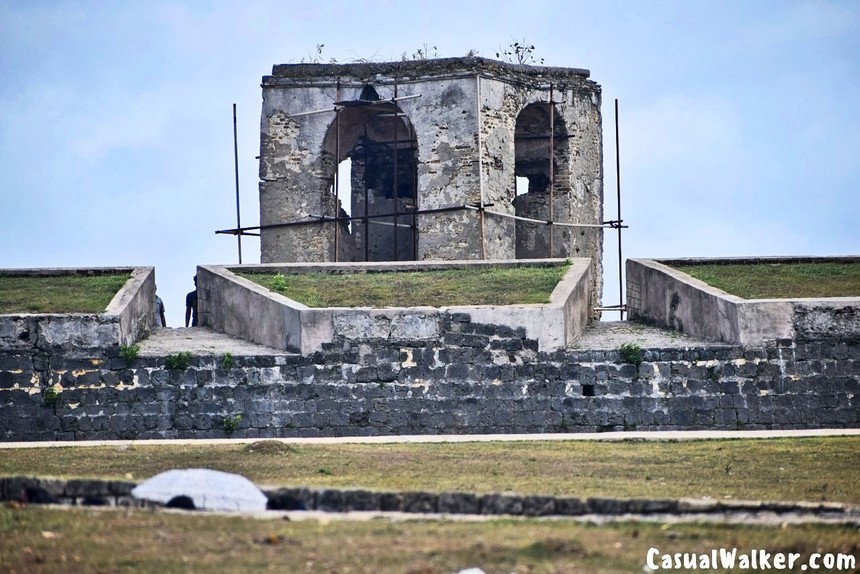
Climb to the bastions. The triangular staircase leads up to the rampart level, where the Gelderland Bastion gives you a commanding 360-degree view over the fort interior and out toward the Jaffna Lagoon. A large structure up here is referred to locally as the Hangman’s Tower its exact history is frustratingly undocumented, but it’s visually striking and worth the climb. The views from the fort walls in every direction are excellent, particularly at sunset, when the sky reflects in the moat below and the lagoon glows in deep shades of amber and rose. This is one of the best sunset spots in Jaffna, and an absolute must for travel photography.
Jaffna Lagoon and Waterfront: Beauty Outside the Fort Walls
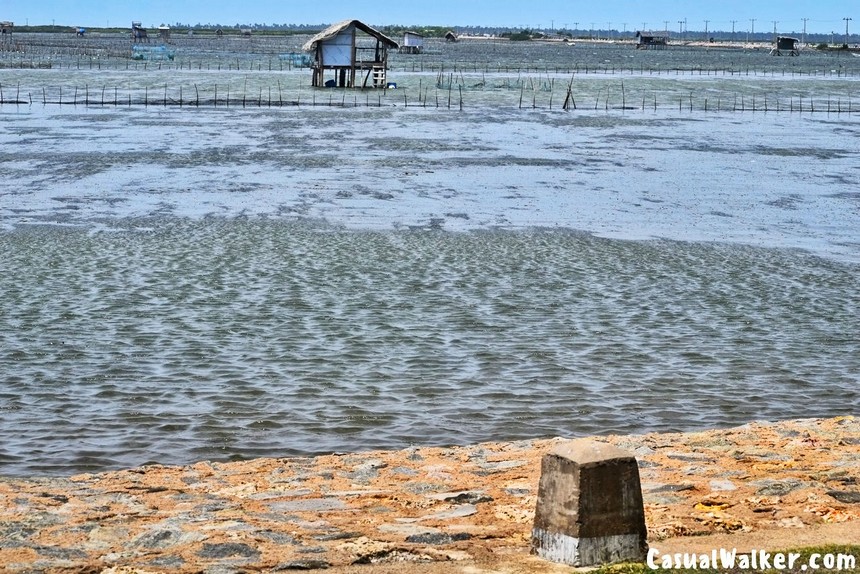
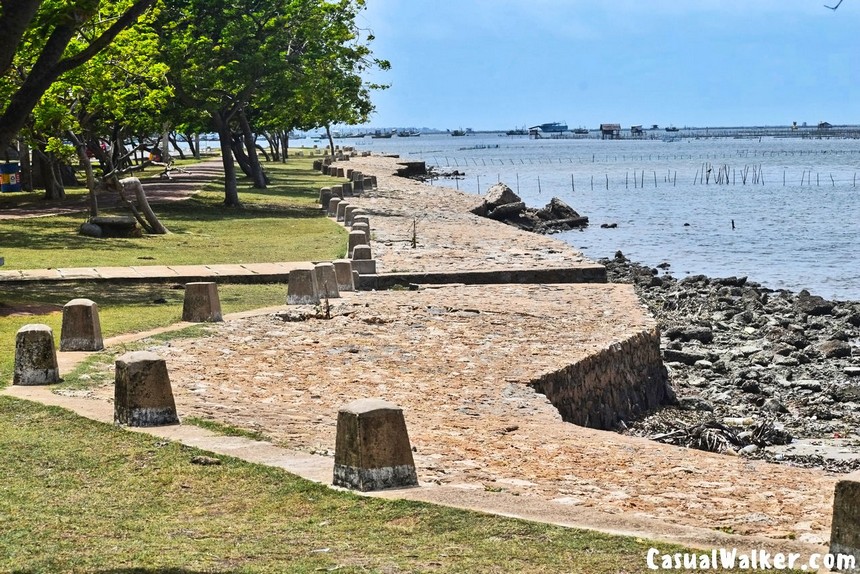
The area immediately outside and around the Jaffna fort, along the edge of the Jaffna Lagoon, is one of the most quietly beautiful stretches of waterfront anywhere in Sri Lanka. The Jaffna Lagoon itself is vast a shallow, sheltered body of water that separates the Jaffna Peninsula from the islands scattered to the south. From the fort’s seaward ramparts you get your first glimpse of it, but it’s when you step outside the fort walls entirely and walk along the waterfront road that it truly reveals itself.
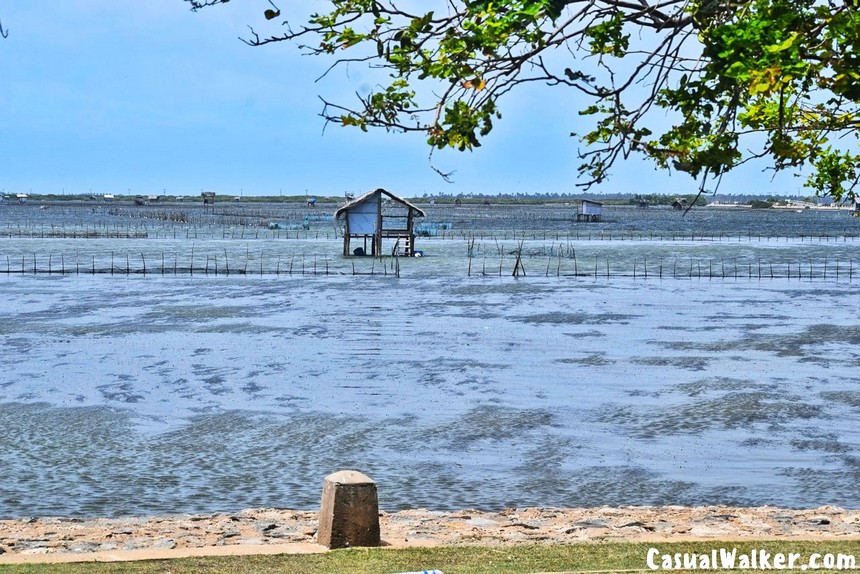
The water here is a remarkable shade of pale turquoise in the mornings, deepening to steel blue through the afternoon, and then in those final thirty minutes before the sun touches the horizon turning into something that looks entirely painted. Shades of copper and gold and deep violet spread across the surface without a ripple to interrupt them.
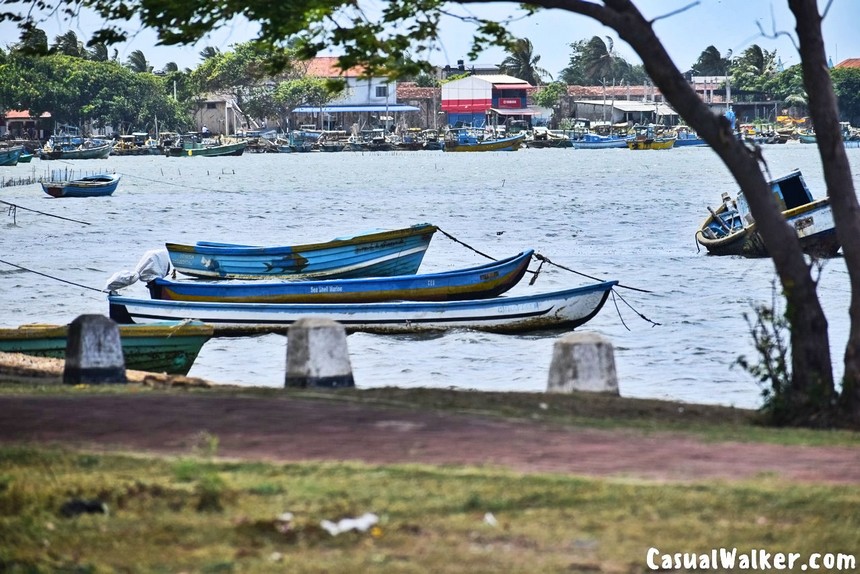
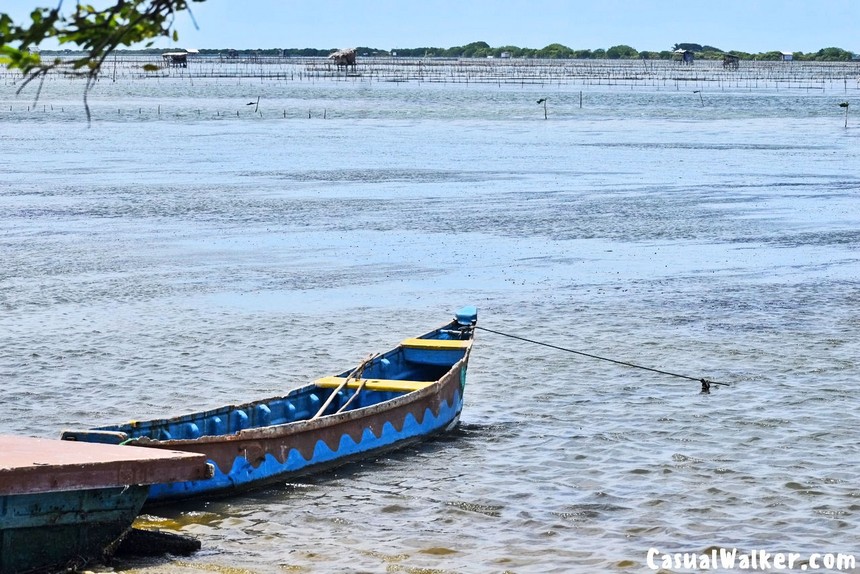
The scene along the Jaffna waterfront is wonderfully unhurried. Wooden fishing boats are pulled up along the shore, their hulls painted in fading greens and blues, nets draped over their sides to dry in the afternoon heat. Fishermen work quietly at the water’s edge, mending lines or sorting their catch, entirely unbothered by the odd tourist wandering past with a camera.
Egrets pick their way along the shallows with great dignity. The occasional cormorant dries its wings on a half-submerged post. It is the kind of scene that travel photographers come to Sri Lanka hoping to find, and here it simply exists as ordinary daily life.
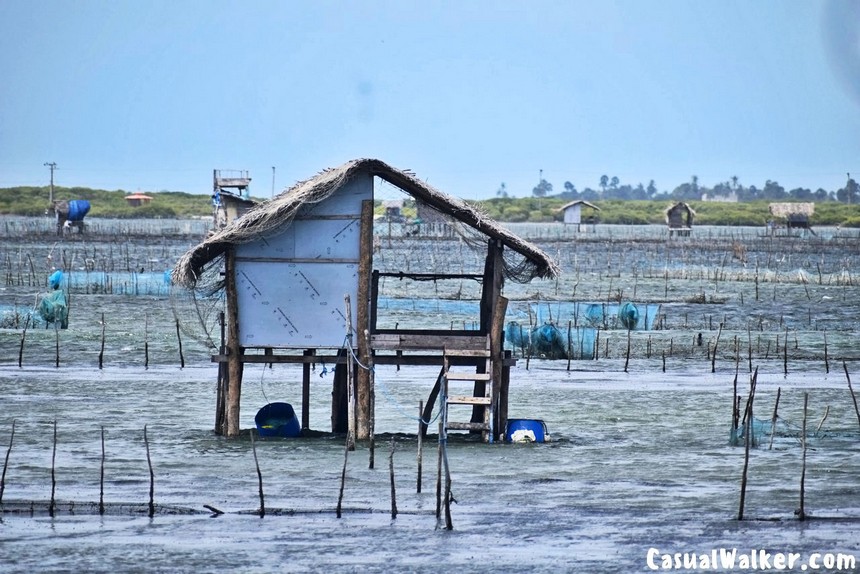
The fort itself forms a dramatic backdrop to all of this. Its thick coral walls rise directly from the waterline along the southern and western edges, and from the lagoon side you begin to truly understand the full scale of what the Dutch built here. The ramparts look almost organic from this angle grey and coral-brown, weathered by centuries of salt air, sloping down to meet the water as though they grew there naturally rather than being engineered by European soldiers in the 17th century. Photographing the fort from the waterfront, with a fishing boat or two in the foreground and that extraordinary sky behind, produces images that honestly don’t look quite real. This is one of the best photography locations in Jaffna, and one of the most underrated photography spots in all of northern Sri Lanka.
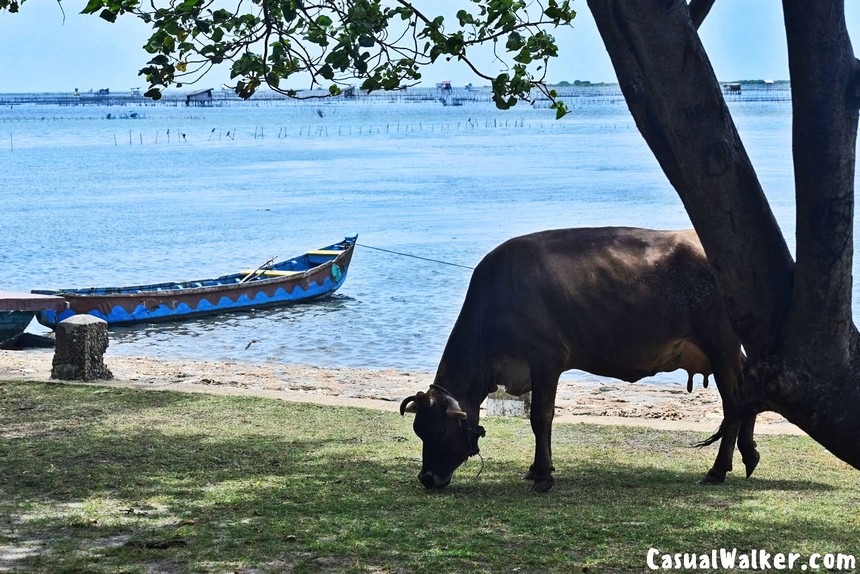
The road that runs along the waterfront outside the fort is lined with large shade trees, and in the early evenings locals come out in numbers families walking, children cycling, couples sitting on the low wall above the water.
Jaffna Fort is currently undergoing ongoing restoration with financial assistance from the Dutch government, which has taken a particular interest in preserving this extraordinary example of Dutch colonial military engineering.

Travel Tips for Jaffna Fort / Yazhpanam Kottai / Dutch Fort, Gurunagar, Jaffna, Sri Lanka
Address of Jaffna Fort / Yazhpanam Kottai / Dutch Fort, Gurunagar, Jaffna, Sri Lanka :
249 Jaffna-Kankesanturai Rd, Jaffna, Sri Lanka
Entry Fee and Opening Hours
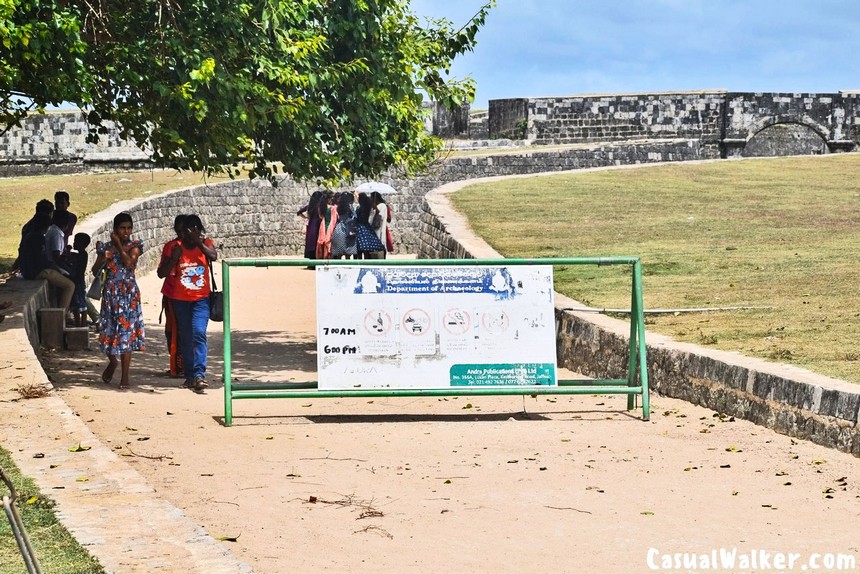
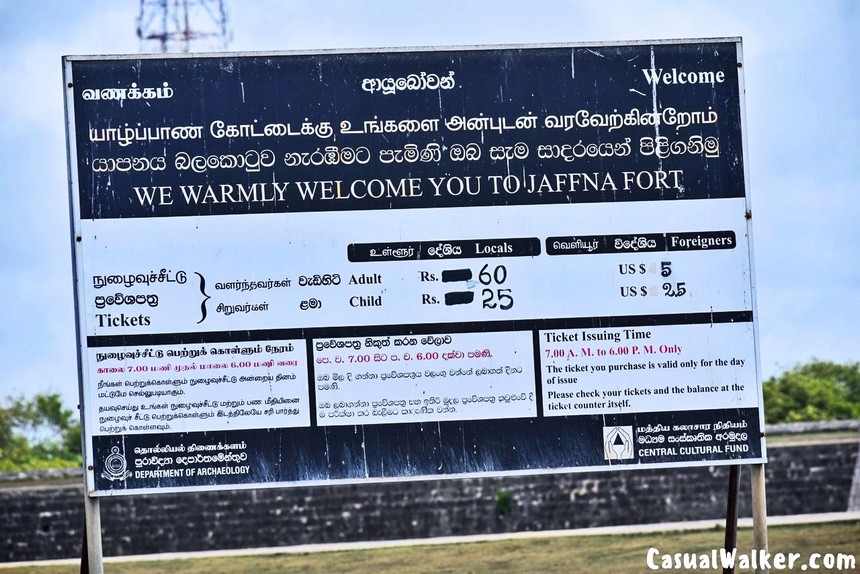
Open Timings: Jaffna Fort is open to visitors every day of the year from 8:00 AM to 6:00 PM. The entry fee is straightforward and reasonable — foreign adults pay USD 5, foreign children aged 6 to 12 pay USD 2.50, and children under 6 enter free. SAARC nationals receive a 50% discount on the foreign adult rate. Local Sri Lankan adults pay LKR 60 and local children LKR 25. Tickets are purchased at the entrance gate, and a small shop nearby sells books, posters, and branded souvenirs worth browsing on your way in or out.
Army Presence and Restricted Access
One thing every visitor should know before arriving: Jaffna Fort is an active Sri Lanka Army military garrison, not purely a civilian heritage site. The army has maintained a permanent detachment inside the fort since recapturing it in 1995, and the site operates simultaneously as a secure military installation and a historical attraction open to the public. You will encounter uniformed personnel during your visit, and certain sections of the fort are entirely off-limits to civilians. In practice, the visitor areas are clearly marked and well-defined, so this rarely causes confusion. That said, always respect any boundary a soldier indicates, and do not photograph restricted zones or military personnel without explicit permission.
Best Time to Visit
For the most comfortable and rewarding experience, aim to arrive around 4:00 PM. The fort is fully exposed to the open sky with very little shade, and midday in Jaffna can be punishingly hot. A late afternoon arrival gives you cooler exploring temperatures and places you perfectly on the ramparts for the Jaffna Fort sunset — the view of the lagoon turning gold and copper from the bastions is one of the most photographed scenes in the entire Northern Province. After the fort closes at 6:00 PM, the waterfront outside remains open and is arguably even more beautiful in the fading light.
In terms of the broader travel season, the dry months from November through April offer the most reliable weather for visiting Jaffna. The northeast monsoon runs from May through October and brings heavier rainfall, though the fort stays open year-round and the moody storm light over the lagoon has its own dramatic photographic appeal.
What to Wear and Bring
Comfortable shoes with a decent grip are non-negotiable — the terrain inside the fort is genuinely uneven, with worn stone pathways, rubble-strewn areas, and sloped rampart walls that require confident footing. Sunscreen, a refillable water bottle, and a wide-brimmed hat are equally essential given the exposed tropical heat. There are no food or drink vendors inside the fort itself, so come prepared.
How to reach Jaffna Fort / Yazhpanam Kottai / Dutch Fort, Gurunagar, Jaffna, Sri Lanka
By Tuk-Tuk: Once you are in Jaffna city, a tuk-tuk is the easiest and most enjoyable way to reach the fort. The ride from the city centre takes roughly ten minutes, and virtually every tuk-tuk driver in Jaffna knows the fort well — ask for “the Dutch fort” or simply “Jaffna Fort” and you’ll be on your way immediately. Fares from the centre are very affordable, and most drivers are happy to wait nearby if you want a return ride. It is also a short and pleasant walk from several central Jaffna hotels if you prefer to go on foot.
By Bus: Long-distance buses connect Colombo to Jaffna and are the most budget-friendly option for reaching the north. Both air-conditioned and non-air-conditioned services operate on this route, with journey times ranging from approximately six to eight hours depending on the service and road conditions. Buses arrive at the Jaffna Bus Stand in the city centre, from where a tuk-tuk to the fort takes around ten minutes. If you are already travelling within the Northern Province, local bus services also connect Jaffna town to surrounding areas frequently throughout the day.
By Train: Travelling to Jaffna by train from Colombo is one of the great rail journeys in South Asia and highly recommended if time allows. The overnight Yal Devi Express departs from Colombo Fort Station in the evening and arrives in Jaffna after approximately eight hours, pulling in around sunrise as the flat northern plains light up around you. It is a memorable, comfortable, and inexpensive way to travel, and arriving at Jaffna Railway Station puts you just a short tuk-tuk ride from the fort. Book your train tickets in advance through the Sri Lanka Railways website or at Colombo Fort Station, especially during the dry season when demand is high.
By Flight: For travellers with limited time, flying is by far the fastest way to reach Jaffna. FitsAir and SriLankan Airlines operate domestic flights between Bandaranaike International Airport in Colombo and Jaffna International Airport, with a flight time of approximately 45 to 60 minutes. The airport sits about 20 kilometres from the city centre and from there a taxi or tuk-tuk to the fort takes around 30 to 40 minutes. Flight availability and schedules change seasonally, so check current timetables and book ahead, particularly during the peak travel months of December through March.