




Vontimitta Sri Kodanda Rama Swamy Temple, Kadapa, Andhra Pradesh: A Miraculous 16th-Century Lord Rama, Temple Built Overnight in a Single Day by Vontudu & Mittudu | Rare Temple with No Hanuman Idol in the Main Sanctum & Single-Rock Sita, Rama, and Lakshmana Idol — Visit, Temple Timings, Darshan Schedule, Pooja Timings, History, Contact Details & Complete Travel Guide (Updated)
– a stunning fusion of vijayanagara & chola architectural styles & 32-pillar granite marvel

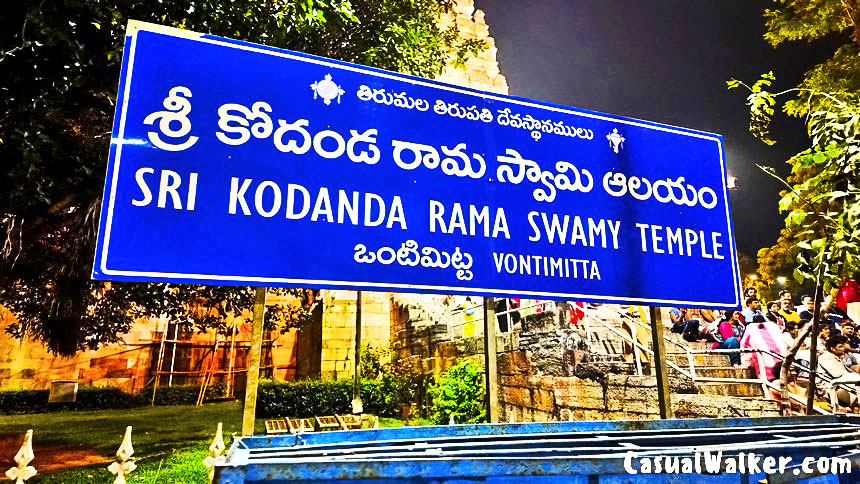
Vontimitta Sri Kodanda Rama Swamy Temple, is located in Kadapa district, roughly 25 kilometres from Kadapa town, this ancient temple is dedicated to Lord Rama. Currently this temple is under the administration of Tirumala Tirupati Devasthanams (TTD), the temple is also a centrally protected monument of national importance.
History of Vontimitta Sri Kodandarama Swamy Temple – Vontudu and Mittodu
Vontudu and Mittodu were, by most accounts, highway robbers, men who lived outside the law. Something transformed them into ardent devotees of Lord Rama. In an extraordinary act of devotion, they built the entire temple in a single day, raising 32 magnificent pillars in the process. The moment they completed their work, both men sacrificed their lives and were transformed into stone statues. Those statues still stand at the temple entrance today. 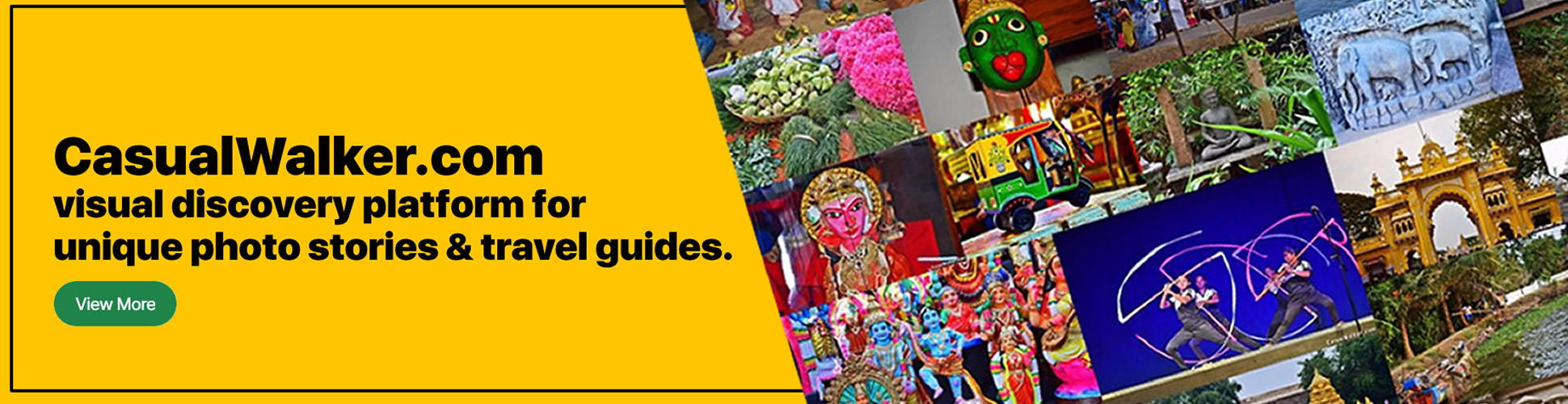
The village name Vontimitta itself blends their names, Vontu and Mitta, as a lasting tribute. One legend also mentions a king named Kampana, whose army was parched during a campaign in the region. Vontudu and Mittodu showed him the sacred Rama Theertham water source, quenching his army’s thirst. Grateful, the king established a settlement in their honor and built a temple to Sri Raghu Rama. Rama Theertham and Lakshmana Theertham, which still exist within the temple precinct.
Jambavantha and the Monolithic Idol
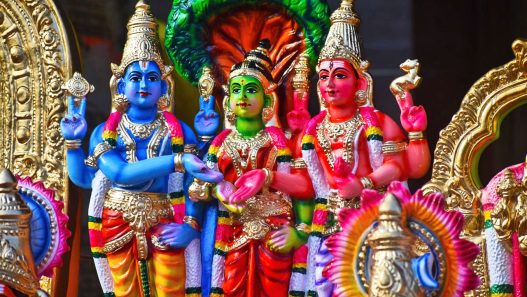
The installation of the presiding deity carries its own legend. Jambavantha, the bear king who played a crucial role in Rama’s campaign against Lanka, is said to have personally placed the idol of Lord Rama in the Garbhagriha (sanctum sanctorum). The idol, along with those of Sita and Lakshmana, is carved from a single block of stone, which is why the place is also called Ekasilanagaram, meaning “city of the single stone.”
Cholas to Vijayanagara Temple Architecture
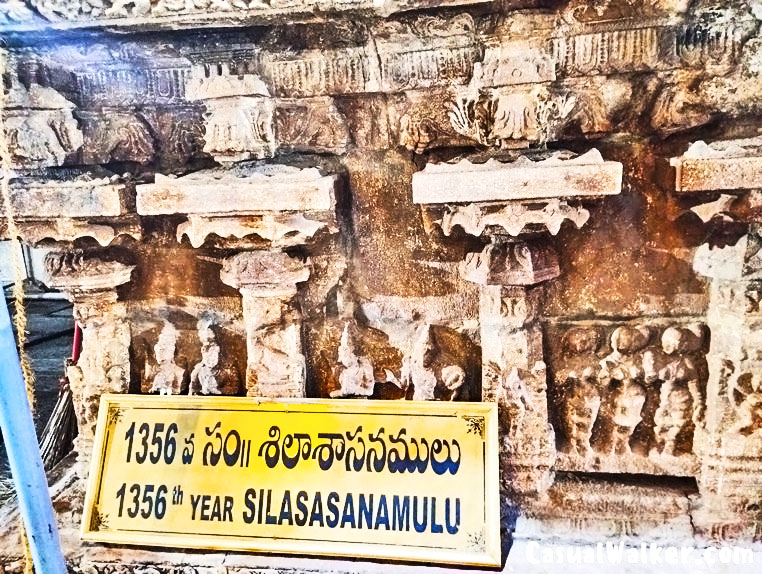
The historical record traces construction of the Vontimitta temple across several centuries and dynasties. The Chola rulers initiated the early work, possibly as far back as the 11th century. The Vijayanagara kings, particularly during the 14th to 17th centuries, expanded and renovated it substantially. King Kampana of Udayagiri built the sanctum sanctorum, and in 1356, Bukkaraya, a founder of the Vijayanagara Empire, formally inaugurated the temple.
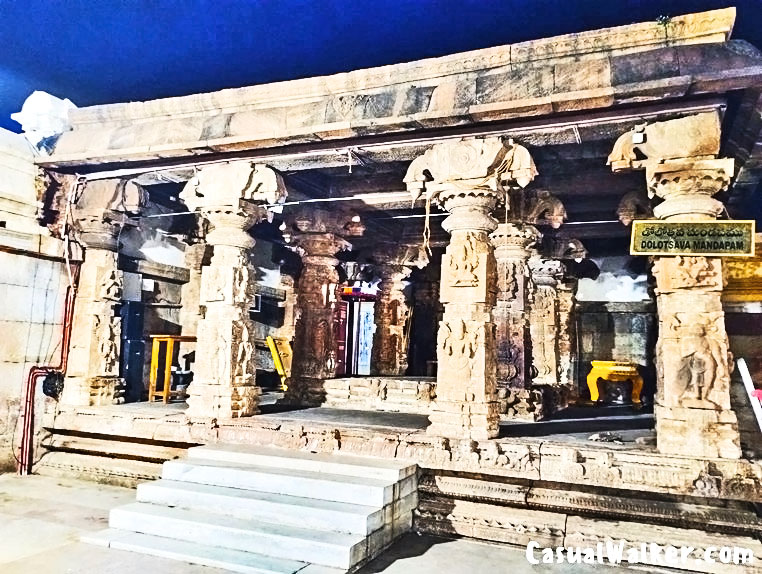
The region also formed part of the territory governed by the Pemmasani Nayakas, feudatories of the Vijayanagara Empire who controlled the nearby Gandikota Fort and were celebrated for their military courage.
Over time, great poets and scholars found their way to Vontimitta. Bammera Pothana, one of the most revered Telugu poets in history, lived here and ultimately dedicated his monumental work, the Andhra Maha Bhagavatamu, to Lord Rama at this temple. Saint-poet Annamacharya visited frequently and composed keertanas (devotional hymns) in praise of the deity. In the 19th century, Vavilakolanu Subba Rao, known as Andhra Valmiki, translated the Valmiki Ramayana into Telugu and spent years in devoted service here, raising funds to create new ornaments and idols.
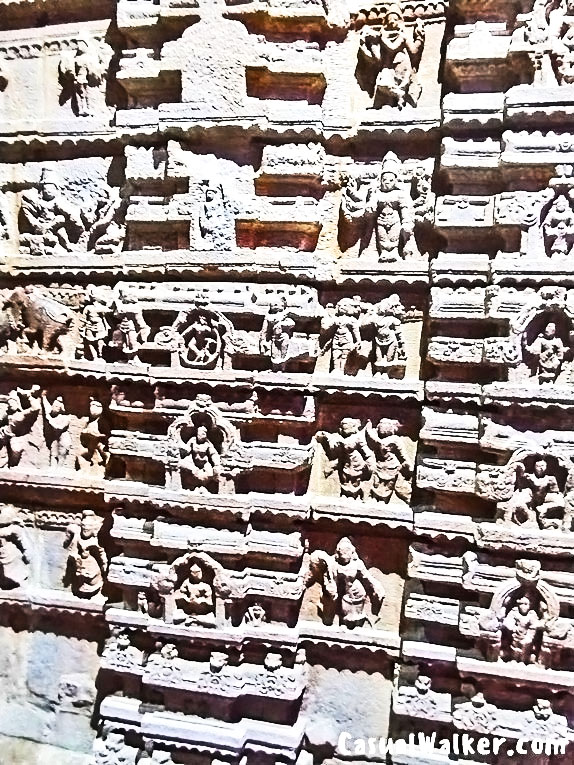
Vontimitta Sri Kodandarama Swamy Temple Architecture – Three Gopurams and the Vijayanagara Style
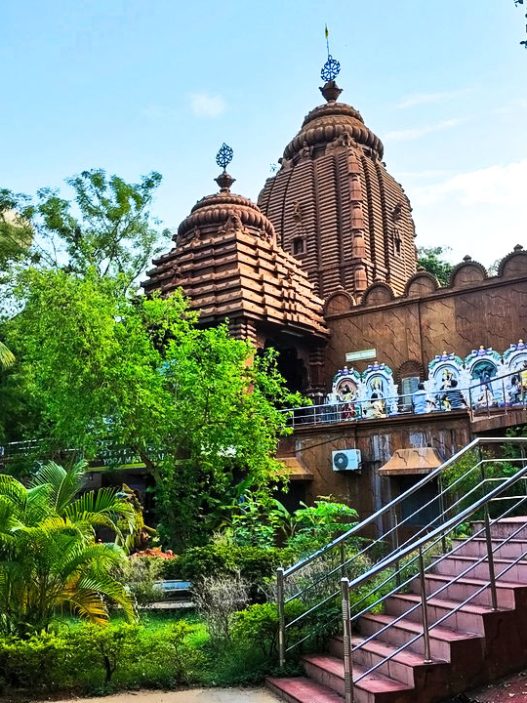
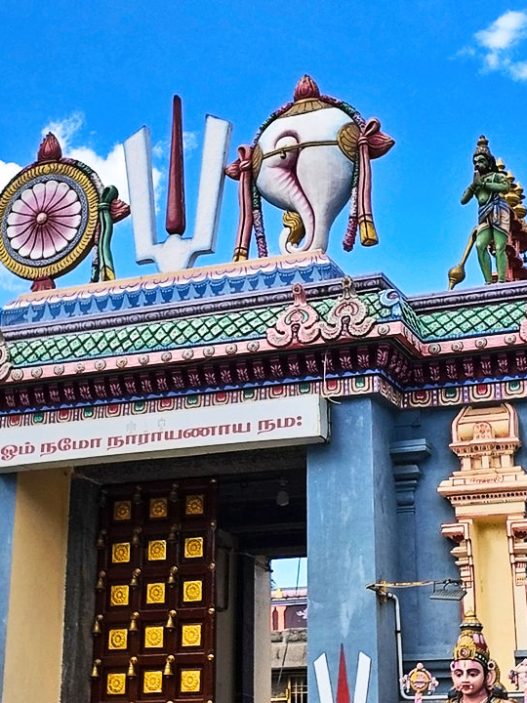
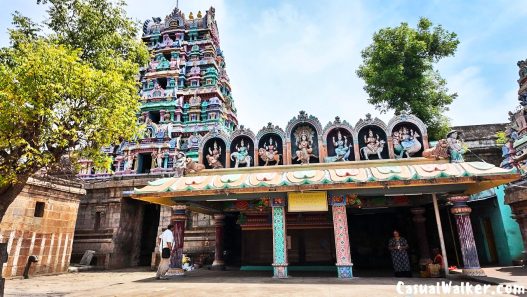
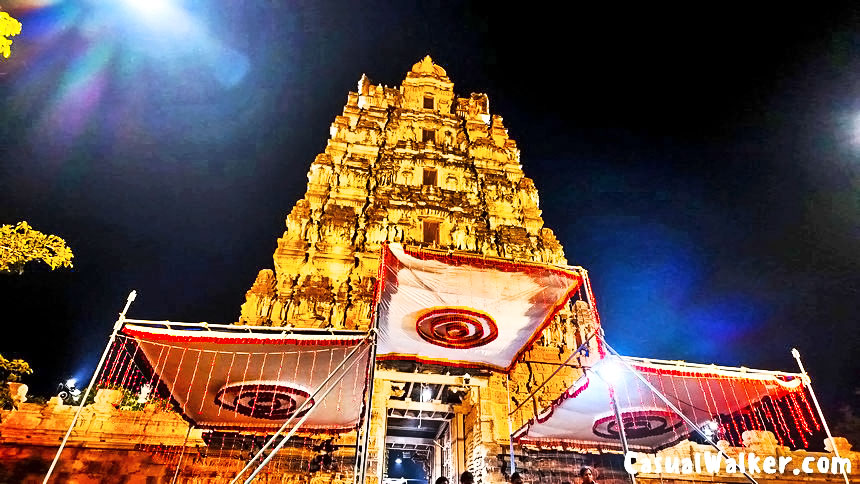
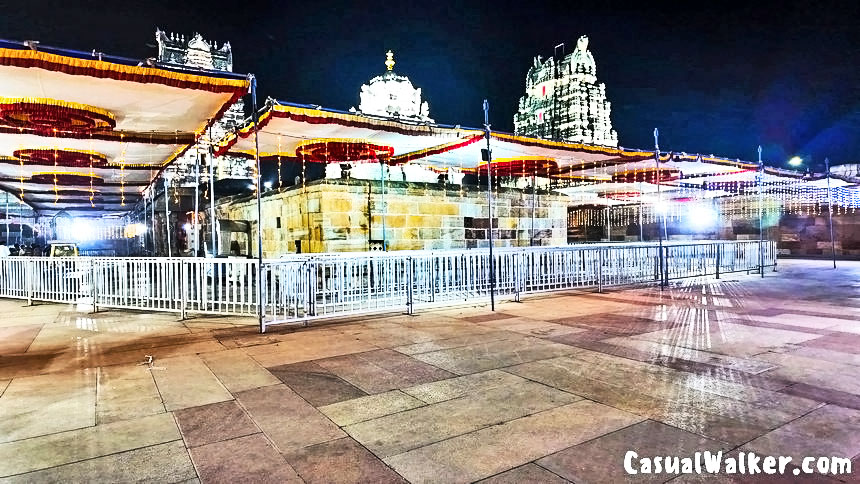
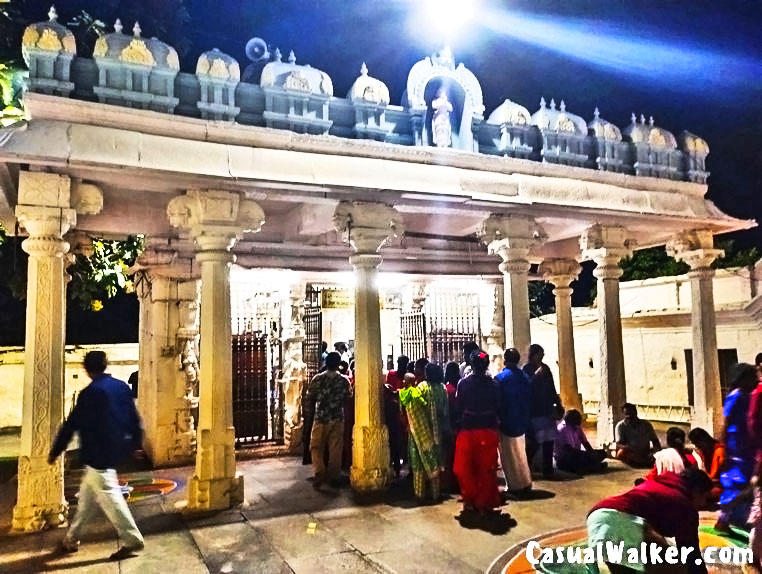
The temple follows the Vijayanagara architectural tradition of the Sandhara order, a rectangular enclosure bounded by walls, entered through imposing tower gateways. Three gopurams (gateway towers) mark the cardinal directions: east, north, and south.
The east-facing gopuram is the main entrance and the tallest, rising approximately 160 feet across five tiers. The north and south gopurams are three-tiered structures, sharing the ornate detailing characteristic of Chola-influenced craftsmanship. A Dhwajasthambam (flagpole) stands before the entrance to the sanctum, as is traditional in major Vaishnava temples.
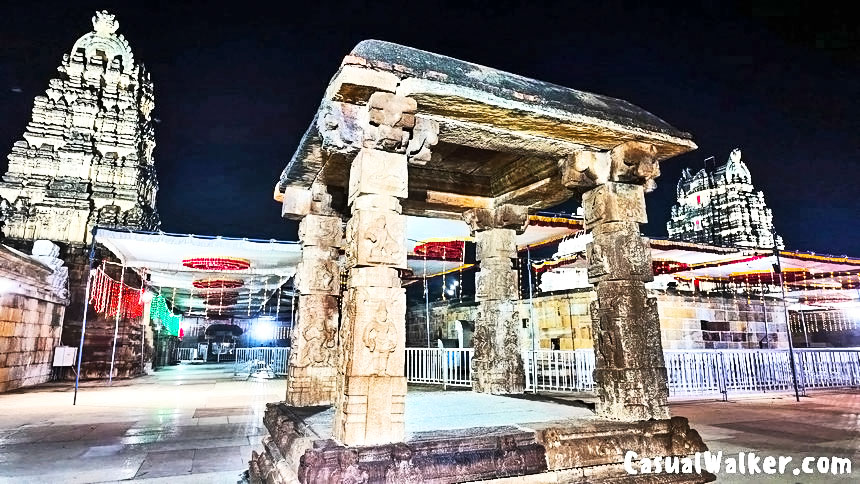
Madhya Ranga Mandapam: 32 Pillars of Sculptural Excellence
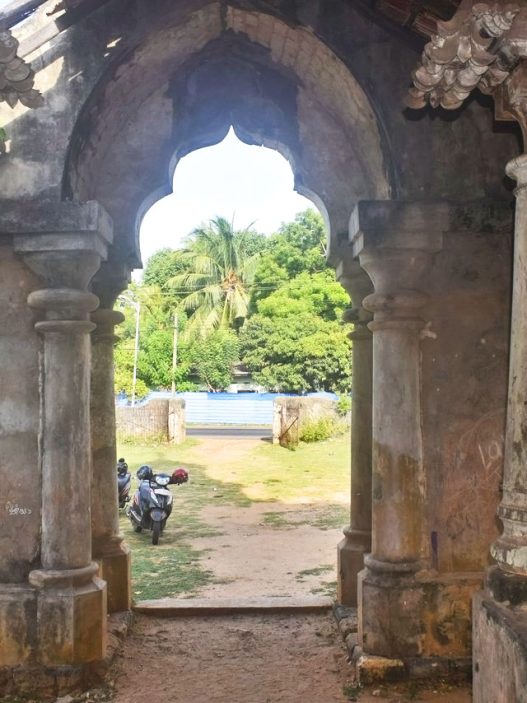
Step inside and the Madhya Ranga Mandapam commands immediate attention. This open-air hall, supported by 32 intricately carved pillars, functions almost like an open theater, a space where music, ritual, and community converge. Each corner column features three layers of carved apsaras (celestial nymphs) and divine figures. The central piers carry images of the mythical Yali creature, doubling at the corners where they frame attendant figures. The ceiling over the central section rises on multiple corbelled brackets, creating a layered, richly textured canopy above.
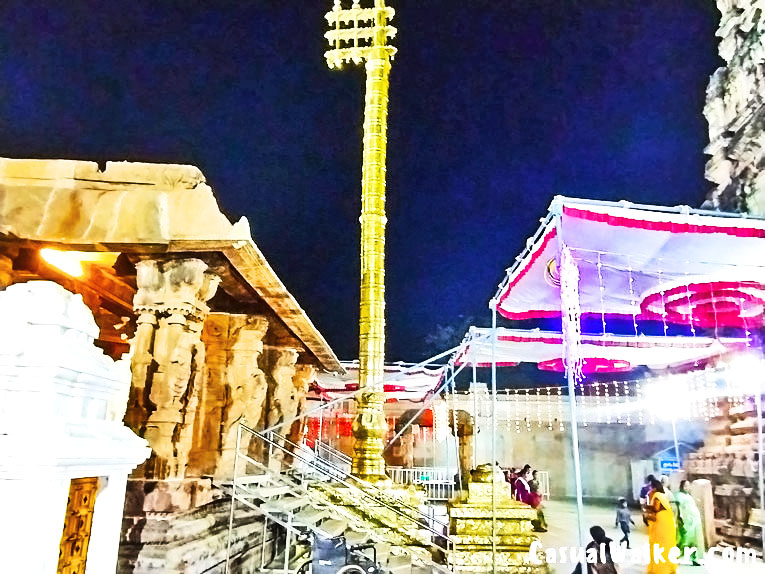
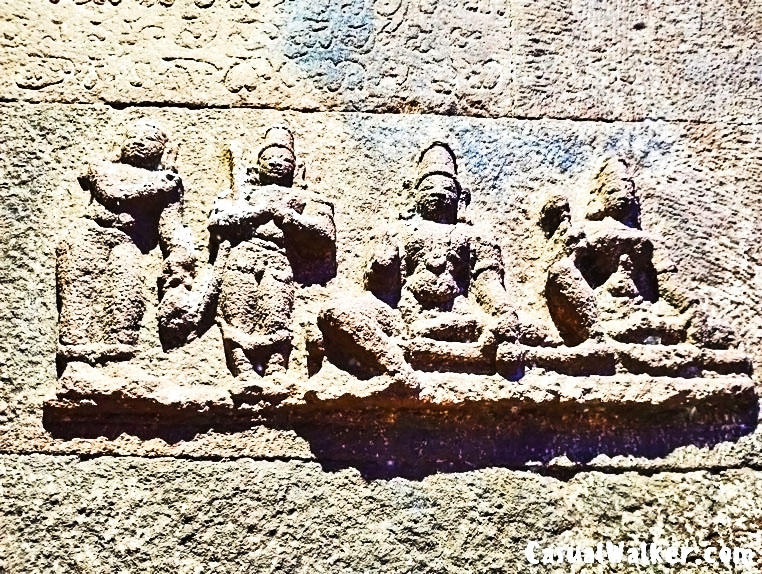
Sculptures throughout the mandapam depict Lord Rama and Lakshmana in specific iconographic postures. Rama stands holding a bow in his right hand and an arrow in his left, the Kodanda Rama form that gives the temple its name. Lakshmana stands in the tribhanga posture, left hand holding a bow, right hand free. Krishna appears in both the dvibhanga posture and the iconic Govardhana hill-lifting scene.
Sanctum and Its Rare Iconography
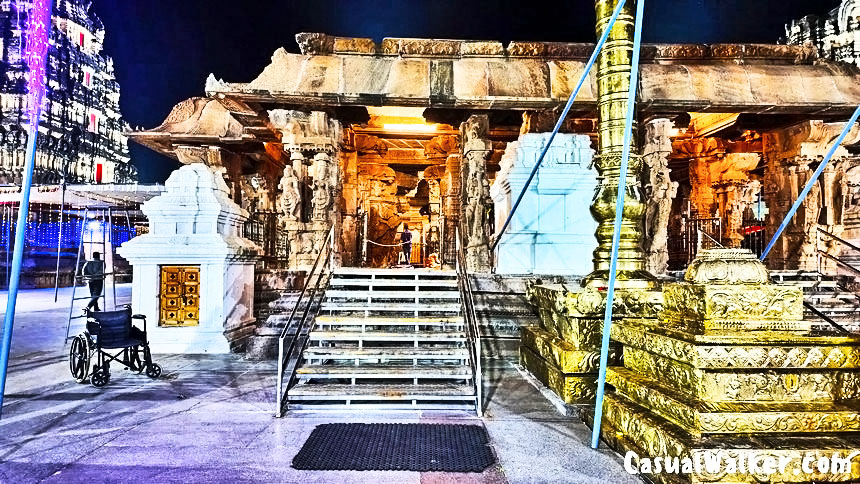
Visitors pass through an inner vestibule called the Antarala before reaching the Garbhagriha. Inside, the monolithic stone carving of Rama, Sita, and Lakshmana dominates the space. The deity’s ornamentation, Kundalas (ear ornaments), Haras (necklaces), Valayas (bracelets), and the sacred Yagnopavita, is rendered with meticulous detail. Sita stands to the right of Rama; Lakshmana wears a Kirtimukuta crown and stands in the Tribhanga posture.
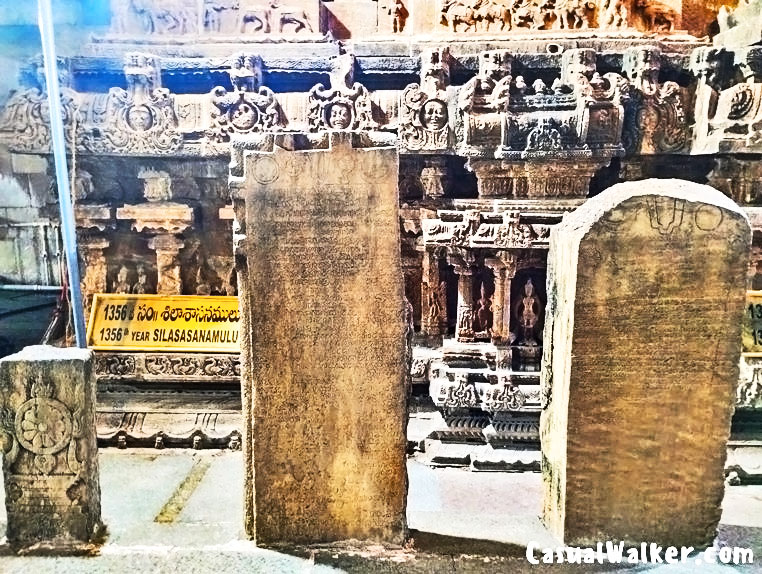
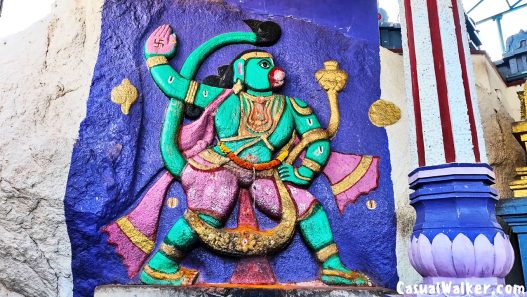
Separate shrines within the complex house Vishnu, Krishna, Hanuman, and Ganesha. The Ganesha shrine in the main mandapam depicts the deity in a distinctive dancing posture. An Anjaneya (Hanuman) temple stands to the right of the main shrine.
Why Hanuman Is Absent from the Main Sanctum
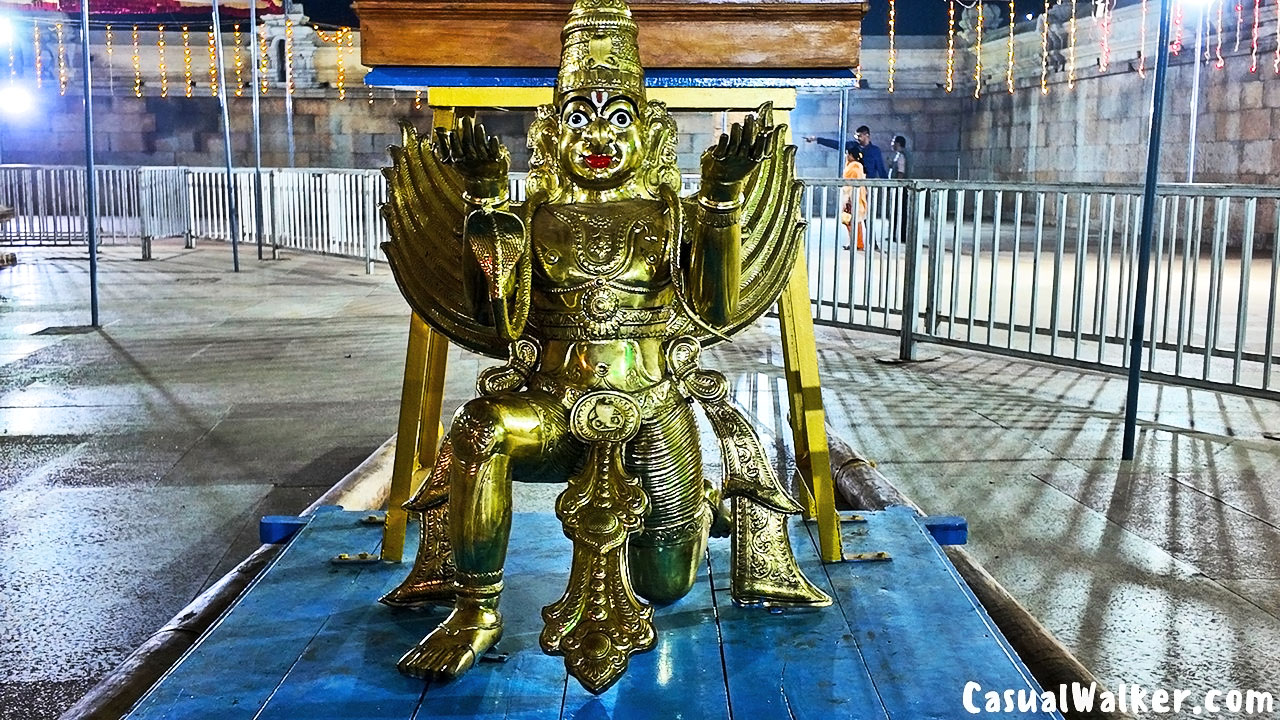
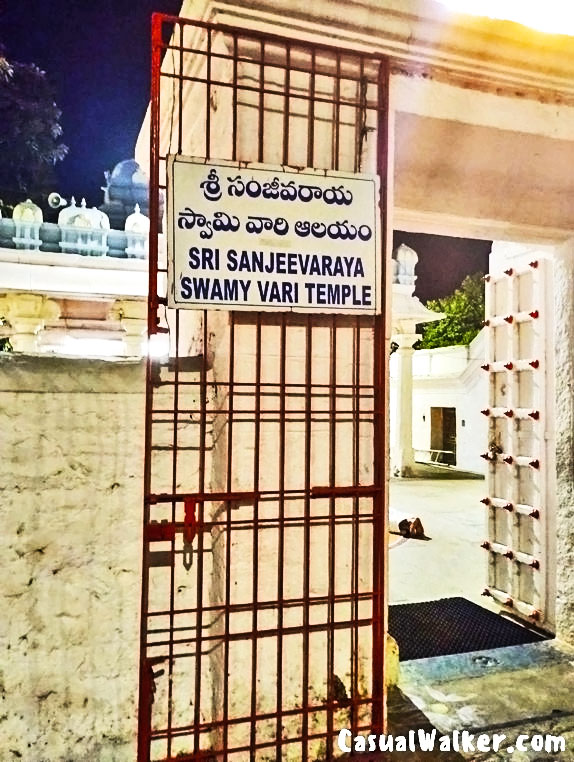
This is one of the temple’s most talked-about peculiarities. At nearly every other Rama temple in India, Lord Hanuman stands beside the main deity. Here, Hanuman does not. The reason may be the timeline of the idol’s consecration predates Lord Rama’s first meeting with Hanuman. Since this particular form of Lord Rama had not yet encountered Lord Hanuman at the time represented, his image has no place beside the main idol. A separate Anjaneya temple was later built just outside the complex.
Sri Sita Rama Kalyanotsavam – Midnight Wedding
Perhaps the single most unique ritual at Vontimitta is the Sri Sita Rama Kalyanotsavam, the celestial wedding of Rama and Sita, which takes place at night, outdoors, under the full moon. No other temple in India celebrates this event at midnight.
The legend behind the timing is charming. Chandra (the Moon) had always loved Rama and was deeply saddened when the midday wedding of Rama and Sita took place without him, for the moon cannot be seen in daylight. Rama consoled Chandra with three promises: first, that his own name would become Sri Ramachandra; second, that in his next incarnation (as Krishna) he would be born at night; and third, that in the Kali Yuga, his wedding celebration would be held at night. Vontimitta honors that third promise every year on Chaturdashi (the 14th day of the lunar month), a day before the full moon, so that Chandra’s light bathes the ceremony in its fullest glory.
Festivals and Annual Celebrations
Rama Navami, the birth anniversary of Lord Rama is celebrated on a grand scale, with the Andhra Pradesh government officially sponsoring the Sri Sita Rama Kalyanotsavam as part of the festivities.
Other major festivals include Vaikunta Ekadashi, Maha Shivaratri, Ugadi, and the Navahnika Brahmotsavam. The Kishkinda Khanda, one of the seven sections of the Ramayana describing Rama’s alliance with the vanaras, is also believed to have unfolded in this region, adding another layer of mythological significance to the land itself.

Travel Tips for Vontimitta Sri Kodandarama Swamy Temple
Address of Vontimitta Sri Kodandarama Swamy Temple :
Sri Kodandarama Swamy Temple, Vontimitta,
Kadapa District – 516213, Andhra Pradesh.
Temple Timings: The temple opens at 5:00 AM and closes at 9:00 PM, with darshan sessions interspersed with ritual bell periods. Key darshan windows fall roughly between 5:00–7:30 AM, 8:15–10:30 AM, 11:15 AM–5:30 PM, and 6:15–8:45 PM.
Daily sevas include Suprabhatham (5:00–5:30 AM), Abhishekam (5:30–6:30 AM and 4:00–4:30 PM), Sahasranama Archana, and Ekantha Seva in the evening.
How to Visit Vontimitta Sri Kodandarama Swamy Temple
Vontimitta sits conveniently on the Chennai–Mumbai railway line, making rail travel a practical option. The nearest railway station is Vontimitta itself, with Kadapa Railway Station located about 26 kilometres away. Kadapa Airport is approximately 35–36 kilometres from the temple, and Tirupati Airport is around 113 kilometres.
By Road: Vontimitta is well-connected by road and sits directly on the Kadapa–Tirupati bus route, making it easy to reach from either direction. APSRTC operates frequent bus services from Kadapa (Cuddapah) Bus Stand, which is about 25 kilometres from the temple. Private vehicles and taxis are also a convenient option, with the temple accessible via a smooth road connecting it to Kadapa town. Pilgrims driving from Chennai or Mumbai can follow the National Highway network and take the Kadapa exit to reach Vontimitta comfortably.
By Train: Vontimitta has its own railway station on the Chennai–Mumbai main line, making train travel one of the most direct ways to reach the temple. Kadapa Railway Station, located about 26 kilometres away, is a larger junction with broader connectivity to major cities including Chennai, Hyderabad, and Bengaluru. From Kadapa station, local buses and autos are readily available to cover the remaining distance to the temple.
By Air: The nearest airport to Vontimitta is Kadapa Airport, approximately 35 to 36 kilometres from the temple. It handles limited domestic flights, so travelers coming from distant cities may find better connectivity through Tirupati Airport, which is around 113 kilometres away. From either airport, hired taxis or cabs are the most practical way to reach the temple directly.
Thanks for exploring this photo guide! We’d love to hear your feedback, stories, corrections, or any updates. Email us.
Follow our photo walks on Instagram: @hicasualwalker
Keep exploring: Browse 650+ Travel & Culture Photo Guides