





Manthiri Manai Jaffna, Northern Sri Lanka: The Complete Insider Travel Guide to the Ancient Ruins of the Forgotten Minister’s Mansion of the Jaffna Kingdom — History, Mystery, Architectural Highlights, Things to Do, Must-Visit Cultural Heritage Sites, Entry Fee, Timings, What to Expect, Travel Tips & How to Get There (Updated)
– one of jaffna’s less-known heritage sites

Manthiri Manai is a historic two-storey mansion located along Point Pedro Road in Nallur, Jaffna, just about a kilometre from the famous Nallur Kandaswamy Kovil. One of the few surviving remnants linked to the era of the Jaffna Kingdom, this centuries-old structure blends Tamil and colonial architectural traditions in a setting that feels genuinely untouched by modern tourism. Though much of it now stands in partial ruin, its arched doorways, ornate gateway, and coral limestone walls still carry a quiet grandeur that draws history lovers, architecture enthusiasts, and curious travellers alike.

Manthiri Manai, pronounced man-THEE-ree muh-NAI, translates from Tamil as “Minister’s Abode” or “Minister’s Mansion.” The name itself is evocative: a place of counsel, administration, and power, now standing half in ruin and half in quiet dignity along one of Jaffna’s busiest roads. It is a protected historical monument under the care of the Department of Archaeology of Sri Lanka and is considered one of the few surviving structural remnants connected to the era of the Jaffna Kingdom.
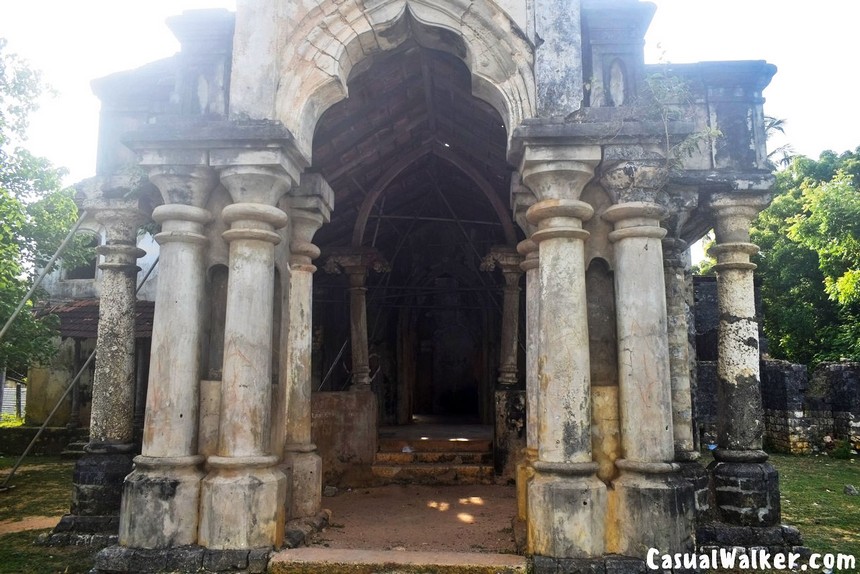
The building sits on the left-hand side of the Point Pedro Road, roughly 100 metres past the Poothathamby Arch, another intriguing local landmark whose origins are similarly debated. Together, these sites form a loose trail through Nallur’s layered historical identity, a neighbourhood that has seen Tamil kings, Portuguese invaders, Dutch colonial administrators, and decades of modern conflict, all leaving their marks on the landscape.
Manthiri Manai is not a polished museum. It is not heavily staffed or commercialised. What it offers instead is something increasingly rare in heritage tourism: authenticity. Moss-covered walls, crumbling brickwork, arched doorways half-swallowed by time, and behind all of it, a genuinely contested and fascinating history.
History and Origins of Manthiri Manai
This structure is protected monument under the Department of Buddhist Religious and Cultural Affairs, the site is believed to have been built by the Arya Chakravarti kings, who ruled the northern region from the 13th to the 17th century.
The structure dates to the era of King Sangiliyan / Cankili, the last king and monarch of Jaffna Kingdom before Portuguese forces dismantled it in the early 17th century. Manthiri Manai served as the official residence of the king’s chief minister, a high-ranking official responsible for governance of the peninsula, including the administration of the lucrative pearl fisheries along Jaffna’s coast. The building’s name supports this interpretation: a minister’s house, attached to a royal court.
Some argue that the inner sections of the structure may date to the 15th century, potentially constructed during the reign of King Paranirupasingam, who ruled from Nallur, then called Pushparatnam. There are also more speculative theories linking the site to even earlier rulers, though these remain difficult to substantiate without documentary evidence.
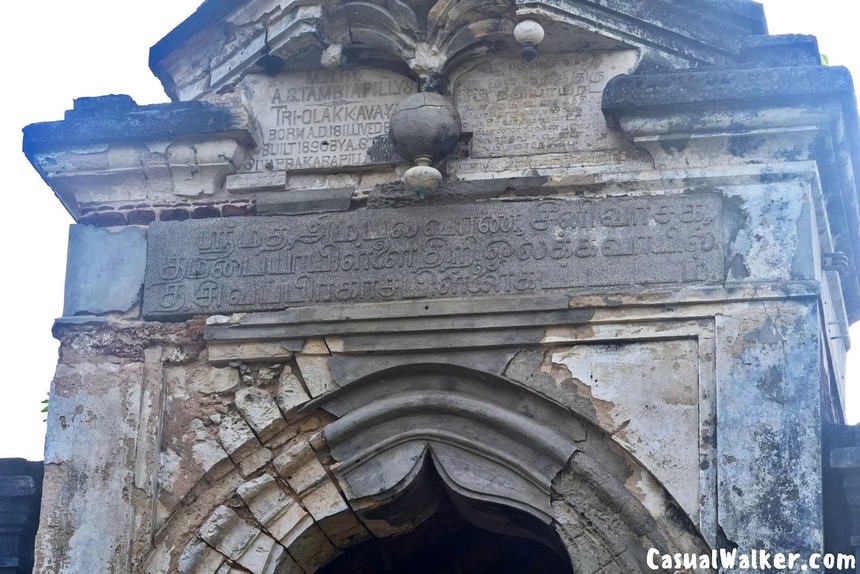
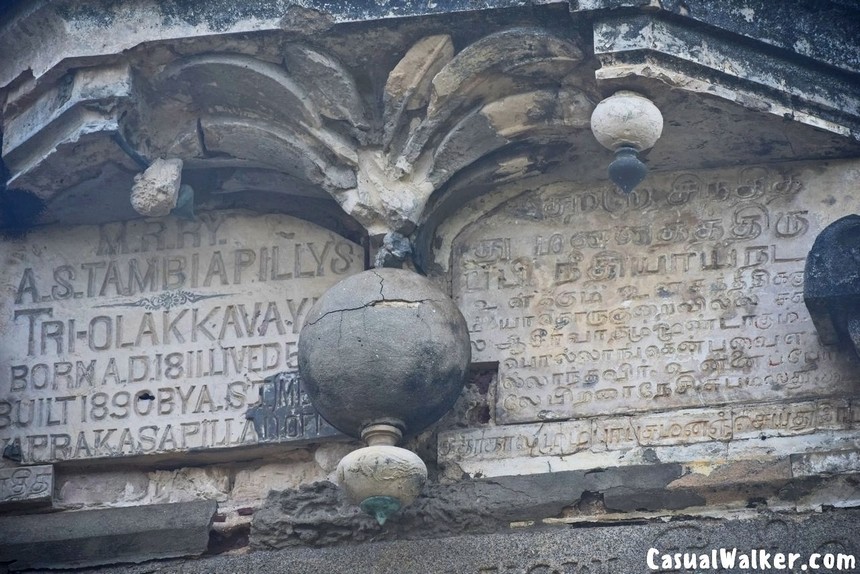
Few other account suggests the building was not a minister’s residence at all, but rather a chaultry, a rest house or travellers’ shelter, known locally as an Ambalama, constructed in the early 19th century by a philanthropic donor from the Vannarpannai area of Jaffna. The same donor is said to have also funded the belfry of the nearby Chaddai-naathar temple. Adding weight to this more recent origin theory, an inscription found on the structure reportedly states it was built by an individual named A.S. Tambiyapillai in the year 1890.
Jaffna was the capital of the Jaffna Kingdom, one of the most powerful polities in medieval Sri Lanka. The kingdom thrived on trade, fishing, and agriculture, and maintained sophisticated courtly and administrative structures. The Portuguese conquest in the early 1600s dismantled that world, followed by Dutch colonial rule and eventually British administration. Manthiri Manai, whatever its precise origin, exists within that long arc of power, displacement, and cultural survival.
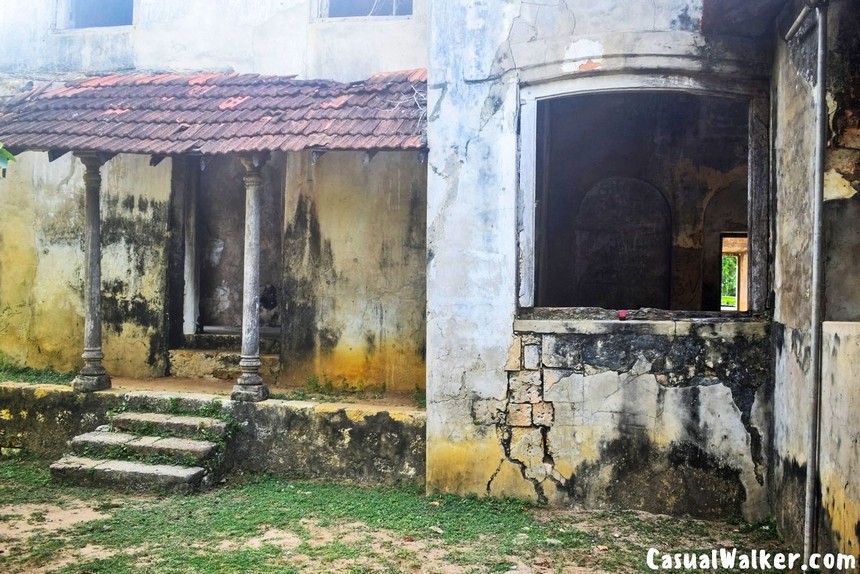
Manthiri Manai Architecture
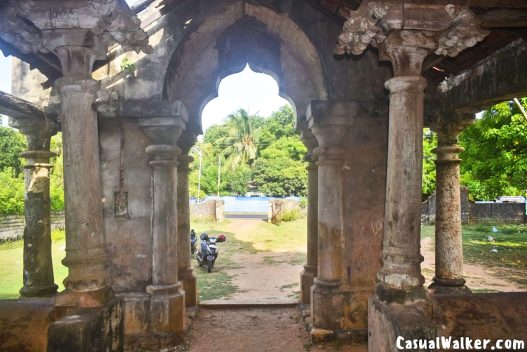
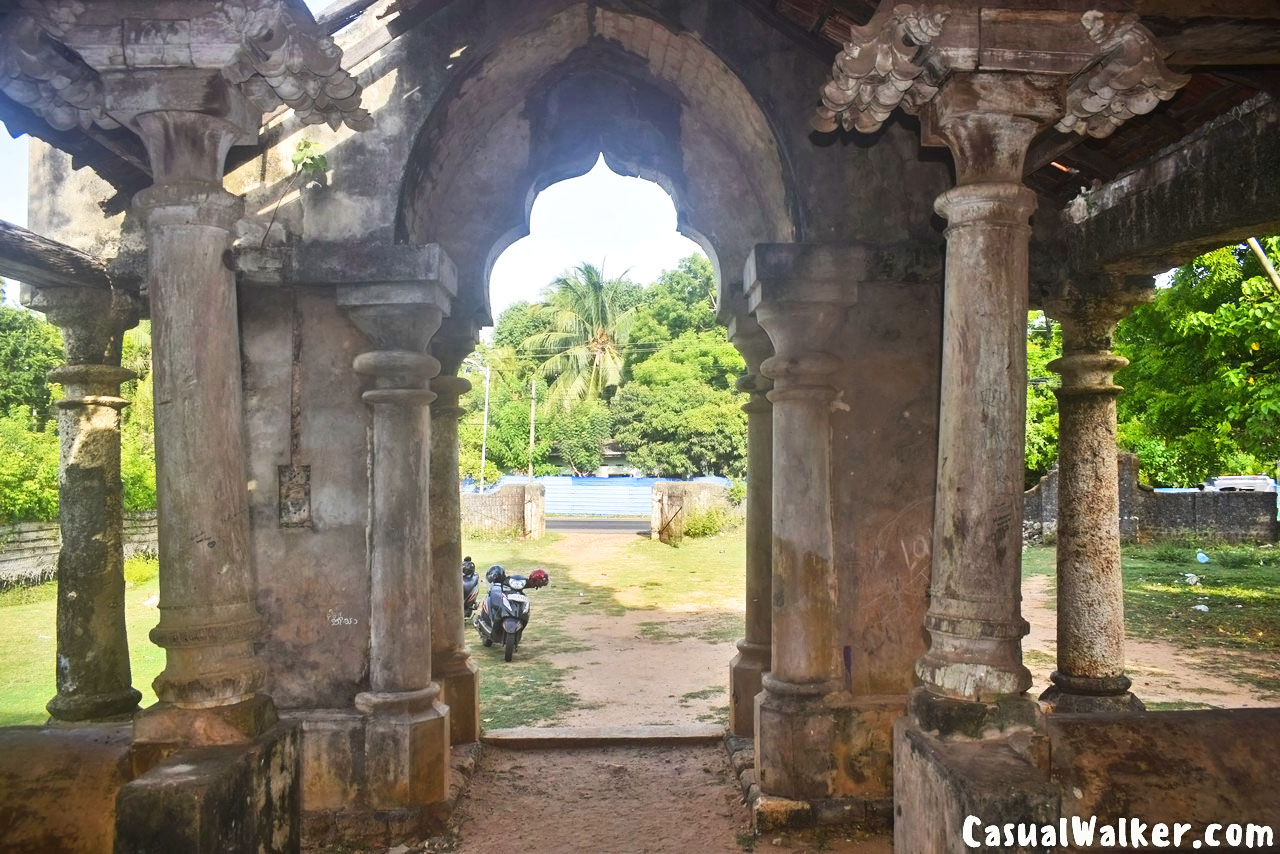
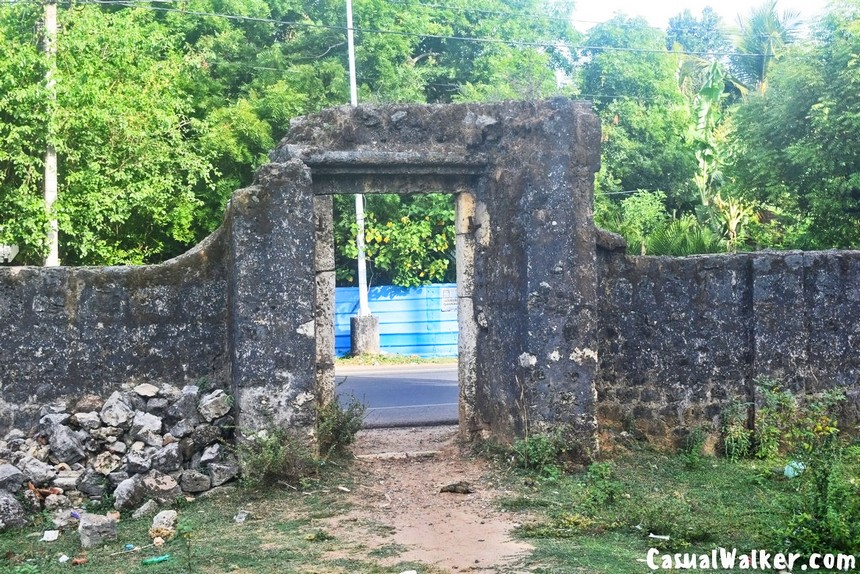
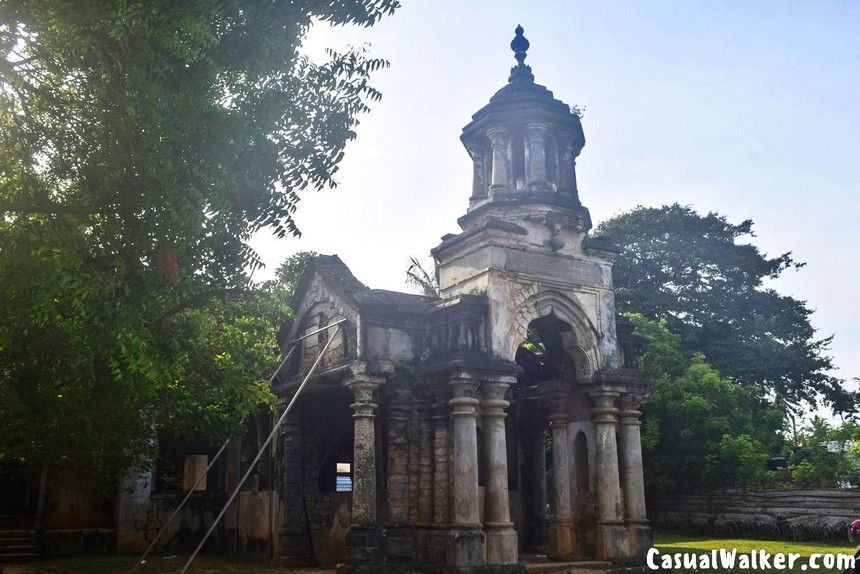
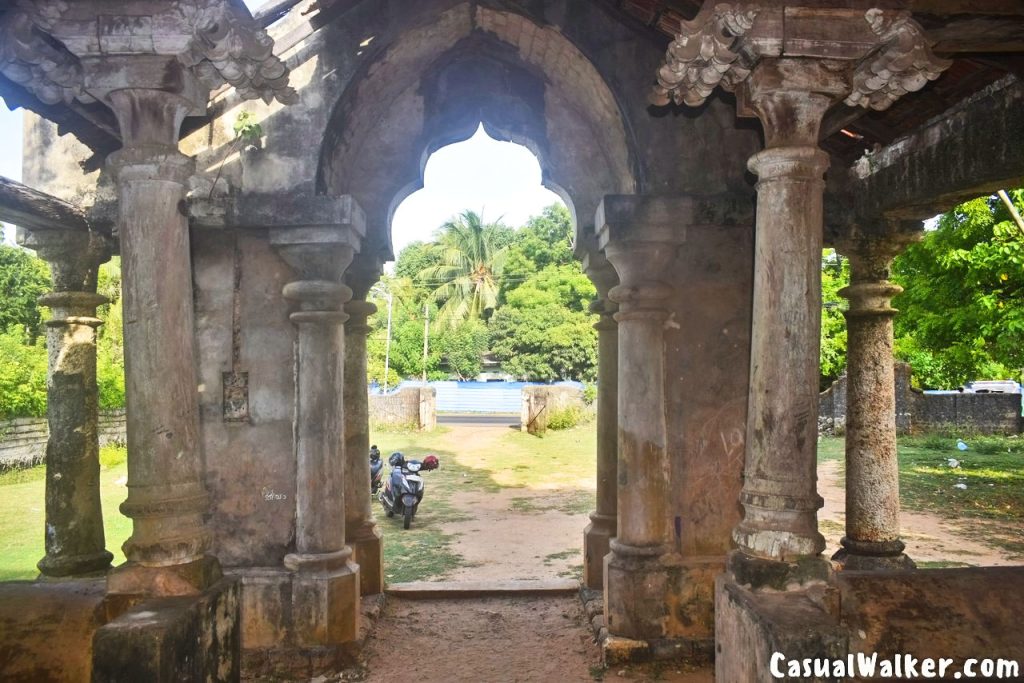
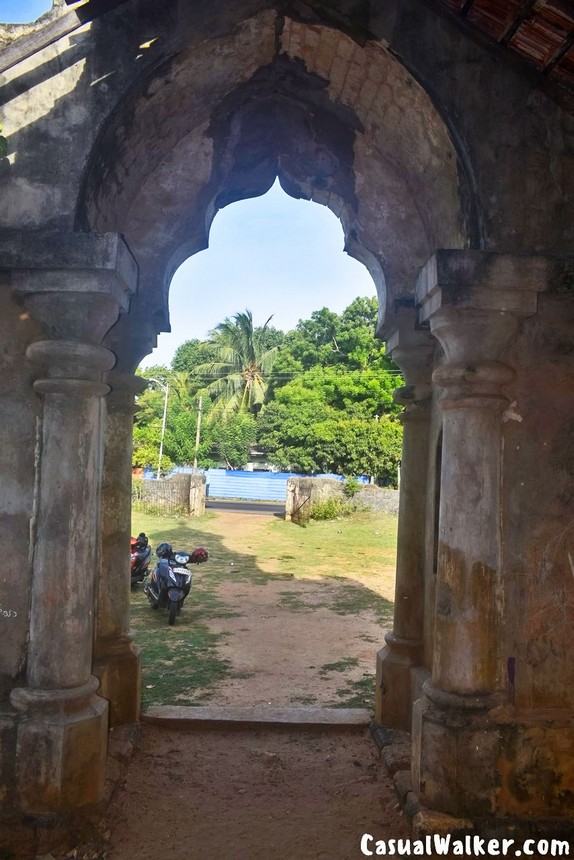
Manthiri Manai is a layered delight, even in its current ruined state. The building is a two-storey structure, and what survives tells you a great deal about the aesthetic sensibilities and practical knowledge of whoever built it. The most visually striking feature is the ornamental gateway at the entrance, flanked by a large arched porch and topped by a tower. Even partially collapsed, this entrance retains a commanding presence.
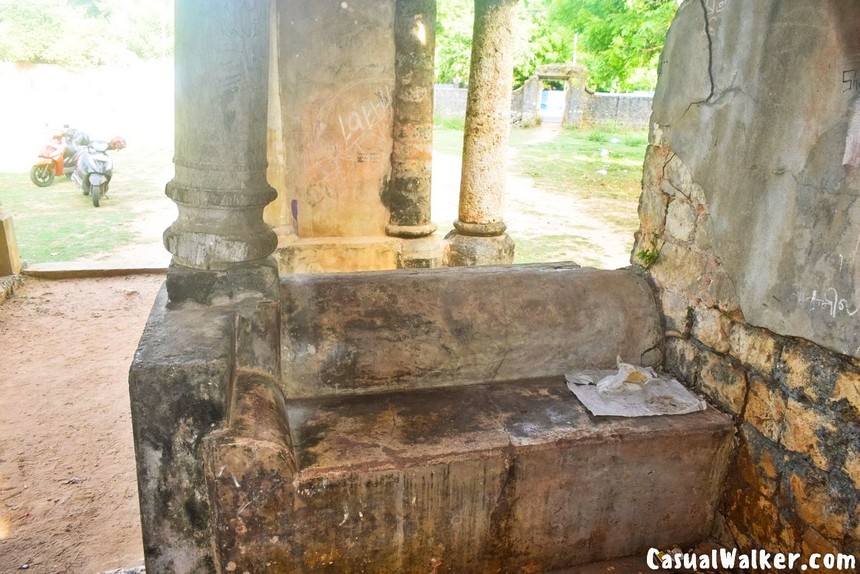
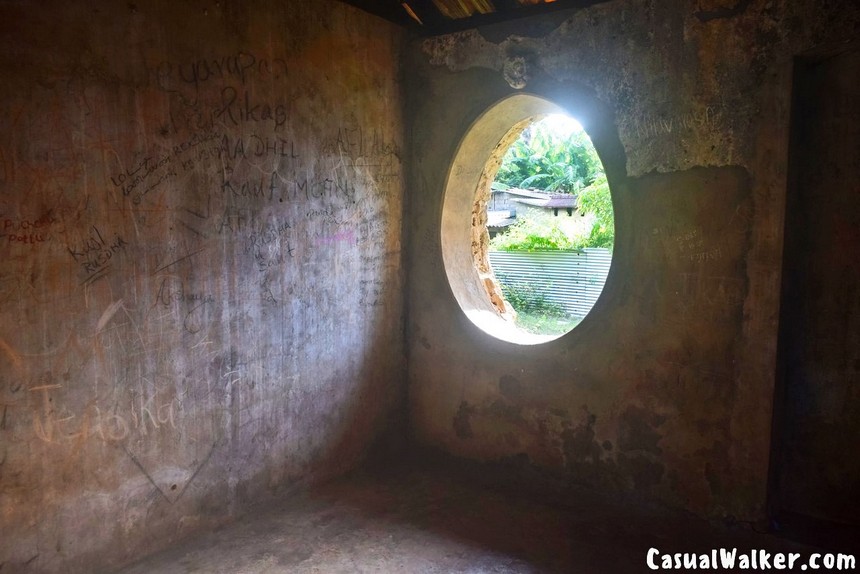
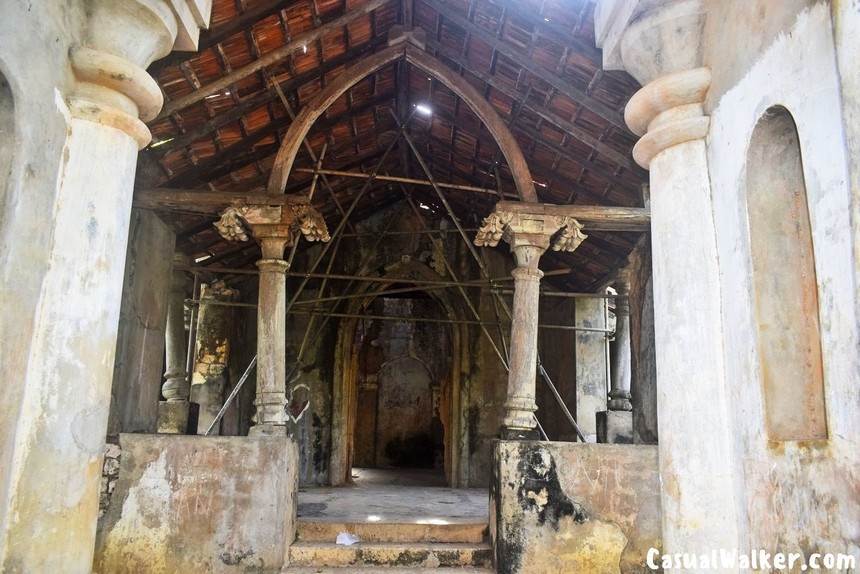
At Manthiri Manai strong South Indian architectural influences are also evident throughout, most notably in the circular columns that frame the main entrance and carry through into the interior spaces. The structure is particularly noted for its Mayo stone construction and lime-plastered walls, both characteristic of the period’s building traditions.
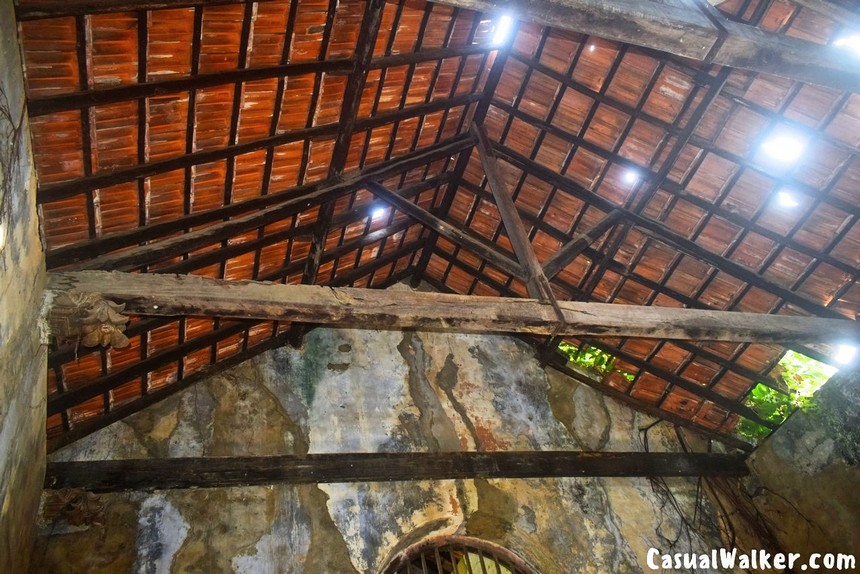
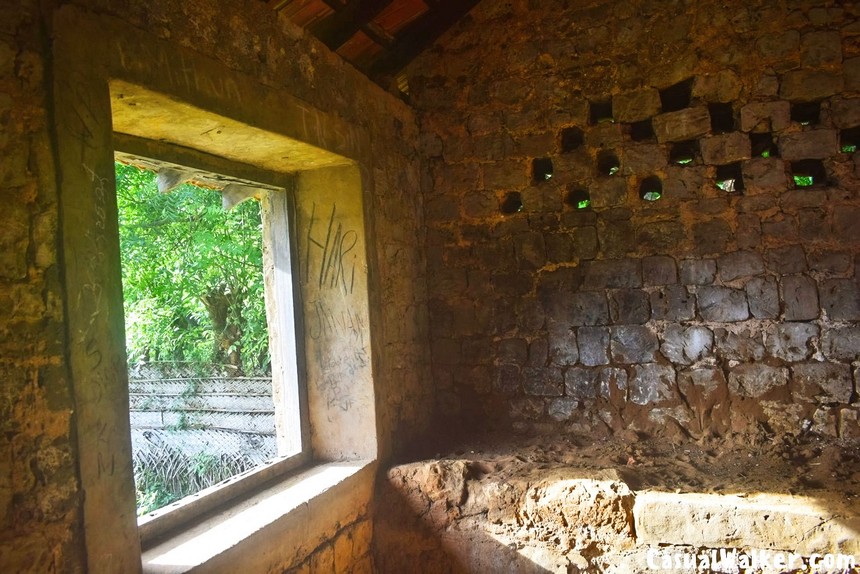
The construction material is coral limestone, which was widely used in Jaffna due to its local availability and its excellent properties for building in the peninsula’s climate. It weathers beautifully, developing a textured, almost sculptural surface over time, which is part of why the ruins photograph so well.
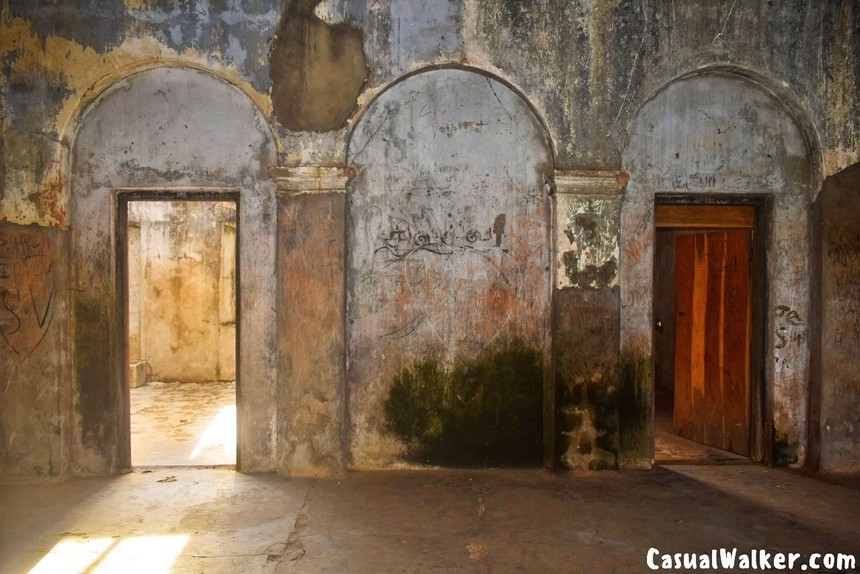
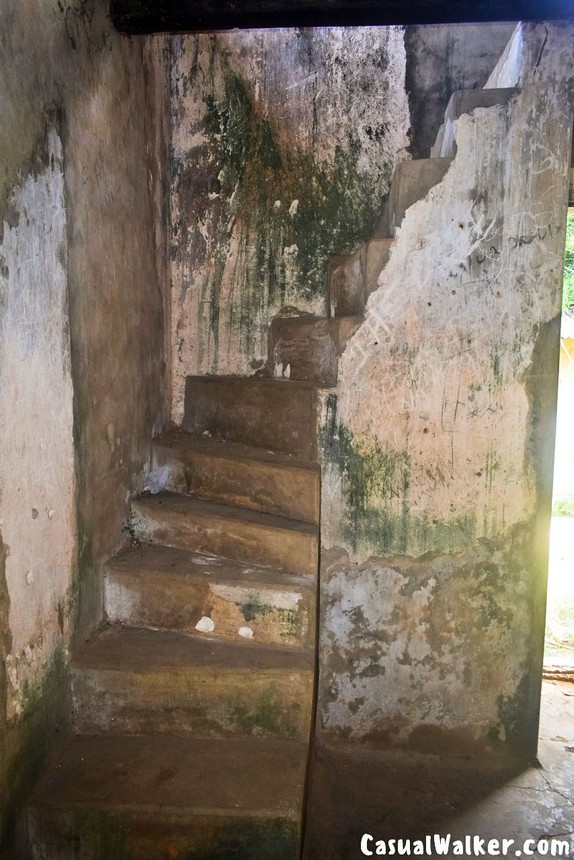
The interior, where accessible, reveals wooden carvings decorating the walls, a well, a wash basin, a cellar, and a staircase descending to underground rooms. And then there are the secret tunnels. Local legend holds that these underground passages connect Manthiri Manai to Jaffna Fort, roughly two kilometres away. Whether the tunnels actually exist in a functional sense, or whether they have collapsed entirely, is unclear, but their presence in the folklore says something important about how people understood this building’s role in the old city.
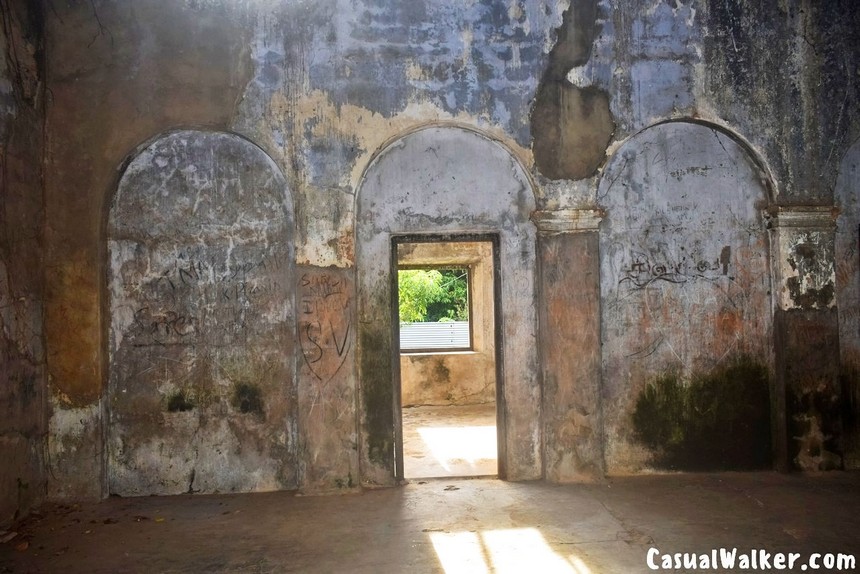
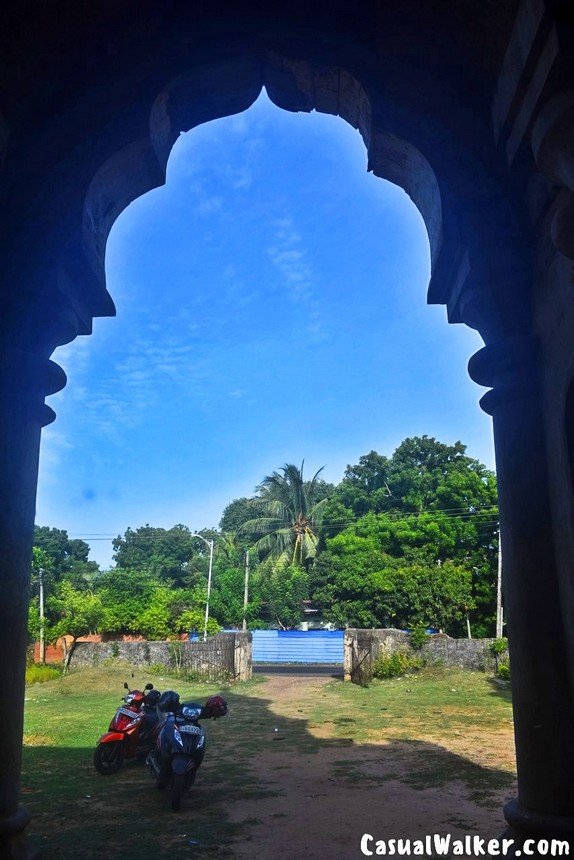
Architecturally, what makes Manthiri Manai genuinely distinctive is the stylistic blend. The building sits at the intersection of European colonial design and Dravidian Tamil construction traditions. You can see it in the arched doorways, which carry a clear European sensibility, set against construction techniques and decorative carving styles rooted in Tamil craft traditions.
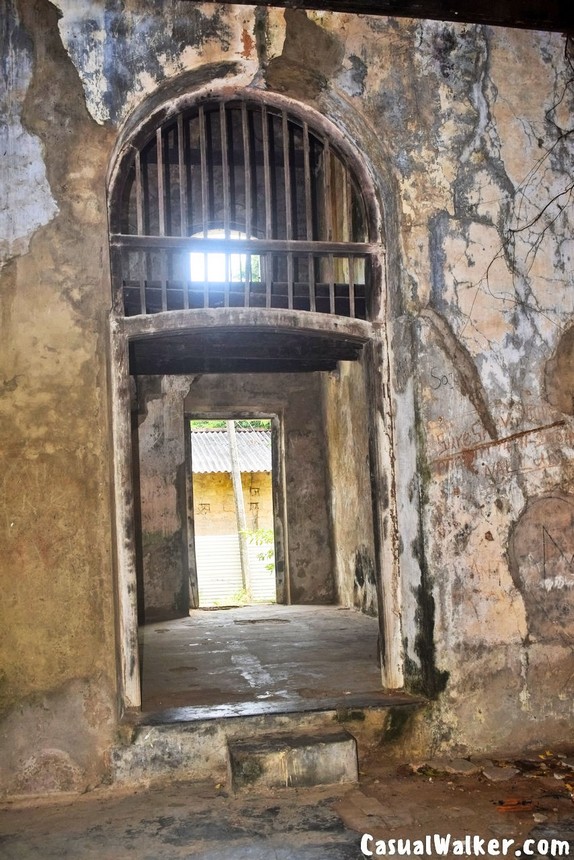
Inscriptions in Tamil, Sinhalese, and Latin have been noted on the tower, a detail that almost perfectly encapsulates the building’s layered cultural identity. Three languages, three historical moments, one crumbling wall.
Nearby, the Poothathamby Arch and the Sangili Toppu Arch, along with a statue of the last king of Jaffna and the Jamuna pool, form a loose cluster of sites that together paint a coherent picture of the old royal and administrative complex of Nallur. Visiting Manthiri Manai in isolation is worthwhile; visiting it as part of this wider circuit is genuinely moving.
Current Status of Manthiri Manai
The Srilankan Department of Archaeology has taken the site under its protection and initiated conservation efforts, which is encouraging. But the honest assessment is that Manthiri Manai has suffered enormously from decades of neglect, the prolonged civil conflict in northern Sri Lanka, and insufficient funding and political attention.
Manthiri Manai has real potential to become a well-rounded heritage destination, with the introduction of guided tours, informative printed brochures, and basic visitor facilities such as restrooms, the experience could be significantly enriched for a much wider audience. A modest ticketed entry, even at a nominal fee, would go a long way in funding ongoing conservation and day-to-day maintenance, ensuring this irreplaceable landmark is preserved for future generations. Better signage and a small interpretive display would help visitors connect more deeply with the site’s layered history. With the right investment and attention, Manthiri Manai has every ingredient to stand proudly as one of Jaffna’s premier heritage attractions.
The ground is uneven in places, and some interior sections are structurally unsafe, it is advisable to be cautious and to avoid climbing on fragile walls or descending into areas that are clearly unstable. Wear comfortable shoes. Treat the site with the respect that genuine heritage deserves.
Manthiri Manai represents exactly what makes Jaffna compelling as a destination. It is a site where Tamil, colonial, and indigenous architectural traditions converge in a single structure. It is a place whose very origins remain contested, where inscription evidence, oral legend, scholarly theory, and architectural analysis all pull in slightly different directions. It is, in other words, a living historical puzzle rather than a settled exhibit, and that makes it far more interesting to visit than many a tidier, better-funded heritage site.

Travel Tips for Manthiri Manai Jaffna, Northern Sri Lanka
Address of Manthiri Manai Jaffna, Northern Sri Lanka :
Manthiri Manai
M2GP+X9V, Point Pedro Road, Nallur, Jaffna,
Northern Province, Sri Lanka
Opening Hours: Daytime hours. No fixed schedule, visit during daylight for both safety and the best light for photography.
Entry Fee: Free of charge.
Time Required A casual visit typically takes 15 to 30 minutes. Photographers and architecture enthusiasts often spend considerably longer, particularly when exploring the surrounding Nallur heritage cluster.
Combine Your Visit With Manthiri Manai pairs well with several nearby landmarks. Nallur Kandaswamy Kovil is just a short walk away. Jaffna Fort, the Poothathamby Arch, Sangili Toppu Arch, and the statue of the last king of Jaffna are all within easy reach and together offer a rich, connected experience of Jaffna’s royal and colonial history.
There are currently no on-site facilities. Bring sufficient water, particularly if you are visiting during the midday heat of Jaffna’s dry season, which runs from May through September.
How to reach Manthiri Manai Jaffna, Northern Sri Lanka
Manthiri Manai is located along Point Pedro Road in Nallur, approximately two kilometres from central Jaffna, making it easily accessible by several modes of transport.
By Road: Jaffna is accessible from Colombo and other major cities via the A9 Highway, also known as the Kandy–Jaffna Road. The drive from Colombo takes approximately 6 to 7 hours depending on traffic and road conditions. Long-distance buses operated by both the Sri Lanka Transport Board and private operators run regular services to Jaffna Bus Station, from where Manthiri Manai is easily reachable by local transport. If you are travelling by private vehicle, street parking is available close to the site.
By Tuk-Tuk / Auto: The tuk-tuk is the most convenient and popular way to get around. From central Jaffna, a tuk-tuk ride to Manthiri Manai costs approximately 400 Sri Lankan rupees and takes around 10 minutes. Most tuk-tuk drivers in Jaffna are familiar with the site and can also wait while you explore, making it easy to combine the visit with nearby attractions.
By Bus: Local buses heading in the direction of Point Pedro pass along the road where Manthiri Manai is located. Board any Point Pedro-bound bus from Jaffna Bus Station and alight near the Nallur Kandaswamy Kovil, from where the mansion is approximately a one-kilometre walk. This is the most budget-friendly option and a good choice if you want to experience everyday local life in Jaffna.
By Train: Jaffna is well connected to Colombo by rail via the Northern Line, with the Yal Devi Express being the most popular service. The journey takes approximately 6 to 7 hours and arrives at Jaffna Railway Station. From the station, Manthiri Manai is a short tuk-tuk or taxi ride of around 10 to 15 minutes, making the train a comfortable and scenic option for reaching the city.
By Flight: The nearest airport is Jaffna International Airport (JAF), also known as Palaly Airport, which operates domestic flights from Colombo’s Bandaranaike International Airport. Several airlines including FitsAir connect Colombo to Jaffna with a flight time of roughly 45 minutes. From the airport, you can hire a tuk-tuk or taxi directly to Manthiri Manai, which takes approximately 20 to 30 minutes depending on traffic.
Thanks for exploring this photo guide! We’d love to hear your feedback, stories, corrections, or any updates. Email us.
Follow our photo walks on Instagram: @hicasualwalker
Keep exploring: Browse 650+ Travel & Culture Photo Guides