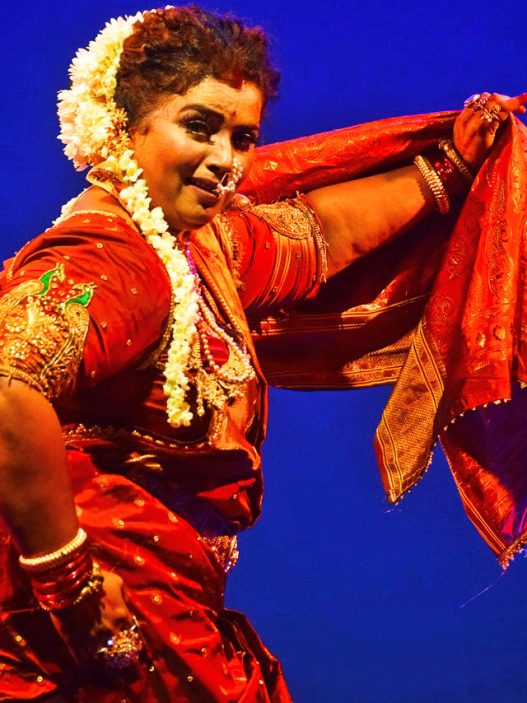



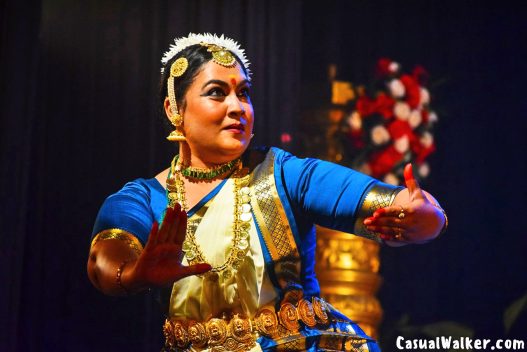
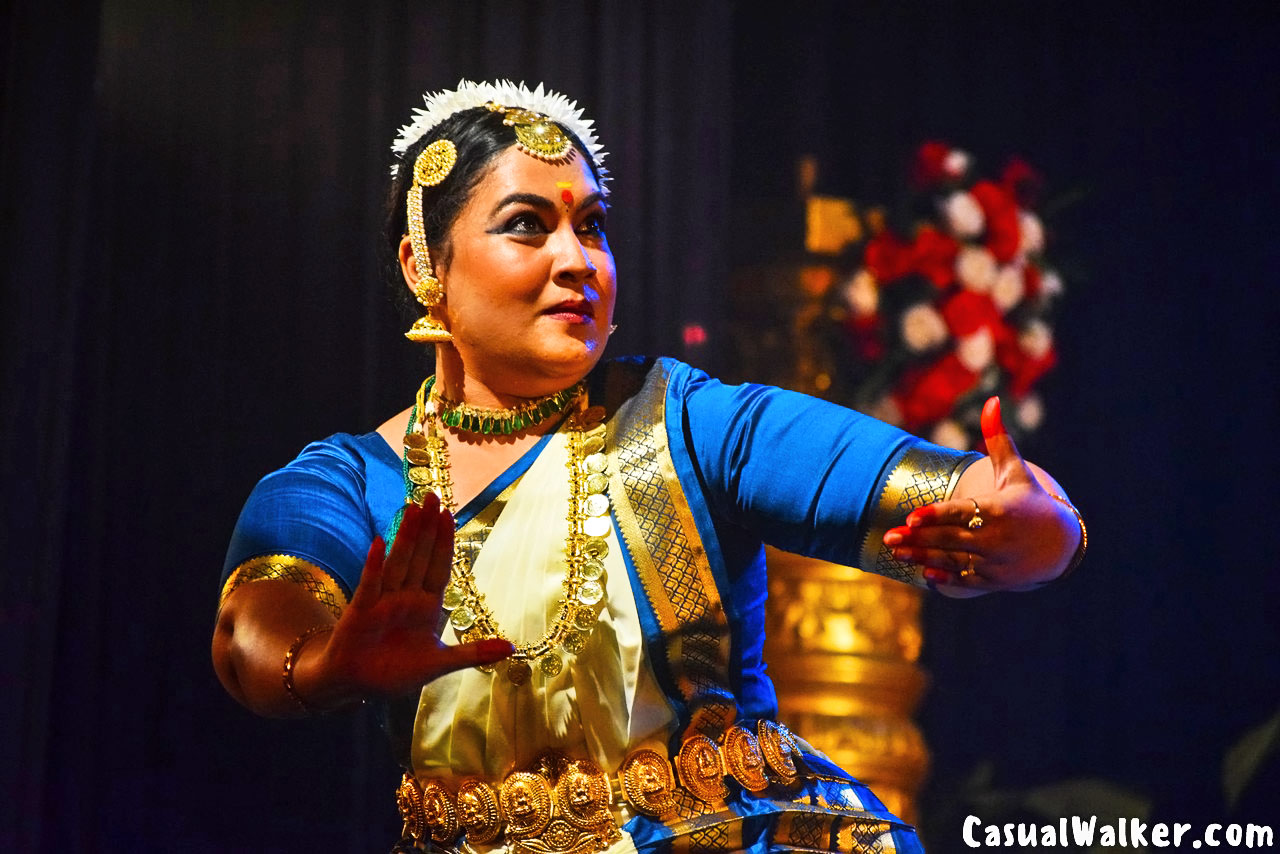


Mohiniyattam: An Enchanting Traditional Classical Dance Form of Kerala | A Mesmerizing Mohiniyattam Dance Performance by Famous Mohiniyattam Dancer Gopika Varma & Her Disciples, Featuring Maharaja Swathi Thirunal’s Compositions : Kuchelavrutham – Krishna & Kuselan, A Tale of Friendship & Humility / Kanakamayam Ayidum – A Playful Game of Guessing the Divine Lord Padmanabha
– the grace, mythology & artistry of a mohiniyattam performance
| CasualWalker’s Rating for Mohiniyattam Dance Performance by Gopika Varma & Her Disciples : | |
9.9 – Spellbinding, Soulful, Mesmerizing |
|

Mohiniyattam literally translates to the dance of the enchantress, drawing its name and imagery from the mythological Mohini – the enchantress, the divine enchantress form taken by Lord Vishnu. Along with Kathakali, it is one of the two major classical dance forms native to Kerala, and it holds a place among India’s eight recognised classical dance forms, alongside Bharatanatyam, Kathak, Odissi, Kuchipudi, Manipuri, Sattriya and Kathakali.
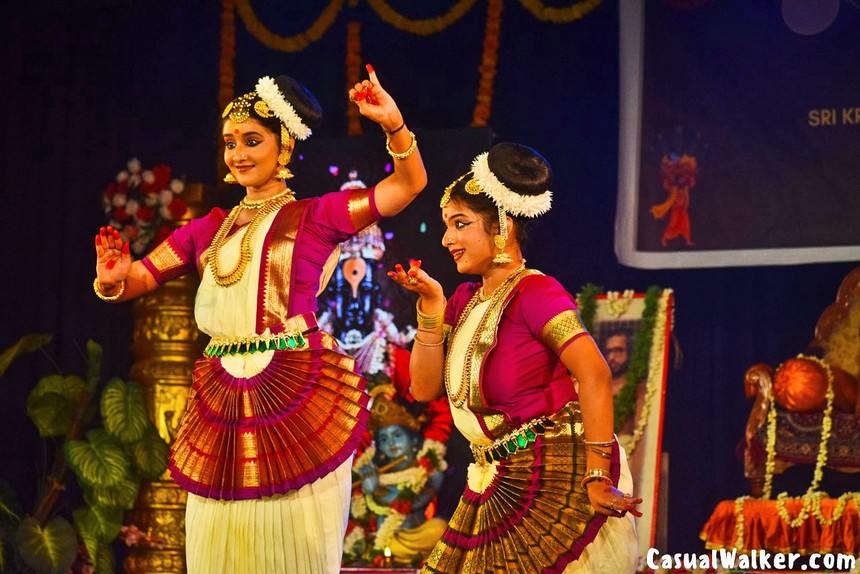
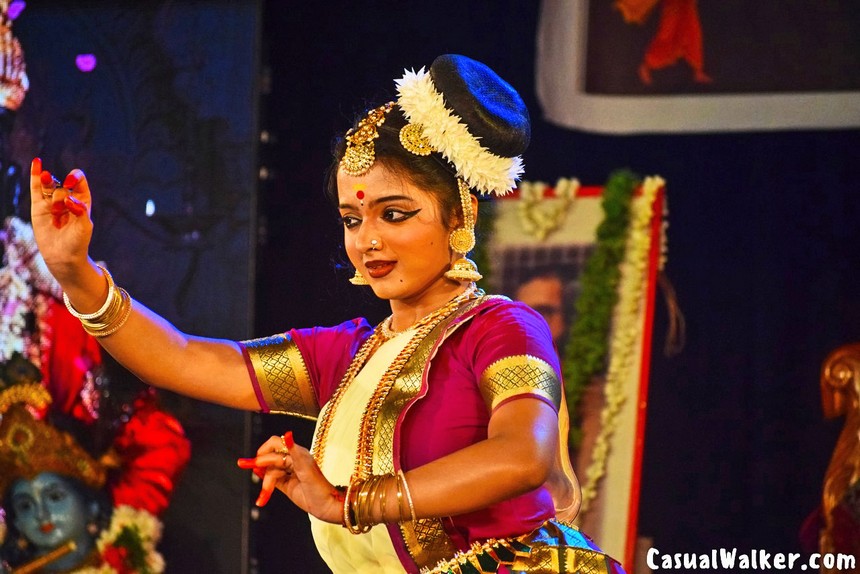
What sets Mohiniyattam apart instantly is its movement vocabulary. Where many classical forms lean on sharp angularity and rhythmic assertiveness, Mohiniyattam moves like water. The body sways gently from side to side, the torso curves, the eyes speak in slow, unhurried sentences, and the overall vocabulary is lyrical, feminine and deeply devotional.
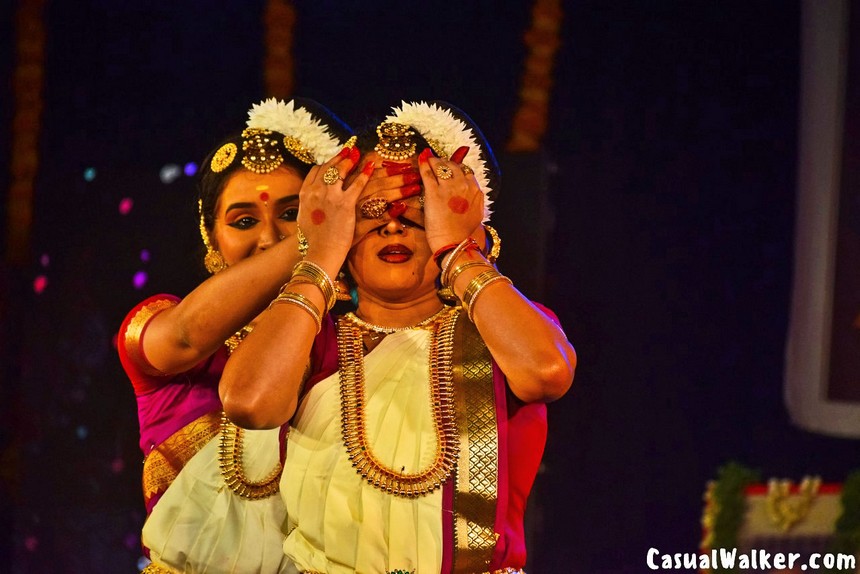
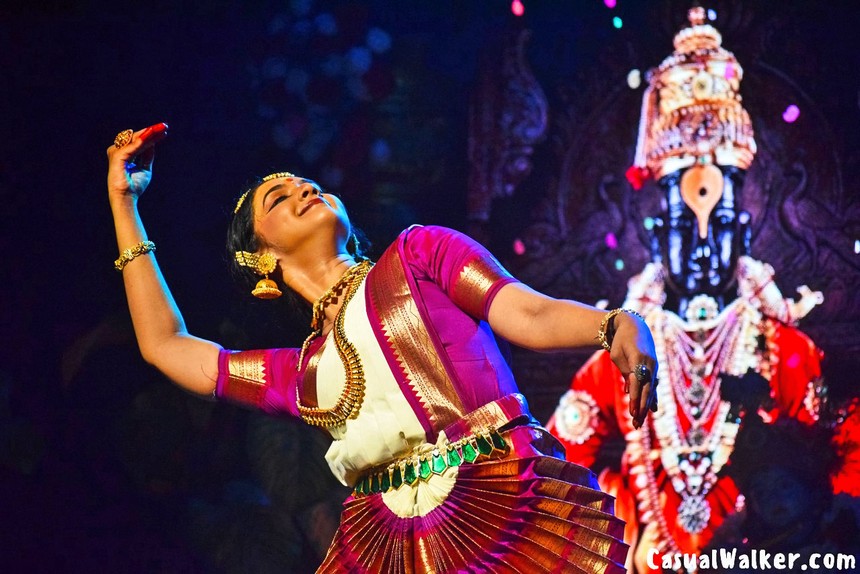
Traditionally performed solo by women, it blends nritta (pure, non narrative dance), nritya (expressive dance combining movement and emotion), and abhinaya (the art of expression) or emotive storytelling, all set within the framework of the Lasya style, which celebrates grace, tenderness and soft eroticism in its most refined, temple bound sense.
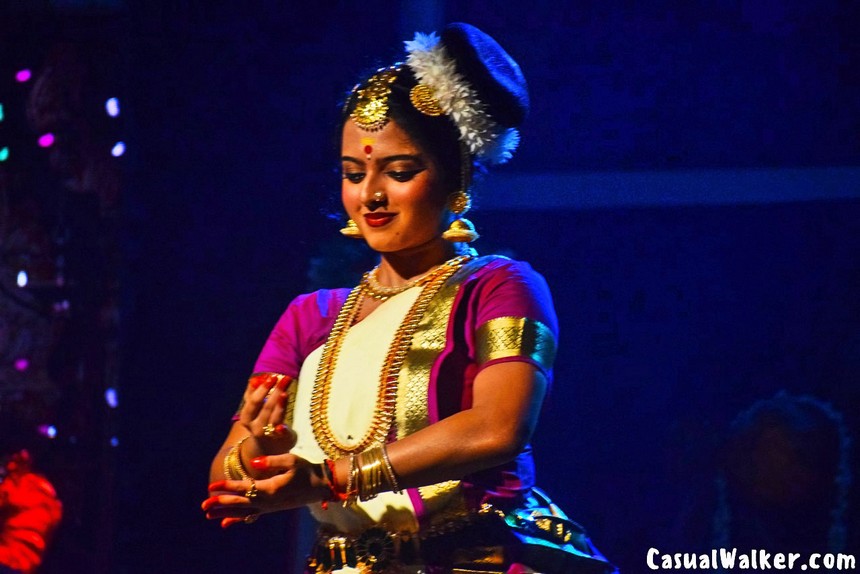
The dance form nearly disappeared in the early twentieth century, and it was largely due to the efforts of poet Vallathol Narayana Menon, who founded Kerala Kalamandalam, and dancers like Kalyanikutty Amma, that Mohiniyattam was revived, restructured and given the codified grammar it follows today.
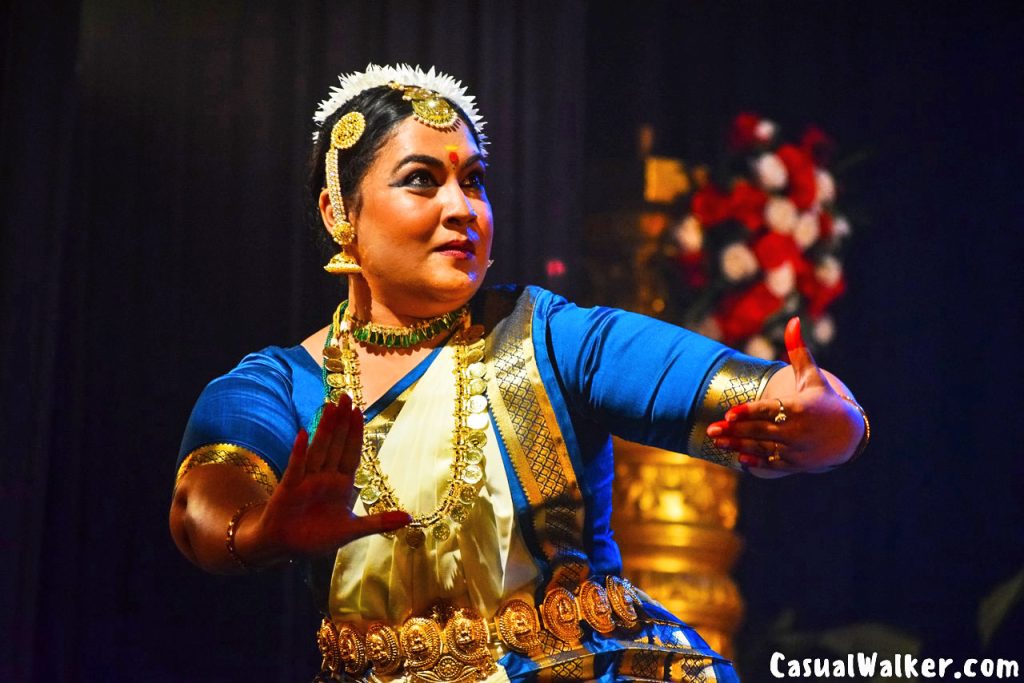
The music that accompanies Mohiniyattam draws heavily on the Sopanam tradition, a devotional singing style native to Kerala temples, along with elements of Carnatic music. The costume is unmistakable too, an unbleached off white and gold bordered kasavu saree, jasmine flowers in a side bun, and minimal yet elegant jewellery, all designed to let the movement itself take centre stage rather than ornamentation.
Gopika Varma’s Mohiniyattam Lineage
Some artistes do not just perform a tradition, they seem to carry an entire lineage within them, and Gopika Varma is exactly that kind of dancer. Born in Thiruvananthapuram and now based in Chennai, she began learning under her mother before formally training in Mohiniyattam from the age of ten under Girija and Chandrika Kurup, senior disciples of the legendary Kalyanikutty Amma, and later trained directly under Kalyanikutty Amma herself and her daughter Sreedevi Rajan.
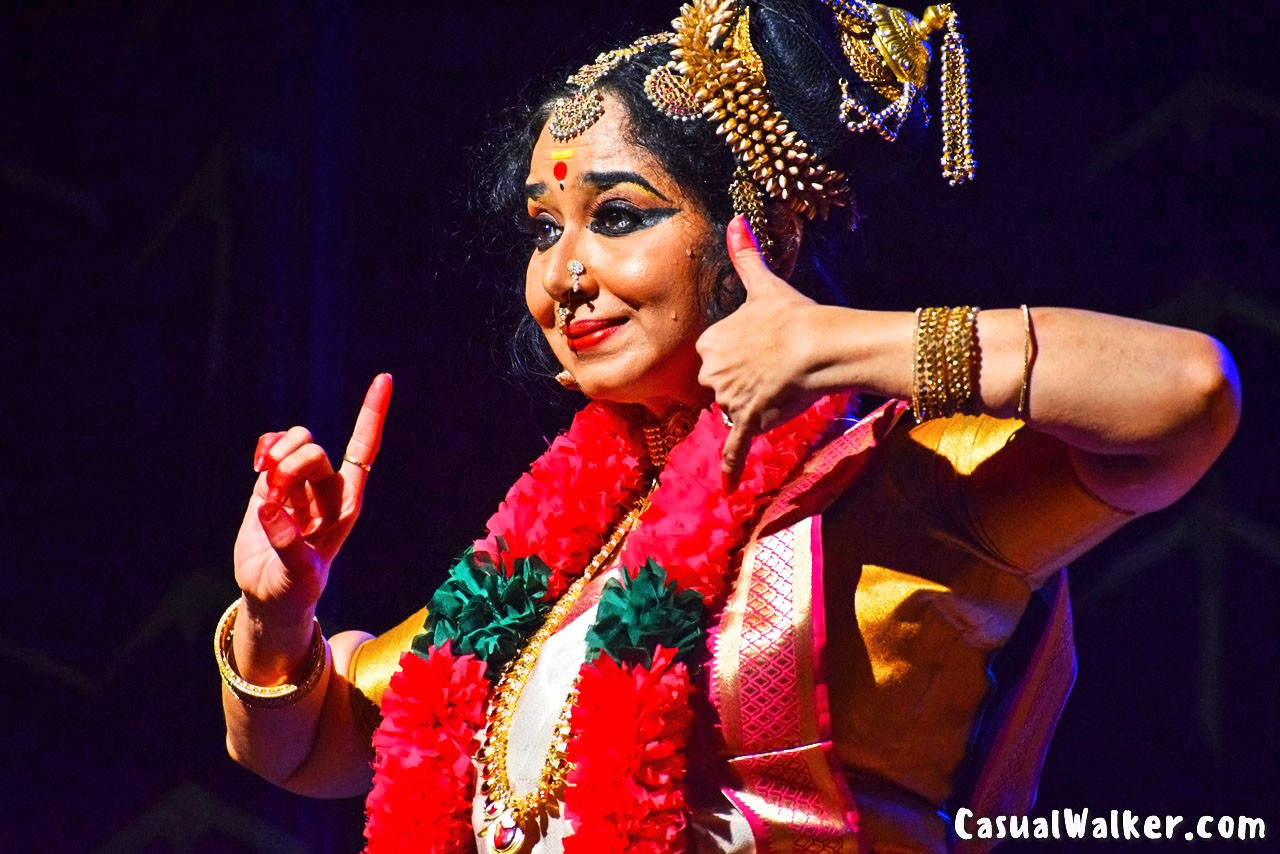
She also learnt abhinaya (expressive art) under Kathakali doyen Kalamandalam Krishnan Nair, trained in the Sopanam style under Kavalam Narayana Panicker, and studied Bharatanatyam for eighteen years under Vazhuvoor Ramaiah Pillai, giving her repertoire a rare, layered depth.
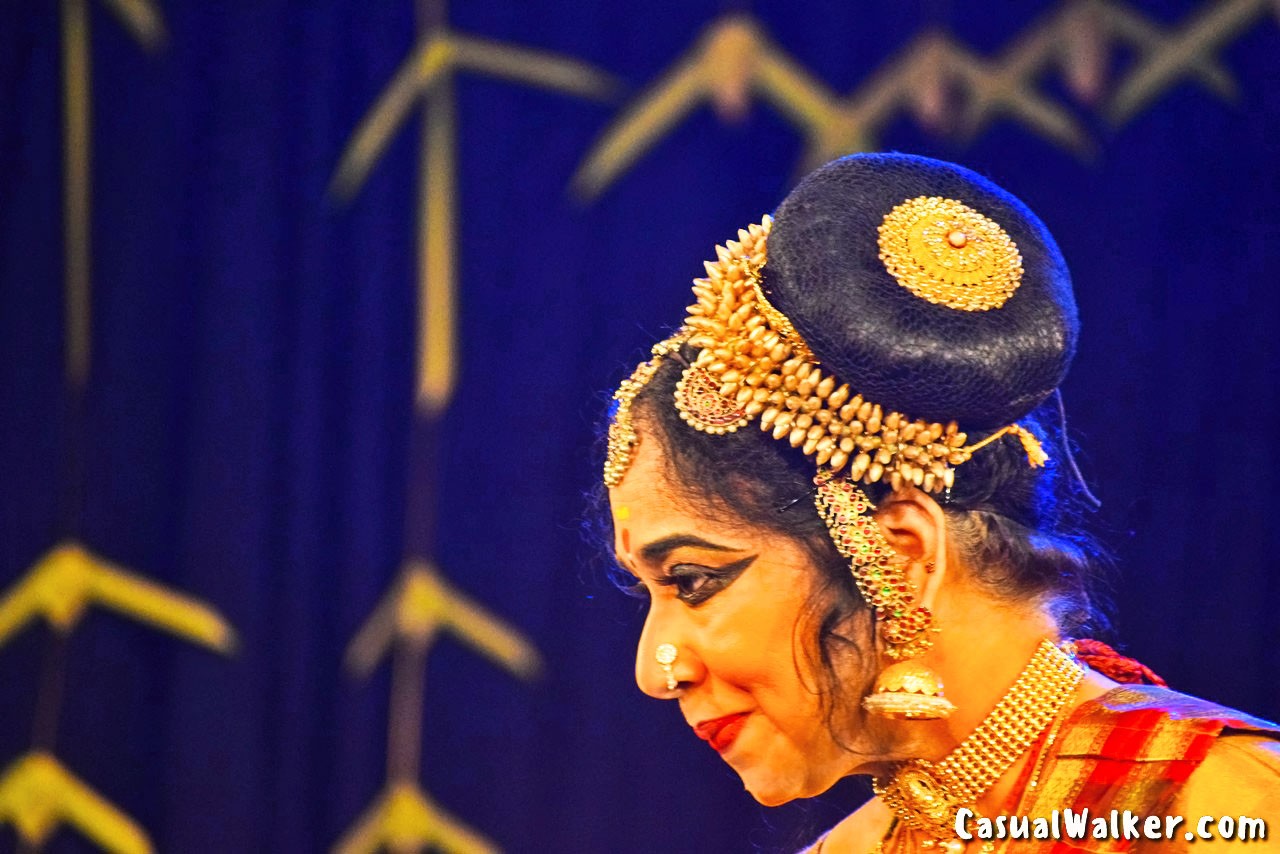
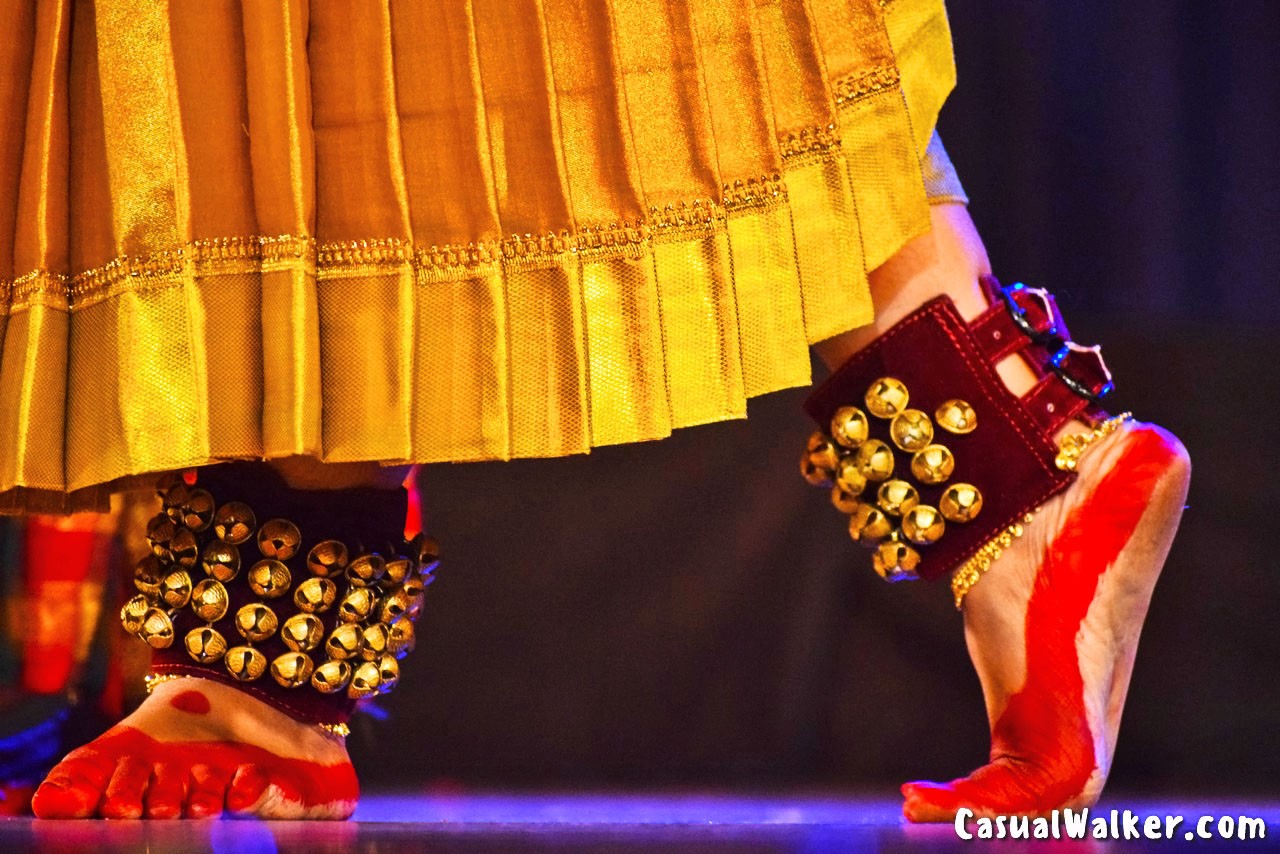
Married into the Travancore royal family, she carries a personal connection to Maharaja Swathi Thirunal’s compositions, and today runs Dasyam, her Mohiniyattam school in Adyar, Chennai. Her honours include the Sangeet Natak Akademi Award, the Kerala Sangeetha Nataka Akademi Award, Kalaimamani and Nrithya Choodamani.
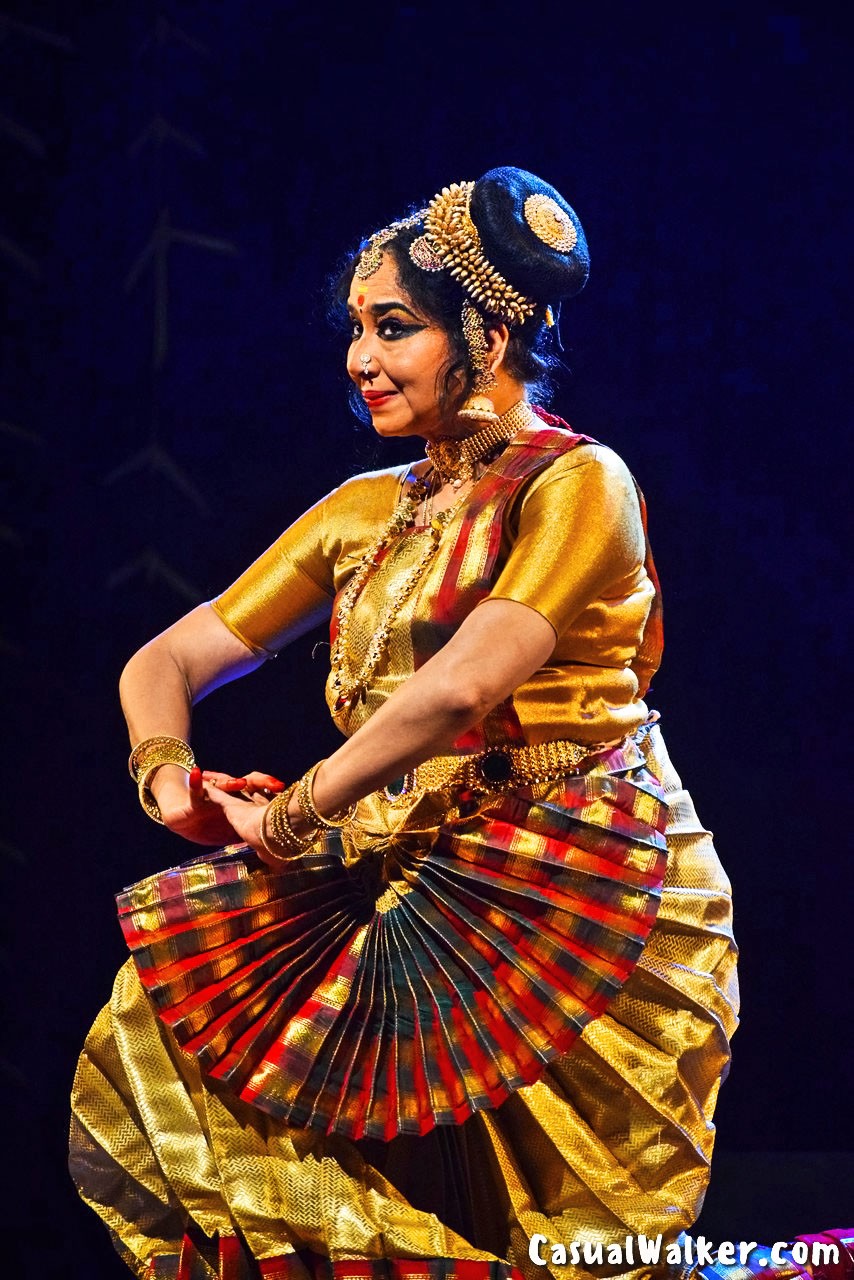
Mohiniyattam Performances by Gopika Varma & Her Disciples
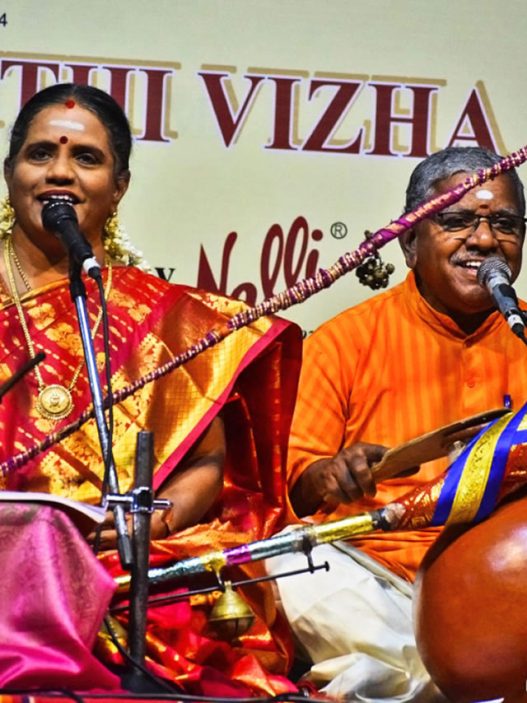
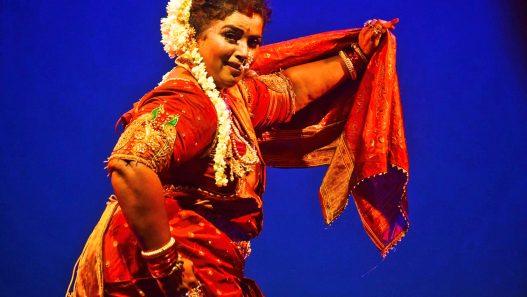
Even in the opening minutes, the unhurried sway of her movements and the stillness she commanded on stage told me I was in for something special, decades of training distilled into a single, unbroken gaze. The evening was not a solo recital alone either, she performed several pieces herself and shared the stage with senior students (shishyas) from Dasyam, each carrying forward the same quiet discipline and grace their guru (teacher) has nurtured in them.
Maharaja Swathi Thirunal And His Compositions In Mohiniyattam
The poetry of Maharaja Swathi Thirunal, the nineteenth century Travancore king was not just a ruler but an extraordinary composer, fluent across Sanskrit, Malayalam, Hindustani and Carnatic musical idioms, and his devotional compositions dedicated to Lord Padmanabha remain central to Mohiniyattam even today. These works are steeped in bhakti (devotion), or devotion, and madhura bhakti (the sweet, romantic mode of devotion), that particular strand of soulful, romantic longing where the devotee addresses the divine as a beloved rather than simply a deity.
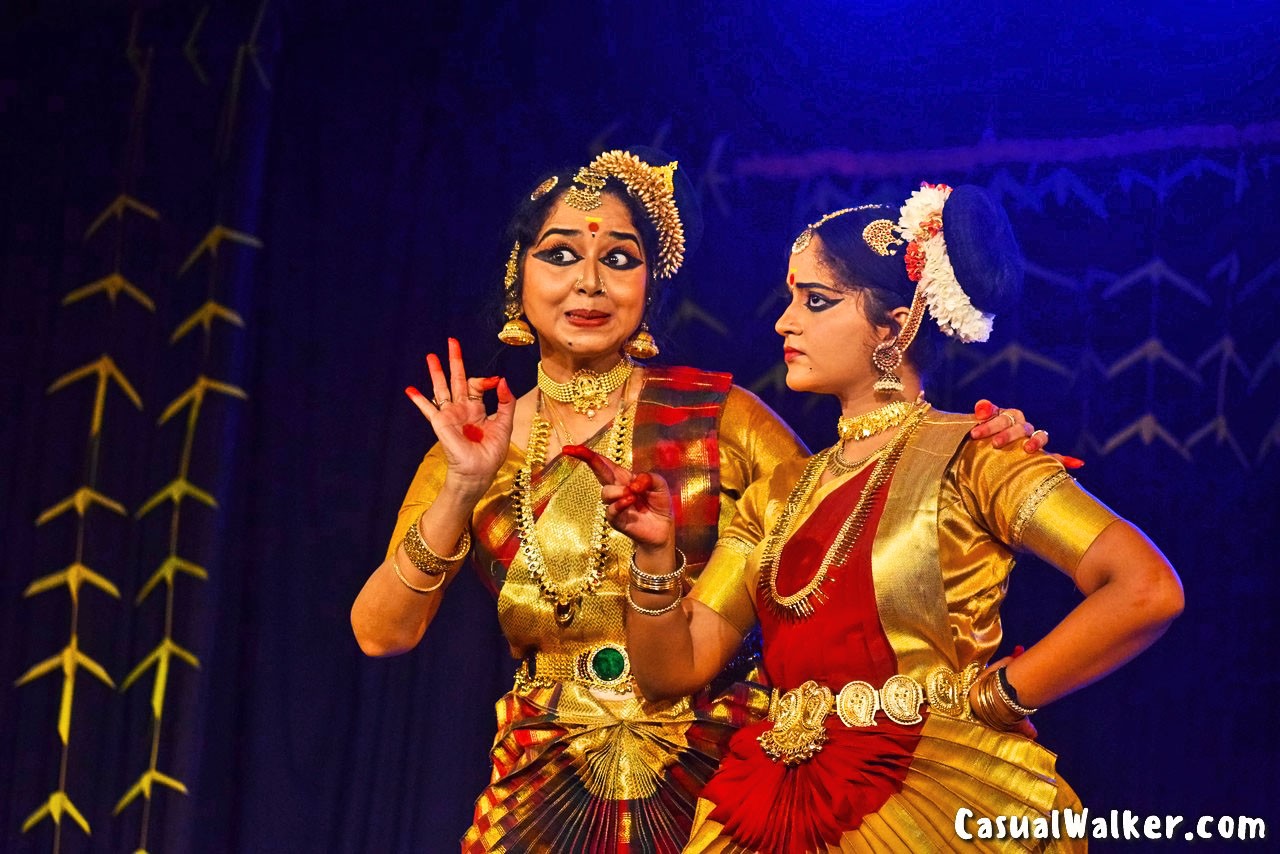
Kuchelavrutham – Krishna & Kuselan, A Tale of Friendship & Humility Performances
One of the most moving pieces of the evening was this Mohiniyattam item built around the story of Krishna and Kuselan, more popularly known as the tale of Sudama and his flattened rice offering. The plot the dancer brings alive on stage unfolds like this: Kuselan, a childhood friend of Krishna who grew up with him under the same guru, has lived a life of extreme poverty as a humble Brahmin while Krishna went on to become a king.
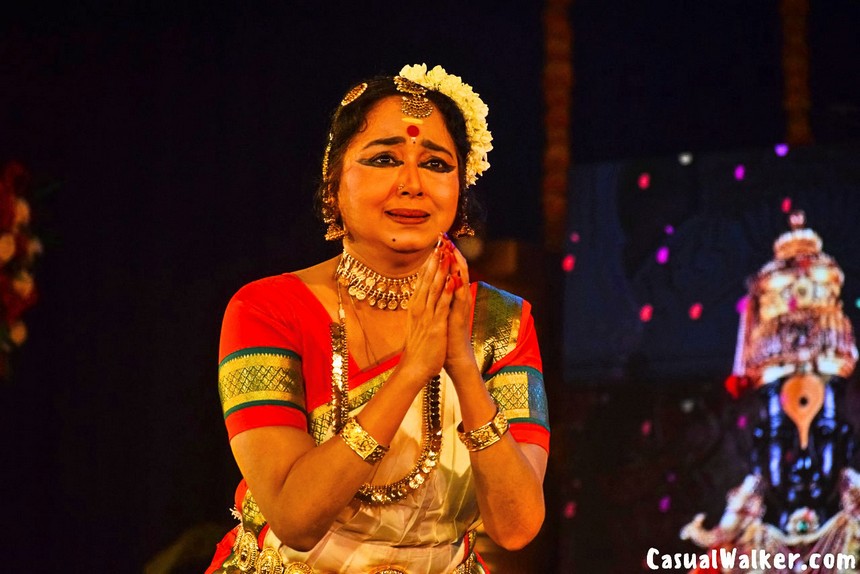
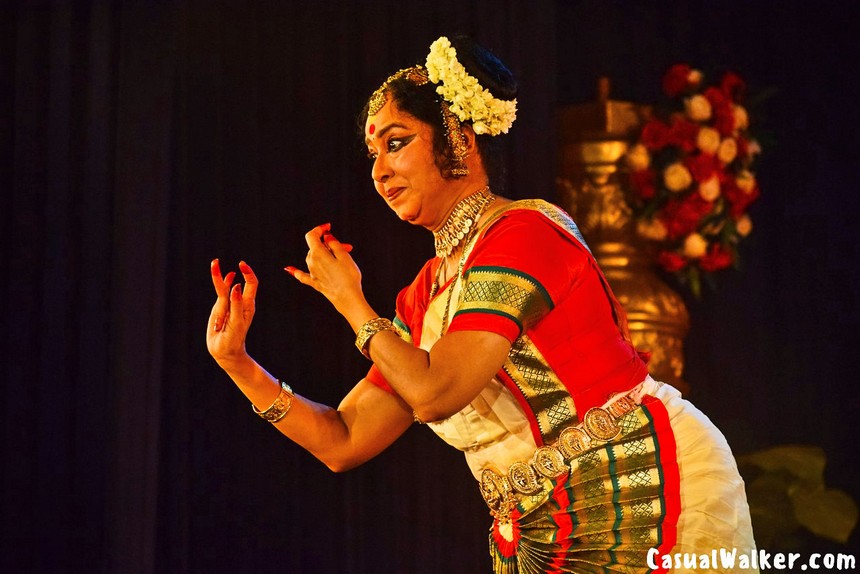
Urged by his wife, and with great reluctance, Kuselan finally sets out for Dwaraka to seek his old friend’s help, carrying with him the only gift he can afford, a small, tattered bundle of poha (beaten rice).
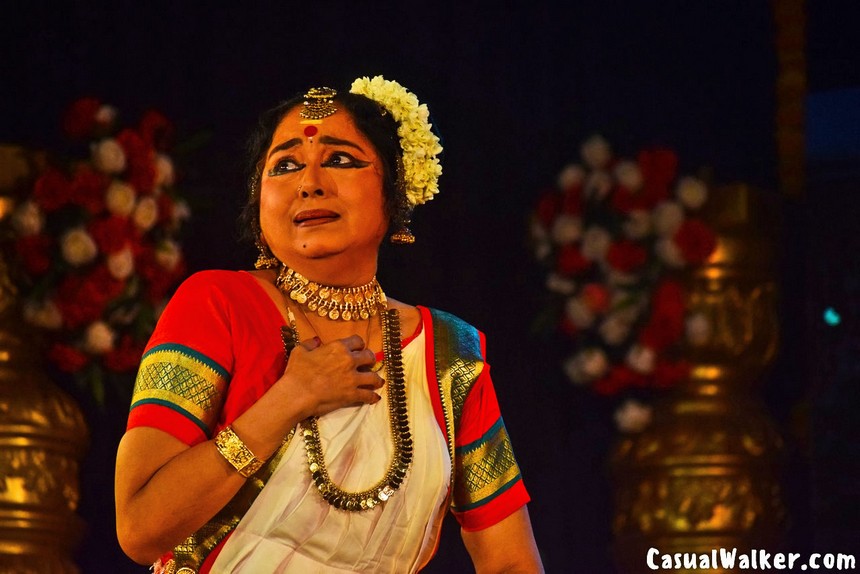
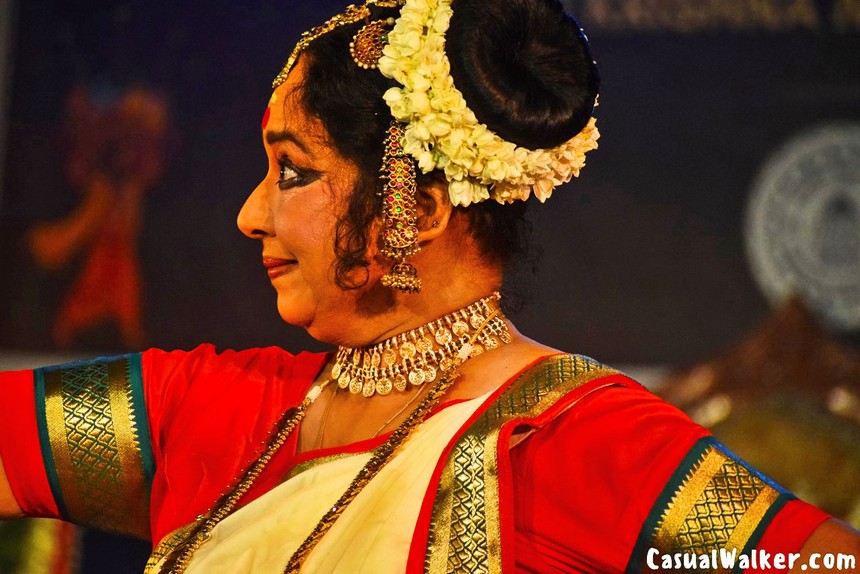
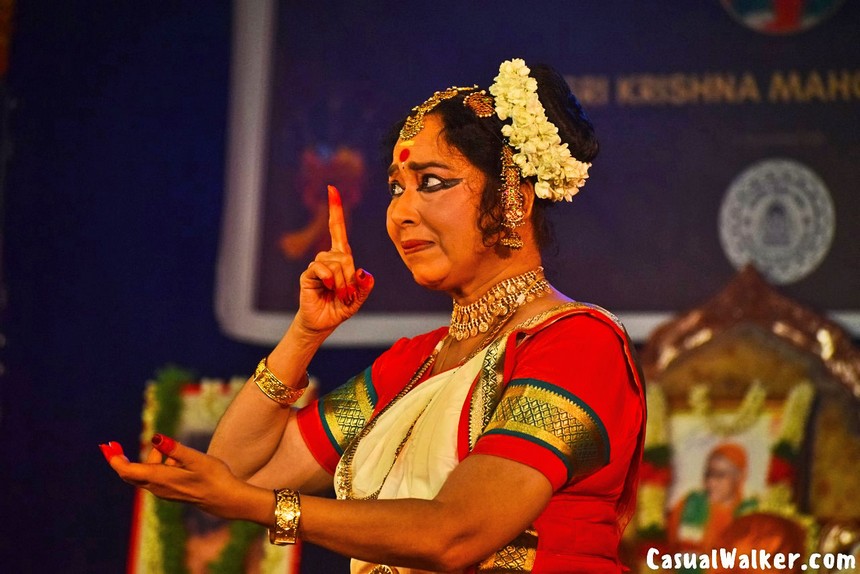
The performance then moves into its central meeting, where Krishna receives his poor friend not with royal detachment but with overwhelming affection, washing his feet himself and embracing him as an equal, moved to tears by the humble gift rather than embarrassed by it.
adsense_inpost]
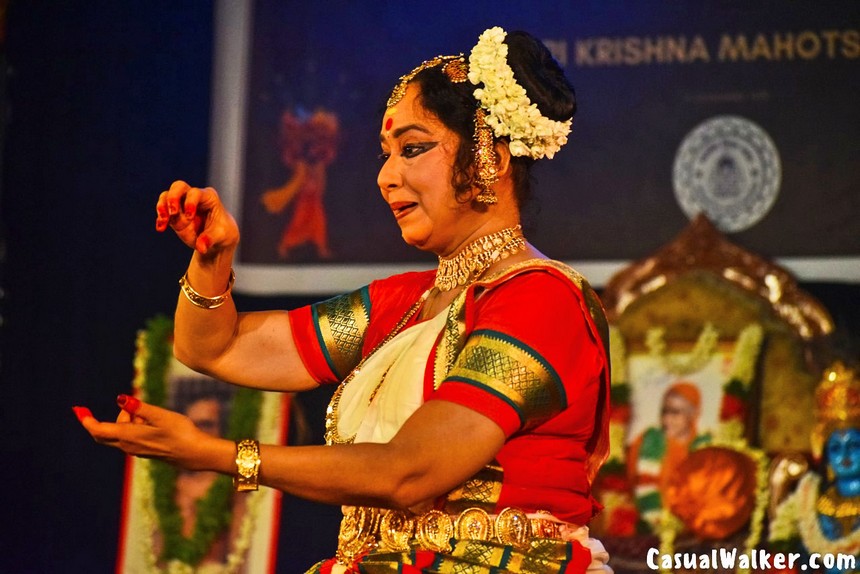
On stage, this warmth was conveyed through an open, expansive use of the upper body, the shoulders drawn back, the gaze wide and unguarded, the hands moving in slow, welcoming arcs that seemed to draw the invisible friend closer with every gesture. There was a softness in the eyes whenever Krishna’s bhava (emotional state) took over, a kind of joy tinged with disbelief, as though seeing a beloved face after years apart, that disbelief slowly melting into tenderness as the embrace unfolds.
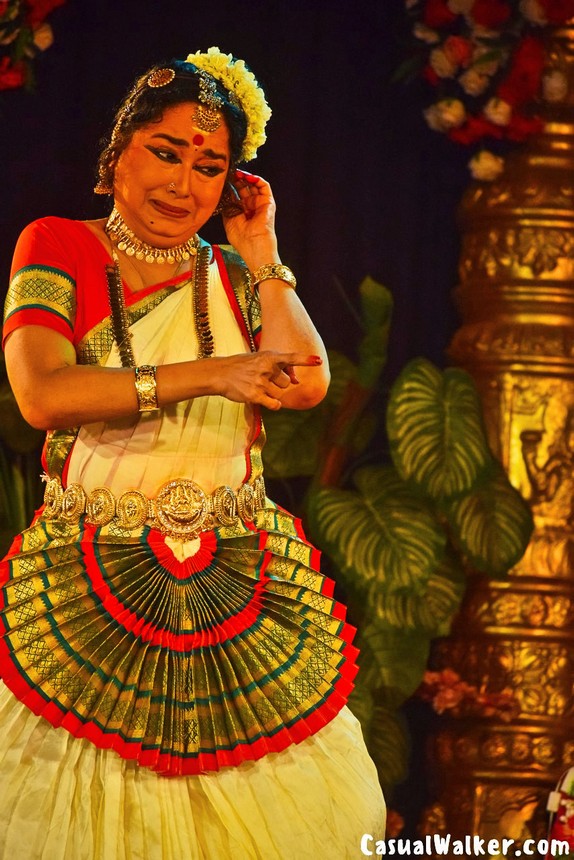
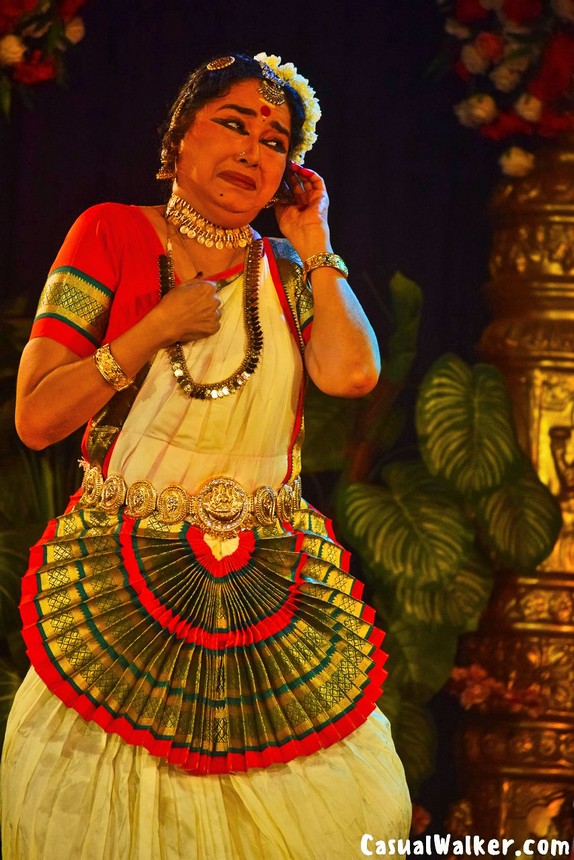
The dancer then shifts into Kuselan’s role, and it is here that the piece’s abhinaya (expressive storytelling) truly shines. Too shy and self conscious to even present the puffed rice properly, Kuselan hides it out of shame until Krishna gently coaxes it out of him and eats it with visible delight.
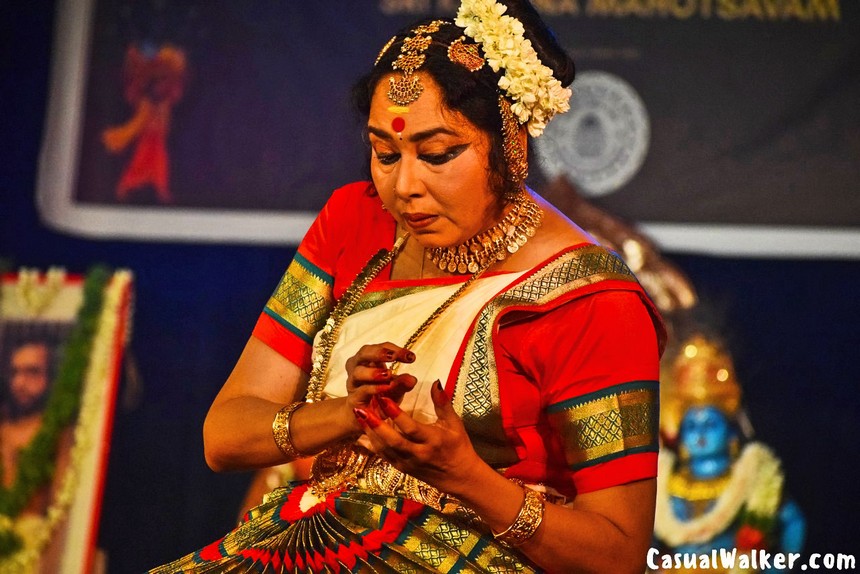
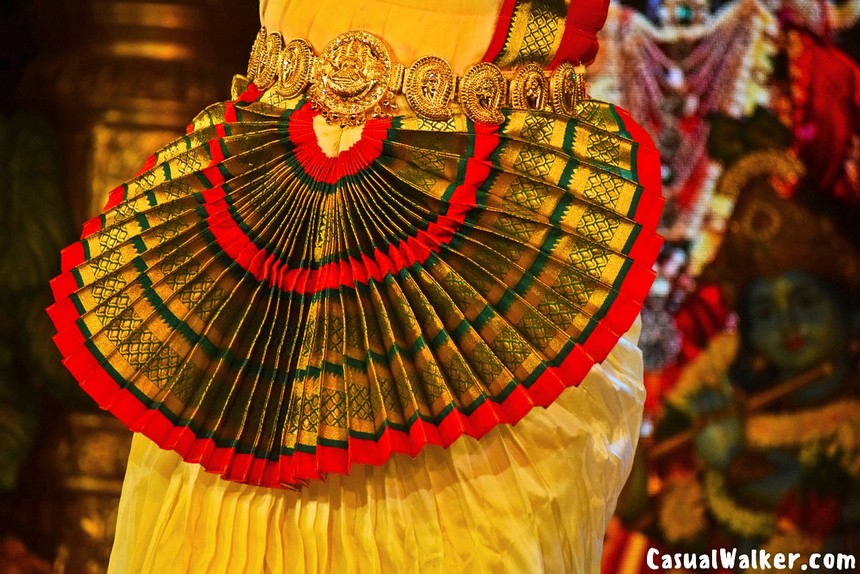
This transition was built through the spine curving inward ever so slightly, the shoulders drawn up as if trying to make himself smaller, the eyes lowered and flickering nervously rather than meeting an imagined gaze directly. There was a lovely, hesitant quality to the hand gestures too, fingers curling protectively around the little bundle of rice before reluctantly, shamefully, offering it forward, the face caught between the fear of being judged and the deep, quiet love for an old friend.
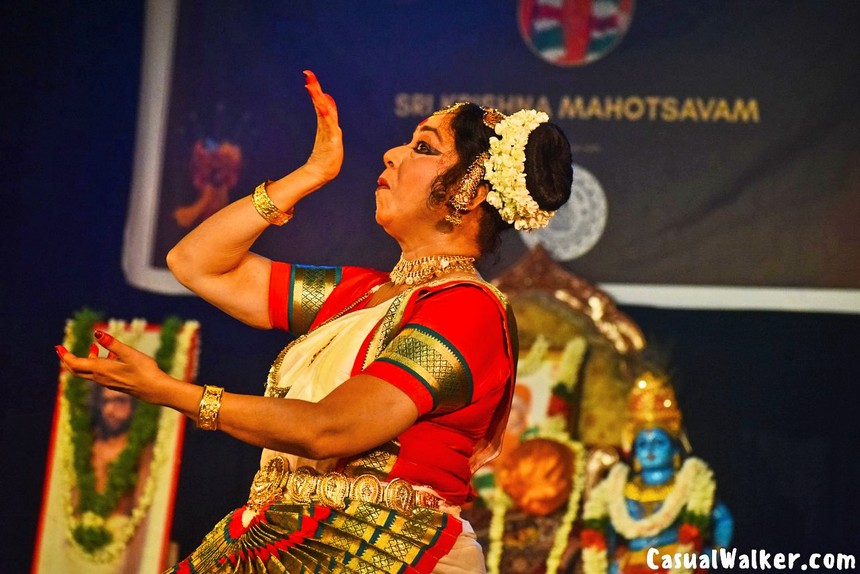
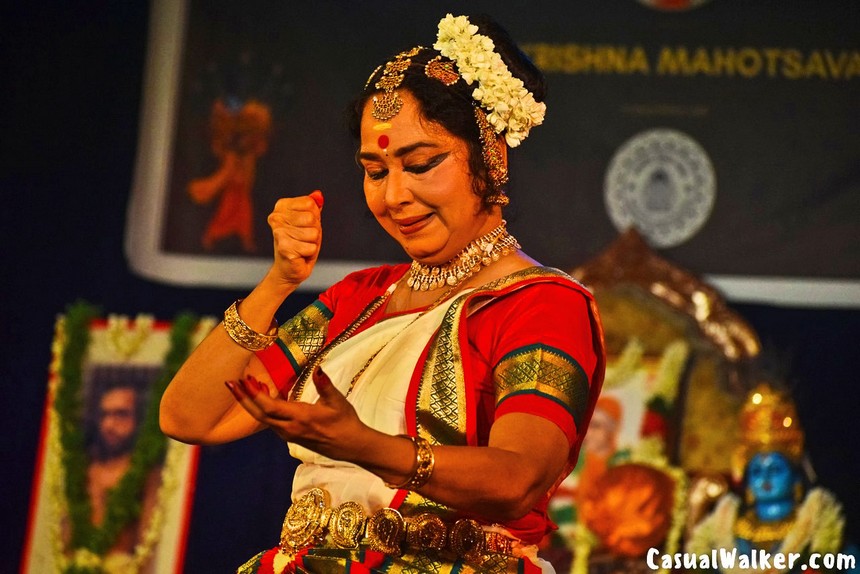
Watching Gopika Varma move through this plot was genuinely touching, the shift between Krishna’s regal warmth and Kuselan’s timid hesitation captured entirely through subtle changes in posture, eye movement and hand gesture, without a single word spoken. What made it so effective was the sheer economy of the expression, nothing was overplayed, and yet every beat of the story, disbelief, tenderness, shame, gratitude, was unmistakably legible, carried purely by bhava (inner emotion) rather than any narrated action.
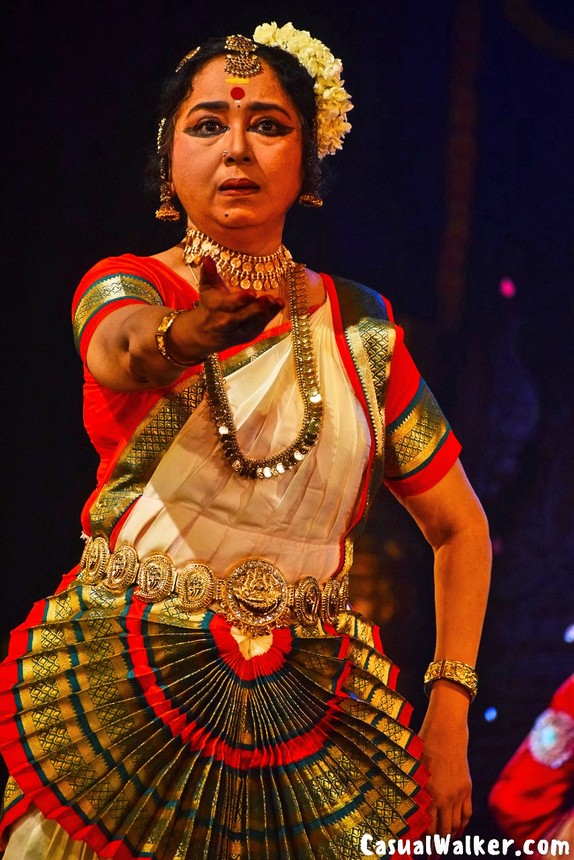
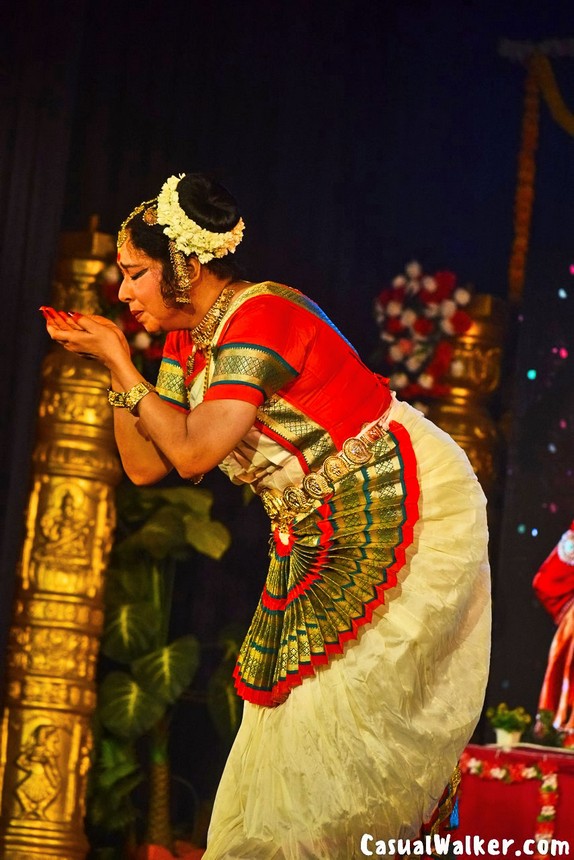
At its heart, this is a performance about friendship transcending status, and about the idea that true devotion (bhakti) and love matter far more than material offerings, a plot that translates beautifully into the devotional grammar of Mohiniyattam.
Kanakamayam Ayidum – A Playful Game of Guessing the Divine Performance
Kanakamayam Ayidum, set in the Huseni raga (melodic framework), one of the compositions from Swathi Thirunal’s Utsavaprabandha, the musical work that captures the ten day temple festival of the Sree Padmanabhaswamy Temple in Thiruvananthapuram in song. The storyline enacted on stage belongs to the third day of that festival, when the deity is taken out in a grand street procession seated upon the kamala vahana (lotus vehicle), the golden lotus vehicle, and the dancer becomes the crowd itself, marvelling at the spectacle unfolding before them.
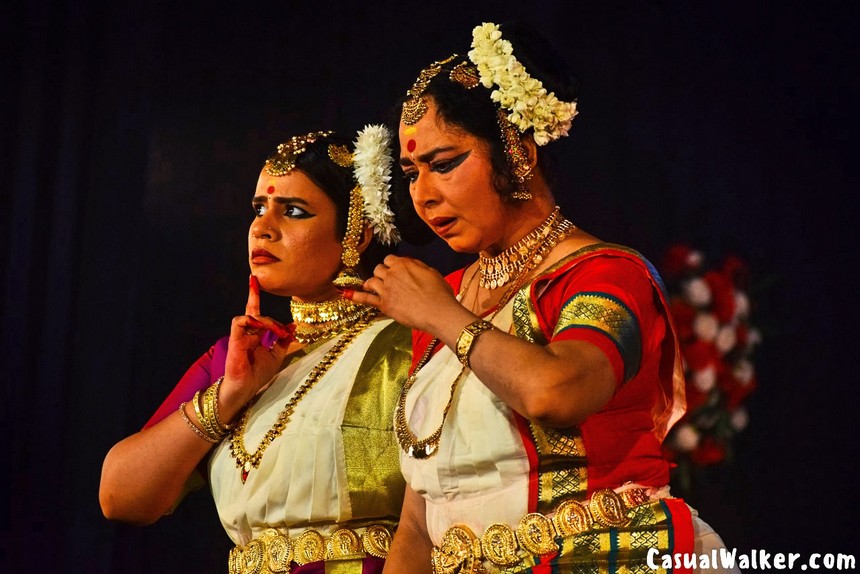
The plot is built in a playful, teasing style known as ninda stuti (praise through mock rebuke), where praise is disguised as mock criticism or feigned confusion, set to lyrics in manipravalam (a blend of Sanskrit and Malayalam), that lovely old blend of Sanskrit and Malayalam.
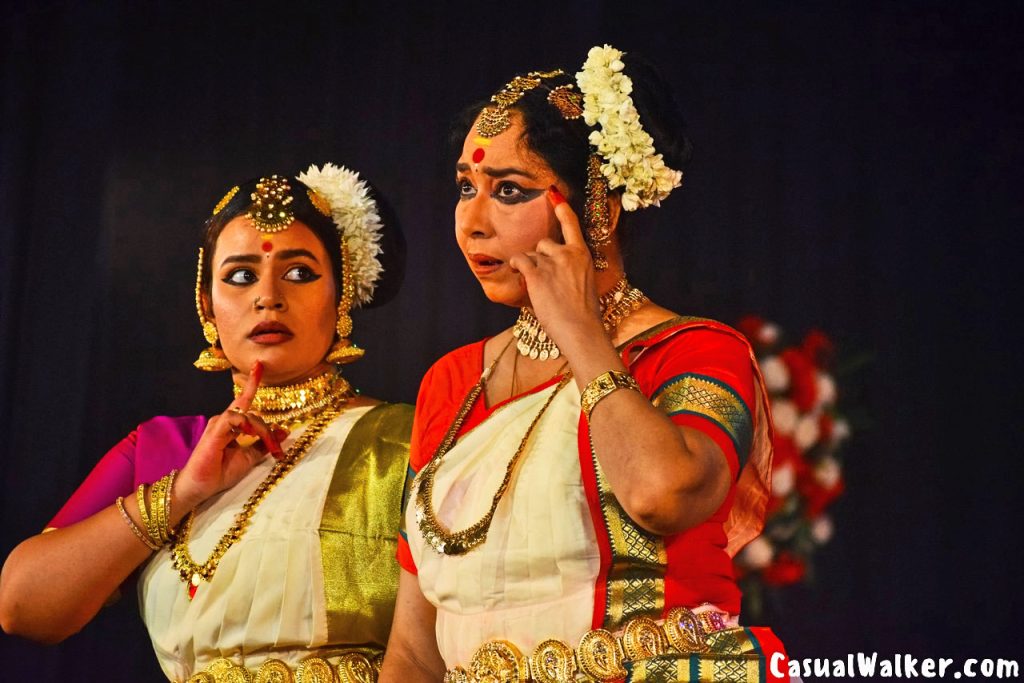
On stage, the dancer plays out a conversation between two friends standing in the crowd, watching a blindingly radiant figure glide past on the lotus carriage and pretending, with great amusement, that they cannot quite place who it is. The refrain (pallavi) poses the question with mock wonder, asking who this glorious being could be, moving with such intense brilliance atop the golden lotus, and from there the performance becomes a joyful guessing game acted out entirely through gesture and expression.
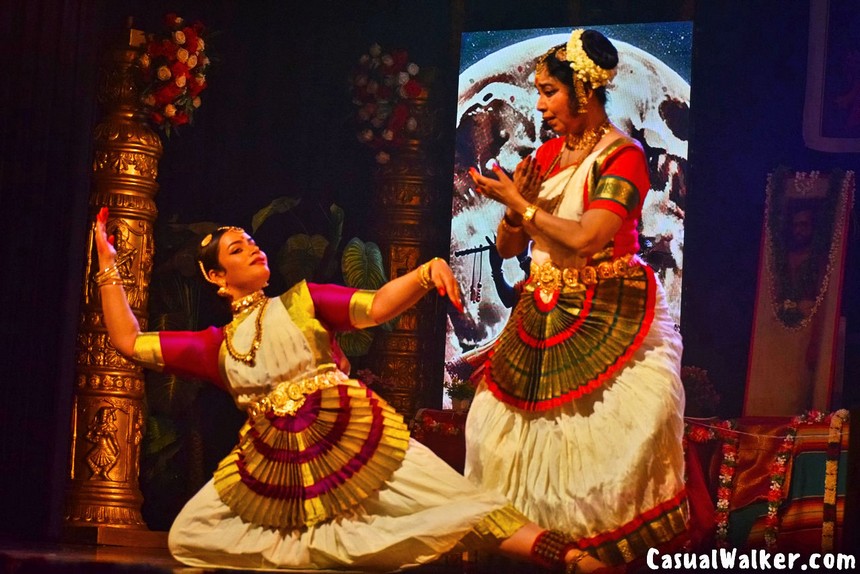
The onlookers first wonder if it could be Indra, the king of the gods, arriving in all his celestial grandeur, only to laughingly dismiss the idea since Indra is known for his thousand eyes, and this figure clearly does not have them. They wonder next if it might be the moon god, drawn in by the same cool, soothing radiance, but reject that guess too, since the moon carries its familiar dark spot and this figure carries none.
Could it be Lord Shiva himself, they ask, lord of Kailasa and consort of Gauri, only to rule him out for lacking the third eye upon his forehead. Perhaps it is the sun god, given the sheer brilliance of the light pouring off the carriage, but no, the sun scorches and burns, while this presence feels calm, gentle and soothing rather than fierce.
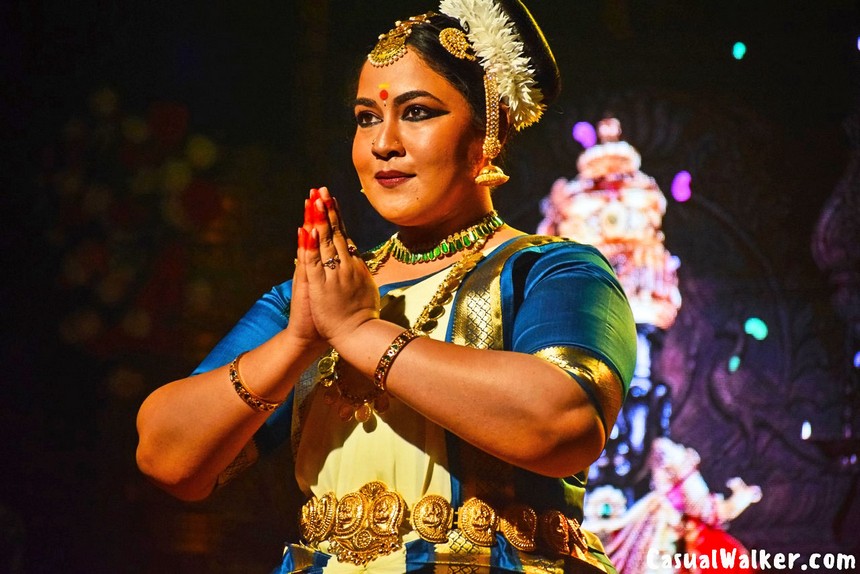
One last guess follows, Kubera, the god of wealth, prompted by the sheer opulence of gold and jewels surrounding the procession, but he too is dismissed, since Kubera is traditionally depicted as less than perfectly formed, while this figure is flawless in every way.
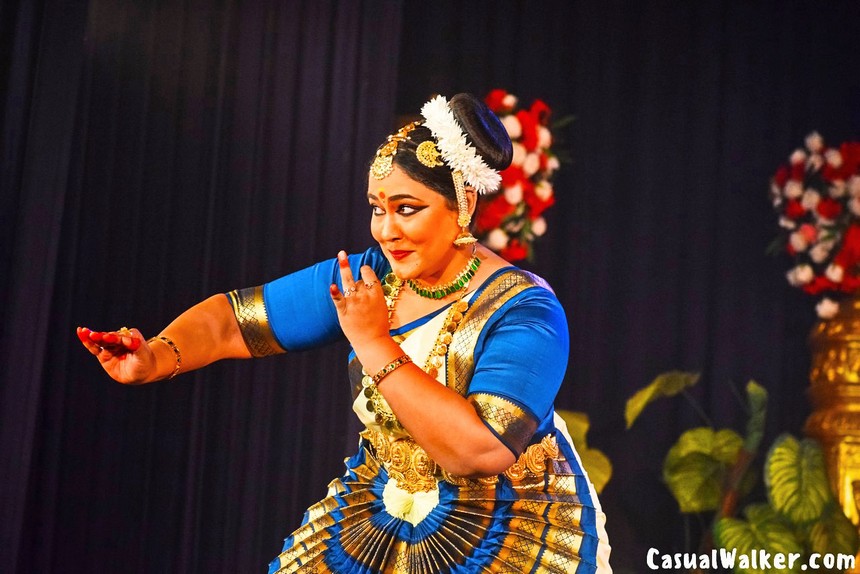
The plot resolves with the friends playfully eliminating every possibility and arriving, with evident delight, at the only answer left, that this magnificent figure can be none other than Lord Padmanabha himself, blessing his devotees from the street below. On stage, this entire back and forth of wonder, guesswork and gentle dismissal was carried purely through expression (abhinaya) and gesture, the dancer’s face shifting between curiosity, mock seriousness and eventual joyful recognition.
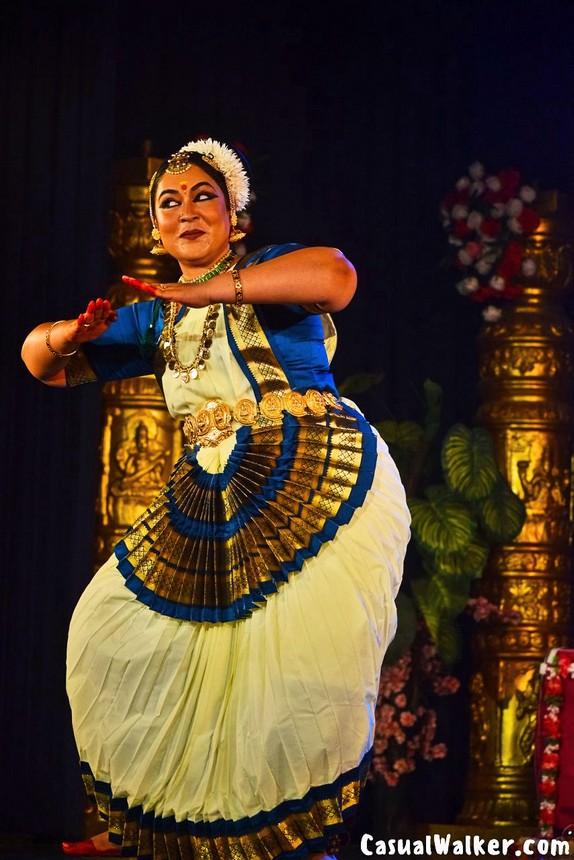
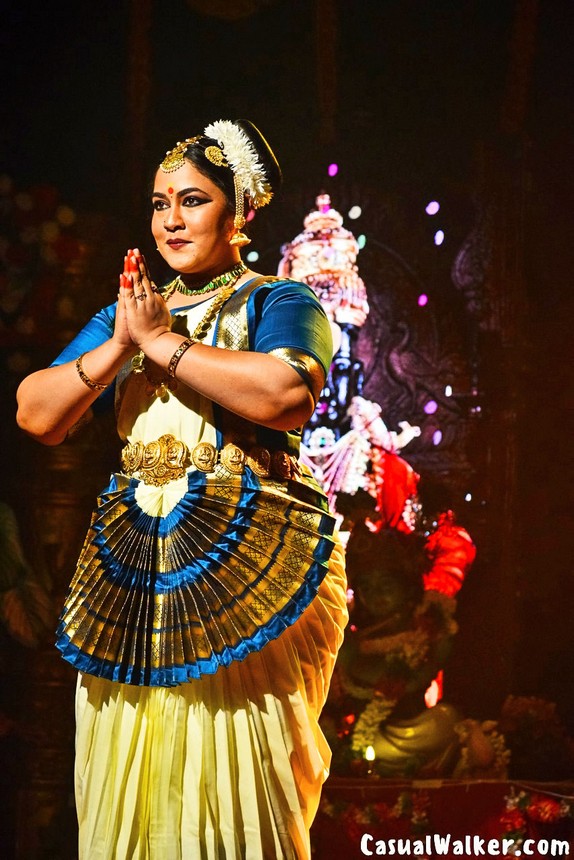
What stayed with me longest was not any single gesture or story, but the quiet realisation that an art this unhurried still has the power to hold a room completely still. Gopika Varma and her students told their stories with such sincerity that the applause followed on its own. And as the final note faded and the dancers settled into their closing namaskaram, bowing to the audience, the gods and the art itself, it felt less like an ending and more like a promise that Mohiniyattam, in hands as devoted as these, will keep swaying gently on for generations to come.

Thanks for exploring this Casual Walker photo guide — India’s most visual cultural travel guide and a curious discovery journal finding authentic photo stories, guides, and tips across travel, culture, arts, temples, heritage, and food.
- Keep exploring: Browse 650+ Travel & Culture Photo Guides
- We’d love to hear your feedback, stories, corrections, and updates — Email us.
- Follow our photo walks on Instagram: @hicasualwalker