





Purulia Chhau Dance in Purulia Region, West Bengal: UNESCO-Recognized Masked Martial Folk Dance Representing Gods, Goddesses, and Demons | A Male-Performance Chhau Folk Dance | History & Origin, Cultural Significance, Traditional Costumes, Mask Symbolism, Chaitra Parva Festival & Complete Guide to India’s Ancient Tribal Performance Art (Updated)
– semi-classical dance form that combines martial arts & mythological storytelling

In the eastern India, where the red laterite soil of Purulia district meets the misty Ajodhya Hills, an ancient art form has survived for centuries one that transforms men into gods, warriors into storytellers, and open courtyards into divine battlegrounds. This is Purulia Chhau dance, a spectacular fusion of martial arts, tribal traditions, and mythological theatre that remains one of India’s most electrifying yet underappreciated cultural treasures.
Chhau dance is explosive, athletic, and visceral a performance where dancers wear elaborate traditional masks depicting gods and demons while executing acrobatic combat movements that would challenge even trained athletes. When the thunderous dhamsa drums begin their primal rhythm and masked figures leap into torchlit circles, you’re witnessing something far older than memory: a living bridge between ancient warrior traditions and sacred devotional art. 
Recognized by UNESCO as Intangible Cultural Heritage of Humanity in 2010, and with its iconic masks receiving the Geographical Indication (GI) tag in 2018, Purulia Chhau represents the raw, unpolished soul of Indian folk performance born not in royal courts or temple halls, but in the villages and red earth of West Bengal’s tribal and scheduled caste communities.
Chhau Dance: A Semi-Classical Marvel
Chhau dance is a semi-classical Indian dance form that uniquely combines martial arts, tribal folk traditions, and mythological storytelling. Practiced across eastern India, it exists in three regional styles:
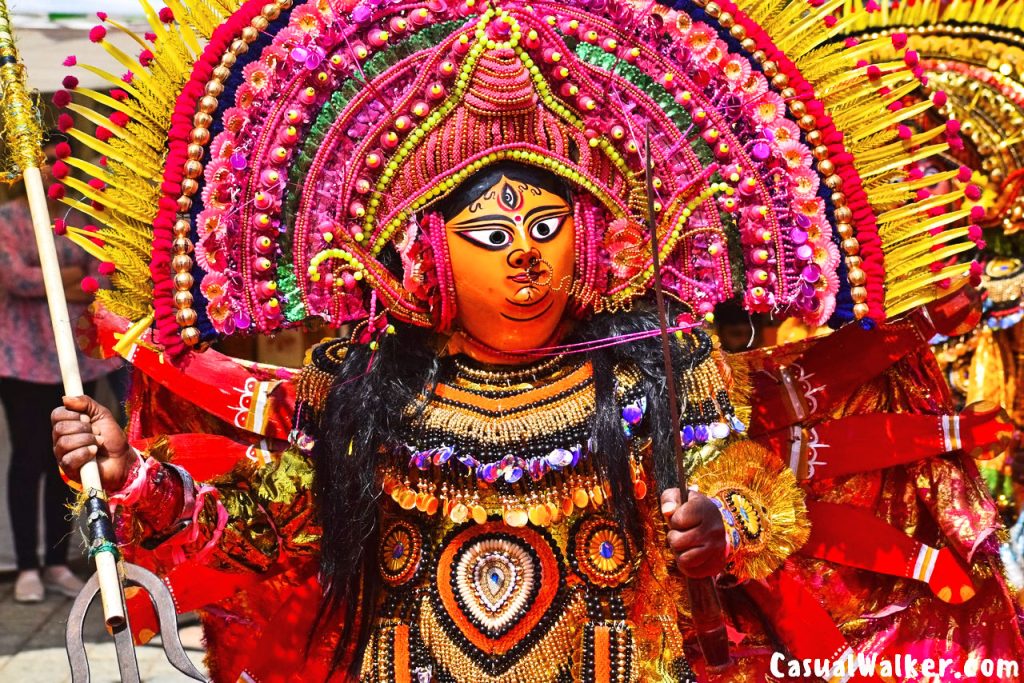
- Purulia Chhau (West Bengal) – Elaborate masks and explosive acrobatics
- Seraikella Chhau (Jharkhand) – Subtle movements with stylized masks
- Mayurbhanj Chhau (Odisha) – No masks, emphasizing facial expressions
Purulia Chhau stands apart for its dramatic intensity, vibrant masks, and deep rural folk culture roots.
Meaning Behind “Chhau”
The word reveals the dance’s dual nature:
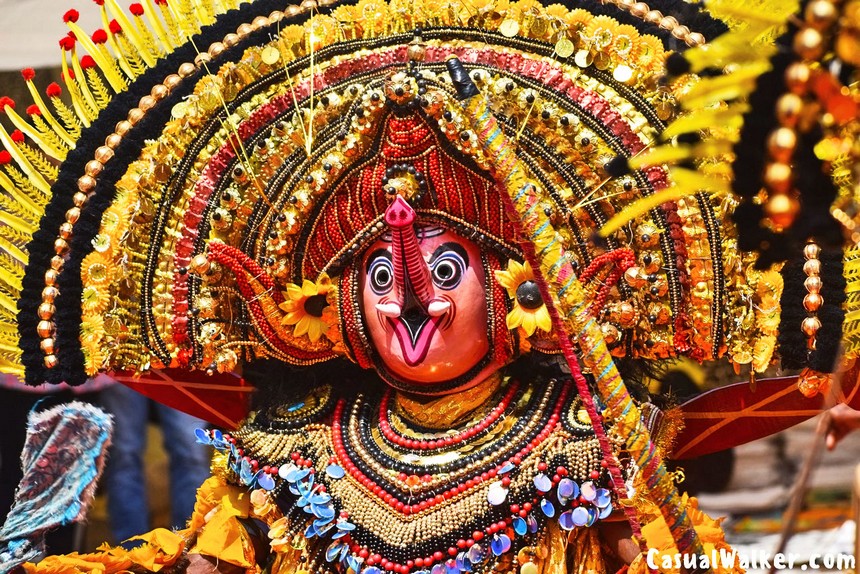
- “Chhaya” (Sanskrit) = shadow/mask the iconic mask tradition
- “Chhauni” (Sanskrit/Odia) = military camp martial foundations
- “Chadma” (Sanskrit) = disguise transformative power
History of Chhau Dance
Chhau dance history traces to the 18th century when Purulia’s kings and zamindars patronized village martial performances during spring festivals. It is believed to have evolved under the patronage of local nobility, transforming from combat displays rooted in parikhanda, the ancient sword-and-shield fighting system, into elaborate dance-dramas.
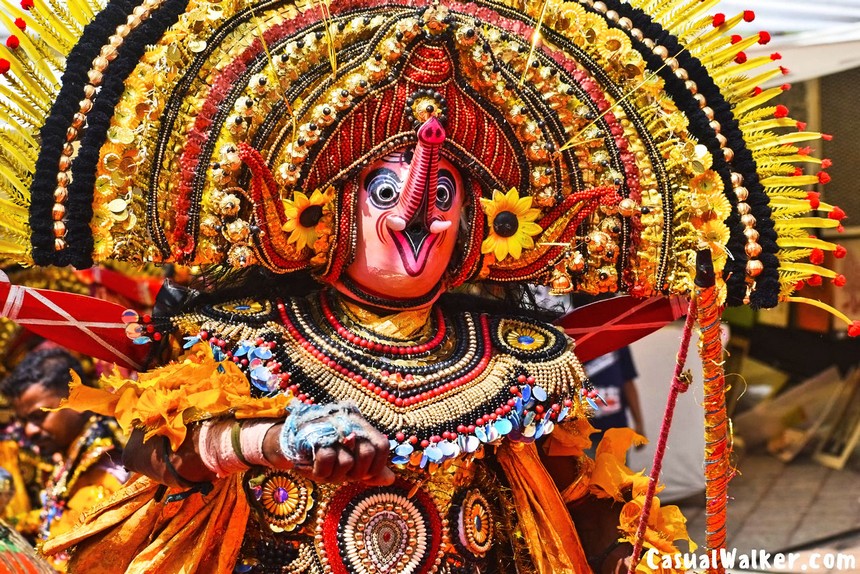
Over generations, warrior training became divine theatre, with martial displays evolving into performances depicting stories from the Ramayana, Mahabharata, and Puranas.
Purulia’s Unique Folk Heritage
Unlike Seraikella and Mayurbhanj Chhau, which developed under royal patronage, Purulia Chhau remained a grassroots folk art performed by scheduled caste and tribal communities. This origin preserved its raw authenticity but also led to marginalization. Through the generations, this dance form has been a source of pride and identity for the local community, playing a vital role in preserving and passing on the cultural heritage of the Purulia district.
Charida Village: Where Gods Take Form
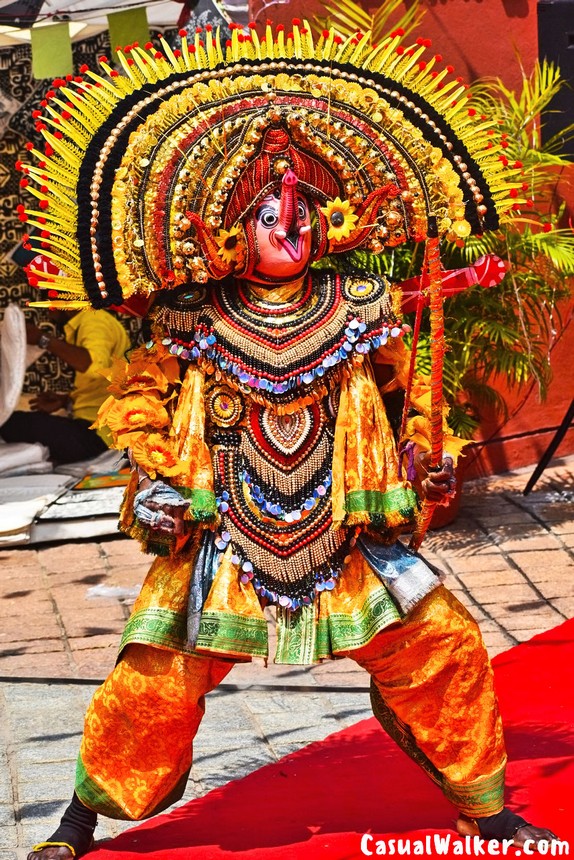
Every authentic Purulia Chhau mask originates from Charida village in Baghmundi, known as Mukhosh Gram (Mask Village) the epicenter of traditional mask-making in India.
The Dance: Where Martial Arts Meets Divine Theatre
Martial Foundation
Purulia Chhau is rooted in parikhanda sword-and-shield combat. Every leap, spin, and stance originates from battlefield techniques, demanding raw strength, fearless acrobatics, and explosive energy.
Movement Vocabulary
- Khel: Complete movement sequence
- Chalis: Gaits mimicking animals/gods (peacock walk, lion’s prowl)
- Topkas: Dramatic jumping and leaping steps
- Uflis: Village life movements (grinding grain, plowing fields)
The dance is characterized by energetic footwork and agile movements. Dancers perform intricate steps, leaps, and spins, showcasing their physical prowess and skill. The rhythm and precision of their footwork create a mesmerizing auditory experience that complements the visual aspects of the performance.
Mask’s Challenge
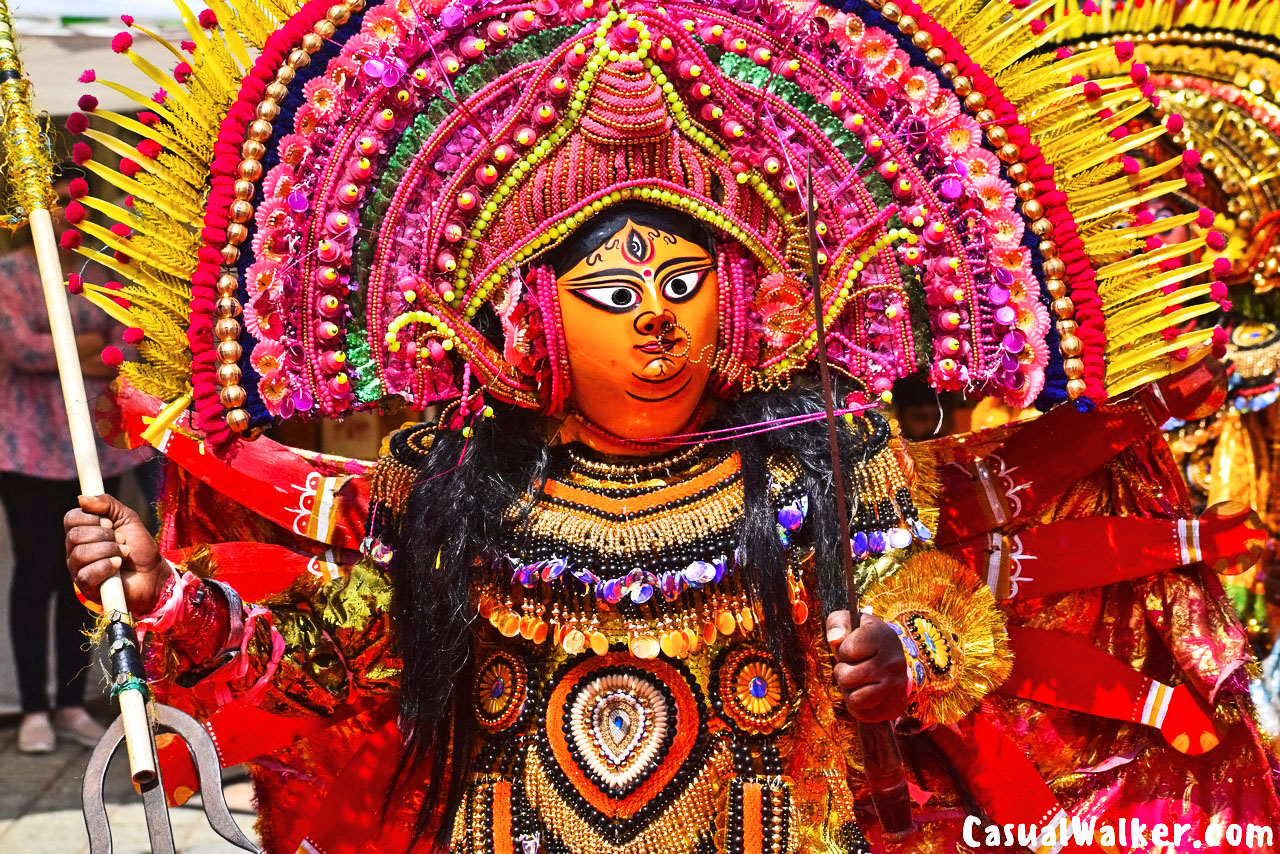
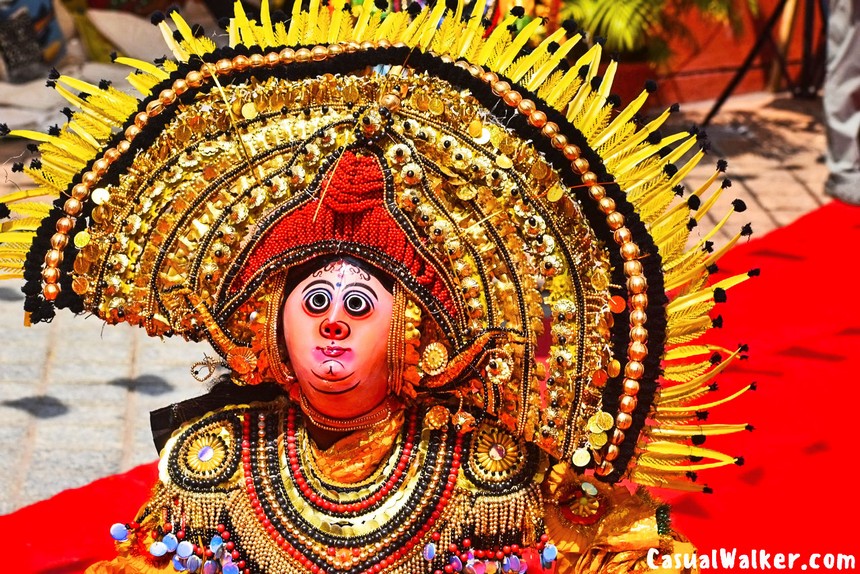
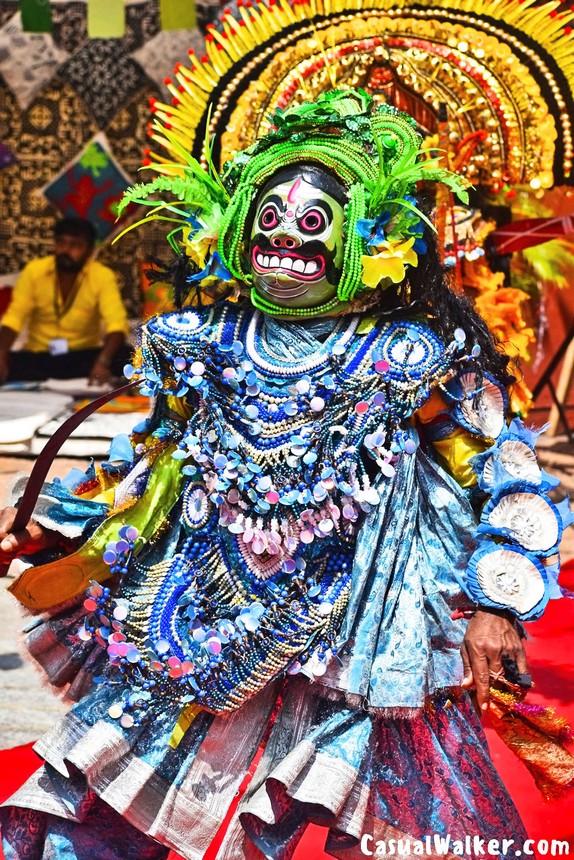
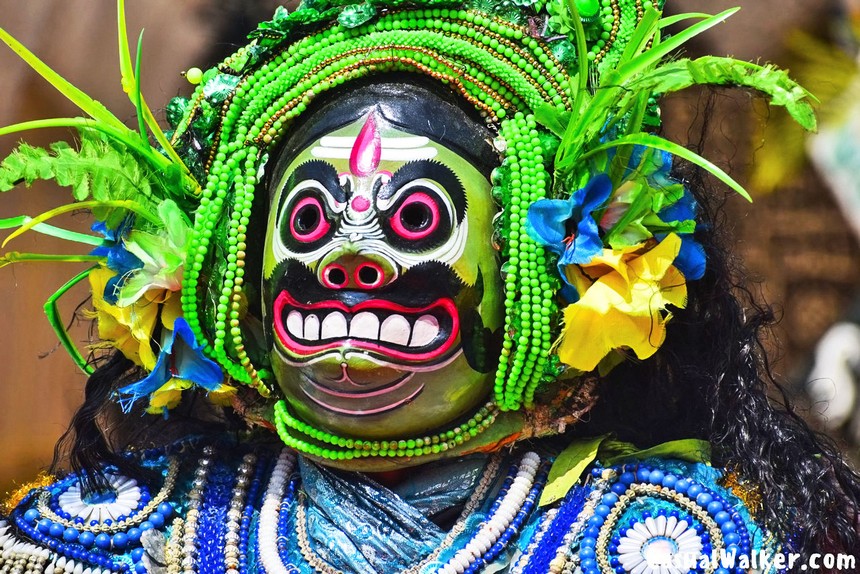
The Chhau mask completely covers the face, eliminating expressions. Every emotion rage, devotion, fear, triumph is conveyed through body posture, gesture quality, rhythm, and spatial dynamics. This makes Chhau a masterclass in non-verbal communication and adds an element of mystique and visual appeal to the performance.
Tandava and Lasya
Though performed exclusively by men, Chhau embodies both:
- Tandava: Masculine vigor (Shiva’s dance, warrior battles)
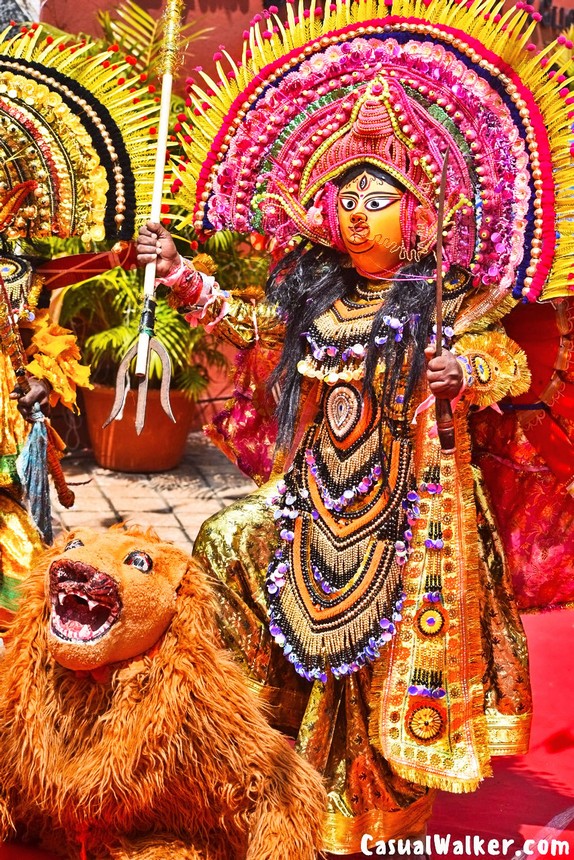
- Lasya: Feminine grace (Durga’s elegance, Saraswati’s gentleness)
Male performers portraying goddesses must channel strength into controlled beauty.
Visual Spectacle: Masks and Costumes
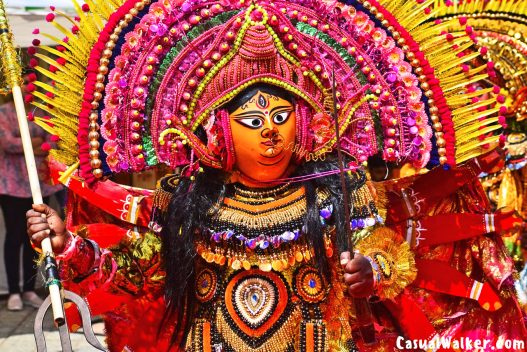
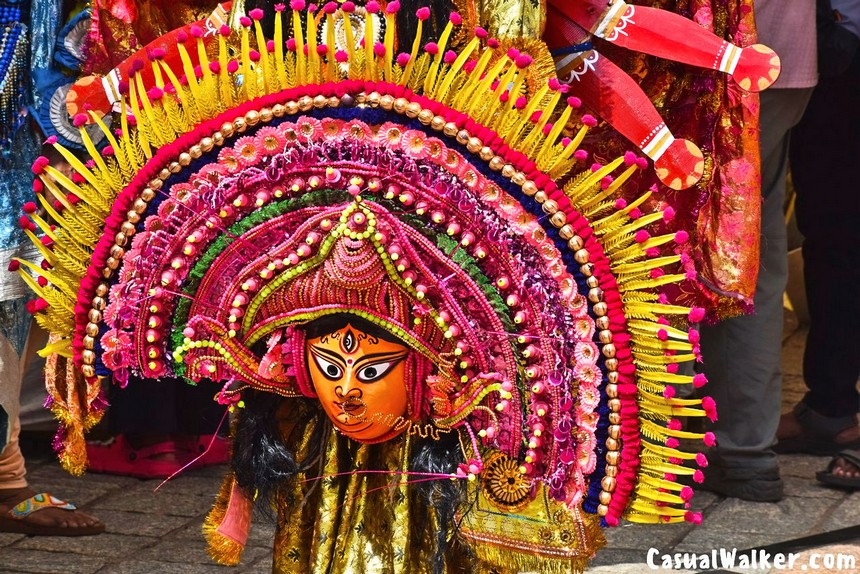
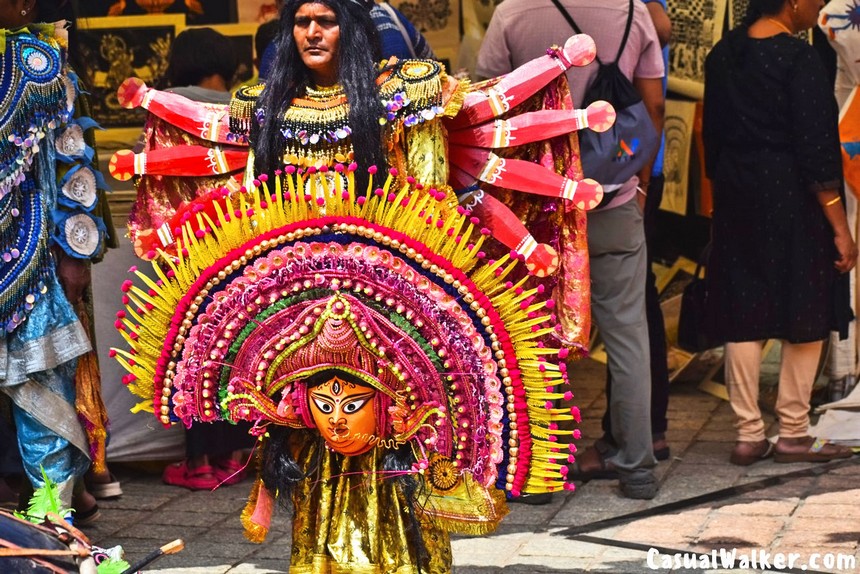
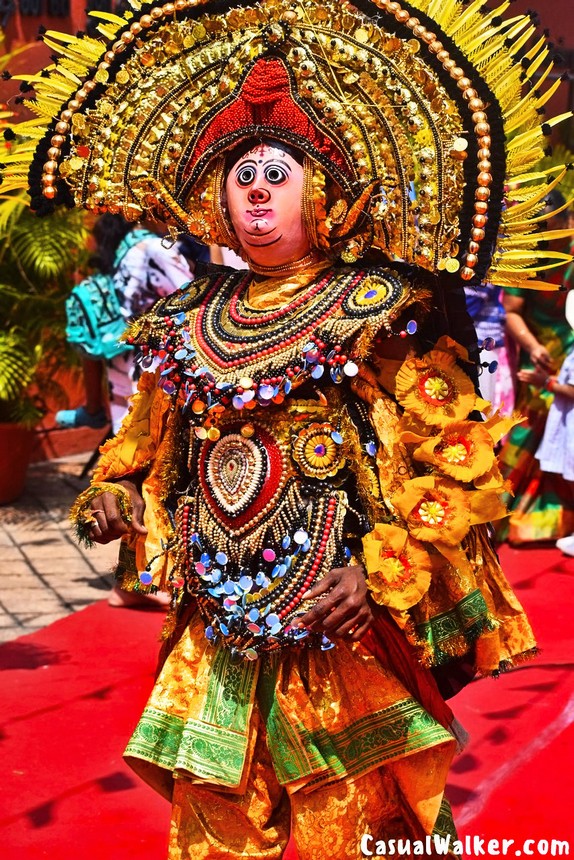
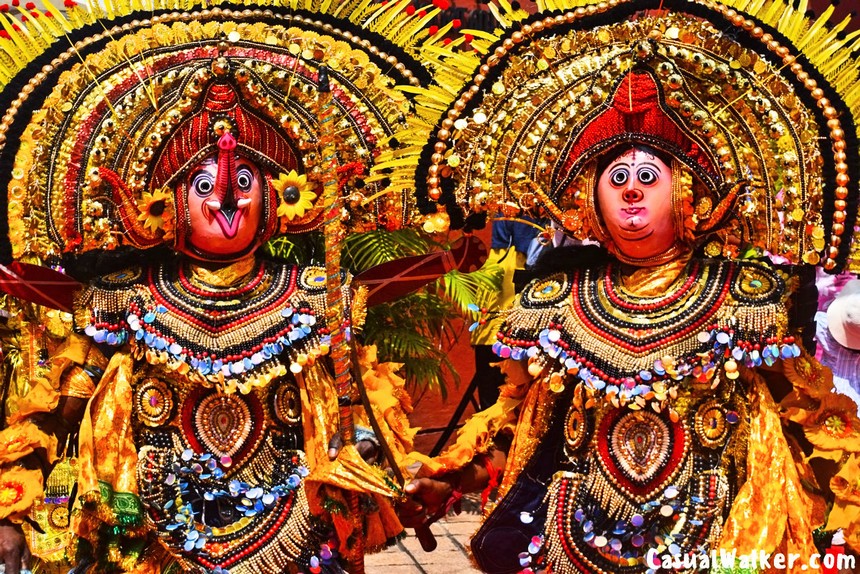
One of the most striking elements of Purulia Chhau is its use of intricately crafted masks representing various characters from Indian mythology and folklore, including gods, demons, and animals. Dancers don these traditional Indian masks, transforming themselves into divine or demonic beings. Elaborate traditional costumes, often adorned with traditional motifs and vibrant colors, further enhance the visual spectacle, creating a complete theatrical experience.
Mythological Stories: Epic Palas
Purulia Chhau is fundamentally a storytelling dance form. Each performance, called a “pala,” revolves around a specific narrative drawn from Hindu epics or local folklore. Through intricate movements and gestures, dancers convey the plot, emotions, and conflicts of the story, captivating the audience with their expressive storytelling.
Popular Palas:
- Mahishasur Mardini – Durga slaying the buffalo demon
- Tarakasur Badh – Kartikeya destroying demon Tarakasura
- Arjun’s Darpachurna – Mahabharata tale of pride and humility
- Shiva-Parvati – Divine marriage and cosmic dance
Contemporary troupes now experiment with environmental themes, tribal folklore, and social justice narratives.
Musical Heartbeat
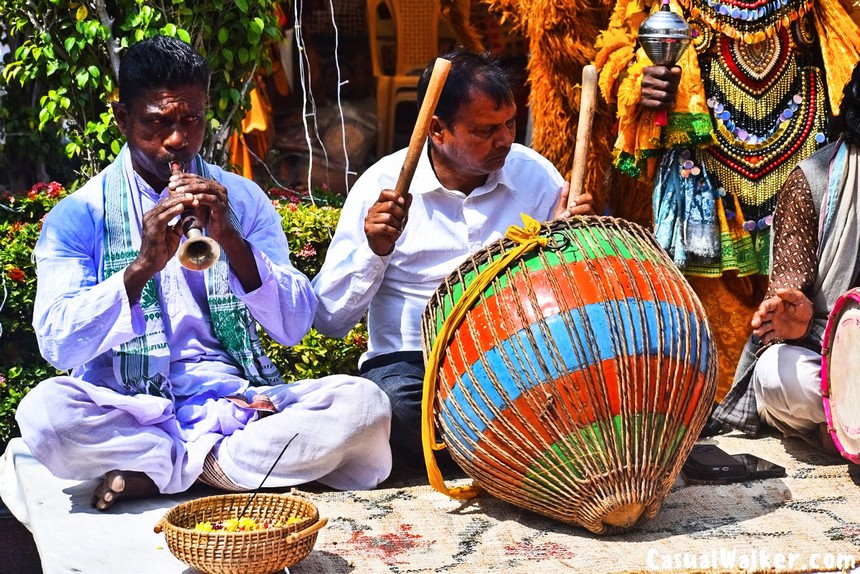
Purulia Chhau is accompanied by live traditional music, featuring a traditional ensemble that voices the divine drama:
Primary Instruments:
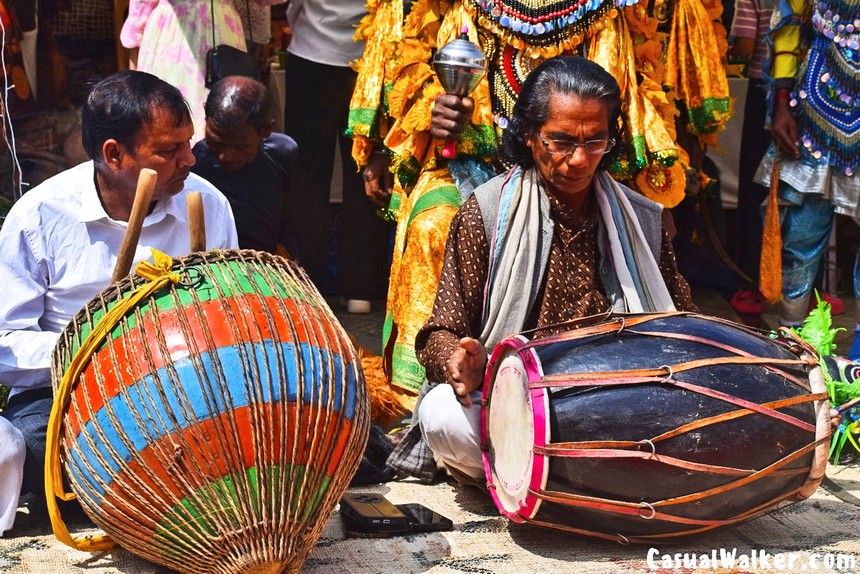
- Dhamsa (Kettle Drum): Thunderous bass driving combat, evoking anger and heroism
- Dhol/Madal: Drums providing rhythm and heartbeat
- Shehnai/Mohuri: Reed instruments adding melodic sweetness, evoking peace and devotion
The music adds depth and emotion to the dance, enhancing the overall artistic experience. Musicians and dancers share an unspoken code rhythm cues signal entries, exits, and emotional shifts.
Chaitra Parva: The Festival of Fire and Faith
Every spring (March-April), Chaitra Parva honoring Lord Shiva and Shakti transforms Purulia into living theatre. From Bamnia to Charida, villages awaken as men rehearse, mask makers finish pieces, and the red earth prepares for divine battles.
Festival Experience
Timing: 9 PM onwards, past midnight
Purulia Chhau is also performed during religious festivals such as Durga Puja, Diwali, the Gajan Festival, Sun Festival (Makar Sankranti), weddings, and cultural events at Folk Art Centres (Maldi, Bamnia). These performances not only entertain but also provide a spiritual and cultural connection for the audience.
Comparing Three Chhau Styles
While all three regional variations of Chhau share martial foundations, each has developed its own distinct aesthetic and performance style. Purulia Chhau from West Bengal is characterized by elaborate, full-face masks and explosive, acrobatic movements that emphasize combat episodes and the explicit victory of good over evil, rooted in its folk and tribal origins. Seraikella Chhau from Jharkhand, developed under royal patronage, features subtle, stylized masks with refined, lyrical movements that explore more abstract and symbolic themes, often performed as solos or duets.
Mayurbhanj Chhau from Odisha, which evolved under state patronage, is unique in that it uses no masks at all, relying instead on highly acrobatic movements combined with expressive facial gestures to convey epic dramas and emotional depth. Among these three forms, Purulia Chhau remains the most visually dramatic and theatrically powerful, maintaining its raw, earthy authenticity as a true folk performance art.
Cultural Significance
Purulia Chhau dance holds immense cultural significance in the Purulia region and beyond. In recent years, it has gained recognition beyond its home region, attracting tourists and art enthusiasts from around the world. This international exposure has contributed to its promotion and sustainability, helping ensure that this ancient art form continues to thrive in the modern era.
Purulia Chhau reminds us that India’s greatest cultural wealth lies in remote villages where marginalized communities preserve ancient knowledge against all odds.
Purulia Chhau dance is a captivating blend of artistry, tradition, and storytelling a complete theatrical universe where mythology walks the earth, masks transform humans into gods, and drumbeats carry ancient wisdom. Its distinctive masks, vibrant costumes, energetic movements, and cultural significance make it a cultural treasure that continues to thrive and evolve.
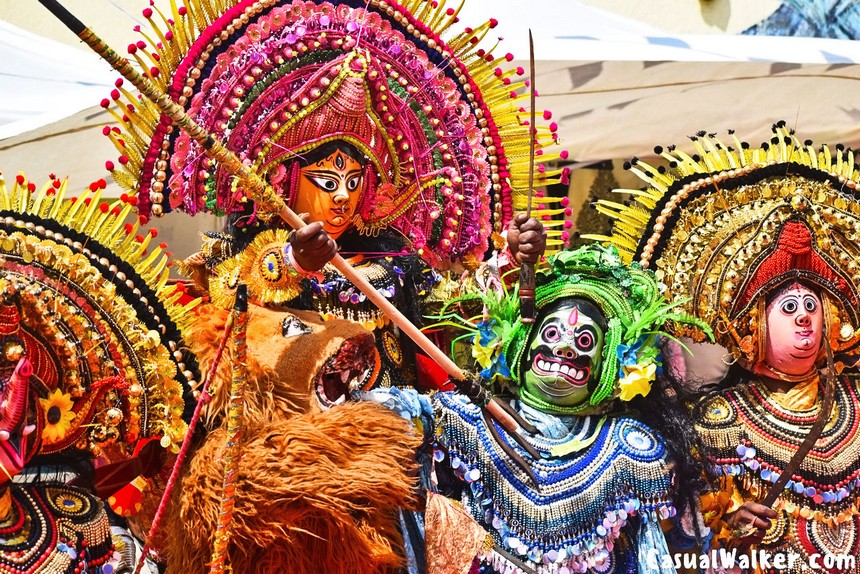
As the dhamsa rolls through the night and torches illuminate Purulia’s red hills, you witness something timeless: art, faith, and endurance merging into one explosive heartbeat.
From Charida’s workshops to Chaitra Parva’s open-air stages, from 18th-century patronage to UNESCO status, Chhau has survived, evolved, and continues to captivate. As we celebrate the diversity of India’s cultural heritage, Purulia Chhau stands as a shining example of the country’s artistic richness and enduring traditions.

Travel Tips for Visiting Purulia Chhau Dance in Purulia Region, West Bengal
Best Time to Visit
March-April (Chaitra Parva) is the ideal time to witness Purulia Chhau in its full glory. During this period, the region comes alive with the annual Chaitra Parva festival, featuring nightly performances in villages across the district. The weather is pleasant, with moderate temperatures ranging from 20°C to 35°C, making it comfortable for outdoor performances and exploration.
Best Time to Visit: Morning hours (8 AM – 12 PM)
- Artisans work during daylight for intricate detailing
- Better lighting for photography
- Cooler temperatures for walking around the village
How to Visit Purulia Chhau Dance in Purulia Region, West Bengal
By Train (Most Convenient Option): Purulia Railway Station is well-connected to major cities in eastern India:
From Kolkata:
- Trains Available: Rupashi Bangla Express, Purulia Express, Santragachi-Chandil Passenger
- Duration: 5-6 hours
- Frequency: Multiple trains daily
- Class Options: AC, Sleeper, General
- Tip: Book tickets in advance during festival season (March-April) as trains fill up quickly
From Ranchi:
- Duration: 3-4 hours
- Frequency: Regular passenger and express trains
Local Transport from Station:
- Auto-rickshaws and taxis available for hire
- Local buses connect to various parts of the district
- Pre-book vehicles if arriving late at night
By Road (Scenic Route)
From Kolkata (290 km / 6-7 hours):
Route Options:
- Via NH-60 (Recommended): Kolkata → Durgapur → Asansol → Purulia
- Via Bankura: Kolkata → Arambagh → Bankura → Purulia (more scenic but slower)
Bus Services:
- Government Buses: Regular services from Kolkata’s Esplanade and Babughat bus terminals
- Private Buses: Comfortable AC and non-AC coaches available
- Booking: Can be done online or at bus terminals
- Overnight buses: Available for those preferring to travel at night
Road Trip Highlights:
- Stop at Durgapur Barrage for refreshments
- Explore Joychandi Pahar hills en route
- The landscape transitions from plains to red laterite hills perfect for photography
By Flight: Nearest Airport: Birsa Munda Airport, Ranchi (115 km from Purulia) or Netaji Subhas Chandra Bose International Airport, Kolkata.
Thanks for exploring this photo guide! We’d love to hear your feedback, stories, corrections, or any updates. Email us.
Follow our photo walks on Instagram: @hicasualwalker
Keep exploring: Browse 650+ Travel & Culture Photo Guides