





Sri Adhikesava Perumal temple / Sri Ramanujar Temple or Bhashyakara Swamy Devasthanam in Sriperumbudur: One of 108 Divya Desams & Birthplace of Sri Ramanujacharya, Vedic Philosopher & Social Reformer / Temple to Solve Marriage Obstacles & Skin Doshas | Visit, Temple Timings, History, Contact Details & Complete Travel Guide (Updated)
– sacred shrine where vishnu relieved boodha ganas from divine curse

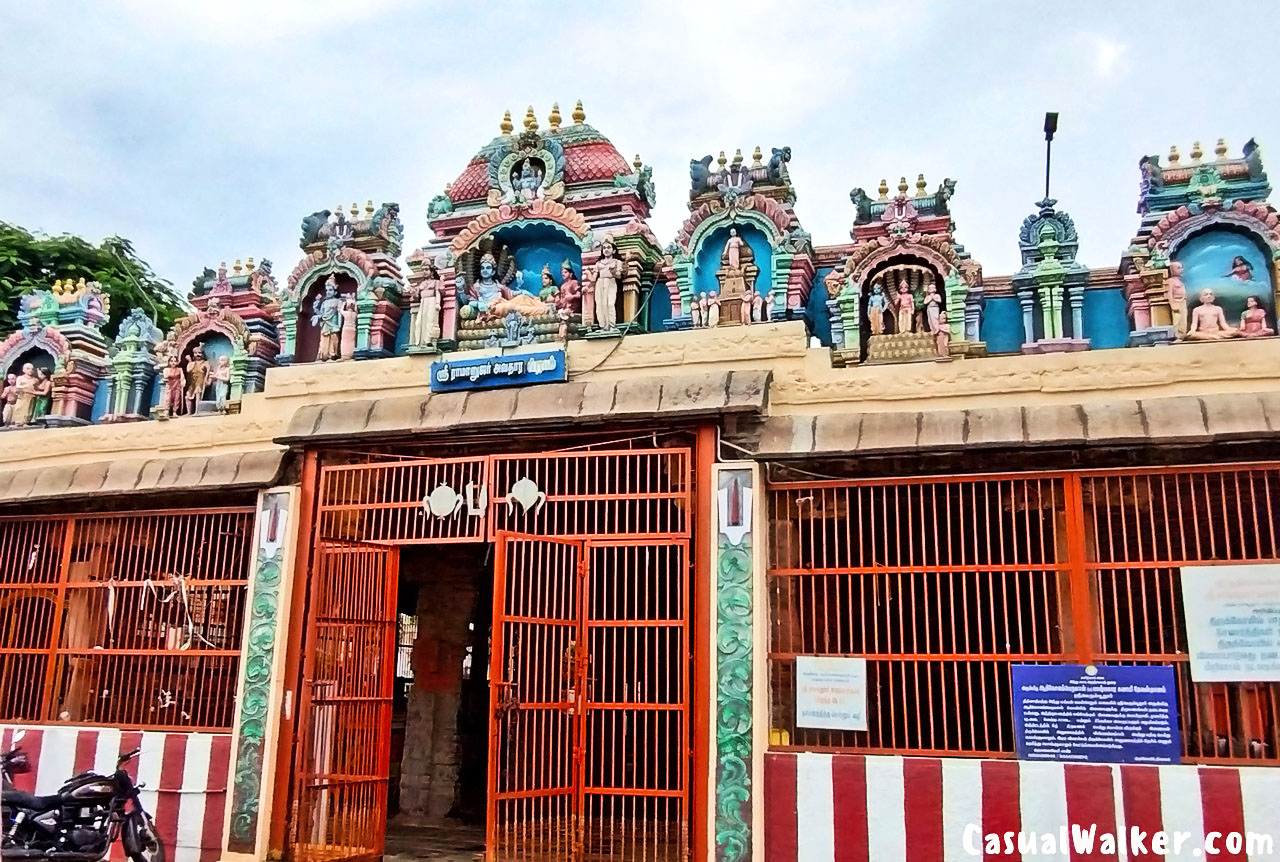
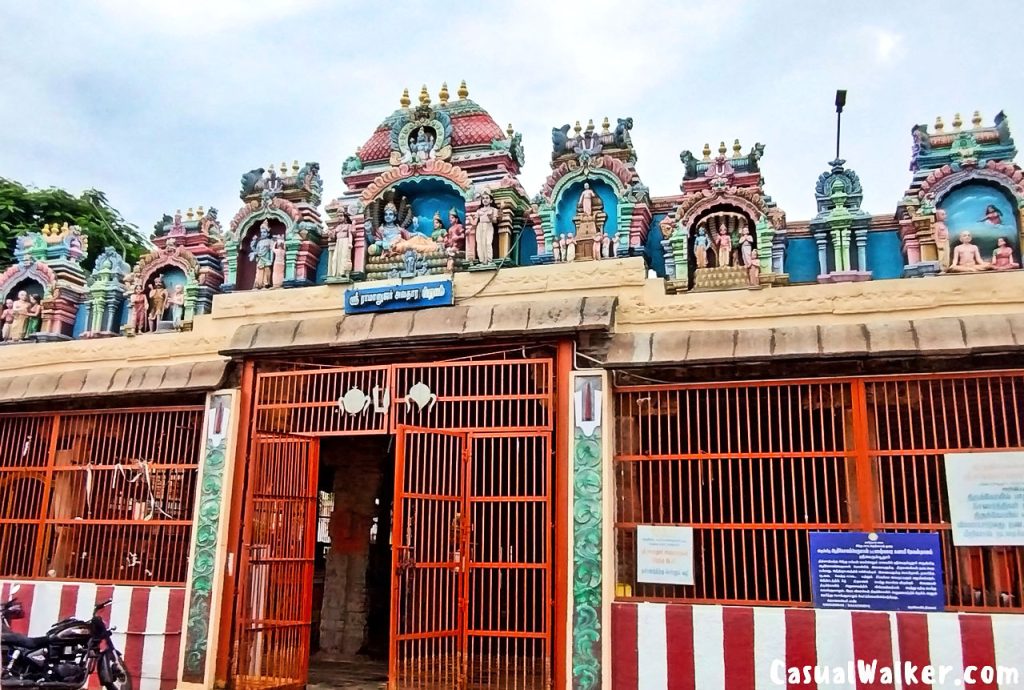
Sri Adhikesava Perumal Temple in the historic town of Sriperumbudur in Kanchipuram district, stands as a beacon of Vaishnavite tradition and spiritual heritage. Also revered as the Ramanujar Temple or Bhashyakaraswamy Devasthanam. 
This place is also the birthplace of Sri Ramanujar, the great philosopher-saint who revolutionized Vaishnavism in the 11th century. Standing here, you can feel the divine energy that has blessed this land for over a thousand years.
History of Adikesava Perumal Temple / Ramanujar Temple, Sriperumpudur : From Bhutapuri to Sriperumbudur
The story behind this temple’s origin is fascinating! In ancient times, this place was called Bhutapuri, Lord Shiva was performing a cosmic dance in Kailasa when a wardrobe malfunction occurred. The onlookers – his own Bhuta Ganas – couldn’t control their laughter. Angered, Lord Shiva cursed them to take birth as demons on Earth.
When they pleaded for mercy, Shiva directed them to perform penance and seek Lord Mahavishnu’s grace. The devoted Bhutas descended to Earth and engaged in intense meditation. Pleased with their devotion, Perumal – Lord Vishnu instructed Adisesha to create a sacred lake at Bhutapuri.
The Lord then appeared before them in his primordial form as Adikesava, blessing them with liberation from the curse. This is how the holy Ananta Saras Tirtha (temple tank) came into being, and the place earned its name Bhutapuri, which eventually transformed into Sriperumbudur.
Sri Ramanujar: The Divine Philosopher
Born in 1017 CE during the Tamil month of Chithirai, Sri Ramanujar’s very name means “the younger brother of Rama” – synonymous with Lakshmana. Just as Lakshmana was an incarnation of Adisesha, Ramanujar too is considered the avatar of the divine serpent in Kaliyuga. His great-uncle, Sri Tirumalai Nambi, worked at the Tirupathi temple. Observing that the young boy resembled Lakshmana, Lord Rama’s younger brother, he gave him the name Ilaya Azhwar — “Ilaya” signifying “younger” in the Tamil language.
His Revolutionary Mission
Ramanujar challenged prevailing Vedic interpretations and established the Vishishtadvaita philosophy (qualified non-dualism). Known as Yathiraja (the king of Sanyasis), he devoted his entire life to spreading the message of Lord Vishnu, emphasizing devotion and equality among all people.
His spiritual journey spanned three significant places:
- Sriperumbudur: Where he was born and practiced Vaishnavism
- Melkote, Karnataka: Where he lived for 12-14 years
- Srirangam, Trichy: Where he reformed temple worship and spread Vaishnavism across South India
The Sacred Mantra
One of the most inspiring stories involves Ramanujar receiving the Ashtakshara Mantra (Om Namo Narayanaya) from Goshtipurna at Tirukkottiyur. After 18 visits and being guided by Lord Vishnu himself, Ramanujar received this sacred initiation.
But here’s what makes him truly extraordinary – instead of keeping this divine knowledge to himself, Ramanujar climbed to the top of the temple gopuram and gave mass deeksha to everyone gathered below! When his guru cursed him to suffer in hell for this act, Ramanujar humbly replied that he wouldn’t mind suffering if it meant elevating countless devotees to Vaikuntha.
Miracle of Than Ugantha Thirumeni
The Ramanujar idol at this temple has an incredible story. While Ramanujar was still alive, his disciples created a sculpture of him. The resemblance was so perfect that when completed, Sri Ramanujar himself embraced the idol, infusing his own prana (life force) into it.
This is why it’s called ‘Than Ugantha Thirumeni’ – meaning Ramanujar himself resides within the sculpture. Legend says that when the sculptor carved the eyes, Ramanujar began bleeding from his own eyes because his soul had truly entered the idol. Within a fortnight, the great saint attained Vaikuntha.
The majestic idol, standing 5-6 feet tall, reveals its full glory during thirumanjanam (abhisheka) ceremonies. If you look closely at the back of the idol, you’ll notice it resembles the hood of Adisesha – a beautiful reminder of Ramanujar’s divine origin.
The Presiding Deities
Moolavar (Main Deity): Lord Vishnu as Adikesava Perumal, gracing devotees alongside Sridevi and Bhudevi
Thayar (Goddess): Yathirajanathavalli – and here’s something unique! This is the only temple where Goddess Lakshmi bears a name attributed to a devotee of the Lord. She’s known as a varaprasathi who grants all wishes to sincere devotees.
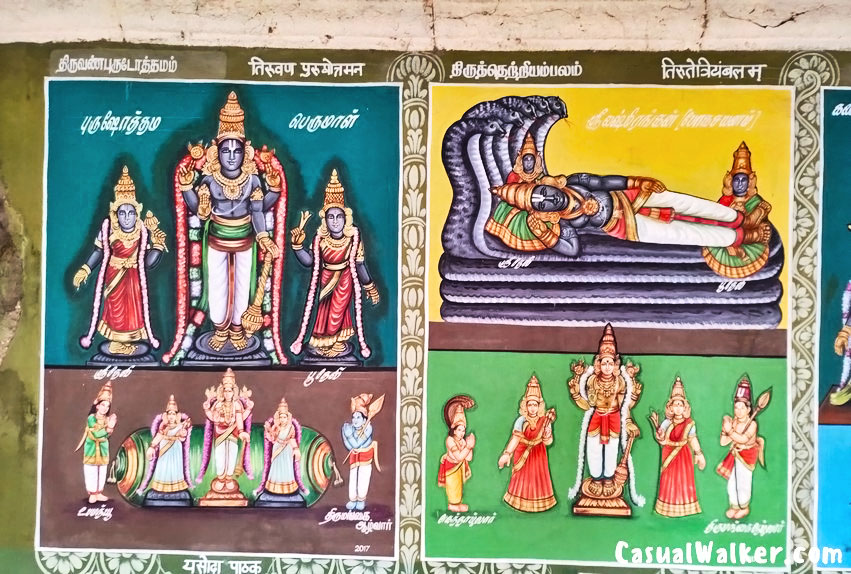
Temple Architecture and Layout
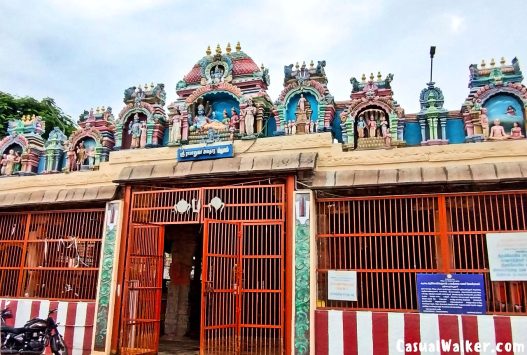
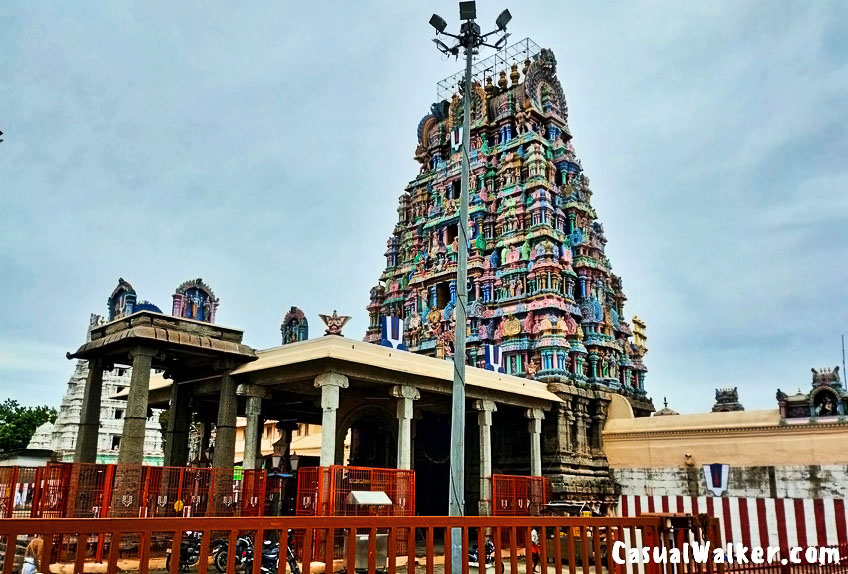
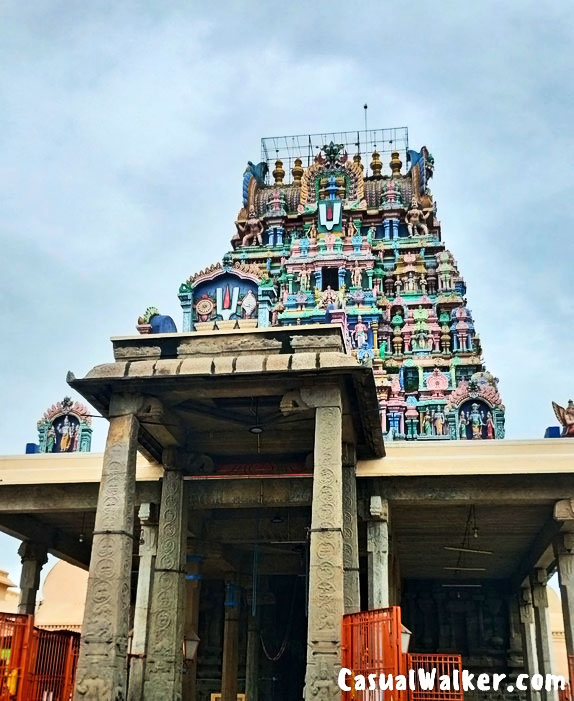
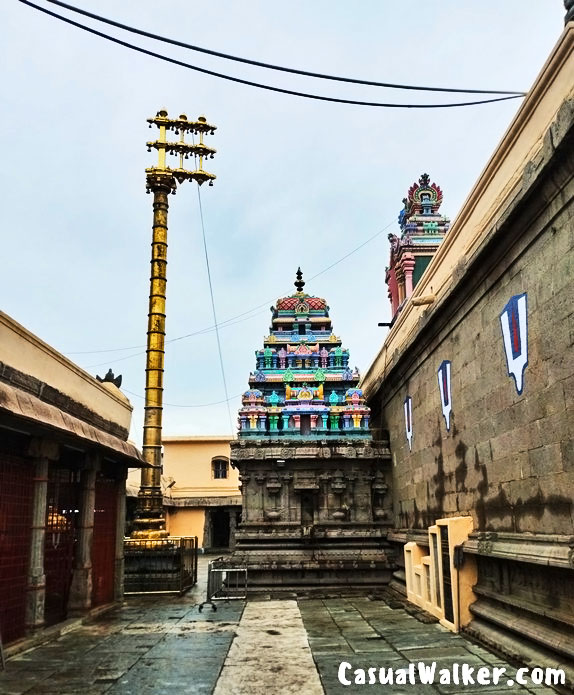
Built in the stunning Dravidian architectural style, the temple features a magnificent five-tiered Rajagopuram that welcomes you with its colorful splendor. The recent renovations have restored the temple to its original glory.
Main Entrance: As you enter through the gopuram, you’ll see the Dwajasthambam (flag post) with intricate stone carvings
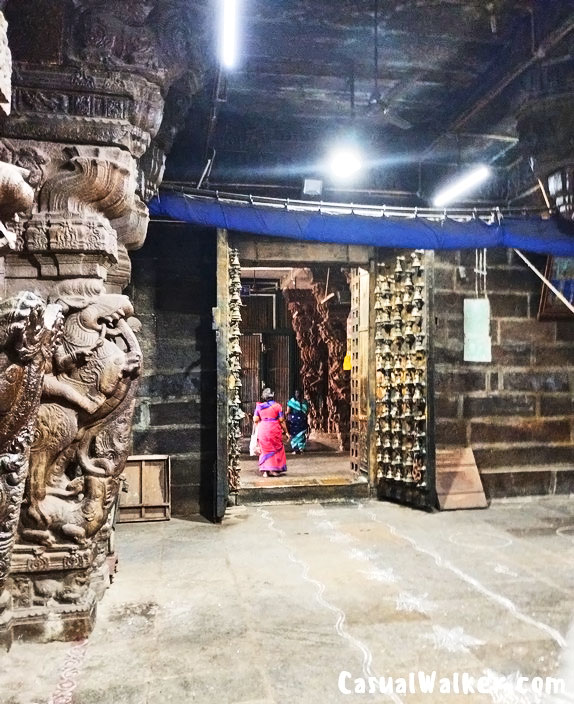
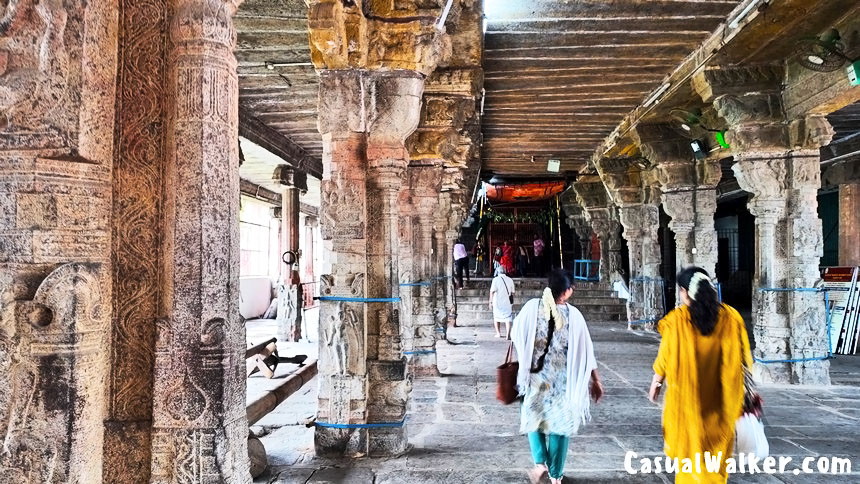
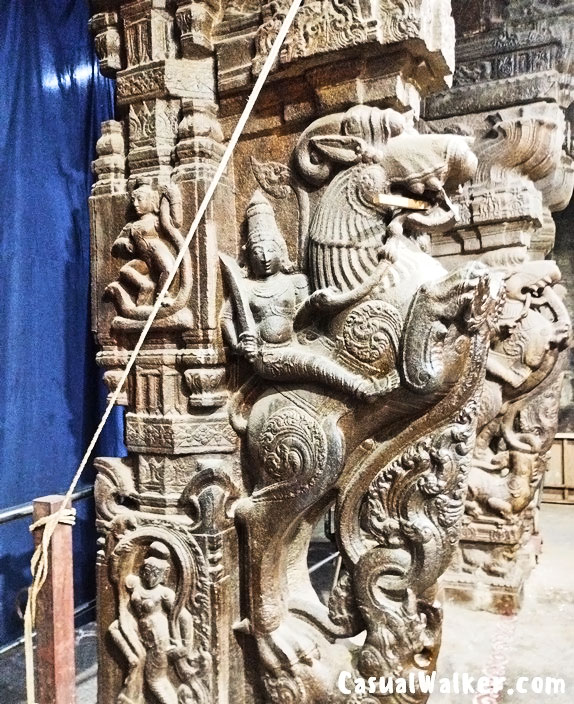
Ramanujar Shrine: Turn left from the entrance to reach this sacred sanctum. The architectural details here are mesmerizing – stone chains, links, and pillars adorned with Yazhi (mythical creatures combining lion, horse, and elephant), symbolizing supreme power
Adikesava Perumal Shrine: The main sanctum houses the Lord with his consorts, facing east
Garudalwar Shrine: Opposite the main shrine sits Garuda, Lord Vishnu’s divine vehicle, eternally facing his master
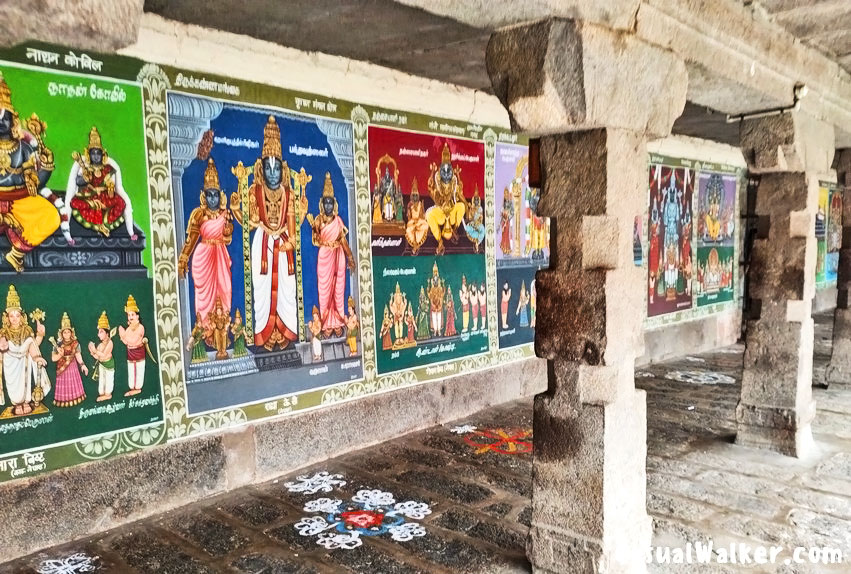
Hall of Mirrors: During festivals, the utsava murthy (processional deity) is placed here, surrounded by mirrors reflecting divine beauty
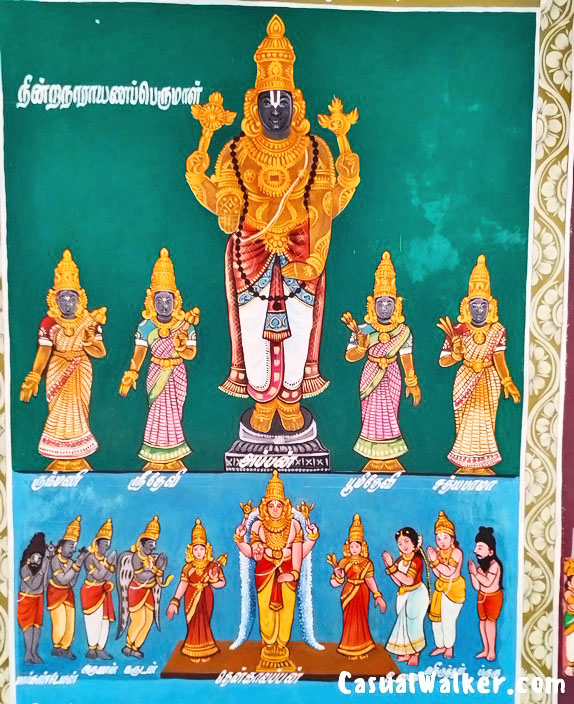
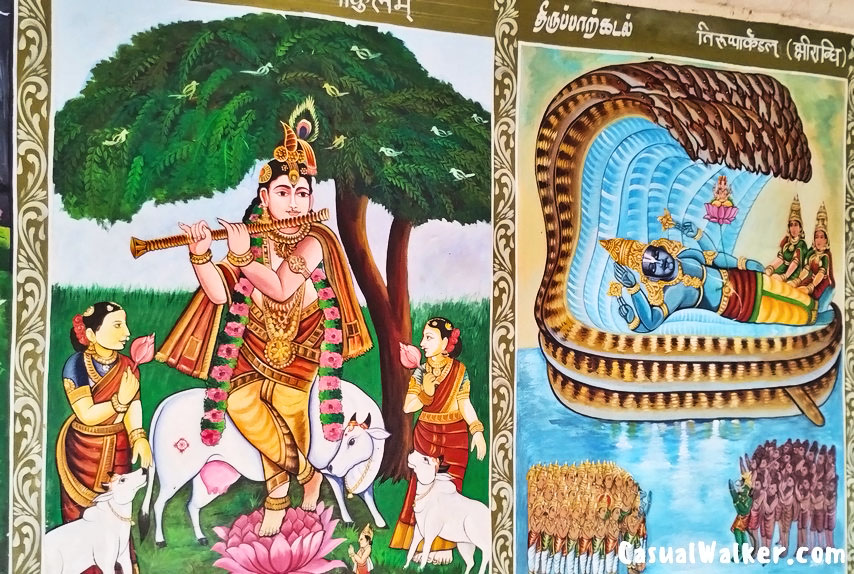
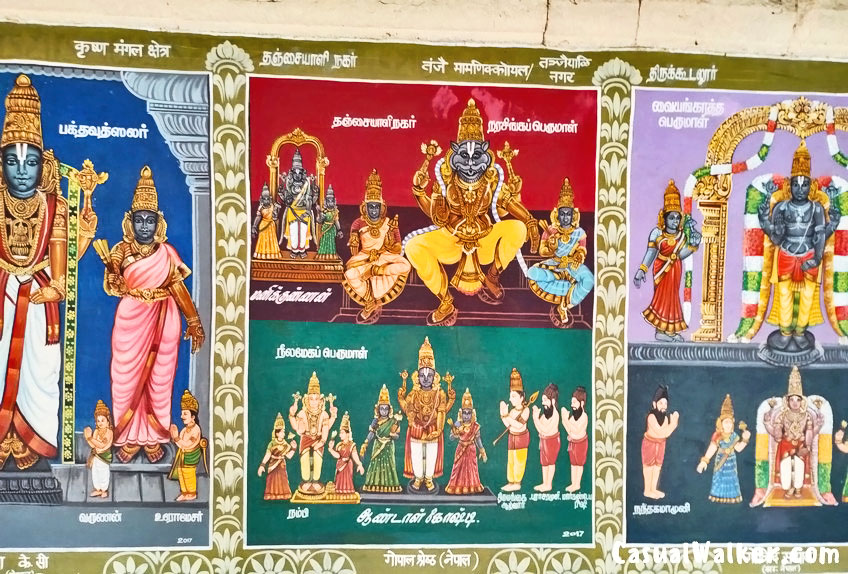
108 Divya Desam Paintings: The corridors showcase stunning paintings depicting Lord Vishnu’s presence in all 108 sacred shrines
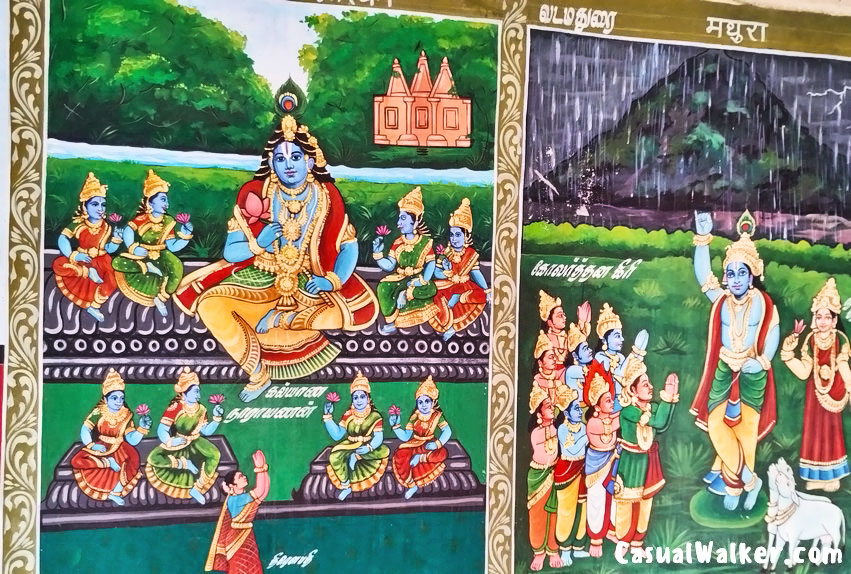
Yathirajanathavalli Shrine: A separate sanctum for the Goddess
Ramanujar’s Birthplace: Opposite the main entrance stands a closed mandapam marking the exact spot where the saint was born
Special Worship and Remedies
For Marriage Obstacles and Doshas
Devotees facing Rahu-Ketu dosha or Kalasarpa dosha find solace here. According to Hindu astrology, when all planets align between Rahu and Ketu in one’s horoscope, it creates obstacles, particularly in marriage and life goals.
The prescribed ritual:
- Sprinkle water from the holy Ananta Saras Tirtha
- Perform milk abhisheka for Sri Ramanujar
- Light a ghee lamp before the deity
Bathing in the sacred tank, believed to be about 20 feet deep, is said to cleanse sins and remove planetary afflictions.
For Skin Ailments
The temple is also renowned for curing skin diseases through divine grace.
Divine Nectar
Every morning, after abhisheka is performed for Sri Ramanujar, the water squeezed from the cloth adorning the Lord is distributed as theertham (holy water). Devotees believe this possesses healing properties.
Why There’s No Sorgavasal (Heaven’s Gate)
Here’s something unique – unlike other prominent Vishnu temples in South India, this temple doesn’t have a Sorgavasal (Vaikunta Dwaram). You know why? Because receiving Sri Ramanujar’s blessings itself is equivalent to crossing the heavenly gates.
On Vaikunta Ekadashi, when other temples ceremonially open their heaven’s gate, here the sanctum’s belled door (sannadhi kathavu) is opened symbolically, with both Adikesava Perumal and Ramanujar gracing devotees together.
Festivals and Celebrations
Margazhi Month (December-January)
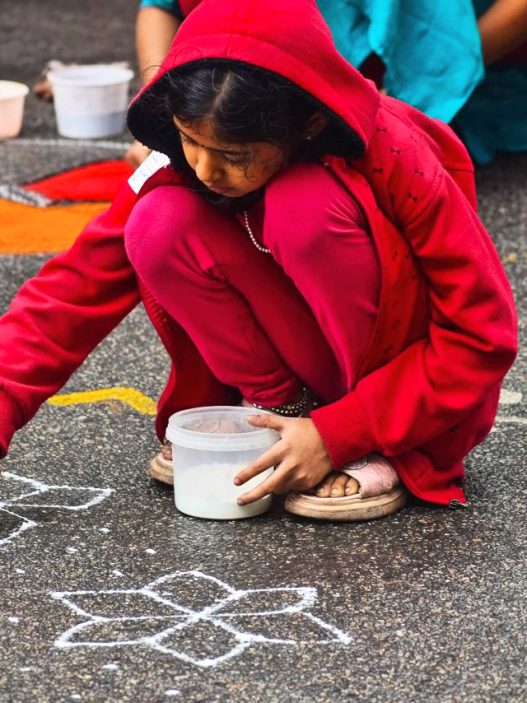
This holy month transforms the temple into a divine celebration! From December 16 to January 13, devotees wake up early, draw colorful rangolis, and sing Andal’s Thiruppavai. The 21-day Vaikunta Ekadashi celebration includes:
- Pagal Pathu recitation (first 10 days)
- Opening of the symbolic heaven’s gate (11th day)
- Ira Pathu recitation (final 10 days)
Chittirai Brahmotsavam
This is the grandest annual festival, drawing thousands of devotees
- Masi Pooram (February-March)
- Panguni Uthiram (March-April)
- Monthly Thiruveedi Procession
- On Thiruvadhirai Nakshatra days (Ramanujar’s birth star), special processions are conducted
Puliyodurai – The Divine Prasadam
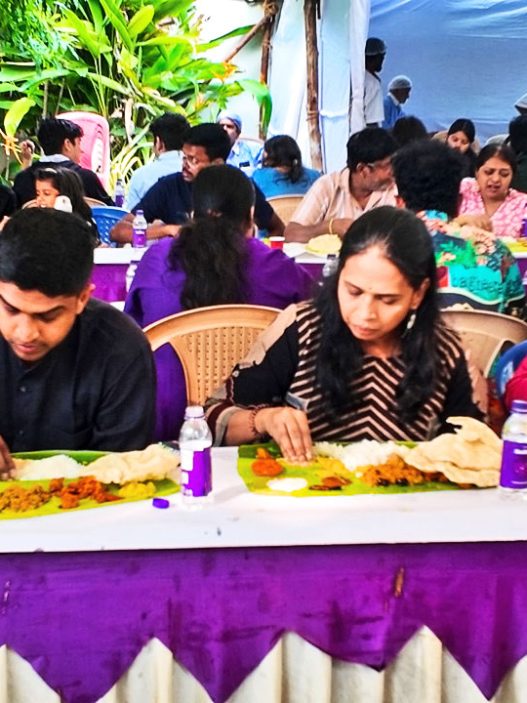
The temple’s Puliyodurai – the tamarind rice is the perfect balance of spicy and tangy flavors, along with sweet laddu and crispy thattai, makes for the most satisfying prasadam experience.


Travel Tips for Adikesava Perumal Temple, Sriperumpudur
Address of Adikesava Perumal Temple, Sriperumpudur:
XW9X+67R, SH 57, Ramanujar Nagar,
Sriperumbudur, Tamil Nadu 602105
Contact / Phone Number: +91 44 – 27162236
Adikesava Perumal Temple, Sriperumpudur Temple Timings:
Evening: 4:00 PM to 8:30 PM
Morning: 6:30 AM to 12:00 PM
Best Time to Visit: While the temple welcomes devotees year-round, visiting during Vaikunta Ekadashi or Ramanujar’s birth anniversary offers an unparalleled spiritual experience.
How to Visit Adikesava Perumal Temple, Sriperumpudur
By Road: Sriperumbudur Temple enjoys excellent road connectivity, making it easily accessible from major nearby cities. Located just 40 km from Chennai via the NH 4 (Bangalore-Chennai Highway), visitors can reach the temple comfortably within an hour. The temple is conveniently situated 24 km from Tambaram via Manimangalam, 21 km from Tiruvallur, and 35 km from Kanchipuram. Regular bus services operate from these locations, and taxis are readily available. The temple’s proximity to Sriperumbudur Bus Stand makes it particularly convenient for pilgrims traveling by public transport.
By Rail: While Sriperumbudur has a railway station, the nearest major rail hubs are Chennai Central and Tiruvallur. From these stations, visitors can continue their journey by road via buses, taxis, or shared autos. The well-connected road network ensures a smooth onward journey to the temple.
By Air: For travelers arriving by air, Chennai International Airport is the nearest airport, located approximately 40 km from the temple. Upon arrival, visitors can hire prepaid taxis or use app-based cab services to reach Sriperumbudur. Public transport options, including buses connecting the airport to nearby towns, are also available for budget-conscious travelers.