





Sri Kalatheeswarar Temple Ayyampettai, Walajabad, Kanchipuram — 1000-Year-Old Open-Air Lord Shiva Temple Under a Sacred Peepal Tree | Rahu-Ketu Parihara Sthalam Where Lord Shiva Was Worshipped by Rahu & Ketu – Shadow Planets of Vedic Astrology | Temple History, Legends, Festivals, Timings & Complete Travel Guide (Updated)
– one of the navagraha dosham temple in kanchipuram

Sri Kalatheeswarar Temple / காளத்தீஸ்வரர் ஆலயம் in Ayyampettai is an ancient, open-air Lord Shiva temple located near Walajabad in the Kanchipuram district. Unlike the grand stone temples of Kanchipuram or the majestic temple complexes of the Kaveri delta, this sacred site has no formal structural enclosure, no towering gopuram, and no elaborately carved mandapam. 
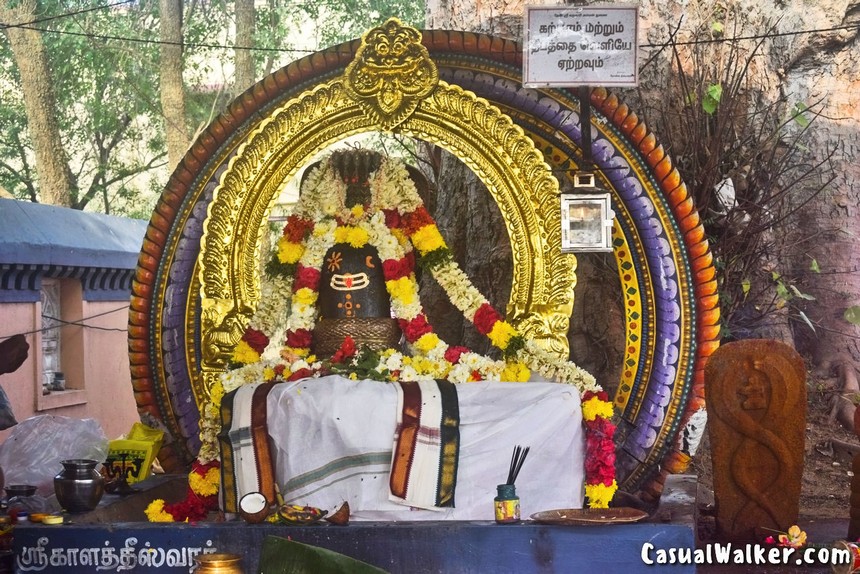
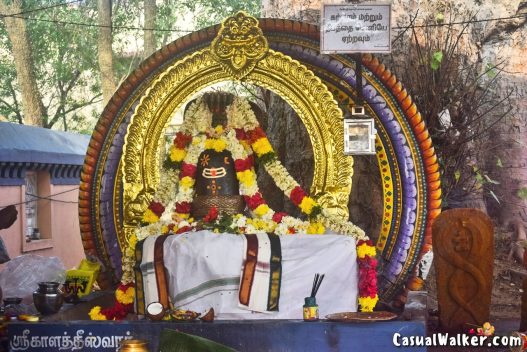
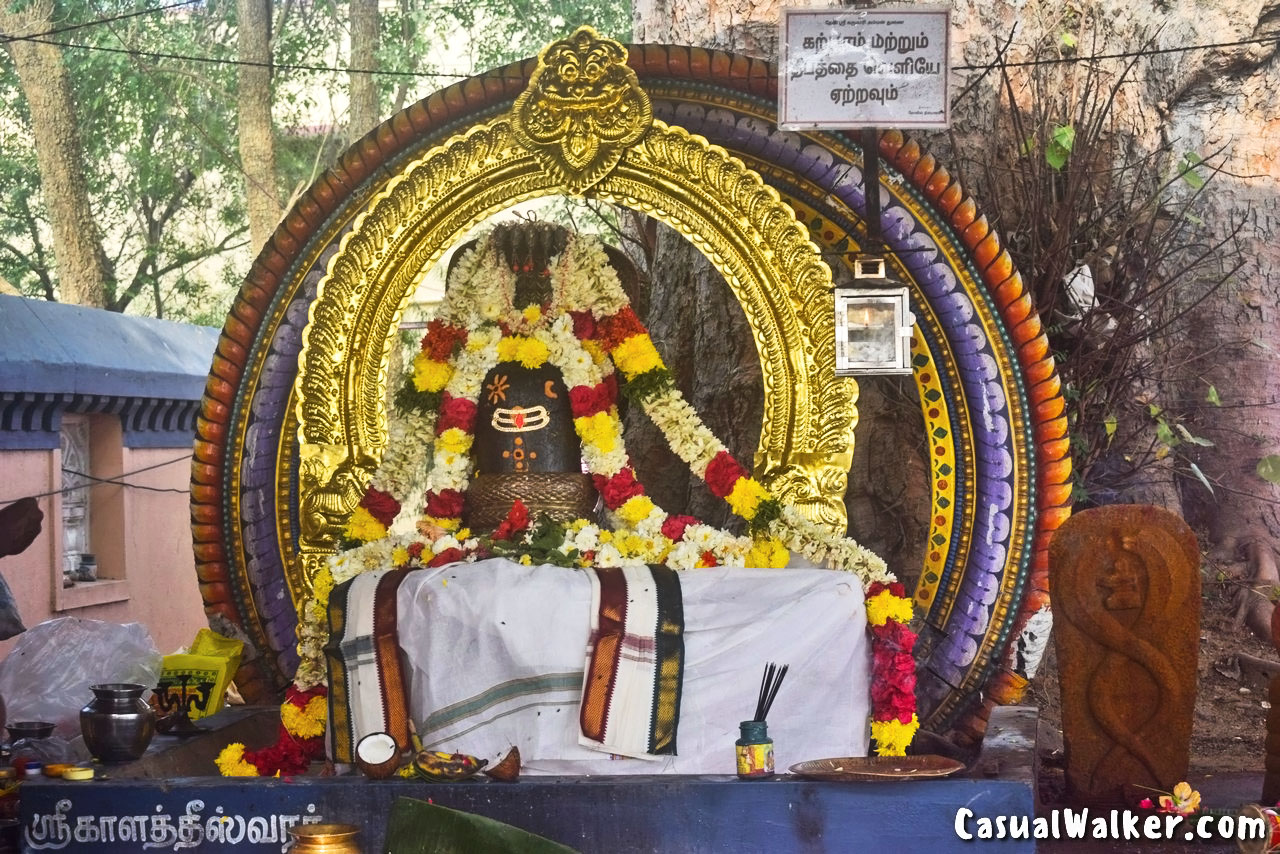
This temple is located about 150 meters off the busy Kanchipuram–Walajabad State Highway, this ancient shrine doesn’t have any grand architecture. What it offers instead is something far more powerful, a direct, unobstructed darshan of a 1000-year-old Shiva Lingam seated beneath a sacred Peepal tree, open to the sky, the wind, and the divine.
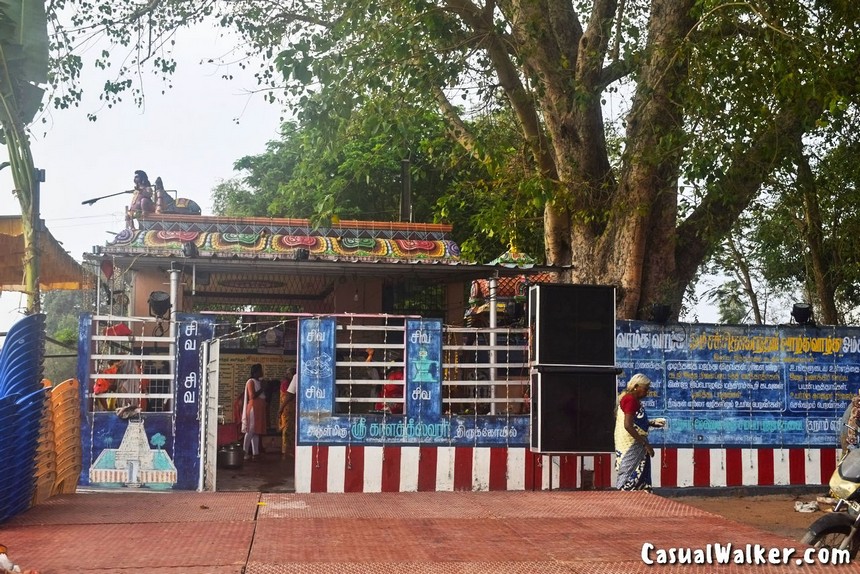
At this temple Lord Shiva, worshipped as Sri Kalatheeswarar, a form deeply associated with cosmic time and divine power over the celestial serpents Rahu and Ketu. The sanctity of this place lies not in stone and mortar but in its ancient spiritual heritage, its legendary connection to Navagraha dosham remedies, and the sheer antiquity of the Shiva Lingam believed to be over a thousand years old.
This temple is widely regarded as a Parihara Sthalam, a place of astrological and spiritual remedy, especially for devotees seeking relief from Rahu-Ketu Dosha, making it a sought-after pilgrimage destination among those who follow Vedic astrology traditions.
Sri Kalatheeswarar Temple History
The exact historical records of Sri Kalatheeswarar Temple, Ayyampettai are not extensively documented in official Tamil Nadu temple inscriptions, which in itself speaks to the antiquity and grassroots devotion that has kept this shrine alive through centuries.
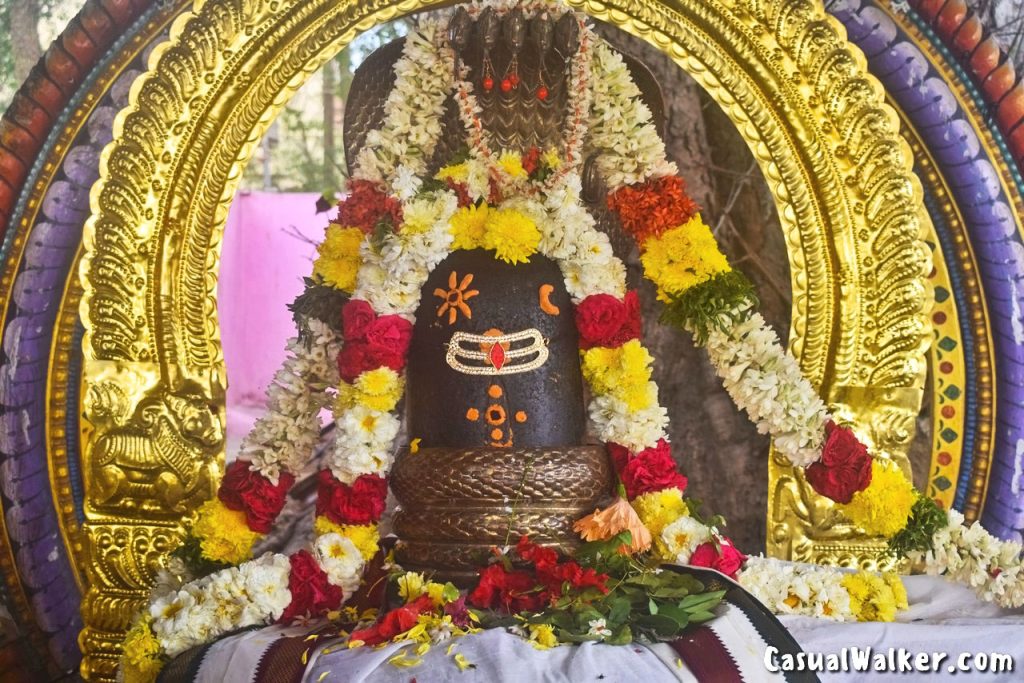
The Shiva Lingam installed here on a circular Avudaiyar (the base or pedestal of the Lingam) is popularly believed to be more than 1,000 years old. Its open-air setting under a sacred Peepal tree, a tree considered deeply auspicious in Hindu tradition and associated with Lord Vishnu, Brahma, and Shiva alike, suggests that this shrine predates conventional temple architecture in the region and may have originated as a forest or nature-worship site in the early medieval period.
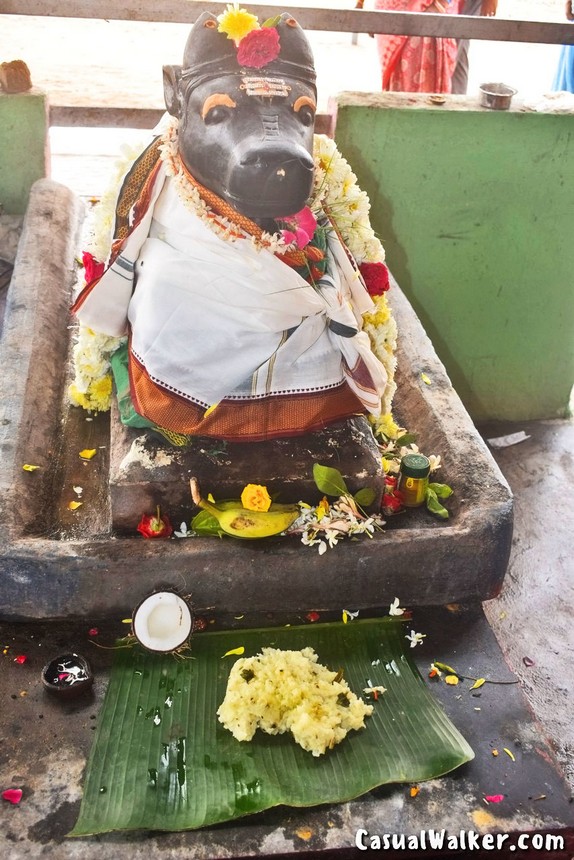
Over the centuries, the site evolved organically. Devotees installed the Balipeedam (offering platform) and the Nandi (Rishabam) in front of the Lingam, following traditional Shaivite temple conventions. Nagars (serpent idols) were also installed on the same platform, a significant detail given the temple’s association with Rahu and Ketu, both of whom are depicted in the form of serpents in Hindu astrology.
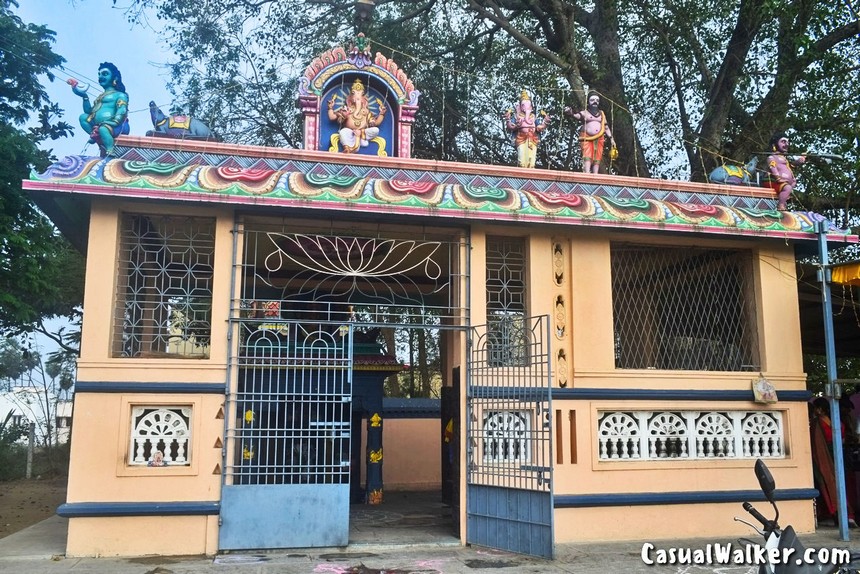
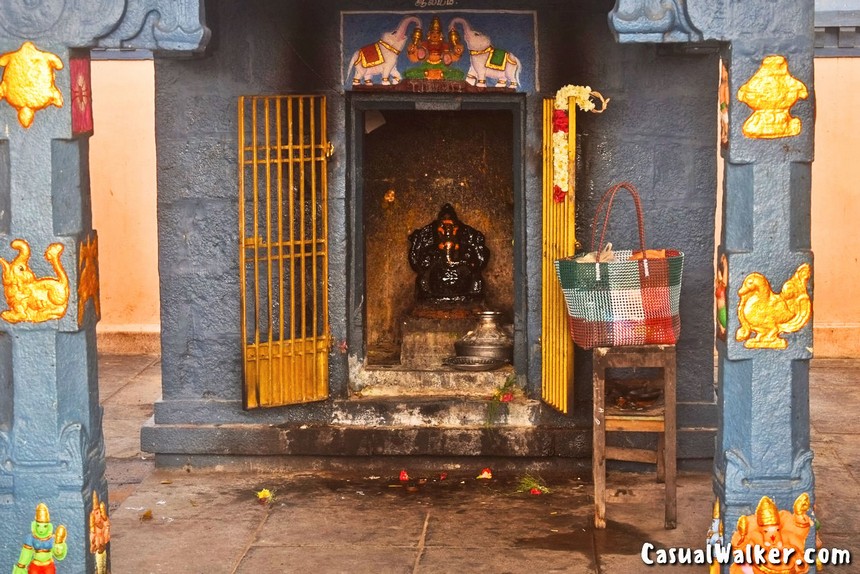
The adjacent shrine of Sri Sengazhuneer Vinayagar (Lord Ganesha) was established on the southern side, and the Navagraha (the nine celestial bodies) were installed in front of the Vinayagar shrine, further cementing this location as a powerful Navagraha parihara kshetram.
Sri Kalatheeswarar Temple Temple Significance – A Parihara Sthalam for Rahu and Ketu Dosha
The most significant spiritual aspect of this temple is its legend and equivalence to Srikalahasti. Lord Shiva at this shrine was directly worshipped by Rahu and Ketu, the two shadow planets (lunar nodes) of Vedic astrology. Because of this sacred legend, Sri Kalatheeswarar Temple, Ayyampettai is considered spiritually equivalent to the famous Srikalahasteeswara Temple in Andhra Pradesh, one of the Pancha Bhuta Stalas representing the element of air and a premier Rahu-Ketu parihara kshetram.
Devotees who suffer from the ill effects of Rahu-Ketu transit, Kala Sarpa Dosha, or Naga Dosha in their birth charts visit this temple to perform special poojas and rituals for astrological relief. The presence of the Navagraha shrine within the temple complex further amplifies its significance for Jyotish (Vedic astrology) believers.
Sacred Peepal Tree, Nature as the Temple
One of the most visually and spiritually striking features of this temple is that the Shiva Lingam is not housed inside a stone shrine but sits beneath a living Peepal tree (Ashwatha Vruksham). The Peepal tree itself is sacred in Hinduism, it is believed to be inhabited by the Trimurtis (Brahma, Vishnu, and Shiva) and worshipped by devotees on Saturdays and full moon days for blessings and relief from planetary afflictions.
The combination of an ancient Shiva Lingam and a sacred Peepal tree in one spot creates a powerful axis of natural and divine energy, something you feel deeply the moment you stand before it.
Since the Lingam is installed in the open air and not enclosed within a garbhagriha, darshan at Sri Kalatheeswarar Temple is available at any time of the day or night, making it a rare and accessible sacred site for devotees who wish to pray at dawn, dusk, or any hour of their choosing.
Parikara Thala, Key Shrine Details and Ritual Importance
Moolavar (Presiding Deity): Sri Kalatheeswarar (Lord Shiva)
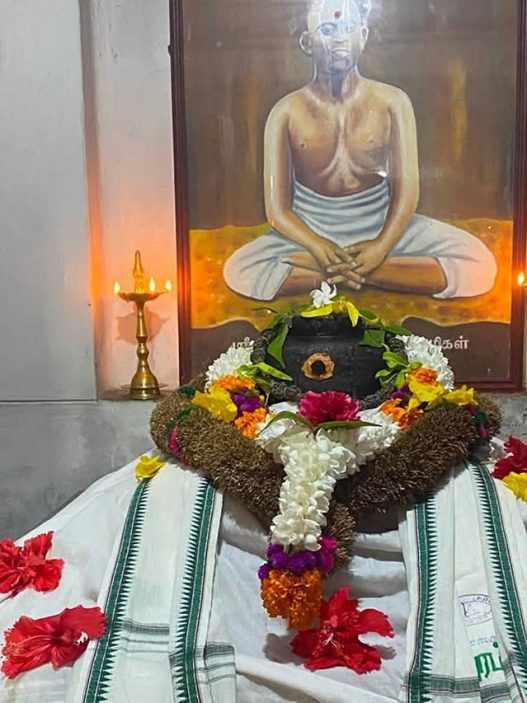
Shiva Lingam: An ancient Lingam seated on a round Avudaiyar, believed to be over 1,000 years old, installed under a sacred Peepal tree, open to the sky.
Balipeedam: Present directly in front of the Shiva Lingam, this is the offering platform where ritual oblations are made during poojas.
Nandi (Rishabam): The sacred bull, the vehicle of Lord Shiva, is installed in front of the Lingam in the traditional Shaivite manner.
Nagars: Serpent idols are installed on the same platform as the Shiva Lingam, directly reinforcing the Rahu-Ketu parihara significance of this shrine. Worshipping Nagars here is believed to remedy Naga Dosha and Sarpa Dosha.
Sri Sengazhuneer Vinayagar Shrine: Located on the south side of the Kalatheeswarar Lingam, this Ganesha temple adds the traditional auspicious beginning to any worship circuit here.
Navagraha: The nine-planet shrine is installed in front of the Vinayagar temple. Praying at the Navagraha here is considered especially effective for those seeking relief from adverse planetary positions.
Parihara Sthalam Type: Rahu-Ketu Dosha, Kala Sarpa Dosha, Naga Dosha, this temple is considered spiritually equivalent to Srikalahasti for Rahu-Ketu remedies.
Poojas and Celebrations
While regular daily poojas are conducted at the shrine, special poojas and rituals are observed on:
Pradosham, The bi-monthly Shiva worship occasion, observed on the 13th lunar day (Trayodashi) of each fortnight, is celebrated with special significance here.
Maha Shivaratri, The great night of Shiva sees heightened activity and devotion at this open-air shrine. My visit during Mahashivaratri 2025 was a memorable experience, the simplicity of the setting against the devotion of the gathered pilgrims was deeply moving.

Travel Tips for Sri Kalatheeswarar Temple, Ayyampettai, Kanchipuram
Address of Sri Kalatheeswarar Temple, Ayyampettai, Kanchipuram :
Sri Kalatheeswarar Temple,
RQ45+M85, SH58, Ayyampettai,
Tamil Nadu 631601.
How to Visit Sri Kalatheeswarar Temple, Ayyampettai, Kanchipuram
The temple is located within Kanchipuram town and is easily accessible once you reach the city, as local auto-rickshaw drivers are familiar with this ancient Shiva temple.
By Road: Sri Kalatheeswarar Temple is conveniently located just approximately 150 metres off the Kanchipuram–Walajabad–Chengalpattu State Highway, making it easy to spot and access without any confusing detours. The temple sits within the village of Ayyampettai, which lies on the south side of the Chengalpattu to Kanchipuram State Highway. If you are coming from Walajabad, the temple is just 7 kilometres away from the Walajabad Bus Stand, and if you are travelling from Kanchipuram, it is a smooth 10-kilometre drive. State-run buses and private buses that ply regularly along the Kanchipuram–Walajabad route pass close to the temple junction, making it reachable even without a private vehicle.
By Car or Bike: If you are travelling by car or two-wheeler, reaching Sri Kalatheeswarar Temple is an absolute breeze. The temple is easily accessible from both Kanchipuram and Walajabad via the State Highway, and the roads leading to Ayyampettai village are in good condition. Once you reach the highway junction near the village, it is just a short and pleasant 150-metre walk from the roadside to the shrine itself. There is enough space near the highway to park your vehicle safely before making your way to the temple on foot. For those on a Kanchipuram temple circuit or a day trip from Chennai, this temple makes for a very convenient stop given its proximity to the main road.
By Train: For devotees and travellers preferring rail travel, the nearest railway station to Sri Kalatheeswarar Temple is Walajabad Railway Station, which is well-connected to Chennai and other major towns in the region. From Walajabad station, the temple at Ayyampettai is just about 7 kilometres away, and the journey can be comfortably covered by auto-rickshaw, cab, or any local transport available at the station. It is advisable to check the train schedule in advance, as Walajabad is a smaller station with limited but regular services on the Chennai–Arakkonam rail line.