







Houses of Mylapore, Chennai: Design and Architecture – Heritage Walk | Mylapore Heritage Houses, Agraharam, Vintage Colonial, Greek, Portuguese, Neo Classical & Traditional South Indian Architecture — Garland Houses, Madras Terrace, History – Visit, History & Complete Travel Guide
– a living museum where colonial grandeur meets traditional architecture
| CasualWalker’s Rating for Houses of Mylapore – Heritage Walk : | |

9.8 – Exceptional Heritage Experience |

Mylapore where the ancient Kapaleeshwarar Temple has stood for over a millennium, where the legendary sage Thiruvalluvar is believed to have woven his timeless verses, and where the Portuguese first landed in the 16th century, forever altering Chennai’s destiny. This storied neighborhood, older than Madras itself, cradles secrets in every stone. Its narrow lanes whisper tales of temple dancers, colonial merchants, and scholarly Brahmins who once walked these same paths. Today, hidden between modern concrete structures, stand silent witnesses to this extraordinary past magnificent houses that embody centuries of cultural confluence. 
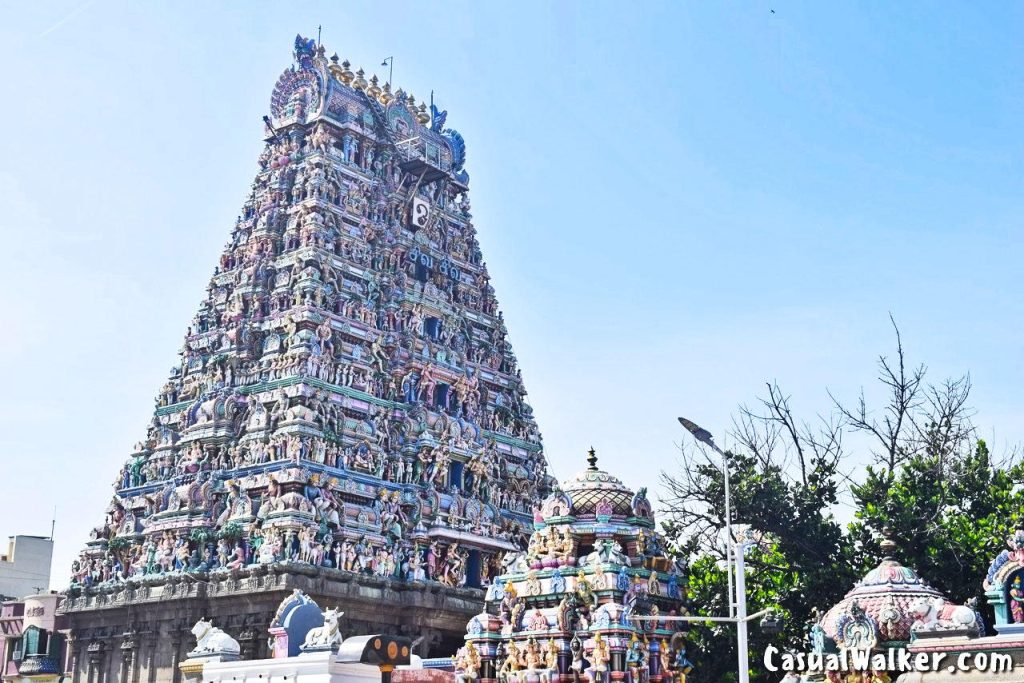
Walking through the narrow bylanes of Mylapore feels like stepping into a living museum where colonial grandeur meets traditional Tamil architecture, and every weathered doorway conceals a story waiting to be told.

I recently attended an heritage walk led by Ashmitha Athreya from Madras Inherited, exploring the historic houses of Mylapore one of Chennai’s oldest and most culturally rich neighborhoods. This was a journey through time, revealing the architectural heritage and colonial-era design hidden within the unassuming lanes of this ancient settlement.


Vanishing Heritage of Mylapore’s Traditional Houses
As we meandered through the heritage bylanes of Mylapore, the fascinating stories behind these early 1900s South Indian houses. These structures represent a remarkable fusion of Mediterranean colonial architecture and traditional Tamil vernacular design, creating a unique architectural vocabulary that once defined this historic quarter.

Garland Houses: Mylapore’s Unique Row House Architecture
The traditional row houses of Mylapore, often called “Garland Houses” due to their linear, interconnected layout, stood wall-to-wall with no gaps between them. This urban housing design maximized land use while creating a sense of community a testament to the social fabric of colonial-era Madras.

Each vintage Mylapore house was thoughtfully designed around a central mittam – the open courtyard a brilliant passive cooling system that ensured natural ventilation throughout the structure. In Chennai’s tropical climate, this traditional courtyard architecture was essential for maintaining comfortable living conditions without modern air conditioning.
Architectural Elements That Define Mylapore’s Heritage Homes
Welcoming Thinnai: A Social Architectural Feature
The street-facing thinnai – the raised verandah platform, served as a semi-public space a transitional zone between the private home and public street. This traditional South Indian architectural element functioned as a social hub where neighbors gathered, travelers rested, and community bonds strengthened.

Ingenious Madras Terrace Roofing System
One of the most remarkable features highlighted was the Madras Terrace flat roof system an engineering marvel that predates modern construction techniques. This traditional roofing technology employs thin bricks called achikal laid over wooden joists, bonded with lime mortar.

The genius of this heritage construction method lies in its exceptional:
- Thermal insulation properties, keeping interiors cool despite Chennai’s scorching heat
- Durability, with many roofs lasting over a century
- Load-bearing capacity, supporting additional floors and heavy monsoon rains
- Breathable construction, allowing moisture regulation naturally
Being a coastal city, lime plaster was abundantly available from seashells. This breathable lime construction created walls that regulated humidity and maintained cooler indoor temperatures a sustainable building practice we’re only now rediscovering.

Greek and Portuguese Design in a Tamil Setting
What struck me most was the seamless integration of Greek colonial architecture with South Indian vernacular design. The façades display clear Mediterranean architectural influences, particularly Greek and Portuguese decorative elements used for ornamental detailing around windows, doorways, and pillars.

Understanding the Classical Orders in Mylapore Houses
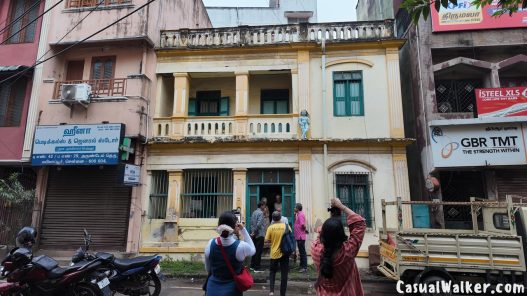
The classical colonial house I photographed exemplifies this architectural fusion perfectly. The different classical architectural orders visible on the façade:
Ground Level: Tuscan Order
The plain-bodied columns on the ground floor follow the Tuscan order the simplest of the classical orders, characterized by smooth, unadorned shafts and simple capitals. This Roman-influenced design provided structural elegance without excessive ornamentation.

Upper Level: Corinthian Order
The upper-story columns showcase the Corinthian order the most ornate of classical styles. Notice the fluted ridges running vertically along the column shafts and the elaborate scroll-like acanthus leaf details on the capitals (column heads). This Greek-inspired architectural detailing added prestige and grandeur to these heritage Mylapore residences.
Architectural Paradox: Classical Exteriors, Vernacular Interiors
While the street-facing façades proudly displayed colonial classical architecture, stepping inside revealed a completely different world. The interiors maintained traditional Tamil architectural principles with central courtyards, traditional spatial organization, and vernacular construction techniques that had served South Indian families for centuries.

This duality reflects the cultural complexity of colonial-era Chennai, where Indian homeowners adopted European aesthetics for social prestige while preserving their traditional lifestyles within.
Sacred Doorways: Where Architecture Meets Spirituality
The traditional carved wooden doors of these homes held particular spiritual significance. The inner door panels featured intricate carvings of the family deity positioned above the entrance a beautiful example of how South Indian temple architecture influenced residential design.

Remarkably, these heritage wooden doors stood only about five feet tall, requiring anyone entering to bow their head. This intentional architectural design ensured that residents and visitors would naturally bow in reverence to the deity carved above a subtle integration of devotion into daily life.
Stained Glass Windows: Victorian Elegance in Mylapore
Many vintage Mylapore houses feature stunning stained glass windows another Victorian-era architectural element borrowed from colonial influences. These decorative glass installations served dual purposes: providing privacy while filtering beautiful colored light into interior spaces, and showcasing the homeowner’s aesthetic sophistication and economic status.
Heartbreaking Loss of Mylapore’s Architectural Heritage
As we walked us through these magnificent structures, a sobering reality became clear: Mylapore’s heritage architecture is disappearing rapidly.
Why Are These Heritage Houses Vanishing?
Age and Maintenance Costs: These century-old structures require specialized restoration techniques and materials lime plaster restoration, Madras Terrace roof repairs, traditional carpentry all expensive and difficult to source.
Lack of Heritage Conservation Policies: Unlike many countries where government heritage grants support private owners in maintaining historic structures, India lacks comprehensive heritage house preservation programs for privately-owned residential buildings.
Economic Pressures: The real estate value of Mylapore land far exceeds the value of these aging structures, making demolition and redevelopment financially attractive to owners and developers.
Need for Heritage Conservation Initiatives
The need for heritage conservation funding, similar to international models where governments provide maintenance subsidies to owners of protected heritage buildings. Without such intervention, we’re witnessing the irreversible loss of Chennai’s architectural legacy.
Imagining Mylapore’s Architectural Past
Try to envision historic Mylapore streets lined entirely with these magnificent wall-to-wall heritage houses their classical columns, carved facades, stained glass windows, and Madras Terrace roofs creating a continuous architectural narrative. The urban heritage landscape has transformed dramatically, yet some of these architectural icons still survive in unexpected corners and forgotten bylanes.
Standing before these classical Mylapore houses, I felt a profound connection to the architects, craftsmen, and families who created and inhabited these spaces. The architectural heritage of Mylapore deserves our attention, appreciation, and most importantly, active preservation efforts.

Thanks for exploring this Casual Walker photo guide — India’s most visual cultural travel guide and a curious discovery journal finding authentic photo stories, guides, and tips across travel, culture, arts, temples, heritage, and food.
- Keep exploring: Browse 650+ Travel & Culture Photo Guides
- We’d love to hear your feedback, stories, corrections, and updates — Email us.
- Follow our photo walks on Instagram: @hicasualwalker