




Sathyanatha Swamy Temple / Sri Sathyanatheswarar Temple / Satyanathaswami Temple in Thirukalimedu, Kanchipuram – 1500-Year-Old Paadal Petra Shiva Temple / Ancient Swayambhu Temple / Budha Parihara Temple / Mercury Remedial Temple / Thevaram Temple Kanchipuram – Temple Timings, History, Legends, Festivals, Contact Details & Complete Travel Guide (Updated)
– the 5th shrine in thondaimandalam region praised in thevaram

Sri Sathyanatha Swamy Temple / Sri Sathyanatheswarar Temple / Satyanathaswami Temple is an ancient Hindu temple dedicated to Lord Shiva, located in Thirukalimedu, Kanchipuram district, Tamil Nadu. With a history spanning over 1,500 years, this sacred shrine stands as one of the oldest and most significant Shiva temples in the Kanchipuram region. 
The temple holds a prestigious position among the 275 Paadal Petra Sthalams—sacred Shiva temples that have been glorified in the ancient Thevaram hymns composed by Tamil Shaivite saint-poets during the 7th century CE. Specifically, it is recognized as the 5th Thevaram Paadal Petra Shiva Sthalam in the Thondai Nadu region, establishing its profound importance in Tamil Shaivite tradition.
Lord Shiva is worshipped here as Sathyanatheswarar (also known as Sathyanatha Swamy, Karaivananathar, and Tirukaleeswarar), and his divine consort Goddess Parvati as Pramarambikai. The main deity is a Swayambhu (self-manifested) Shiva Lingam, believed to have manifested on its own without human intervention, making it a particularly powerful and sacred site for worship and meditation.
History of Sri Sathyanatha Swamy Temple / Sri Sathyanatheswarar Temple / Satyanathaswami Temple
Dating back to at least the 5th Century CE, Sri Sathyanatha Swamy Temple stands as one of Kanchipuram’s oldest spiritual landmarks. Many scholars and devotees believe this temple predates even the famous Ekambaranathar Temple and Kailasanathar Temple, making it a cornerstone of the region’s ancient Shaivite heritage.
The temple’s historical significance is literally etched in stone. Six ancient inscriptions from the illustrious Chola period adorn its walls, belonging to great rulers including Rajaraja Chola I, Rajendra Chola I, Rajendra Chola II, Rajathiraja Chola, and Adhi Rajendra Chola. These inscriptions chronicle royal patronage, generous donations of gold and land, renovation activities, and the temple’s administrative importance during the golden age of the Chola dynasty.
According to historical records preserved in the South Indian Inscriptions Volume VIII, this sacred site was originally called Thiru Neri Karaikadu, meaning “forest of the sacred path,” referring to the dense Karai tree groves that once surrounded the temple. During the Chola period, it was part of Kachi Pedu and served as an important religious center in Jayamkonda Chozha Mandalathu Eyir Kottathu Kanchipuram.
The 7th-century Tamil saint-poet Thirugnana Sambandar immortalized this temple in his Thevaram hymns, establishing its place in Tamil devotional literature. The 18th-century saint Sri Sivagnana Swamigal further documented the temple’s glory in the Thirunerikaaraikattu Padalam, identifying it as Sathya Viratha Natham, one of the twelve sacred names of Kanchipuram.
Divine Presiding Deities
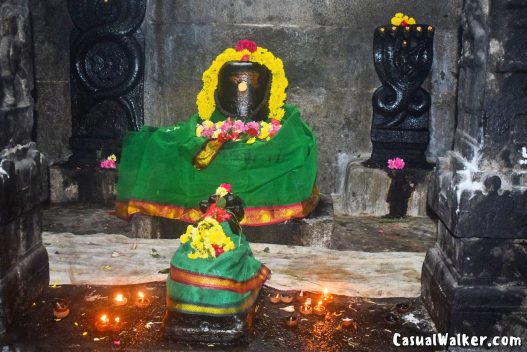
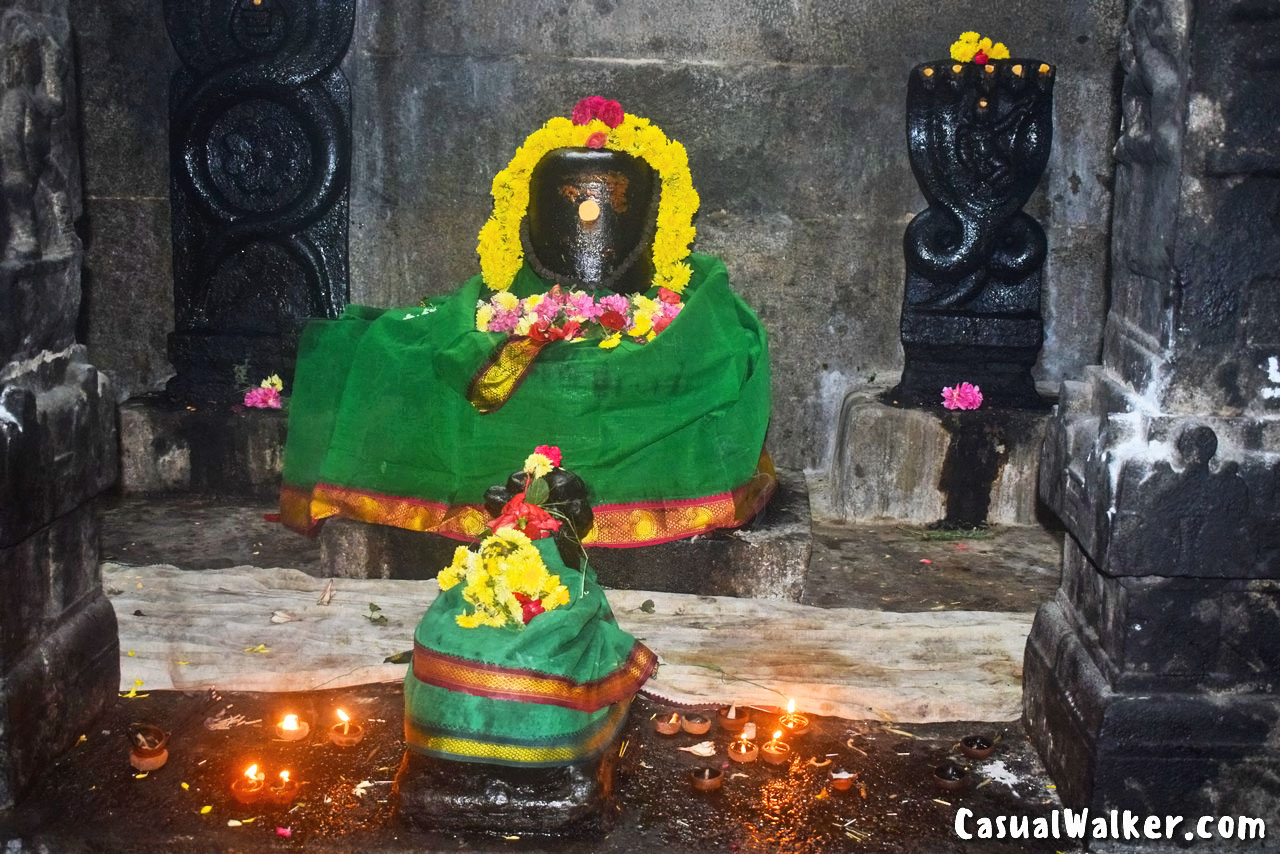
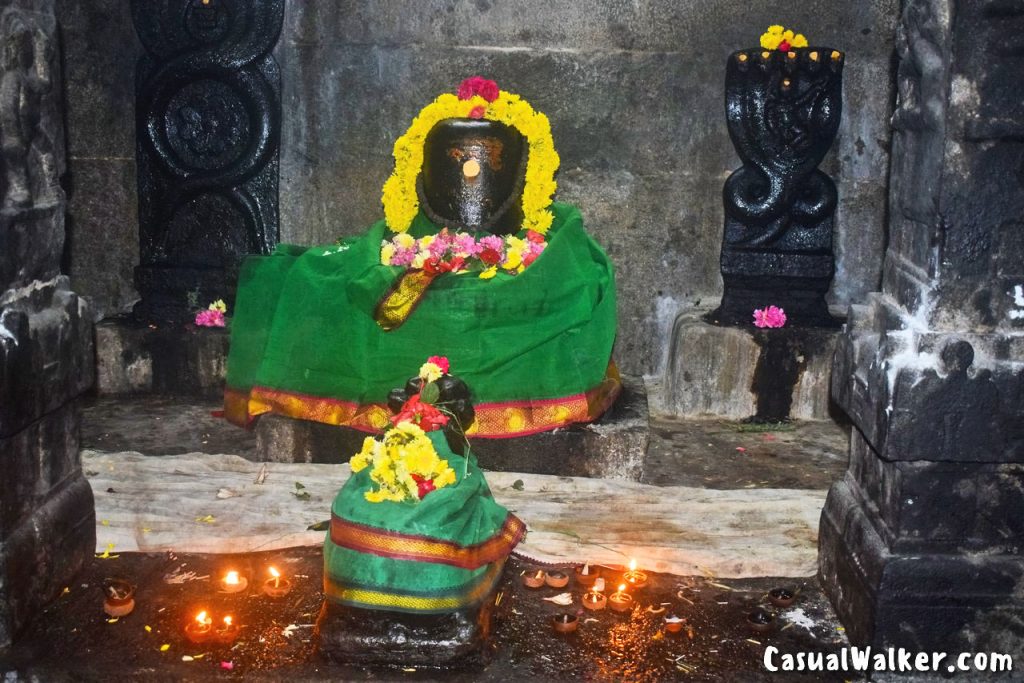
Lord Shiva is worshipped here as Sri Sathyanatheswarar (also known as Sathyanatha Swamy, Satyaviratheswarar, Tirukaleeswarar, and Karaivananathar). His divine consort is Goddess Pramarambikai (also called Brahmarambigai or Karakuzhali). The main deity is a Swayambhu (self-manifested) Shiva Lingam made of granite with a distinctive reddish-pink hue, believed to be approximately 1,500 to 2,000 years old.
What struck me most during my visit was the unique rough texture of the Lingam. Unlike the smooth, polished deities in other temples, the Shiva Lingam here retains its natural, unrefined form—a powerful reminder of Lord Shiva’s raw, primordial energy. Witnessing the abhishekam (sacred bathing ritual) here was truly a different experience, as the sanctified waters cascaded over the ancient stone in a mesmerizing display of devotion.
Magnificent Architecture and Sacred Spaces
The temple complex spans an impressive 22,500 square feet and showcases classic Dravidian architectural elements combined with unique features that set it apart from other temples in Kanchipuram.
Main Entrance and Rajagopuram
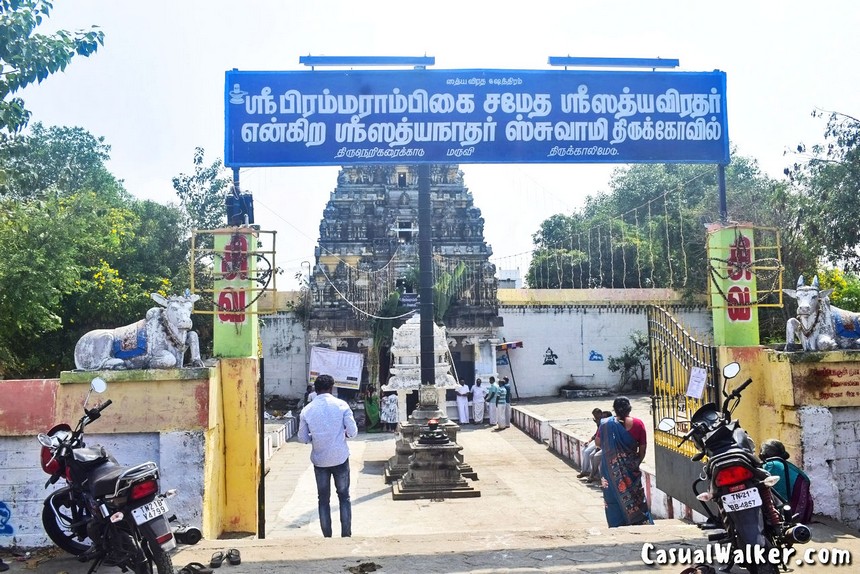
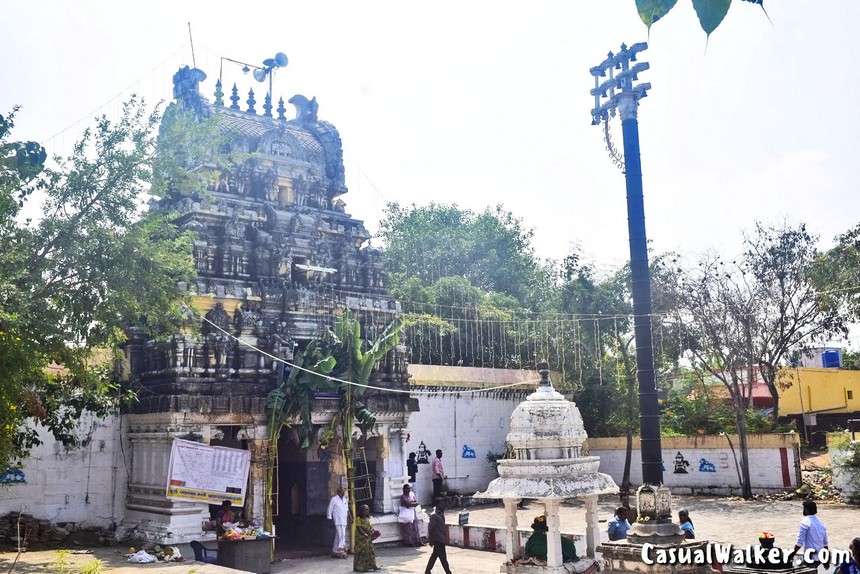
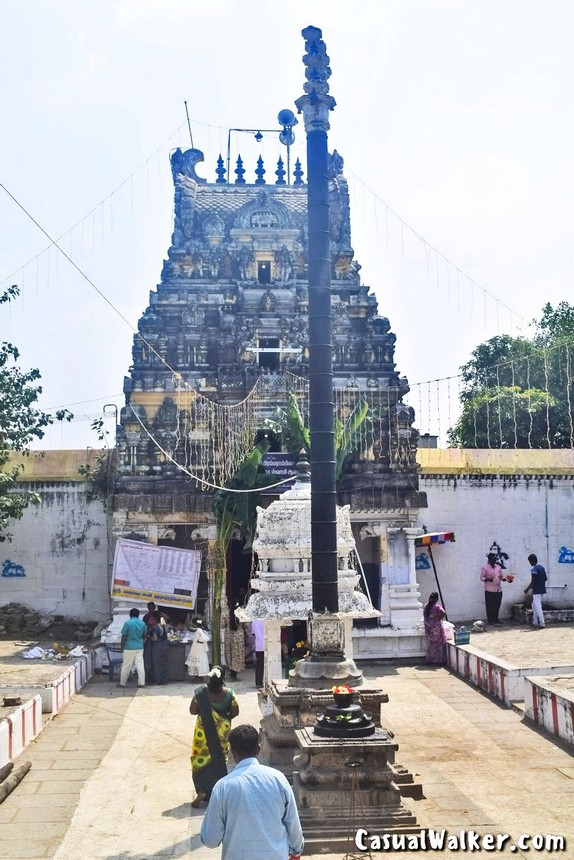
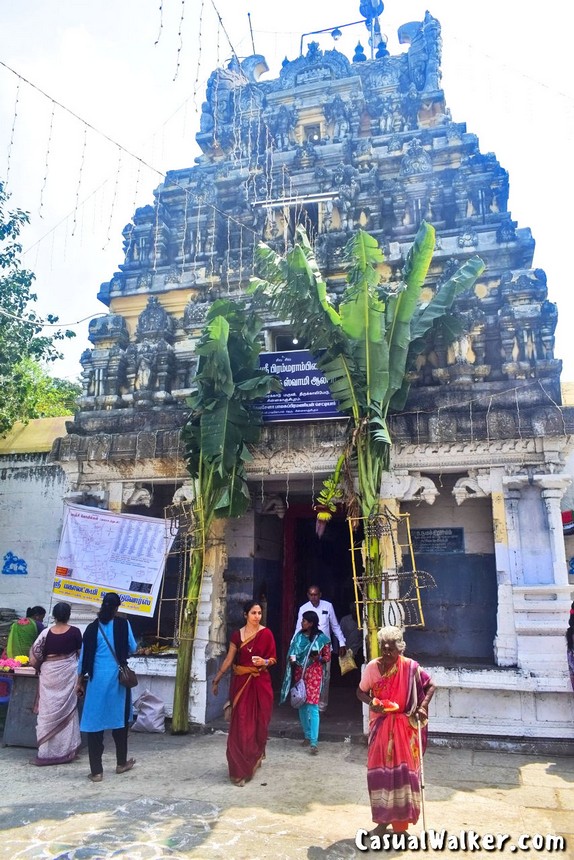
The temple faces west—a rare orientation that immediately distinguishes it from most Hindu temples. A magnificent three-tiered Rajagopuram (gateway tower) rises to a height of 50 feet, welcoming devotees into this sacred space. This impressive structure dates back to the Vijayanagara period and sets the tone for the spiritual journey within.
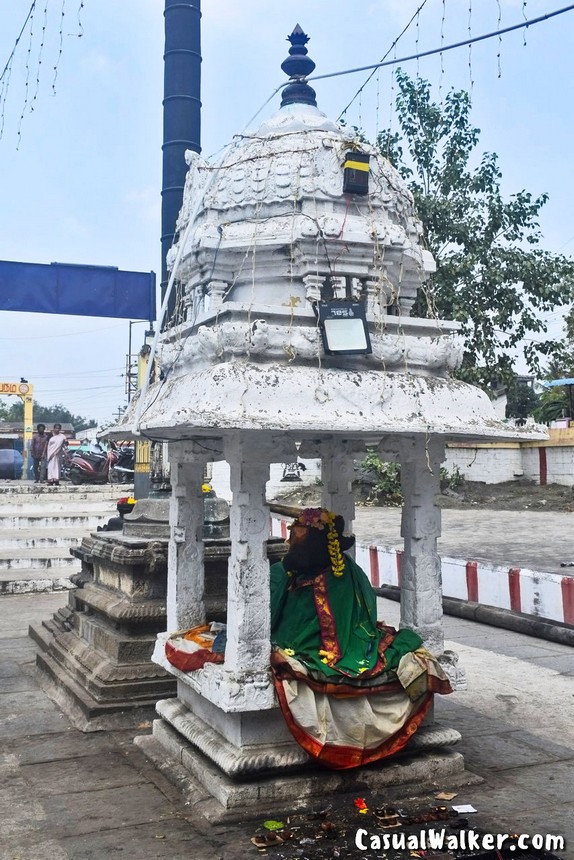
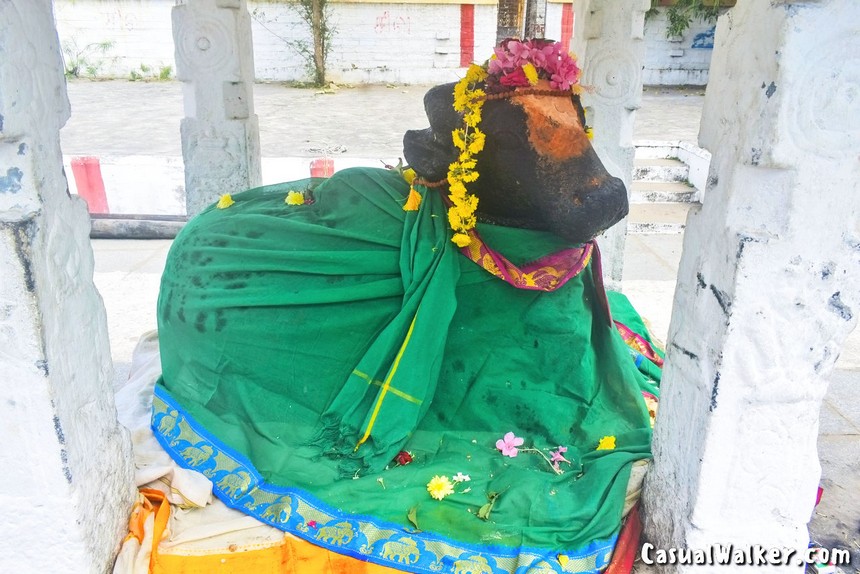
In front of the Rajagopuram stand the traditional elements: the Rishabam (Nandi statue), Balipeedam (offering pedestal), and Dwajasthambam (flag staff), all aligned in perfect symmetry with the sanctum sanctorum.
Sanctum Sanctorum
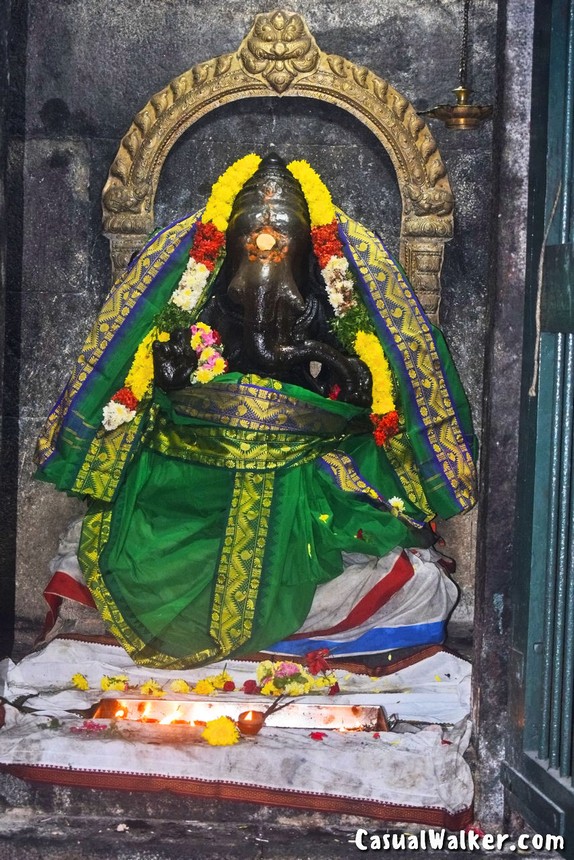
As I entered the sanctum, I was greeted by Dwara Ganapathy on the left and Lord Subrahmanyar on the right—divine guardians of this holy space. The central shrine faces east and houses the magnificent Swayambhu Lingam of Lord Sathyanatheswarar, slightly elevated and larger than typical Shiva Lingams.
A unique feature here is the presence of Goddess Pramarambikai within the sanctum itself. While most Shiva temples in Kanchipuram don’t have separate shrines for the Goddess (as Kamakshi is considered the common divine mother for all), this temple honors the Goddess with a south-facing processional deity within the main sanctum. The idol features beautiful engravings of fish (Matsya reka) and paddy bundles (Dhanya reka)—symbols of prosperity and abundance.
The Koshtam (Niches)
The walls surrounding the sanctum feature exquisitely carved images of:
- Vinayagar (Ganesha)
- Sri Dakshinamurthy (Shiva as the supreme teacher)
- Lingothbavar (Shiva emerging from the cosmic pillar)
- Brahma (the Creator)
- Durgai (Goddess Durga)
Inner Prakaram (First Courtyard)
Walking through the inner prakaram filled me with reverence as I discovered numerous subsidiary shrines:
- Natarajar Sabha with Natarajar and Goddess Sivagami in their cosmic dance
- The sacred Nalvar (four Shaivite saint-poets)
- Shrines for Indiran and Budhan (Mercury)
- Bhairavar
- Sri Valli Devasena Subrahmanyar
- Gajalakshmi
- Neelakanda Sivachariyar
- Lakshmi Sametha Thirumalavan
- Mahavishnu with his consorts
The processional deities (Urchavars) include Somaskandar, Chandeswarar, Chandrasekarar, Pradosha Nayagar, and the Naalvar.
Outer Prakaram
The outer courtyard houses the Navagrahas (nine planetary deities), with special shrines for Budhan (Mercury) and Shani Bhagavan (Saturn). The Vimana (tower) above the sanctum sanctorum is built in the distinctive Vesara style using stone, showcasing the architectural expertise of ancient craftsmen.
Sacred Water Tank
The temple features a beautiful lotus-shaped temple tank where devotees take holy dips before worship, especially on auspicious days.
Unique Spiritual Features That Captivated Me
Several extraordinary features make this temple truly special:
West-Facing Deity
Lord Sathyanatheswarar faces west as a Swayambhu deity—an extremely rare orientation that carries deep spiritual significance. This westward direction symbolizes the setting sun and the journey toward self-realization.
Unique Nandi
In a fascinating deviation from traditional temple architecture, Nandi’s neck is turned southward rather than facing directly toward the Lingam. This rare feature has intrigued devotees and scholars for centuries. Additionally, there is an entrance positioned before Nandi, another unusual architectural element.
Dakshinamurthy with Seven Disciples
Typically, Lord Dakshinamurthy (Shiva in his aspect as the silent teacher) appears with four disciples—Sanaka, Sananda, Sanathana, and Sanatkumara. However, in this temple, Dakshinamurthy is depicted with seven disciples, symbolizing the bestowal of complete wisdom and knowledge to devotees. This unique iconography sets the temple apart and emphasizes its role as a center of spiritual learning.
Sacred Sthala Vriksham
The Karai plant serves as the temple’s Sthala Vriksham (sacred tree), connecting the temple to its historical name—Karai Tirunagar or Thiruneri Karai Kadu (forest of Karai trees).
Holy Theerthams in Sri Sathyanatha Swamy Temple / Sri Sathyanatheswarar Temple / Satyanathaswami Temple
The temple is associated with two sacred water bodies:
- Indira Theertham
- Satyavradha Theertham (also called Buddha Theertham)
Devotees believe that bathing in these theerthams before worship purifies the body and soul, preparing one for divine darshan.
Legends in Sri Sathyanatha Swamy Temple / Sri Sathyanatheswarar Temple / Satyanathaswami Temple
Two powerful legends are associated with this ancient temple, both involving celestial beings seeking Lord Shiva’s grace.
Legend of Budhan (Mercury)
According to Hindu mythology, Chandra (the Moon) was a disciple of Guru Brihaspati (Jupiter). Chandra fell in love with his Guru’s wife, Dhara, and performed a grand yagna dedicated to Lord Vishnu to seek his blessings. During this ceremony, Guru attended with his wife Dhara. Through his charms, Chandra allured Dhara to stay with him, and from their union, Budha (Mercury) was born.When Budha grew up and learned the truth about his birth, he was deeply ashamed and distressed. Seeking redemption and a rightful place in the cosmic order, he came to this very temple and performed intense penance, praying to Lord Sathyanatheswarar to grant him status among the Navagrahas (nine planets).
Pleased with his sincere devotion and penance, Lord Shiva appeared before Budha and blessed him with a place among the planetary deities. This is why Budhan has a special shrine in the southern prakaram of the temple, and devotees worship him here for wisdom, intelligence, and eloquence.
Legend of Indra and Ahalya
Indra, the king of the Devas, possessed the ability to assume any form. When his eyes fell upon Ahalya, the beautiful wife of Sage Gautama, he was consumed by desire. Using his powers of transformation, Indra took the form of a rooster and crowed near the hermitage at dawn, deceiving the sage into believing morning had arrived.
When Sage Gautama left for his ritual bath at the river, Indra quickly assumed the sage’s form and entered the ashram to be with Ahalya. However, the wise sage sensed something amiss and returned to find Indra fleeing in the form of a cat.
Enraged by this transgression, Sage Gautama cursed Ahalya to turn into stone and cursed Indra to bear a thousand marks all over his body (which later transformed into eyes when he worshipped Surya).
Indra wandered the earth in agony, seeking redemption. He eventually reached this sacred spot among the Karai bushes in Kanchipuram and worshipped Lord Shiva with utmost devotion. Moved by his sincere penance, Lord Shiva appeared and relieved him from the curse. Following this divine intervention, the Lord came to be known as Karai Thirunathar, and the place as Thiruneri Karai Kadu.
Spiritual Significance and Benefits of Worship in Sri Sathyanatha Swamy Temple / Sri Sathyanatheswarar Temple / Satyanathaswami Temple
As a Parihara Sthalam for Budha Dosham
This temple is renowned as a powerful Parihara Sthalam (remedial temple) for those suffering from Mercury (Budha) afflictions in their horoscopes. Devotees experiencing challenges in education, communication, business, or intellectual pursuits visit this temple to seek relief.
Wednesday Worship
Wednesdays hold special significance at this temple. Devotees following this practice:
- Take a holy dip in the temple’s Theertham
- Offer green vastras (clothes) to Lord Budhan
- Present green pulses (moong dal) as nivedhana
- Worship Budhan as Gnanakaraka (the giver of wisdom)
Worship is believed to bring:
- Excellence in education and academic pursuits
- Proficiency in language skills and communication
- Enhanced eloquence and speaking abilities
- Success in business and trade
- Removal of Mercury-related astrological afflictions
- Sharp intellect and analytical thinking
General Blessings
Lord Sathyanatheswarar is known to grant all boons to sincere devotees. The temple is considered especially powerful for:
- Meditation and spiritual practices
- Seeking knowledge and wisdom
- Relief from karmic debts
- Overall spiritual growth and enlightenment
Daily Rituals and Worship Practices in Sri Sathyanatha Swamy Temple / Sri Sathyanatheswarar Temple / Satyanathaswami Temple
The temple follows the Kamikagama tradition for its daily rituals. Priests perform elaborate puja ceremonies with precision and devotion, maintaining traditions passed down through generations.
Daily Rituals
Two major ritual cycles are performed each day:
- Kalasanthi at 8:00 AM
- Sayarakshai at 6:00 PM
Each ritual comprises four essential steps:
- Abisheka (sacred bathing of the deities with water, milk, honey, and other sacred substances)
- Alangaram (elaborate decoration with flowers, garlands, and ornaments)
- Naivethanam (offering of food to the deities)
- Deepa Aradhana (waving of lamps in a ritualistic manner)
These rituals are performed for both Lord Sathyanatheswarar and Goddess Pramarambikai with equal reverence. Interestingly, though Pramarambikai is a processional deity, she receives all the same rituals as the main deity—a unique practice in this temple.
Weekly and Monthly Observances
The temple observes special worship on:
- Somavaram (Monday) – sacred to Lord Shiva
- Sukravaram (Friday) – auspicious for Goddess worship
- Pradosham (13th day of lunar fortnight) – highly auspicious for Shiva worship
- Amavasai (new moon day)
- Pournami (full moon day)
- Krithigai (when the Krittika star prevails)
- Chaturthi (fourth lunar day, sacred to Ganesha)
Grand Festivals and Celebrations
The temple comes alive during its annual festivals, drawing thousands of devotees from across Tamil Nadu and beyond.
Margazhi Thiruvathirai (December-January)
This is one of the most important festivals, celebrated during the Tamil month of Margazhi when the star Thiruvathirai coincides with the full moon. The temple conducts special abhishekams, processions, and cultural programs. The cosmic dance of Lord Nataraja is specially commemorated during this time.
Maha Shivaratri (February-March)
The great night of Shiva is celebrated with immense fervor. Devotees observe fasting, perform night-long vigils, and offer prayers every three hours. The abhishekams performed throughout the night are particularly powerful, and thousands gather to witness the divine rituals.
Aippasi Annabishekam (October-November)
During this unique festival, the deity is bathed in cooked rice (anna), symbolizing abundance and prosperity. This ancient ritual is believed to bring wealth and food security to devotees.
Special Features During Festivals in Sri Sathyanatha Swamy Temple / Sri Sathyanatheswarar Temple / Satyanathaswami Temple
- The processional deities are taken out in grand processions
- However, Goddess Pramarambikai remains in the sanctum even during festivals—a unique tradition
- Cultural programs, bhajans, and discourses are organized
- Special prasadam is distributed to devotees
As I sat in meditation within the temple’s serene precincts, I felt an overwhelming sense of peace wash over me. The ancient stones seemed to vibrate with accumulated spiritual energy from centuries of worship. The rough texture of the Swayambhu Lingam reminded me that divinity doesn’t always come in polished, perfect forms—sometimes the raw, unrefined essence carries the greatest power. The inscriptions preserved here provide invaluable insights into Chola administration, temple management, taxation, and social customs of medieval Tamil Nadu.
If you’re planning a spiritual journey through Kanchipuram—the city of thousand temples—make sure Sri Sathyanatha Swamy Temple is on your itinerary. Take time to sit in its peaceful precincts, absorb the spiritual energy, witness the ancient rituals, and connect with a tradition that has sustained countless seekers for over fifteen centuries.

Travel Tips for Visiting Sri Sathyanatha Swamy Temple / Sri Sathyanatheswarar Temple / Satyanathaswami Temple
Sri Sathyanatha Swamy Temple / Sri Sathyanatheswarar Temple / Satyanathaswami Temple Address:
Sri Sathyanatha Swamy Temple
Tiruneri Karaikadu, Thirukalimedu, Kanchipuram – 631 502
Tamil Nadu.
Contact Details:
Phone: +91 44 2723 2327 / 2722 1664
Temple Timings
Morning : 7:00 AM to 1:00 PM
Evening : 4:00 PM to 7:00 PM
How to Visit Sri Sathyanatha Swamy Temple / Sri Sathyanatheswarar Temple / Satyanathaswami Temple
By Road: Sri Sathyanatheswarar Temple at Thirukalimedu is well connected by road and is located about 2–2.2 km from Kanchipuram Bus Stand and Kanchipuram Railway Station, taking roughly 10–15 minutes to reach. The temple can be accessed easily by auto-rickshaws, cycle-rickshaws, town buses, taxis, and app-based cabs such as Ola and Uber. From Chennai, the temple is around 70 km away and takes about 1.5 to 2 hours via NH 48, following the route.
Chennai–Tambaram–Perungalathur–Chengalpattu–Kanchipuram, with frequent TNSTC and private buses operating from CMBT and Chennai Central. Arakkonam, located 34 km away, is also well connected by state highways, with regular bus services to Kanchipuram. The temple is situated on Thirukalimedu, branching off Railway Road, directly opposite the Kanchipuram Head Post Office, making it easy to locate.
By Train: The nearest railway station is Kanchipuram Railway Station (station code: CJ), located about 2 km from the temple, from where auto-rickshaws and taxis are readily available. Kanchipuram is connected to major cities in Tamil Nadu through regular passenger and MEMU services. Arakkonam Junction (station code: AJJ), about 34 km away, is a major rail hub linking Chennai, Bangalore, Tirupati, Vellore, and other important cities, with frequent express, passenger, and MEMU trains. From Arakkonam, visitors can reach Kanchipuram by local buses or hired taxis.
By Air: The nearest airport is Chennai International Airport (MAA), approximately 70 km from the temple, with a travel time of about 1.5 to 2.5 hours depending on traffic. Taxis and app-based cabs offer the most convenient door-to-door option from the airport. Budget travellers can reach Kanchipuram by first traveling to Chennai CMBT by bus and then boarding frequent buses to Kanchipuram, or by taking a suburban train from Tirusulam to Chennai Beach or Central and continuing onward to Kanchipuram or Arakkonam, followed by a short road journey.
Thanks for exploring this photo guide! We’d love to hear your feedback, stories, corrections, or any updates. Email us.
Follow our photo walks on Instagram: @hicasualwalker
Keep exploring: Browse 650+ Travel & Culture Photo Guides