











Top 22 Best Bhagavad Gita Books for , Beginners, Children, Adults & Advanced Readers | Complete Reviews & Buying Guide 2026 & Discover Lord Krishna’s Timeless Teachings to Arjuna on Life, Duty, and Spirituality (Updated)
– expert recommendations to choose the right translation & commentary


The Bhagavad Gita, reverently called the “Song Celestial,” stands as one of humanity’s most profound spiritual treasures and the crown jewel of Hindu philosophical literature. This sacred text, comprising 700 verses of sublime poetry, appears as a luminous episode within the vast epic of the Mahabharata, yet it transcends its narrative context to offer timeless wisdom that has guided countless seekers across millennia. The Bhagavad Gita is a living guide, a divine conversation that continues to illuminate the path of dharma and self-realization in every generation.
This spiritual text that takes the form of a dialogue between Prince Arjuna and his charioteer Krishna (revealed to be a divine incarnation) on a battlefield – Kurukshetra.

The Basic Story Arjuna faces a moral crisis right before a great battle—he must fight against his own relatives and teachers. Paralyzed by doubt, he turns to Krishna for guidance. Their conversation explores fundamental questions about duty, action, life, and spirituality.
Core Concepts to Understand
- Dharma: Your righteous duty or path in life
- Karma: Action and its consequences; also the principle that selfless action is superior to inaction
- Yoga: Paths of spiritual practice (not just physical postures)
- Atman: The eternal soul or true self within each being
Key Teachings Krishna teaches that we should perform our duties without attachment to results, that the soul is eternal and unchanging, and that there are multiple paths to spiritual realization including devotion, knowledge, and selfless action.
The beauty of the Bhagavad Gita lies in its magnificent synthesis of India’s diverse spiritual traditions. It harmoniously weaves together the paths of karma yoga – selfless action, bhakti yoga – devotion, jnana yoga – knowledge, and dhyana yoga – meditation, demonstrating that all authentic paths ultimately lead to the same Divine Truth.
Throughout its eighteen chapters, the Gita addresses fundamental questions that have troubled human consciousness since time immemorial. What is the nature of the self? What is our true purpose? How should we navigate worldly life while maintaining spiritual integrity? The answers Krishna provides are not abstract theological speculations but practical wisdom applicable to every human situation, from the battlefield of war to the challenges of daily life.
Top 22 Best Books on the Bhagavad Gita
To learn about the entire Bhagavad Gita in detail, we have listed the top 22 best books for beginners, children, adults, and advanced readers below. Whether you’re exploring these timeless teachings for the first time or seeking deeper philosophical insights, our comprehensive reviews and buying guide will help you find the perfect edition for your spiritual journey.

BHAGAVAD GITA FOR BEGINNERS
Amar Chitra Katha’s The Gita
Author: Anant Pai
Published: January 1977 (Paperback)
Category: Beginner, Graphic Novel/Comic Format
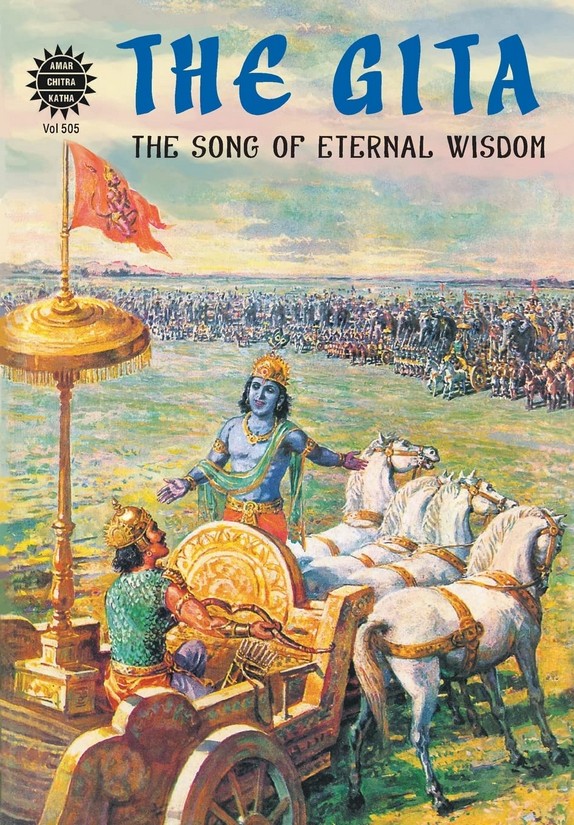
About the Book: Part of the legendary Amar Chitra Katha series, this illustrated edition presents the entire Kurukshetra dialogue between Krishna and Arjuna through vibrant artwork and sequential storytelling. The comic format doesn’t oversimplify—it includes key verses and maintains the philosophical depth while making it visually engaging. The illustrations bring ancient India to life, helping readers visualize the battlefield setting and understand the emotional context of Arjuna’s moral crisis. This pioneering work has introduced generations of Indian children and adults to the Gita.
About the Author: Anant Pai, known as “Uncle Pai,” was the creator of Amar Chitra Katha comics, making Indian mythology and philosophy accessible through illustrated storytelling. A visionary educator and publisher, he believed that Indian children should know their own culture’s stories and wisdom. He passed away in 2011, leaving behind a legacy of over 400 titles that have educated millions.
Review: A pioneering work that presents the Gita in comic book format. The visual storytelling makes complex concepts easier to grasp, particularly for visual learners and those new to Indian philosophy. Despite being nearly 50 years old, the artwork remains charming and the storytelling compelling. Many adults credit this comic as their first meaningful encounter with the Gita during childhood, later returning to more detailed versions. It’s surprisingly effective at conveying philosophical nuances through facial expressions and carefully chosen dialogue. Ideal for children ages 10+, reluctant readers, or anyone who finds traditional texts intimidating. The compact format (typically 32 pages) makes it a quick, non-threatening introduction that can be completed in one sitting.
Bhagavad Gita for Students
Author: C.Rajagapalachari
Published: July 2017 (Paperback)
Publisher: Bharatiya Vidya Bhavan
Category: Beginner-friendly, Children’s Literature
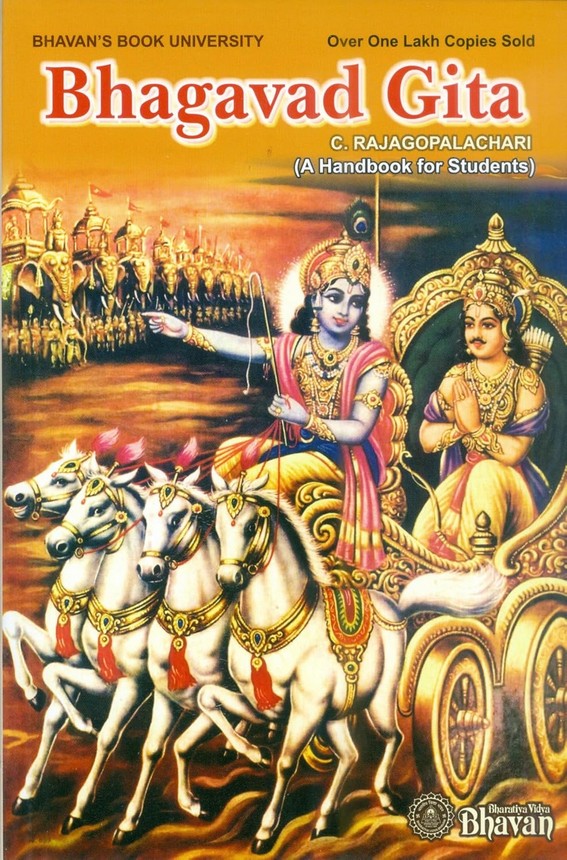
About the Book: “Bhagavad Gita for Students” is a compact 69-page guide published by Sri Ramakrishna Math, Chennai, one of India’s most respected spiritual institutions. This concise volume presents the essential teachings of the Bhagavad Gita in a format specifically tailored for student readers, focusing on practical application of the Gita’s wisdom to everyday student life. The book emphasizes how the timeless principles of the Gita—including concentration, self-discipline, managing stress, and finding purpose—can help students navigate academic pressures, personal challenges, and character development. Its brevity makes it an ideal companion for busy students seeking spiritual guidance without overwhelming reading commitments.
About the Author: Swami Atmashraddhananda is a respected monk of the Ramakrishna Order, known for his ability to communicate Vedantic philosophy in clear, practical terms. As part of the Sri Ramakrishna Math tradition, which follows the teachings of Sri Ramakrishna, Swami Vivekananda, and Vedanta philosophy, he brings both scholarly depth and monastic insight to his writings. His work focuses on making ancient spiritual wisdom accessible and relevant to contemporary readers, particularly young people facing modern challenges. Through his writings and teachings, Swami Atmashraddhananda continues the Ramakrishna Mission’s legacy of blending spiritual ideals with practical life guidance.
Review: This remarkably concise 69-page book delivers profound insights without unnecessary elaboration, making it perfect for students with limited time but genuine spiritual curiosity. Swami Atmashraddhananda’s presentation is direct and practical, focusing on how students can apply Gita’s teachings to real-life situations like exam stress, peer pressure, career choices, and personal growth. The book’s association with Sri Ramakrishna Math ensures authenticity and depth rooted in a well-established spiritual tradition. Its compact size belies its impact—readers often find themselves returning to its pages for guidance during challenging times. For students seeking a quick yet meaningful introduction to the Gita’s practical wisdom, this book is an excellent choice that respects both their time constraints and intellectual capabilities.
Bhagavad Gita for Students
Author: Swami Atmashraddhananda
Publisher: Sri Ramakrishna Math, Chennai
Category: Beginner-friendly, Children’s Literature
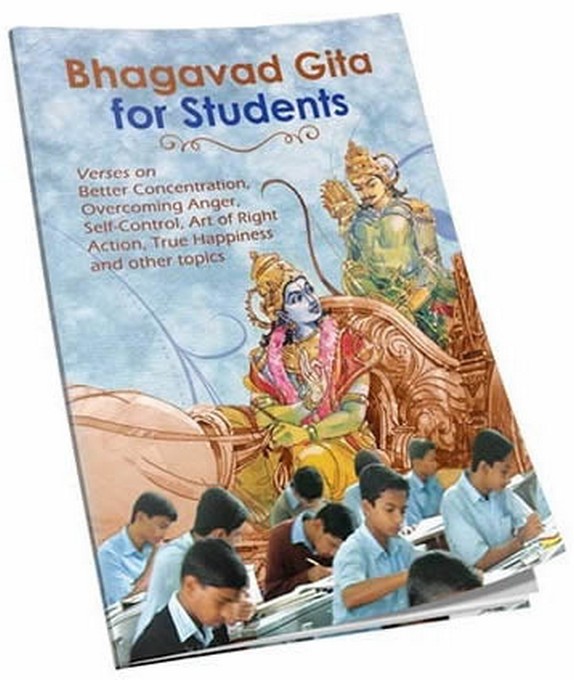
About the Book: Bhagavad Gita for Students is a compact 69-page guide published by Sri Ramakrishna Math, Chennai, one of India’s most respected spiritual institutions. This concise volume presents the essential teachings of the Bhagavad Gita in a format specifically tailored for student readers, focusing on practical application of the Gita’s wisdom to everyday student life. The book emphasizes how the timeless principles of the Gita—including concentration, self-discipline, managing stress, and finding purpose—can help students navigate academic pressures, personal challenges, and character development. Its brevity makes it an ideal companion for busy students seeking spiritual guidance without overwhelming reading commitments.
About the Author: Swami Atmashraddhananda is a respected monk of the Ramakrishna Order, known for his ability to communicate Vedantic philosophy in clear, practical terms. As part of the Sri Ramakrishna Math tradition, which follows the teachings of Sri Ramakrishna, Swami Vivekananda, and Vedanta philosophy, he brings both scholarly depth and monastic insight to his writings. His work focuses on making ancient spiritual wisdom accessible and relevant to contemporary readers, particularly young people facing modern challenges. Through his writings and teachings, Swami Atmashraddhananda continues the Ramakrishna Mission’s legacy of blending spiritual ideals with practical life guidance.
Review: This remarkably concise 69-page book delivers profound insights without unnecessary elaboration, making it perfect for students with limited time but genuine spiritual curiosity. Swami Atmashraddhananda’s presentation is direct and practical, focusing on how students can apply Gita’s teachings to real-life situations like exam stress, peer pressure, career choices, and personal growth. The book’s association with Sri Ramakrishna Math ensures authenticity and depth rooted in a well-established spiritual tradition. Its compact size belies its impact—readers often find themselves returning to its pages for guidance during challenging times. For students seeking a quick yet meaningful introduction to the Gita’s practical wisdom, this book is an excellent choice that respects both their time constraints and intellectual capabilities.
The Gita for Children
Author: Roopa Pai
Published: July 2015 (Paperback)
Category: Beginner-friendly, Children’s Literature
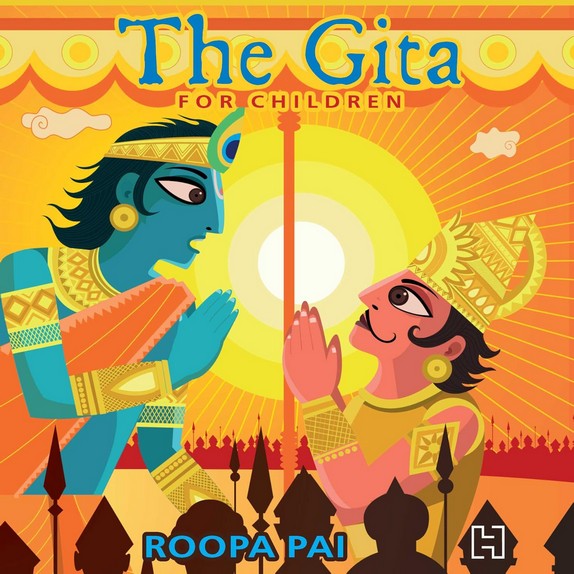
About the Book: This delightful adaptation transforms the 5000-year-old battlefield dialogue into an engaging narrative that speaks to contemporary children. The book covers all 18 chapters of the original Gita while weaving in stories, analogies from daily life, and even pop culture references. Pai addresses fundamental questions like “Why should I be good?”, “What is dharma?”, and “How do I handle difficult emotions?” in a language that resonates with young readers.
About the Author: Roopa Pai is an accomplished children’s author with over 20 books to her credit, including the bestselling “Taranauts” series. She has won multiple awards for her ability to make complex subjects—from science to philosophy—engaging for young minds through her witty, conversational style.
Review: This book brilliantly simplifies the profound teachings of the Gita for children and first-time readers. Using simple language, humor, and relatable examples, it makes ancient wisdom digestible for modern young minds. Parents and educators praise it for opening meaningful conversations about ethics, purpose, and inner strength without being preachy. The conversational tone feels like a friendly chat rather than a lecture, making it equally enjoyable for adults seeking a gentle introduction to the Gita. Perfect for families introducing spiritual concepts to children aged 10 and above.
Gita Made Easy
Translator: Swami Swarupananda
Features: Simple & Crisp | All 18 Chapters with Shlokas and Summaries
Category: Beginner to Intermediate
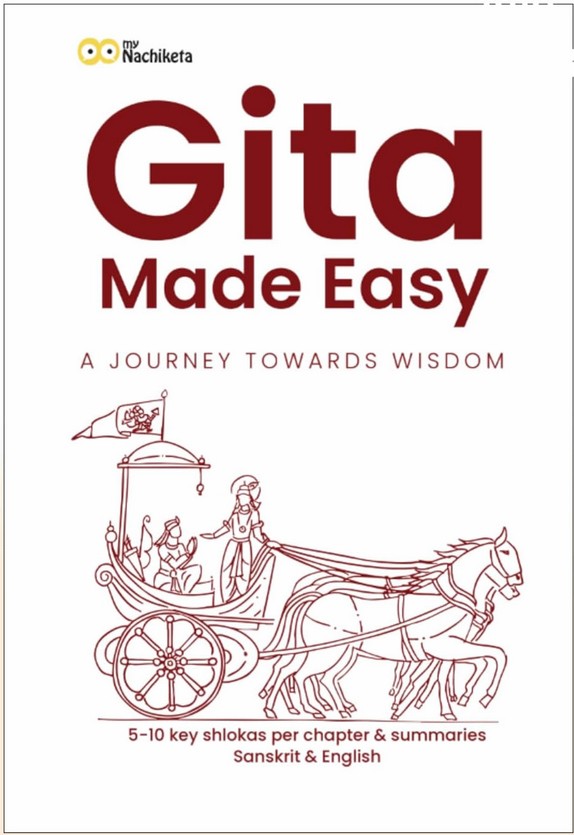
About the Book: This streamlined translation strikes the perfect balance between completeness and accessibility. Each chapter begins with a brief overview of its main themes, followed by the original Sanskrit shlokas in Devanagari script, their English transliteration, word-by-word meanings, and a clear translation. The summaries at the end of each chapter help readers consolidate key learnings. Unlike heavily annotated versions, this book keeps commentary minimal, allowing the verses to speak for themselves while providing enough context for understanding.
About the Translator: Swami Swarupananda is known for his clear, concise translations that maintain authenticity while enhancing accessibility. As a monk of the Ramakrishna Order, he brings both scholarly rigor and practical spiritual insight to his work, ensuring that translations serve both academic study and personal spiritual practice.
Review: Lives up to its title by providing straightforward translations with summaries. The crisp presentation of all 18 chapters with original shlokas makes it perfect for beginners who want a complete but uncomplicated overview. Readers appreciate the “no-frills” approach—there’s no lengthy introduction or heavy philosophical commentary that might overwhelm newcomers. The inclusion of Sanskrit text with transliteration is particularly valuable for those who want to chant or memorize verses. Many use this as their “daily reading” edition because it’s comprehensive yet digestible in small portions. The compact size and clear layout make it ideal for regular study without feeling like homework. This edition is especially popular among yoga teachers and meditation practitioners who want authentic verses without wading through extensive scholarly annotations.
Oh Man! Read The Gita
Author: Suresh G. Bharwani
Published: November 2025 (Hardcover)
Subtitle: Solutions for Peace & Happiness | The Most Unique & Simplest Version
Category: Beginner, Practical Guide
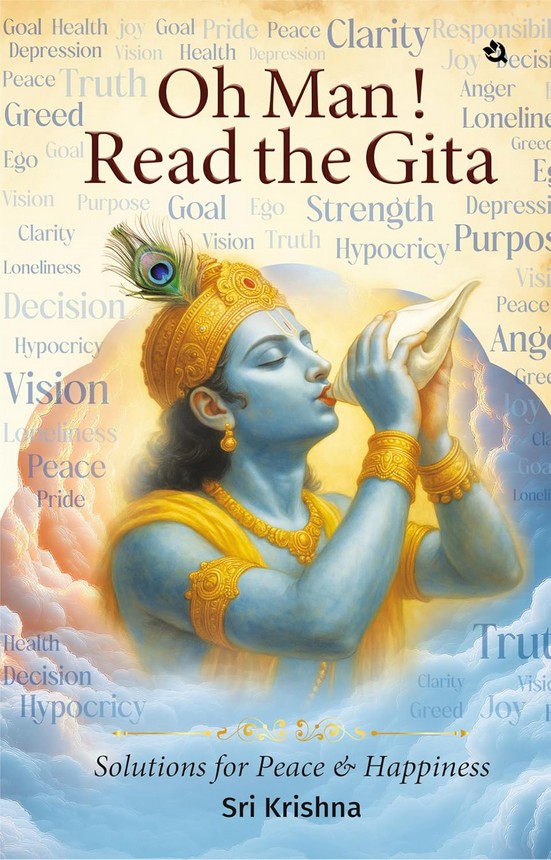
About the Book: This is an outstanding simple introduction to the Gita that makes the ancient text both simple and profound. Covering all 18 chapters comprehensively, the book also includes insightful essays on key topics. It’s particularly valuable today because the Gita offers timeless wisdom that we can apply to our everyday lives. Beautifully organized in an accessible format with straightforward language. The author has done an exceptional job of presenting the profound teachings of the Bhagavad Gita in clear, straightforward language.
About the Author: The author presents themselves as a guide to making the Gita the most accessible it has ever been. Suresh G. Bharwani is a respected leader in the education and information technology training sector. As a co-compiler of Oh Man! Read The Gita, he brings a unique perspective that blends spiritual wisdom with practical simplicity. His interpretation highlights the accessible and universal nature of the Bhagavad Gita, using apt analogies to help readers connect ancient teachings with modern life.
Review: This publication focuses on everyday applications and solving modern problems using ancient wisdom. Early readers appreciate the straightforward, no-nonsense approach that treats the Gita as a life manual rather than a religious text. Great for complete beginners who want straightforward answers without philosophical complexity. The thematic organization makes it easy to find guidance on specific issues without reading the entire text. However, purists may find the reorganization and heavy simplification removes too much of the original context and richness. Best suited for those seeking immediate practical help rather than traditional spiritual study.
Gita for the Young and the Urban
Author: Swami Nityanand Charan Das
Category: Beginner, Urban Lifestyle, Youth-oriented

About the Book: Written specifically for the smartphone generation, this book addresses the unique challenges of modern urban living—social media anxiety, FOMO (fear of missing out), career confusion, mental health struggles, and the constant digital noise. The swami uses contemporary language, real-life case studies of young professionals, and relatable scenarios from dating to job interviews. Each chapter ends with practical exercises and reflection questions that help readers apply the teachings immediately.
About the Author: A bestselling author of “Icons of Grace” and “Ask the Monk,” Swami Nityanand Charan Das bridges ancient wisdom with modern urban challenges. Before taking monastic vows, he worked in the corporate sector, giving him firsthand understanding of the pressures faced by young urban professionals. His social media presence and Q&A sessions with youth inform his approachable teaching style.
Review: Specifically designed for millennials and Gen Z readers navigating urban chaos. The swami’s conversational tone and real-life applications make spiritual concepts relatable. Readers praise his ability to discuss topics like anxiety, burnout, and relationship drama without being judgmental. Excellent for those seeking to “unplug from the noise” and find inner clarity. The book doesn’t ask readers to renounce the world but rather to navigate it with wisdom and balance. Many young readers report feeling “seen and understood” by this adaptation, as it acknowledges their struggles without dismissing the realities of modern life.
Gita on the Go | Quick Lessons from the Bhagavad Gita for Modern Life
Author: Aakriti Bansal
Category: Beginner, Modern Application, Self-Help

About the Book: This compact guide distills 5000 years of wisdom into practical, digestible lessons tailored for the modern reader’s hectic lifestyle. Each chapter focuses on applying Gita principles to contemporary challenges like workplace stress, relationship conflicts, decision-making paralysis, and maintaining work-life balance. The book strips away the religious and cultural context to focus purely on universal life lessons, making it accessible regardless of one’s background or beliefs.
About the Author: Aakriti Bansal is a contemporary author who specializes in making ancient wisdom relevant to modern lifestyle challenges. Her writing reflects her own journey of discovering the Gita’s practical value while navigating corporate life, making her insights particularly relatable to working professionals.
Review: Ideal for busy professionals and beginners seeking practical wisdom. This book distills Gita’s teachings into bite-sized, actionable lessons for contemporary life. Readers appreciate the absence of Sanskrit terminology and religious jargon, making it one of the most accessible entry points for skeptics or those intimidated by spiritual texts. The modern approach makes it less intimidating for those new to spiritual texts, and it can be read in short bursts during commutes or lunch breaks. Many readers report returning to specific chapters when facing particular life challenges, making it a practical handbook rather than just a one-time read.
The Bhagavad Gita
Author: Eknath Easwaran
Published: June 2009 (Paperback)
Category: Beginner to Intermediate, Universal Spirituality

About the Book: Easwaran’s translation is celebrated for its poetic beauty and spiritual depth without sectarian bias. The book opens with a substantial 60-page introduction that sets the historical and philosophical context, making it accessible even to those unfamiliar with Hindu tradition. Each of the 18 chapters begins with a thoughtful essay connecting the Gita’s ancient wisdom to modern life challenges—relationships, work, purpose, and inner peace. The translation itself uses clear, lyrical English that captures the devotional essence of the original. Includes practical guidance on meditation and applying the Gita’s teachings in daily life.
About the Author: Eknath Easwaran (1910-1999) was a spiritual teacher and author who founded the Blue Mountain Center of Meditation in California. He was renowned for making Eastern spirituality accessible to Western audiences. A former English professor in India, Easwaran came to America in 1959 as a Fulbright scholar and stayed to teach meditation. His own life—bridging East and West, academia and spirituality—informs his unique ability to translate ancient wisdom for contemporary readers.
Review: One of the most beloved modern translations. Easwaran’s poetic yet accessible language, combined with his insightful chapter introductions, makes this ideal for beginners and those from non-Hindu backgrounds. His universal spiritual approach transcends religious boundaries, making the Gita’s wisdom applicable regardless of one’s faith tradition. Readers consistently praise the clarity of his prose and the warmth of his voice—it feels like learning from a wise, patient teacher. The chapter introductions are particularly valuable, providing context that helps readers understand not just what the verses mean, but why they matter for modern life. This edition has become a favorite in meditation circles, book clubs, and university courses. Many spiritual seekers from diverse backgrounds cite this as their gateway into serious Gita study, later appreciating more traditional commentaries after Easwaran’s introduction.
Gita Life: A Summary of the Bhagavad-gita in Acronyms
Author: S.B. Keshava Swami
Category: Beginner, Memory Aid, Quick Reference
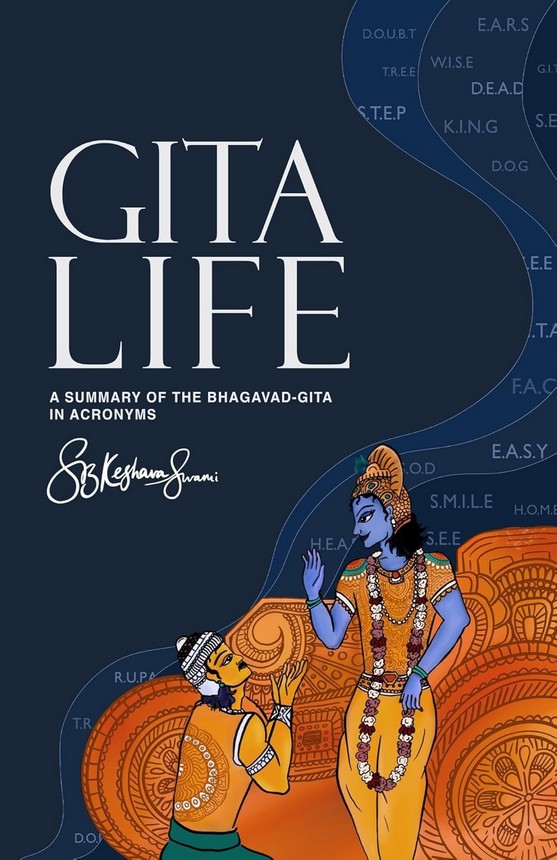
About the Book: This innovative guide transforms the Gita’s 700 verses into memorable acronyms, making complex philosophy stick in your mind. Each chapter’s main teachings are condensed into clever mnemonic devices—for example, the three types of knowledge might be remembered through an acronym that makes sense in contemporary life. The book is structured as a quick-reference companion rather than a complete translation, perfect for busy readers who want to internalize key concepts without extensive study time. Digital format allows for easy searching and highlighting of favorite acronyms.
About the Author: S.B. Keshava Swami uses innovative teaching methods to make Vedic wisdom memorable and practical. His background in both traditional Vedic studies and modern education gives him insight into how contemporary learners best absorb and retain information. He recognizes that today’s readers need memory aids to compete with information overload.
Review: A unique approach using acronyms to help readers remember key concepts. Perfect for beginners who learn through mnemonics and want a quick-reference guide to Gita’s essential teachings. Students and professionals appreciate being able to recall Gita wisdom during stressful moments at work or in daily life—the acronyms pop into mind when needed most. While it shouldn’t be your only Gita resource (it’s more of a study aid than a complete text), it’s incredibly effective for retention and review. Many readers keep this on their phones for quick consultation during commutes or before important meetings. The creative memory devices make ancient wisdom feel accessible and relevant, though some readers feel the acronyms can occasionally oversimplify nuanced teachings. Best used alongside a more complete translation for full understanding.
BHAGAVAD GITA FOR INTERMEDIATE READERS
Bhagavad Gita: The Song of God
Author: Swami Mukundananda
Published: September 2022 (Hardcover)
Category: Intermediate, Devotional
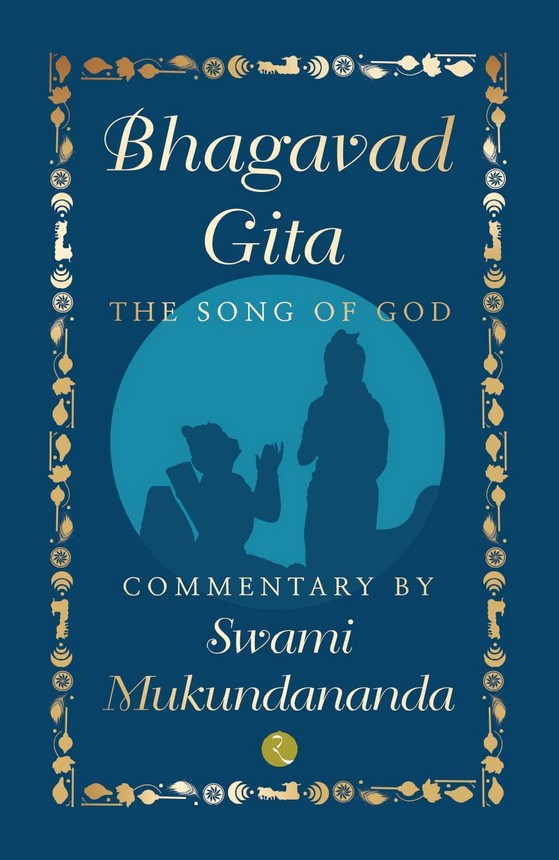
About the Book: This modern masterpiece spans over 1,000 pages of detailed verse-by-verse commentary that bridges ancient spirituality with contemporary science. Each verse is presented in Sanskrit (Devanagari script), followed by transliteration, word-by-word meaning, translation, and extensive commentary. What sets this edition apart is Swami Mukundananda’s unique approach of correlating Gita’s wisdom with findings from neuroscience, psychology, and management studies. The book includes practical examples from corporate life, healthcare, education, and personal relationships, making philosophical concepts tangible. Special sections address modern challenges like stress management, goal-setting, and emotional intelligence through the Gita’s lens.
About the Author: Swami Mukundananda is a globally recognized spiritual teacher, Vedic scholar, and founder of JKYog (Jagadguru Kripaluji Yog). He blends ancient wisdom with modern science. Holding degrees from IIT Delhi and IIM Calcutta, he chose monastic life after a successful career path, studying under Jagadguru Shri Kripaluji Maharaj. His engineering and management background uniquely positions him to explain spiritual principles through logic and scientific parallels, making him particularly effective with educated, skeptical audiences.
Review: A comprehensive yet readable translation with extensive commentary. Swami Mukundananda’s scientific background allows him to bridge spiritual concepts with contemporary understanding. Suitable for readers with some spiritual foundation seeking deeper insights. Readers praise the balance between devotional sentiment and intellectual rigor—the commentary never becomes dry academic exercise but maintains spiritual warmth throughout. The scientific correlations are particularly appreciated by professionals and students who need logical frameworks to accept spiritual teachings. Many consider this the most relevant Gita commentary for 21st-century readers, especially those in STEM fields or corporate careers. The extensive length might intimidate some, but the clear structure and engaging writing style make it highly readable. Excellent for study groups and those ready to commit to serious, sustained study over several months.
The Holy Geeta
Author: Swami Chinmayananda
Published: December 2000 (Hardcover)
Category: Intermediate, Vedanta Philosophy
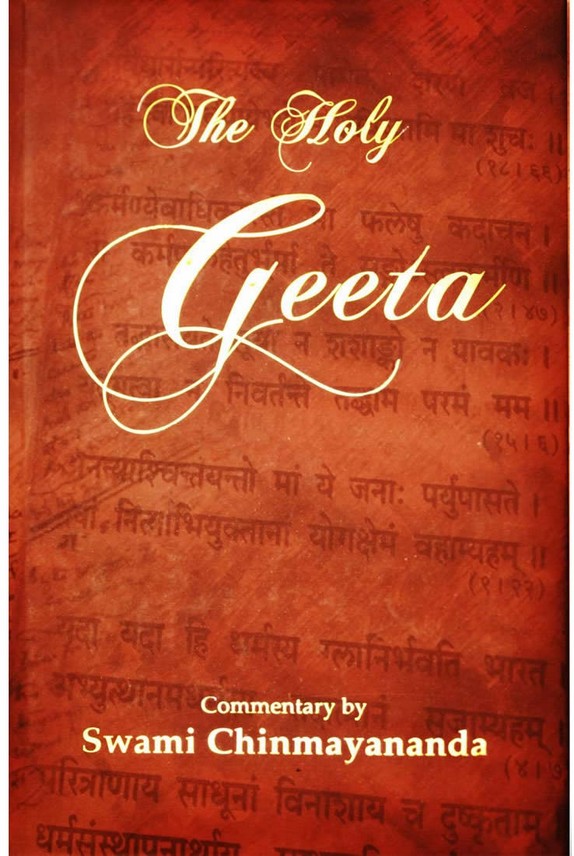
About the Book: This classic commentary represents Swami Chinmayananda’s discourses on the Gita delivered over many years to diverse audiences worldwide. The book presents each verse with Sanskrit text, transliteration, word meanings, and detailed explanations that unpack the philosophical depth layer by layer. Chinmayananda’s genius lies in his ability to explain complex Vedantic concepts through everyday analogies, humor, and rhetorical questions that engage readers directly. The commentary addresses both the literal and metaphorical meanings, showing how the battlefield dialogue applies to the inner struggles we all face. Includes chapter summaries and a comprehensive introduction to Vedantic terminology and concepts.
About the Author: Swami Chinmayananda (1916-1993) was the founder of Chinmaya Mission and a pioneering teacher who revitalized Vedanta study worldwide through his dynamic teaching style. Born as Balakrishnan Menon, he was initially a journalist and freedom fighter before his spiritual transformation. His razor-sharp intellect, combined with infectious enthusiasm and wit, made him one of the 20th century’s most influential spiritual teachers. He established over 300 centers globally and inspired a renaissance in Vedantic learning, particularly among educated urban Indians who had drifted from their philosophical heritage.
Review: A scholarly yet accessible commentary from one of modern India’s greatest spiritual teachers. Requires some familiarity with Hindu philosophy but rewards readers with profound insights into Vedantic interpretation. Chinmayananda’s distinctive voice comes through powerfully—questioning, challenging, and inspiring readers rather than simply explaining. His commentary feels like a living dialogue, often addressing potential doubts and objections before readers even formulate them. The book balances intellectual depth with practical spirituality, never becoming overly abstract or detached from daily life. Readers appreciate his fearless approach to tackling difficult philosophical concepts without oversimplifying them. This edition has been a staple in Chinmaya Mission study groups for decades and remains highly relevant. Best for those ready to think deeply about philosophical questions and willing to study actively rather than passively read. The hardcover edition’s quality and durability reflect its status as a long-term reference work.
Srimad Bhagavad Gita (Translation)
Author: Swami Dayananda Saraswati
Published: April 2007 (Paperback)
Category: Intermediate, Traditional Vedanta
About the Book: This translation stands out for its precision and adherence to traditional Vedantic interpretation without added embellishment or modern reinterpretation. Each verse is carefully analyzed with attention to Sanskrit grammar, ensuring the translation captures the exact intended meaning rather than imposing contemporary interpretations. The commentary is concise but profound, focusing on clarifying the philosophical framework rather than storytelling or motivational content. Swami Dayananda’s approach treats the Gita as a Prakarana Grantha (methodical treatise) that presents Vedantic knowledge systematically. The book is particularly valuable for understanding technical terms like dharma, karma, and moksha in their precise Vedantic context.
About the Author: Swami Dayananda Saraswati (1930-2015) was a distinguished teacher of Vedanta and Sanskrit who founded Arsha Vidya Gurukulam. He was known for his precise and authentic teaching methodology. Trained in the traditional guru-shishya system, he spent decades mastering Sanskrit texts before teaching. His commitment to preserving the authentic teaching tradition while making it accessible to modern students earned him respect across spiritual and academic circles. He also founded the Hindu Dharma Acharya Sabha, bringing together diverse Hindu spiritual leaders.
Review: A faithful translation emphasizing traditional Vedantic understanding. Best for readers who have basic familiarity with Sanskrit concepts and want an authentic, unembellished presentation. This is not the Gita for casual reading or quick inspiration—it demands careful, thoughtful study. Readers who have struggled with overly simplified or westernized versions appreciate the intellectual honesty and rigor here. The translation doesn’t try to make the Gita say what modern readers want to hear; instead, it presents what the text actually says according to traditional interpretation. Particularly valued by serious Vedanta students, Sanskrit learners, and those preparing to study the Gita formally under a teacher. The straightforward presentation makes it excellent for repeated study—each reading reveals deeper layers. Some find the lack of elaborate commentary refreshing, while others might prefer more explanatory guidance. Ideal for building a solid foundational understanding before exploring more interpretive commentaries.
Srimad Bhagavad Gita (Gita Press, Gorakhpur)
Publisher: Gita Press
Category: Intermediate to Advanced
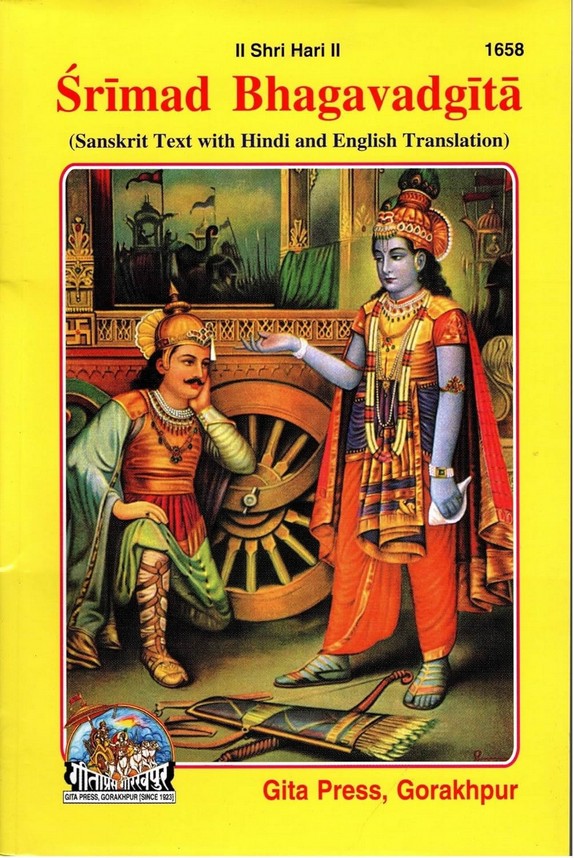
About the Publisher: Gita Press, established in 1923 in Gorakhpur, Uttar Pradesh, stands as one of the world’s largest publishers of Hindu religious texts, distinguished by its commitment to producing affordable and authentic editions. Since its founding over a century ago, the press has published more than 410 million copies of the Gita in various Indian languages, playing an instrumental role in democratizing access to sacred texts across the Indian subcontinent and beyond. Operating as a non-profit organization, Gita Press has dedicated itself to the noble mission of spreading Vedantic knowledge and making spiritual wisdom available to people from all economic backgrounds. The publisher’s reputation for textual accuracy and traditional scholarship has made it a trusted source for generations of spiritual seekers and scholars alike.
Review: This highly respected edition features Sanskrit text with English translation and transliteration, making it an invaluable resource for serious students who wish to engage directly with the source material while having reliable translation support. The Tattva Vivecani commentary provides substantial philosophical depth without becoming overly complex or inaccessible, striking a balance that appeals to intermediate and advanced readers. The word-by-word breakdown serves as an excellent tool for language students and those interested in comparative study, helping readers understand the precise meaning and nuance of each Sanskrit term rather than relying solely on interpretive translations. The compact size enhances its practicality, making it suitable for daily reading, meditation, and travel without sacrificing completeness or quality. This edition is best suited for readers who value scriptural authenticity above all else and want to develop a deeper, more intimate connection with the original Sanskrit verses, understanding the Gita in a form closer to how it has been studied for centuries.
BHAGAVAD GITA FOR ADVANCED READERS
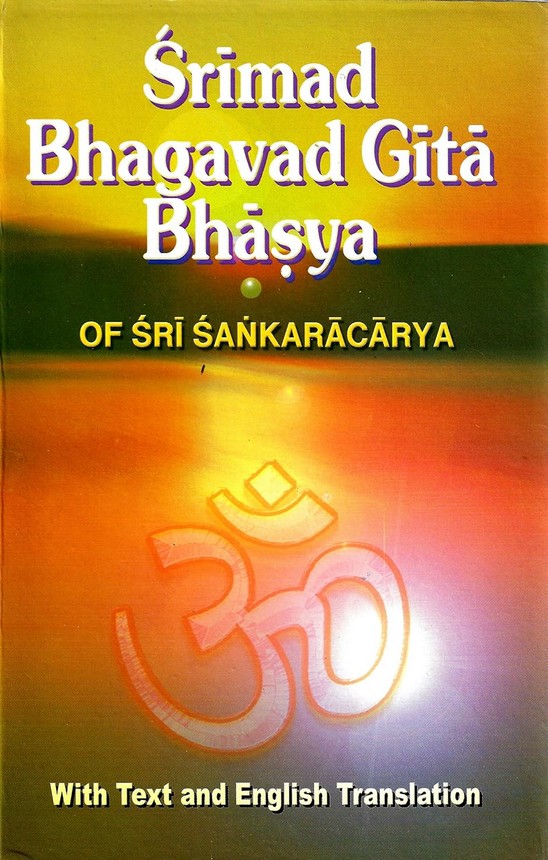
Srimad Bhagavad Gita Bhasya
Author: Sri Adi Sankaracharya
Translator: A.G. Krishna Warrier
Published: January 2008 (Hardcover)
Pages: Approximately 800+ pages
Category: Advanced, Advaita Vedanta, Scholarly
About the Author: Adi Shankaracharya (8th century CE) was one of India’s greatest philosophers and theologians who consolidated the doctrine of Advaita Vedanta. His commentaries are foundational texts in Hindu philosophy. He established four mathas (monasteries) across India and engaged in extensive philosophical debates to revive and systematize Vedantic thought. His works form the cornerstone of non-dualistic philosophy in Hinduism.
About the Book: This is Shankaracharya’s magnum opus on the Bhagavad Gita, written in Sanskrit and meticulously translated by A.G. Krishna Warrier. The Bhasya (commentary) examines each verse through the lens of Advaita (non-dualism), arguing that the ultimate reality is Brahman, the singular consciousness, and that the individual self (Atman) and Brahman are identical. The text includes detailed philosophical arguments, refutations of opposing viewpoints, and deep explorations of concepts like Maya (illusion), Moksha (liberation), and Jnana (knowledge).
Review: This is the gold standard for advanced philosophical study and remains the most influential commentary on the Gita for over a millennium. Shankaracharya’s commentary (Bhasya) presents the non-dualistic Advaita interpretation with rigorous logical analysis, employing sophisticated dialectical methods to establish his positions. The work demonstrates exceptional intellectual rigor, with each verse dissected for its deeper metaphysical implications. Requires strong background in Vedanta philosophy and patience for deep philosophical arguments that often involve Sanskrit terminology and references to Upanishadic texts. Essential for serious scholars who wish to understand the philosophical foundations of Hinduism. Readers should be prepared for complex discussions on the nature of reality, causation, and the path to liberation through knowledge (Jnana Yoga). This is not light reading but rather a lifelong study companion for those committed to understanding Advaita Vedanta at its source. The Krishna Warrier translation is praised for maintaining philosophical precision while making the text accessible to English readers with philosophical training.
Bhagavad Gita As It Is
Author: A.C. Bhaktivedanta Swami Prabhupada
Publisher: ISKCON/Bhaktivedanta Book Trust
Available in: Multiple editions (Hardcover, Paperback)
Pages: Approximately 900+ pages (with commentary)
Category: Advanced, Bhakti Yoga, Gaudiya Vaishnava Tradition
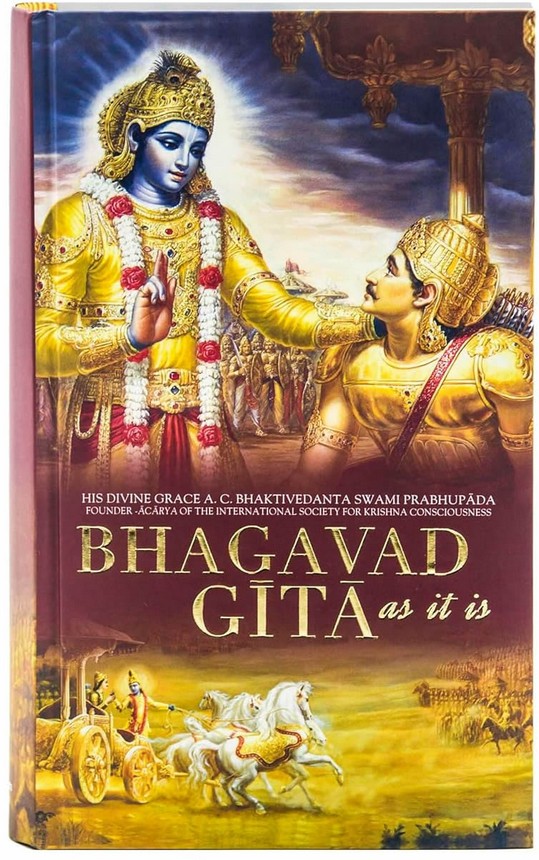
About the Author: A.C. Bhaktivedanta Swami Prabhupada (1896-1977) founded ISKCON (International Society for Krishna Consciousness) and translated numerous Vedic texts including the massive Srimad Bhagavatam. He brought Bhakti yoga to Western audiences, arriving in America at age 69 with only a few dollars and establishing over 100 temples worldwide. His dedication to preserving the original teachings while making them accessible to modern readers has influenced millions.
About the Book: This edition presents the complete Sanskrit text with Roman transliteration, word-for-word translation, English translation, and extensive purports (commentary) for each verse. Prabhupada’s approach emphasizes devotion to Krishna as the Supreme Personality of Godhead, presenting the Gita as a manual for developing love of God through bhakti (devotion). The commentary draws extensively from traditional Vaishnava acharyas (teachers) and includes practical guidance for spiritual practice, including chanting, deity worship, and Krishna consciousness in daily life.
Review: The definitive translation from the Bhakti perspective and one of the most widely distributed versions of the Gita in the world. Extensive verse-by-verse commentary from the Gaudiya Vaishnava tradition provides theological depth that connects the Gita to broader Vaishnava philosophy and the Srimad Bhagavatam. While accessible in language, the theological depth and devotional focus make this best suited for those committed to deeper spiritual study or interested in the Hare Krishna movement’s interpretation. Prabhupada’s purports are distinctive for their directness, practical application, and unapologetic devotional stance. He frequently addresses modern readers’ concerns and skepticism, making ancient wisdom relevant to contemporary life. The work excels at explaining karma, reincarnation, and the soul’s journey with clarity and conviction. Some readers appreciate the uncompromising traditional approach, while others may find the sectarian emphasis challenging. This edition is particularly valuable for understanding how the Gita has been interpreted within living devotional traditions and offers a complete spiritual philosophy encompassing ethics, metaphysics, and practice.
Bhagavad Gita: The Scriptures of Mankind
Author/Translator: Swami Tapasyananda
Publisher: Ramakrishna Math
Published: January 2000 (Paperback)
Pages: Approximately 400 pages
Category: Advanced, Ramakrishna-Vivekananda Tradition
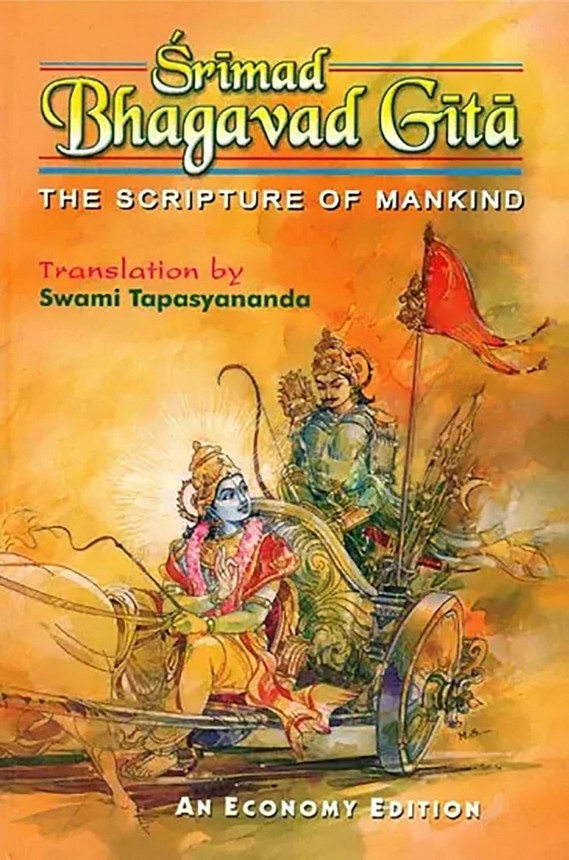
About the Author: Swami Tapasyananda (1904-1991) was a senior monk of the Ramakrishna Order known for his scholarly translations and commentaries on Hindu scriptures, including works on the Upanishads and Narada Bhakti Sutras. His academic rigor combined with monastic experience created translations that are both intellectually satisfying and spiritually edifying. He served at various centers of the Ramakrishna Mission and was respected for his deep scholarship and clarity of expression.
About the Book: This translation and commentary emerges from the Ramakrishna-Vivekananda tradition, which emphasizes the harmony of religions and the practical application of spiritual principles. The work includes Sanskrit text with transliteration, English translation, and substantial commentary drawing from traditional sources while addressing modern readers’ concerns. Swami Tapasyananda contextualizes each chapter, explains key concepts thoroughly, and connects the Gita’s teachings to the broader Vedantic tradition. The commentary frequently references the teachings of Sri Ramakrishna and Swami Vivekananda, showing how their realizations illuminate the Gita’s verses.
Review: An authoritative translation from the Ramakrishna tradition emphasizing the universality of the Gita’s message and its relevance across religious boundaries. Scholarly yet devotional, it requires philosophical maturity to fully appreciate the nuanced interpretations and extensive cross-references to other scriptures including Upanishads, Brahma Sutras, and the teachings of various saints. What distinguishes this work is its balanced approach: it presents different traditional interpretations fairly while highlighting the Ramakrishna tradition’s emphasis on harmony and practical spirituality. Swami Tapasyananda writes with precision and clarity, making complex philosophical concepts accessible without oversimplification. His commentary addresses the ethical, psychological, and metaphysical dimensions of the text, showing how the Gita provides guidance for different temperaments and stages of spiritual development. The work is particularly valuable for understanding how the Gita functions as practical spiritual guidance rather than abstract philosophy. Readers appreciate the comprehensive notes, the connection to living spiritual traditions, and the way the commentary illuminates obscure passages. This edition serves well as both a reference work and a text for systematic study, suitable for scholars, students, and serious practitioners seeking an authoritative yet accessible treatment.
The Bhagavad Gita: God Talks With Arjuna
Author: Paramahansa Yogananda
Published: January 2009 (2-Volume Paperback Set)
Pages: Over 1,200 pages across two volumes
Category: Advanced, Kriya Yoga, Comprehensive Commentary
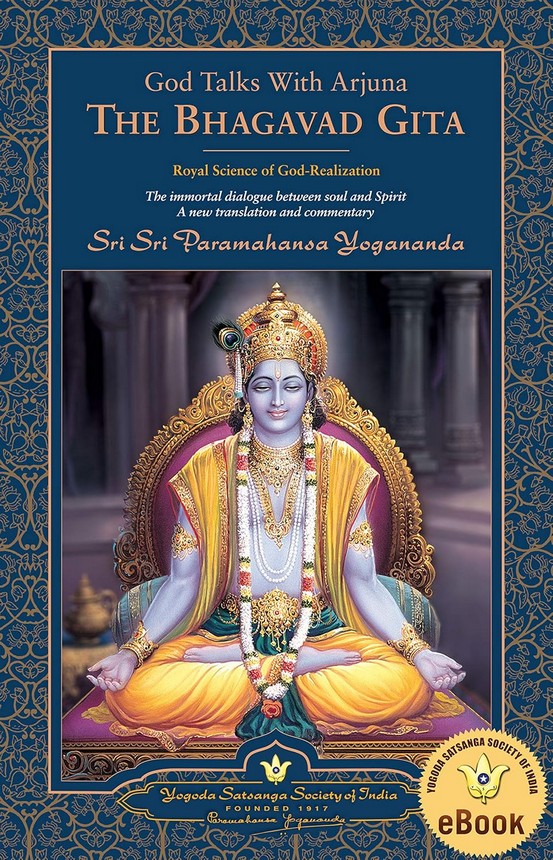
About the Author: Paramahansa Yogananda (1893-1952) was the founder of Self-Realization Fellowship and author of “Autobiography of a Yogi,” one of the most influential spiritual books of the 20th century. He introduced millions of Westerners to yoga and meditation, emphasizing the scientific basis of spiritual practice and the unity of Eastern and Western religious truths. His teachings bridge mysticism and practical spirituality, making esoteric knowledge accessible while maintaining depth.
About the Book: This monumental work represents Yogananda’s life’s devotion to explaining the Gita’s deepest meanings. Each of the 18 chapters receives extensive treatment, with individual verses explored through multiple lenses: psychological, metaphysical, yogic, and devotional. The commentary integrates detailed explanations of meditation techniques, the science of Kriya Yoga, the subtle workings of consciousness, and the symbolic meanings hidden within the narrative. Yogananda presents the battlefield of Kurukshetra as an allegory for the inner struggle between higher and lower natures within each person. The text includes discussions of chakras, prana, the astral body, and states of consciousness rarely found in other Gita commentaries.
Review: An extensive two-volume masterwork offering verse-by-verse commentary integrating yoga science, meditation techniques, and universal spiritual principles in unprecedented detail. Yogananda’s mystical insights and connections to personal spiritual practice make this essential for advanced practitioners seeking deeper meditation guidance and understanding of subtle spiritual physiology. The length and depth require serious commitment—this is not a book to read quickly but rather to study systematically over months or years. What sets this commentary apart is its practical mysticism: Yogananda doesn’t just explain philosophy but shows how to experience the truths he describes through specific meditation methods. His writing combines poetic beauty with scientific precision, making complex yogic concepts comprehensible. The work draws parallels with Christian mysticism, making it valuable for those interested in comparative religion. Readers praise the transformative potential of engaging deeply with this text, noting that it serves both as intellectual study and spiritual practice guide. The investment in these two volumes pays lifelong dividends for serious yoga practitioners and those seeking to understand consciousness from both experiential and philosophical perspectives.
Bhagavad-Gita
Translators: Swami Prabhavananda & Christopher Isherwood
Published: Various editions since 1944
Pages: Approximately 160 pages
Category: Advanced, Literary Translation
Includes: Introduction by Aldous Huxley (in some editions)

About the Translators: Swami Prabhavananda (1893-1976) was head of Vedanta Society of Southern California for over 50 years, working tirelessly to present Vedantic philosophy to Western audiences. Christopher Isherwood (1904-1986) was a renowned British-American novelist, screenwriter, and spiritual seeker best known for works like “Goodbye to Berlin.” His collaboration with Swami Prabhavananda on multiple translations brought literary excellence and Western sensibility to ancient Indian texts.
About the Book: This translation emerged from an unusual and fruitful collaboration between Eastern spiritual wisdom and Western literary craft. The pair spent considerable time ensuring each verse captured both the philosophical precision required by the Sanskrit and the poetic beauty that would resonate with English readers. The introduction often includes an essay by Aldous Huxley, adding another layer of literary and philosophical gravitas. The translation avoids overly technical language while maintaining theological accuracy, making profound concepts accessible without oversimplification.
Review: A beautiful literary translation that balances poetic language with philosophical accuracy in ways few other versions achieve. The collaboration between a swami and a novelist created an elegant work appreciated by scholars and literary enthusiasts alike—it reads as genuine English poetry rather than translated text. Best for readers with philosophical background who appreciate literary craftsmanship and want to experience the Gita as literature as well as scripture. Isherwood’s literary sensibility ensures the English flows naturally, while Prabhavananda’s spiritual depth keeps the translation true to the original meanings. This version has been praised by literary figures and philosophers, including Aldous Huxley, who recognized its unique achievement in bridging two worlds. The translation influenced a generation of Western seekers in the mid-20th century and continues to be valued for its readability and elegance. While the commentary is less extensive than some other editions, the quality of the translation itself makes deep study rewarding. Ideal for readers who want to experience the Gita’s poetry and philosophy without wading through extensive theological apparatus.
Bhagavad Gita and Its Message
Author: Sri Aurobindo
Also includes: “Essays on the Gita”
Published: Various editions; originally written 1916-1920
Pages: Approximately 450+ pages (combined editions)
Category: Advanced, Integral Yoga Philosophy
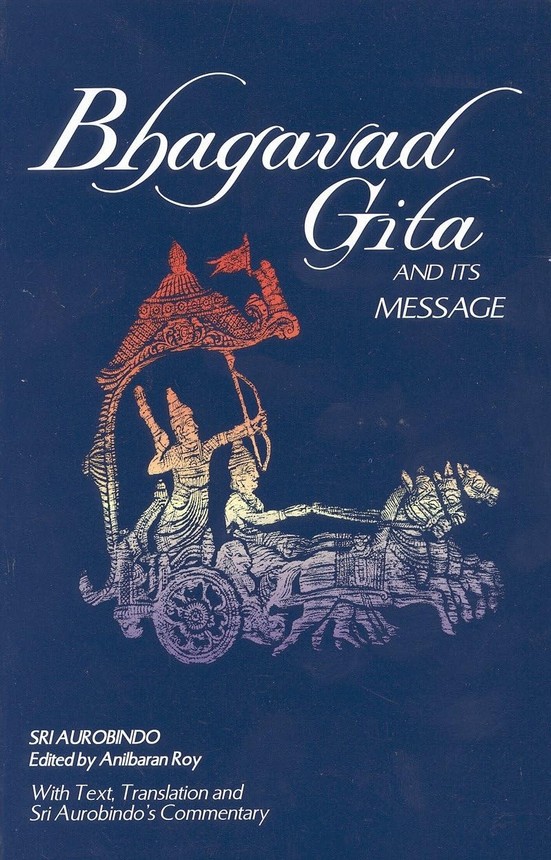
About the Author: Sri Aurobindo (1872-1950) was a revolutionary, philosopher, poet, and yogi who developed Integral Yoga and the philosophy of evolutionary spirituality. Educated at Cambridge, he returned to India to participate in the independence movement before withdrawing to pursue spiritual realization in Pondicherry. His interpretation synthesizes Indian philosophy with evolutionary theory, Western philosophy, and his own profound yogic experiences. He wrote extensively on consciousness, evolution, and the transformation of human nature.
About the Book: Sri Aurobindo’s work on the Gita consists of lengthy essays examining the text from his unique evolutionary perspective. Rather than seeing spiritual realization as escape from the world, Aurobindo presents the Gita as a gospel of divine action and world-transformation. He explores the synthesis of knowledge (jnana), devotion (bhakti), and works (karma) as an integral path leading to the supramental transformation of consciousness. His analysis delves deeply into concepts of the Divine manifesting in matter, the evolution of consciousness, and humanity’s potential for collective spiritual advancement. The work requires familiarity with both Eastern philosophy and Western intellectual traditions.
Review: A sophisticated philosophical commentary presenting Aurobindo’s unique evolutionary and integral perspective that revolutionized interpretations of the Gita for modern seekers. His synthesis of Eastern and Western thought creates a distinctive interpretation requiring familiarity with both philosophical traditions but rewarding readers with a vision of spirituality that embraces rather than rejects material existence. Essential for students of Integral Yoga and those interested in evolutionary spirituality. Aurobindo’s prose is dense and demands careful reading, but his insights are profound and original. He addresses the apparent contradictions within the Gita—between renunciation and action, knowledge and devotion—by showing how they synthesize in the integral path. His emphasis on transforming rather than escaping life makes this commentary particularly relevant for contemporary practitioners who seek spirituality within worldly engagement. The work influenced numerous 20th-century spiritual teachers and philosophers. Readers appreciate how Aurobindo makes the Gita speak to modern concerns about purpose, action, and social transformation while maintaining spiritual depth.
Maharishi Mahesh Yogi on the Bhagavad-Gita
Author: Maharishi Mahesh Yogi
Published: Various editions since 1967
Pages: Approximately 470 pages
Covers: Chapters 1-6 with extensive commentary
Category: Advanced, Transcendental Meditation

About the Author: Maharishi Mahesh Yogi (1918-2008) founded the Transcendental Meditation movement and brought Vedic knowledge to global prominence in the 1960s-70s, teaching millions including celebrities and conducting extensive research on meditation’s effects. Trained in physics before becoming a monk, he emphasized the scientific validation of spiritual practices and developed educational programs based on consciousness development. His organization conducted extensive research into meditation’s physiological and psychological effects.
About the Book: This commentary focuses primarily on the first six chapters of the Gita, providing extraordinarily detailed analysis of verses related to meditation, consciousness, and the path to enlightenment. Maharishi interprets the Gita through the framework of seven states of consciousness, from waking to unity consciousness, explaining how transcending leads to the fulfillment of human potential. The commentary integrates discussions of Being, transcendental consciousness, and the mechanics of thought and action. Maharishi’s approach is systematic and technical, treating spiritual development as a precise science with predictable results when correct techniques are applied.
Review: Presents the Gita through the lens of Transcendental Meditation and consciousness-based philosophy in exceptional detail and precision. The commentary emphasizes achieving higher states of consciousness through meditation, providing a framework for understanding spiritual development in systematic, almost scientific terms. Most valuable for TM practitioners or those interested in consciousness studies and the scientific approach to spirituality. Maharishi’s unique contribution lies in his detailed descriptions of transcendental consciousness and how it relates to daily activity, creativity, and fulfillment. He addresses the practical concerns of modern people—stress, efficiency, success—while maintaining focus on transcendence. The work is less concerned with devotional or philosophical aspects and more focused on the mechanics of consciousness development. Some readers find the repetitive emphasis on TM technique promotional, while others appreciate the clear, systematic presentation of meditation’s role in spiritual life. The commentary provides valuable insights into how ancient teachings can be understood through modern frameworks of psychology and neuroscience. Particularly useful for understanding concepts like “established intellect,” “evenness of mind,” and “Yoga of action” in practical, experiential terms.
The Bhagavad Gita: A Walkthrough for Westerners
Author/Translator: Jack Hawley, Ph.D.
Publisher: New World Library Barnes & Noble
Published: March 1, 2011
Pages: Approximately 224 pages
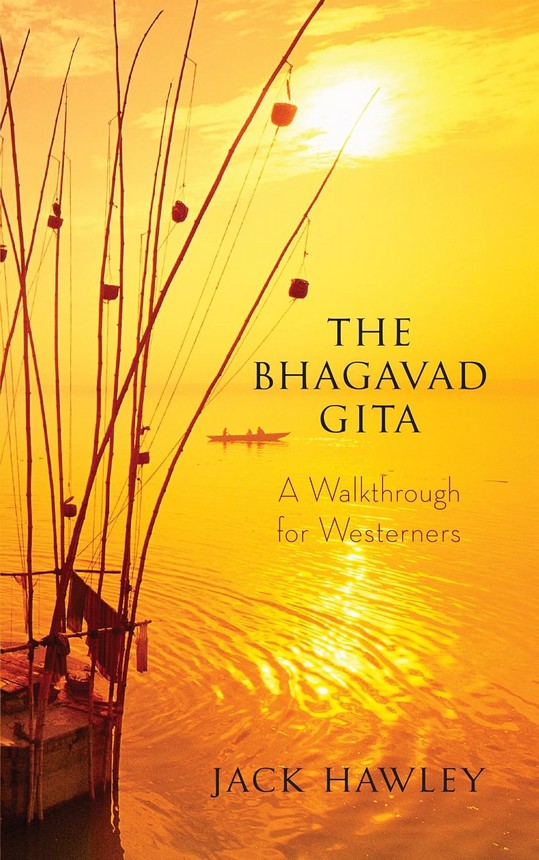
About the Book: “The Bhagavad Gita: A Walkthrough for Westerners” is a prose translation that makes the ancient scripture accessible to Western readers by presenting its story clearly and making its truths easy to apply to modern busy lives. The book presents the Gita as a universal love song sung by God to His friend man, transcending any single creed.
The book covers all 18 chapters of the original Gita and includes supplementary essays on important spiritual topics. It’s designed specifically for those unfamiliar with Eastern philosophy, removing the barriers that often make ancient Hindu scriptures challenging for Western audiences.
About the Author: Jack Hawley, PhD is a spiritual scholar who divides his time between living and studying in an ashram in rural southern India and lecturing to leaders and organizations in the West. His work focuses on bringing ancient Eastern wisdom to contemporary Western audiences. In addition to this book, he has written “Essential Wisdom of the Bhagavad Gita” and “Reawakening the Spirit in Work: the Power of Dharmic Management.” His approach emphasizes making spiritual concepts practical and applicable to daily life, particularly in business and leadership contexts.
Reviews: Readers have overwhelmingly praised this translation for its remarkable accessibility and transformative impact. Many who struggled with other versions, including those who couldn’t get through the 400-page ISKCON translation, found Hawley’s work refreshingly straightforward and as engaging as a novel. The book has inspired devoted readers to return to it repeatedly, incorporating it into their daily practice for introspection and spiritual guidance. What distinguishes this translation is its refusal to oversimplify—it respects the sophistication of the original text while removing the barriers that often prevent Western readers from connecting with its timeless wisdom, creating a bridge between ancient spiritual insights and contemporary life that resonates deeply with modern audiences.