





Explore Victoria Public Hall Chennai | Town Hall Chennai Visit Guide 2026 – Online Ticket Booking, Entry Fee, Show Timings, Heritage Walk, Historical Significance, Indo-Saracenic Architecture, Photography Rules, Visitor Tips, Contact Details, Best Time to Visit & Tourist Information – Complete Travel Guide (Updated)
– chennai’s 137-Year-old witness to history & revolution
| CasualWalker’s Rating for Victoria Public Hall Chennai | Town Hall Chennai : | |

9.8 – Great / Excellent |
|

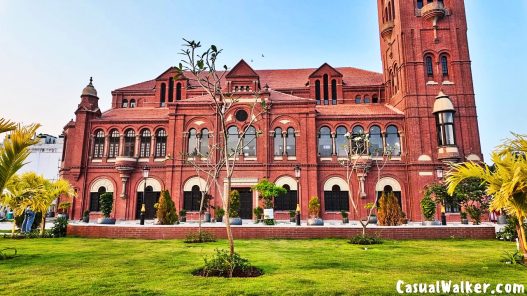
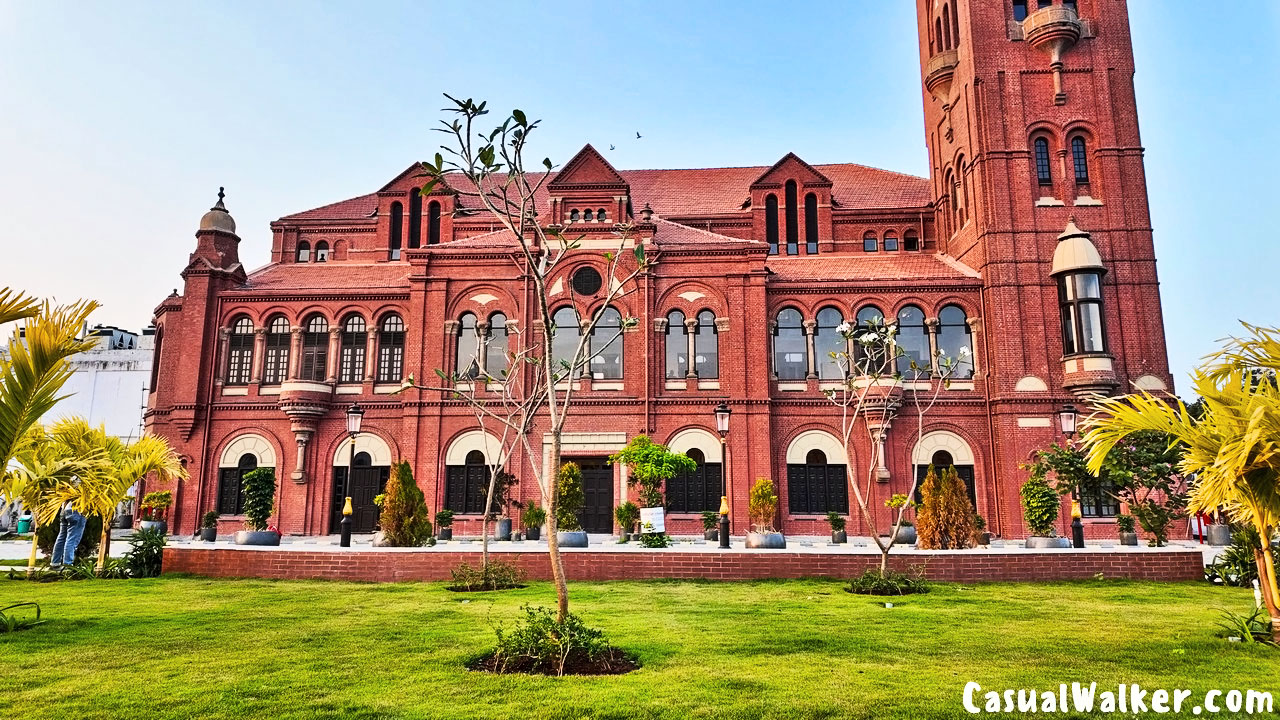
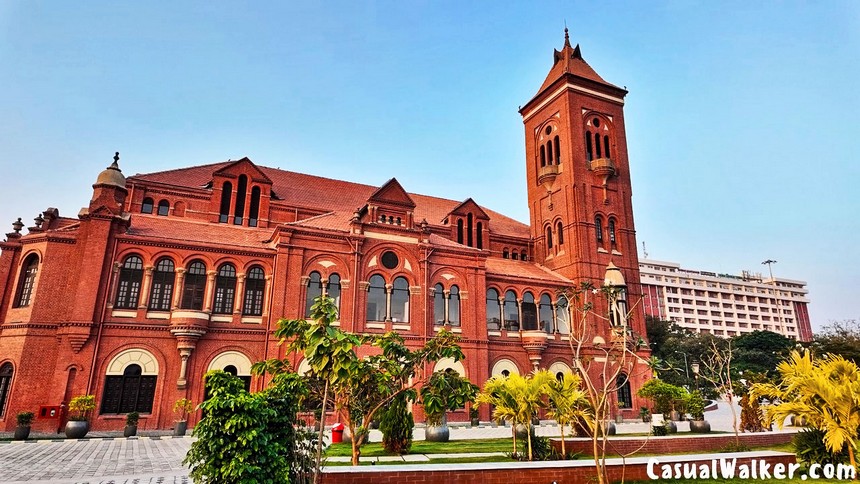
Rising majestically adjacent to the iconic Rippon Building, the Victoria Public Hall / Queen Victoria Hall stands as a testament to 137 years of Chennai‘s artistic and political awakening. This imposing Italian-style structure is far more than an architectural relic it is the stage where the city first found its voice, its rhythm, and its vision. 
The Victoria Public Hall offers a window into the soul of the city. Within its walls, history was made and remade: Mahatma Gandhi sat among audiences seeking freedom, Swami Vivekananda’s words rang out with spiritual fire from atop a bullock cart, and on a fateful December evening in 1896, Tamil cinema flickered into existence for the very first time.
When Madras Dreamed of a Meeting Place
In 1880s, and Madras is rapidly transforming from a trading post into a thriving metropolis. The city’s elite rajahs, zamindars, and visionaries gathered at Pachaiyappa’s Hall with a single dream: to create a space where ideas could collide, art could flourish, and citizens could gather freely.
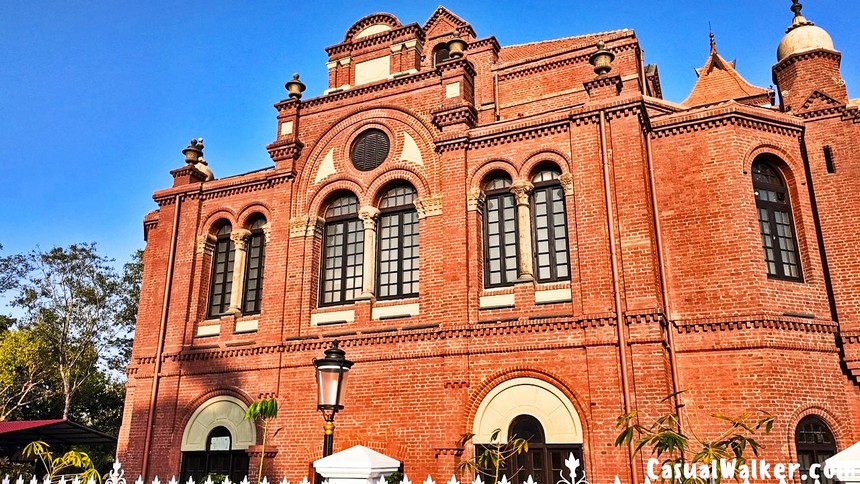
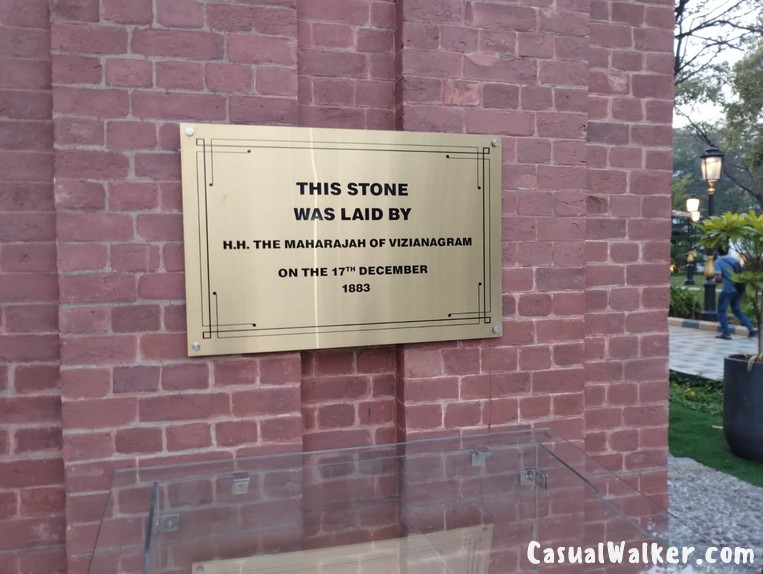
What started as a 30-member meeting evolved into something extraordinary. The foundation stone was laid on December 17, 1883, by Maharajah Ananda Gajapathi Raju of Vizianagaram, with generous contributions from royalty across South India the Maharajas of Mysore, Travancore, and Pudukottai, along with luminaries like Justice Muthuswamy Iyer and watchmaker P. Orr and Sons.
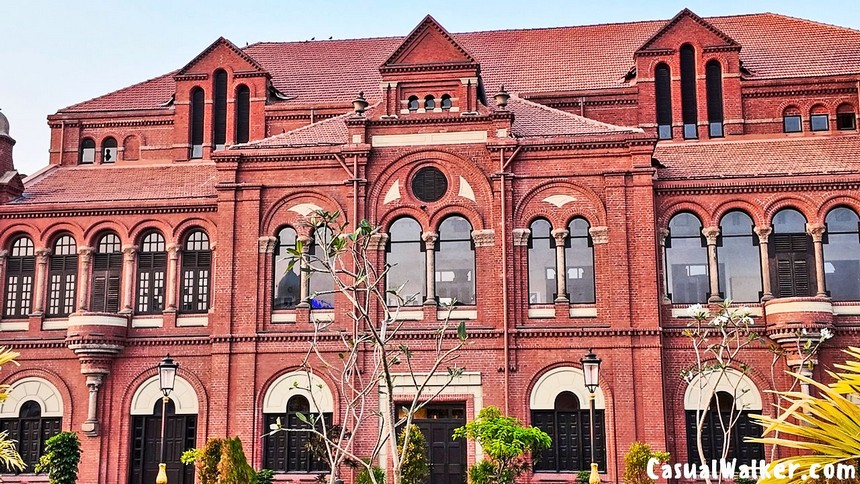
The 3.14 acres of land, carved from the People’s Park (now part of bustling Park Town), was leased for 99 years at the princely sum of just ₹28 annually. Can you imagine? Today, that spot between Chennai Central Railway Station and the magnificent Ripon Building witnessed history being made for less than the cost of a movie ticket.
Architectural Brilliance: Robert Fellowes Chisholm
Robert Fellowes Chisholm wasn’t just an architect he was a revolutionary who reimagined South Indian architecture. Having served as Executive Engineer of Bengal PWD in Puri Division, he moved to Madras and transformed its skyline forever. His genius lay in harmonizing disparate architectural traditions into cohesive, breathtaking structures.
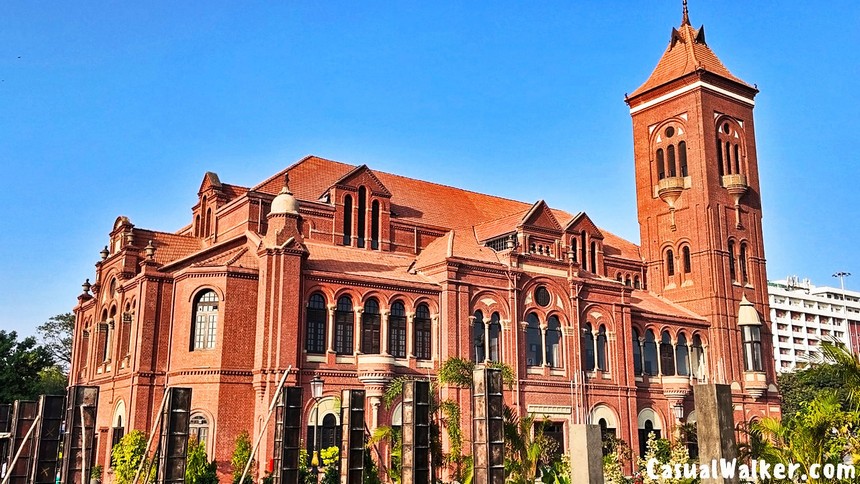
Victoria Public Hall represents Chisholm’s experimental phase, where he boldly fused Indo-Saracenic principles with elements from the Malabar school of architecture. This wasn’t merely aesthetic choice it was architectural innovation driven by practical engineering considerations and climatic adaptation.
Indo-Saracenic Marvel: Design Elements
The centerpiece of Victoria Public Hall is undoubtedly its majestic tower that dominates the Chennai skyline. Rising 34 meters into the sky, this square, three-story tower is an engineering feat of the 19th century. What makes it extraordinary is the Travancore-style tiled roof crowning the structure a direct influence from Chisholm’s study of Kerala architecture.
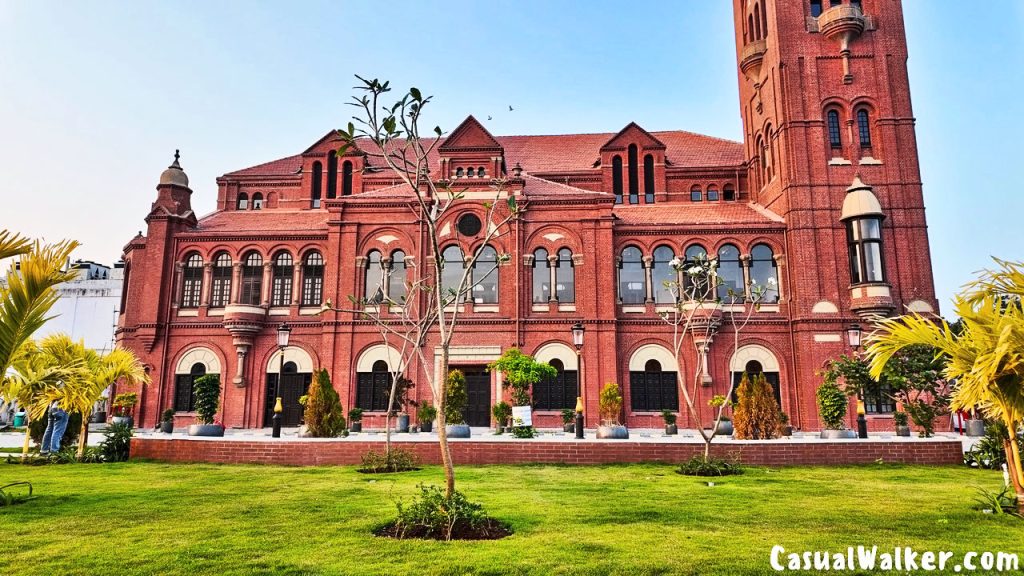
The tower isn’t just decorative; it serves crucial ventilation purposes. The height creates a natural chimney effect, drawing hot air upward and maintaining cooler temperatures in the halls below a brilliant passive cooling solution for Chennai’s tropical climate.
Terracotta Crown
Atop the tower sits an artistically sculpted clay cornice that resembles Islamic calligraphy the signature Saracenic touch that gives the building its distinctive character. This terracotta work showcases the extraordinary craftsmanship of 19th-century artisans who molded, fired, and installed these delicate decorative elements at such heights.
Structural Engineering: The Double-Storied Marvel
The building stands on a robust double-storied rectangular base, measuring approximately 150 feet by 80 feet. This foundation was engineered to support not just the structure’s weight but also the dynamic loads of hundreds of people gathering simultaneously a critical consideration for a public assembly hall.
Twin Grand Halls
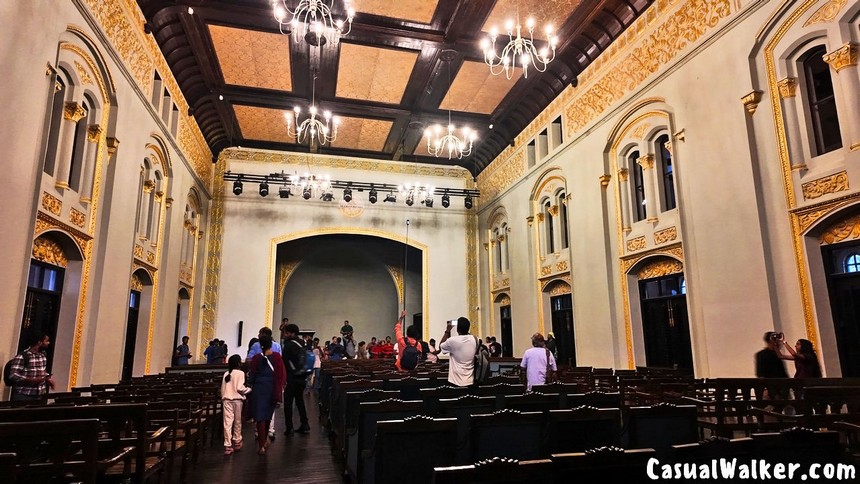
Each floor houses a magnificent hall capable of seating 600 people. The engineering challenge here was creating column-free spaces large enough to accommodate such crowds without obstructing sightlines. Chisholm achieved this through:
- Load-bearing brick walls constructed with red bricks transported down the Cooum River from Choolaimedu
- Lime mortar ground on-site using traditional grinding stones operated by bullocks, ensuring superior binding strength
- Strategic placement of support columns only along the perimeters, leaving the central areas open
Innovative Balcony System
The eastern end features a wooden gallery seating an additional 200 people. What’s remarkable is the intermediate floor of Madras Terrace that serves as the balcony structure. This terrace construction technique using clay tiles, limestone, and timber was both cost-effective and provided excellent acoustic properties for theatrical performances.
Chisholm’s use of lightweight Mangalore tiles for the roof allowed him to create exceptionally tall ceilings without overburdening the structure. This ingenious weight distribution meant the building could support the massive tiled roof while maintaining structural integrity.
Four Staircases: Circulation Design
The building features four strategically placed staircases, a sophisticated circulation system for its time:
- Three staircases lead to the first-floor hall, ensuring smooth crowd movement during events
- One grand staircase connects to the entrance porch, flanked by four decorative turrets
- The staircases are wide enough (approximately 6 feet) to allow two-way traffic, preventing bottlenecks during intermissions
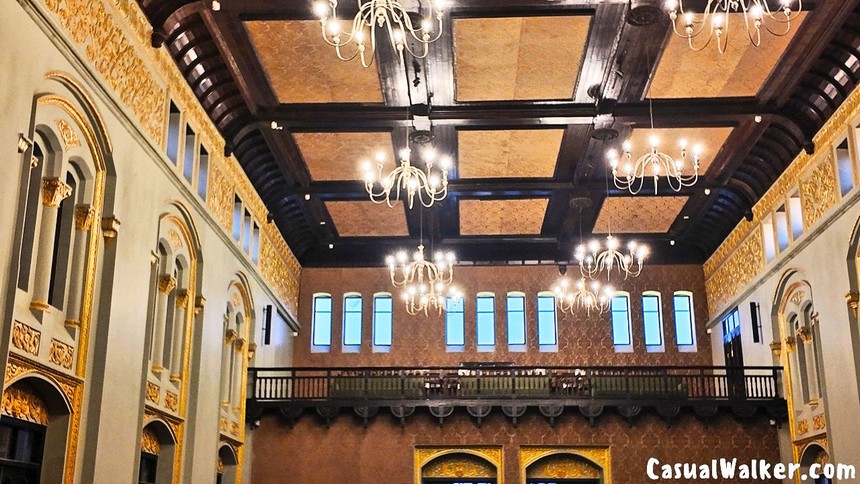
This circulation design reveals Chisholm’s understanding of crowd management crucial for a venue hosting political gatherings, theatrical performances, and cultural events.
Construction Techniques: 19th Century Engineering
Materials and Methods
The construction of Victoria Public Hall took five years (1883-1888), employing traditional methods with remarkable precision:
- Red bricks were transported via boats down the Cooum River, then manually hauled to the site
- Lime mortar preparation involved grinding limestone with water using bullock-powered grinding stones a process requiring weeks of curing for optimal strength
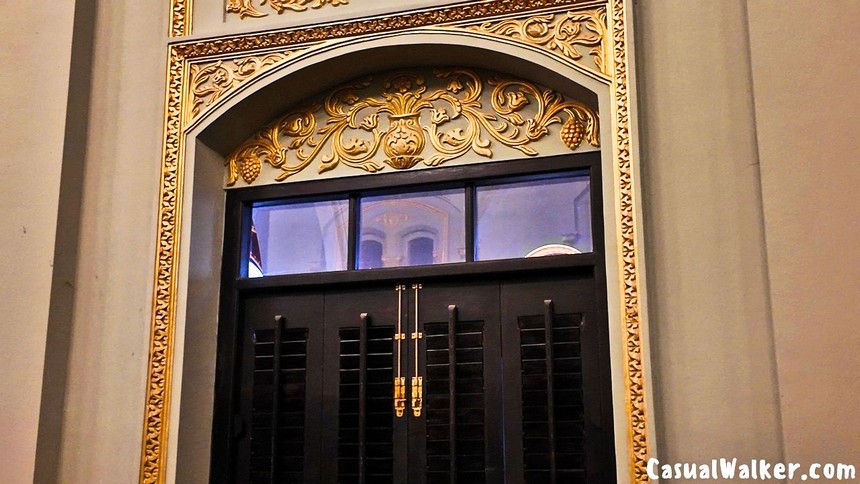
- Stone carving for columns, capitals, and decorative elements was done entirely by hand by master craftsmen
- Timber framework for the roof and balcony was constructed using teak and other durable hardwoods
Tiled Roof Innovation
Chisholm’s decision to use Travancore-style roofing was revolutionary for Madras. The steep-pitched, multi-tiered roof served several purposes:
- Rapid rainwater drainage during Chennai’s monsoons
- Heat deflection due to the air gap between tiles and the ceiling
- Reduced structural load compared to traditional flat terraced roofs
- Aesthetic distinction that made the building instantly recognizable
Decorative Elements and Craftsmanship
Four Turrets
Flanking the entrance porch are four ornamental turrets that add vertical emphasis and create a fortress-like grandeur. These aren’t structural necessities but architectural embellishments that transform a functional building into a civic monument worthy of its role as the city’s premier public space.
Window Design
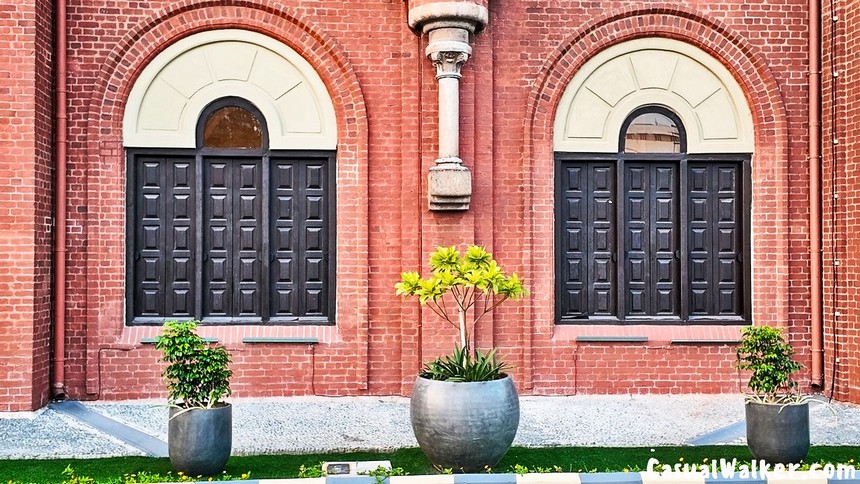
The building features large, arched windows with decorative stone tracery another Indo-Saracenic hallmark. These windows:
- Maximize natural light penetration into the deep halls
- Create cross-ventilation when paired with windows on opposite walls
- Add visual interest through shadow play on interior walls
- Feature colored glass panels that cast beautiful patterns during different times of day
Historical Milestones: Moments That Shaped Victoria Public Hall
1883: The Foundation Stone
December 17, 1883, marks the birth of Victoria Public Hall when Maharajah Ananda Gajapathi Raju laid the foundation stone. This wasn’t just a construction ceremony it was a statement of civic pride, with royalty from across South India in attendance.
1887-1888: The Grand Opening
Though historical accounts differ on the exact date and inaugurator (either Governor Sir Mountstuart Elphinstone Grant Duff or Lord Connemara), the hall’s opening between 1887 and 1888 immediately established it as Madras’s premier public venue.
January 1888: Christening as Victoria Public Hall
During a citizens’ meeting, the decision was formalized to name the hall after Queen Victoria, aligning with the Golden Jubilee celebrations of her coronation. This naming ceremony transformed a town hall into an imperial monument, yet one that would ironically become a center for nationalist awakening.
December 1896: Birth of Indian Cinema
On a cyclone-ravaged December evening, T. Stevenson screened ten short films to a sparse audience. This seemingly insignificant event was actually the genesis of Chennai’s legendary film industry. The hall became the womb of Tamil cinema an industry that would eventually produce thousands of films and influence global culture.
Early 1900s: The Golden Age of Theatre
Victoria Public Hall became the epicenter of Tamil theatre’s transformation. Key milestones include:
- Sankaradas Swamigal’s mythological plays that attracted massive audiences
- Pammal Sambanda Mudaliar’s revolutionary evening shows, making theatre family-friendly
- First Tamil adaptations of Shakespeare: Jwalita Ramanan (Romeo and Juliet) and Vannipurathu Vanigan (The Merchant of Venice)
- Suguna Vilasa Sabha’s debut performance of Kaadalar Kangal in 1891, launching a 30-year association with the hall
Post-1900: Platform for National Leaders
The hall transformed into a crucible of India’s freedom movement:
- Swami Vivekananda (post-1893): After his triumphant Chicago address, he spoke to overflowing crowds, with thousands standing outside. His famous bullock cart sermon outside the hall became legendary.
- May 7, 1915: Mohandas Karamchand Gandhi attended Mudaliar’s play Harichandra before he became the Mahatma, before the nation knew his name. No local newspaper covered his presence.
- Bharathiyar‘s oration on the “cult of the eternal,” with tickets priced at the substantial sum of one rupee
- Gopal Krishna Gokhale and Sardar Vallabhbhai Patel addressed critical political gatherings here
- The hall witnessed countless speeches, debates, and planning sessions that shaped India’s independence movement
1891-1920s: Cultural Renaissance
For three decades, Victoria Public Hall served as Chennai’s undisputed cultural capital:
- Weekly theatrical performances drawing thousands
- Musical concerts showcasing Carnatic classical traditions
- Public lectures on science, literature, and social reform
- Art exhibitions and literary gatherings
- Community celebrations and festivals
Mid-20th Century: The Decline
As Chennai expanded, newer venues emerged. The hall’s prominence waned:
- Encroachments began appearing on the grounds
- Unauthorized sub-leases granted to various organizations
- Andhra Mahila Sabha occupied five-and-a-half grounds behind the hall
- Hotel Picnic and over thirty shops mushroomed on the property
- Structural neglect led to deterioration
1985: Lease Expiration and Legal Battles
When the 99-year lease expired, the Municipal Corporation refused renewal due to encroachments. This triggered decades of legal wrangling that eventually reached the Supreme Court, which ordered all unauthorized constructions demolished and the land restored to the Corporation.
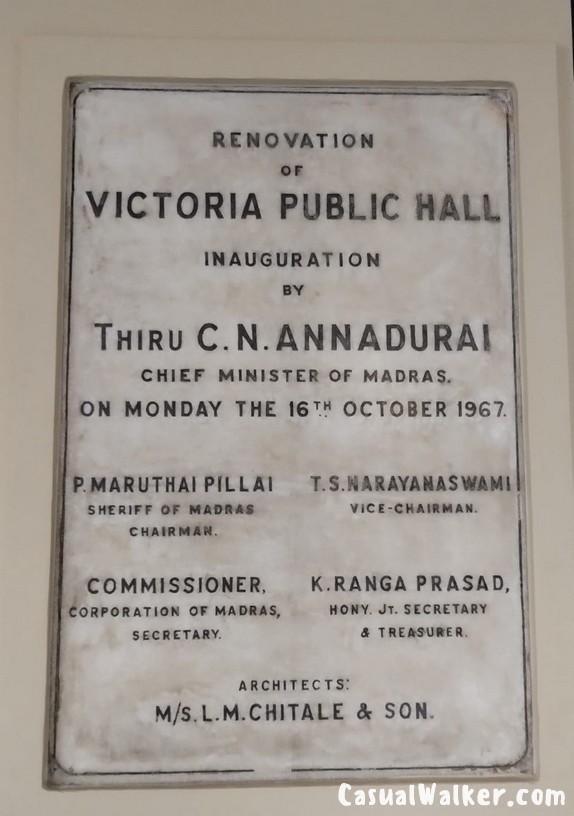
2009: Restoration Begins
The Greater Chennai Corporation launched comprehensive restoration under the Jawaharlal Nehru National Urban Renewal Mission, prioritizing scientific preservation methods while adapting the space for contemporary use.
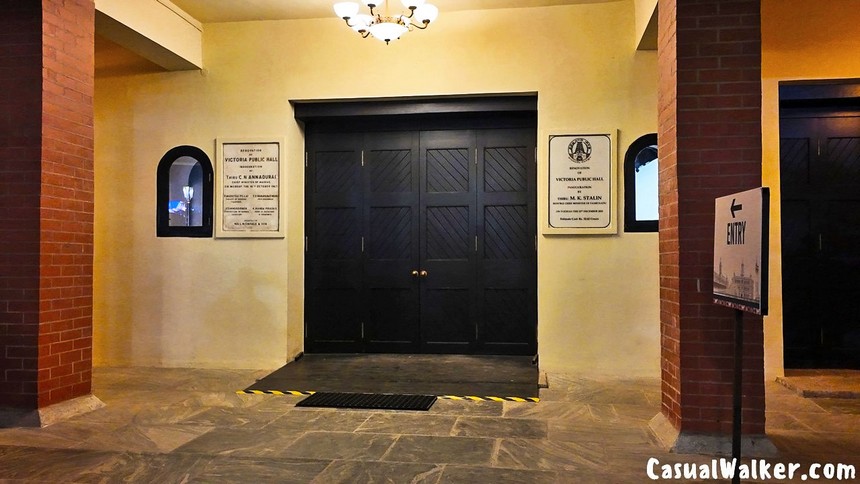
2021-2025: The Singara Chennai 2.0 Transformation
Under the Singara Chennai 2.0 programme, Victoria Public Hall underwent its most extensive renovation:
- Complete structural restoration preserving original architectural elements
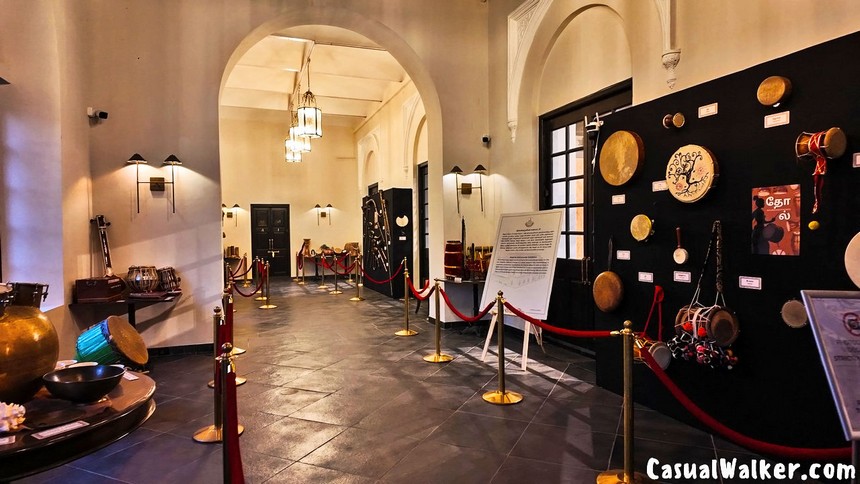
- Installation of approximately 120 Sangam period musical instruments exhibition
- Creation of rotating exhibition spaces (themes change every three months)
- Modern amenities including climate control, lighting, and accessibility features
- Digital archives documenting the hall’s history
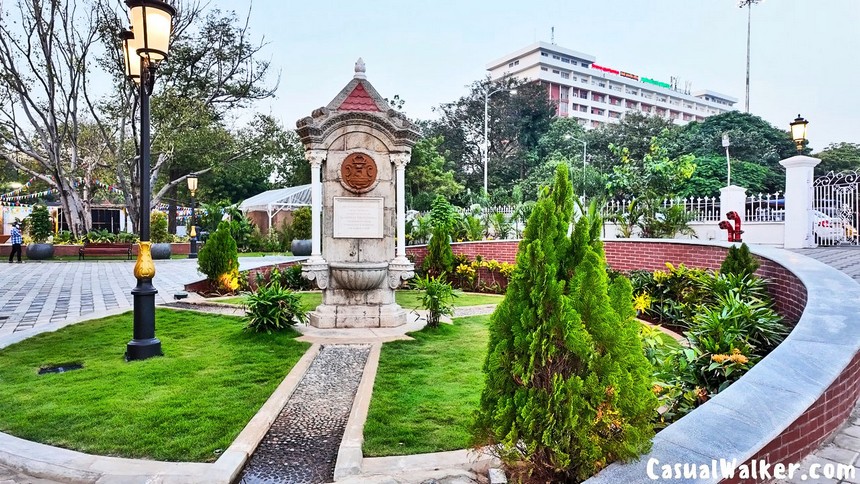
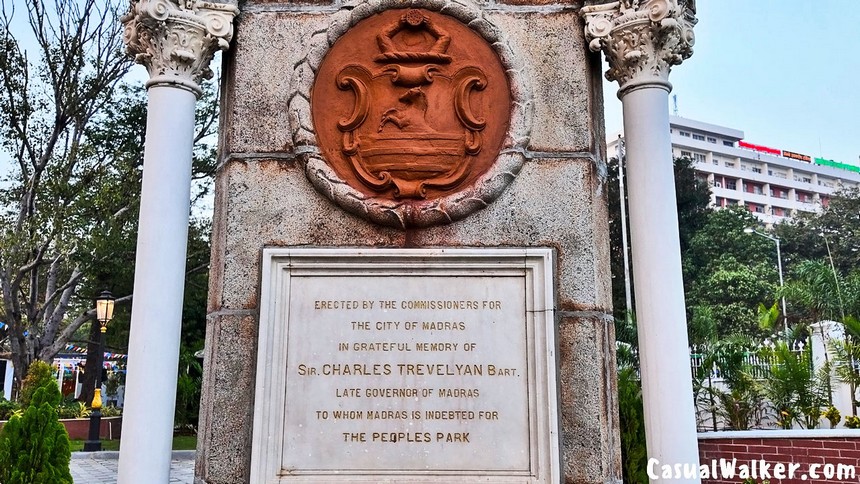
- Restoration of the Trevelyan Fountain
- Landscaping of surrounding grounds
Architectural Landmarks: Identifying Features
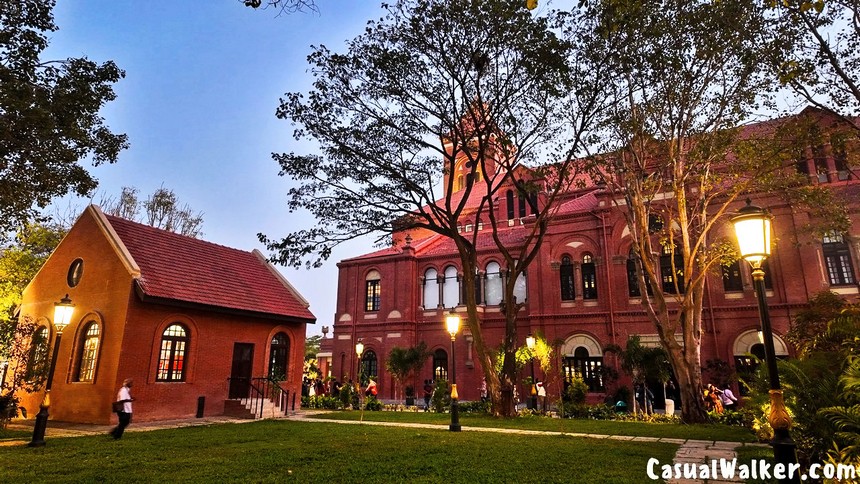
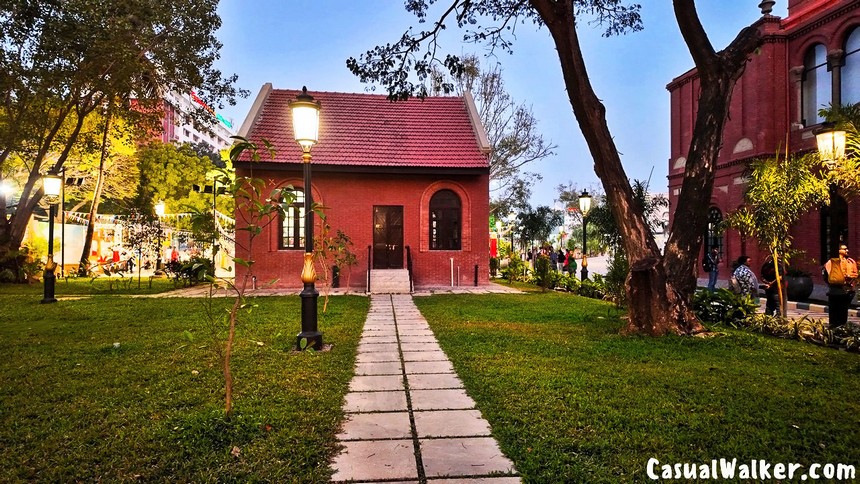
The 34-meter tower with its distinctive Travancore-style roof serves as Victoria Public Hall’s primary landmark. The pyramidal tiled roof, unique among Chennai’s colonial buildings, makes it instantly recognizable.
Red Brick Facade
Unlike many colonial buildings painted in light colors, Victoria Public Hall retains its red brick exterior with lime mortar finishing a conscious design choice that emphasizes texture and creates striking shadow patterns throughout the day.
Corinthian Columns
The arcaded verandahs with their elegant Corinthian columns create a rhythmic colonnade visible from both north and south approaches, serving as secondary landmarks that guide visitors toward the main entrance.
Four Corner Turrets
At the entrance porch, four decorative turrets frame the main access point, creating a memorable gateway that has welcomed visitors for over 135 years.
Arched Windows
The large, arched windows with stone tracery create a distinctive pattern across the building’s facades, combining Gothic and Islamic architectural vocabularies into a harmonious whole.
Engineering Significance: Lessons from the Past
Victoria Public Hall demonstrates sophisticated understanding of tropical architecture.
Acoustic Design
The halls’ rectangular proportions, high ceilings, and hard surfaces created excellent acoustics for unamplified speech and music essential for an era before electronic sound systems. The wooden balcony also absorbed some sound frequencies, preventing excessive echo.
Structural Longevity
Despite decades of neglect, the building’s core structure remained sound, testament to:
- Quality of 19th-century lime mortar (often superior to modern cement)
- Proper load distribution through thick load-bearing walls
- Use of locally-sourced, climate-appropriate materials
- Traditional construction techniques refined over centuries
Sangam Period Musical Instruments: Connecting Ancient and Colonial
The restored hall’s exhibition of approximately 120 ancient musical instruments from the Sangam period (300 BCE – 300 CE) creates a fascinating dialogue between Tamil Nadu’s ancient cultural heritage and its colonial past.
Instruments on display include:
- Tutari (trumpet-like wind instrument)
- Kuzhal (flute variations)
- Kinnaram (stringed instrument similar to veena)
- Kokkarai (percussion instruments)
- Various drums, cymbals, and rhythm instruments
This exhibition transforms Victoria Public Hall from merely a colonial monument into a celebration of Tamil civilization’s continuous artistic tradition spanning over two millennia.
Auditorium Inauguration
The restored auditorium is available for cultural events, conferences, and performances. Booking details and rates available on the Greater Chennai Corporation website.
The hall now offers:
- Free public viewing daily from 8:30 AM to 6:30 PM
- Online reservations through Greater Chennai Corporation website
- Auditorium bookings for cultural events, maintaining its original purpose
- Educational programs about Chennai’s architectural and cultural heritage

Travel Tips for Visiting Victoria Public Hall Chennai :
Address of Victoria Public Hall Chennai:
Victoria Public Hall, 11/33, EVR Salai, Park Town, Kannappar Thidal, Poongavanapuram, Chennai, Tamil Nadu 600003
Contact: 098405 56909
Victoria Public Hall Chennai Timings and Entry
Hours & Tickets: Open All days: 8:00 AM to 6:00 PM
Weekly Holiday: Tuesday
Book your visit to Victoria Public Hall
https://gccservices.in/victoriapublichall/register
Book Victoria Public Hall – Auditorium hall Bookings for Events
https://gccservices.in/victoriahallbooking
Show Timings
Daily: 6 shows of 90 minutes each
Maximum 60 viewers per show
Daily Show Schedule
Morning: 8:30 – 10:00 / 10:00 – 11:30 / 11:30 – 1:00
Afternoon: 2:00 – 3:30 / 3:30 – 5:00
Evening: 5:00 – 6:30
Exhibition Entry Fee
General Public ₹25
Students ₹10 (Student ID card is mandatory for student entry)
Children below 10 years Free
Persons with Disabilities ₹10
Senior Citizens (above 60 years) ₹10
Foreign Tourists ₹50
Photography and videography Rules
Photography and videography are not permitted inside the hall
Best Time to Visit Victoria Public Hall Chennai
- Early mornings (8:30-10:00 AM): Fewer crowds, better lighting for photography
- Late afternoons (4:00-6:00 PM): Pleasant weather, golden hour photography
- Guided Tours: Available on request; check website for schedule
- Weekdays: Less crowded than weekends
- Avoid: Public holidays and rainy days (although the architecture looks beautiful in monsoons!)
- Photography and videography are not permitted inside the hall
- Viewers may wait in the rest area until show time begins
- ID card and booking receipt must be brought for admission
What to Expect
- Duration: Plan for 1.5-2 hours to thoroughly explore the museum and architecture
- Accessibility: Wheelchair accessible with ramps and elevators
- Facilities: Restrooms, drinking water, small cafeteria
- Language: Exhibits in Tamil and English
- Audio Guides: Available in multiple languages
How to Reach Victoria Public Hall Chennai
By Road: Victoria Public Hall is located in Thousand Lights area, central Chennai. Easily accessible by local buses, taxis, auto-rickshaws, and app-based cabs from any part of the city via major roads like Anna Salai and Poonamallee High Road.
By Train: The nearest railway station is Chennai Egmore (approximately 2 km away). From there, take a taxi, auto, or local bus to reach the venue in 10-15 minutes.
By Flight: Chennai International Airport is about 15-18 km away. Take a prepaid taxi, airport shuttle, or app-based cab; travel time is approximately 30-45 minutes depending on traffic.