



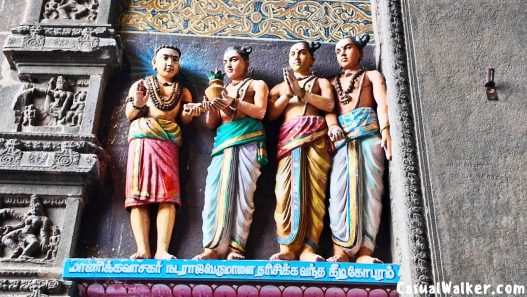



Sri Sringeri Sharada Peetham (Sringeri Math/Mutt), Chikmagalur, Karnataka | Sri Sharadamba Temple Dedicated to Goddess of Knowledge Saraswati | Established by Adi Shankaracharya | Advaita Vedanta Headquarters & Karnataka Pilgrimage Spiritual Destination | Complete Temple Tour Guide – How to Reach, Darshan & Pooja Timings, Best Time to Visit, Entry Fee, Places to Visit, Online Accommodation Booking, Contact Details, Festivals, Annadana Timings, Dress Code & History / Aham Brahmaasmi Foundation Events (Updated)
– one of the 1,200-year-old mathas/monasteries founded by adi shankaracharya

Sri Sringeri Sharada Peetham / Mutt sits in the heart of Karnataka’s Western Ghats, about 100 kilometers from Mangalore. This ancient temple town isn’t just another pilgrimage spot it’s the birthplace of organized Vedantic philosophy in India and the first Math established by Jagadguru Adi Shankaracharya over twelve centuries ago. 
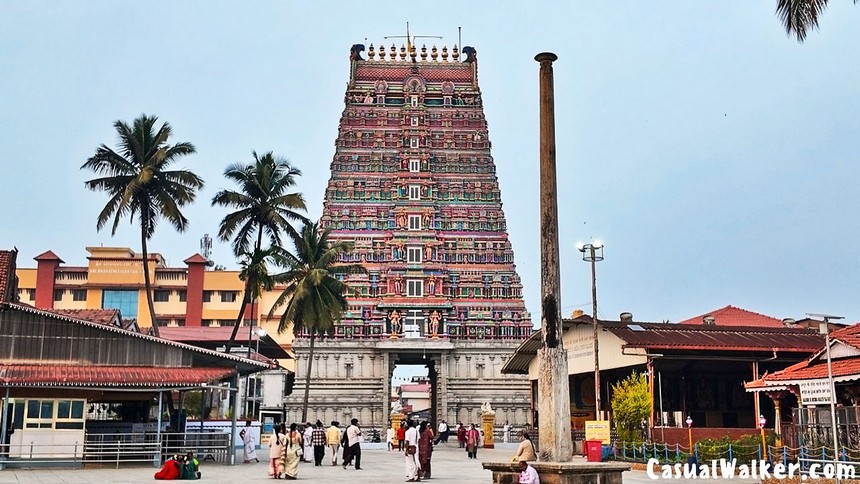
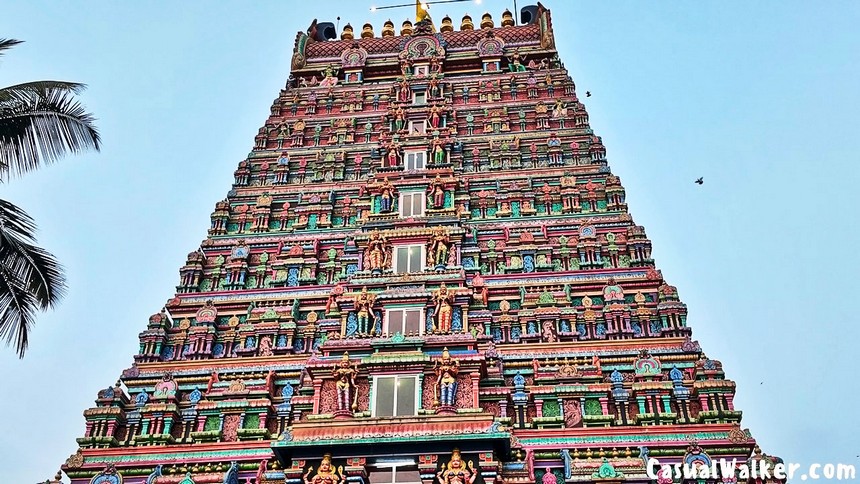
Getting to Sringeri is an adventure that prepares your mind for the spiritual experience ahead. The road winds through Karnataka’s mountain ranges, taking you deeper into nature with every kilometer. Thick forests stretch on both sides, their canopies creating natural tunnels of green. Morning mist clings to the valleys, and small waterfalls appear around unexpected corners, their waters dancing over moss-covered rocks.
Maharshi Rishyashringa – The Sacred Tapasya at Shringa-giri : The Hill of the Peak
The sanctity of Sringeri predates even the epic Ramayana. This hallowed ground was blessed by the intense tapas (penance) of Maharshi Rishyashringa, the legendary sage whose divine presence gave this place its name Rishyashringa-Giri, which evolved through time into Shringa-giri and eventually Sringeri, meaning “Hill of the Peak.”
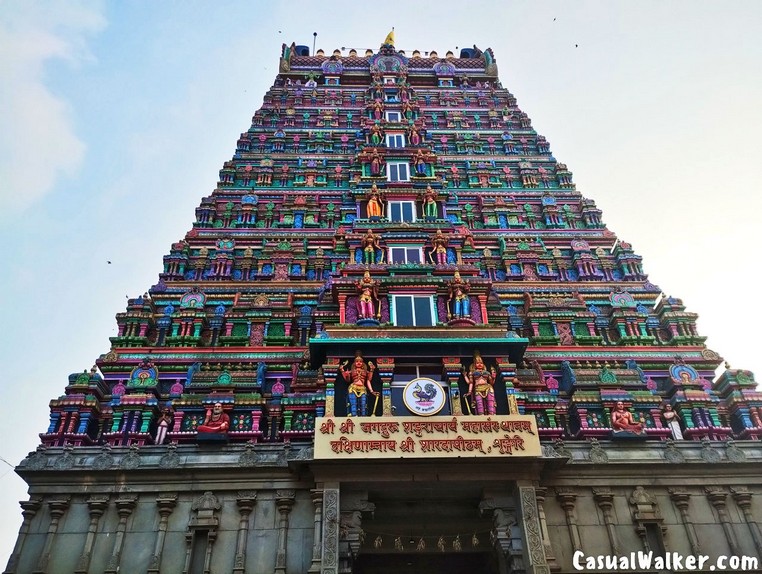
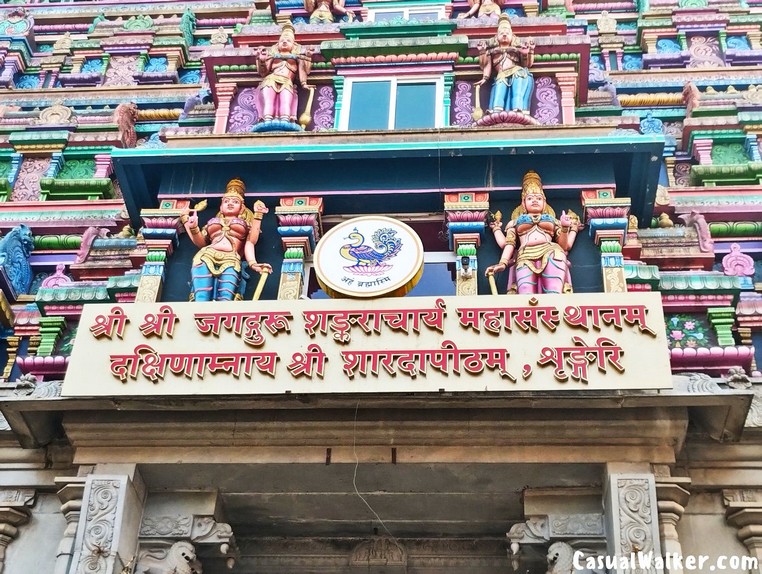
What moved my heart deeply was learning that Maharshi Rishyashringa himself conducted the sacred Putrakameshti yajna for King Dasharatha, the ritual that blessed the world with the birth of Bhagavan Sri Rama and His divine brothers. Standing on this sacred soil, I felt the weight of that connection this very land witnessed prayers that would eventually manifest as Lord Rama’s incarnation.
Jagadguru Adi Shankaracharya’s Miraculous Vision: Cobra Sheltering the Frog
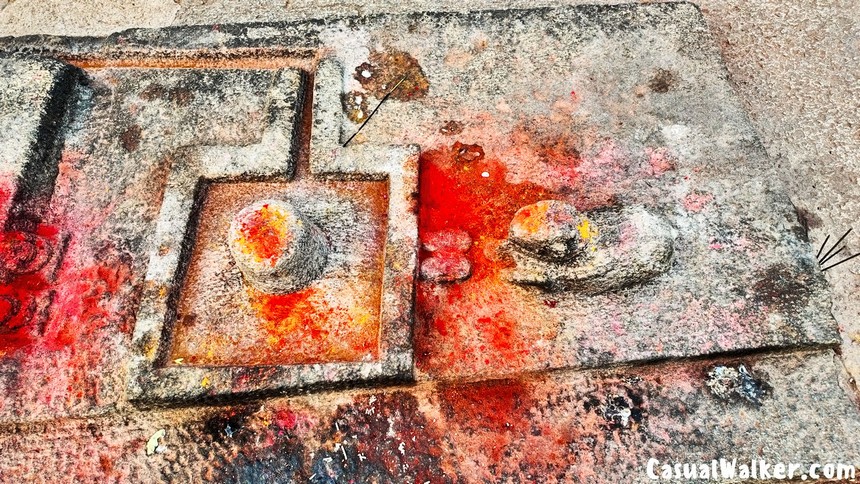
When Jagadguru Adi Shankaracharya arrived at Sringeri more than twelve centuries ago, He witnessed an extraordinary phenomenon on the banks of the sacred Tunga River. Under the scorching midday sun, a cobra the natural predator of frogs had spread its hood to provide shade for a pregnant frog in labor pains.
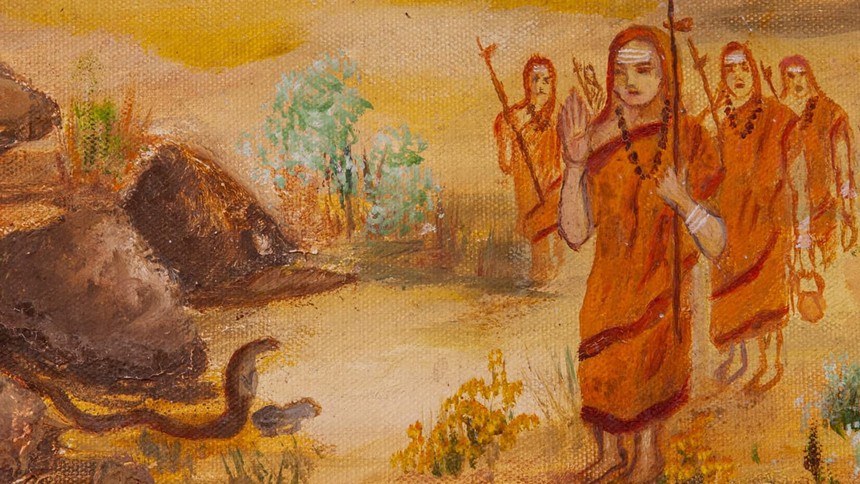
This incredible sight revealed to the Acharya that this land possessed such sublime spiritual power that even mortal enemies could transcend their nature and embody compassion. Moved by this divine sign, Adi Shankaracharya chose this exact location to establish His foremost Peetham, consecrating it as the Dakshinamnaya Sri Sharada Peetham dedicated to fostering Vedic wisdom and Sanatana Dharma.
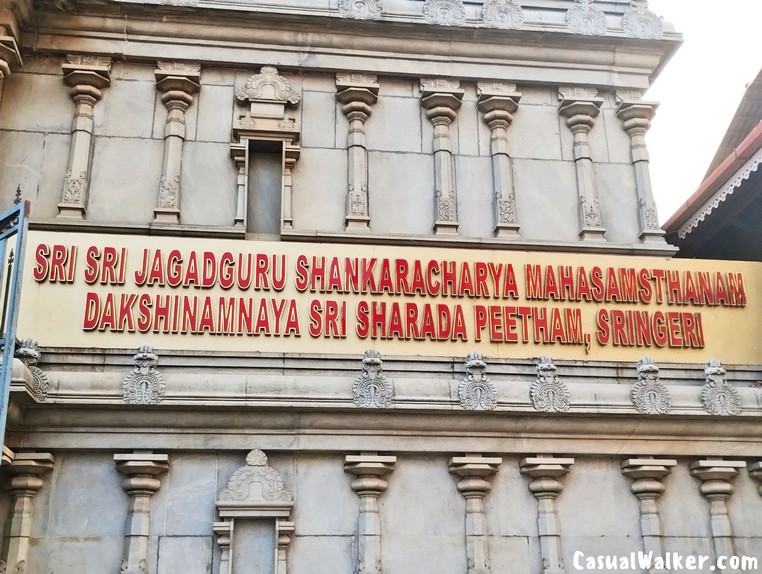
Establishment of the Sharada Peetham: Seat of Transcendental Wisdom – Head of Advaita Vedanta philosophy
Sringeri holds an unparalleled position in India’s spiritual heritage as the first and foremost of the four cardinal Maths / Mutt (Amnaya Peethams) established by Jagadguru Adi Shankaracharya in the 8th century CE. While the other three peethams Dwaraka in the west, Puri (Govardhan Math) in the east, and Jyotirmath (Badrinath) in the north guard their respective directions, Sringeri represents the southern direction (Dakshinamnaya) and stands as the fountainhead of Advaita Vedanta (Non-dualism) philosophy.
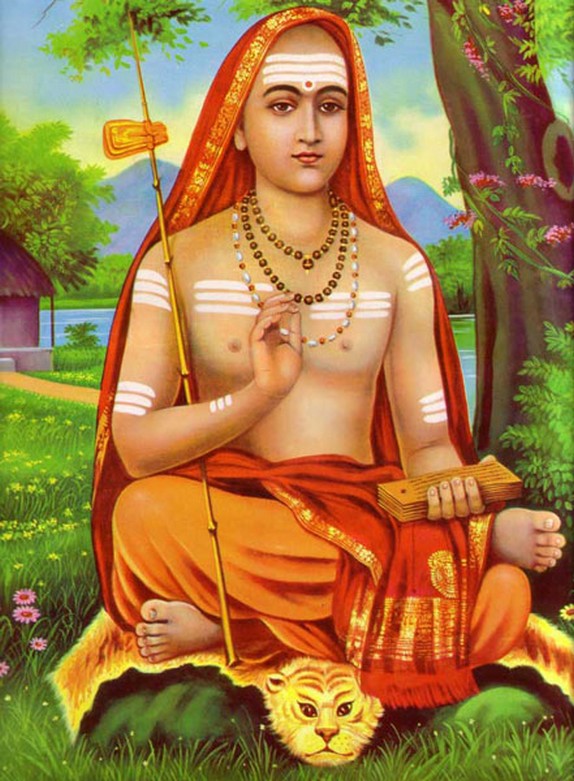
The Madhaviya Shankara Digvijayam, a magnificent kavya (poetic composition) authored by Jagadguru Sri Vidyaranya Mahaswamiji the 12th Acharya of the Peetham chronicles that upon reaching Sringeri, the Acharya encountered many virtuous individuals and began teaching them the Upanishadic philosophy of Advaita. He then invoked the Divinity of Knowledge, Goddess Sharadamba (the embodiment of Saraswati), and consecrated a sacred murti of the Goddess.
Thus was established the Dakshinamnaya Sri Sharada Peetham at Sringeri in South India, an eternal institution for fostering the Vedas and preserving the sacred traditions of Sanatana Dharma for future generations.
Goddess Sri Sharadamba Temple : The Divine Mother of Wisdom – Dedicated to Goddess Saraswati
माला सुधाकुम्भ विबोधमुद्रा विद्याविराजत्करवारिजाताम्
अपारकारुण्यसुधाम्बुराशिं श्रीशारदाम्बां प्रणतोस्मि नित्यम्I eternally prostrate before Sri Sharadamba, whose lotus hands hold the rosary, nectar pot, and wisdom mudra, who radiates with the splendor of knowledge, and who is an ocean of boundless compassion.
Sacred Evolution of the Sharadamba Temple
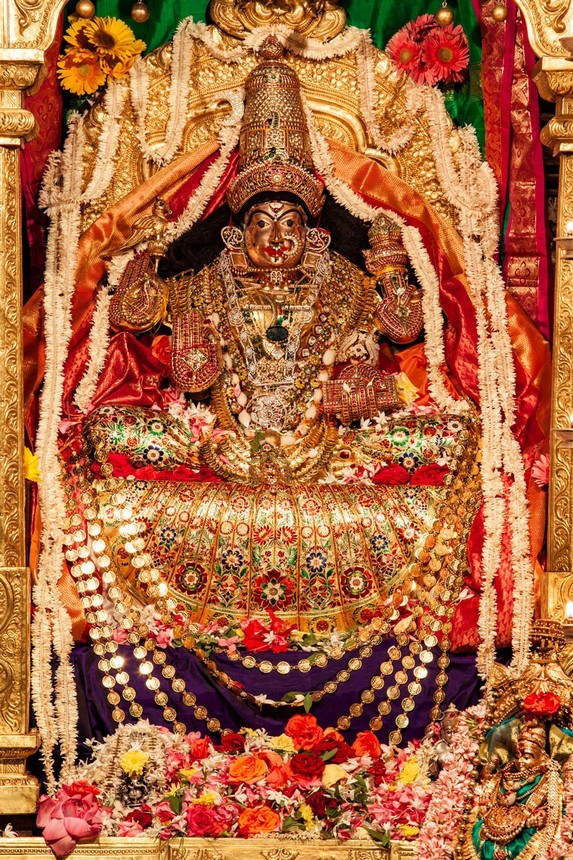
The ancient temple of Sri Sharada has a glorious history beginning with the establishment of the Dakshinamnaya Peetham by Sri Shankara Bhagavatpada. Originally, it was an unpretentious shrine with the sacred Murti of Sharada made of sandalwood, installed over the Sri Chakra that Sri Adi Shankara personally carved on a rock.
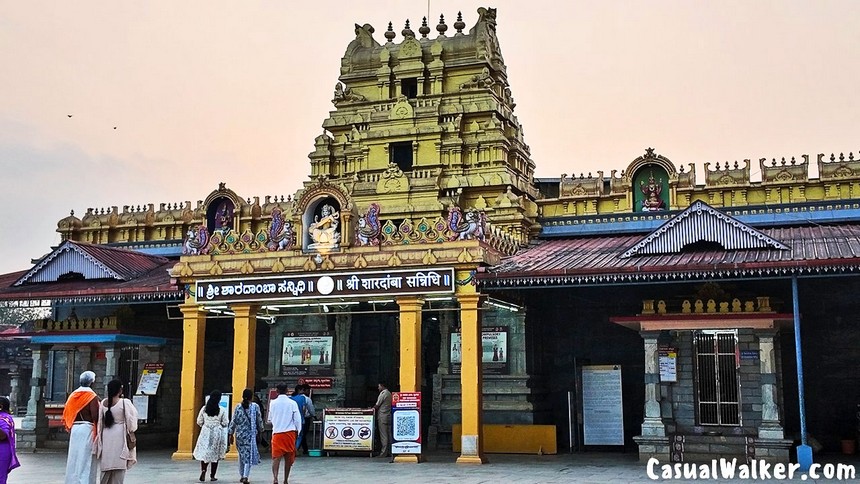
Jagadguru Sri Bharati Krishna Tirtha later substituted the sandalwood idol with the present magnificent golden idol that radiates divine grace. The 33rd Acharya raised the present majestic structure in granite with polished granite walling surrounding the sanctum sanctorum. The 34th Acharya consecrated this new temple in May 1916.
Exquisite Temple Architecture and Sacred Art of Sringeri Temple
The Mahamandapam features massive stone pillars exquisitely carved with divine deities including Durga, Raja Rajeshwari, Dwarapalakas (guardian deities), and various manifestations of the Divine Mother. These magnificent sculptures are crafted according to the traditional Shilpa Sastras (sacred architectural treatises) practiced in Tamil Nadu.
Golden Chariot and Golden Doors
In 1999, the present Jagadguru Shankaracharya Sri Bharati Tirtha Mahaswamiji dedicated to Goddess Sharada a spectacular Golden Chariot (valued at one crore rupees). During sacred festivals, particularly the grand Navaratri celebrations, the Goddess is taken in this magnificent golden chariot in procession around the temple complex.
On the occasion of the golden jubilee Vardhanti (Birthday celebration) of the Jagadguru, exquisite golden doors were installed at the entrance of the sanctum sanctorum. The gold covering on these doors, worth twenty-four lakh rupees, features beautifully inscribed figures of Ashta Lakshmi (the eight forms of Goddess Lakshmi).
As I stood before Goddess Sharadamba, I felt an overwhelming sense of clarity and profound peace. The ancient tradition teaches that Sharadamba blesses devotees with Viveka (discriminative wisdom) and Vairagya (detachment from worldly illusions). Students, scholars, artists, musicians, and seekers of knowledge from across the world come here to seek Her blessings. She is revered as the embodiment of Saraswati (knowledge), Lakshmi (prosperity), and Durga (strength) the complete manifestation of Divine Shakti.
Sri Vidyashankara Temple – Lord Shiva Temple : Architectural Marvel of Ancient India
लम्बिकायोगनिरतं अम्बिकापतिरूपिणम्
विद्याप्रदं नमामीशं विद्यातीर्थ महेश्वरम्
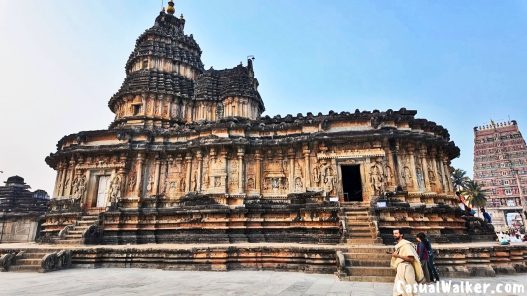
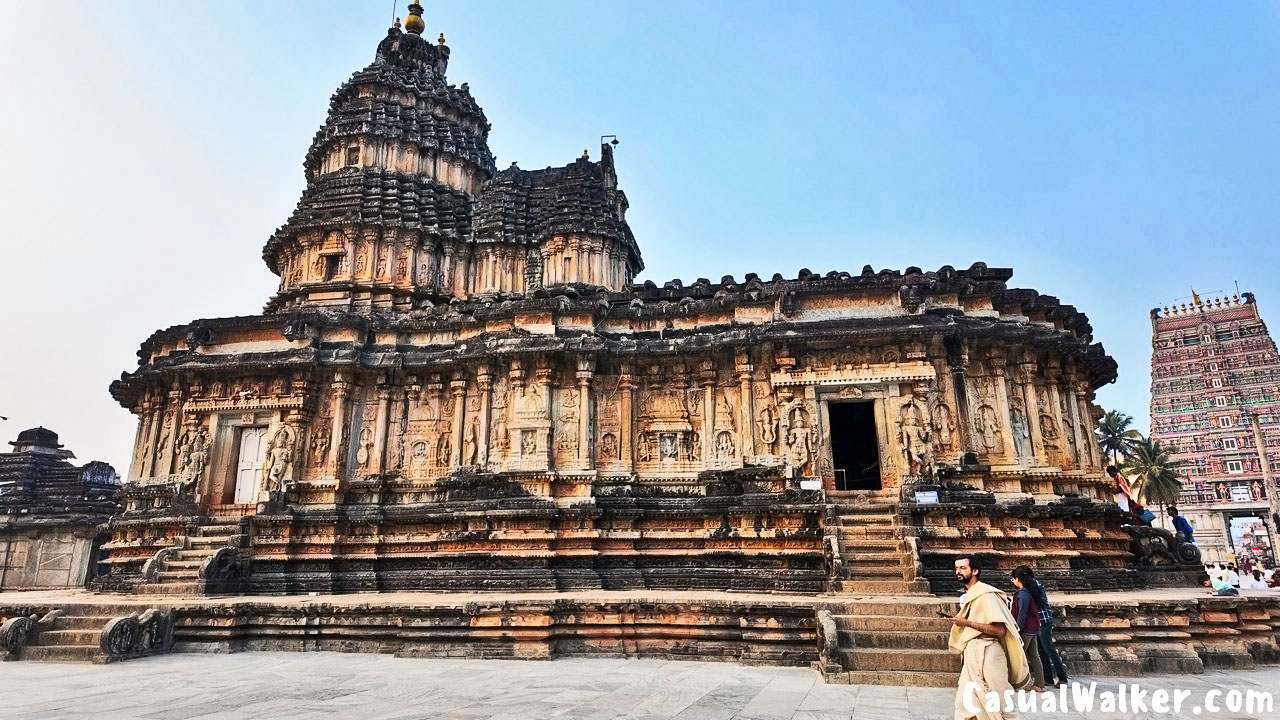
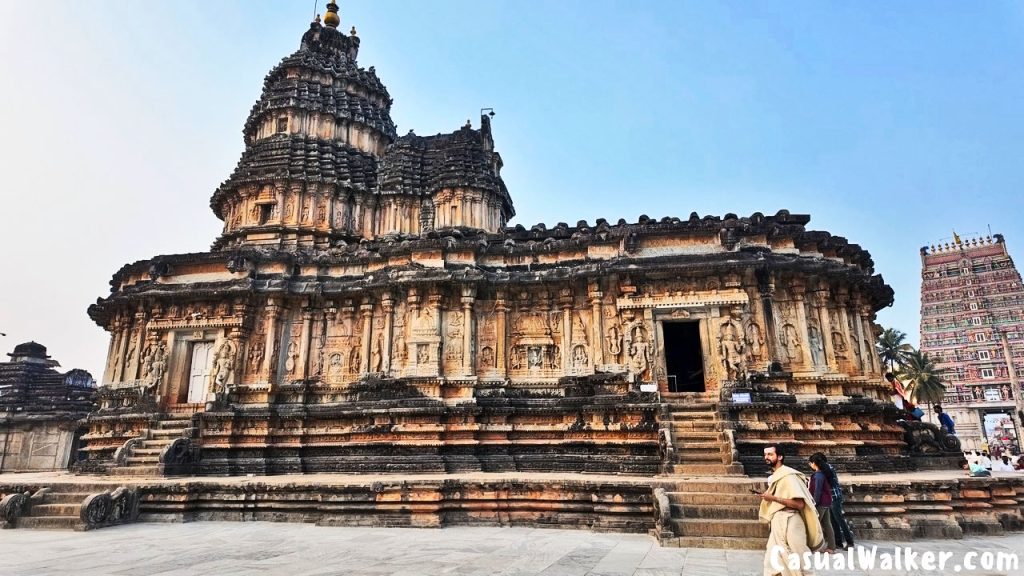
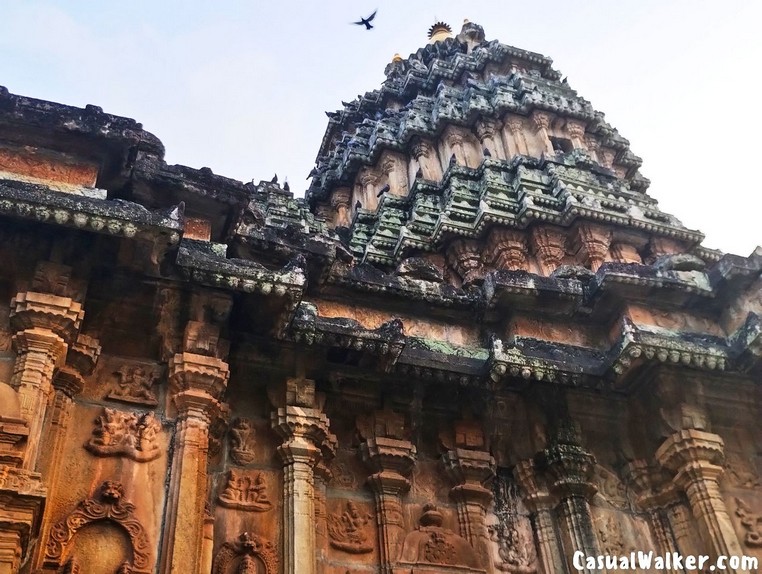
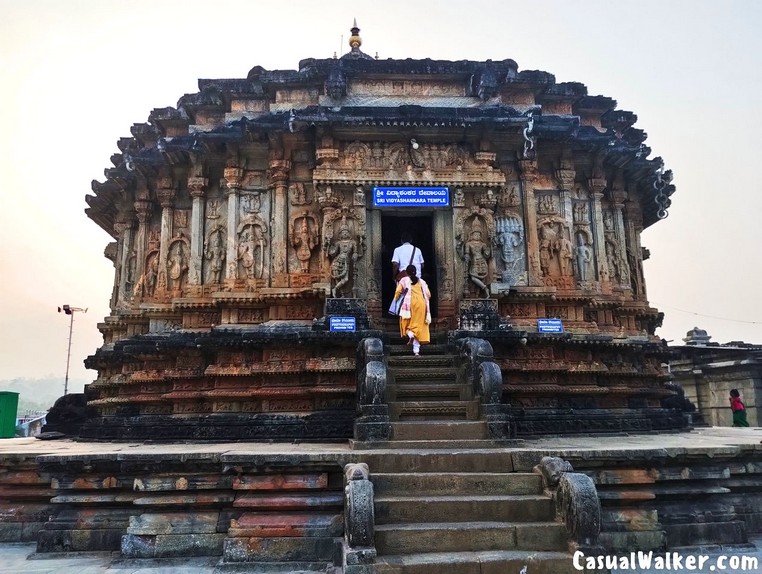
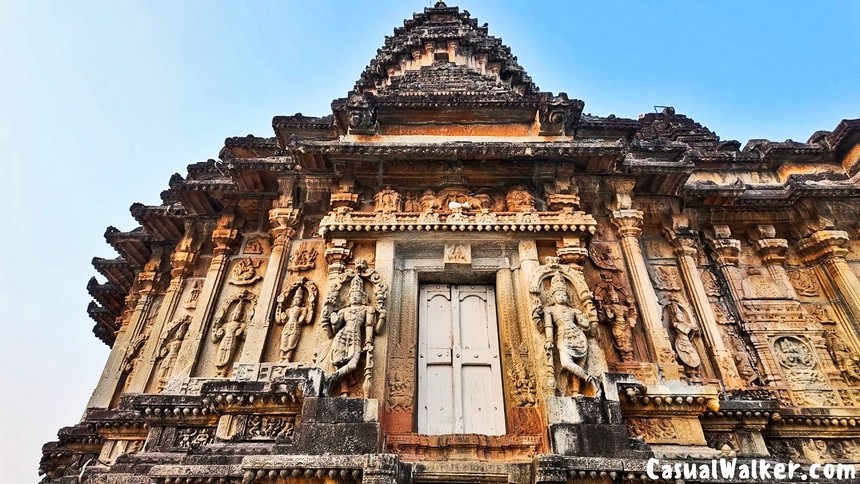
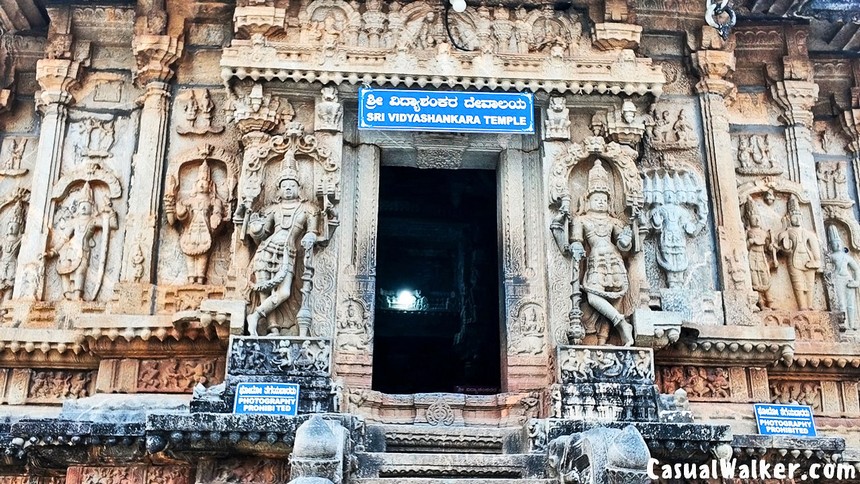
The magnificent Vidyashankara Temple, built in 1338 CE, stands as a unique monument in Indian temple architecture. This extraordinary structure is built entirely of stone, masterfully combining both Hoysala (Chalukya) and Dravidian architectural styles.
Architectural Splendor and Sacred Geometry
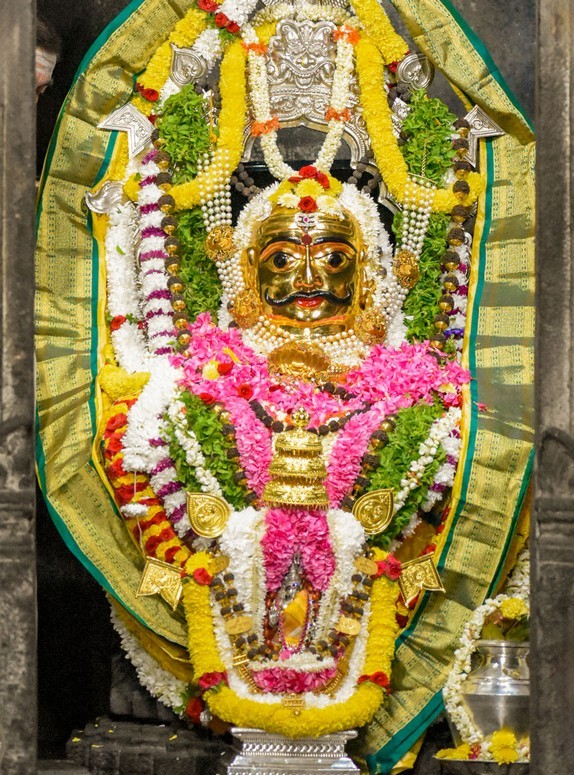
The temple stands on a high plinth and commands a magnificent panoramic view from the surrounding hills. On the western side is the Garbhagriha (sanctum sanctorum), with Vidya Ganapati enshrined on one side and Durga on the other. On the other three sides are shrines dedicated to the divine trinity Brahma, Vishnu, and Maheshwara (Shiva) each with their divine consorts.
Twelve Zodiac – Rashi Pillars: Cosmic Time in Stone
In the eastern half stands a magnificent mandapa featuring twelve massive monolithic pillars. Each of these twelve pillars is marked by one of the twelve signs of the zodiac in their regular astrological order a testament to the advanced astronomical knowledge of ancient India. The central ceiling is an exquisite masterpiece adorned with intricately carved lotus patterns and pecking parrots.
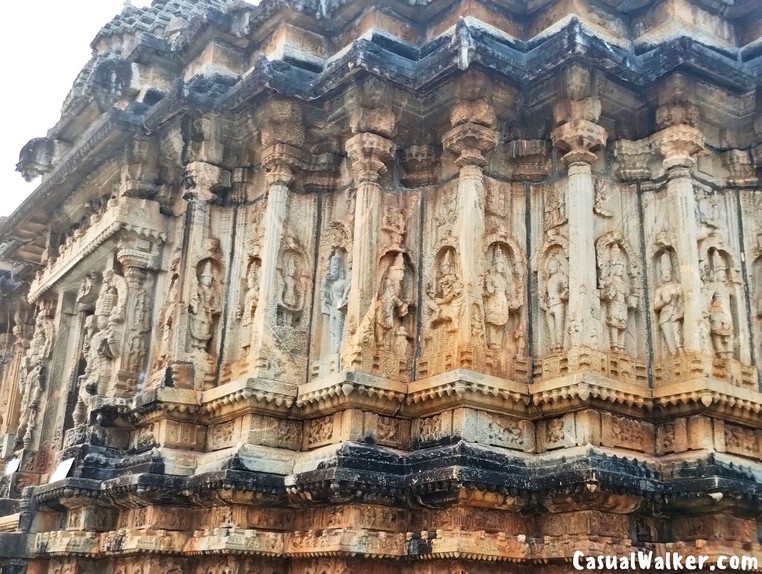
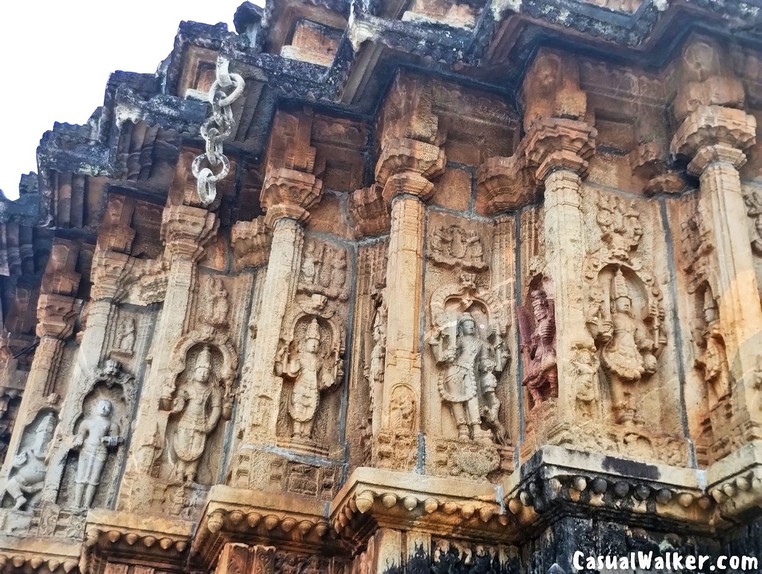
The brilliance of our ancient rishis reveals itself in these zodiac pillars. Throughout the year, the divine sun illuminates each pillar in precise sequential order, marking the sacred solar months of the Hindu calendar. This temple itself becomes a celestial clock, harmonizing earthly worship with cosmic rhythms.
Divine Vimana and Elaborate Sculptures
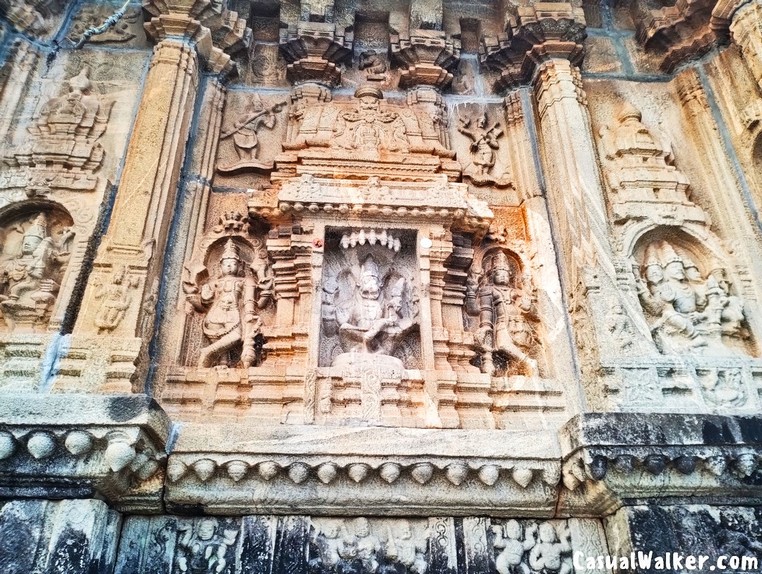
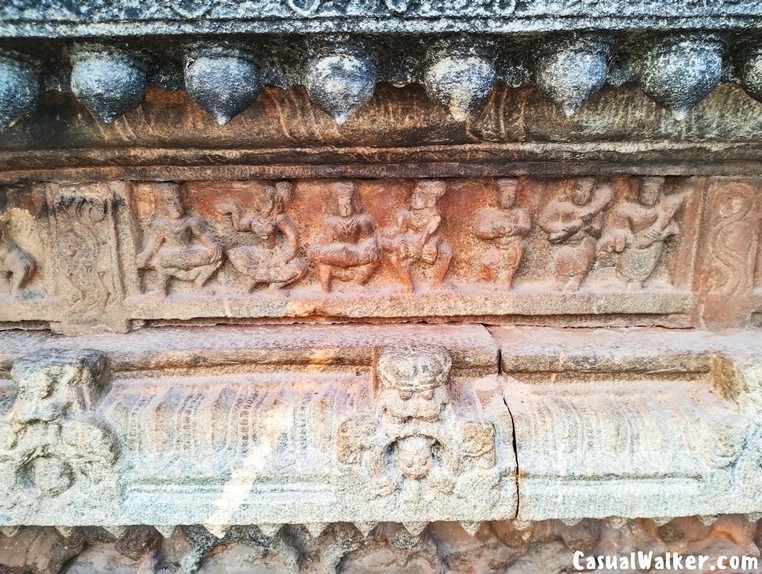
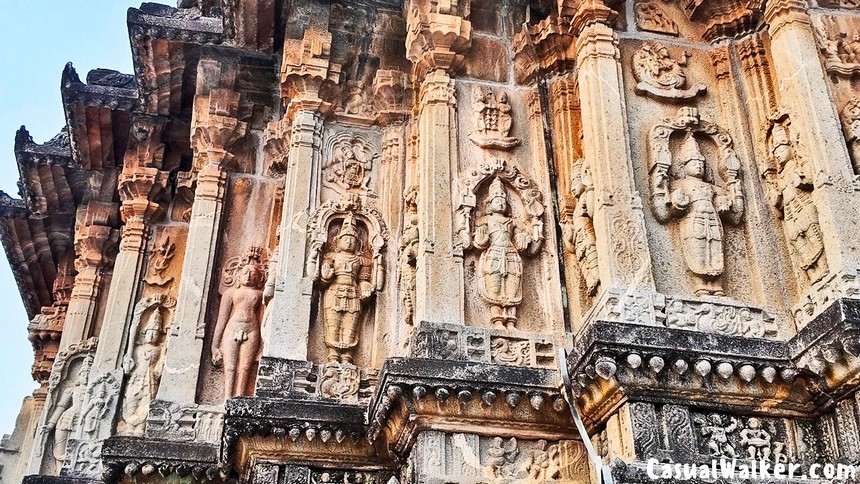
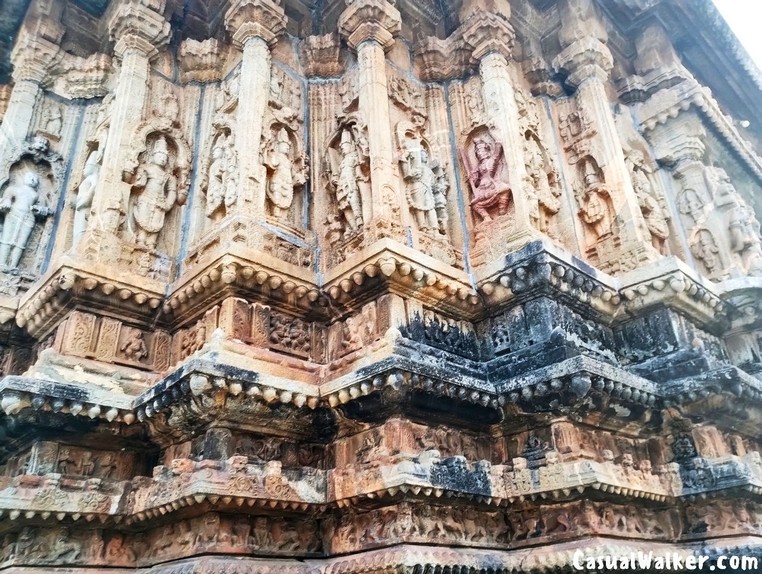
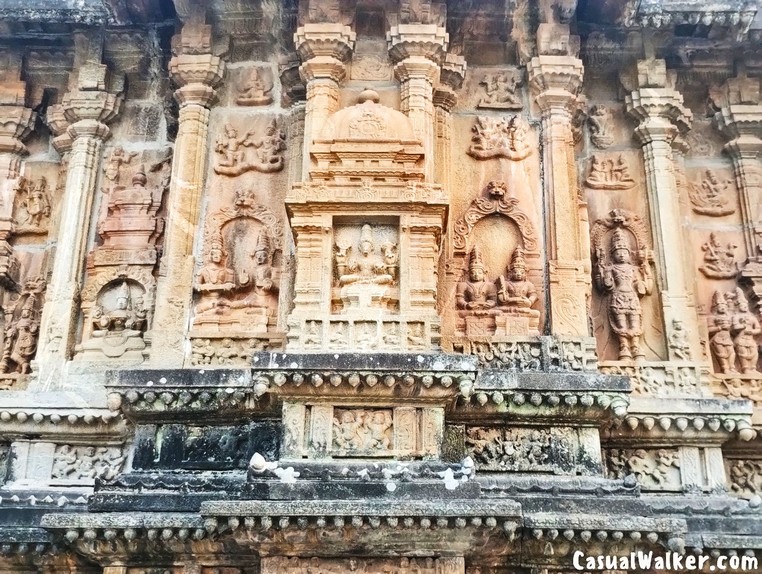
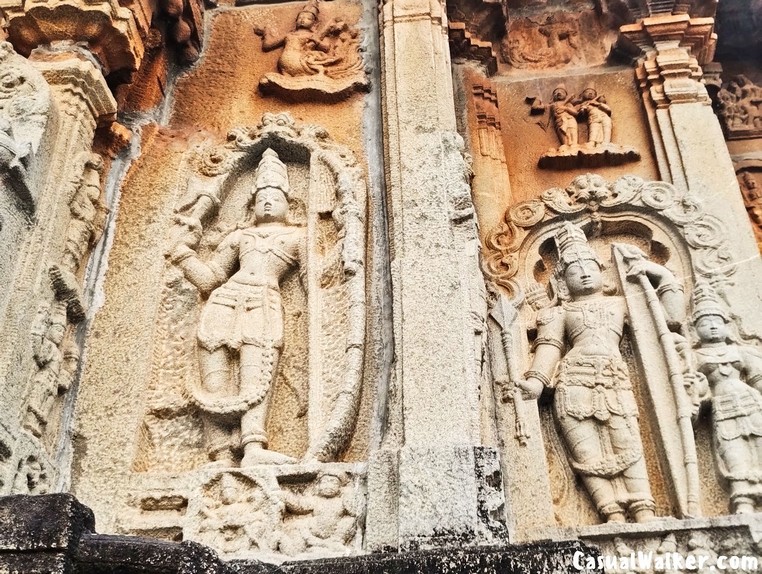
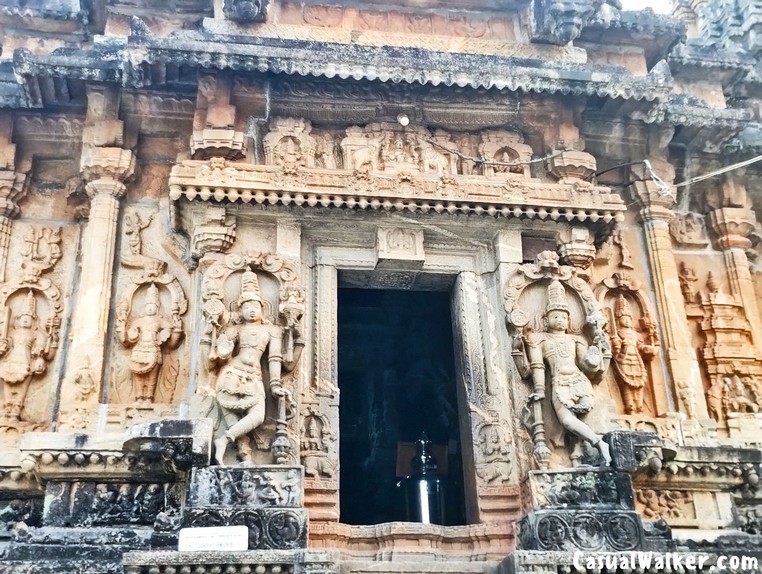
The vimana (tower) over the Garbhagriha rises magnificently with its sikhara (spire), mahapadma (great lotus), and stupi (finial). The basement is elaborately sculpted with intricate depictions of animals, scenes from Puranic stories, various forms of Shiva and Vishnu, the Dasavatara (ten incarnations of Vishnu), Goddess Kali, and Lord Shanmukha (Kartikeya).
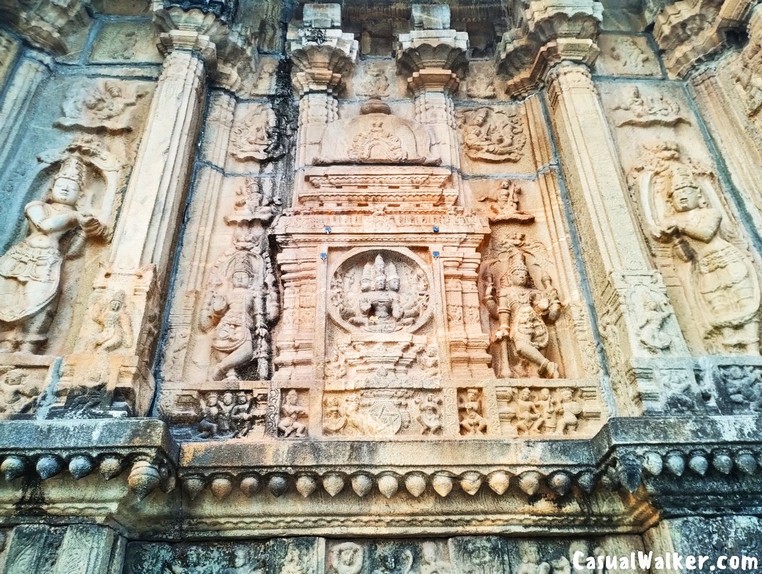
The temple is maintained with impeccable cleanliness and organization. Currently this temple is under the care of the Archaeological Survey of India.
Exquisite Sculptural Details
The temple complex showcases magnificent architecture with elaborately carved pillars depicting all the avatars of Lord Vishnu in their traditional sequence: Matsya (Fish), Kurma (Tortoise), Varaha (Boar), Narasimha (Man-Lion), Vamana (Dwarf), Parashurama (Warrior-sage), Rama (Prince of Ayodhya), Krishna (Divine Cowherd), Buddha (The Enlightened One), and Kalki (Future Avatar).
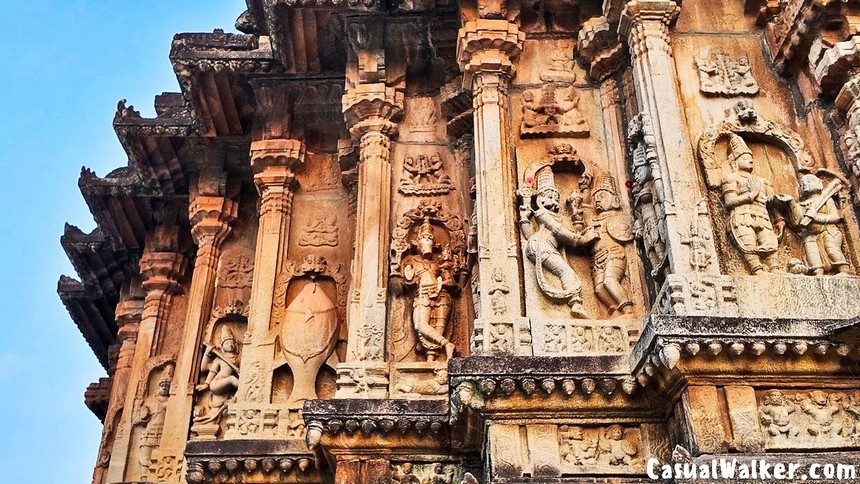
Interestingly, even Mahavira (the founder of Jainism) is depicted in some sculptural representations, beautifully demonstrating the inclusive and universal nature of Sringeri’s spiritual philosophy.
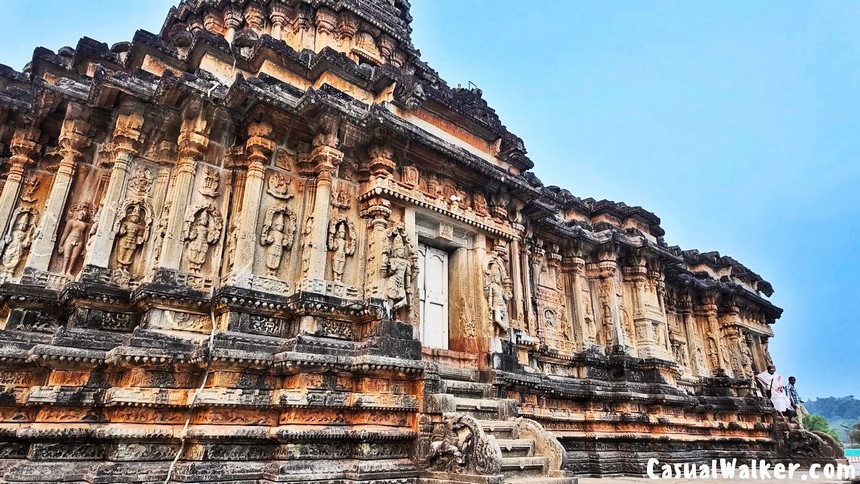
Twelve Centuries of Spiritual Masters – Unbroken Guru Parampara
Jagadguru Sri Adi Shankaracharya appointed His prime disciple, Sri Sureshwaracharya, as the first Acharya of the Peetham. Since that sacred moment over 1,200 years ago, the Peetham has been blessed with an unbroken Guru Parampara a magnificent garland of spiritual masters and Jivanmuktas (liberated souls) representing Jagadguru Sri Adi Shankaracharya Himself.
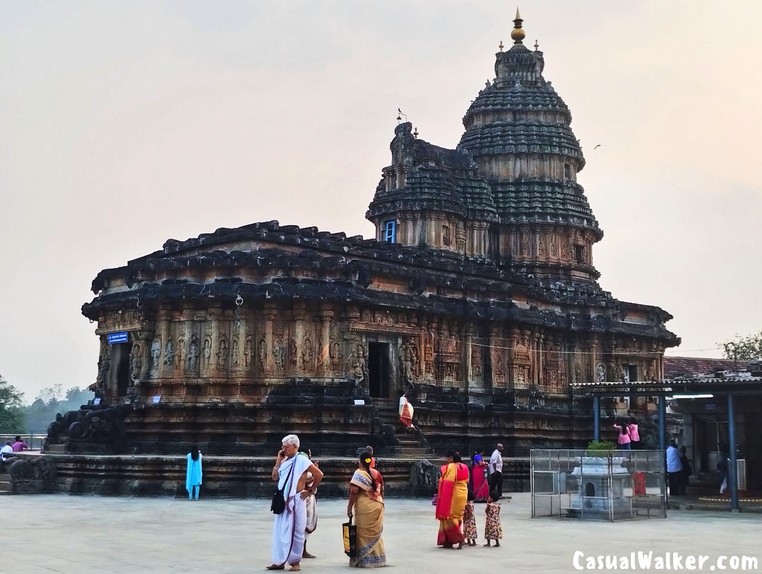
The succeeding Acharyas, reverentially referred to as Jagadguru Shankaracharyas, have led lives of such austere penance, profound scholarship, and unwavering devotion that disciples see in them the radiance of Sri Adi Shankara Himself.
Current Jagadgurus: Living Embodiments of Divine Grace – Luminaries of Spiritual Wisdom
His Holiness Jagadguru Sri Bharati Tirtha Mahaswamiji (36th Jagadguru)
Today, the Sringeri Sharada Peetham is blessed with the divine guidance of His Holiness Jagadguru Sri Bharati Tirtha Mahaswamiji, the 36th pontiff in this unbroken lineage. Born as Sitarama Anjaneyalu on May 11, 1951, in Mandya district, Karnataka, He displayed exceptional spiritual inclinations and scholarship from a very young age.
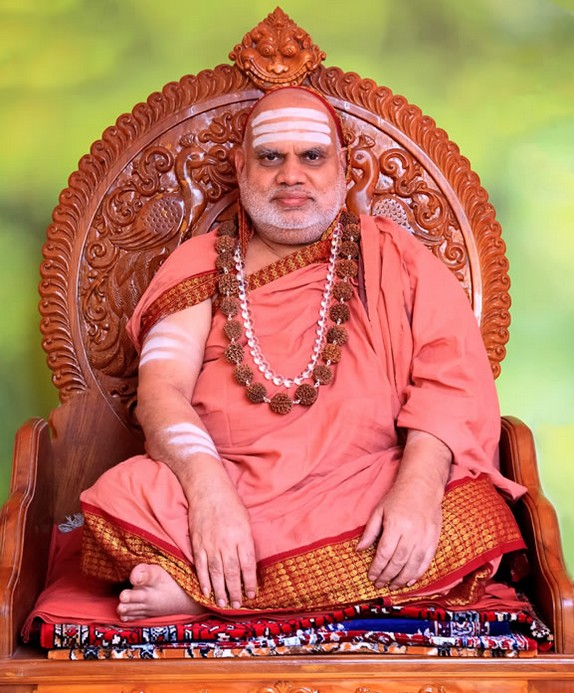
He was initiated into sannyasa (monastic order) by His revered guru, Jagadguru Sri Abhinava Vidyatirtha Mahaswamiji, on March 11, 1974. On October 9, 1989, following the Mahasamadhi of His guru, Sri Bharati Tirtha Mahaswamiji ascended the sacred Sringeri Peetham as its 36th Jagadguru.
His Holiness is renowned for:
- Deep scholarship in Advaita Vedanta and complete mastery over the Vedas
- Exceptional administrative abilities in managing the vast spiritual and charitable activities
- Remarkable simplicity and accessibility despite His exalted spiritual position
- Tireless efforts in preserving and propagating ancient Vedic traditions
- Establishment of educational institutions, charitable hospitals, and social welfare programs
Under His divine guidance, Sringeri Sharada Peetham has expanded its charitable activities manifold, including free food distribution (Nitya Annadana) to thousands daily, medical services, and comprehensive Vedic education programs.
His Holiness Jagadguru Sri Vidhushekhara Bharati Mahaswamiji (37th Jagadguru Designate)
The Peetham is further blessed with His Holiness Jagadguru Sri Vidhushekhara Bharati Mahaswamiji, who serves as the 37th Jagadguru Designate (Sannidhanam). Born as Sridhara Murthy on September 6, 1974, in Shimoga district, Karnataka, He was identified at a young age as possessing the rare spiritual qualities befitting a future pontiff.
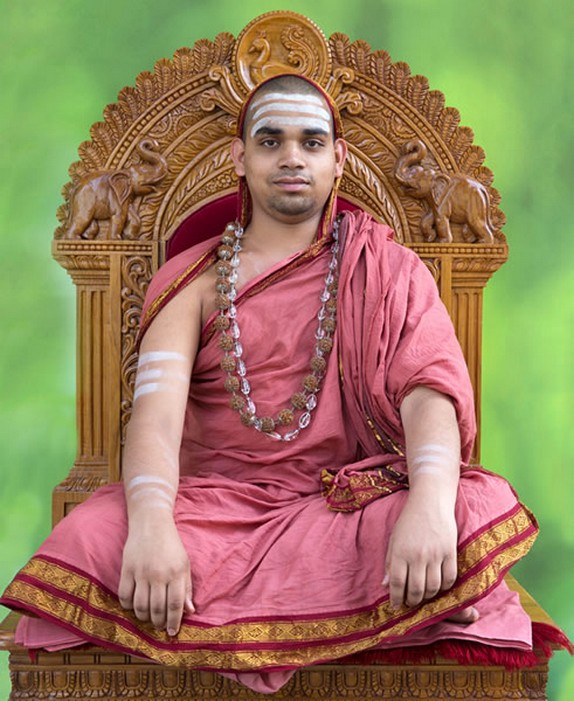
On May 22, 2015, Sri Bharati Tirtha Mahaswamiji initiated Him into sannyasa and bestowed upon Him the sacred name “Vidhushekhara Bharati.”
His Holiness is distinguished by:
- Exceptional scholarship in Sanskrit, Vedanta, and allied scriptures
- Proficiency in multiple languages including Sanskrit, Kannada, Hindi, Tamil, and English
- Engaging and accessible teaching style
- Deep devotion to Goddess Sharadamba
- Remarkable memory and ability to quote scriptures with precision
Together, these two illustrious Jagadgurus represent the past, present, and future of Sringeri Sharada Peetham maintaining the delicate balance between preserving ancient traditions and addressing the spiritual needs of modern devotees.
Sacred Tunga River: Lifeblood of Sringeri
The Tunga River flows majestically alongside the Sringeri temple complex. Unlike many rivers in India that have suffered from pollution, the Tunga here remains remarkably pristine its crystal-clear waters teeming with fish. One of the most delightful experiences at Sringeri is feeding the fish in the Tunga River.
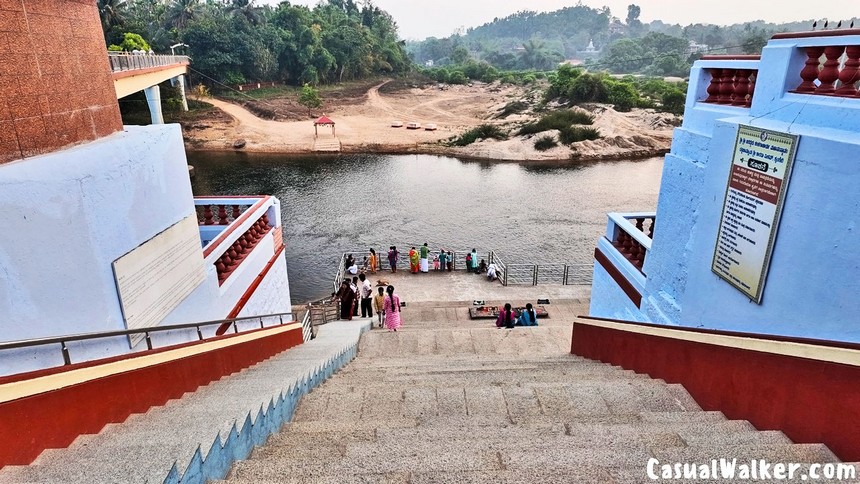

Devotees purchase puris (fried bread) from nearby shops and throw them into the sacred waters, watching with childlike joy as hundreds of fish rush to the surface. This simple activity fills the heart with innocent happiness and serves as a powerful reminder of the interconnectedness of all life.

Sacred Bathing and Riverside Rituals
The riverbank features well-maintained facilities for performing poojas and sacred rituals. Many devoted pilgrims take a holy dip in the Tunga before proceeding for darshan of Goddess Sharadamba, believing that the sacred waters purify them both physically and spiritually.
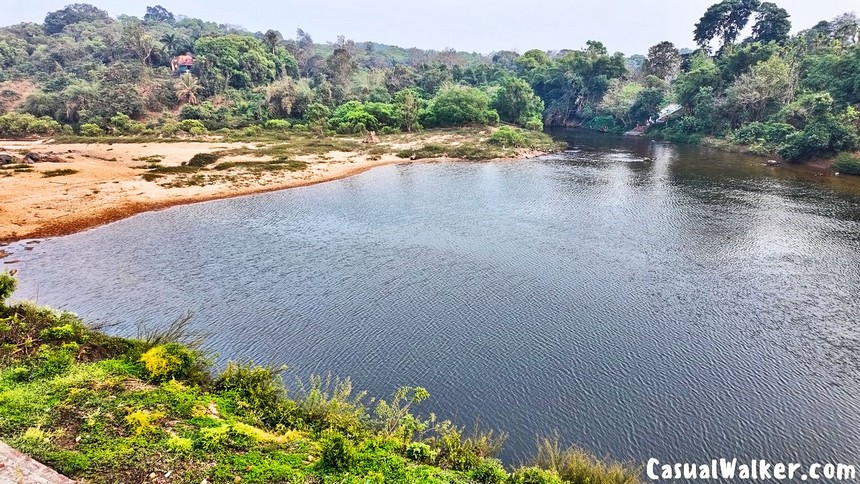
The evening hours spent by the sacred Tunga River remain among the most spiritually enriching moments of my life. Watching the golden sun set behind the majestic Western Ghats, feeding the grateful fish in the pristine waters, and listening to the melodious temple bells these simple yet profound experiences have been permanently etched into my spiritual consciousness.
Sringeri Veda Pada Sala: Preserving Ancient Wisdom
Opposite the main temple complex, across the ancient bridge spanning the Tunga River, stands the Sringeri Veda Pada Sala a traditional Vedic school where young brahmacharis (students) learn the sacred Vedas using the time-honored oral tradition that has preserved these texts for thousands of years.
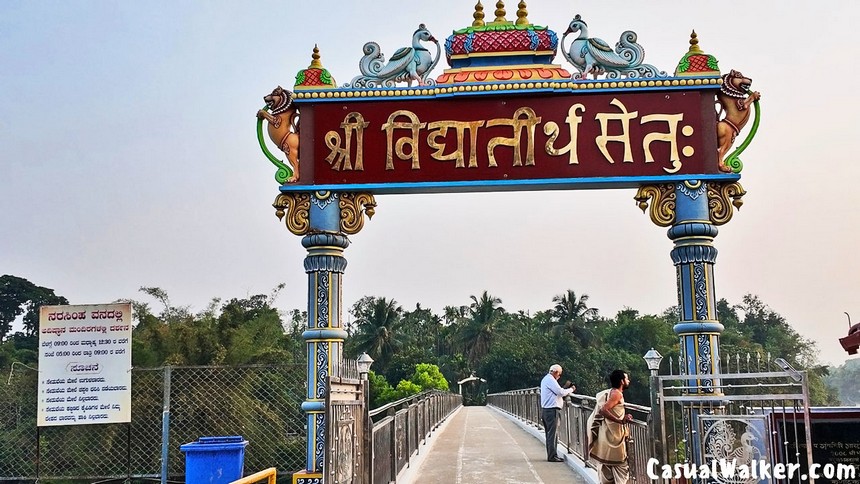
The sacred chanting of Vedic mantras that echoes from this institution creates an atmosphere of timeless sanctity. The current Jagadgurus continue this unbroken lineage of Vedic teaching. Regular spiritual discourses and Vedanta teachings are conducted, and devotees worldwide can access these through modern platforms.
Available Sevas (Sacred Services) at Sringeri Temple
Devotees can participate in various sacred services:
- Archana – Ashtotram (108 names), Trishati (300 names), Sahasranamam (1000 names), Laksharchana (100,000 name recitation)
- Durga Shata Chandi – Powerful protective ritual
- Dindi Deeparadhana – Sacred lamp offering
- Udayastamana Pooja – Sunrise and sunset worship
- Suprabhata Seva – Early morning awakening ritual
- Swarna Pushpa Seva – Golden flower offering
- Aksharabhyasa – Sacred initiation into learning for children
- Saraswati Pooja – Special worship for students and artists
Sacred Festivals and Celebrations at Sringeri temple
Navaratri: The Grand Festival of Divine Mother
The Navaratri festival is celebrated at Sringeri on a magnificent scale every year for eleven days. The sacred Shathachandi Homa (a powerful fire ritual invoking the Goddess) culminates with Poornahuti (final offering) performed on the Mahanavami day. During these blessed days, a traditional Durbar is conducted daily a custom established centuries ago by the Vijayanagara rulers.
Other Sacred Festival Celebrations
- Chaitra Shukla Poornima: Special Puja in the Sri Sharada Shrine
- Vaisaka Krishna Prathipath: Mahabhishekam (grand sacred bathing ceremony) for Sri Sharadamba
- Karthika Poornima: Deepotsava (festival of lights) with thousands of oil lamps
- Magha Shukla Panchami (Lalitha Panchami): Special Puja by the Jagadguru, particularly auspicious for students
- Magha Trithiya: Sri Sharadamba Rathotsava (chariot festival)
- Vidyatirtha Rathotsava: Celebrated during Kartika Shukla Paksha spanning seven days
Sringeri is a complete spiritual experience that has the power to transform seekers from within. The presence of two revered Jagadgurus ensures that the divine grace of Adi Shankaracharya and Goddess Sharadamba continues to flow uninterrupted to all sincere seekers.
The divine presence of Goddess Sharadamba radiates powerfully from this sacred kshetra. The pristine natural beauty of the Western Ghats, the sacred flowing waters of the Tunga River, the magnificent temple architecture, the living Vedic traditions, and the grace of the living Jagadgurus make Sringeri a unique spiritual treasure.
Dress Code and Temple Etiquette at Sringeri Temple
Sringeri Sharada Peetham maintains strict adherence to traditional temple protocols:
For Men:
- Must remove shirts before entering the main temple premises
- Wearing a traditional dhoti is a must to enter near the garbha griha (sanctum sanctorum) for close darshan
- Dhotis can be purchased or rented near the temple
For Women:
- Traditional Indian attire is required – saree, salwar kameez, churidar, or lehenga with dupatta
- Western clothing (pants, shorts, skirts) is not permitted
- Modest dressing with appropriate coverage is essential
These requirements help maintain the spiritual sanctity of this divine abode.
Sringeri Sharada Peetham In-person & Online Events – Aham Brahmaasmi Foundation
Sringeri Sharada Peetham, through the Aham Brahmaasmi Foundation, organizes various programs, both in-person and online, to create awareness and host events on Sanatana Dharma and Advaita Vedanta at various locations. View all their events:
https://events.ahambrahmaasmi.org/events
Accommodation and Pilgrim Facilities
Guest Houses: Comfortable Stay for Devotees
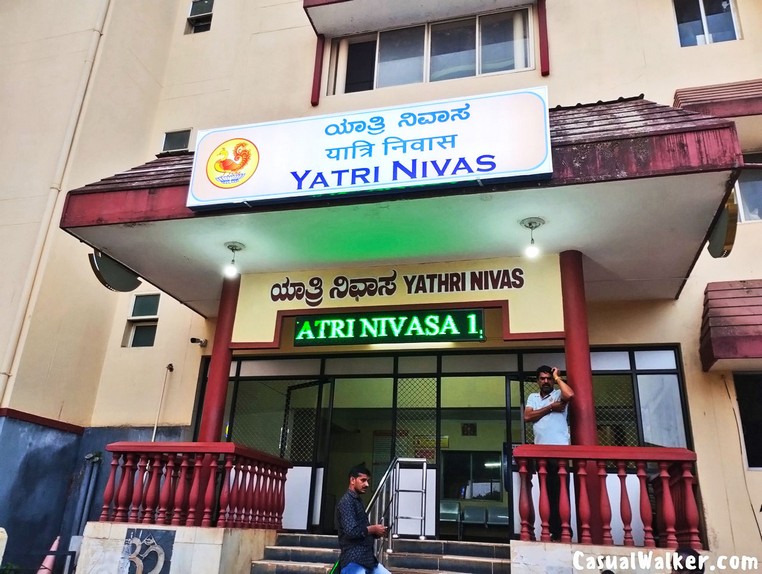
Sri Sharada Peetham has constructed several well-maintained guest houses near the Sharada Temple:
- Sri Shankara Kripa
- Sri Sharada Kripa
- Yatri Nivas
- Sri Bharathi Tirtha Vihara
- Sri Shankara Sadana
- Sri Srinivasa Kripa
- Sri Bharati Tirtha Krupa
Accommodations Online Bookings:
https://yatri.sringeri.net/rooms/reserve
Phone: +918265 252525
Room rates range from ₹200 to ₹800 per night. Guest houses are allotted on a first-come-first-served basis. For guest house requirements, pilgrims can approach the Information Office located adjacent to the Sri Sharada Temple main entrance.
Nitya Annadana: Sacred Free Food Service
A large dining hall named “Sri Bharathi Tirtha Prasada Mandira” serves Nitya Annadana (daily free food distribution) to all devotees.
Serving timings:
Afternoon: 12:15 PM to 2:30 PM
Night: 7:15 PM to 8:30 PM
This sacred service provides free meals to approximately 7,500 people daily, including students, hospital patients, and all visiting pilgrims.

Travel Tips for Visiting Sringeri Sharada Peetham, Chikmagalur
Sringeri Sharada Peetham Temple Address:
Sri Sharada Peetham,
Sringeri, Chikkamagaluru District,
Karnataka – 577139
Phone: +91 8265 272727
Website: https://www.sringeri.net
Temple Timings and Darshan Schedule at Sringeri Sharada Peetham, Chikmagalur
Sharadamba Temple Darshan Timings
Normal Days:
Morning Darshan: 6:00 AM to 2:00 PM
Evening Darshan: 4:00 PM to 9:00 PM
Maha-Mangalarati (Grand Auspicious Lamp Offering):
First Arati: 10:00 AM
Second Arati: 12:00 PM
Evening Arati: 7:30 PM
Other Temples in the Complex:
Morning: 6:00 AM to 1:00 PM
Evening: 5:00 PM to 8:00 PM
Guru Darshanam (Audience with the Jagadguru):
Daily: 10:30 AM to 11:30 AM
Chandramoulishwara Puja by Jagadguru:
Normal Days: 9:00 PM to 10:00 PM
Fridays: 8:30 PM to 10:00 PM
Weather and Best Time to Visit
The months from October to February offer the most comfortable weather for pilgrimage.
March to Mid-June: Hot weather (summer season)
Mid-June to Mid-September: Heavy monsoon rainfall
October to February: Cool and pleasant (winter season – best time to visit)
How to Visit Sringeri Sharada Peetham, Chikmagalur
By Train: Sringeri does not have its own railway station, so you’ll need to travel to one of the nearby railheads and continue by road. The nearest railway stations are Shimoga (approximately 90 km away), Udupi (around 100 km), Mangalore (about 105 km), and Bangalore (roughly 330 km). From Chennai, you can take trains to any of these stations. Trains to Bangalore are most frequent and well-connected from Chennai, with options like the Shatabdi Express or overnight trains. From your chosen railway station, you can hire a taxi or take a bus to complete the journey to Sringeri. The road journey from these stations offers scenic views of the Western Ghats.
By Bus: Regular bus services operate to Sringeri from all major cities in Karnataka, making it a convenient option for travelers. From Chennai, you can take a bus to Bangalore first, and then catch one of the many state-run or private buses that go directly to Sringeri. Karnataka State Road Transport Corporation (KSRTC) operates frequent services to Sringeri from cities like Bangalore, Mangalore, Shimoga, and other towns. The journey from Bangalore to Sringeri takes approximately 6-7 hours by road. Alternatively, private operators also run comfortable coaches on this route. The bus journey allows you to enjoy the beautiful landscapes of Karnataka’s hill country.
By Flight: The nearest airports to Sringeri are Mangalore International Airport (approximately 100 km away) and Kempegowda International Airport in Bangalore (around 330 km away). From Chennai, multiple daily flights operate to both these airports, with Bangalore being more frequently connected. The flight to Bangalore takes about an hour, while to Mangalore it’s roughly 1.5 hours. Once you land at either airport, you can hire a private taxi or book a cab service to reach Sringeri. The drive from Mangalore airport takes about 3 hours, while from Bangalore it takes around 7 hours. Private taxis and rental cars are readily available at both airports for a comfortable onward journey to Sringeri.

Thanks for exploring this Casual Walker photo guide — India’s most visual cultural travel guide and a curious discovery journal finding authentic photo stories, guides, and tips across travel, culture, arts, temples, heritage, and food.
- Keep exploring: Browse 650+ Travel & Culture Photo Guides
- We’d love to hear your feedback, stories, corrections, and updates — Email us.
- Follow our photo walks on Instagram: @hicasualwalker