




Chidambaram Temple / Thillai Nataraja Temple in Chidambaram – Sabhanayagar : Lord Of The Assembly Halls, Pancha Bhoota Sthalam For Akasha (Sky), Five Sacred Sabhas, Chidambara Rahasyam : The Sacred Secret, Kunjithapatham : Lord Nataraja’s Raised Foot | Dance Duel Of Thillai, Lord Govindaraja Perumal Shrine: Thiruchitrakoodam Divya Desam, Dikshitars : The Temple Guardians, Lord Nataraja At CERN Switzerland – History, Scientific Significance, Architecture, In Tamil Literature, Daily Rituals & Worship, Festivals, Temple Timings, Contact Details, How To Reach & Complete Travel Guide (Updated)
– a complete guide to chidambaram thillai nataraja temple: the abode of cosmic consciousness & divine bliss

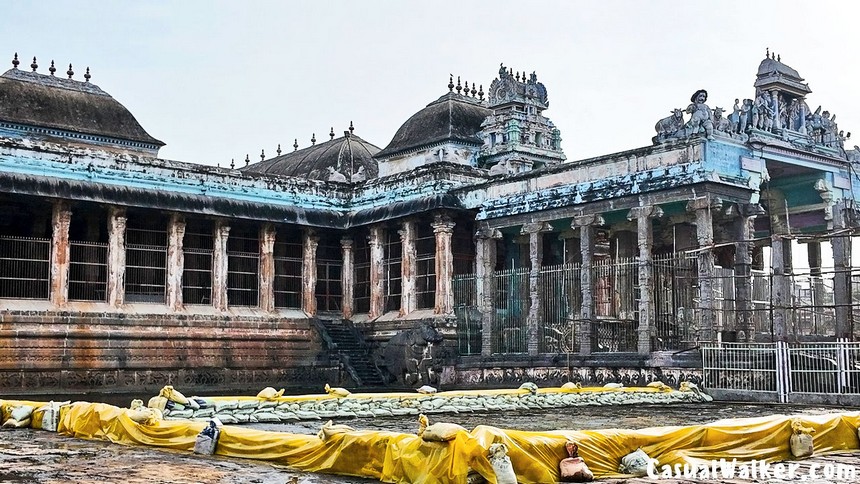
The Great Chidambaram Temple, also known as the Thillai Nataraja Temple or Sri Sabanayagar Temple, is one of the most famous Lord Shiva temples located in the temple town of Chidambaram in Cuddalore district, about 78 km south of Puducherry and roughly 235 km from Chennai. I still remember the first time I stepped through its gates, this ancient shrine dedicated to Lord Shiva draws devotees, historians, dancers and travellers from all corners of the world, and I understood within minutes why. 
At this temple Lord Shiva is in the form of Lord Nataraja (Naṭarāja, the King of Cosmic Dance), the Lord of Cosmic Dance (Ananda Tandava, the dance of eternal bliss). Sanathana Dharma places the shrine at the Virat Hridaya Padma Sthalam, the Lotus Heart of the Universe, the very spot where Lord Shiva is believed to have performed his cosmic dance in a grove of Thillai trees.
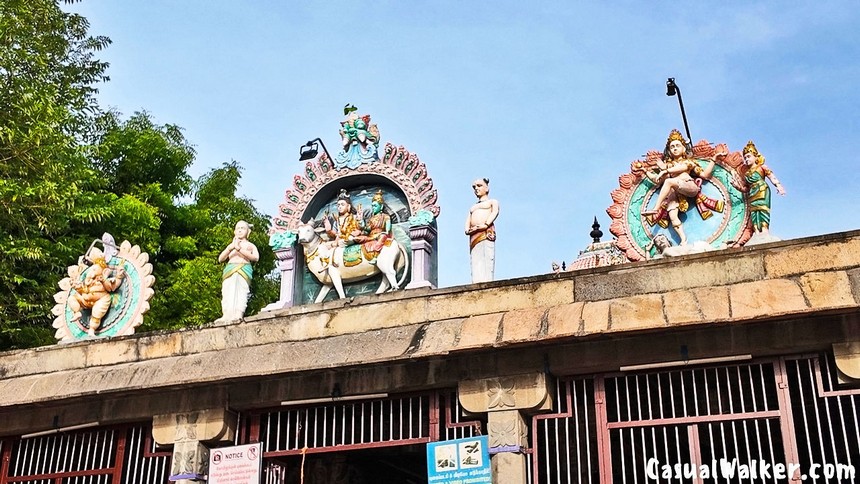
It is also one of the rare temples where both Shaivite and Vaishnavite traditions coexist, since the temple also houses a shrine for Lord Govindaraja Perumal, a form of Lord Vishnu, worshipped alongside Nataraja under a single roof, and I made it a point to visit both during my time there.
This ancient shrine stands as one of the most sacred and spiritually charged Hindu pilgrimage sites (Tirthasthala) in South India. Having visited it myself, I feel this temple is one of the most revered, historically significant, and architecturally magnificent Hindu temples in India, that touches the soul (Ātman, the inner self), blending art, philosophy, architecture and devotion into one unforgettable experience.
Meaning Of Chidambaram
The name Chidambaram carries deep philosophical meaning, something I only fully appreciated once I stood within its walls. It is generally believed to be derived from the words chit (Cit, pure consciousness) and ambaram (Ambara, sky), together forming the idea of chidaakasam (Cidākāśa, the “sky of consciousness”), the ultimate spiritual goal described in the Vedas (Veda, sacred revealed knowledge).
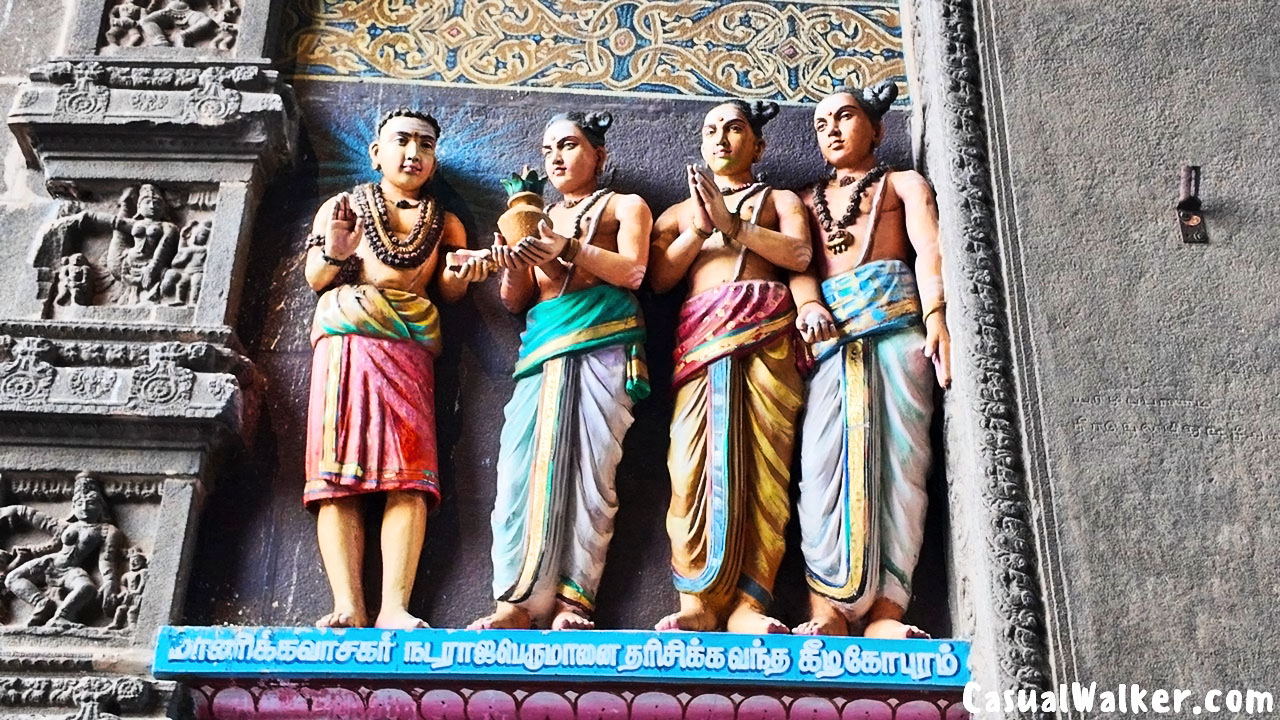
Another interpretation traces the name to chit and ambalam, where ambalam refers to a stage (Sabhā) for performing arts, since Lord Nataraja represents supreme bliss (Ānanda) through his cosmic dance. A third explanation connects the name to chitrambalam, combining the idea of divine play (Līlā) with that of a sacred stage. Manikkavasagar himself alludes to this sacred stage in the Tiruvasagam, where he sings:
சிற்றம்பலமே தில்லை என்று திருத்தினை
Chitrambalame Thillai Endru ThiruthinaiYou perfected the little sacred hall and called it Thillai
There is also an older and simpler Tamil origin worth mentioning, where the name is said to come from Cirrambalam, meaning small hall, a reference to the humble hut believed to have originally stood at this spot deep within the mangrove forest. Whichever origin one accepts, the underlying meaning always circles back to consciousness (Cit), bliss (Ānanda) and liberation (Mokṣa), which is why Shaivites believe a visit to Chidambaram itself leads one closer to moksha, a belief I found myself carrying home with me. The temple town itself has been referred to by other names in old texts as well, including Thillai after the Thillai forest, Perumpatrapuliyur, and Vyagrapuram in honour of Sage Vyagrapathar.
Sabhanayagar: Lord of the Assembly Halls
Closely related to the temple’s meaning is its other well known name, Sri Sabanayagar Temple, which translates roughly to “The Temple of the Lord of the Stage” or “The Lord of the Assembly Halls.” The name comes from a combination of Sanskrit and Tamil words: Sabha, meaning assembly hall, stage, or court, and Nayagar, meaning leader, lord, or master. Lord Shiva is called Sabanayagar, or in its Sanskrit form Sabhapati, here because he is considered the absolute master of the cosmic dance, performing it eternally upon the stage of this temple.
The name reflects both the architecture and the mythology of the shrine at once: architecturally, because the entire complex is structured around five distinct holy halls, or Sabhas, over which Shiva presides as the one deity ruling all five; and mythologically, because in most Hindu temples Shiva is worshipped in the static, formless shape of a Lingam, whereas at Chidambaram he takes a human like form as the dynamic cosmic dancer. Since a dance requires a stage, the universe itself is viewed as his theatre, and this temple, standing at the Lotus Heart of the Universe, is regarded as the ultimate stage upon which the Sabhanayagar performs.
Chidambaram & the Pancha Bhoota Sthalas
According to our Indian tradition the universe is composed of five cosmic elements, earth, water, fire, air and sky, and these five temples signify nothing less than the fundamental meaning of life itself, each representing the manifestation of one of these elements through the form of Shiva. Chidambaram holds a special place among these five Pancha Bhoota Sthalas (Pañca Bhūta Sthala, the five element shrines), since it stands for akasha (Ākāśa), the element of sky and space. The other four temples in this sacred group are the Ekambareswarar Temple at Kanchipuram representing earth (Pṛthvī), the Jambukeswarar Temple at Thiruvanaikaval near Tiruchirapalli representing water (Jala), the Annamalaiyar Temple at Tiruvannamalai representing fire (Agni), and the Kalahasti Temple at Srikalahasthi representing wind (Vāyu).
Devotees who wish to complete this elemental pilgrimage (Yātrā), often called the Pancha Bhoota Sthalam tour or Shiva Pancha Bhoota temple circuit, often plan visits across these five temples over time, and Chidambaram, representing the most subtle and formless of all elements, is fittingly considered the culmination of that spiritual journey, one I hope to complete myself someday. Remarkably, these five temples are said to be geographically aligned in an almost straight line, an alignment that continues to astonish researchers, since it was achieved by builders working centuries before satellite technology or GPS existed, an accuracy many describe as a geographical, engineering and astronomical marvel in its own right.
History Of Chidambaram Lord Nataraja
Long ago, this land was covered with Thillai trees, a species of mangrove that still grows in the nearby Pichavaram wetlands, one of the most popular Pichavaram mangrove forest tourist attractions near Chidambaram, and which I stopped at on my way to the temple. Interestingly, sculptures depicting these very Thillai trees found within the temple are believed to date back to the second century CE, showing just how old this association truly is.
The forest was home to a group of sages who believed that the universe could be controlled through rituals and magical chants (Mantra). One day, Lord Shiva walked into this forest as Pitchatanadar, a radiant mendicant (Bhikṣāṭana) seeking alms, accompanied by Lord Vishnu who had taken the form of the enchantress Mohini. The wives of the sages were captivated by the beauty of the divine visitors, and the enraged sages summoned serpents through their rituals to attack Lord Shiva. He calmly lifted the serpents and wore them as ornaments. The sages then unleashed a ferocious tiger, which Lord Shiva skinned with ease and wrapped around his waist like a shawl.
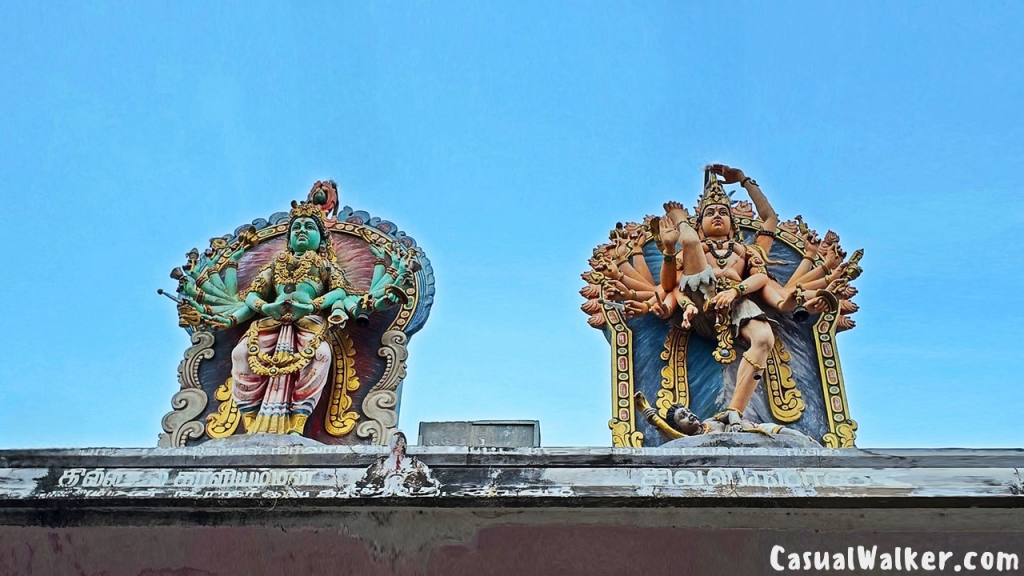
Finally, in complete frustration, the sages invoked a powerful demon named Muyalakan (Apasmāra Puruṣa, the demon of forgetfulness and ignorance), a symbol of arrogance and ignorance (Avidyā). Lord Shiva simply placed his foot upon the demon, immobilised him, and began his divine Ananda Tandava (Ānanda Tāṇḍava, the dance of eternal bliss), revealing his true cosmic form. Humbled and awakened, the sages surrendered before him, realising that true divinity lies beyond ritual and magic.
Kunjithapatham: The Raised Foot of Lord Nataraja
Kunjithapatham refers to the raised, gracefully curved left foot of Lord Nataraja at the Thillai Nataraja Temple, a posture unique to this form of Shiva’s cosmic dance (Ananda Tandava). I remember standing before the sanctum and having a priest point this out to me specifically, telling me to look nowhere else first. In classical Bharatanatyam terms, kunchitam describes a limb held in a tight inward curve with the foot sharply pointed, and it is this taut line running from the lifted knee to the pointed toes that gives the gesture its name.
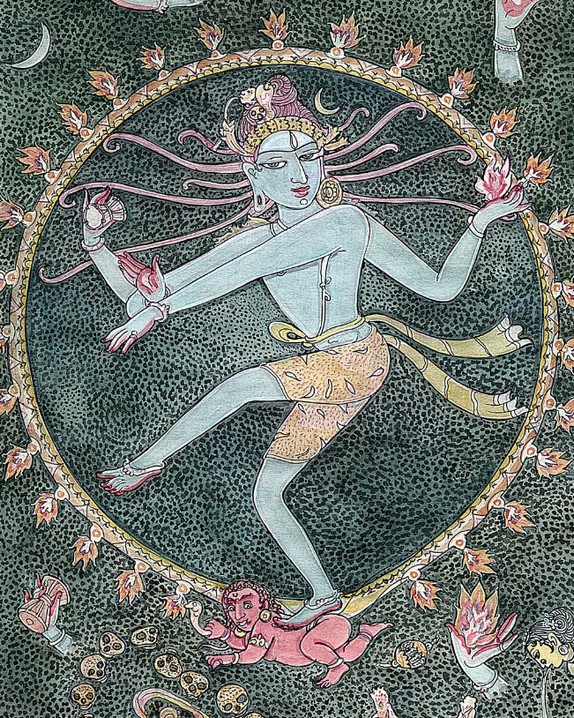
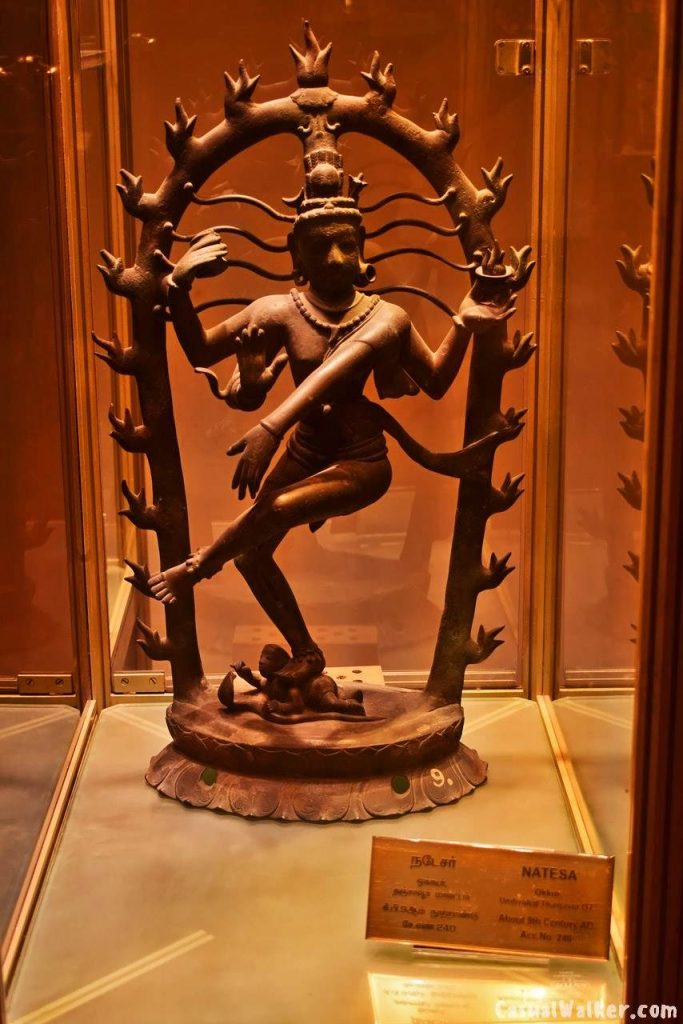
The posture carries deep meaning within Shaiva philosophy. The right foot is planted upon the demon of forgetfulness (Apasmara Purusha), representing ignorance (avidya), showing the crushing of ego (ahamkara) and worldly illusion (maya), while the raised left foot reveals that liberation (moksha) from suffering is possible, and Nataraja’s lower left hand points toward it in the elephant gesture (Gaja Hasta mudra), inviting devotees to take refuge (sharanagati) there as the gateway to final release.
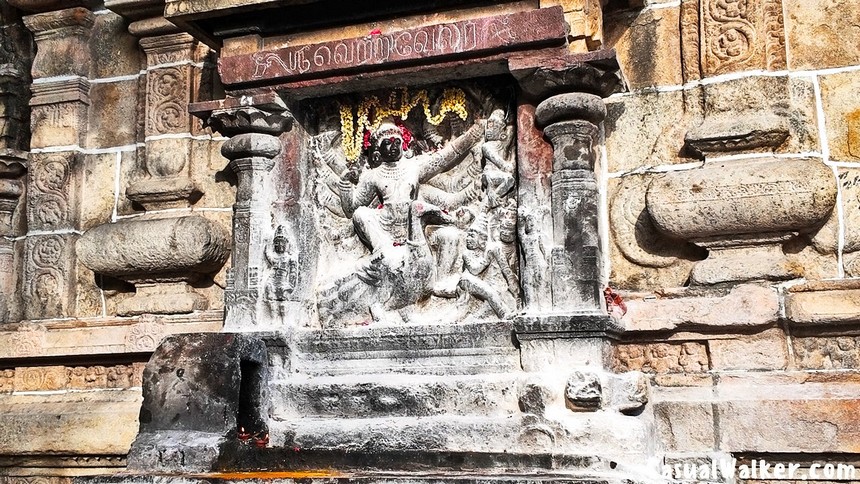
Since the divine feminine energy (Shakti) is said to reside on Shiva’s left side, it is also with this same foot that Shiva is said to have kicked away the god of death (Yama) when his noose struck the sacred emblem (Shivalinga) that the sage Markandeya clung to in his hour of fear. For this reason, devotees are taught to fix their gaze first upon Nataraja’s left foot during sacred viewing (darshan), believed to dissolve black magic, ease the afflictions of Saturn (Shani), and remove the flaws (dosha) and ailments recorded in one’s horoscope, granting bodily strength and spiritual freedom.
The term also names a sacred ring fashioned by the temple’s priestly community (Dikshitars) from vetiver grass, sacred bilva leaves, and other medicinal roots, placed upon Nataraja’s raised foot during the daily rites of worship (puja) before being offered to devotees as consecrated grace (prasadam), believed to carry the vibration (spandana) of the divine foot and to hold the power to heal. I was fortunate enough to receive a small piece myself as I left the sanctum that day, and I still keep it at home.
Patanjali and Vyaghrapada: The Sages Who Sought The Dance
According to tradition, the sage Patanjali, who is revered as the compiler of the Yoga Sutras (Yoga Sūtra), along with another sage named Vyagrapathar, deeply desired to witness this divine dance. A related legend adds a further layer to Patanjali’s story: it holds that Adi Sesha, the great serpent god upon whom Lord Vishnu reclines, having heard of the Ananda Tandava, was so eager to witness it in person that he descended to earth in the Thillai forest and took birth as the sage Patanjali. Both sages are counted among the legendary figures who performed rigorous penance (Tapas) at Thillai to witness Shiva’s primal dance of bliss. Vyagrapathar’s name itself carries a beautiful story, since it means one with tiger feet, referring to how he once sought and received the feet and eyesight of a tiger so he could climb trees before dawn to pick flowers (Puṣpa) for Lord Shiva before the bees could reach them.
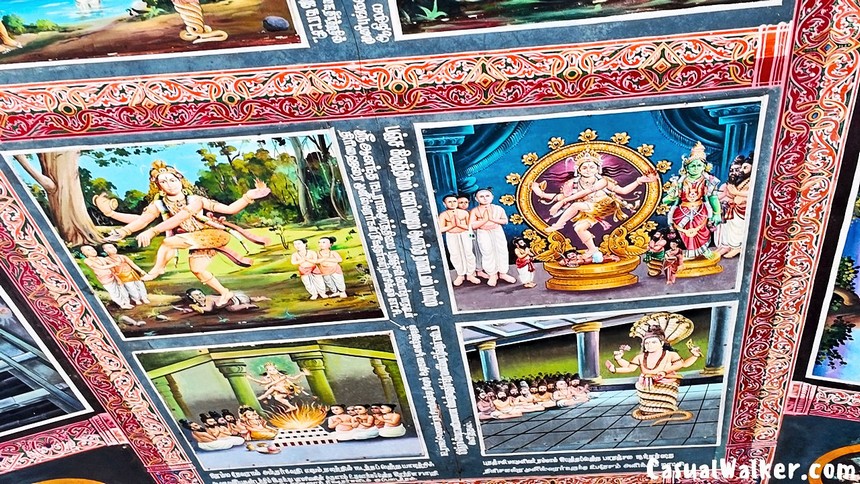
Both sages meditated (Dhyāna) in the Thillai forest and worshipped a Shivalinga known today as Thirumoolanathar, until Lord Shiva finally appeared before them and performed the Ananda Tandava, an event still commemorated at the temple every year during the star of Pusam in the Tamil month of Thai. In lasting tribute to their devotion, images of both sages are embossed upon the doors of the Chit Sabha itself, and I paused there for a moment before entering, so that they stand eternally as guardians of the sanctum they once longed to behold.
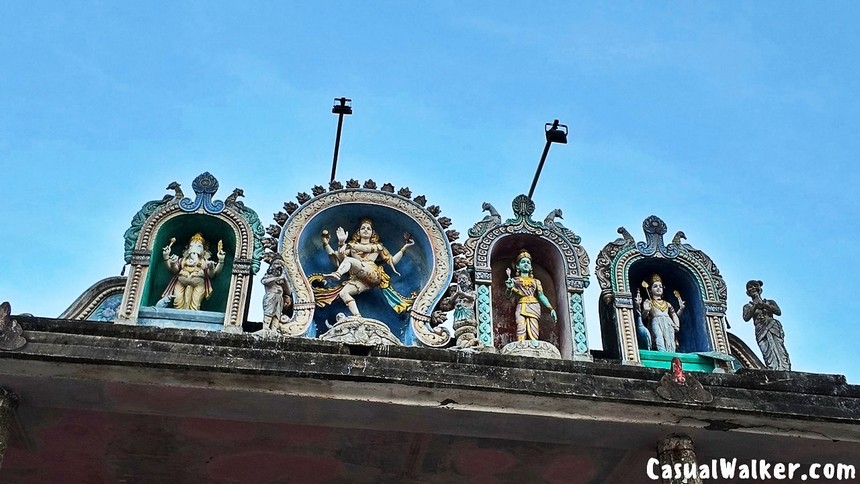
The Ananda Tandava posture itself is rich with symbolism. The demon crushed beneath Lord Nataraja’s feet represents ignorance being subdued. The fire (Agni) held in one hand signifies the destruction of evil, while the raised hand offers protection (Abhaya Mudra) and blesses all living beings. The circular ring of flames (Prabhāmaṇḍala) around him represents the cosmos, and the small drum (Ḍamaru) in his hand represents the very sound of creation (Nāda Brahman), preservation and dissolution. This symbolism, central to understanding Nataraja iconography and the meaning of the cosmic dance of Shiva, is echoed in a classical Sanskrit verse traditionally recited by devotees describing the five acts of Nataraja:
सृष्टिं करोति कमलासनसंस्थितोऽयं
Sṛṣṭiṃ karoti kamalāsana saṃsthito’yaṃSeated upon the lotus, He performs the act of creation
Interestingly, a rarer form of this cosmic dance, where Lord Nataraja is shown dancing upon a bull surrounded by celestial beings (Deva), can be found at the Melakadambur temple, located about 32 km from Chidambaram, a lesser known site I hope to visit on a future trip.
Dance Duel of Thillai: How Lord Shiva Won His Sacred Ground
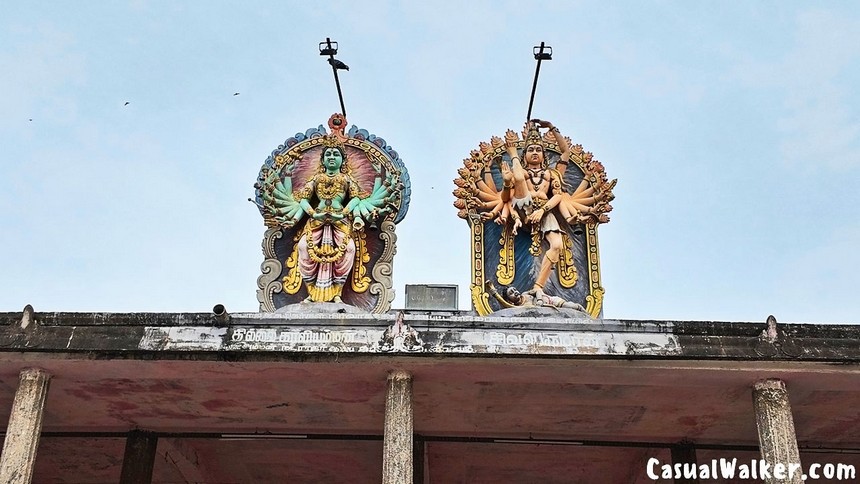
Long ago, before Chidambaram bore that name, the land was known simply as Thillai, a dense forest of mangrove trees standing at the edge of the sea, ruled by Goddess Kali as its guardian deity. Then Lord Shiva arrived to dance before the sages who dwelled there, and in doing so stepped, however unknowingly, onto ground Kali held as her own. To a goddess who had reigned over Thillai since time beyond memory, this was no small trespass, and she answered it the only way a goddess of her stature could: she challenged Lord Shiva to a dance.
Lord Vishnu was called to judge, and for hours the two danced with everything they possessed. Lord Shiva moved through the fierce, thunderous Urdhva Tandava, while Goddess Kali answered with her fluid, lyrical Lasya, matching Him step for step, ferocity for ferocity, neither yielding an inch. It was Lord Shiva who finally broke the deadlock, not through force, but through sheer artistry. In the midst of the dance, His earring slipped loose; without breaking rhythm, He caught it on His toe and flung it back onto His ear in one impossible motion, His leg rising straight and vertical above His head. It was a magnificent step, and one Goddess Kali, bound by the modesty expected of her, could not follow. She conceded, and dominion over Thillai passed to Lord Shiva.
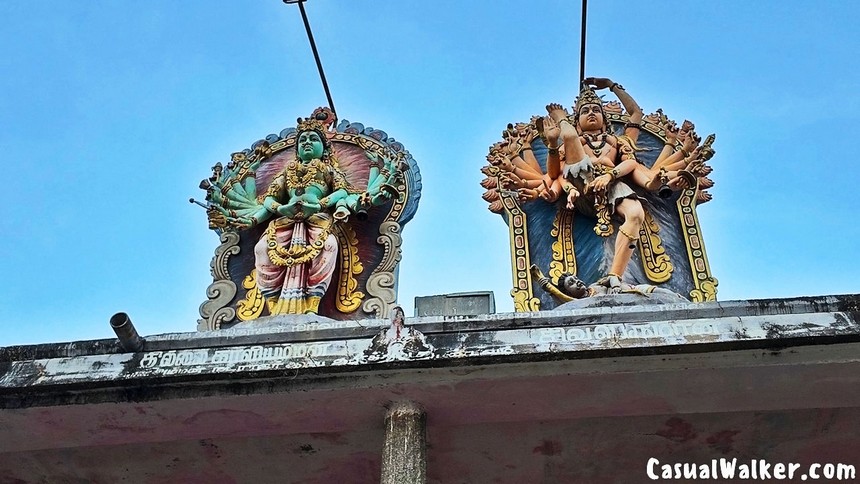
Goddess Kali simply withdrew a little from the forest’s heart and settled nearby in a gentler form; the Thillai Kali Amman Temple, about a kilometre away, still marks where she made her home, and I made a short detour there before heading back to my hotel. Where Lord Shiva completed His final, victorious step, the Thillai Nataraja Temple now stands, its Nritta Sabha built upon that very spot, enshrining Him eternally as Nataraja, King of Dance, and standing inside that hall myself, I could almost picture the contest taking place beneath those very pillars.
Chidambara Rahasyam, The Sacred Secret
Perhaps the most mysterious and profound aspect of the Chidambaram Temple is the Chidambara Rahasyam (Rahasya, secret, mystery), often translated as the secret of Chidambaram, and I will admit I had read about it long before I ever saw it with my own eyes. Behind a curtain, itself said to represent human ignorance (Avidyā), and opened by the priests only on specific occasions, devotees find, instead of an idol, an empty space (Ākāśa) set against a black screen said to signify the sky, and adorned with strings of golden vilva leaves.
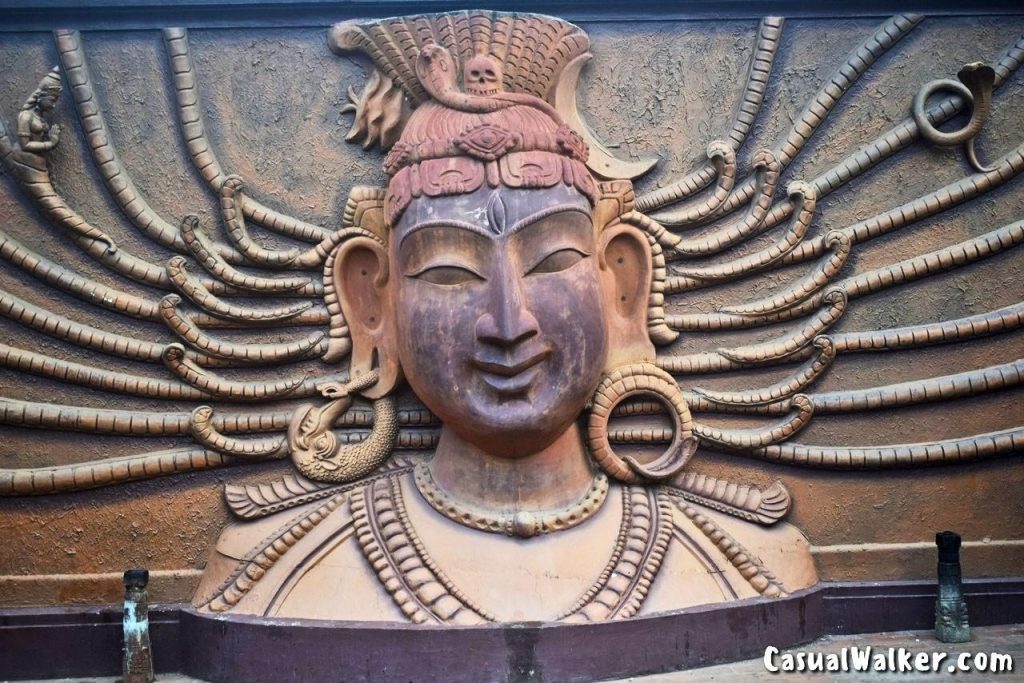
Interestingly, the three leaflets of each vilva leaf are said to represent the holy trinity (Trimūrti) of Brahma, Vishnu and Shiva, as well as the three eyes of Lord Shiva, the sun, the moon and the third eye of wisdom (Jñāna Netra). Some traditions also hold that an embossed figure near this sacred space conveys a secret message to those with the eyes to see it, and that especially revered saints have, across the centuries, been able to perceive the Lord and Goddess here in physical form, though this naturally remains a matter of faith rather than something that can be verified. This empty space represents Lord Shiva in his formless state, known as Akasha Lingam (Ākāśa Liṅgam, the “space linga”), symbolising the idea that the divine (Brahman) ultimately transcends form altogether.
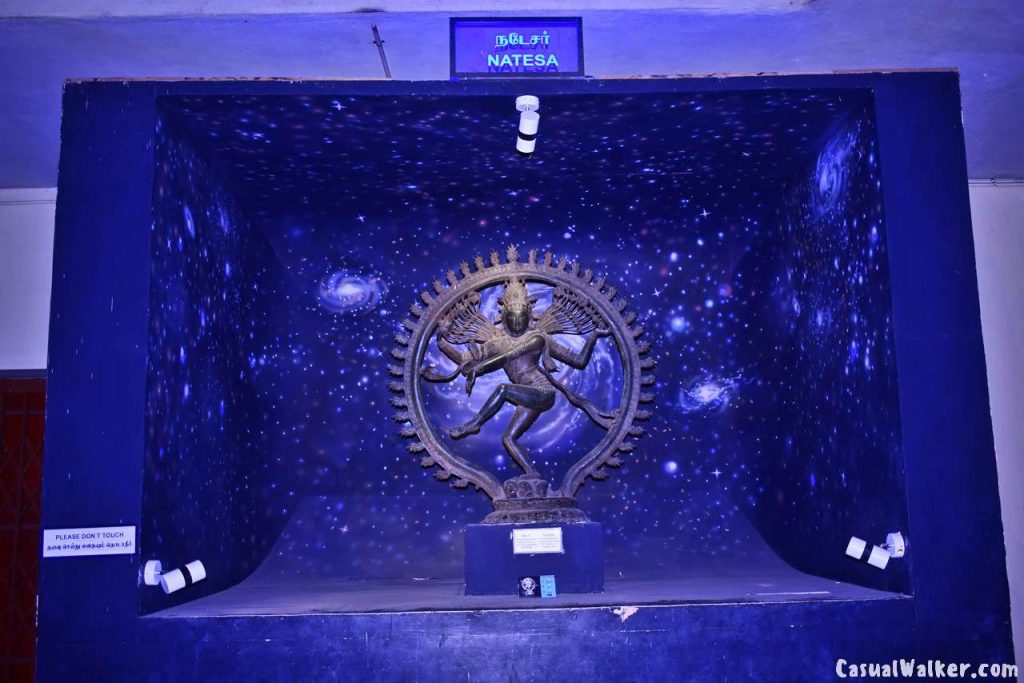
The temple thus presents Lord Shiva in three distinct manifestations: the fully formed Nataraja idol known as Sakala Thirumeni, the semi-formed crystal lingam known as Chandramouleeswarar or Sakala Nishkala Thirumeni, and the completely formless empty space known as Nishkala Thirumeni, offering pilgrims a rare and layered glimpse into different levels of divine reality (Tattva). A small entry fee is charged to view this sacred space up close, and standing before it myself, watching the golden leaves sway gently, I understood why this is an experience that stays with most devotees long after they leave.
Associated Saints Of Chidambaram
The temple’s soil has been walked by devotees whose stories are told and retold to this day, and hearing them recounted on site made them feel far more alive than reading them ever had.
Patanjali and Vyaghrapada: The two legendary sages who performed rigorous penance (Tapas) at Thillai to witness Shiva’s primal dance of bliss (Ānanda Tāṇḍava).
Nandanar: A saint whose intense devotion (Bhakti) broke social barriers, granting him direct entry into the cosmic light (Jyoti) of the sanctum.
Thirunila Kandar: A potter saint whose unyielding vow (Vrata) of fidelity was tested and blessed by Shiva right outside the temple gates.
Chidambaram In Sacred Tamil Literature
Chidambaram is extensively praised across the great canon of Tamil devotional (Bhakti) literature, and these hymns remain central to how the temple is understood and worshipped even today, making it a cornerstone of Tamil Shaiva Bhakti literature and South Indian temple heritage. The Nayanmar saints Appar, Sundarar and Jnanasambandar sang of Tillai as the spiritual and ritualistic centre of their devotion, their earliest hymns on the “dancing god of Chidambaram” dating to around the sixth and seventh centuries AD, establishing Thillai as a site of pilgrimage significance from a remarkably early period.
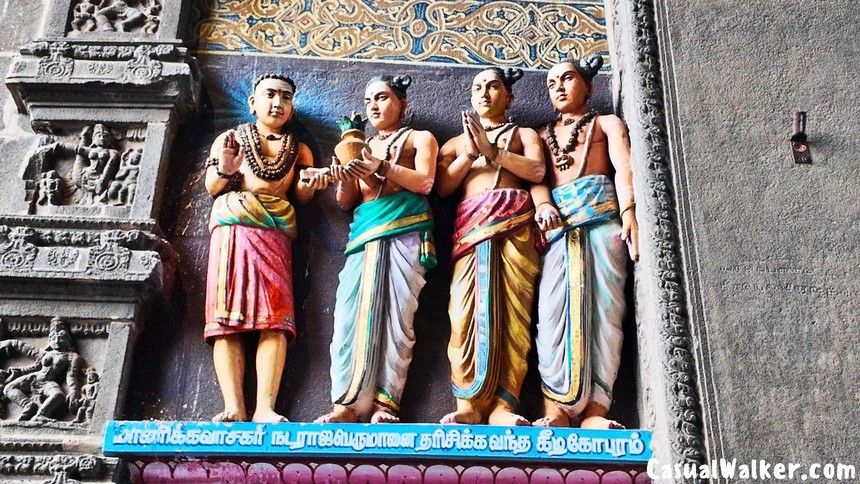
Thevaram (தேவாரம், Tēvāram, hymns “of the divine”): Sung by the early Tamil Saivite saints (Nāyanmār), Thirugnana Sambandar, Thirunavukkarasar (Appar), and Sundarar, who dedicated numerous hymns to Lord Nataraja at Thillai. One of Thirugnana Sambandar’s Devaram verses on Thillai reads:
தில்லை சிற்றம்பலத்தே தீயிற் கூத்தாடுவானை
Thillai Chitrambalathe Theeyil KoothaduvanaiHe who dances in fire, within the small sacred hall of Thillai
Tiruvasagam (திருவாசகம், Tiruvācakam, “sacred utterance”): Composed by Manikkavasagar, who spent a major part of his life in Chidambaram and wrote deeply emotional and philosophical (Jñāna) poems dedicated to the cosmic dancer.
Naalariya Divya Prabandham (Divya Prabandham, the “divine composition”): Honours the temple as a sacred Vishnu shrine because it houses the Govindaraja Perumal sanctuary within the same complex, with verses sung by Thirumangai Alvar.
Core Hymns and Verses
In the Koyil Mootha Thiruppadhigam of the Tiruvasagam, Manikkavasagar expresses intense longing for liberation (Mokṣa), declaring that merely beholding the cosmic dance at Thillai shatters all past karmas (Karma, the accumulated fruits of action). One of his often quoted lines from this hymn reads:
பொன்னார் மேனியனே போற்றி புலித்தோலார் அல்குலனே போற்றி
Ponnaar Meniyaney Pothri, Pulithoalaar Alkulaney Pothri
Glory to the one whose body glows like gold, glory to the one who wears the tiger skin
Appar’s celebrated Ananda Thandavam verse, beginning “Kunitha Puruvamum…”, praises the arched eyebrows, smiling lips, and raised foot of Nataraja, declaring that human birth (Manushya Janma) itself is worth taking just to witness this sight. A well known fragment of this verse goes:
குனித்த புருவமும் கொவ்வைச் செவ்வாயில் குமிண் சிரிப்பும்
Kunitha Puruvamum, Kovvai Sevvayil Kumin Sirippum
The gently arched brow, and the soft smile upon the lips red as the kovvai fruit.
Centuries later, Sekkizhar chose this very temple hall as the sacred setting to premiere the Periya Puranam, his massive epic on the sixty-three Nayanmar saints, opening the work with the resonant invocation “Ulagellam”, “All the Worlds.”
Vedic Foundations
Akasa Sthalam (Ākāśa, ether, space): Chidambaram represents the element of space among the Pancha Bhootha Sthalams (Pañca Bhūta Sthala, the five element-shrines), an idea rooted in ancient Vedic concepts of formless divine consciousness (Nirguna Brahman).
Chidambara Rahasyam (Rahasya, the sacred secret): The subtle theological concept of worshipping the formless Supreme Space, often aligned with esoteric Vedic and Upanishadic (Upaniṣad) philosophy on the nature of Brahman. A Sanskrit verse traditionally associated with the sanctity of Chidambaram captures this idea well:
चिदम्बरं हृदयाकाशं तत्र नित्यं प्रकाशते
Cidambaraṃ hṛdayākāśaṃ tatra nityaṃ prakāśateChidambaram is the sky within the heart, where the eternal light forever shines
Chidambaram Temple Architecture
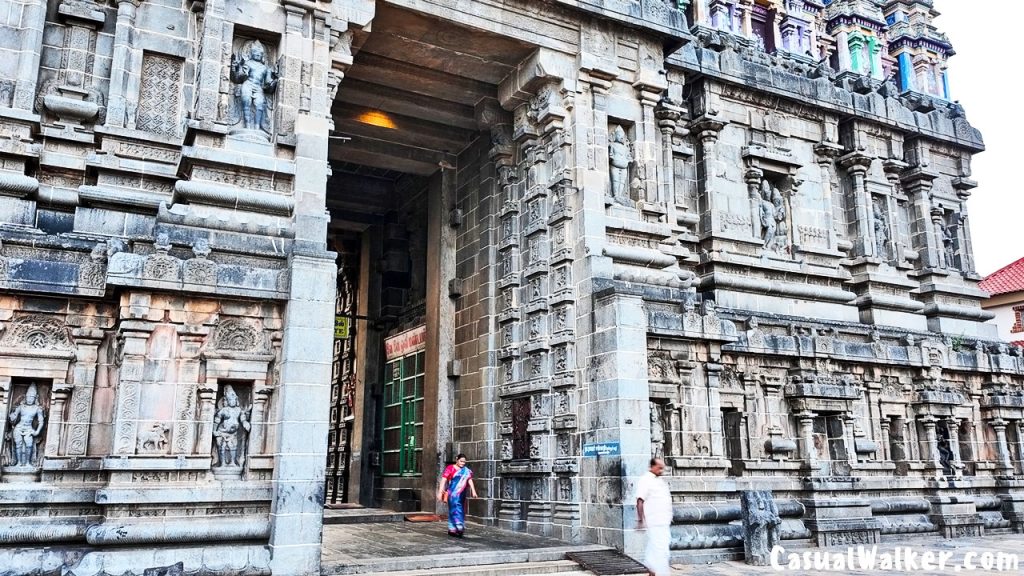
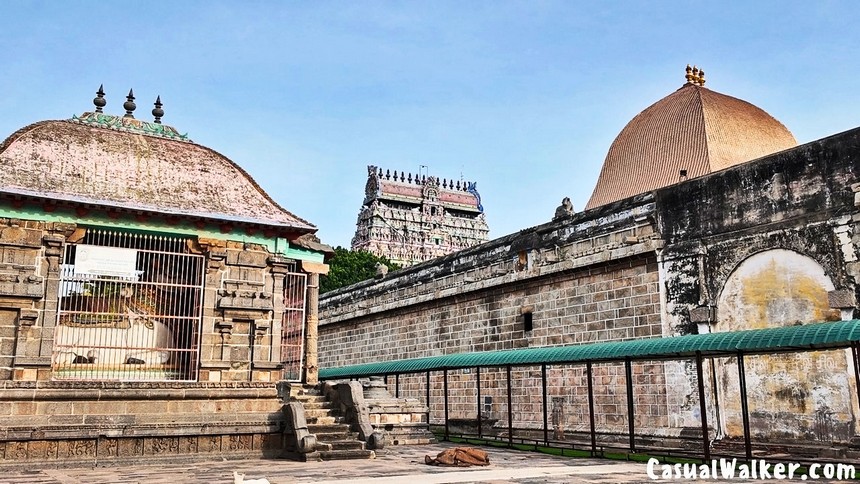
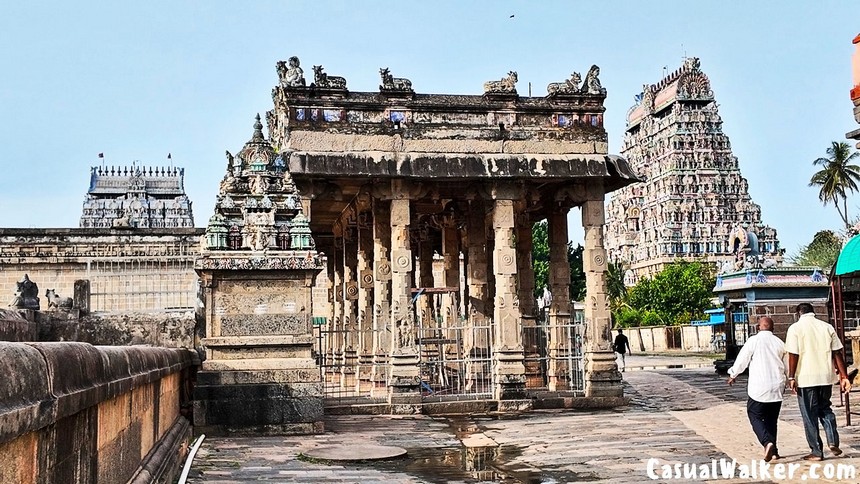
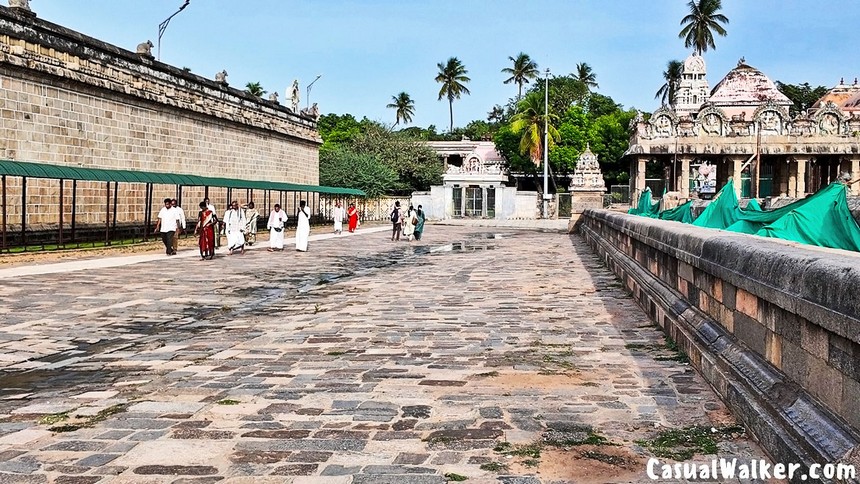
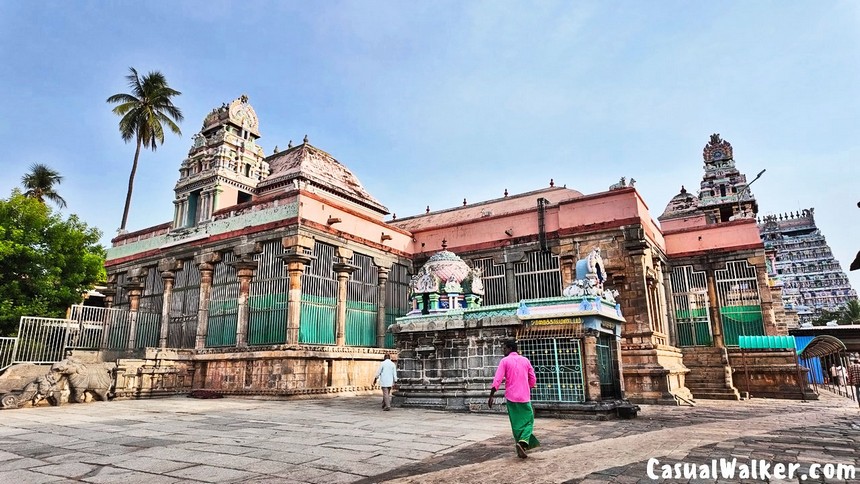
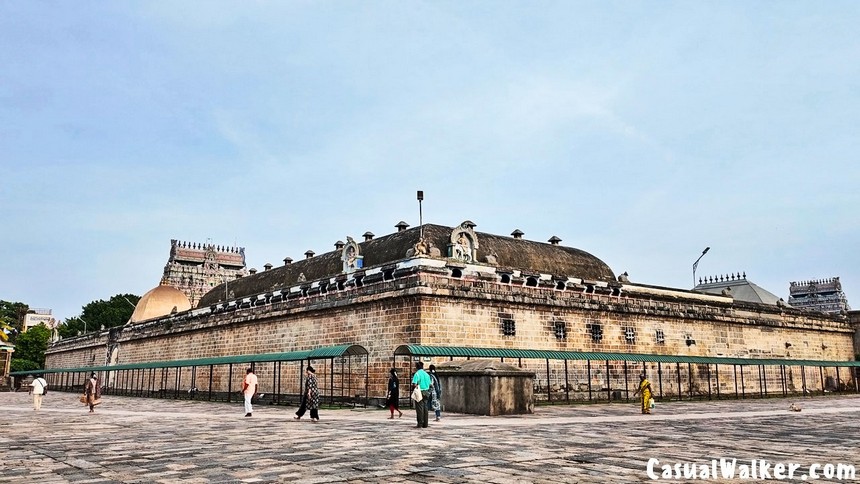
Spread across nearly fifty acres, the Chidambaram Temple is a remarkable example of Dravidian temple architecture and Chola era temple construction shaped by centuries of Chola craftsmanship, and stands as a striking symbol of the relationship between art and the divine, something I felt the moment I walked through the outer courtyards. Once itself a thick forest of Thillai trees, the site has, over centuries of damage, rebuilding and expansion, been maintained by a succession of chief architects, among whom Viduvelvidugu Perumtaccan is remembered as the craftsman principally responsible for the temple’s restoration in later years.
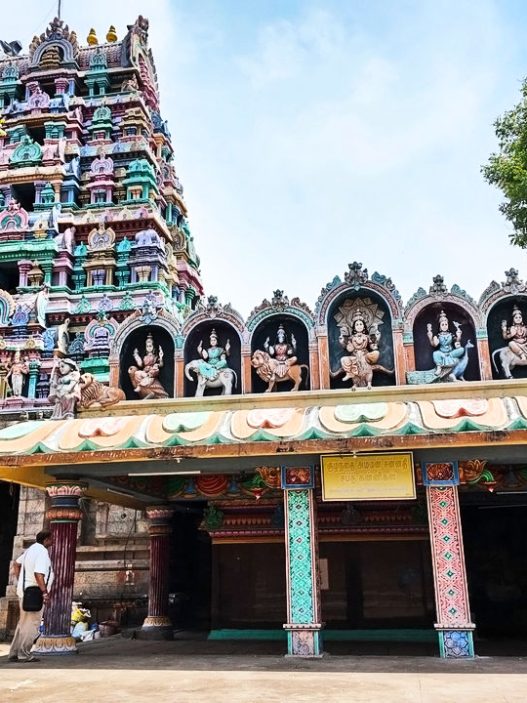
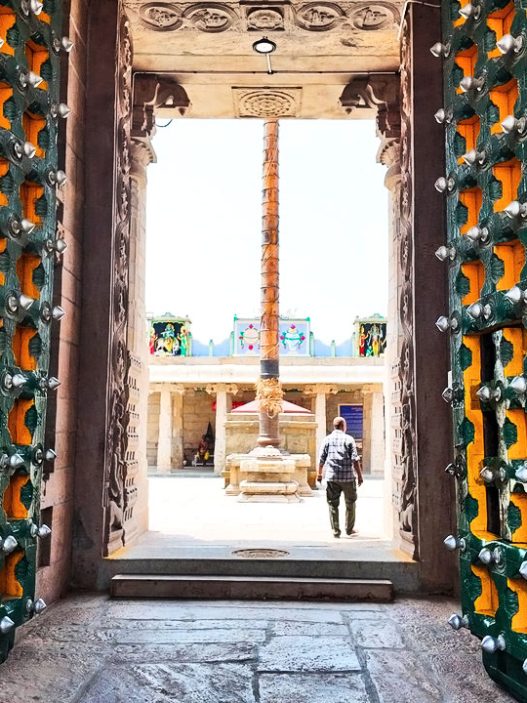
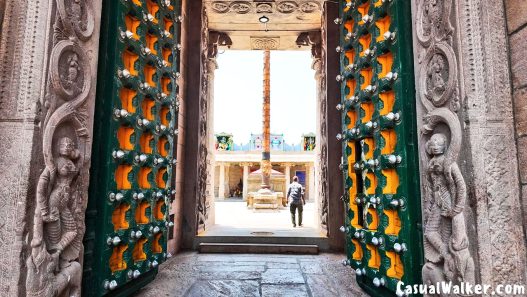
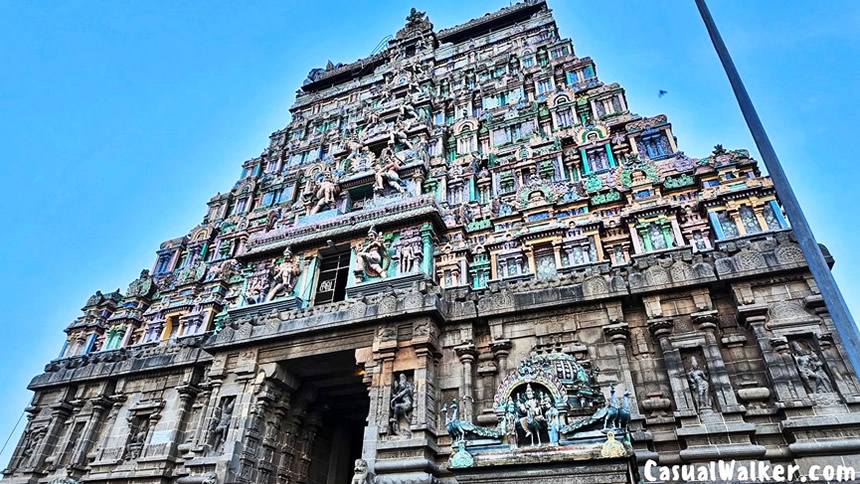
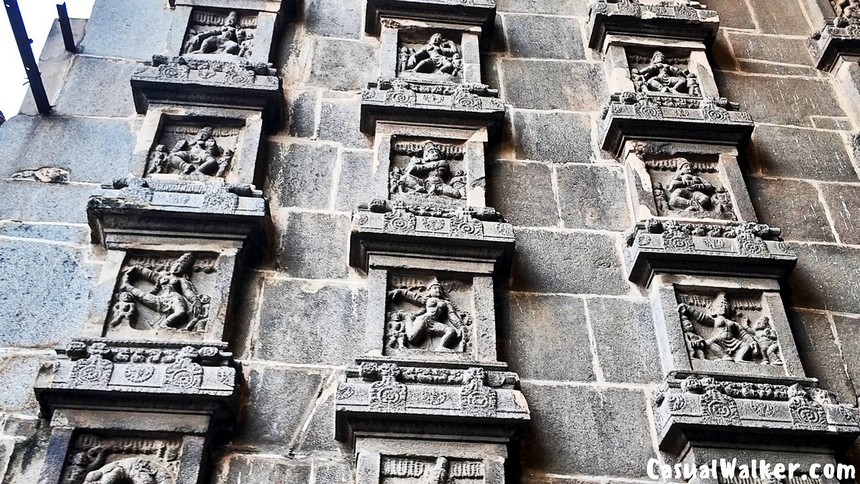
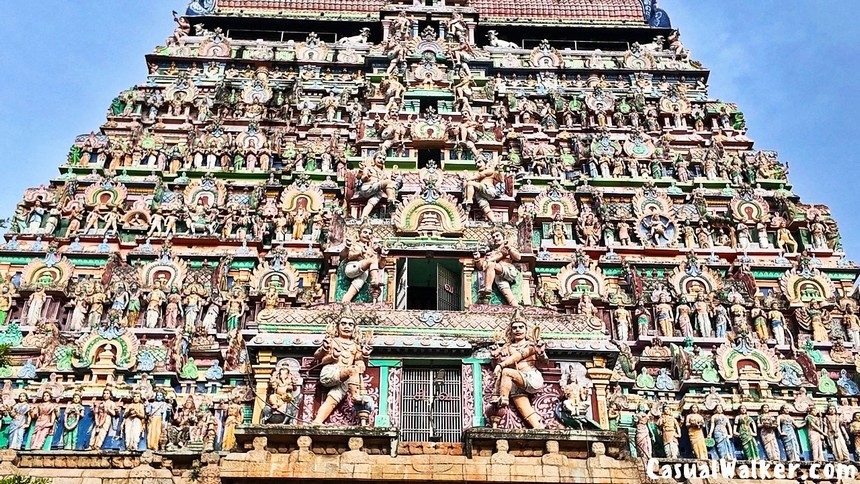
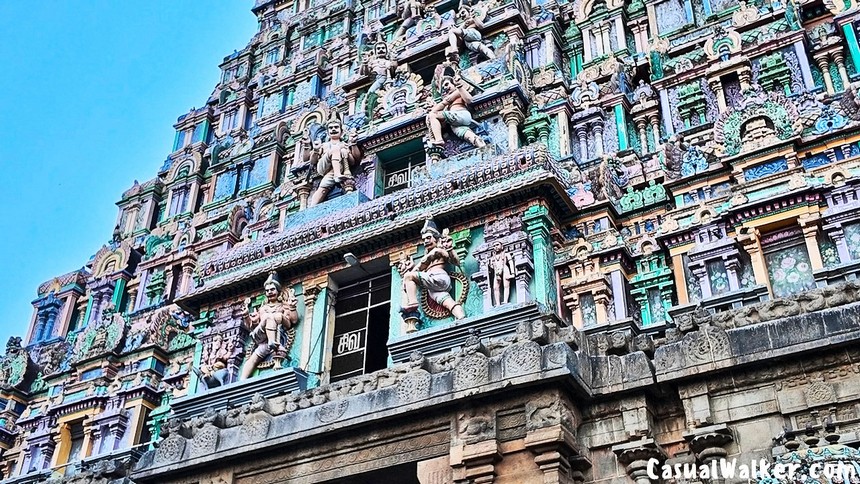
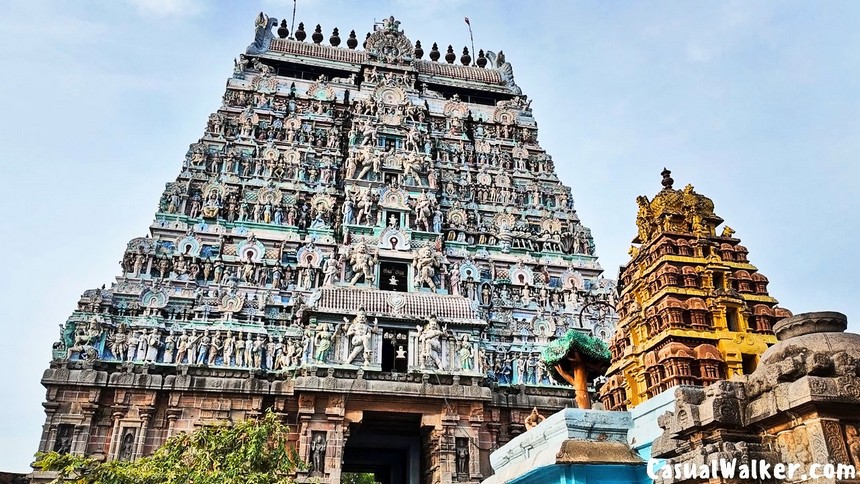
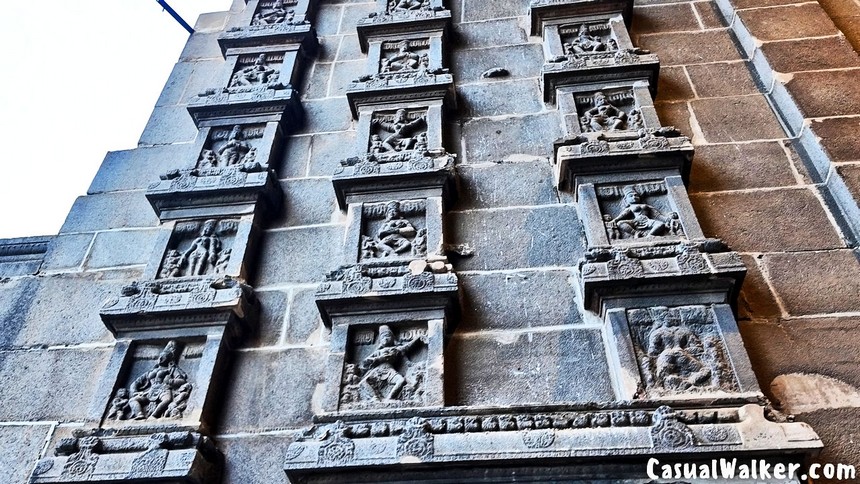
The complex is surrounded by four grand gopurams (Gopuram, monumental temple gateway tower) facing the four cardinal directions, each rising about 135 feet with seven tiers, and each entrance itself stands about 40 feet high. The eastern gopuram is particularly celebrated for its sculpted panels depicting all 108 karanas (Karaṇa, classical dance postures), the classical dance postures described in the Natya Shastra (Nāṭya Śāstra, the ancient treatise on dramatic and dance arts), making Chidambaram an essential pilgrimage for Bharatanatyam dancers and students of Indian classical dance, with each posture accompanied by a short two-line inscription explaining it, a detail I found myself photographing panel by panel. Some of these karanas carry evocative names such as Adhikrantham, Viruchikakuthitham and Vishnukrantham.
The temple’s layout itself is organised around five concentric courtyards, or Prakaras, echoing the five elements celebrated across the Pancha Bhoota Sthalams, though the innermost of these Prakaras remains hidden from the general public, with only the outer four open to devotees.
Interestingly, the temple is believed to sit close to what scientists identify as the earth’s magnetic equator, a fact that continues to fascinate researchers and pilgrims alike; some accounts describe this as having been confirmed by research and development scientists studying the planet’s magnetic field, who identified the temple as lying near the very centre point of the Earth’s magnetic equator. Ancient Tamil scholar Thirumoolar reportedly wrote about this cosmic alignment thousands of years ago in his work called Thirumandiram (Tirumantiram, a foundational text of Tamil Saiva Siddhanta philosophy). A frequently quoted line from the Thirumandiram beautifully sums up the philosophy behind the temple:
உடம்பினை முன்னம் இழுக்கென்று இருந்தேன் உடம்பினுக்குள்ளே உறுபொருள் கண்டேன்
Udambinai Munnam Izhukkendru Irundhen, Udambinukkulley Uruporul KandenI once thought this body was a mere flaw, but within this very body I found the true essence
It is also worth noting that three Pancha Bootha temples, Chidambaram, Kalahasti and Kanchi Ekambareswarar, are said to lie along the same longitude of 79 degrees 41 minutes, an alignment often described as an astronomical marvel connecting the elements (Bhūta) of sky, wind and earth in a single sacred line.
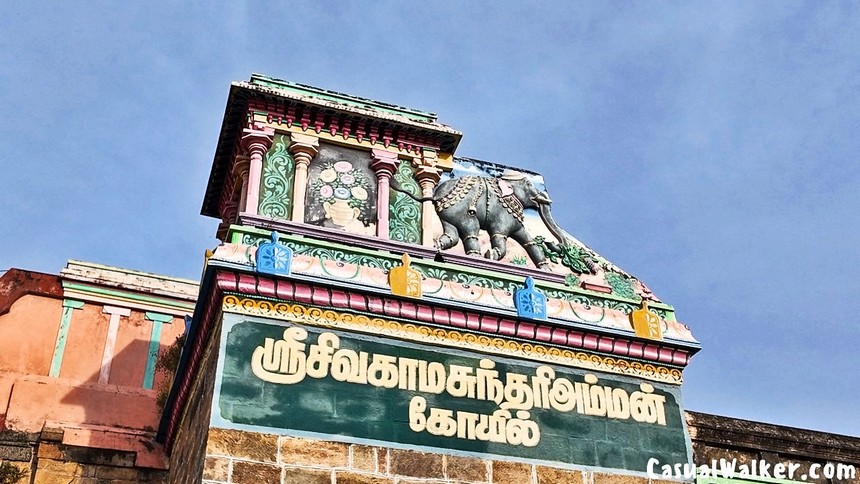
Beyond the gopurams, the Maha Mandapam (Mahā Maṇḍapam, the great pillared hall) of the Shivakami Amman shrine houses another treasure for art lovers, a ceiling adorned with murals from the Nayak period of the sixteenth and seventeenth centuries. These paintings, still vivid on either side of the ceiling, depict the legend of the temple along with scenes of daily life, including the elaborate clothing and jewellery worn by women of that era.
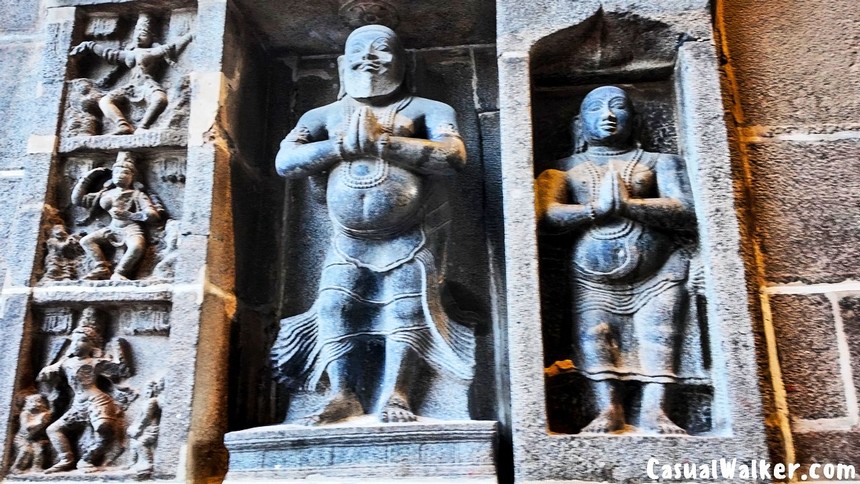
The temple’s walls elsewhere carry thousands of carved sculptures, including numerous figures of women captured mid dance in a variety of postures, many accompanied by inscriptions quoting Hindu literature, making them an invaluable reference for scholars of dance and epigraphy alike. Photography is not permitted inside the murals hall, which somehow made the experience of viewing them even more special for me, since I simply had to stand, look and remember.
Five Sacred Sabhas at Chidambaram Temple
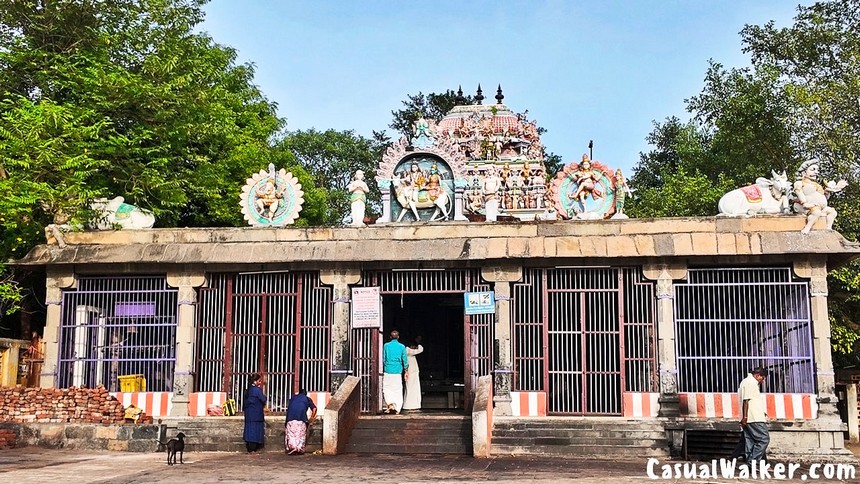
At the heart of the temple lie five sacred halls, or sabhas (Sabhā, assembly hall / cosmic stage), each carrying its own spiritual meaning, and each ruled over by Shiva in his aspect as Sabhanayagar, Lord of the Assembly Halls. Walking from one to the next in a single visit, I felt the geography of the temple almost tell a story on its own.
The Chit Sabha (Cit Sabhā, the “Hall of Consciousness,” sometimes rendered the “Hall of Wisdom”), also called Ponnambalam, is the golden roofed sanctum sanctorum (Garbhagṛha) housing the image of Lord Nataraja along with his consort (Śakti) Goddess Shivakami, enshrined to the left of the main sanctum. This hall is supported by pillars and beams said to symbolically represent everything from the human senses (Indriya) to the number of breaths a person takes in a day. The five pillars of the Chit Sabha represent the five senses, while the roof holds nine kalasas (Kalaśa, sacred pot finials) symbolising the nine gateways (Navadvāra) of the human body.
Twenty eight pillars are said to hold up the sanctum sanctorum, representing the twenty eight Agamas, or sacred scriptural methodologies, through which Lord Shiva is worshipped, while the sixty four letters inscribed above these pillars are said to signify the sixty four traditional arts, layering yet another dimension of meaning into this small but extraordinarily dense hall. The roof itself is covered with about 21,600 gold tiles, a number arrived at, tradition explains, by multiplying the fifteen breaths a person is said to take each minute by sixty minutes and twenty four hours, and said to represent the number of breaths a person takes daily; these tiles are fixed using 72,000 gold nails, representing the nadis (Nāḍī), the subtle energy channels, both visible and invisible, believed to exist within the human body.
Much like the human heart, the Nataraja idol within is also positioned slightly off centre, and the pathway leading to the sanctum is deliberately built to the side rather than straight ahead, mirroring the way blood flows through the chambers of the heart rather than in a straight line. Guarding the entrance to this innermost hall are the embossed images of the sages Patanjali and Vyagrapada, keeping eternal watch over the sanctum they once longed to see.
The Kanaka Sabha (Kanaka Sabhā, the “Golden Hall”) stands just in front of the Chit Sabha and is where the daily rituals are conducted; it is this gold plated hall, along with the Chit Sabha, that together are sometimes referred to together as Ponnambalam. It contains the Panchakshara (Pañcākṣara, the “five sacred syllables”) steps, five silver steps representing the five sacred syllables Na Ma Śi Vā Ya, which, according to the old Tamil text Unmai Vilakkam, correspond to the feet, lips, shoulder, face and head of the divine form.
The Nritta Sabha, also called the Nrithya Sabha (Nṛtta Sabhā, the “Hall of Dance”), supported by ornately carved pillars, is believed to be the place where Lord Shiva once engaged in a dance competition with Goddess Kali, ultimately winning through a posture that only he could perform. Every pillar here is intricately carved with tiny figures no larger than a finger, each caught mid dance, a detail that left me staring upward for far longer than I had planned to.
The Deva Sabha (Deva Sabhā, the “Hall of the Gods”) houses several important bronze idols and artistic frescoes, some of which date back to the Nayak period in the sixteenth and seventeenth centuries. It is also home to the Pancha Moorthis (Pañca Mūrti, the “five sacred forms”), the five deities comprising Lord Ganesha, Lord Somaskanda, Goddess Sivananda Nayaki, Lord Muruga and Chandikeswarar, the chief among Lord Shiva’s devotees, and it is here that the temple’s processional deities, the Utsava Murtis, are kept and worshipped between festivals.
The Raja Sabha (Rāja Sabhā, the “Royal Hall”), popularly known as the Thousand Pillar Hall, is considered symbolic of the Sahasrara chakra (Sahasrāra Cakra, the “thousand petaled” crown chakra in yogic philosophy) where the soul (Ātman) is said to unite with the divine (Brahman). This grand hall was historically used by ancient kings for coronation ceremonies and grand festival gatherings, held under the protection and blessing of Nataraja. This hall, along with the smaller Shatasila Sabha or Hundred Pillar Hall, remains closed to the general public, so I could only admire it from a distance, but it stands as an architectural wonder nonetheless.
Scientific Significance Of Thillai Nataraja Temple: Where Ancient Wisdom Meets Modern Science
While I walk through the gopurams of the Thillai Nataraja Temple, I am reminded that this is not merely a monument of stone, but a structure where science, spirituality, and scripture come together in perfect harmony:
Symbolism Behind Lord Nataraja’s Idol
Every part of Lord Nataraja’s form carries deep meaning. The demon Muyalaka, also known as Apasmara, crushed beneath his feet, represents arrogance and ignorance (Avidya) being subdued. The fire in one hand represents the destruction of evil, while the raised hand offers protection and blessing to all living beings. The ring of flames encircling him represents the entire cosmos, and the small drum, or Damaru, in his hand represents the primal rhythm from which all life originates. Even amidst this powerful dance, Lord Nataraja’s expression remains one of eternal stillness, a beautiful reminder that true balance exists even within constant motion.
Temple Standing On The Earth’s Magnetic Equator
After years of research, western scientists discovered something the ancient Tamil sages already knew, that the exact spot where Lord Nataraja’s big toe rests is believed to be the centre point of the world’s magnetic equator. The temple also sits close to eleven degrees latitude, a location where the centrifugal pull is said to move upward toward the sky (Akasha) rather than downward. Spiritually, this is seen as a place where devotees can free themselves from earthly magnetic influences and channel their inner energy upward, aiding in spiritual awakening (Atma Jagriti). Standing there myself, even without fully understanding the science behind it, I could feel a stillness that is hard to put into words.
Five Elements & The Human Senses
Chidambaram is one of the five Pancha Bhoota Sthalams, sacred temples representing the five great elements. Here, Lord Shiva is worshipped in the form of sky (Akasha). At Srikalahasti, he is worshipped as wind (Vayu), and at Kanchi Ekambareswarar Temple, as earth (Prithvi). Remarkably, these three temples are said to align along the same longitude of 79 degrees 41 minutes. Devotees believe these were carefully chosen as power centres, meant to connect our human senses (Indriyas) to the fundamental elements of creation and guide our energies toward higher consciousness (Chit).
Ancient Wisdom Built Into Stone
Tradition holds that the temple’s architecture predates the Chola period and was first conceived by the great sage Patanjali, the revered master of Yoga, sometime around 200 BC. The golden roof of the sanctum, where devotees still sit in quiet meditation (Dhyana), is layered with 21,600 gold sheets, said to represent the number of breaths (Prana) a human being takes in a single day. These sheets are held together with exactly 72,000 gold nails, symbolising the same number of energy channels (Nadis) believed to run through the human body. Even the sanctum itself, known as the Ponnambalam, is positioned slightly to the left, mirroring the human heart. It is a beautiful reminder that this temple was designed to reflect our own body, our own breath, and our own inner cosmos.
Pillars That Hold The Scriptures
The golden roof rests upon nine kalasas, said to represent the nine forms of divine energy (Shakti). The four pillars supporting the Kanaka Sabha are believed to represent the four Vedas, the six pillars of the Artha Mandapam represent the six schools of sacred knowledge (Shastras), and the eighteen pillars of the adjoining mandapam represent the eighteen Puranas. Walking beneath these pillars, one truly feels like they are walking through the scriptures themselves, as though the entire temple were built to remind us that true knowledge (Gyan) is the foundation upon which everything else stands.
Bejewelled Nataraja & The Cosmic Dance
One of the most striking features of this temple is the bejewelled image of Lord Nataraja, portrayed as the Lord of Dance (Bharatanatyam). This is one of the rare temples where Lord Shiva is worshipped not in the traditional formless Lingam, but in a fully realised human form (Murthi). This cosmic dance, or Ananda Tandava, is said to symbolise the eternal motion of the universe, sustained endlessly by Lord Shiva.
Three Forms Of Lord Shiva
Within the golden sanctum, Lord Shiva is believed to reveal himself in three distinct forms. The tangible form, known as Sakala Thirumeni, is the fully realised idol of Lord Nataraja. The half form, known as Sakala Nishkala Thirumeni, is the crystal Lingam of Lord Chandramouleeswarar. And the formless state, known as Nishkala Thirumeni, is represented by nothing but empty space, the great mystery known as Chidambara Rahasyam.
Ananda Tandava, The Dance At The Heart Of The Universe
This temple is believed to sit at what the scriptures call the Lotus Heart of the Universe, or Virat Hridaya Padma Sthalam. It is here, at this precise spiritual centre, that Lord Shiva is believed to perform his celestial dance, sustaining and governing all of creation.
Sivaganga Theertham: The Sacred Temple Tank, Waters From An Unseen Source
Just opposite the Shivakami Amman Temple lies the Shivaganga Tank, fed by an underground water source whose origin remains untraceable to this day. Devotees believe this water flows from an invisible stream connected directly to the celestial Ganga, descending from the sky itself.
The sacred temple tank (kulam) inside the Thillai Nataraja Temple also referred to as Potramarai Kulam or the golden lotus tank (Ponthamarai). Located within the sprawling forty acre complex, this large holy water reservoir (theertha kundam) sits opposite the shrines and plays an important role in temple rituals and the annual float festival, Theppam.
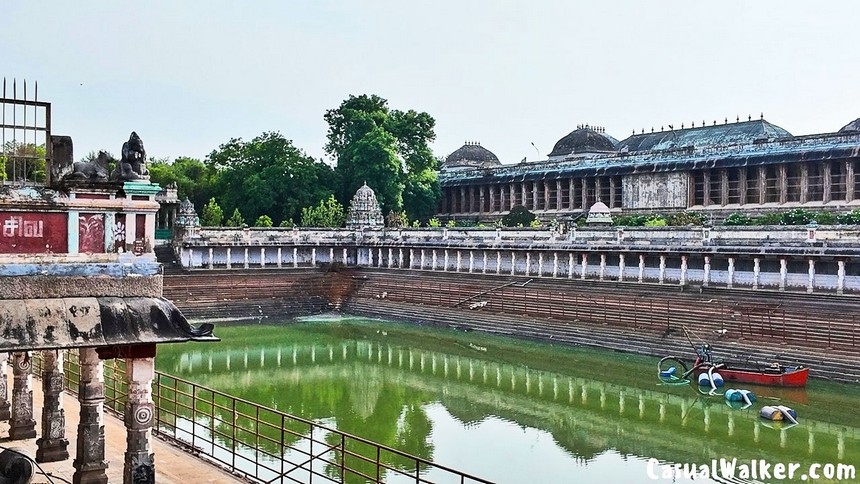
Holy dip (snana) in these Sivaganga Theertham once cured the chronic skin disease and illness afflicting the ancient king Simhavarman, also identified with the sage Vyagrapada, restoring him to health through the tank’s purifying grace (kripa). The Sivaganga Theertham holds great ritual significance and is used for sacred ablutions and ceremonial grand processions during major festivals such as Arudra Darshan and Aani Thirumanjanam, when the deity is brought to its banks in celebration.
Great Cholas and Chidambaram: A Dynasty’s Devotion
During the tenth century, the great devotional hymns of the early Shaiva saints, Sambandar, Appar, and Sundarar, had drifted out of active memory. Rajaraja Chola I reportedly heard only fragments of these verses recited in his own court, and it troubled him enough that he set out to recover the rest. He turned to a temple priest named Nambiyandar Nambi for help, and tradition holds that divine intervention led Nambi to a chamber in the temple’s second precinct, where he found the hymns preserved on palm-leaf manuscripts that had been half eaten away by white ants, a chamber a priest pointed out to me somewhere near the second precinct during my walk through the corridors. The temple’s own priestly community, the Dikshitars, initially resisted the project, but Rajaraja pushed it through by having images of the saint-poets ceremonially carried through the streets of Chidambaram. It’s worth noting the recovery was partial rather than total, later accounts suggest only around a tenth of the original hymn corpus survived to be salvaged, but the achievement was significant enough that Rajaraja earned the title Tirumurai Kanda Cholan, “the one who saved the Tirumurai.”
The scholar who did the actual compiling, Nambiyandar Nambi, organized what survived into the structure Tamil Shaivism still uses today: the hymns of Sambandar, Appar, and Sundarar became the first seven books, Manikkavasagar’s Tirukovayar and Tiruvacakam formed the eighth, and Tirumular’s Tirumandiram became the tenth, with later additions eventually rounding the canon out to twelve volumes, the Tirumurai as it stands now.
Chidambaram Temple Significance
The origins of the Chidambaram Temple are steeped in antiquity, with historical evidence suggesting that a Shiva shrine existed at this site even before the seventh century, when the town was known as Thillai. Literary tradition pushes this antiquity further still: works such as the Sanskrit Cidambara Mahatmya and the Tamil Koyil Puranam trace the sanctity of the shrine back to the era of the sages Patanjali and Vyagrapada, placed by some around the second century, while the Tamil text Tirumandiram pushes the temple’s spiritual origins back even earlier, to around the 5th century.
Epigraphical evidence also shows that Chidambaram once sprawled across a considerably larger area than it does today. A twelfth-century inscription refers to the town as Perumpatrapuliyur-Taniyur, describing it as a large, self-governing local unit comprising 23 hamlets within a radius of eight miles, with the temple complex itself occupying close to 40 acres, much as it does now, a scale I only came to appreciate after spending a full day walking it myself.
The temple owes much of its grandeur to the Chola dynasty, since the Cholas considered Lord Nataraja their family deity (Kula Devata) and contributed generously to its construction between the tenth and thirteenth centuries. Aditya I, who ruled from 871 to 907 AD, is credited with gilding the interior of the Kanaka Sabha, while his successor Parantaka I, ruling from 901 to 953 AD, used the wealth from his military conquests to further enrich the shrine and is remembered for establishing its famous golden roof, the Ponnambalam. From the reign of Kulottunga I (1070 to 1120 AD) onward, the history of the Cholas and the history of Chidambaram became deeply entwined, with each dynastic triumph typically marked by fresh construction, renovation or endowment at the temple. Inscriptions from Kanchipuram record that Kulottunga I built a palace at Chidambaram, most likely to personally oversee the extensive renovations he commissioned, and one inscription even notes that he installed a stone brought all the way from Cambodia in the Edirambalam, apparently to formalise a relationship with the Cambodian king.
Later rulers such as Rajaraja Chola I, Kundavai II, the daughter of Rajaraja Chola, and Vikrama Chola continued this tradition of offerings and structural additions, and historical records also mention the chieftain Aragalur Udaya Iraratevan Ponparappinan, known as Vanakovaraiyan, who rebuilt portions of the temple around 1213 CE and is also credited with building the temple at Tiruvannamalai.
An inscription dated to 1428 AD found within the temple attests to the continuous patronage of the Vijayanagara kings, among whom Krishnadevaraya is remembered for constructing the temple’s north gopuram in 1560, while another Vijayanagara ruler, Achyuta Raya, had earlier granted 18 villages toward the completion of that same gopuram, finished in 1529. The Nayakas of Thanjavur also made generous endowments, one inscription recording a village gifted to the temple by Achuttapa Nayakar on 22nd January 1567. This steady stream of royal generosity continued well into the seventeenth century, even as the day-to-day administration of the shrine remained firmly, and unquestionably, in the hands of the Dikshitars throughout this entire span of centuries.
Chettiyars of Nattukottai
During the 19th century that the Chettiyars of Nattukottai in southern Tamil Nadu, stepped forward to undertake the temple’s renovation. Much of the temple’s present construction and restored walls exist today only because of the financial generosity of the Chettiyars and other members of this newly prosperous merchant class in the late nineteenth and early twentieth centuries. Beyond funding repairs, they built a school in Chidambaram, provided for the ongoing needs of religious services, maintained the temple’s flower gardens, and, as pilgrimage to the shrine grew more popular, constructed accommodation facilities for visiting devotees, one of which I ended up staying near myself. Among these benefactors, the name of Annamalai Chettiyar, founder of Annamalai University, remains especially well remembered.
Maharaja of Pudukkottai, and the Sethupathy rulers
Maharaja of Pudukkottai, and the Sethupathy rulers also made their own contributions in their respective eras, and to this day, the deity of Lord Nataraja is said to be adorned with an emerald jewel gifted by the Sethupathy family, a small but touching reminder of how many hands and hearts have shaped this shrine across generations. Today, the temple continues to be managed by the Dikshitars (Dīkṣitar, one who has undergone sacred initiation, Dīkṣā), the hereditary priestly community that has served it since ancient times.
Dikshitars, Guardians Of Chidambaram Temple
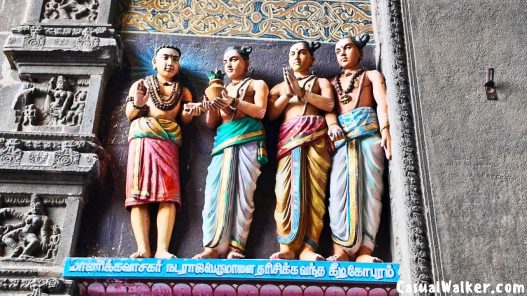
The priests of Chidambaram Temple, known as Dikshitars (Dīkṣitar), are unlike priestly communities found in most other Hindu temples, and I found myself in quiet conversation with one of them for nearly half an hour after the morning rituals. Legend holds that sage Patanjali brought them from Mount Kailas specifically to conduct the rituals of Lord Nataraja. Originally numbering around three thousand, they were known as Thillai Moovayiram, though today only a few hundred families continue this ancient tradition.
Dikshitars follow Vedic (Vaidika) rituals rather than the Agamic (Āgama) traditions followed elsewhere, and every married male member of the community takes turns performing daily rituals (Nitya Pūjā) and priestly duties, making this one of the oldest continually functioning collective priesthoods in the world, and one that many describe as perhaps the oldest functioning democracy anywhere on earth, so consistently has its rotating, assembly based governance endured. Both men and women among the Dikshitars wear their hair tied in a distinctive side bun rather than the usual back-tied style, a practice rooted in the belief that male and female energies (Śiva-Śakti) are inseparable, with the left side of the body considered representative of the feminine (Ardhanārīśvara). The community, known as Podu Dikshithars, is governed almost democratically, with a general assembly meeting periodically and a rotating team managing daily temple affairs, a system that has quietly endured for centuries.
Lord Govindaraja Perumal Shrine, Thiruchitrakoodam: A Divya Desam Within Chidambaram Temple
Within the vast complex of the Chidambaram Temple lies a shrine that makes this site truly unique, the sanctum of Lord Govindaraja Perumal, a form of Lord Vishnu, located in the southwest corner of the temple, and one of the last stops on my own visit. This shrine is also known by its ancient name Thiruchitrakoodam and is counted among the sacred 108 Divya Desams (Divya Deśam, the “divine abodes”), the holiest abodes of Lord Vishnu that were sung about and sanctified by the Alwars (Āḻvār, the poet-saints of the Vaishnava tradition), the poet-saints who lived between the seventh and ninth centuries.
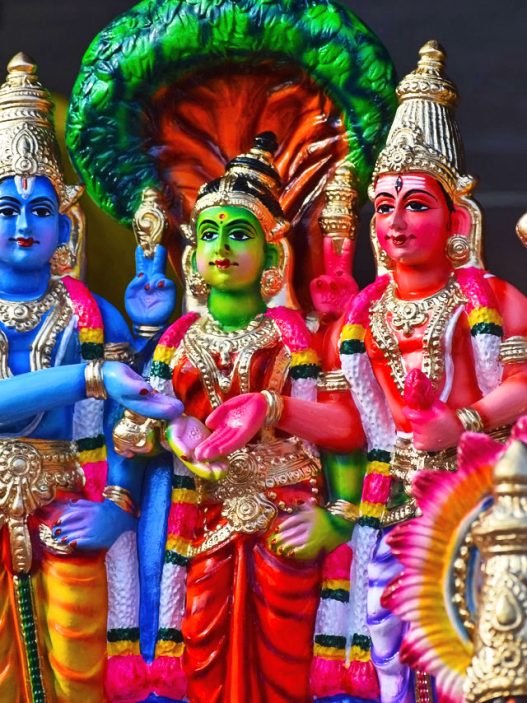
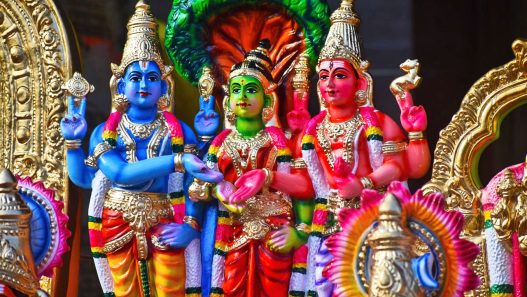
Both Kulasekara Alwar and Tirumangai Alwar composed verses in praise of Thiruchitrakoodam, and their hymns even record that the Chidambaram Dikshitars, the very same Brahmin priests who conduct worship for Lord Nataraja, once performed the Vedic rituals for Lord Govindaraja as well, following proper tradition (Sampradāya). Lord Govindaraja is worshipped here along with his consort Goddess Pundareegavalli Thaayar, and the presence of this Vaishnavite shrine within a temple otherwise devoted to Lord Shiva makes Chidambaram one of the rare places in India where Shaivism and Vaishnavism coexist so harmoniously under a single roof.
Deities & Shrines Within The Chidambaram Temple
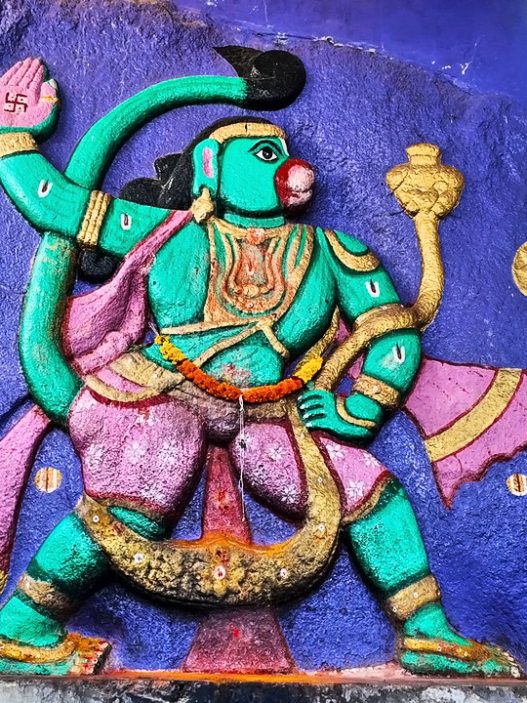
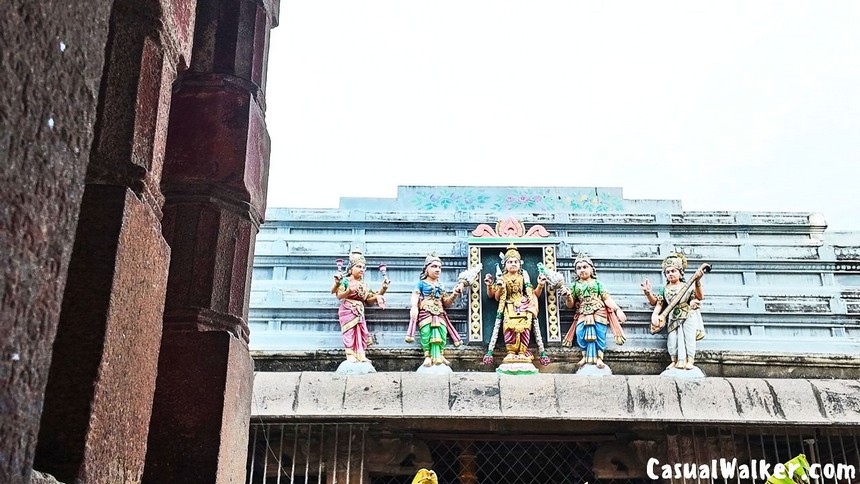
Beyond the main sanctum, the temple complex houses numerous shrines dedicated to various deities, and I found myself losing track of time simply wandering between them. These include Lord Ganesha in the forms of Mukkuruni Vinayakar and Karpaka Vinayakar, Lord Muruga as Subrahmanyar, Goddess Shivakami Amman, and shrines for the sixty-three Nayanmars (Nāyanmār, the sixty-three canonised Tamil Saivite saints), the revered Shaivite saints.
Also worth seeking out along the inner corridors are the Purushamirugam sculptures, curious figures with human faces and animal bodies, along with the Somasundarar Navalingam, a set of nine lingams associated with the nine planets or Navagraha (Navagraha, the nine celestial bodies of Vedic astrology). The temple tank, known as Shivaganga (Śiva Gaṅgā, a sacred temple tank), adds to the serene atmosphere of the complex, and several smaller water bodies surround the temple, each carrying its own local legend and spiritual importance. Among these are the Paramanandha Koobham, a well used for temple rituals, the Vyagrapatha Theertham (Tīrtha, sacred water) and Anantha Theertham to the west, the Brahma Theertham to the northwest, and the Siva Piriyai to the north, each adding to the sacred geography that surrounds this remarkable shrine.
A short distance away stands the Anantheeswarar Temple, a lesser known shrine that carries its own quiet charm, and one I nearly missed had a local not pointed me toward it. Though smaller and somewhat weathered compared to the grandeur of the main temple, it holds the unique shrine of Raja Chandikesar, found nowhere else, and its walls, built of limestone and brick rather than granite, give it a distinctly different character worth exploring for those with extra time in Chidambaram.
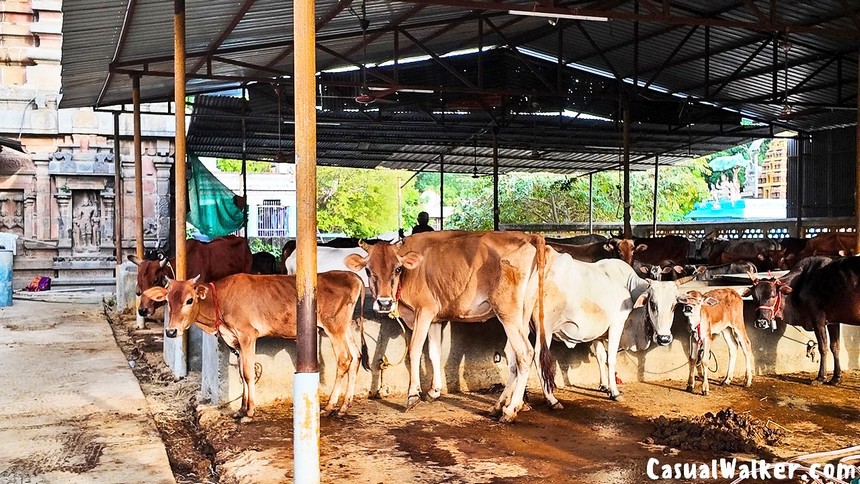
Goshala at the Thillai Nataraja Temple
Goshala at the Thillai Nataraja Temple is a traditional cow shelter that reflects the temple’s deep-rooted spiritual and cultural heritage, and I stopped by briefly on my way out. Revered as sacred in Hinduism, the cows are cared for with compassion and provide fresh milk, curd, butter, and ghee for daily worship, abhishekams, and other religious ceremonies performed in the temple.
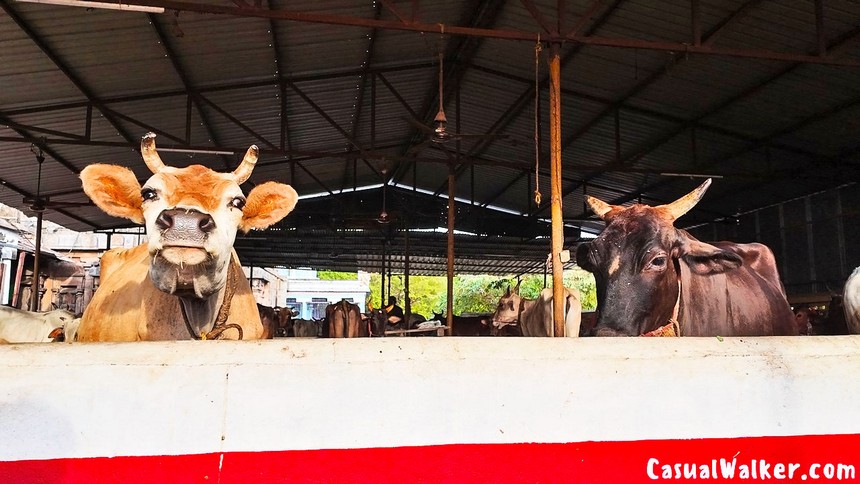
More than a place of shelter, the Goshala embodies the Hindu principles of Ahiṃsā (non-violence), compassion, and reverence for all living beings. It supports the temple’s self-sustaining traditions by ensuring the well-being of the cows while preserving an age-old practice that seamlessly blends spirituality, sustainable living, and cultural heritage.
Daily Rituals And Worship
The rhythm of worship (Upāsanā) at Chidambaram follows a beautiful daily cycle, and I made sure to time part of my visit around it. The day begins around seven in the morning when Lord Shiva’s sandals are brought in a small procession from the inner chamber to the sanctum. Worship, or pooja (Pūjā), is performed six times through the day, during which the crystal lingam is anointed (Abhiṣekam) with milk, honey, sandal paste and other sacred substances, followed by food offerings (Naivedya) and the chanting of Vedic verses (Veda Mantra) and Tamil hymns known as the Panchapuranam (Pañcapurāṇam, the “five sacred hymn collections”).
Before the second pooja of the day, a ruby studded Nataraja idol is also anointed, adding to the richness of the ritual. The final pooja of the night, known as Arthajaama Pooja (Ardhajāma Pūjā, the “midnight worship”), is considered especially powerful, as it is believed that all divine energies (Śakti) of the universe withdraw into Lord Shiva at this hour. The day closes around ten at night when the sandals are carried back in procession, allowing the Lord to rest until dawn.
Festivals Celebrated At Chidambaram Temple
The temple comes alive throughout the year with festivals (Utsava) that draw enormous crowds of devotees. The Aani Tirumanjanam, held in June and July, features a grand ritual bath (Abhiṣekam) for Lord Nataraja along with a spectacular chariot (Ratha) procession, considered among the most beautiful temple cars in all of Tamil Nadu, drawn by thousands of devotees with great devotion. The Margazhi Tiruvadhirai, celebrated in December and January, is considered equally significant and marks the day the divine dance is believed to have first been performed, an event also referred to as Arudra Darshan (Ārdrā Darśan, “the sighting of Ardra”), a word that beautifully captures the idea of stillness rather than mere movement. Alongside these, the Natyanjali Festival (Nṛtyāñjali, “an offering of dance”), held over five days during Mahashivaratri in February or March, brings together classical dancers from across India who perform Bharatanatyam, Kuchipudi and Kathak as a living offering (Arpaṇa) to Lord Nataraja, organised in association with the Tamil Nadu Tourism Department, reaffirming the eternal bond between Indian classical dance and this sacred shrine.
Natyanjali Festival at Chidambaram Temple
Natyanjali is an annual classical dance festival held at the Thillai Nataraja Temple in Chidambaram, timed around Maha Shivaratri in the Tamil month of Maasi, usually falling in February or March, and I count myself lucky to have caught part of it during my own trip. The word Natya means dance and Anjali means offering, so the festival is essentially a dance offering to God. It began around 1981 as a fairly modest event and is now jointly organized by the Department of Tourism of Tamil Nadu along with the Natyanjali Trust.
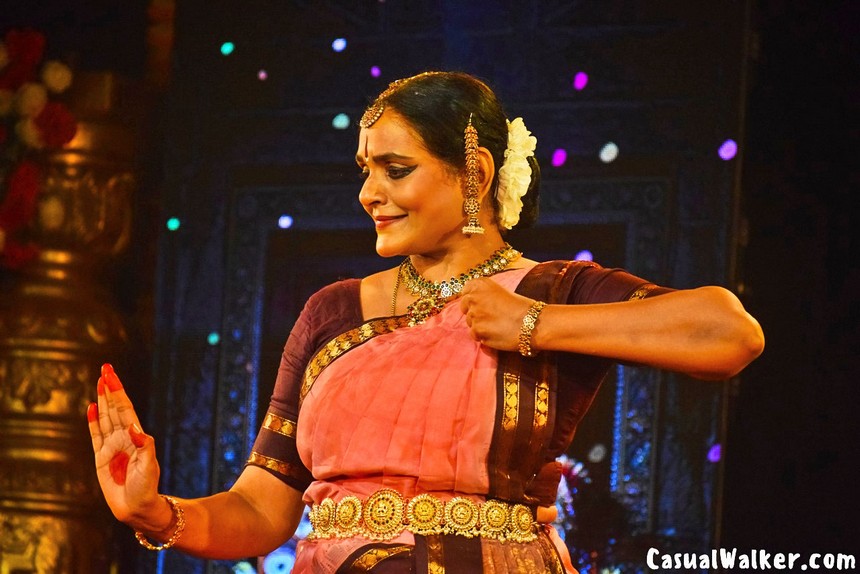
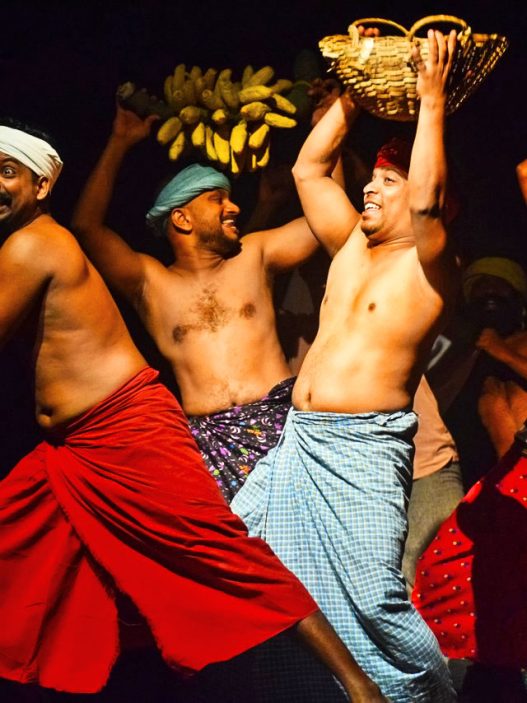
Over five days, some of India’s most accomplished classical dancers, alongside promising young artists, gather in the temple’s outer courtyards to perform. Nearly every major classical form of Indian dance takes part, including Bharatanatyam, Kuchipudi, Mohiniyattam, Kathak, Odissi, Kathakali, and Chhau, all under one roof, and watching several forms performed back to back in that setting is something I will not soon forget.
The festival’s deeper significance lies in its purely devotional character. Unlike competitive or purely artistic dance festivals, Natyanjali is performed entirely as a sacred offering to Lord Nataraja rather than for applause or recognition. This idea is rooted directly in the temple’s own identity, since the temple’s eastern tower is carved with 108 poses of Bharatanatyam representing Lord Nataraja’s Ananda Tandava, the cosmic dance that portrays creation, preservation, destruction, concealment, and grace.
Lord Nataraja At CERN Research Facility In Switzerland
A 2m tall statue of Lord Nataraja stands at the CERN research facility in Switzerland, home to some of the world’s most advanced physics experiments, placed there because scientists recognised in this cosmic dance a fitting symbol for the eternal dance of creation and destruction (Sṛṣṭi-Saṃhāra) that governs the universe at the smallest and largest scales alike, a connection I find myself thinking about often since returning from Chidambaram.
Chidambaram Temple is a living philosophy (Darśana) carved in stone, where every pillar, every ritual and every festival carries a deeper meaning about consciousness (Cit), creation (Sṛṣṭi) and liberation (Mokṣa). Though the Chidambaram Nataraja Temple remains among the most intensively studied temples in South India, a significant part of its history, its inscriptions, and its symbolism still remains to be fully understood, and even after my own visit, I know I only scratched the surface, leaving even the most devoted scholars and pilgrims with more to discover on each return visit.

Travel Tips for Visiting Chidambaram Temple / Thillai Nataraja Temple in Chidambaram
Thillai Nataraja Temple Address: Thillai Nataraja Temple, East Car Street, Chidambaram – 608001, Cuddalore
Conact No: +91 94436 35280 / +91 97914 94280 / 04144-222717
Temple Timings:
Morning Darshan: 6:00 AM – 12:00 PM
Evening Darshan: 5:00 PM – 10:00 PM
The best time to visit is October to March, since summers (April – June) get hot and humid; if you can, time your trip around the Arudra Darshanam festival in December – January or the Natyanjali Dance Festival in February – March for a especially vibrant experience, though these periods also bring bigger crowds.
How To Reach Chidambaram Temple / Thillai Nataraja Temple in Chidambaram
The nearest town to the temple is Villupuram, with Adhi Thiruvarangam situated between Thiruvannamalai and Manalurpet, and also accessible between Thirukoilur and Manalurpet. The full postal address is Sri Adhi Thiruvarangam Perumal Temple, Adhi Thiruvarangam 605 802, Kallakurichi District, Tamil Nadu.
By Road/Car: Chidambaram sits on the East Coast Road (ECR) between Cuddalore and Sirkazhi, making it well connected to major Tamil Nadu cities by well-maintained highways. By road you can reach it from Chennai in about 4 hours, Pondicherry in 1–2 hours, and Mayavaram/Kumbakonam in about an hour, while Thanjavur and Trichy are around 2 hours away. If you’re driving from Chennai, the ECR route via Pondicherry is scenic and generally in good condition, and there are plenty of self-drive and hired-taxi options from nearby cities and airports.
By Bus: Chidambaram has excellent bus connectivity, with its own bus stand roughly 2 km from the temple. There are state-run and private buses in various comfort levels, regular, AC seater, and sleeper, from Chennai, Madurai, Bengaluru, Nagercoil, Velankanni, Cuddalore, Tiruchirapalli, Mumbai, and Hyderabad, among others, plus frequent services from Pondicherry. Buses are usually the cheapest and most frequent option for regional travel.
By Train: Chidambaram has its own railway station right in town, so the train is often considered the easiest way to arrive. The town sits on the Southern Railway’s Madras to Trichy main line, connecting it to Trichy, Chennai, Madurai, Rameshwaram, Bangalore, Villupuram, Mayiladuturai, Thanjavur, and Tirupati. If a direct train isn’t available, Mayiladuthurai (about 48 km) and Villupuram (about 80 km) railway stations are useful alternatives with onward road connections. From the station, autos and cabs to the temple (about 1.5–2 km away) are readily available.
By Flight: There’s no airport in Chidambaram itself, so you’ll fly into a nearby city and continue by road. Trichy International Airport is the nearest, roughly 150–160 km away, about a 3-hour drive, and it has good domestic and some international connectivity. Puducherry airport is closer at about 66 km, though it has fewer flight options (mainly to Coimbatore, Hyderabad, and Bengaluru). Chennai’s airport, around 210–215 km away, offers the widest range of flights if you don’t mind a longer onward drive or train/bus connection.

Thanks for exploring this Casual Walker photo guide — India’s most visual cultural travel guide and a curious discovery journal finding authentic photo stories, guides, and tips across travel, culture, arts, temples, heritage, and food.
- Keep exploring: Browse 650+ Travel & Culture Photo Guides
- We’d love to hear your feedback, stories, corrections, and updates — Email us.
- Follow our photo walks on Instagram: @hicasualwalker