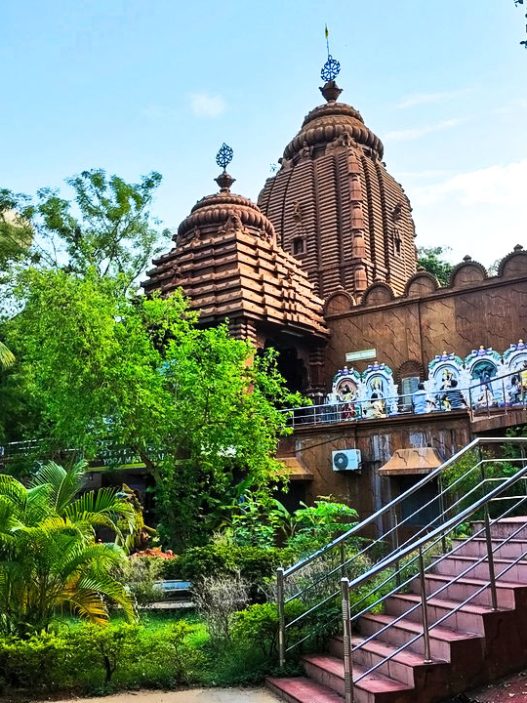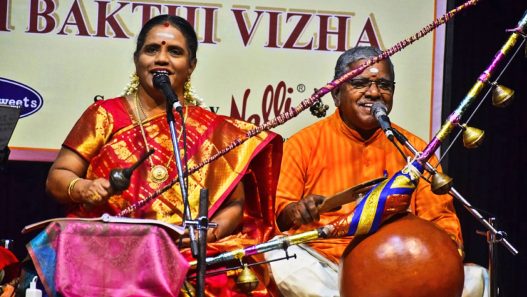


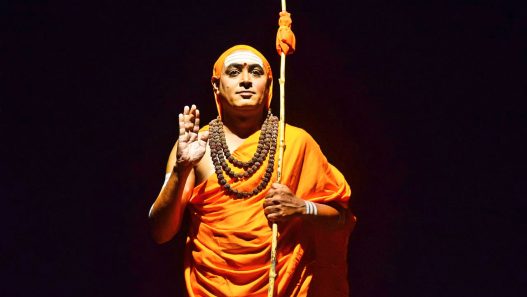



Karnataka Spiritual Tour from Chennai to Mangalore | Udupi Sri Krishna Temple, Dharmasthala Sri Manjunatha Swamy Temple & Murudeshwar Temple with World’s Second Tallest Shiva Statue – Kollur Mookambika Temple, Sringeri Sharada Peetham & Pajaka Kshetra Sri Madhvacharya Birthplace | Complete 2-Day Weekend Pilgrimage Itinerary & Travel Guide | How to Reach from Chennai, Temple History, Dress Code, Timings, Annadana & Travel Tips | Coastal Karnataka & Western Ghats | Karnataka Tourism (Updated)
– 6 sacred temples of coastal karnataka & western ghats — pilgrim guide to mangaluru
The coastal region of Karnataka, particularly around Mangalore (Mangaluru), is the land blessed by Lord Parashurama, where the Western Ghats meet the Arabian Sea, creating a landscape of breathtaking beauty and profound spiritual energy. From the Dvaita philosophy centers of Udupi to the Advaita seat of Sringeri, from the Shakti peetha of Kollur to the dharma abode of Dharmasthala, this region encapsulates the complete spectrum of Hindu spiritual traditions.
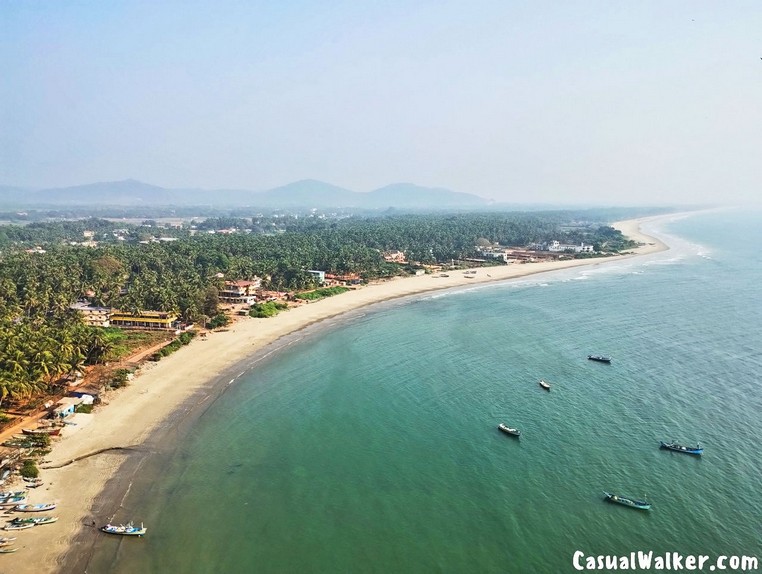
As our train, the West Coast Express, gently rolled into Mangaluru Central (MAQ) station in the early morning, after an overnight journey from MGR Chennai Central (MAS), I felt an immediate shift in the energy around me. The air was different here carrying the salty freshness of the Arabian Sea mingled with the earthy fragrance of coconut groves and the sweet aroma of temple incense that seemed to permeate this sacred land. 
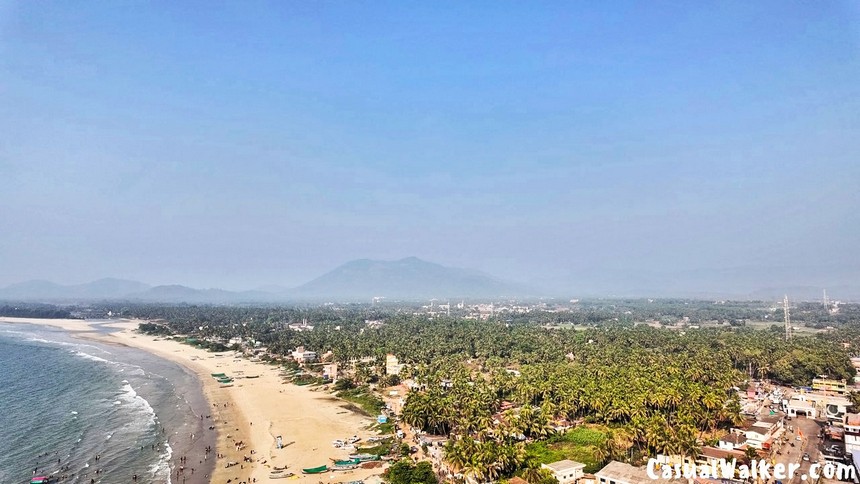
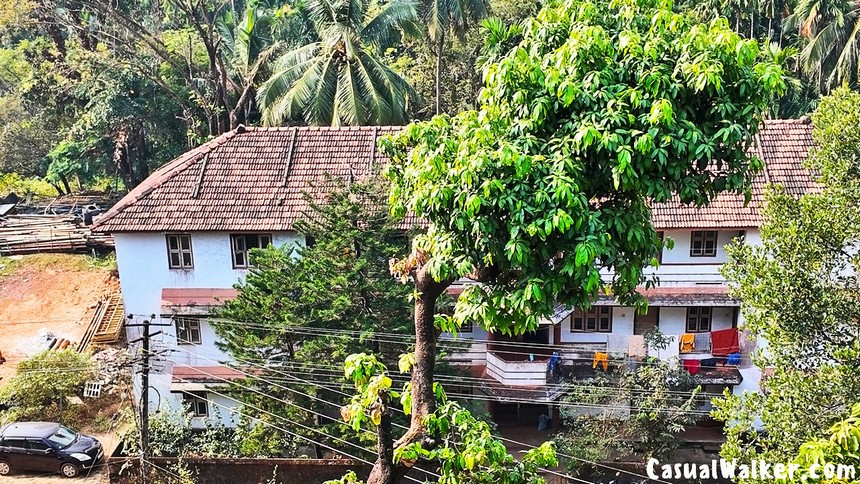
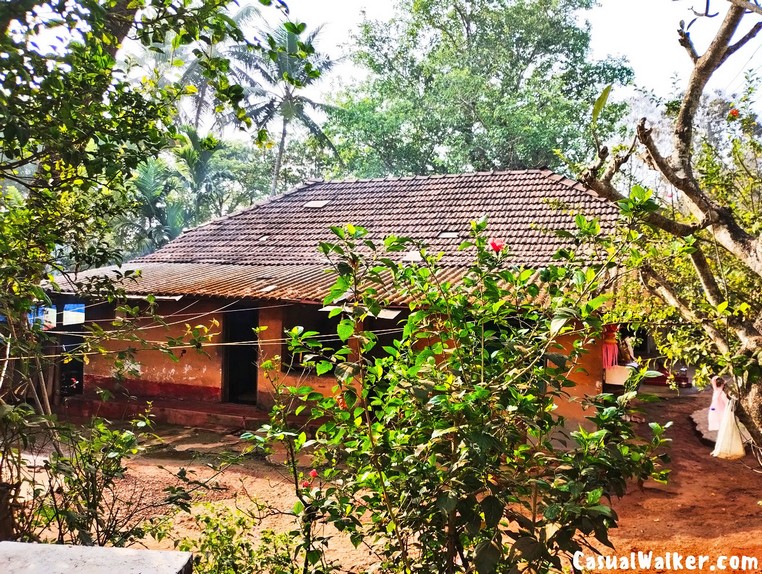
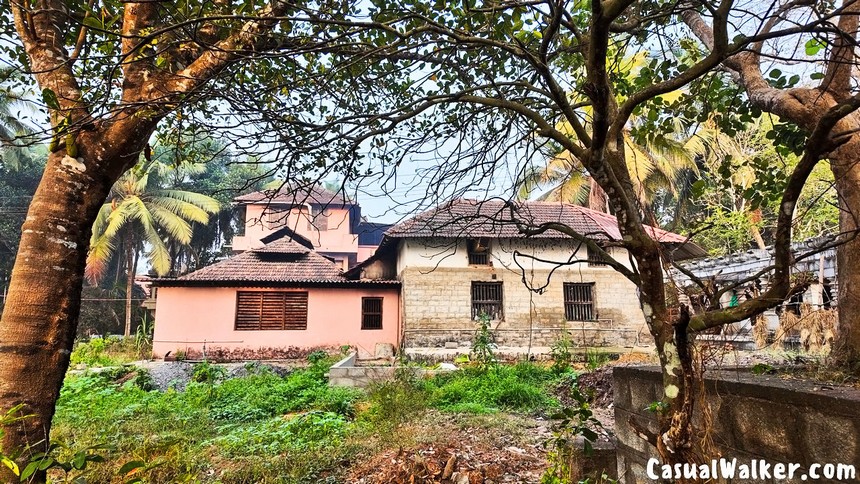
Mangalore, or Mangaluru as it’s known locally, is much more than just a coastal city in Karnataka and is the spiritual heart of the Tulu region, the moment I step out of the railway station, I was greeted by a landscape that seems frozen in time rows of vintage tile-roofed houses reminiscent of R.K. Narayan’s beloved Malgudi Days, their red-tiled roofs peeking through the dense canopy of towering coconut palms that sway gracefully in the coastal breeze.
The Tulu Nadu region, the land created by Lord Parashurama, the warrior sage, who is believed to have reclaimed this territory from the sea by throwing his axe. Mangalore serves as the perfect base for exploring the Seven Mukti Sthalas – the Seven Abodes of Salvation of Karnataka Udupi, Kollur, Subrahmanya, Kumbasi, Kodeshwara, Sankaranarayana, and Gokarna.
My two-day pilgrimage through these sacred sites is a transformative journey through centuries of spiritual devotion, philosophy, and divine grace. As I began my darshan yatra from Mangalore, I carried with me the excitement of a true devotee and the curiosity of a spiritual seeker. Little did I know that the next 48 hours would be a transforming experience, filling my heart with divine bliss and my soul with eternal memories.

Day 1: The Path of Dharma and Wisdom
Dharmasthala Sri Manjunatha Swamy Temple : A Sacred Kshetra Where Dharma Reigns Supreme
In the early morning our first destination was Dharmasthala, located approximately 75 kilometers from Mangalore. The very name “Dharmasthala” means “Abode of Dharma,” and this temple stands as a unique beacon of religious harmony in India a Shiva temple managed by a Jain family for over 800 years.
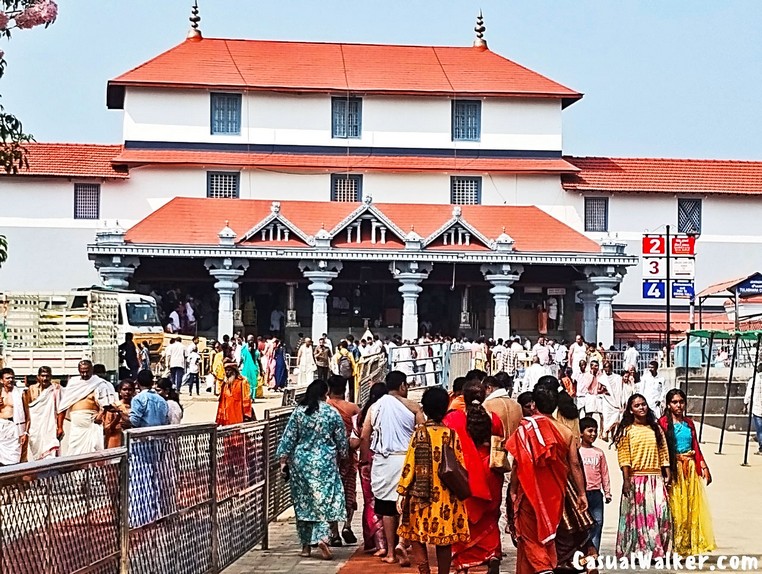
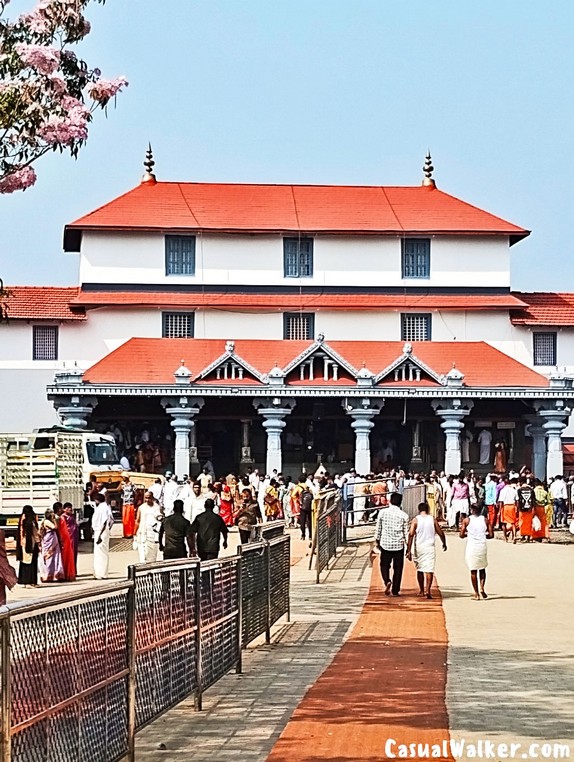
The temple is dedicated to Lord Manjunatha, a form of Lord Shiva. The presiding deity is Lord Manjunatha (Shiva), flanked by Ammenavaru (Goddess Shakti). What makes this temple truly unique is the presence of four guardian deities the Dharma Daivas: Kalarahu, Kalarkayi, Kumaraswamy, and Kanyakumari who are believed to protect the temple and its devotees.
Dharmasthala is one of the most powerful temples for seeking divine justice, resolving legal matters, and finding solutions to life’s complex problems. It’s also one of the Seven Mukti Sthalas of Karnataka, making it essential for spiritual liberation.
The Dharmasthala temple management is under the care of the Heggade family, who, despite being Jains, have served as the hereditary administrators (Dharmadhikaris) of this Shaivite shrine for 21 generations. The current Dharmadhikari, Dr. Veerendra Heggade, is revered across Karnataka for his exemplary service, social reforms, and dedication to upholding dharma.
History of Dharmasthala Temple
The history of Dharmasthala is truly extraordinary. In the 16th century, Dharmasthala was a village called Kuduma in Mallarmadi, South Kanara. Here lived Jain Chieftain Birmanna Pergade and his wife Ammu Ballalthi in a house called Nelyadi Beedu. The Pergade family was renowned for their generosity and hospitality to all visitors, regardless of caste or creed.
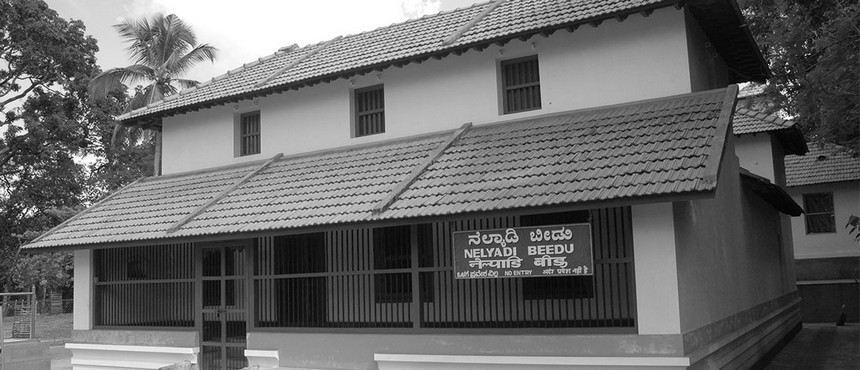
According to legend, guardian angels of Dharma took human form and arrived seeking shelter. The Pergade couple welcomed them with utmost respect. Pleased by their devotion, the Dharma Daivas appeared in Shri Birmanna Pergade’s dreams, instructing him to vacate his home for their worship and dedicate his life to propagating Dharma. Without hesitation, he built another dwelling and transformed Nelyadi Beedu into a sacred shrine a tradition continuing to this day.
The Dharma Daivas later commanded Pergade to build separate shrines for the four guardian deities: Kalarahu, Kalarkai, Kumaraswamy, and Kanyakumari. Following these instructions, Shri Pergade constructed the shrines and installated a Shivlinga alongside the Daivas. The Dharma Daivas then sent their vassal Annappa Swamy to procure the idol of Lord Manjunatheshwara from Kadri, near Mangalore, and the magnificent Shree Manjunatha Swamy Temple was built around it.
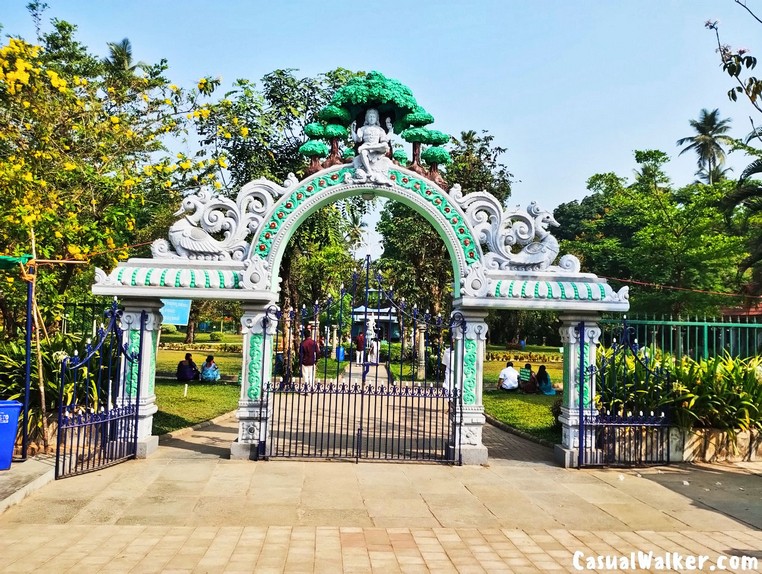
Dharmasthala has become synonymous with justice, righteousness, and divine protection. Thousands of devotees come here seeking solutions to their legal issues, family disputes, and life problems, believing that Lord Manjunatha and the Dharma Daivas will guide them toward just resolutions.
Darshan Experience: A Divine Encounter
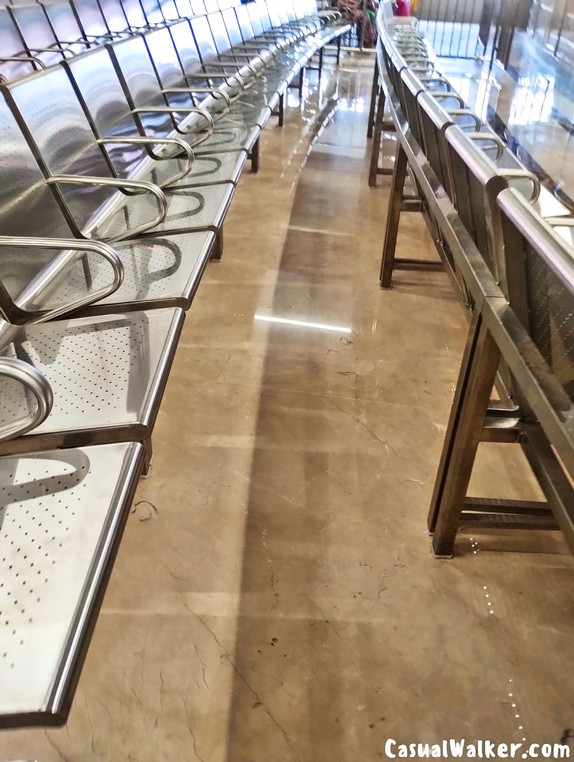
As we approached the temple complex, I was immediately struck by its well-organized and meticulously maintained premises. The temple authorities have created a very comfortable waiting hall with adequate seating arrangements, which is a blessing for elderly devotees and families with children.
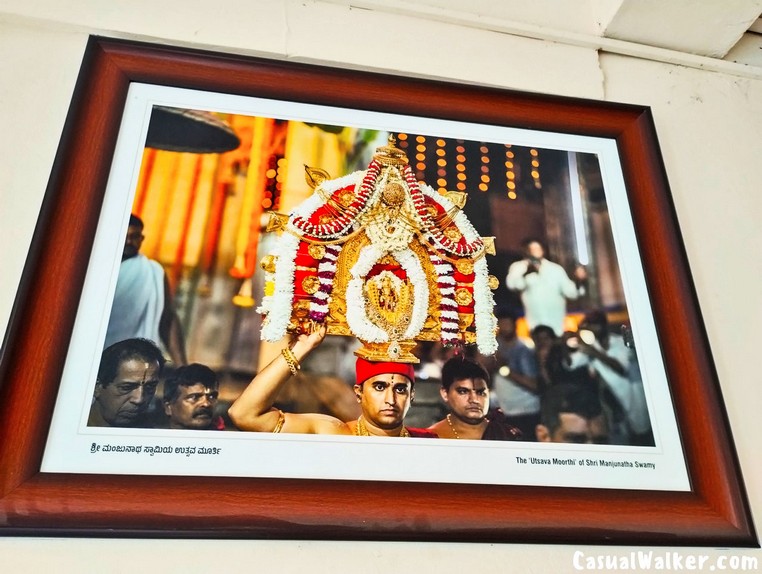
The darshan was absolutely divine! Standing before Lord Manjunatha, I felt an overwhelming sense of peace and protection. The deity’s presence is powerful yet compassionate, stern yet loving embodying the perfect balance of justice and mercy. The temple priests conduct the rituals with great devotion, and the atmosphere is charged with spiritual energy.
Temple Architecture
The temple showcases distinctive Kerala temple architecture, built with granite and laterite, it features a square plan with a pyramidal roof. The steep roof is crafted from wood and covered with gold-plated copper plates, protecting the structure from Western Ghats monsoons.
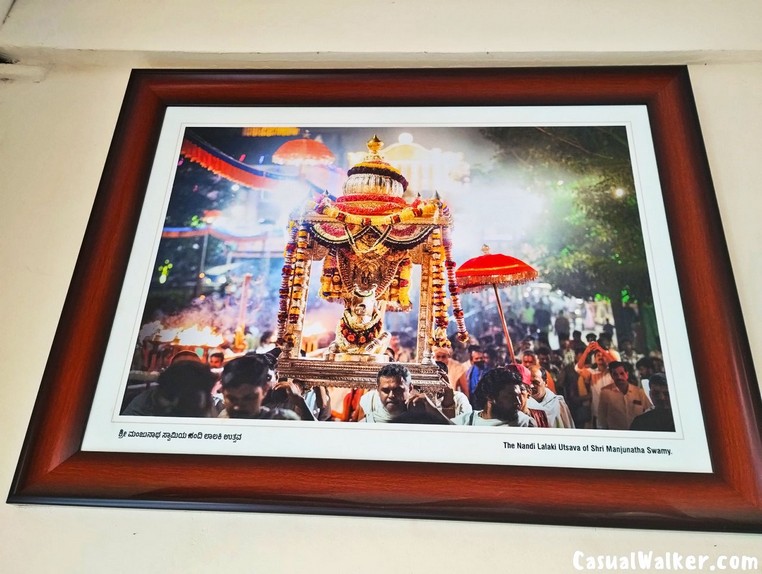
Heggade: Unique Spiritual Leadership
The position of the Heggade is unique in India. He represents Lord Manjunatha as a pious householder with immense religious, social, and cultural responsibilities. The current Dharmadhikari, Dr. Veerendra Heggade (21st generation), is revered across Karnataka for his exemplary service and social reforms.
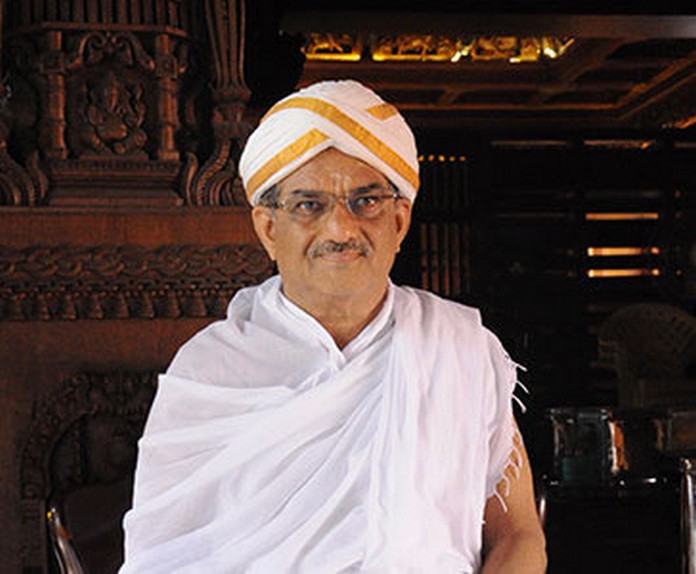
The Heggade extends the four traditional Danas:
- Anna Dana (Feeding) Free food for all
- Aushadha Dana (Healthcare) Medical care and healing
- Vidya Dana (Education) Supporting education
- Abhaya Dana (Protection from Fear) Freedom from fear and injustice
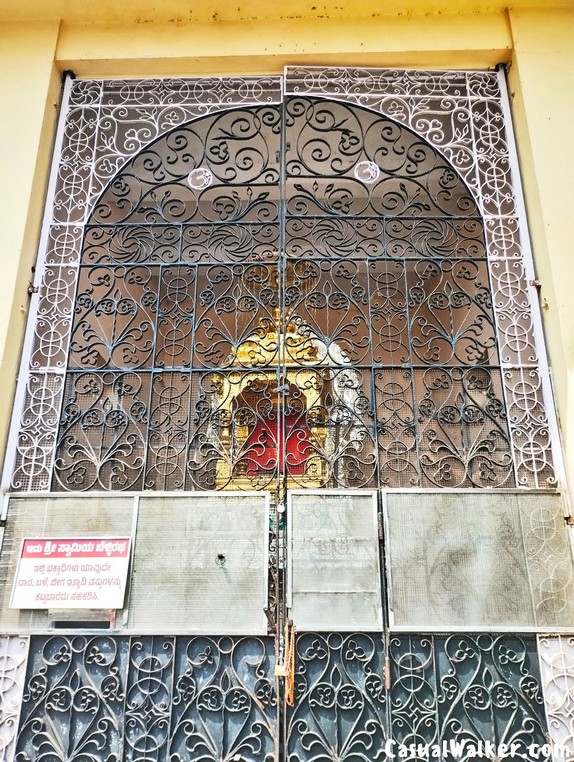
Hoyulus: The Divine Court of Justice
A major function of the Heggade is settling Hoyulus civil complaints presented by people of all creeds. When both parties appear before the Heggade, he gives his verdict, which is accepted as final and even recognized by Civil Courts of India! Long-standing disputes spanning generations have been settled through this divine justice system.
Magnificent Annadana Free Food for All
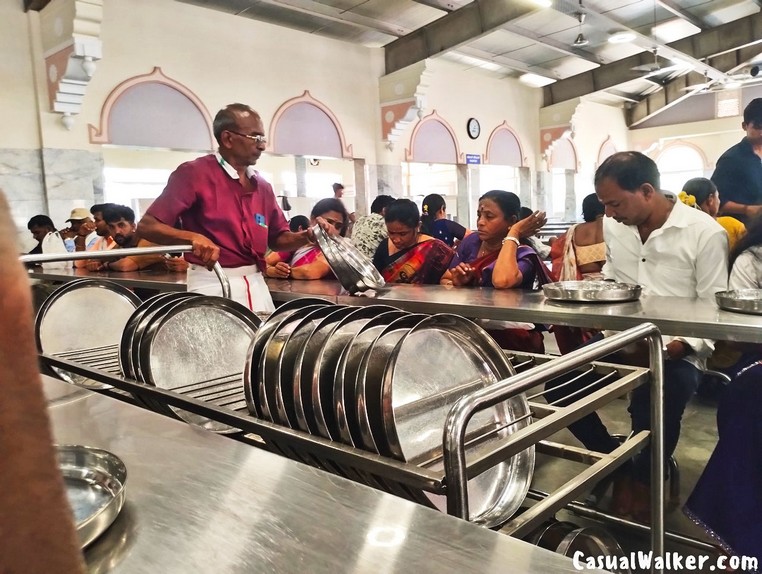
One of the most heartwarming aspects of Dharmasthala is its legendary Annadana (free food distribution). Every single day, the temple feeds thousands of devotees without any discrimination. The food is prepared with devotion and the dining halls are spotlessly clean, and is remarkably well-organized.
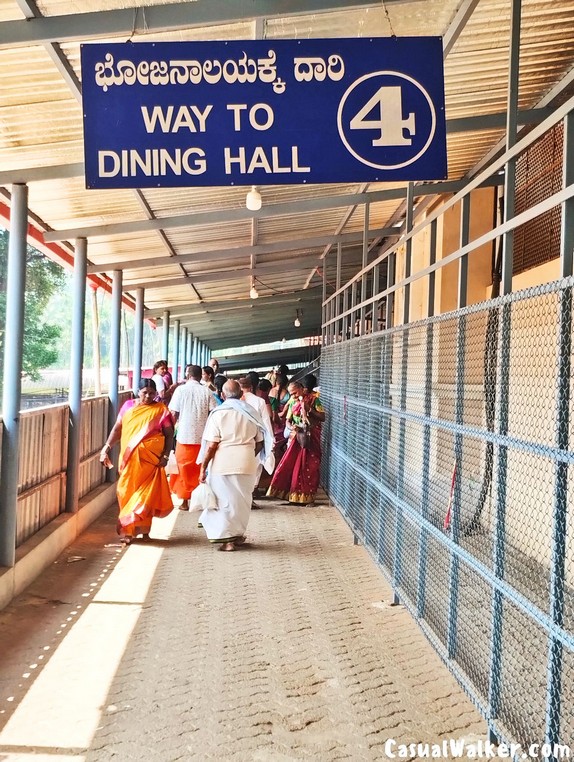
We had the privilege of having lunch at the Dharmasthala Annadana, and it was a truly humbling experience to be part of this beautiful tradition. The prasadam meals are wholesome and satisfying.
Anna Prasada Service Timings
The Dharmasthala Temple Annadana Prasada is served twice daily:
Lunch: From 11:00 AM
Dinner: From 7:00 PM
Dress Code:
Men are required to remove their shirts before entering the temple. This is a mark of respect and humility before the divine presence. Traditional attire is encouraged, and the temple provides free dhotis if needed.
Temple Timings:
Morning Darshan: 6:00 AM to 1:00 PM
Evening Darshan: 5:30 PM to 8:00 PM
Special Poojas: Conducted throughout the day
Address: Sri Kshetra, Dharmasthala, Karnataka 574216
Contact Number: 08256 266655 / 08256 266666
Website: https://www.shridharmasthala.org
Sringeri Sri Sharadamba Temple & Adi Shankaracharya’s First Math
The Powerful Seat of Jnana and Shakti
After the deeply fulfilling darshan at Dharmasthala, our journey continued toward Sringeri, nestled in the Western Ghats, approximately 100 kilometers away. The drive itself was a meditation winding mountain roads with countless bends, lush green forests on either side, and the promise of divine wisdom awaiting us at the end.
The route to Sringeri involves many sharp curves and steep ascents. Drivers must be extremely careful and alert. However, the scenic beauty makes every moment of the journey worthwhile.
Sacred History of Sringeri
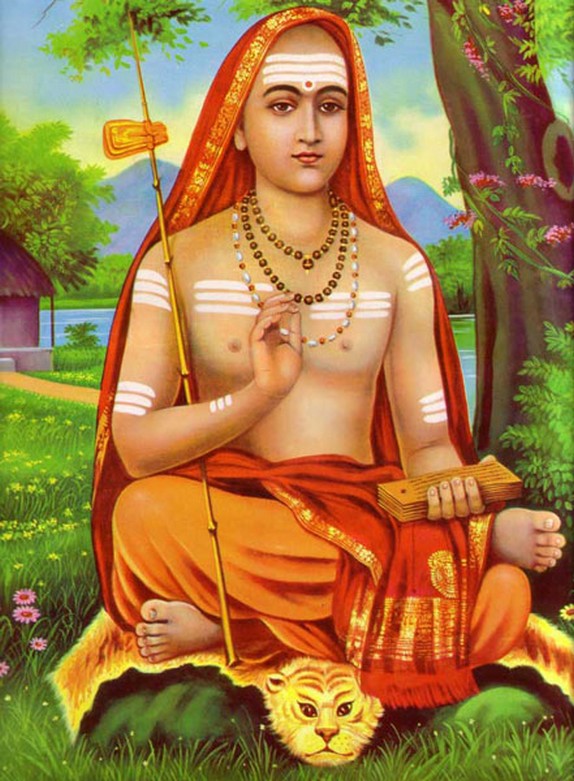
Sringeri holds an incomparable place in Hindu spiritual history as the first of the four cardinal maths (monasteries) established by Sri Adi Shankaracharya in the 8th century. The other three are Dwaraka (west), Puri (east), and Jyotirmath or Badrinath (north). Sringeri represents the southern direction and is dedicated to the goddess of wisdom, Sharadamba, an incarnation of Saraswati.
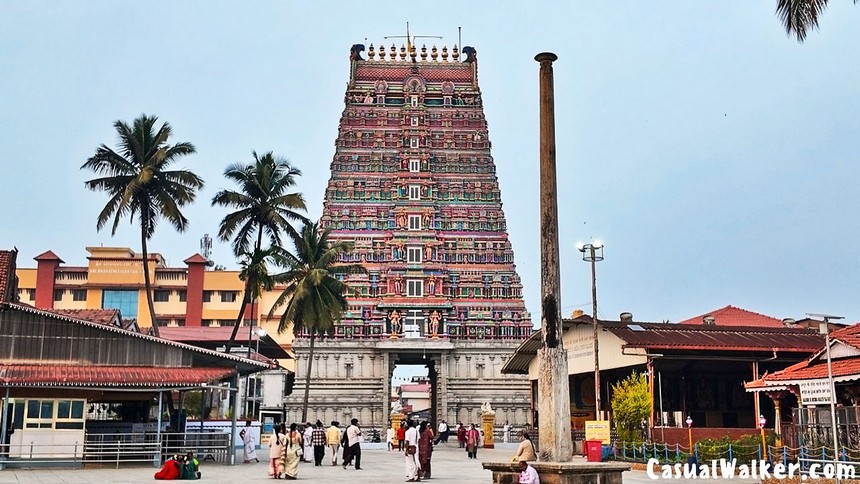
The name “Sringeri” is derived from “Shringa Giri,” meaning “Hill of the Peak.” According to legend, when Sri Adi Shankaracharya arrived at this location, he witnessed an extraordinary sight that convinced him this was the perfect place to establish his monastery.
Sacred Snake and Frog Story
One of the most famous legends of Sringeri involves a cobra and a frog. When young Shankaracharya was walking along the banks of the Tunga River, he saw something that astounded him a cobra was using its hood to provide shade to a pregnant frog that was about to give birth. The cobra, natural predator of the frog, had transformed into a protector.
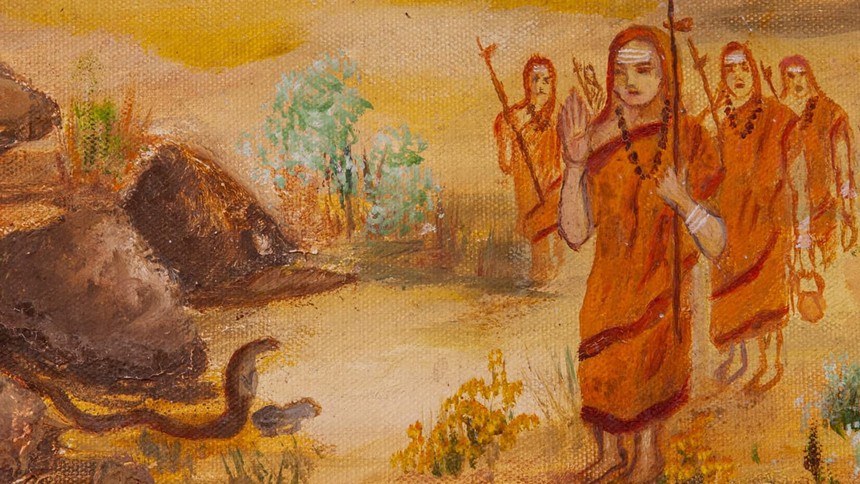
This miraculous sight revealed to Shankaracharya that this was a place of extraordinary spiritual power, where even natural enemies could coexist in harmony and compassion. He immediately decided this was the ideal location to establish his first math and spread the message of Advaita Vedanta (non-dualism).
Sri Vidyashankara Temple – An Architectural Marvel
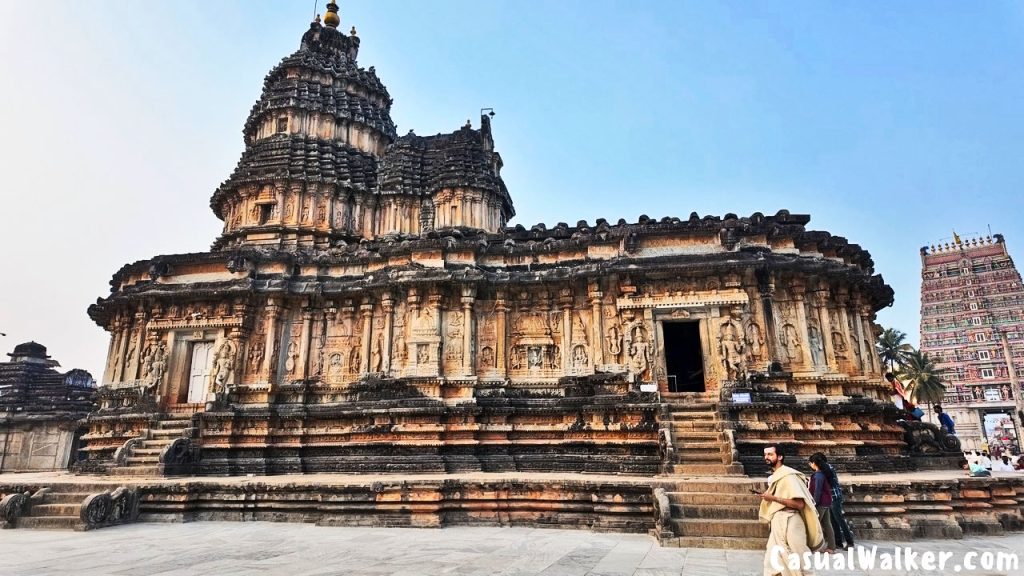
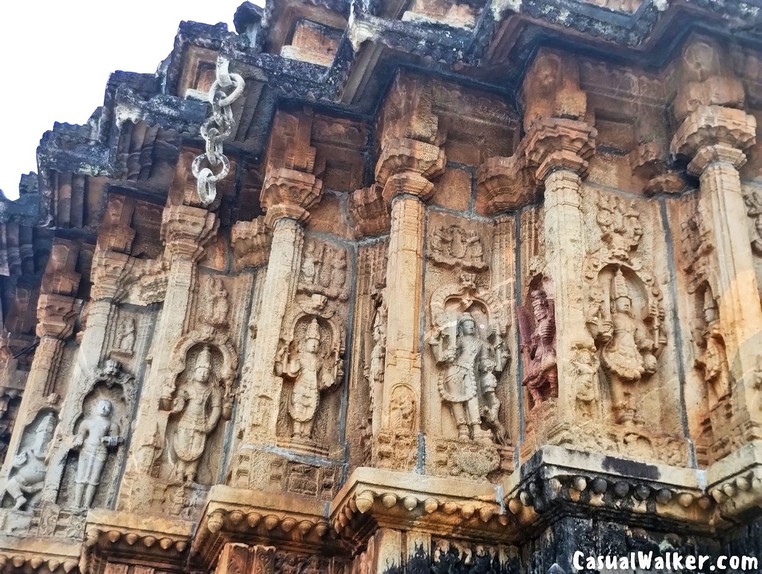
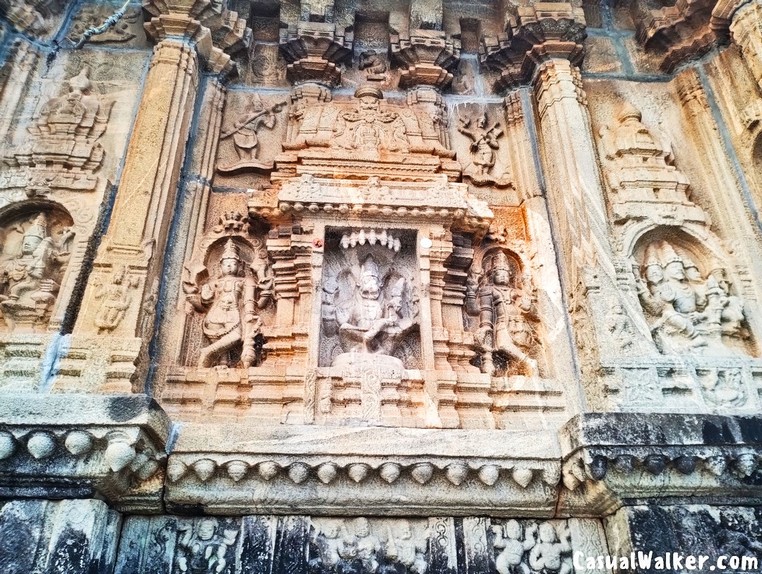
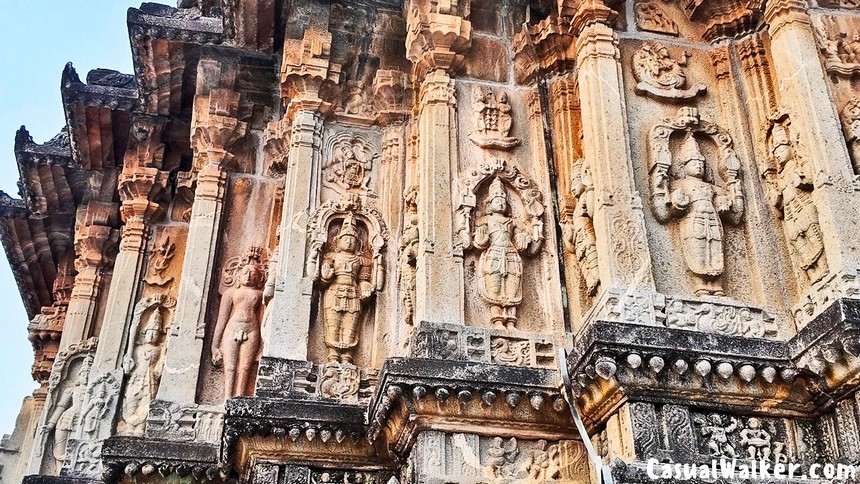
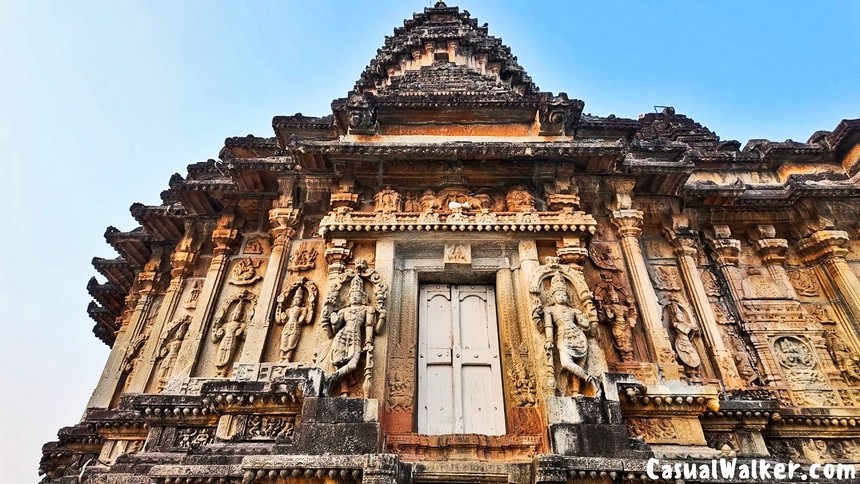
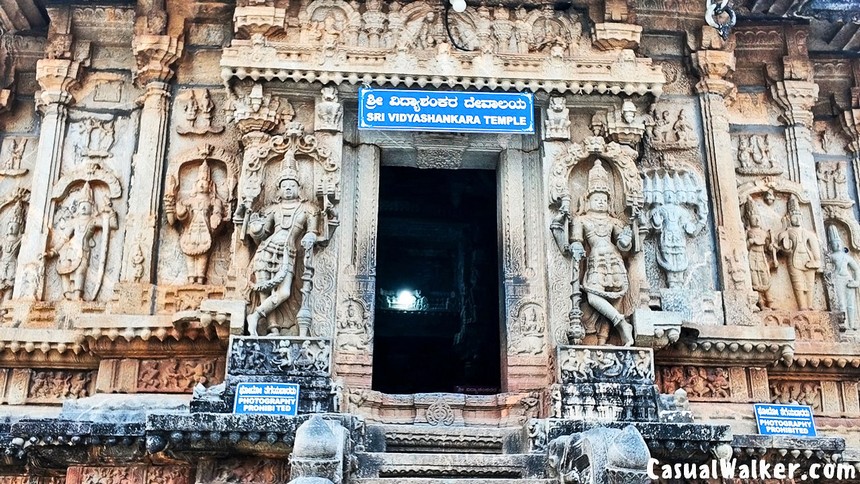
The Sri Vidyashankara Temple stands as one of Sringeri’s most remarkable architectural treasures, built in 1338 CE by Vidyaranya, the 12th Jagadguru of Sringeri Math, in memory of his guru Sri Vidyashankara. This magnificent temple is a unique blend of Hoysala and Dravidian architectural styles and houses the samadhi (final resting place) of Sri Vidyashankara within its sanctum.
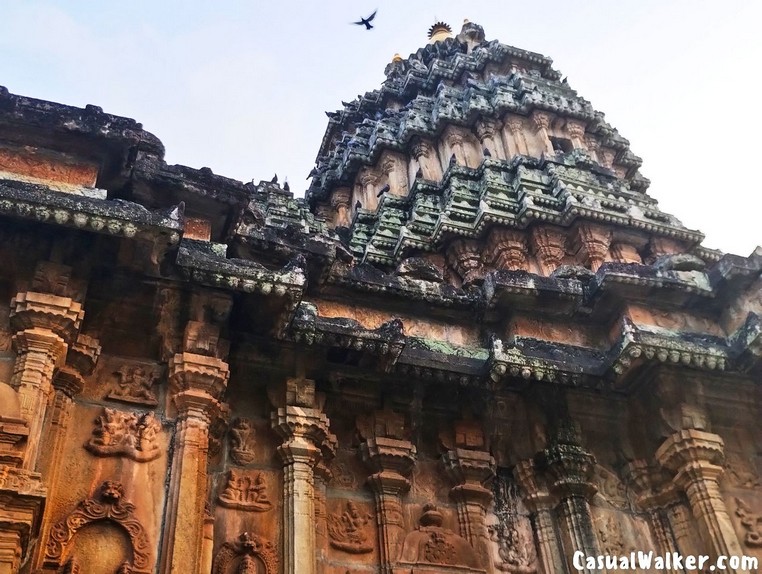
What makes this temple truly extraordinary is its astronomical precision the temple features twelve intricately carved zodiac pillars representing the twelve signs of the zodiac (Mesha to Meena), positioned so perfectly that sunlight falls on each corresponding pillar during its respective month, demonstrating the advanced astronomical knowledge of ancient India.
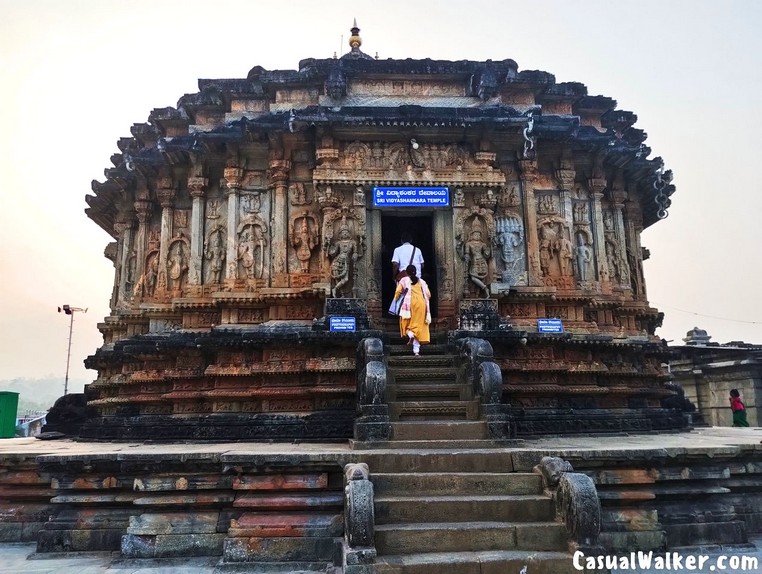
The temple’s sculptural beauty is breathtaking, with every inch of its walls, pillars, and ceilings adorned with exquisite carvings depicting various deities, celestial beings, and mythological scenes. The main deity is a unique form combining Shiva and Vishnu (Hari-Hara), symbolizing the unity of all divine forces, perfectly embodying Adi Shankaracharya’s philosophy of Advaita (non-dualism).
Jagadgurus: Guardians of Ancient Wisdom
The unbroken spiritual lineage of Sringeri Sharada Peetham has been preserved through 36 successive Jagadgurus (World Teachers) since Adi Shankaracharya established it in the 8th century. Currently, the Math is blessed with two illustrious pontiffs – Sri Sri Sri Bharati Tirtha Mahaswamiji (36th Jagadguru) , Sri Sri Sri Vidhushekhara Bharati Mahaswamiji (37th Jagadguru Designate).
Together, these two illustrious Jagadgurus maintain the balance between preserving ancient traditions and addressing modern spiritual needs, attracting seekers worldwide to this sacred abode of knowledge and shakti.
Darshan of Sri Sharadamba and the Temple Complex
The main temple complex houses two primary shrines:
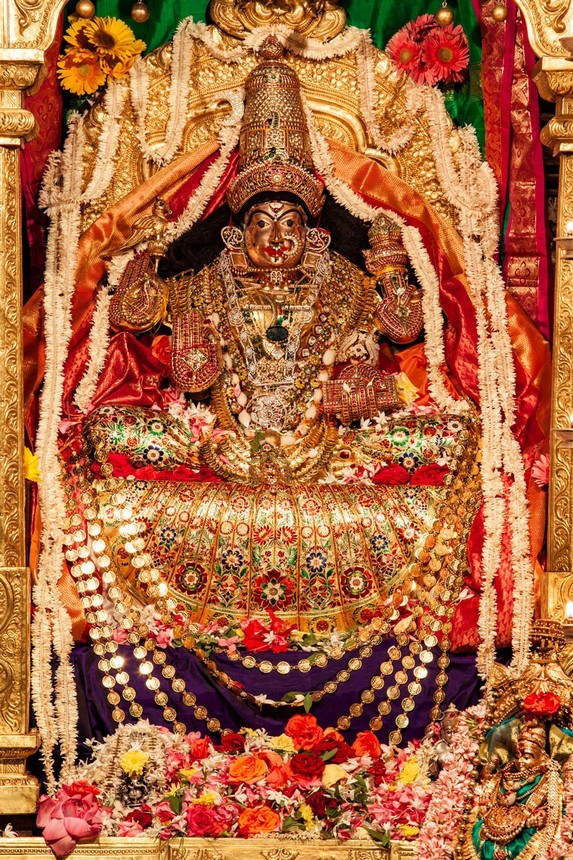
- Sri Sharadamba Temple: The goddess Sharadamba resides here in three forms:
- The ancient Sharadamba Vigraha (idol)
- The Chandramouleshwara Linga (representing Shiva)
- The Sri Chakra (the mystical yantra)
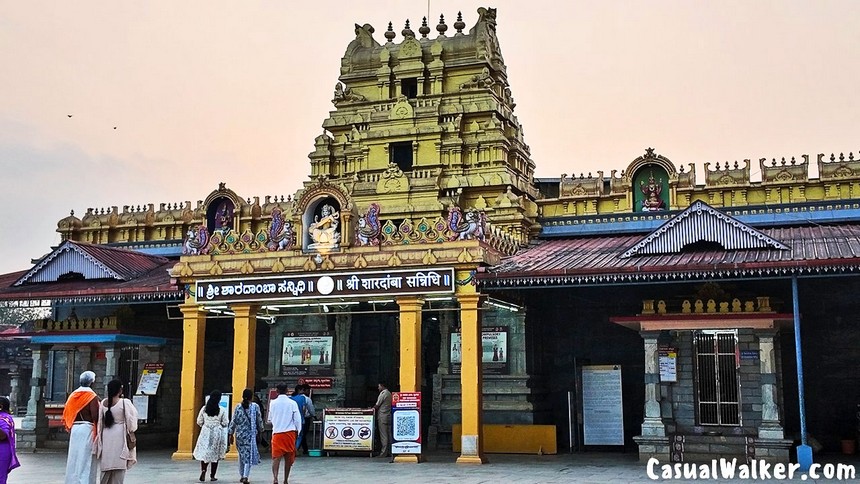
The darshan of Sharadamba is extraordinarily powerful. Students, scholars, artists, and seekers of knowledge from across the world come here to seek her blessings. She is the embodiment of Saraswati (knowledge), Lakshmi (prosperity), and Durga (strength).
- Sri Adi Shankaracharya Shrine: A separate shrine is dedicated to Adi Shankaracharya himself. The great philosopher-saint is honored here not just as a teacher but as an incarnation of Lord Shiva.
Unique Features of the Temple
The temple complex showcases exquisite architecture with pillars depicting all the avatars of Lord Vishnu, including Matsya (Fish), Kurma (Tortoise), Varaha (Boar), Narasimha (Man-Lion), Vamana (Dwarf), Parashurama (Warrior-sage), Rama (Prince of Ayodhya), Krishna (Divine Cowherd), Buddha (The Enlightened One), and Kalki (Future Avatar).
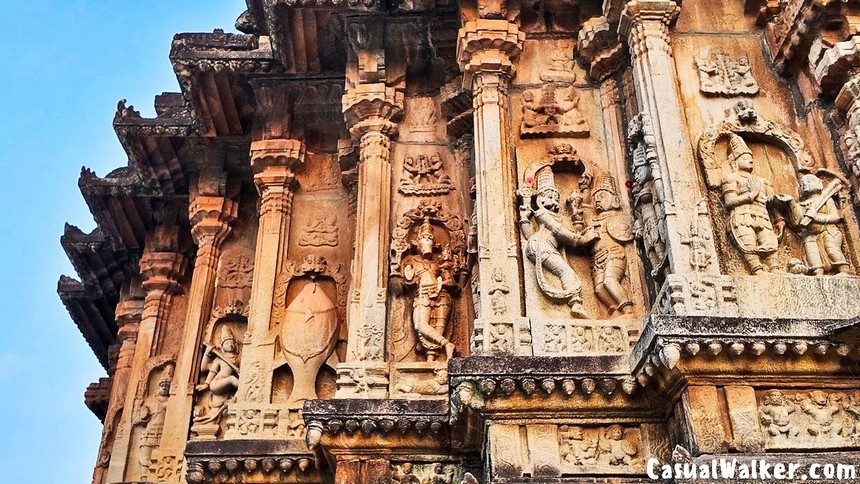
Interestingly, even Mahavira (founder of Jainism) is depicted in some sculptural representations, showing the inclusive nature of Sringeri’s spiritual philosophy.
Goddess Sharadamba’s Golden Chariot
During special festivals, particularly during Navaratri, the goddess is taken in a magnificent golden chariot (ratha) in procession around the temple complex. This ratha is different from those seen in other temples it’s smaller, more elegant, and represents the subtle power of knowledge and wisdom rather than merely physical grandeur.
Sacred Tunga River
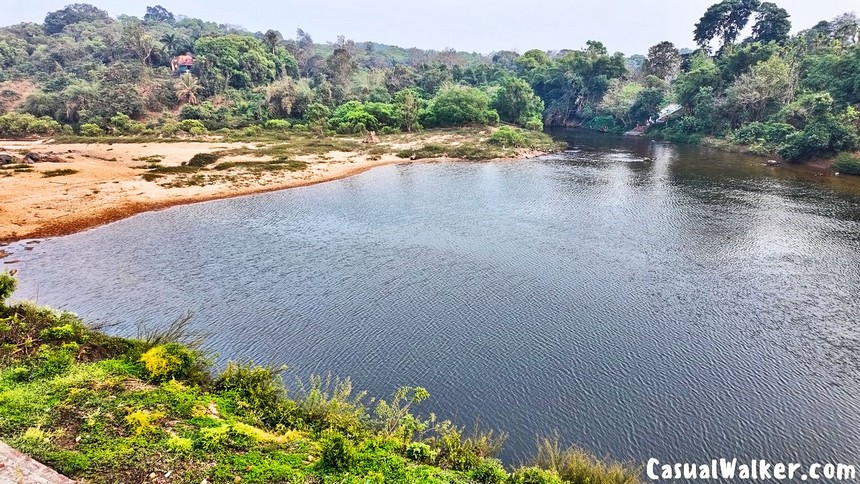
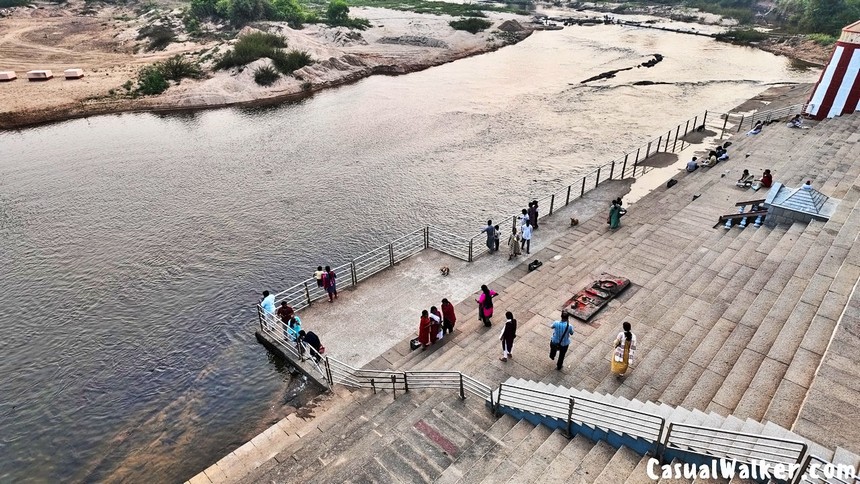
The Tunga River flows majestically alongside the Sringeri temple complex, and its presence adds to the sacred atmosphere of this divine kshetra. Unlike many rivers in India that have become polluted, the Tunga here remains remarkably clean and pristine, its crystal clear waters teeming with fish.
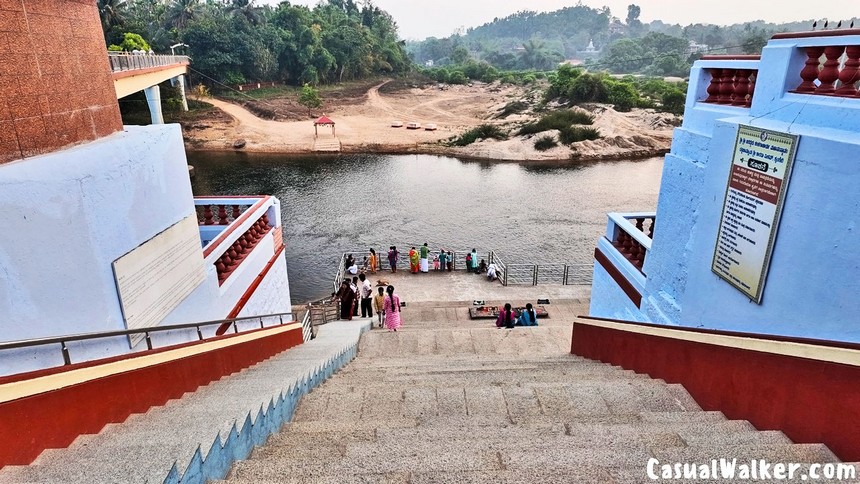
The riverbank also has facilities for performing poojas and rituals. Many devotees take a holy dip in the Tunga before having darshan of Goddess Sharadamba, believing that the sacred waters purify them both physically and spiritually.
As I stood before Goddess Sharadamba, I felt an overwhelming sense of clarity and peace descend upon me. It’s said that Sharadamba blesses devotees with Viveka (discriminative wisdom) and Vairagya (detachment from worldly illusions). In that moment, standing in that ancient sanctum that has witnessed 1,200 years of continuous worship, I felt connected to an unbroken chain of seekers, saints, and sages.
The temple is impeccably clean and well-organized. The discipline maintained here is admirable from the way devotees queue up for darshan to the precision with which the priests perform the rituals.
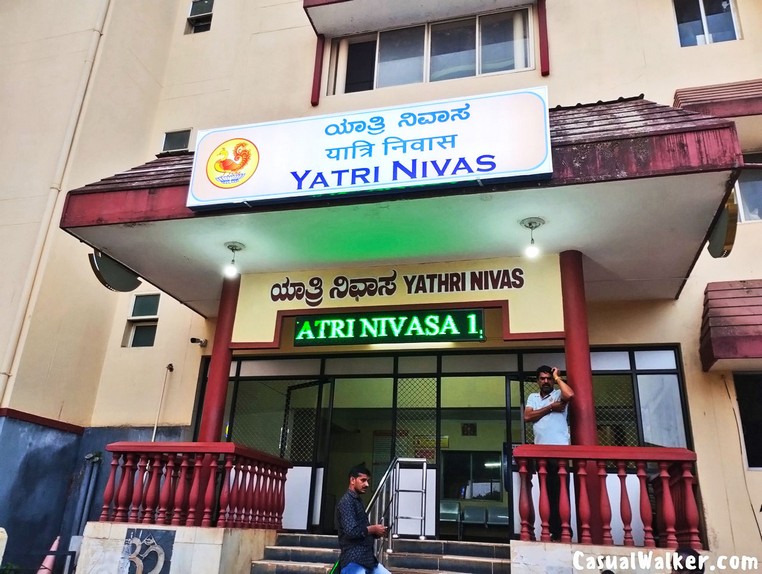
Accommodation: Yatri Nivas
Sringeri Math manages several accommodation facilities for devotees:
- Yatri Nivas: Clean, affordable rooms ranging from ₹200 to ₹800 per night
- Advance booking is recommended during festival seasons
- Annadana (free food) is available for all devotees
- The rooms are simple but clean, and the atmosphere is conducive to meditation and spiritual practice
Booking Accommodation Online:
https://yatri.sringeri.net/rooms/reserve
Dress Code:
Dress code is strictly followed:
Men: Must remove shirts. Wearing a dhoti is mandatory to enter near the garbha griha (sanctum sanctorum) for close darshan of Ambal. If you’re wearing pants, you can have darshan from a distance, but to go near the sanctum, traditional dhoti is required.
Women: Traditional Indian attire saree, salwar kameez, or lehenga with dupatta
Temple Timings:
Morning Darshan: 6:30 AM to 1:30 PM
Evening Darshan: 3:00 PM to 8:30 PM
Special Poojas: Sharada Chandramouleshwara Pooja (morning), Mahamangalarathi (evening)
Address: Sringeri, Chikkamagaluru District, Karnataka – 577139
Contact Number: +91-08265-252525 / +91-8265-262626
Website: https://www.sringeri.net
Day 2: Madhva Kripa and Krishna’s Grace
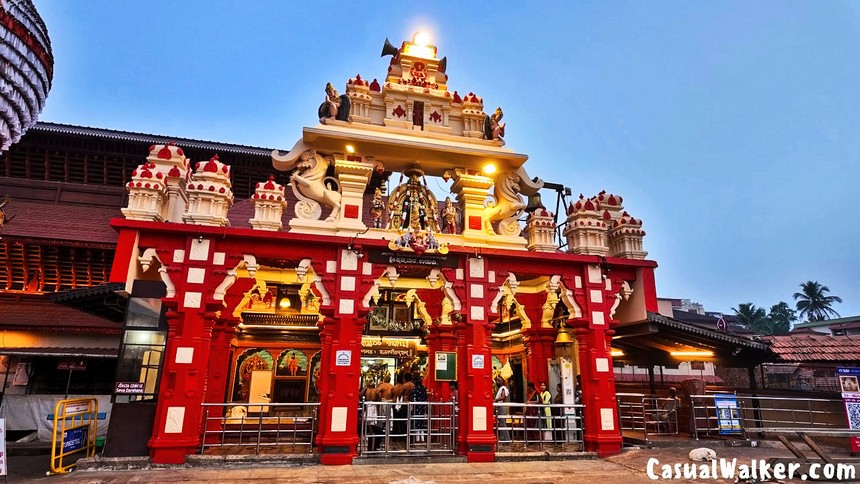
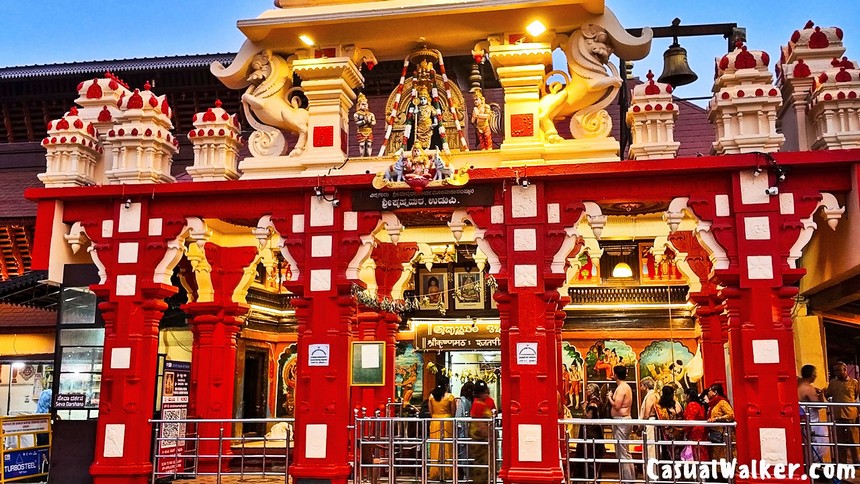
Udupi Sri Krishna Temple – The Most Enchanting Darshan of Bala Krishna
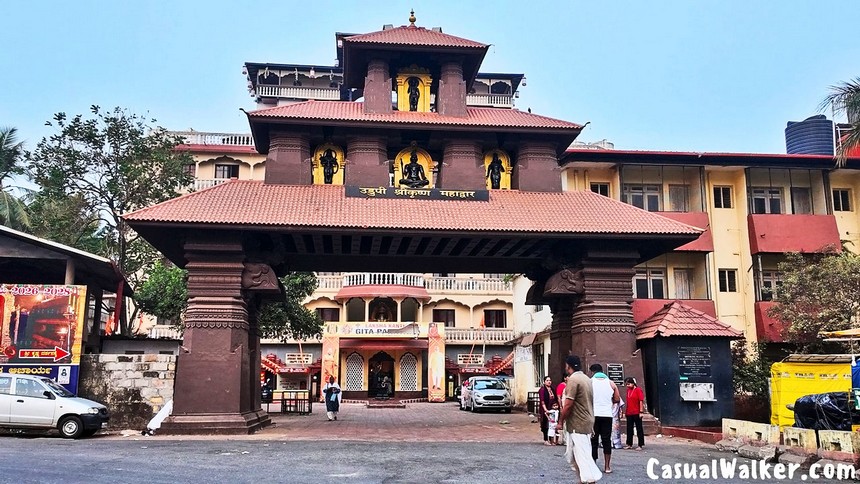
Day two of our divine darshan yatra began with immense excitement I woke up at 3:30 AM, filled with anticipation and energy to get ready for our visit to the sacred Udupi Krishna Temple. As we headed toward Udupi, the abode of Bala Krishna and the birthplace of the Dvaita Vedanta philosophy, my excitement only grew. Udupi is not just a temple town; it’s the very soul of Madhva tradition and Krishna bhakti in South India.
Madhvacharya and the Dvaita Legacy
The Udupi Krishna Temple was established in the 13th century (around 1264 CE) by the great Vaishnava saint and philosopher Sri Madhvacharya (1238-1317), who founded the Dvaita school of Vedanta. Unlike the Advaita philosophy of Shankaracharya which teaches non-dualism, Madhvacharya propounded Dvaita or dualism the philosophy that God (Lord Vishnu) and individual souls are eternally distinct.
Ashta Mathas – Eight Centers of Dvaita Philosophy
To propagate the Dvaita philosophy and manage the Krishna temple, Madhvacharya established eight mathas (monasteries) in Udupi, collectively known as Ashta Mathas. He initiated eight of his ascetic disciples into sannyasa, ordaining them as the first Swamijis of these mathas. Each disciple received the honorific suffix ‘Tirtha’ upon their coronation as matha heads.
The eight mathas, named after their original villages, are:
- Palimaru Matha – Sri Hrishikesha Tirtha
- Adamaru Matha – Sri Narasimha Tirtha
- Krishnapura Matha – Sri Janardhana Tirtha
- Puttige Matha – Sri Upendra Tirtha
- Shirur Matha – Sri Vamana Tirtha
- Sodhe Matha – Sri Vishnu Tirtha
- Kaniyuru Matha – Sri Rama Tirtha
- Pejawar Matha – Sri Adhokshaja Tirtha
These mathas were originally located in different villages but later relocated around the Udupi Krishna Temple. Madhvacharya gave each matha a deity for daily worship – the four avatars of Lord Vishnu: Krishna (Vittala), Rama, Narasimha, and Varaha. It is believed that eight is Krishna’s favorite number, as he was the eighth child of Vasudeva and Devaki.
Paryaya System – Unique Rotational Management
The Ashta Mathas take turns administering the Krishna temple through a unique rotational system called “Paryaya,” which occurs every two years.
Miraculous Discovery of the Krishna Idol
The story of how the Udupi Krishna idol came to be is nothing short of miraculous. One day, while Madhvacharya was performing his morning prayers on Malpe Beach (near Udupi), he witnessed a ship caught in a violent storm. Using his divine powers, the saint calmed the storm and saved the ship.
In gratitude, the ship’s captain offered Madhvacharya anything from the cargo. The saint chose what appeared to be a lump of gopichandana (sacred clay). When Madhvacharya broke open the clay, he discovered a beautiful idol of Bala Krishna (child Krishna) inside.
This idol is believed to be the same deity that was once worshipped by Rukmini, Lord Krishna’s consort, in Dwaraka. Somehow, this sacred murti had made its way across the ocean, waiting for the right person to discover it. Madhvacharya immediately recognized its divine origin and installed it in Udupi.
Unique Window Darshan Kanakana Kindi
One of the most unique features of Udupi Krishna Temple is that devotees have darshan of Lord Krishna through a window! This is not the main entrance of the sanctum but a small opening with nine holes called “Navagraha Kitiki” (Nine Planetary Window).
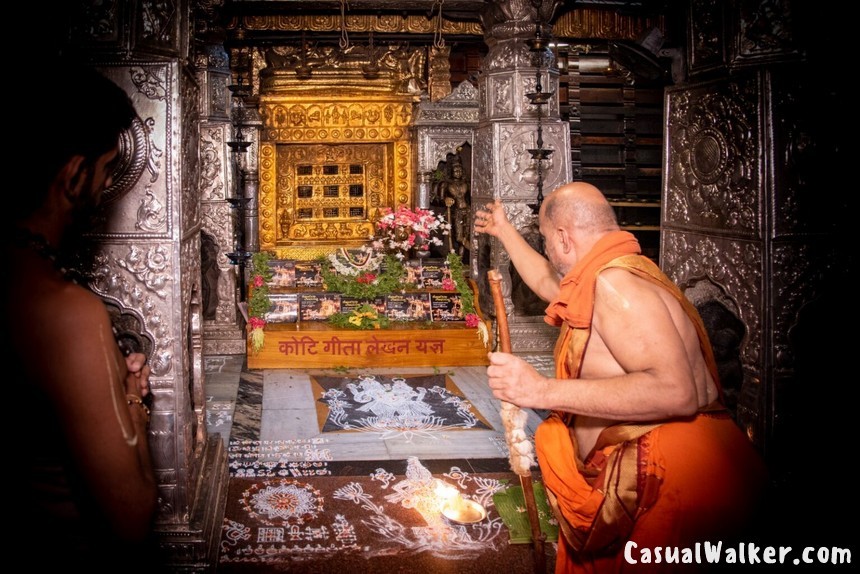
Legend of Kanakadasa
In the 16th century, a devotee named Kanakadasa came to Udupi. He was a great saint, composer of devotional songs, and an ardent devotee of Krishna. However, due to the caste prejudices of that era, he was denied entry into the temple.
Heartbroken but undeterred, Kanakadasa went to the back of the temple and started singing his devotional compositions with intense love and longing. His devotion was so pure and powerful that Lord Krishna himself could not resist!
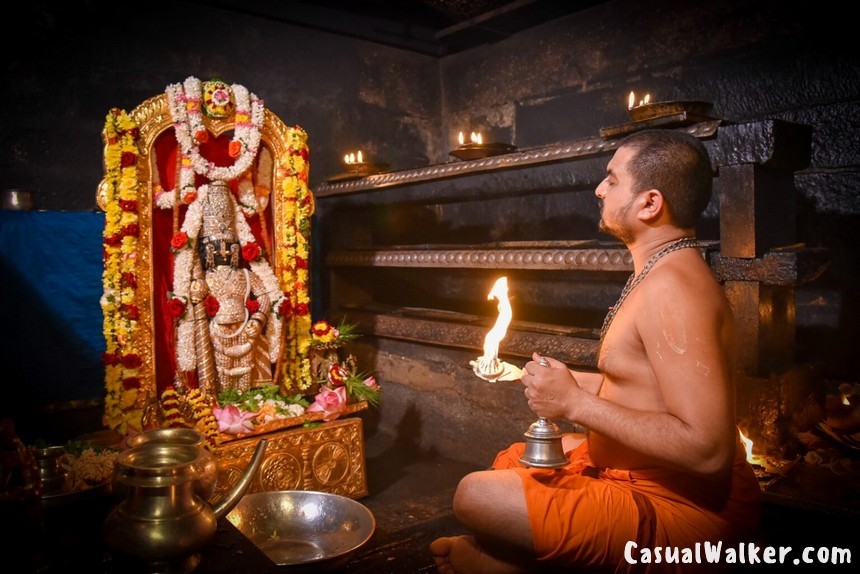
The idol of Krishna turned 180 degrees to face Kanakadasa, creating a small opening in the wall so that his devotee could have darshan! This opening came to be known as the “Kanakana Kindi” (Kanaka’s Window).
Even today, after hundreds of years, the Krishna idol remains facing west rather than east, and devotees first have darshan through this window before entering the main sanctum. This serves as an eternal reminder that for God, devotion matters infinitely more than birth, caste, or social status.
The outer window is called Kanakana Kindi (dedicated to Kanakadasa), and the inner window is called Navagraha Kindi (representing the nine planets). Both are silver-plated and beautifully carved with depictions of the ten avatars of Lord Vishnu.
Madhwa Sarovar The Sacred Temple Pond
The beautiful green pond adjacent to the temple is the Madhwa Sarovar (pushkarni), where Madhvacharya bathed the Balakrishna idol before installing it in the shrine. This sacred pond is used for ritualistic baths by temple priests and holds immense spiritual significance.
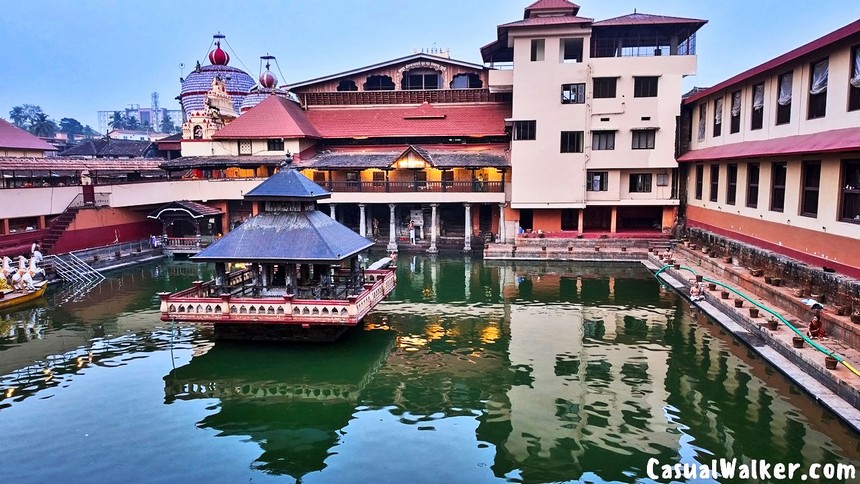
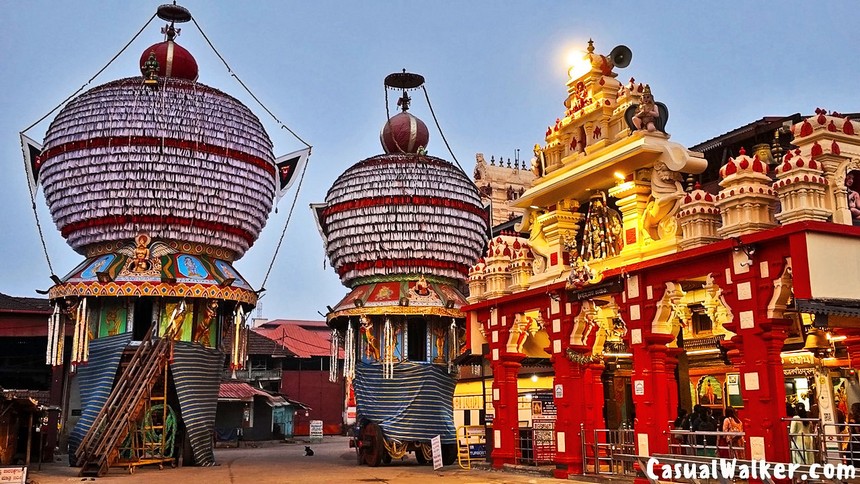
Magnificent Chariots of Udupi
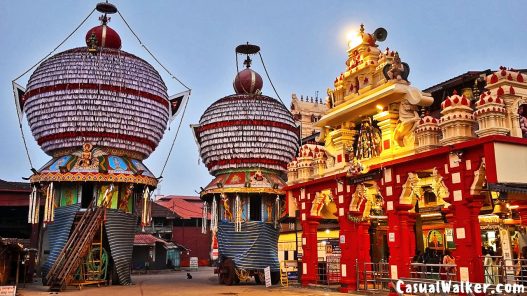
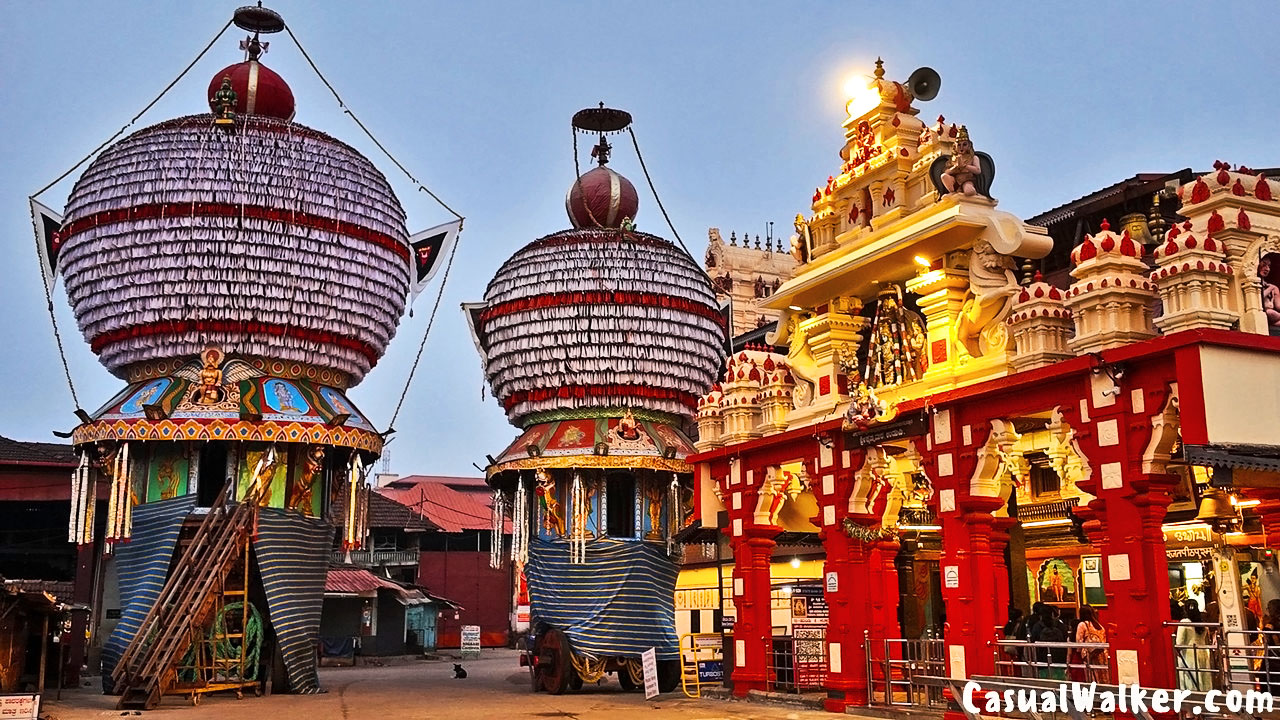
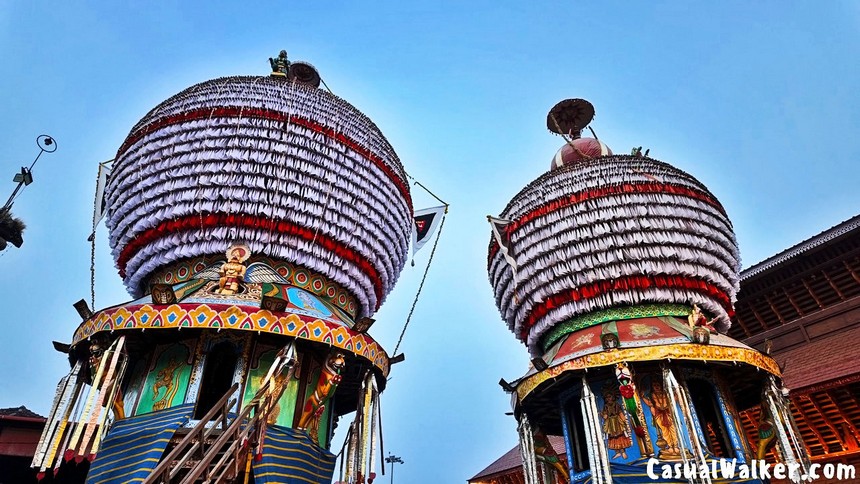
In front of the Madhwa Sarovar, you’ll find the richly decorated wooden chariots (rathas) used during temple festivals. These intricately carved chariots showcase traditional craftsmanship with religious motifs and symbols. During processions, particularly the annual Rathotsava (chariot festival) around Makar Sankranti in January, three chariots follow in succession:
- Brahma Ratha – The largest chariot, reserved for Lord Krishna’s idol
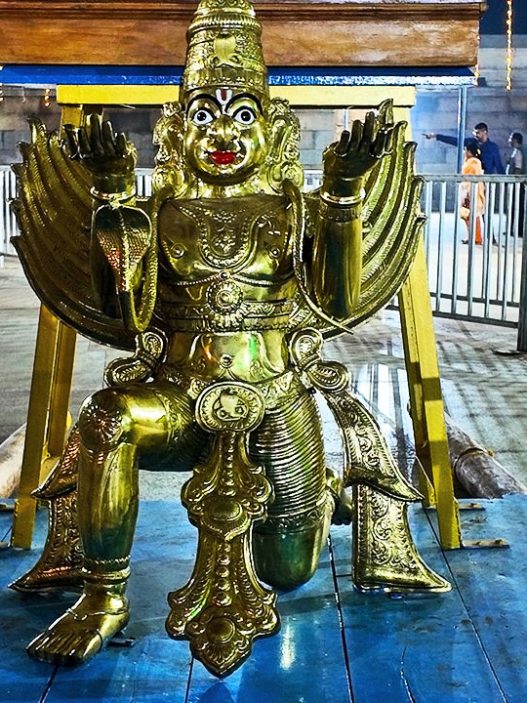
- Garuda Ratha – The second chariot carrying the idol of Lord Hanuman (Mukhyaprana) from the temple hall
- Mahapuja Ratha – The third chariot hosting deities from Chandramouleeswara and Anantheshwara temples
This three-day festival, also called Churnotsava, commemorates the day Madhvacharya installed the Lord in the temple. The chariots are hand-pulled by thousands of devotees around the temple complex, mainly along Car Street, accompanied by chants, bhajans, drums, and cymbals.
Idol of Bala Krishna
The Krishna idol in Udupi is absolutely unique and enchanting. The deity is depicted as Bala Krishna (child Krishna) holding a churning rod in the right hand and a rope in the left hand representing the churning of the cosmic ocean. This particular form of Krishna is not found anywhere else in India.
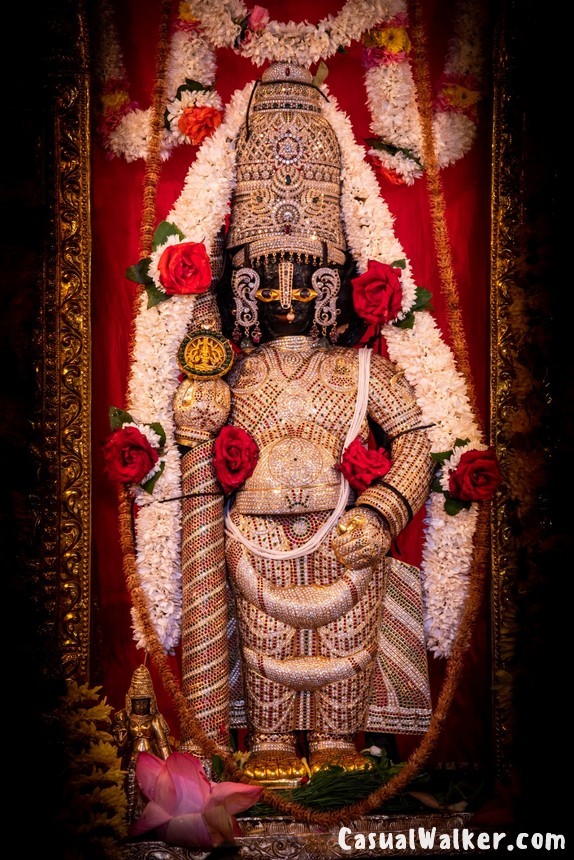
The idol is about two feet in height, made of a rare black stone called Saligrama, and is richly adorned with jewels and ornaments. Interestingly, the size of the Krishna idol in Udupi is said to be similar to that of the Krishna deity in Guruvayur, another famous Krishna temple in Kerala.
Madhvacharya Statue and Periyatiruvadi/Chinna Thiruvadi
Just outside the main Krishna temple, you’ll find a beautiful statue of Madhvacharya. Devotees offer their respects to the great acharya before proceeding for Krishna darshan.
Within the temple complex, there are shrines for Mukhyaprana (Hanuman) and Garuda, both brought from Ayodhya and installed here. These shrines are affectionately called “Periyatiruvadi” (bigger shrine) and “Chinna Thiruvadi” (smaller shrine).
Annadana – The Annabrahma Kshetra
One of the most heartwarming features of Udupi Krishna Temple is its legendary Annadana (free food distribution). The temple feeds hundreds of people daily in its community dining hall (Bhojanshala). The temple is also renowned as the birthplace of Udupi culinary tradition the delicious vegetarian cuisine now popular worldwide, especially the famous Udupi dosa.
Having darshan of Udupi Krishna through the Kanakana Kindi was an experience I will cherish forever. There’s something incredibly intimate and personal about looking at the deity through that small window. It feels like Krishna is giving you a private darshan, just as he did to Kanakadasa.
The idol’s face radiates childlike innocence and divine joy. You can see why people call it the most enchanting Krishna idol in India. The priests perform the poojas with vedic precision, and the temple administration is exemplary clean, organized, and devotion-oriented.
Udupi reminded me that true devotion knows no barriers and tells us that if your love for Krishna is pure, He will break down all walls to reach you. The story of Kanakadasa continues to inspire millions, and the eternal lamp continues to burn, symbolizing the unbroken chain of devotion that Madhvacharya established over 750 years ago.
Dress Code:
Men: Must remove shirts before entering the temple
Women: Traditional Indian attire
The temple maintains strict traditional customs, and visitors are expected to respect these
Temple Timings:
Morning Darshan: 4:30 AM to 1:00 PM (continuous)
Evening Darshan: 3:00 PM to 9:30 PM
Fourteen different poojas are performed throughout the day
Address: Temple Car St, Sri Krishna Temple Complex,
Thenkpete, Maruthi Veethika, Udupi, Karnataka 576101
Pajaka Kshetra – Sri Madhvacharya Birthplace, The Holy Land Where Dvaita Siddhanta Was Born – The Mathura of the South
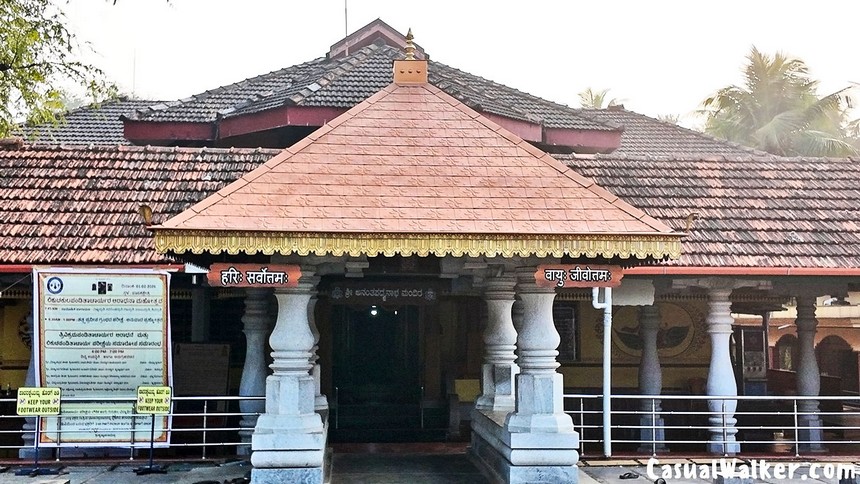
About 18 kilometers from Udupi, nestled in the serene countryside, lies Pajaka Kshetra known as the ‘Mathura of the South’ and the sacred birthplace of Sri Madhvacharya. This small village carries immense spiritual significance as the place where the great philosopher who established the Dvaita school of Vedanta was born in the 13th century.
Mythological Significance and the Parashurama Connection
According to Hindu mythology, Pajaka Kshetra was once the abode of the demon king Kukkura, who terrorized people and gods alike. The gods prayed to Lord Vishnu for help, and He took the form of Sri Madhvacharya, being born in Pajaka Kshetra to defeat the demon.
Pajaka has strong associations with Lord Parashurama, the sixth avatar of Vishnu, who loved this holy ground and created the region. Lord Parashurama established four sacred ponds (tirthas) here, each named after the weapon he used to create it:
- Parashuthirtha – Created with his axe (representing tapassu – austerity)
- Dhanushthirtha – Created with his bow (representing satya – truth)
- Banathirtha – Created with his arrow (representing shuchi – purity)
- Gadathirtha – Created with his mace (representing daye – mercy)
Each pond reflects a cornerstone of dharma. Bathing in these holy tirthas helps devotees attain salvation. The village is situated on the banks of the Papanasini River, also created by Lord Parashurama, and gets its name from “Pajey” in the Tulu language.
Divine Birth of Vasudeva
Here lived Narayana Bhatta (also known as Madhyageha Bhatta) and his wife Vedavati, devout Vaishnavas who offered prolonged prayers to Lord Sri Anantheshwara of Udupi, longing for a child. On Vijayadashami day in 1238, their prayers were answered when a divine child was born.
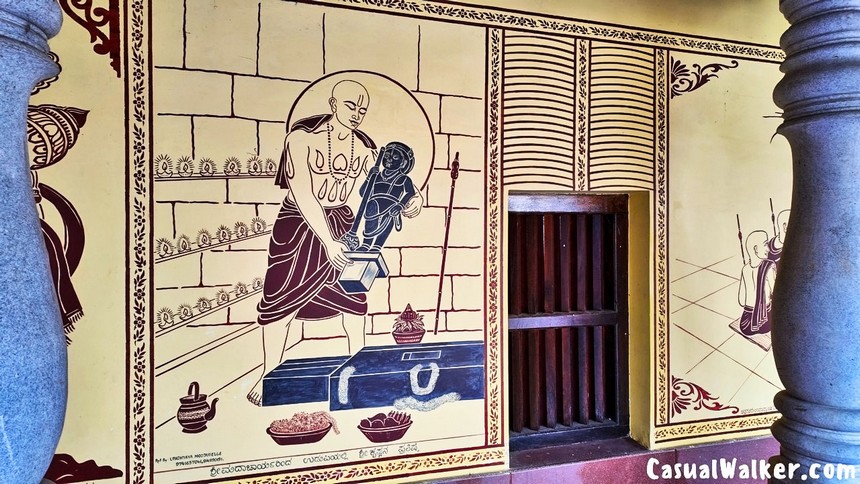
Legend states that when the child was born, he had 32 teeth considered a divine sign. He was also born under the constellation of Uttarabhadrapada, an auspicious time for birth. They named him Vasudeva, as Madhvacharya is an incarnation of Vayu (the Wind god), the son of Lord Narayana and Lakshmi. It is fitting that he was born in Pajaka Kshetra, where Narayana and Lakshmi reside in the form of Parashurama and Durge.
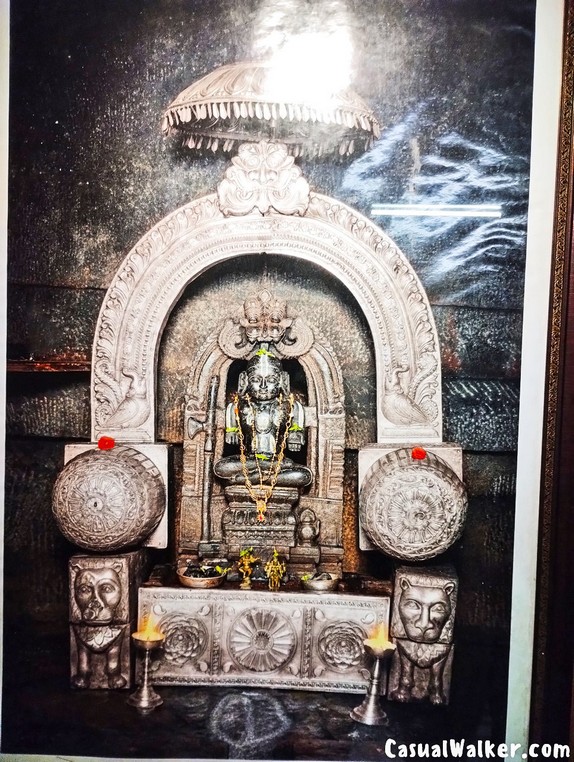
Fifth Pond – Vasudevatirtha
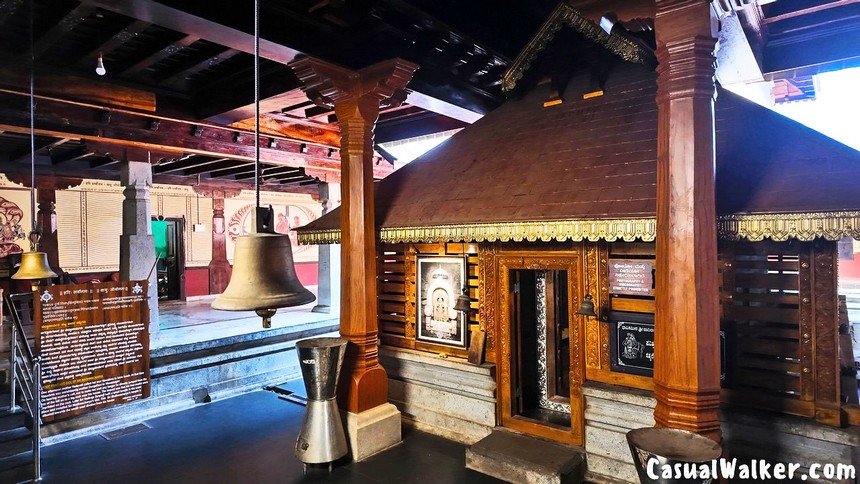
In those days, people (including Vasudeva’s parents) collected water from each of the four ponds daily for ablution and rituals. The journey was treacherous and the distance difficult for many to traverse. When young Vasudeva’s mother expressed concern about this difficulty, he miraculously created a fifth pond right in the backyard of his parents’ house Vasudevatirtha demonstrating that it contained water from all four of Parashurama’s ponds. This sacred pond still exists today, and bathing in its holy waters is said to give the utmost salvation.
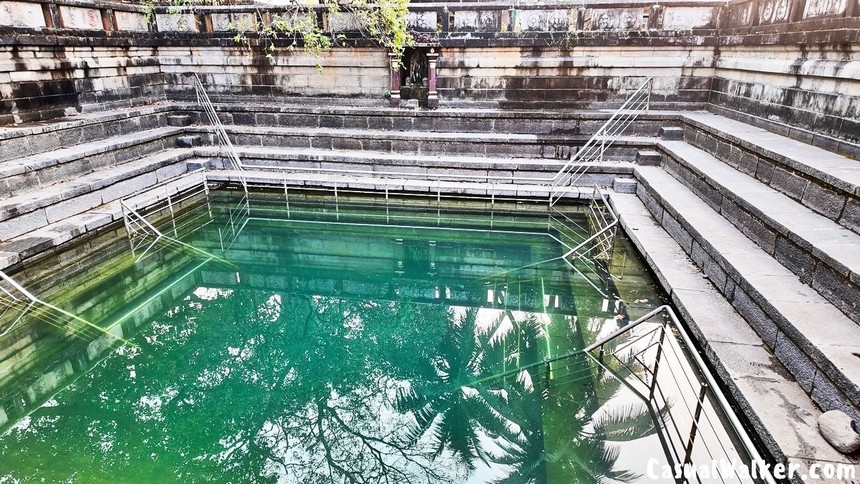
Madhvacharya’s Miraculous Childhood
Even as a child, Madhvacharya displayed extraordinary spiritual powers and wisdom. He could defeat scholars in debate while still young, performed miracles like calming storms and healing diseases, and had visions of Lord Narasimha and other deities. He grew up to become a great philosopher and saint, founding the Dvaita school of philosophy based on dualism the principle that there are two ultimate realities (God and the individual soul) that are distinct from each other.
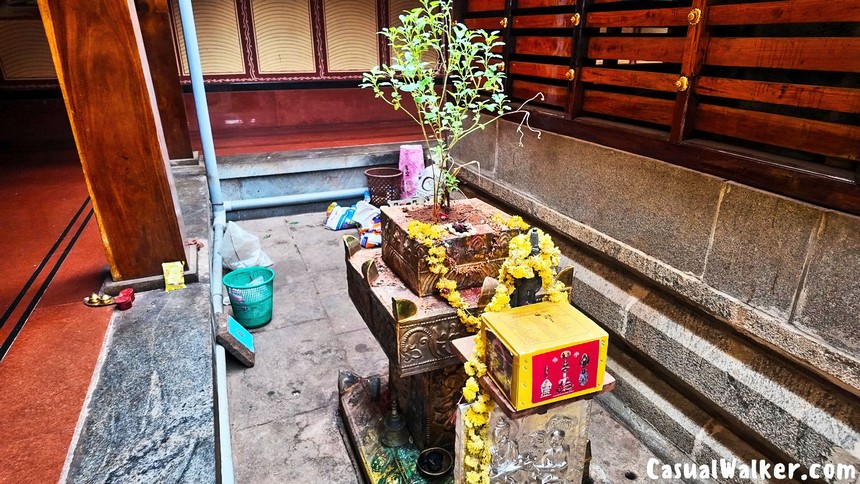
Sacred Tree
One of the most interesting relics at Pajaka is a banyan tree that Madhvacharya planted by simply sticking his walking staff into the ground. The stick miraculously took root and grew into a massive tree, which still stands today as a living testament to the saint’s divine powers.
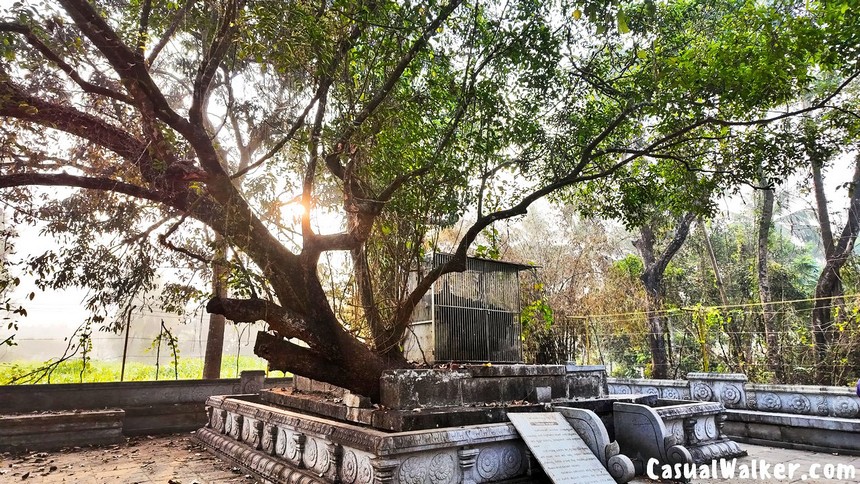
Sri Anantapadmanabha Temple Complex
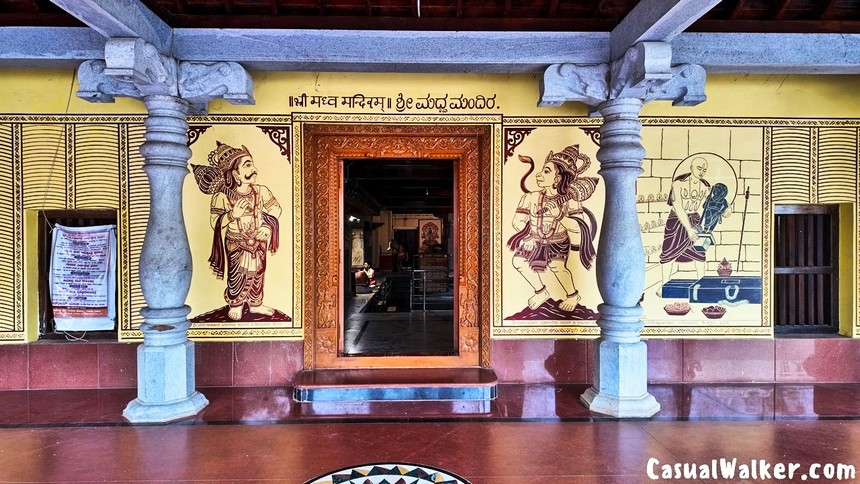
The main complex at Sri Pajaka Kshetra includes the ancestral house where Sri Madhvacharya was born and raised, the temple of Sri Anantapadmanabha, and the temple of Sri Madhvacharya himself. The complex is managed by Sri Kaniyooru Matha, one of the eight mathas established by Madhvacharya in the Udupi region. The current pontiff, Sri Sri Vidyavallabha Tirtha, resides in the temple complex.
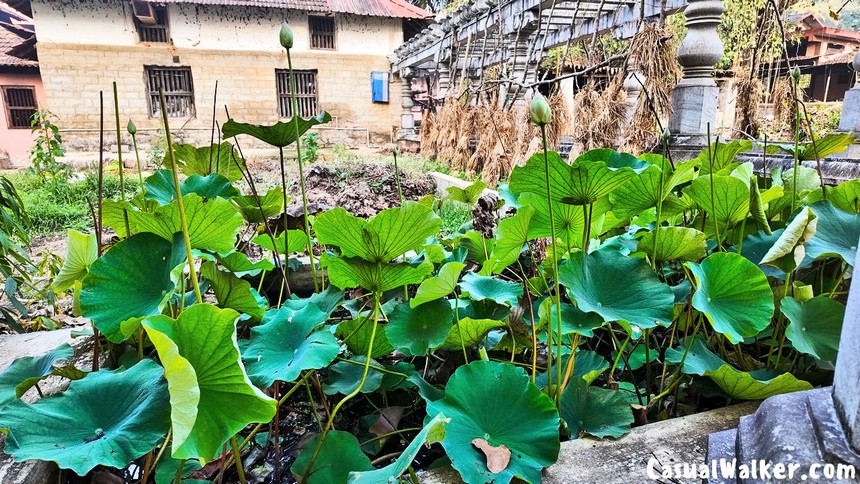
The importance of Pajaka Kshetra is narrated in the Sampradaya Paddhati, a biographical poem written by Madhvacharya’s direct disciple, Sri Hrushikesha, the founding pontiff of Sri Palimaru Matha.
What to See at Pajaka Kshetra
- Madhvacharya’s Ancestral Home: The preserved humble house where Madhvacharya was born. You can step inside and feel the spiritual vibrations of this sacred space.
- The Aksharabhyasa Spot: The exact location where young Vasudeva’s initiation ceremony into learning was performed
- Madhvacharya’s Footprints: A stone bearing the padukas (footprints) preserved and worshipped
- The Writing Stone: A flat stone Madhvacharya used for writing and studying during childhood
- Sri Madhvacharya Temple: A beautiful temple dedicated to the saint
- Sri Ananteshwara Temple: Over 1,000 years old with excellent Hoysala architecture
- Kshetra Mahatmya Temple: Marks the spot where Vishnu appeared as Madhvacharya
- Durga Temple on Kunjarugiri Hill: An ancient temple where Madhvacharya worshipped
- The Sacred Banyan Tree: The miraculous tree grown from Madhvacharya’s walking staff
- The Five Sacred Ponds: The four tirthas created by Parashurama plus Vasudevatirtha
- Gosala (Cow Shelter): Emphasizing cow protection in Vaishnava tradition
- Madhvacharya Statue: A magnificent 25-foot-tall statue at the entrance
Spiritual Significance
Pajaka Kshetra is considered a sacred pilgrimage site where visiting Lord Parashurama and Durge, bathing in Vasudevatirtha, and praying at the footprints of Sri Madhvacharya paves the way to salvation. Performing these tasks at Pajaka gives one the same spiritual benefits as performing austerities and seva at the three holy dhamas of Kashi, Gaya, and Prayaga.
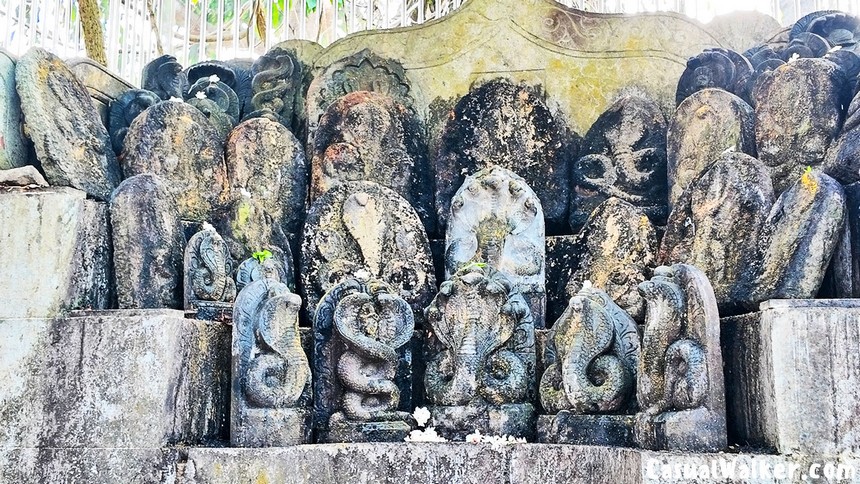
Visiting Pajaka was like stepping back 800 years in time. The simplicity of Madhvacharya’s birthplace the mud house, the rural setting, the sacred ponds reminded me that the greatest spiritual giants often emerge from the humblest circumstances.
Standing in the room where Madhvacharya was born, I felt an overwhelming sense of gratitude. This one person changed the course of Vedanta philosophy, established a tradition that has flourished for eight centuries, and inspired millions to develop devotion to Lord Krishna.
Temple Timings:
Open: 6:00 AM to 7:00 PM
Best time to visit: Early morning for peaceful atmosphere
Address: 7QCR+HW2, Padu Belle, Karnataka 574105
Phone: 094828 46331
How to Reach:
Located 13-18 kilometers southeast of Udupi Sri Krishna Matha
Well-connected by road with regular local transport available
Mangalore Bun for Breakfast
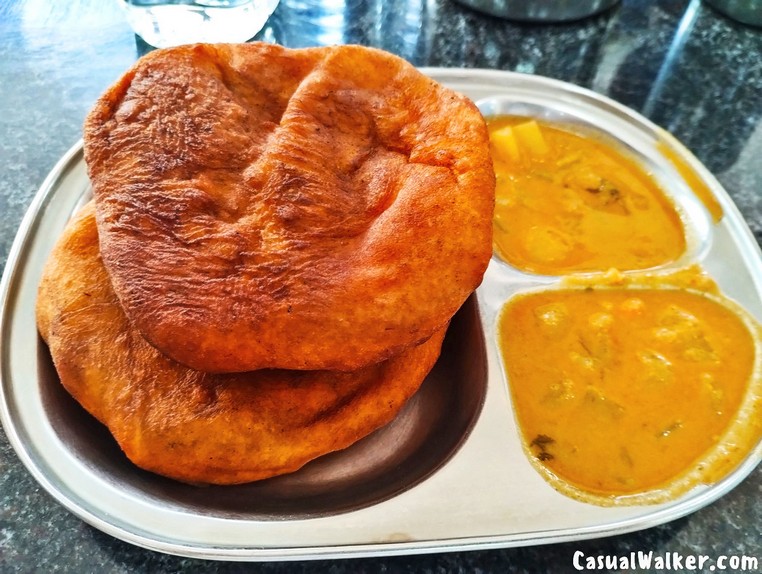
On the second day of our journey, I savored the famous Mangalore Bun for breakfast, and it was an absolute delight. This beloved coastal delicacy is a soft, fluffy, deep-fried bread made from overripe bananas mashed into flour with yogurt, sugar, and salt. The result is a slightly sweet, pillowy bun with subtle banana flavor that creates a wonderful contrast when paired with spicy, aromatic coconut-based masala kurma.
Kollur Mookambika Temple – The Supreme Goddess of Knowledge, Power, and Prosperity
Divine Abode of Adi Shakti
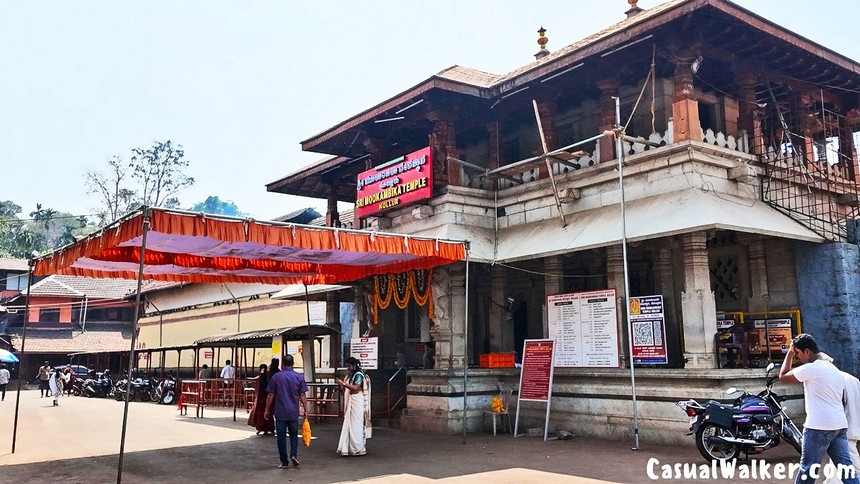
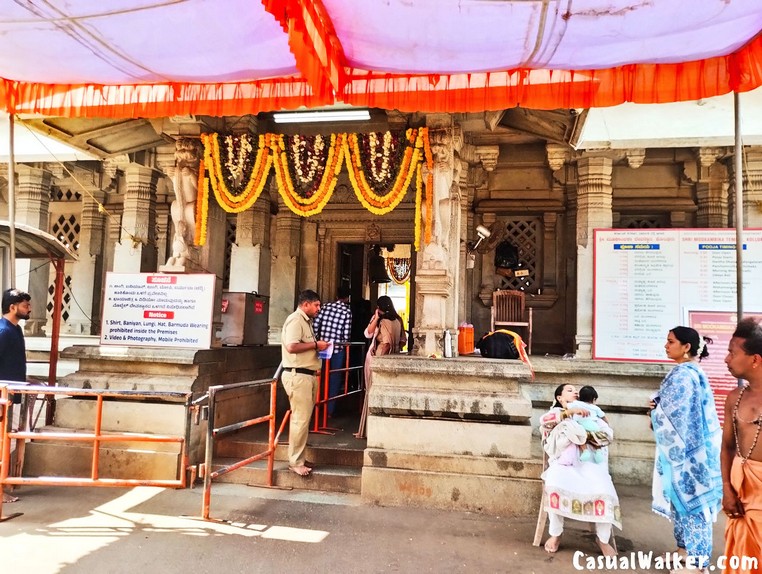
After the enriching visits to Udupi and Pajaka, our next destination was Kollur, home to one of the most powerful Shakti temples in India the Mookambika Temple. Located about 70-75 kilometers from Udupi in the picturesque foothills of the Kodachadri hills, this temple is one of the Seven Mukti Sthalas (abodes of salvation) created by Parashurama and established by Adi Shankaracharya.
Kollur Shree Kshetram History
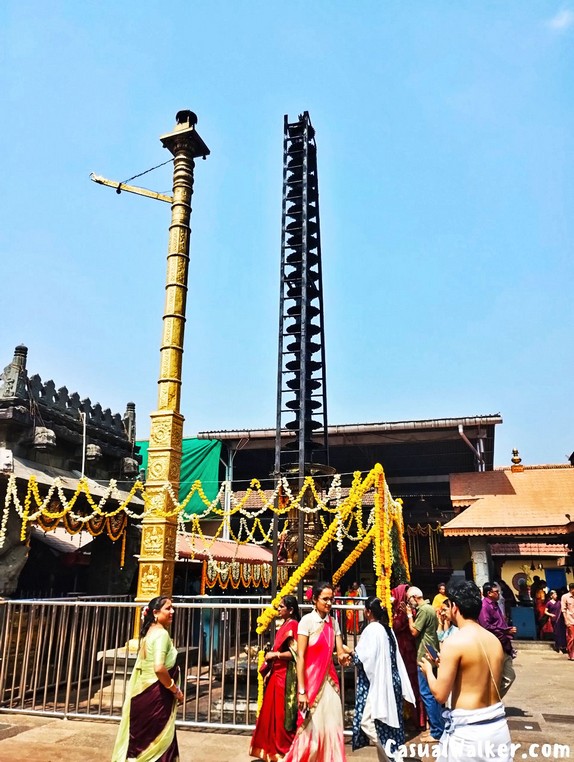
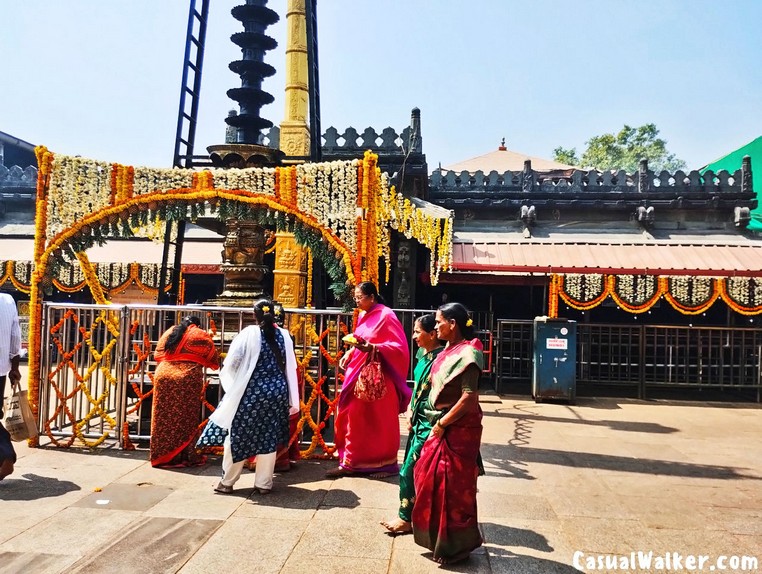
The Kollur Shree Kshetram is an ancient abode where Goddess Shakti is worshipped as Mookambika Devi. According to ancient scriptures and inscriptions (dating back to 1481 AD), this temple has been a center of Devi Shakti worship for over 1200 years. The Agnitheertha and Souparnika rivers flow around the temple, adding to its sacred geography.
Legend of Mookambika
The name “Mookambika” has a fascinating origin. According to Hindu mythology, a powerful demon named Kaumasura (also called Mookasura) obtained a boon from Lord Shiva that made him virtually invincible. He began terrorizing the gods and the universe.
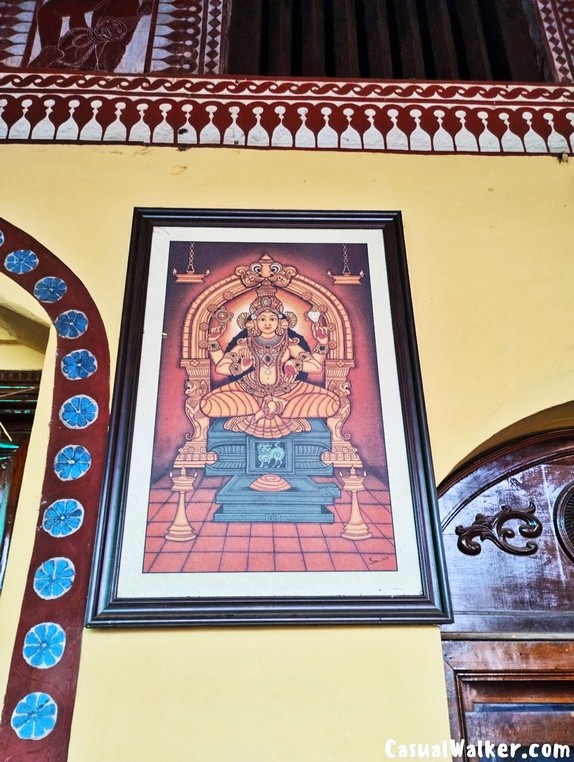
When Kaumasura approached Shiva seeking the ultimate boon, Goddess Saraswati (deity of speech and knowledge) made him mute “Mooka” means mute or speechless. Goddess Parvati then manifested in her fierce form and defeated the demon at Maranakatte. Because she defeated the mute demon, the goddess became known as Mookambika.
Unique Jyotirlinga – Adi Shakti Manifestation
What makes Kollur Mookambika Temple absolutely unique is the form of the deity. Mookambika is worshipped as an Udbhava Linga (self-manifested Jyotirlinga) that represents the perfect union of Shiva and Shakti.
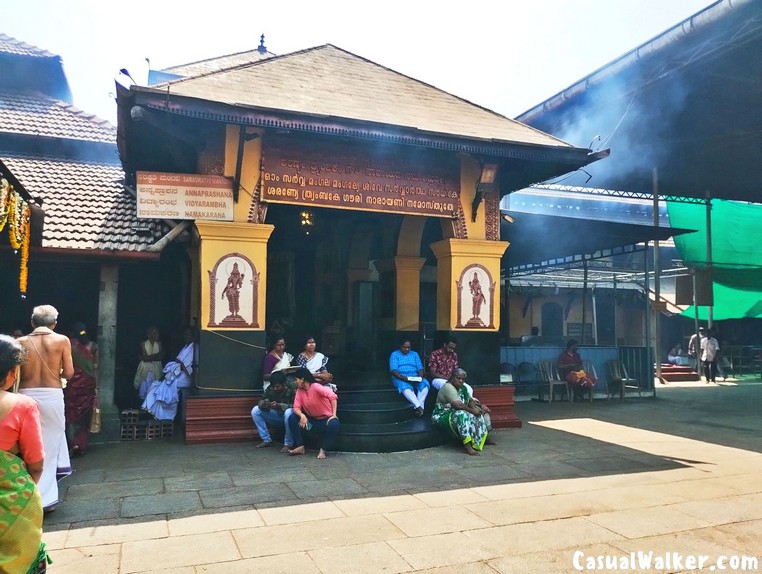
This is the only temple where you can have darshan of both Shiva and Shakti in a single lingam form!
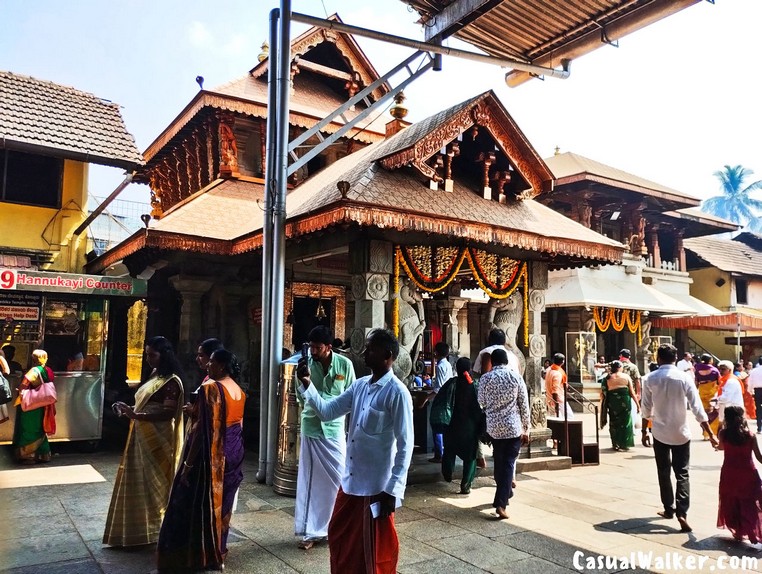
Panchaloha Idol
There’s also a beautiful panchaloha (five-metal alloy) idol of Goddess Mookambika seated in padmasana with four arms. Mookambika represents the combined form of Saraswati (Knowledge), Lakshmi (Wealth), and Durga/Kali (Power).
Adi Shankaracharya Connection
Kollur Mookambika Temple was established by Adi Shankaracharya. When Devi appeared in his meditation, he requested permission to install her idol. She agreed but instructed him not to look back while leading her to the site. When he turned back at Kollur, she asked him to install the idol at that very spot.
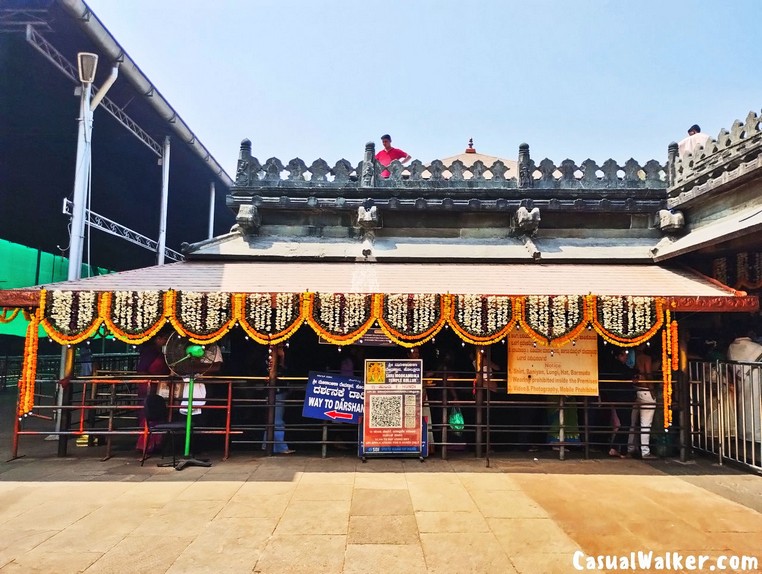
Shankaracharya consecrated the panchaloha idol on top of the Sri Chakra Yantra on the Jyotirlinga. The worship rituals continue as per the Vijayagama system formulated by Adi Shankaracharya.
Nirmalya Darshan – Special Morning Ritual
Every morning at 5:00 AM, Nirmalya Pooja takes place, during which devotees have a rare opportunity to see the Swayambhu Lingam in its original form.
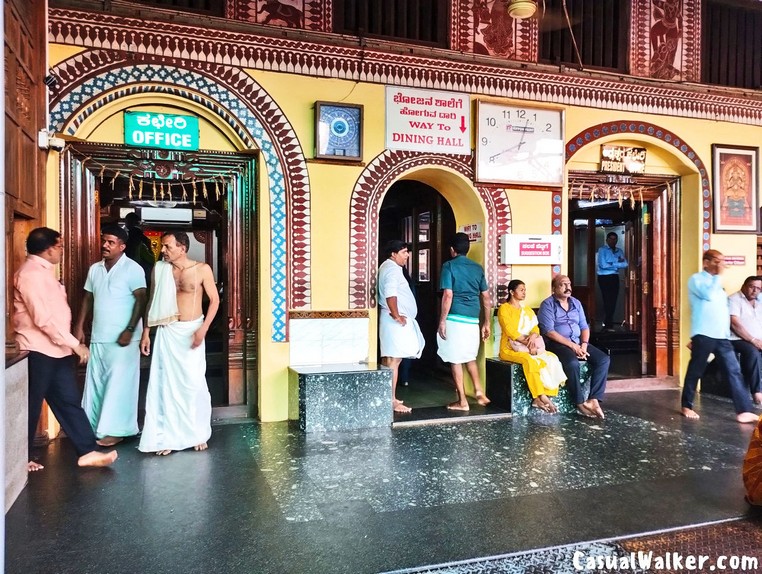
Sri Mookambika Temple Anna Prasada (Free Meals)
Sri Mookambika Temple in Kollur offers a sacred tradition of Anna Prasada — free meals served daily to all devotees in a dedicated, spacious complex known as the Mookambika Annaprasadalaya. This wholesome vegetarian meal is considered a divine blessing from Goddess Mookambika herself and is served in a clean, hygienic, and well-maintained environment.
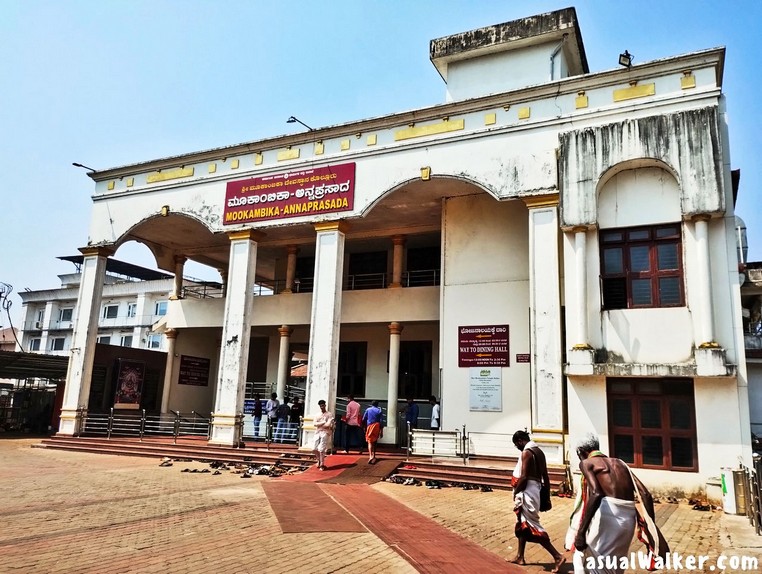
The temple kitchen prepares wholesome, sattvic vegetarian food as prasadam with deep devotion and serves it with warmth and love. This time-honored tradition of feeding devotees has been carried forward for generations, beautifully reflecting the temple’s enduring spirit of seva (service), community, and inclusiveness.
Anna Prasada Service Timings
The Kollur Mookambika Temple Anna Prasada is served twice daily:
Lunch: 12:00 PM – 2:30 PM
Dinner: 8:00 PM – 9:30 PM
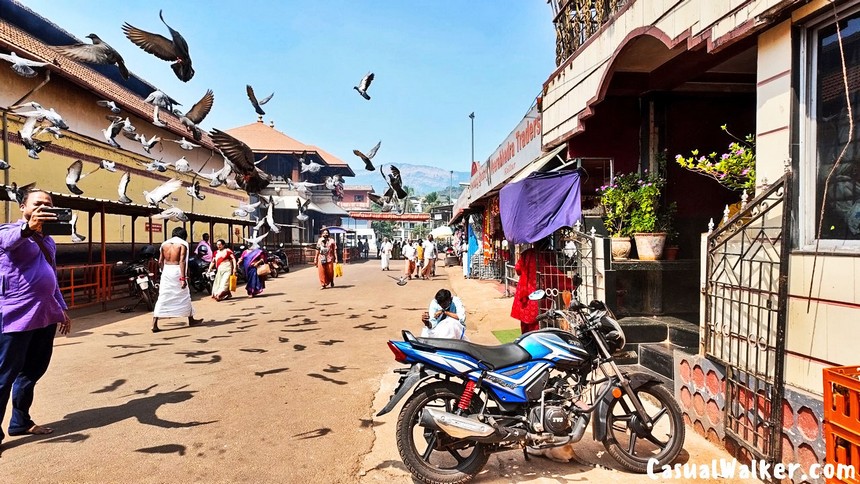
Major Festivals
- Navaratri (September-October): Nine days attracting lakhs of devotees
- Rathotsava (Chariot Festival) in Phalguna (February-March)
- Moola Nakshatra Day in Phalguna the birthday of Goddess Mookambika
The darshan of Mookambika was an experience of pure divine energy. The goddess’s presence is protective, nurturing, and empowering. The Nirmalya darshan at 5 AM was particularly moving understanding the perfect unity of Shiva and Shakti represented by the golden division.
Kollur Mookambika is a power center where the divine feminine manifests as the Adi Shakti the primordial cosmic energy that creates, sustains, and transforms the universe.
Dress Code:
Men: Must remove shirts before entering
Women: Traditional Indian attire
Temple Timings:
Morning Darshan: 4:30 AM to 1:30 PM
Evening Darshan: 3:00 PM to 8:30 PM
Nirmalya Darshan: 5:00 AM
Address: Sri Mookambika Temple, Kollur, Kundapura Taluk,
Udupi District – 576 220
Phone: 08254-258221
Website: https://kollurmookambikatemple.org/
Murudeshwar Temple – The Majestic Shiva Temple with the World’s Second-Tallest Shiva Statue
Our final destination on this divine yatra was Murudeshwar, a spectacular temple complex that combines ancient spirituality with modern architectural grandeur. Located on the Arabian Sea coast, approximately 80 kilometers from Kollur, Murudeshwar is a beautiful combination of spirituality and seaside heaven.
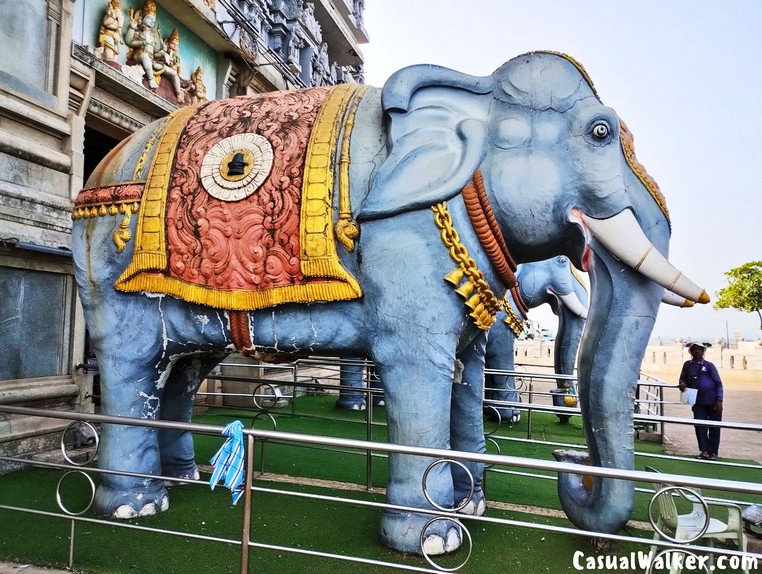
Location and Significance
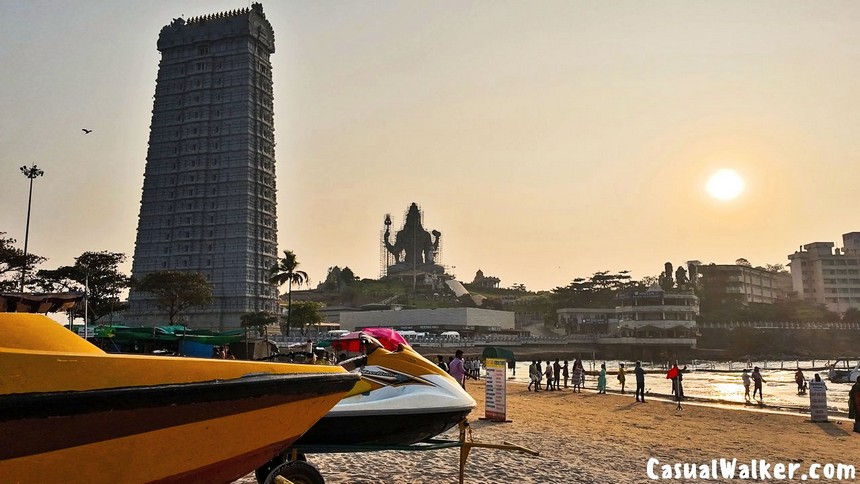
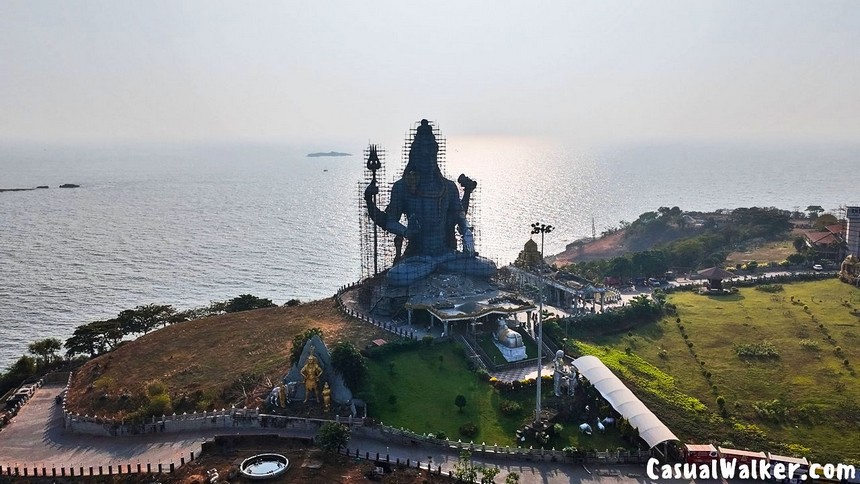
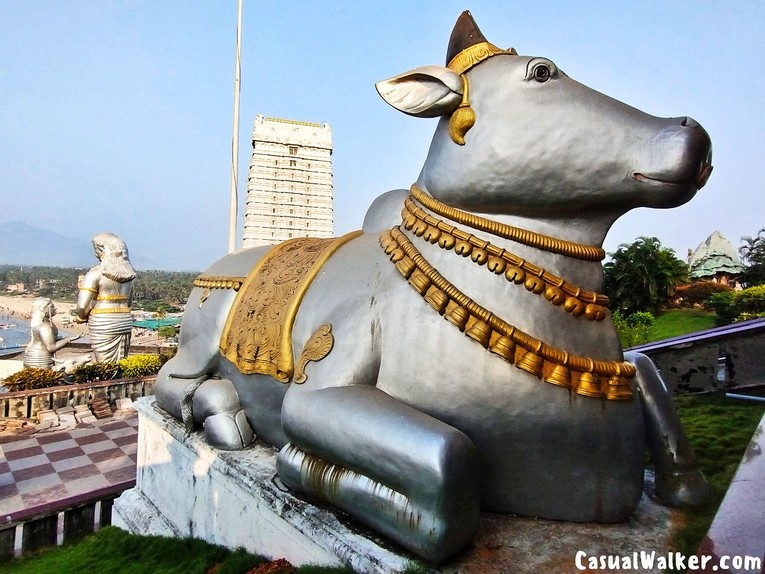
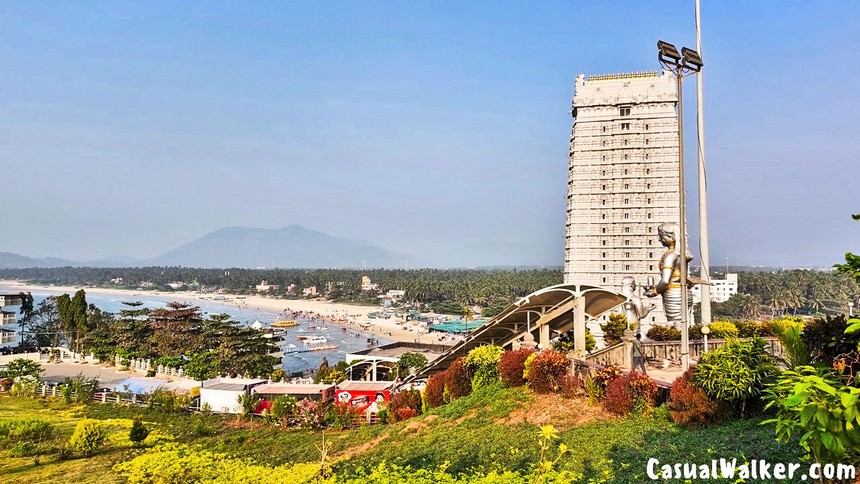
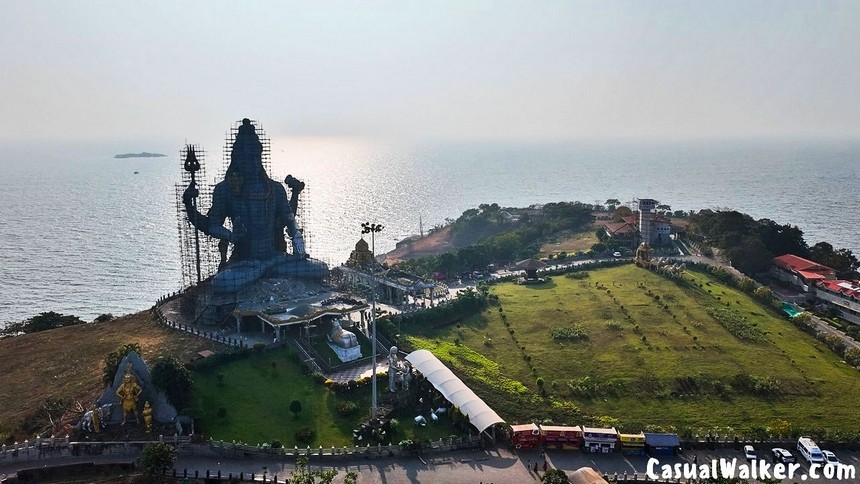
Murudeshwar Temple is built on Kanduka Hill a small peninsula surrounded on three sides by the Arabian Sea. Murudeshwar stands out for its iconic highlights that blend spirituality with architectural grandeur.
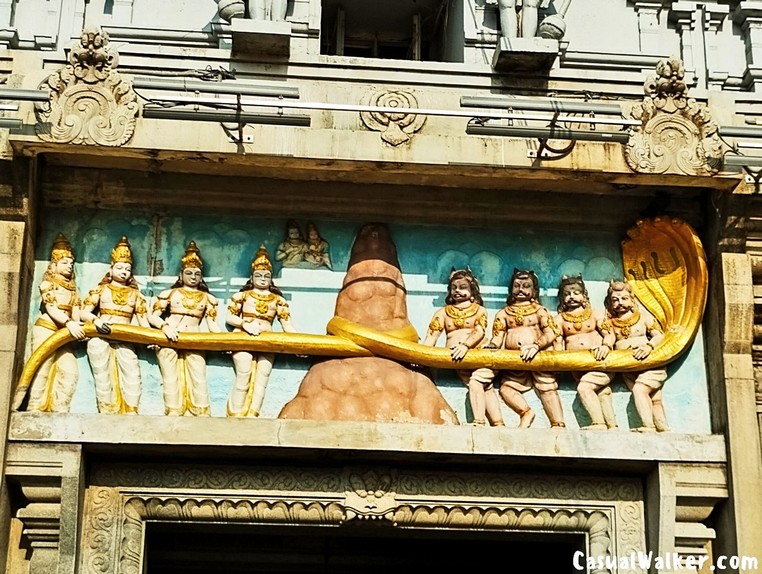
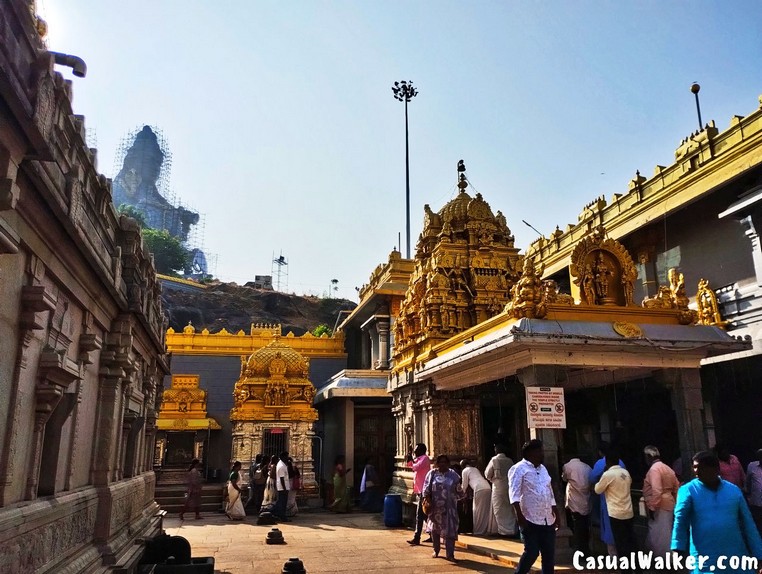
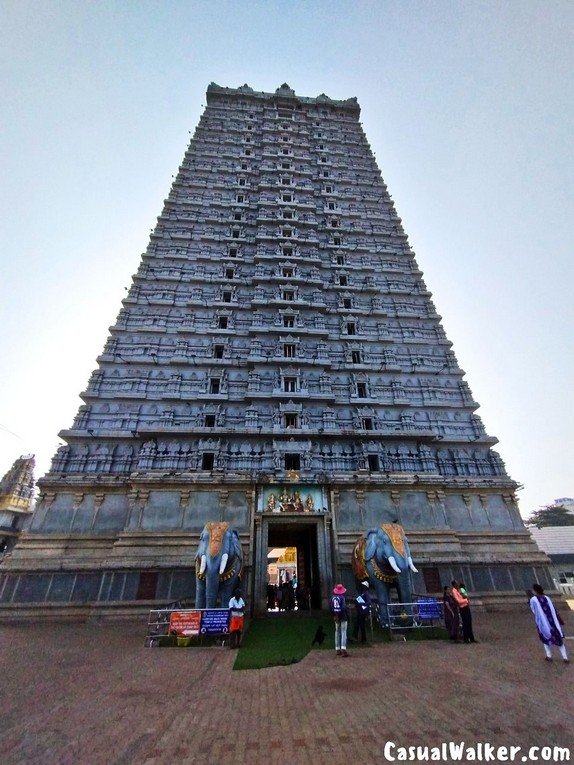
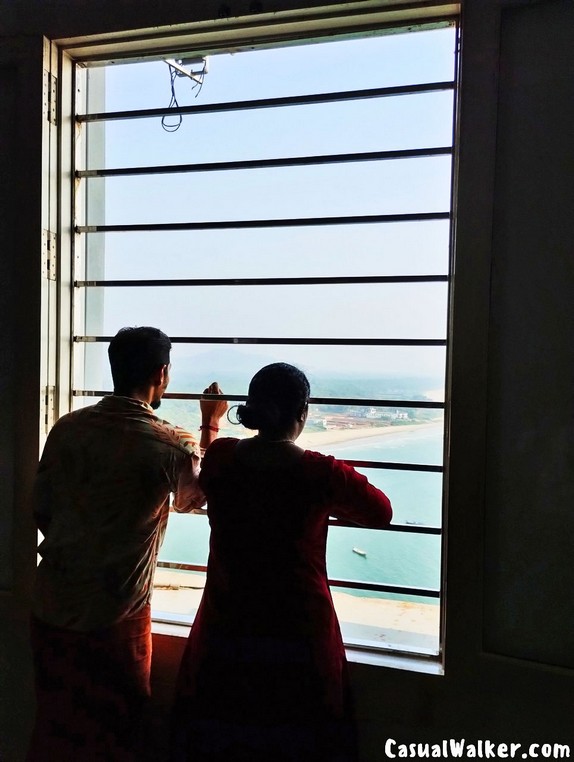
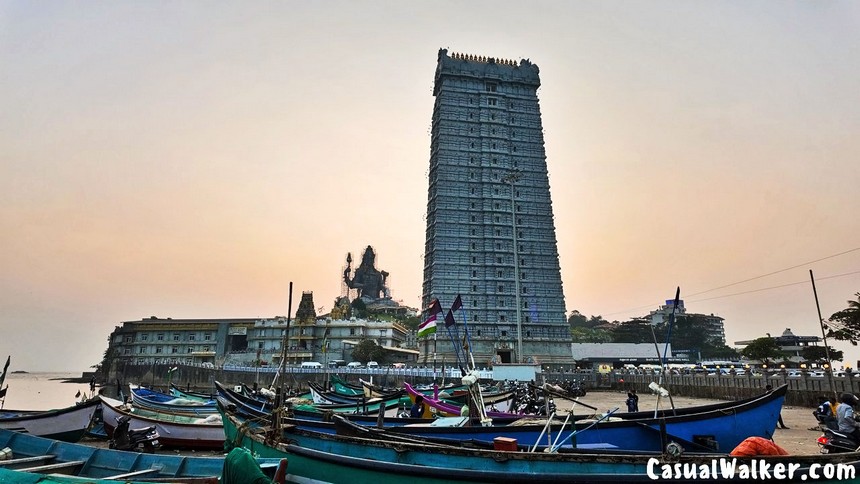
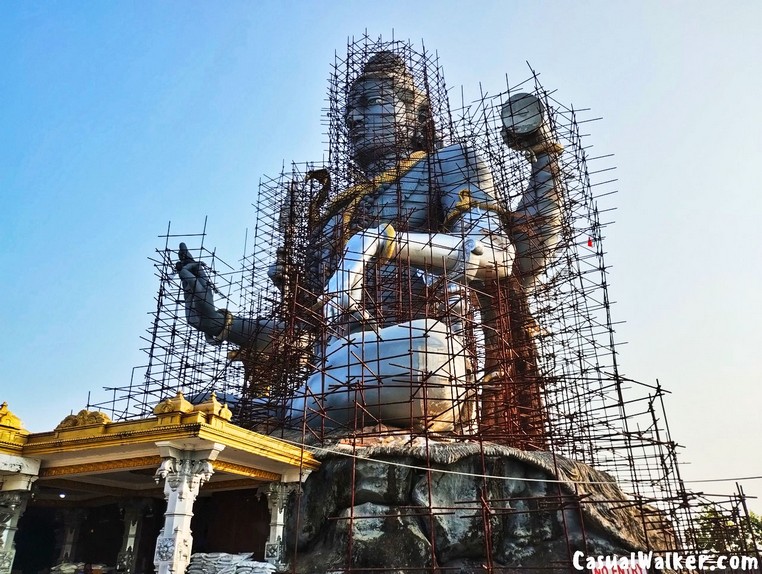
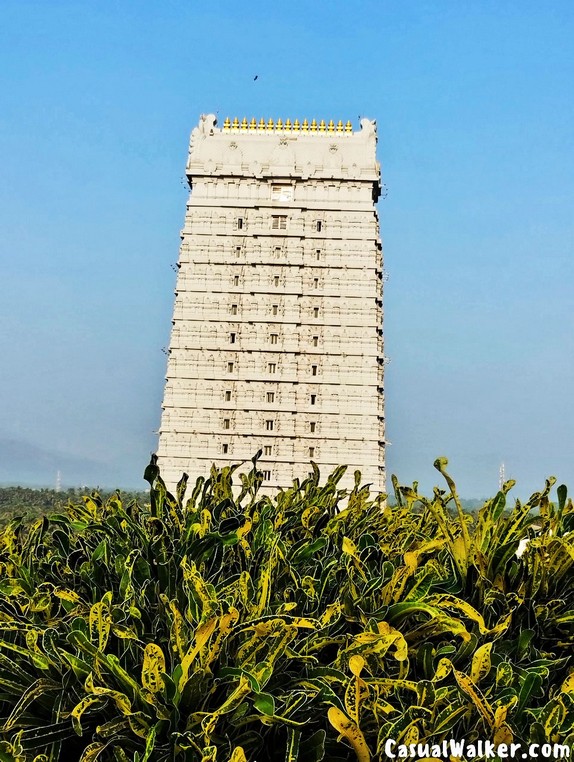
The 123-foot tall statue of Lord Shiva, the second-largest in the world and tallest in India, serves as an awe-inspiring symbol of faith and artistic brilliance. The temple’s magnificent 20-storey Raja Gopura, standing at 249 feet, is equipped with a lift offering breathtaking panoramic views of the temple complex and the Arabian Sea.
Legend of the Atma Linga – The Ramayana Connection
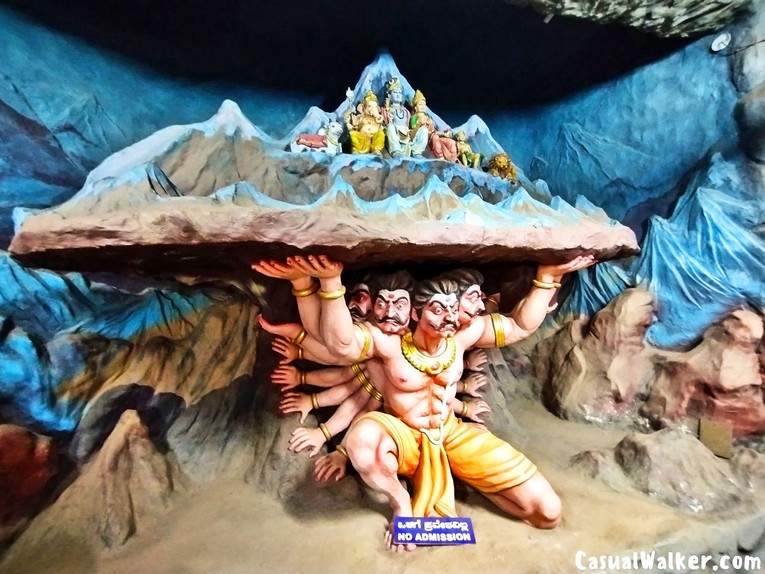
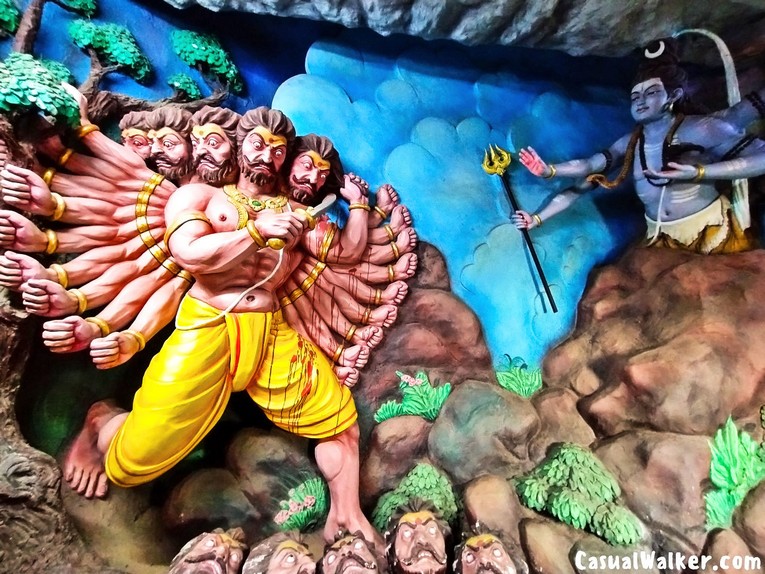
The history of Murudeshwar goes back to the times of Ramayana. Ravana performed severe penance for a thousand years to obtain the Atma Linga (the soul of Shiva) from Lord Shiva. Shiva gave it to him with one condition: he must not put it down anywhere until reaching Lanka.
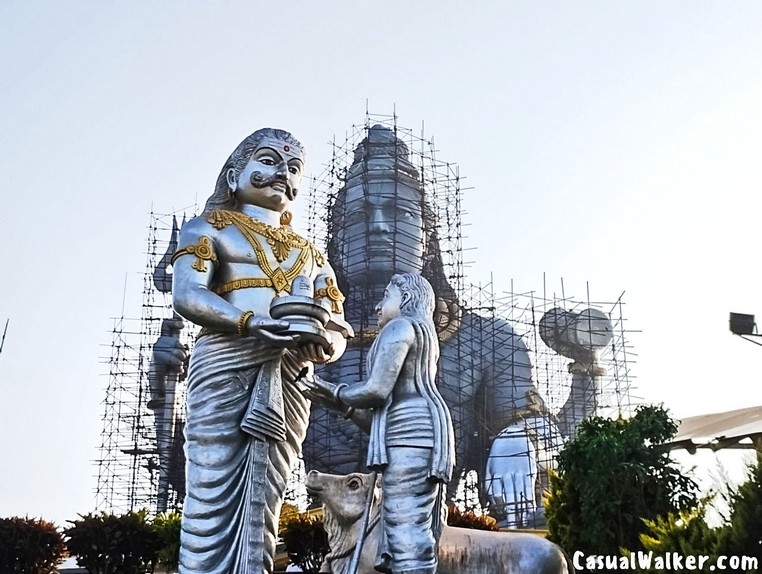
Deception by Lord Ganesha
Lord Ganesha and Lord Vishnu devised a plan. As Ravana passed near Gokarna, Vishnu created the appearance of dusk. Ganesh, disguised as a Brahmin boy, offered to hold the Atma Linga while Ravana performed his rituals. Before Ravana returned, Ganesh placed it on the ground where it became permanently established.
Ravana’s Fury and the Scattered Pieces
Furious, Ravana tried to uproot the lingam but only managed to scatter pieces:
- The cloth covering fell at Murudeshwar on Kanduka Hill
- The case covering fell at Sajjeshwara (23 km away)
- The case lid fell at Guneshwara and Dhareshwara (10-12 km away)
Each place became a sacred Shiva temple. The main Atma Linga is at Gokarna, worshipped as Mahabaleshwara.
Raja Gopuram Second Tallest in the World
The main entrance gopuram stands at 249 feet with 20 storeys the second tallest in the world! It features a lift facility to the 18th floor observation deck, offering breathtaking 360-degree views.
Lift to Gopuram Top: 6:30 AM to 7:30 PM
Raj Gopura Lift Entrance Fee:
Adults: 20 INR
Children: 10 INR
Colossal Shiva Statue 123 Feet of Divine Splendor
Since 2006, the towering statue of Lord Shiva at 123 feet has been the second-tallest Shiva statue in the world and tallest in India! The statue is positioned so the first rays of sun fall directly upon it, making it glow in morning light.
Cave Museum Bhukailash
The artificial cave museum beneath the Shiva statue features a light and sound show depicting the entire mythological tale of the Atma Linga with life-size sculptures.
Netrani Island Adventure Destination
Netrani Island, 20 km offshore, is famous for snorkeling and scuba diving amid coral reefs one of the best diving spots in India.
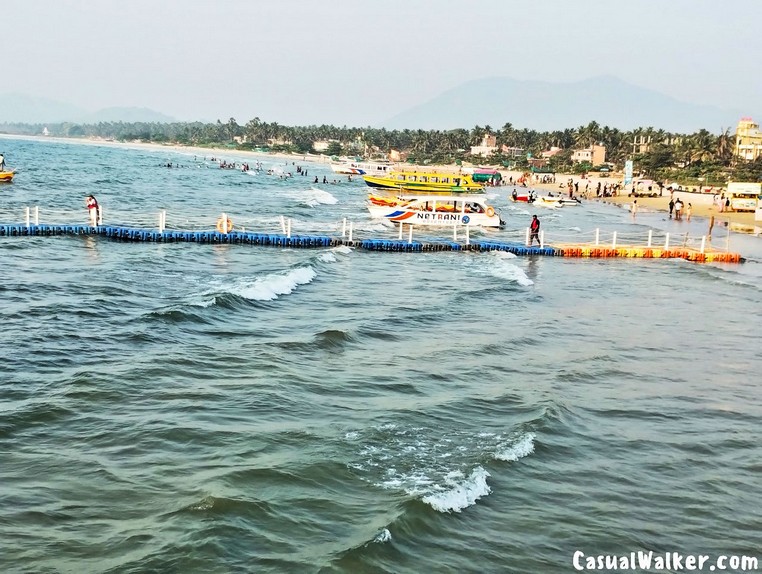
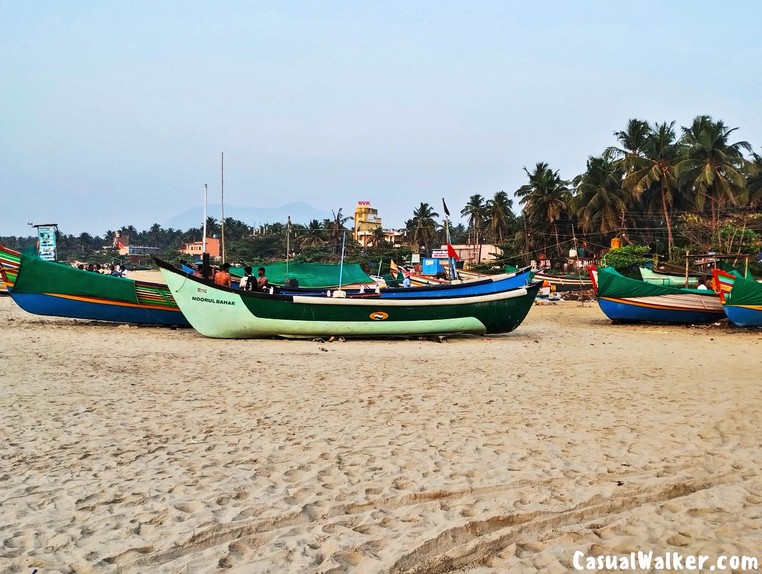
Murudeshwar was the perfect ending to our divine yatra. Taking the lift to the top of the gopuram was exhilarating. The mythology linked with Murudeshwar is captivating because of its Ramayana connection. The cave museum’s light and sound show brings the legend to life.
Spending the evening on Murudeshwar beach, watching the sunset with the illuminated 123-foot Shiva statue standing as a silent guardian this memory is etched permanently in my soul.
Temple Timings:
Temple: 6:00 AM to 1:00 PM & 3:00 PM to 8:30 PM
Museum: 9:00 AM to 6:00 PM
Address: Murudeshwar Temple, NH 7, Murdeshwar, Bhatkal Taluk,
Uttara Kannada District, Karnataka – 581350
Phone: 094828 46331
A Journey of Spritual Transformation
As our two-day Karnataka Divine Darshan Yatra came to an end, I found myself transformed. This wasn’t just a temple tour; it was a spiritual pilgrimage that touched every aspect of my being.
At Dharmasthala, I learned that dharma transcends all religious boundaries and that true seva is selfless and unconditional. The Heggade’s unique position as a Jain administrator of a Shiva temple exemplifies India’s tradition of religious harmony.
At Sringeri, I experienced the power of ancient wisdom and the grace of Goddess Sharadamba, who bestows viveka and vairagya upon sincere seekers. The presence of the two illustrious Jagadgurus ensures that the 1,200-year-old tradition continues to illuminate seekers in the modern age.
At Pajaka, I felt humbled by the simplicity from which greatness can emerge, reminding me that spiritual achievement has nothing to do with material circumstances. Standing in Madhvacharya’s birthplace, I understood that dedication and divine purpose can transform the world.
At Udupi, I witnessed how pure devotion can break all barriers, and how Krishna’s love flows equally to all who seek Him with a sincere heart. The story of Kanakadasa and the window darshan through Kanakana Kindi will forever remind me that God values bhakti above all else.
At Kollur, I experienced the nurturing, protective, and empowering presence of the Divine Mother in her Mookambika form. The unique Jyotirlinga representing the perfect union of Shiva and Shakti taught me the profound truth of cosmic balance.
At Murudeshwar, I saw how tradition and modernity can beautifully coexist, how ancient faith can find new expressions without losing its essence. The magnificent Shiva statue rising from the Arabian Sea is a testament to devotion meeting architectural brilliance.
Throughout this pilgrimage, I experienced waves of divine ecstasy that transcended the physical realm, moments where my soul felt touched by grace itself. Walking upon this blessed land where the divine grace of Jagadguru Adi Shankaracharya, Udupi Krishna, Sringeri Sharadamba, and Kollur Mookambika still flows abundantly like an eternal river of blessings, I felt part of an unbroken thread of faith woven by countless souls over millennia. This sacred journey has deepened my spiritual quest and ignited an unwavering desire to continue walk this path of devotion again and again, each time discovering new dimensions of divine truth.

Travel Tips for Visiting Karnataka Spiritual Tour
Temple Dress Code
- Modest traditional attire is expected at all temples on this
circuit. Men should wear dhoti,or full-length trousers with a clean shirt or kurta. At several temples — including Dharmasthala, Udupi Sri Krishna Temple, and Kollur Mookambika — men are required to remove their shirts before entering the inner sanctum, so be prepared for this. Men may drape a clean towel (angavastram) across their shoulders or upper body as a modest covering while inside — it is widely accepted and commonly practiced, so carrying a fresh towel specifically for this purpose is highly recommended. - Women should wear sarees, salwar kameez, or churidar with a dupatta that covers the shoulders. Short skirts, sleeveless tops, shorts, and tight or revealing clothing are strictly not permitted at any of the temples on this itinerary. Wearing traditional South Indian attire is always appreciated and often preferred. Remove footwear well before the temple entrance. Carry a small cloth bag to keep your belongings while footwear is deposited at the designated stalls.
Best Time to Visit
- The ideal time to visit this temple circuit is between October and March, when the weather along the Karnataka coast and the Western Ghats is pleasant and cool. The post-monsoon months of
October and November are particularly beautiful as the surroundings are lush and green after the rains, and the rivers and waterfalls en route are at their scenic best. - Avoid visiting during peak summer (April to June) as the coastal and ghat regions experience high heat and humidity. The monsoon season (June to September) brings heavy rainfall across this entire region, making roads through the Ghats difficult and sometimes risky, and some temples may have restricted access or altered timings during this period.
- Arrive at each temple as early as possible — ideally by 4:30 AM
to 5:20 AM — to avoid long queues and to experience the morning
rituals and aartis, which are considered the most auspicious
time for darshan.
General Tips
- Carry a small backpack with water, light snacks, a personal
first aid kit, and a hand towel. Temple complexes can involve considerable walking on stone or marble floors which can be hot during midday. - Photography inside the inner sanctum (garbhagriha) is strictly prohibited at all temples. Always check signboards before clicking pictures anywhere within the temple complex.
- Carry cash as most temple towns have limited digital payment
infrastructure. Prasad, donations, and local shops typically operate on cash. - Mobile phones should be kept on silent mode. Loud
conversations and calls inside the temple premises are
considered disrespectful. - Queue management systems (online booking for special
darshan) are available at some temples like Kollur Mookambika and Dharmasthala. Booking in advance on busy days can save significant waiting time.
How to Visit Chennai to Mangaluru / Mangalore, Karnataka
By Road: Mangaluru is approximately 1,050 kilometres from Chennai, and travelling by road is a great option for those who enjoy a long, scenic drive through the heart of South India. The most common route from Chennai is via NH 48 towards Bengaluru, and from there continuing on NH 75 through the majestic Western Ghats, descending into the coastal plains of Mangaluru. The total drive takes around 15 to 17 hours depending on traffic, road conditions, and rest stops along the way. Several private luxury bus operators such as VRL Travels, SRS Travels, and Kallada Travels run overnight sleeper and semi-sleeper services directly from Chennai to Mangaluru, making it a budget-friendly and convenient option. KSRTC also operates services on this route. If you are driving personally, it is advisable to break the journey at Bengaluru or Hassan for rest before continuing to Mangaluru.
By Train: The best way to reach Mangaluru from Chennai is by train, and the West Coast Express (Train No. 16628) is the most popular choice among travellers. It departs from MGR Chennai Central (MAS) in the early evening and glides into Mangaluru Central (MAQ) the following morning, covering the distance in approximately 14 to 15 hours — a perfectly timed overnight journey that lets you wake up refreshed in a new city. The train passes through coastal Tamil Nadu and Karnataka, offering glimpses of paddy fields, rivers, and coconut groves as it nears Mangaluru. Another option is the Chennai–Mangaluru Weekly Express. Booking an air-conditioned sleeper or 3AC berth ensures a comfortable overnight experience, and it is strongly recommended to book tickets well in advance, especially during weekends and festival seasons, as this route is heavily patronised by pilgrims and tourists alike.
By Flight: The fastest way to reach Mangaluru from Chennai is by air, with a flight time of just about 1 hour and 10 minutes. Mangaluru International Airport (IXE), situated at Bajpe around 18 kilometres from the city centre, receives multiple daily flights from Chennai International Airport (MAA). Airlines such as IndiGo, Air India, and SpiceJet operate regular services on this route, with fares that can be surprisingly affordable when booked in advance. Flights are available at various times throughout the day, giving you the flexibility to plan your arrival in Mangaluru as per your itinerary. Upon landing, pre-paid taxis, app-based cabs like Ola and Uber, and hotel shuttle services are readily available outside the terminal to take you comfortably into the city or directly to your first destination.
Thanks for exploring this photo guide! We’d love to hear your feedback, stories, corrections, or any updates. Email us.
Follow our photo walks on Instagram: @hicasualwalker
Keep exploring: Browse 650+ Travel & Culture Photo Guides