




Rakugo Traditional Comedy From Japan : A 400 Year Old Art of Solo Comic Storytelling | Rakugo Meaning, Stories & Performance | Complete Guide: History & Origins, Edo Style & Kamigata Style, Dress & Props, Shinuchi Rakugo, Famous Rakugo Artists of Japan | Traditional Art Forms of Japan | SanQ: Santhosh Kaliyanaraman, India’s First English Rakugo Storyteller | One Storyteller, One Fan, One Hand Towel & a Room Full of Laughter (Updated)
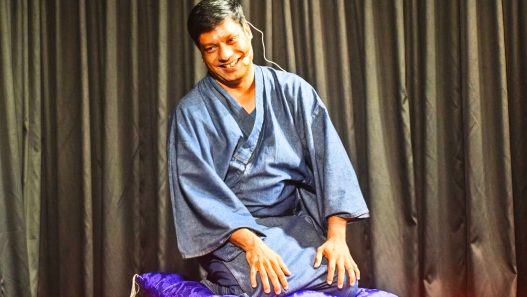
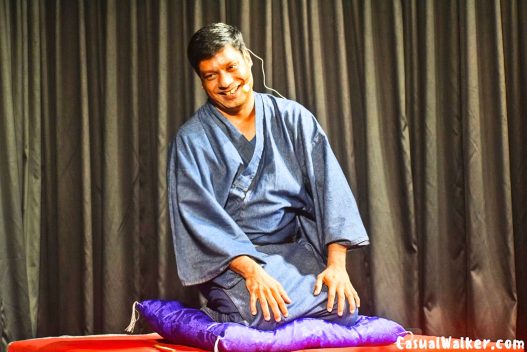
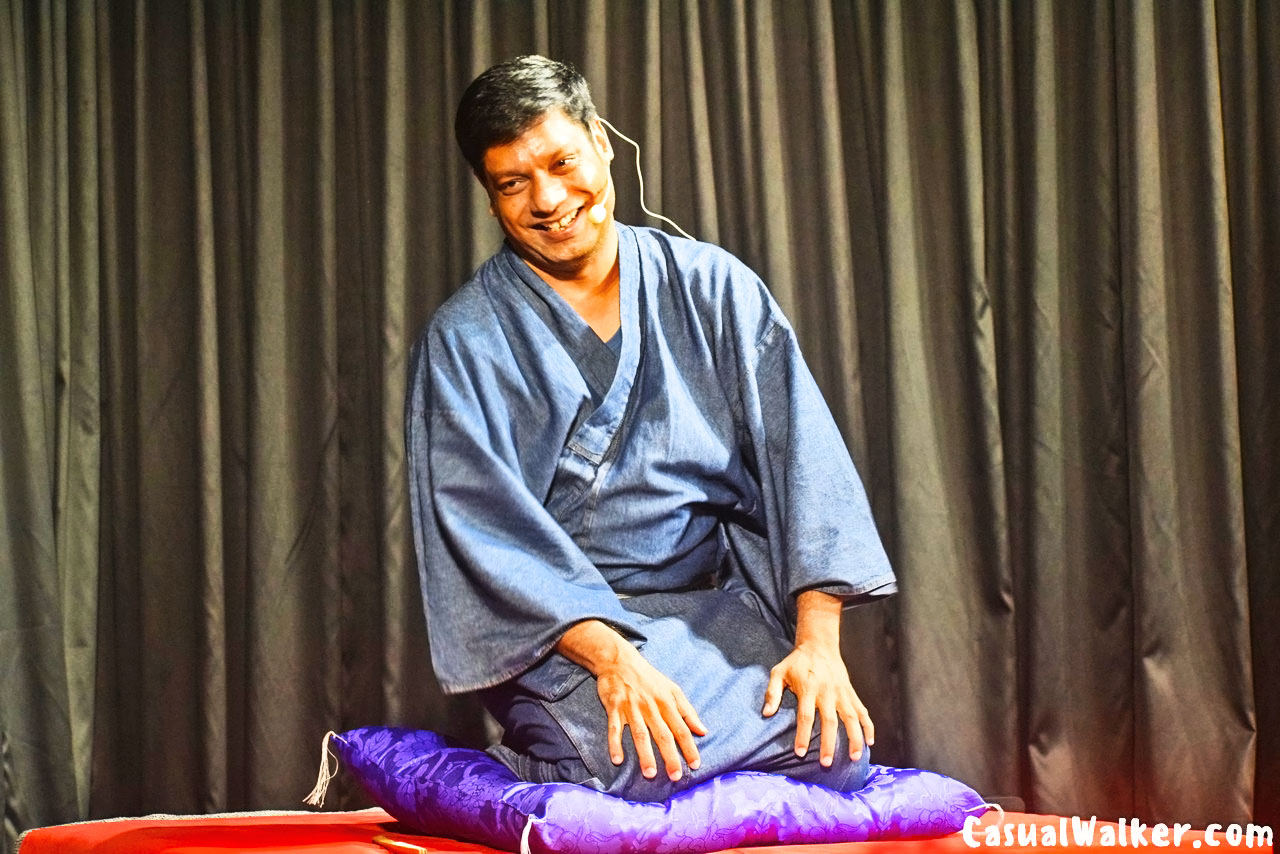
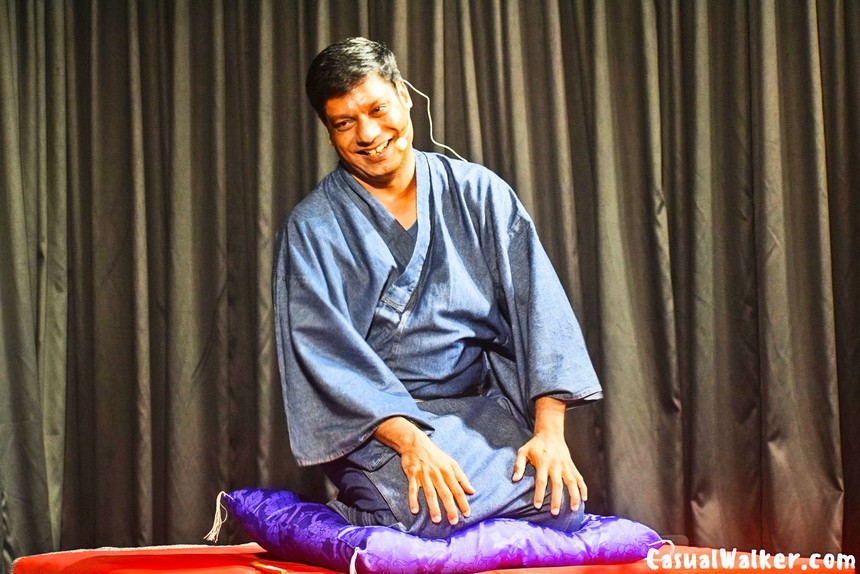
– a single artist, a seated stage and a room full of listeners, ready for a story
| CasualWalker’s Rating for SanQ’s Rakugo Traditional Solo Comic Storytelling Performance : | |

9.9 – Warm, Witty, Wonderful |
|

Rakugo is one of the most charming traditional art forms of Japan. One performer sits on a cushion and brings an entire world to life with only voice, expression and imagination. There is no orchestra, no stage set and no large cast. A single artist, a seated stage and a room full of listeners ready to be taken on a journey is the heart of this art.
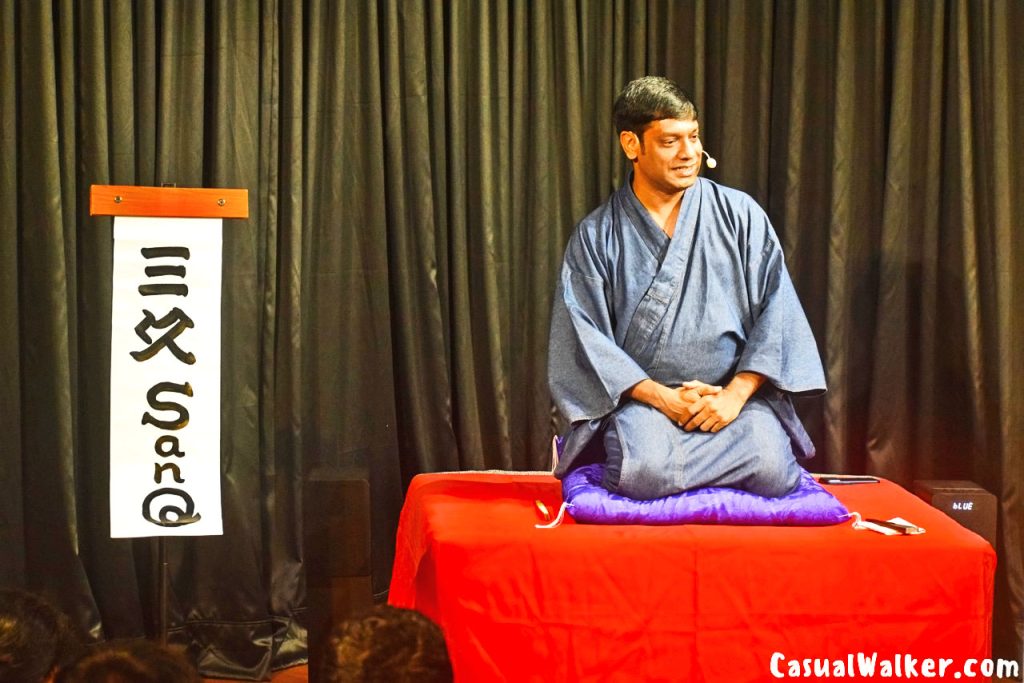
With over 400 years of history, Japan’s traditional art of comic storytelling continues to delight audiences with stories that are as funny today as they were centuries ago. 
What Is Rakugo
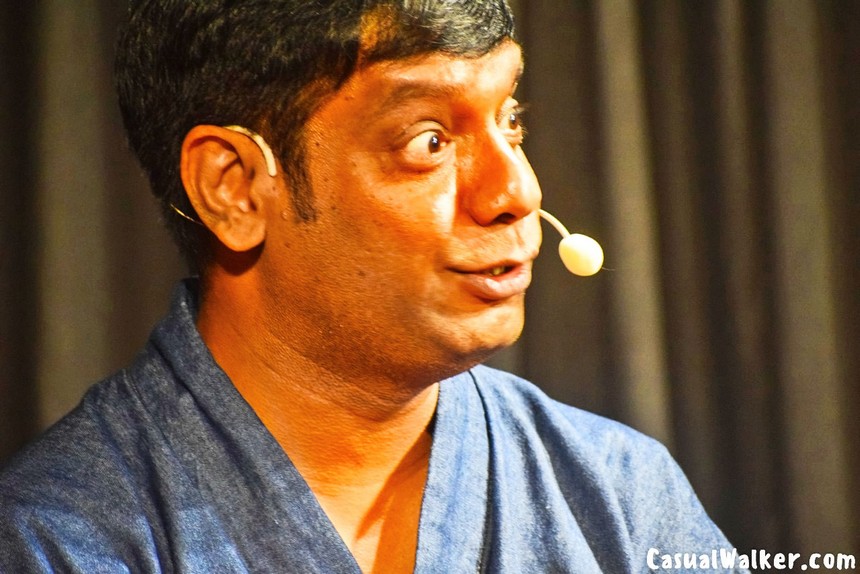
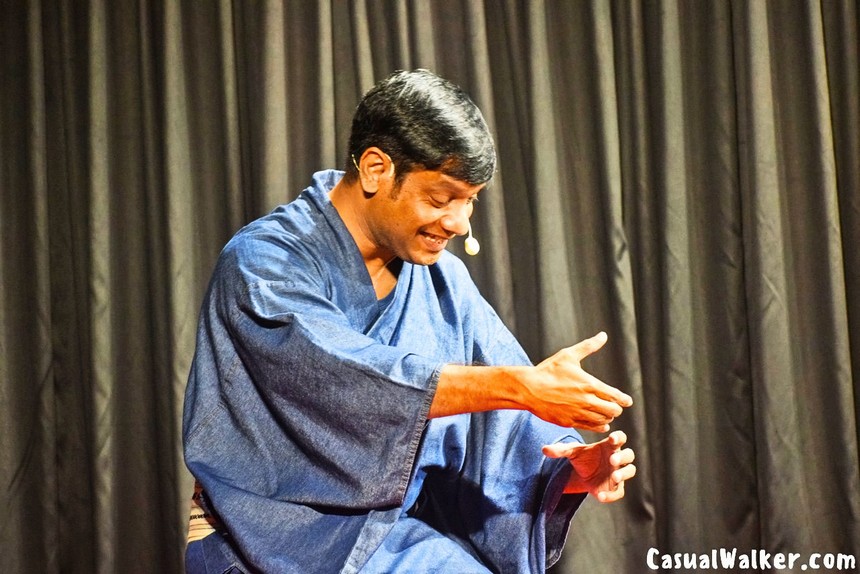
Rakugo is performed by one artist called a rakugoka, also known as a hanashika. The storyteller plays many characters by changing voice, facial expression and the direction of the gaze. A slight turn of the head and the audience knows a new person is speaking.
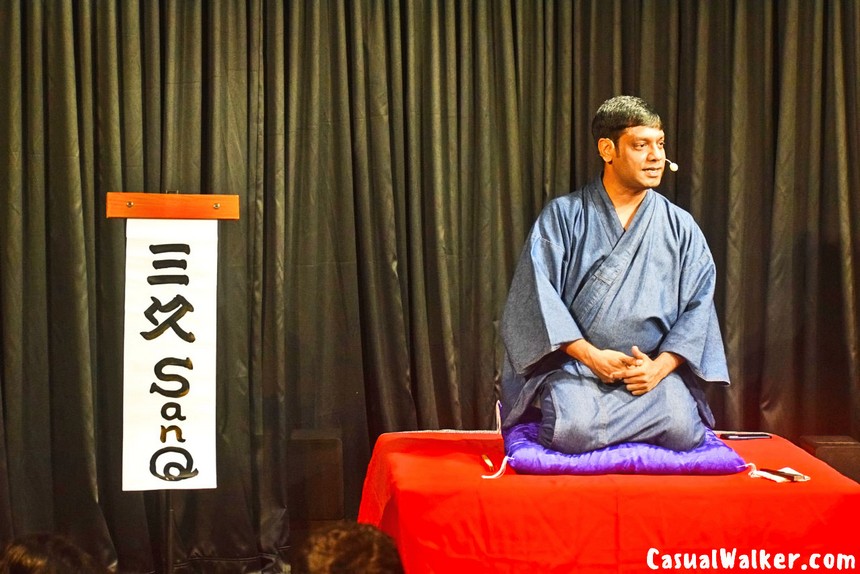
Rakugo means “fallen words” in Japanese. This refers to the ochi, the punchline that drops at the end of every story. A typical tale opens with a light introduction called the makura, moves into the main story with its colourful characters, and then lands on the ochi.
Rakugo Origins & History
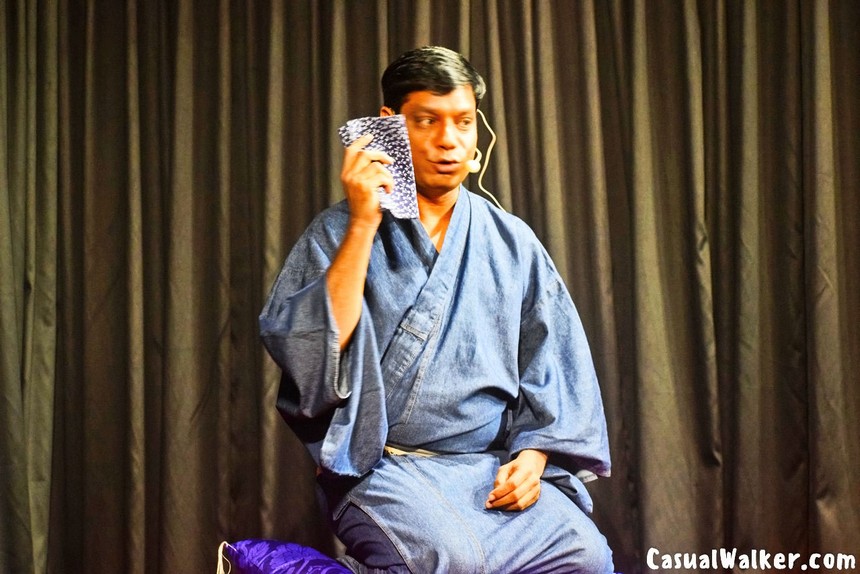
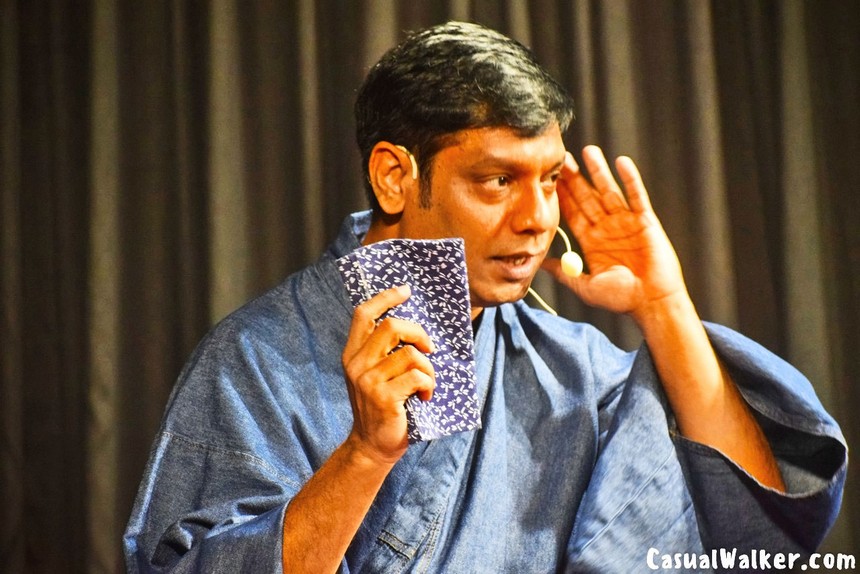
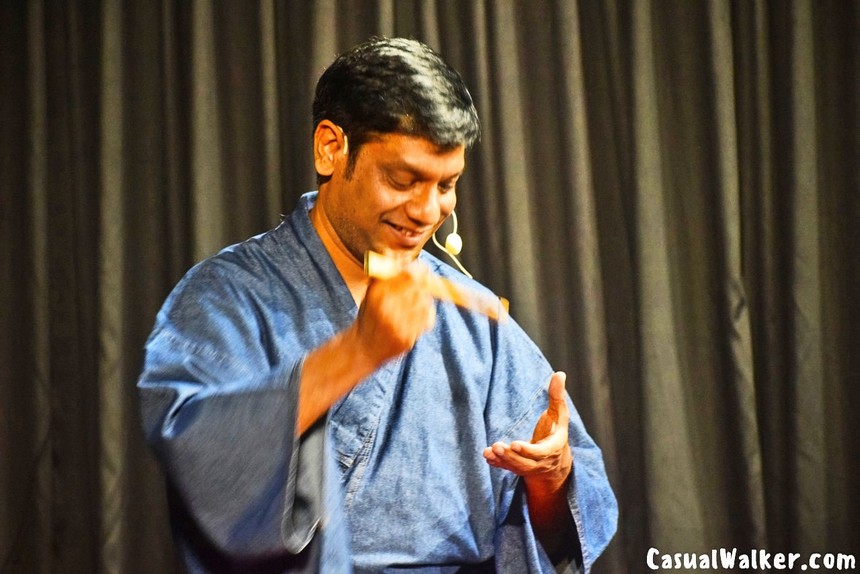
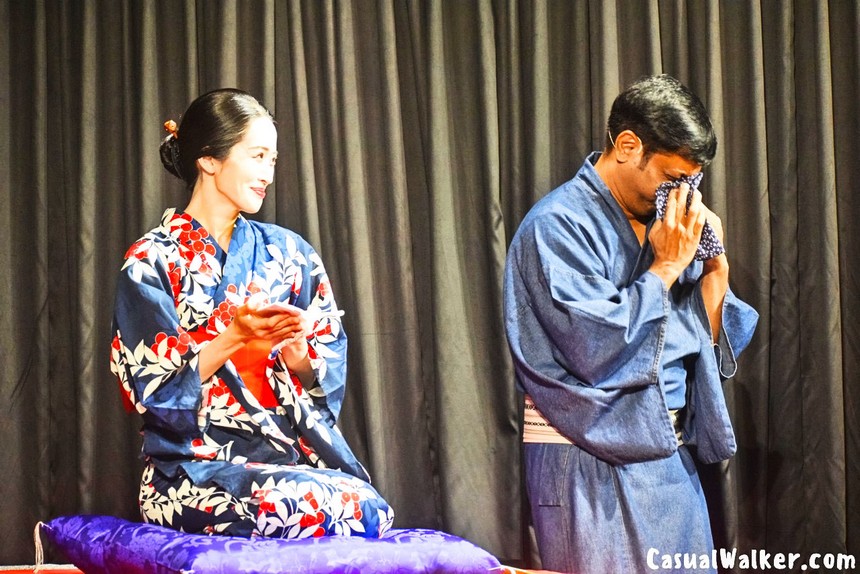
Rakugo is a traditional Japanese comical storytelling art form with over 400 years of history, dating from the middle of the Edo period. It is known for its unique performance style. The stories are narrated in a dialogue format. Dressed in a kimono, the storyteller remains seated throughout the performance, playing the parts of several characters and acting out different scenes with only a fan and a hand towel as props.
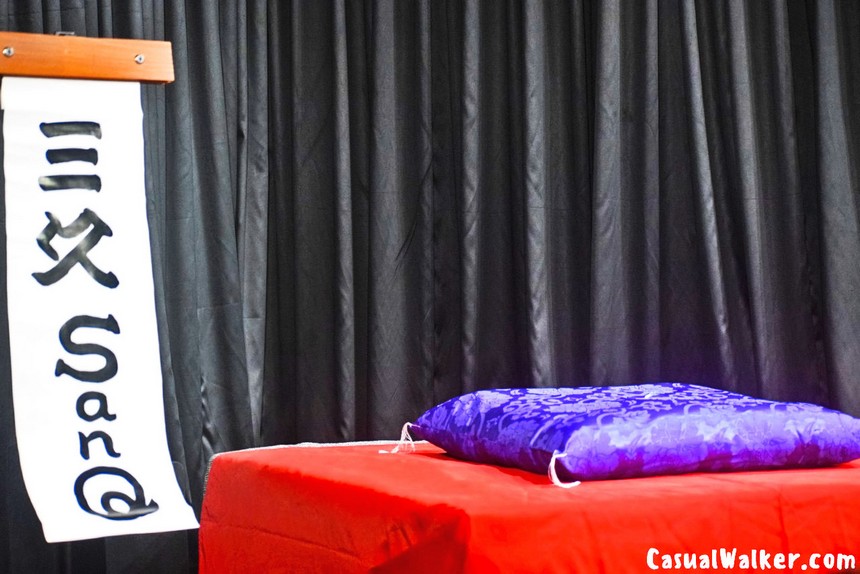
There are no costumes and no scenery, so the job of the rakugoka, the storyteller, is to inspire the imagination of the audience through the skill used in portraying the world of the story. The story of rakugo begins with devotion. Funny tales in the setsuwa collections of the Heian and Kamakura periods are considered early ancestors of rakugo, and its direct ancestor is the humorous tales told by otogishu storytellers in the Sengoku period. This reminds me of our own harikatha and kalakshepam, where devotion, music and storytelling come together to teach through delight.
The most important name in the early story is Anrakuan Sakuden. He was a priest of the Jodo sect of Buddhism, a devotee of the tea ceremony and an amateur poet. He is often called the originator of rakugo, and his eight volumes of Seisuisho contain about 1000 stories, including the original tales of rakugo. The title of that book means laughter to keep you awake, which is a lovely reminder that humour and sermons were once close companions.
By the middle of the Edo period, figures who looked like professional storytellers had appeared, including Tsuyu no Gorobei in Kyoto, Yonezawa Hikohachi in Osaka and Shikano Buzaemon in Edo. The Edo period, from 1603 to 1868, was a time of peace and prosperity. The rise of the merchant class helped rakugo spread to ordinary people, and many performer groups formed.
The art went through ups and downs. In the late 18th century a man named Utei Enba started a revival in Edo, and performing groups emerged in Edo, Osaka and Kyoto. The Edo and Osaka traditions survived, while the Kyoto style eventually faded. Storytellers moved from the streets to special halls. From 1791 they performed in the yose, a special kind of performance room.
Edo Style & Kamigata Style
Two main flavours exist today. The Edo style of Tokyo is refined and quick, while the Kamigata style of Osaka and Kyoto is more expressive and relaxed. Classical rakugo, called koten, consists of stories handed down through generations, while modern rakugo, called shinsaku or sosaku, includes stories created after the Meiji period with contemporary themes.
Dress & Props
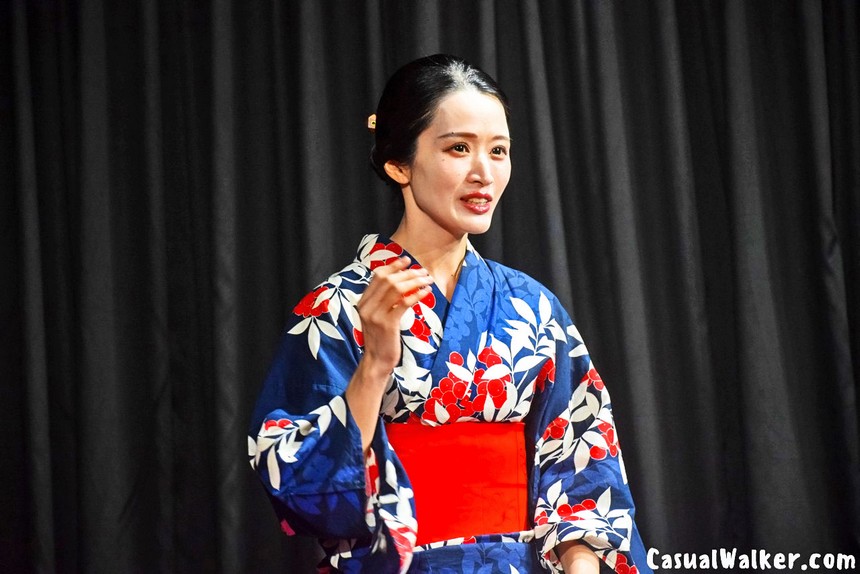
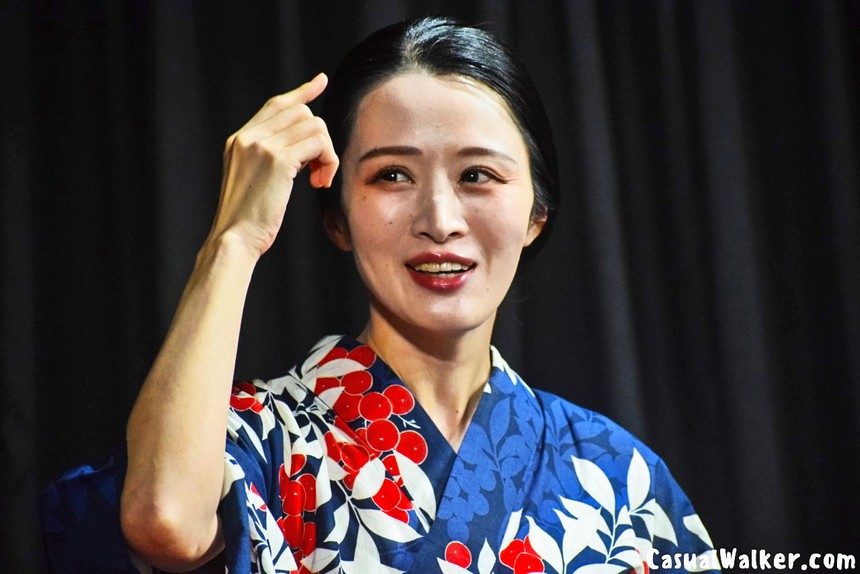
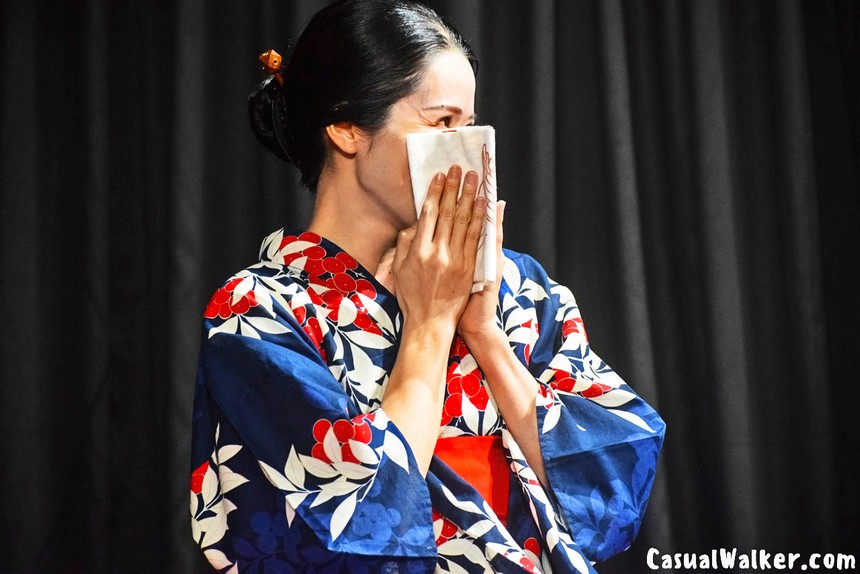
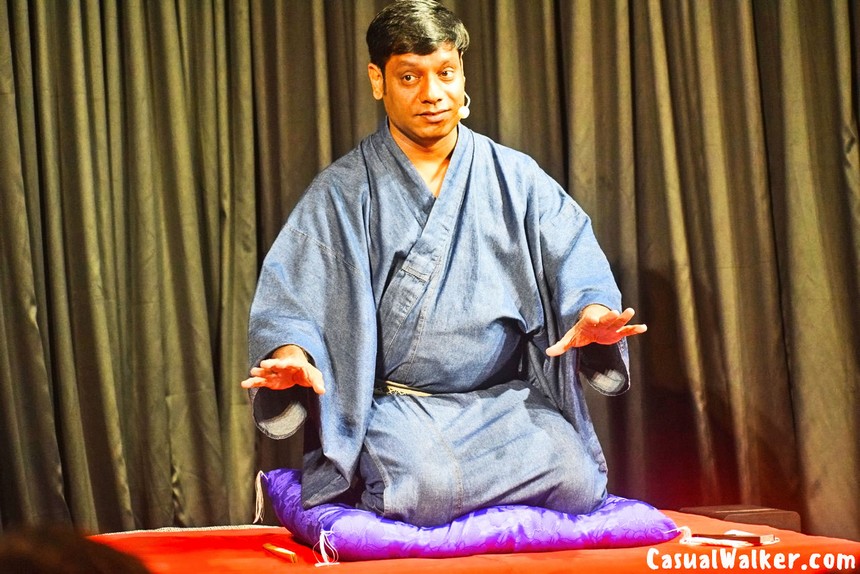
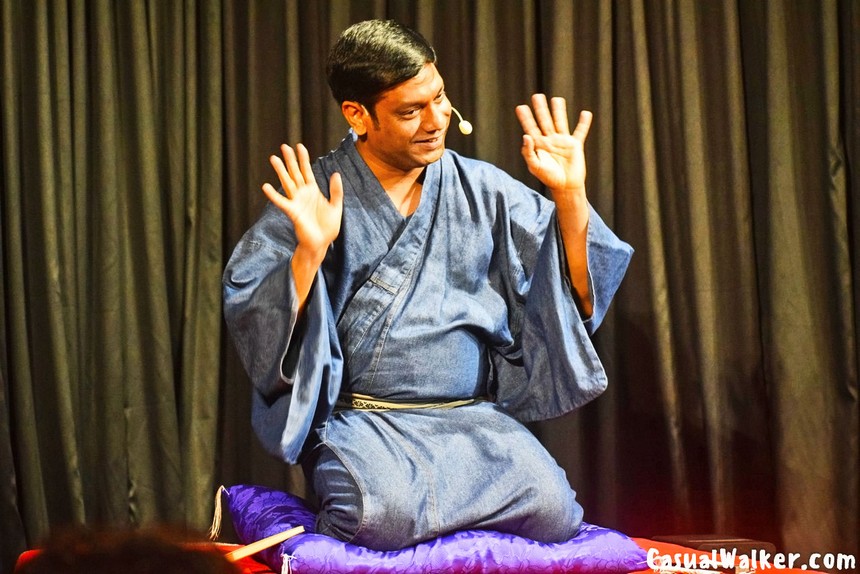
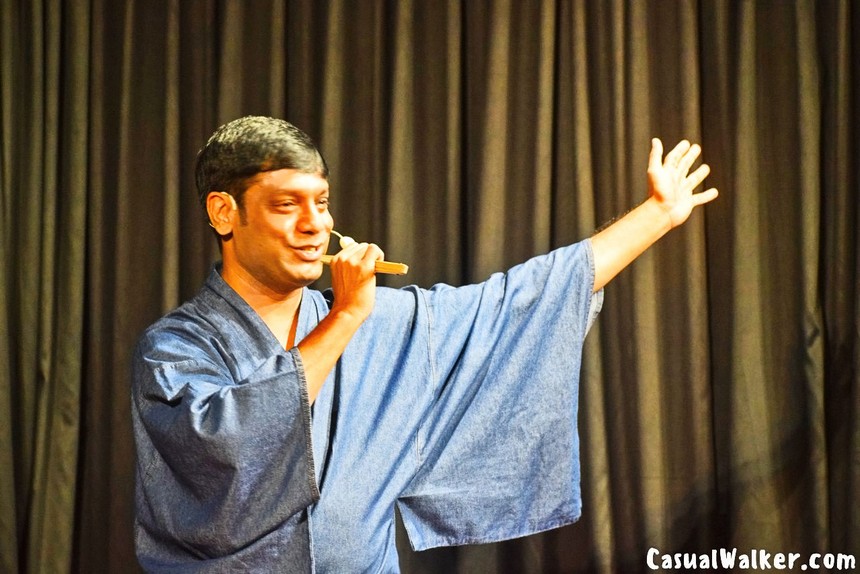
The rakugoka sits on a cushion called a zabuton and wears a traditional kimono. The two props are a folding fan, the sensu, and a small hand towel, the tenugui. The fan can become chopsticks, a pen, a pipe or a sword, and the towel can become a wallet, a book or a letter. It is a beautiful lesson in how little an artist needs when imagination is strong.
Training & the Guru Shishya Bond
Rakugo is passed on through apprenticeship. To become a full storyteller, called a shinuchi in Edo rakugo, one must apprentice under a master and go through many years of training and service. Apprentices carry out demanding domestic chores and learn stories by the traditional mouth to mouth method that artists have used for generations.
Famous Rakugo Artists of Japan
Katsura Beicho III is one of the greatest names of Kamigata rakugo. He was honoured as a Living National Treasure in 1996 and received the Order of Culture in 2009, the first rakugo storyteller to do so. He passed away in 2015 at the age of 89. Yanagiya Kosan V was also a Living National Treasure. In 1999 Japan issued a set of rakugo stamps in honour of five great storytellers, including Yanagiya Kosan V and Katsura Beicho III.
Katsura Bunraku, Kokontei Shinsho and Yanagiya Kosan were rivals who stood side by side after the war. Bunraku kept an orthodox classical style, Shinsho was loved for his free flowing storytelling, and Kosan was admired for the warmth of his telling.
Tatekawa Danshi and Yanagiya Kosan VI also gained nationwide fame and helped the art survive and grow. Akashiya Sanma and Shofukutei Tsurube II are remembered among the artists who shaped rakugo. Famous names among today’s performers include Tachibanaya Enzo, Katsura Bunshi VI, Tatekawa Shinosuke and Hayashiya Shozo IX.
Rakugo Beyond Japan
Rakugo is now travelling the world. Katsura Shijaku II was known outside Japan for performing rakugo in English. Katsura Sunshine, trained under the legendary Katsura Bunshi VI, brings the art to audiences around the world entirely in English. Sunshine says the key to crossing the cultural gap is translating the stories very faithfully, keeping their elements and rhythm.
Tatekawa Shinoharu, who studied at Yale, is another admired performer in both English and Japanese, and the English Rakugo Association was founded in Tokyo in 2020. Around 1,200 people practise Rakugo in Tokyo alone, mostly out of passion, and most Rakugo performers depend on other jobs for their livelihood.
Meet SanQ, The First Indian Rakugo Storyteller in English
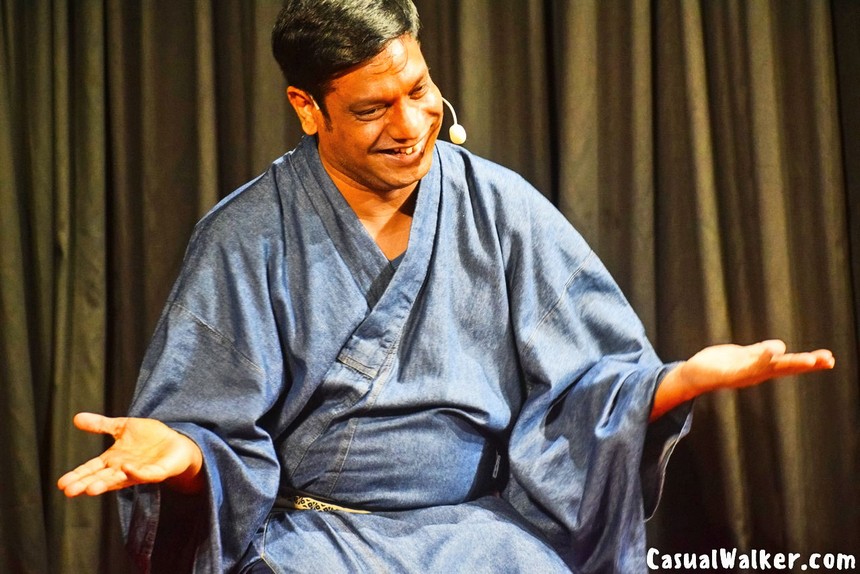
I was fortunate to attend my first live English Rakugo performance, presented by the storyteller SanQ, whose full name is Santhosh Kaliyanaraman.
About SanQ: Santhosh Kaliyanaraman
SanQ is an English Rakugoka dedicated to sharing this art beyond the borders of Japan. He currently lives in Tokyo, where he performs Rakugo. He says he is the first Indian Rakugo performer, and he is a South Indian IT professional by background. His own journey is truly inspiring.
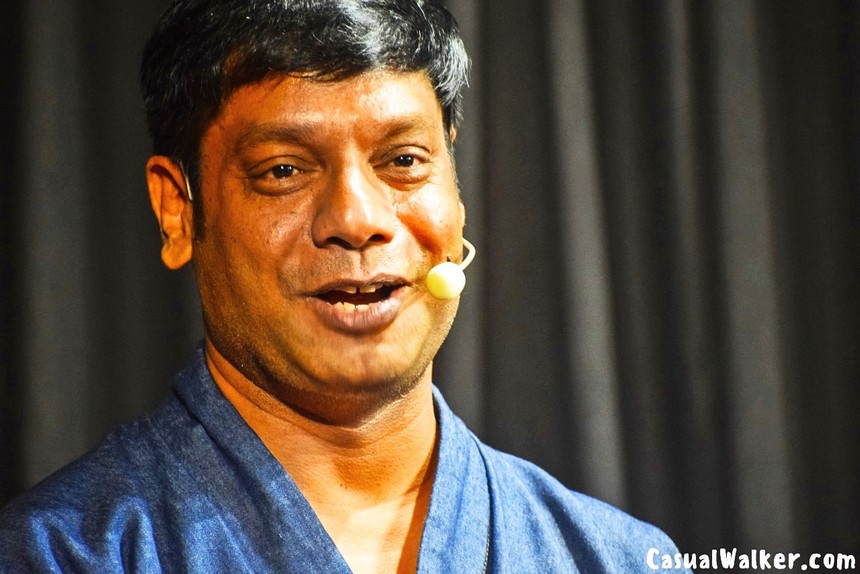
In 2006, his company sent him to Japan. After living there for about six months, he was deeply impressed by the humility and lifestyle of the people. He has even written an English book, published in Japan, about why the country captured his heart.
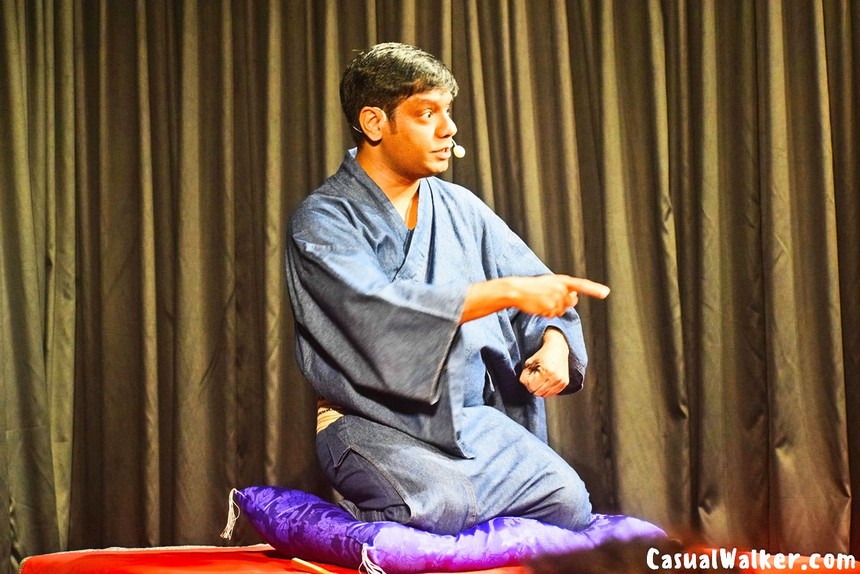
His introduction to Rakugo came in 2019 at a storytelling event in Bengaluru. The performer there told a comic story in Japanese, and the audience, including SanQ, could not laugh because of the language barrier. Even so, he felt that he had found his life’s purpose.
When he reached Japan in 2023, he immediately looked for a guru. He explains that Rakugo is as highly revered in Japan as classical dance is in India, and that it cannot be learned online. It is learned only through the guru shishya parampara. He is also an enthusiastic Indian Food and Culture Ambassador who believes in cultural exchange between people of different backgrounds.
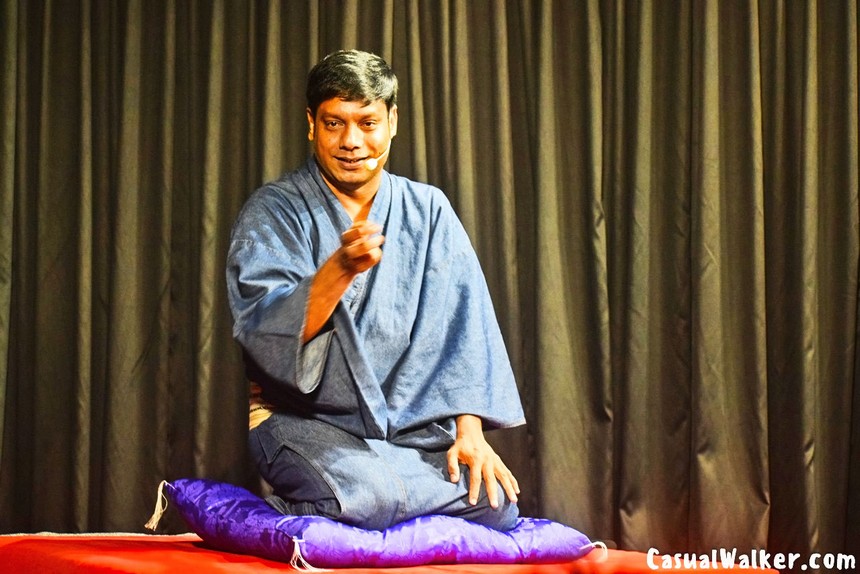
SanQ introduces himself warmly as someone who is happy to share this amazing art form with everyone. What fascinates him most is that stories written more than 300 years ago are still performed today and are still funny. His invitation is simple: come and enjoy listening to some of his favourite Rakugo stories.
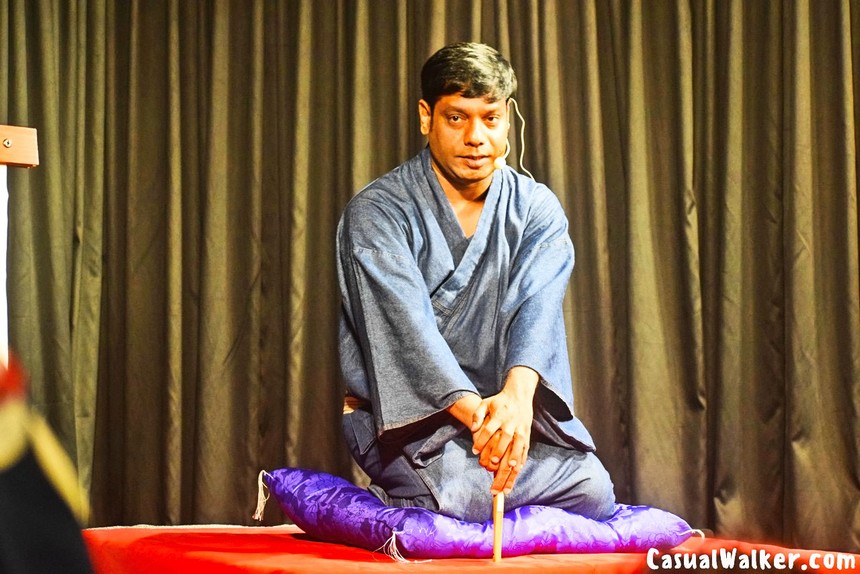
What makes his performance special is the meeting of two cultures. Storytelling comes naturally to him. Before his Rakugo days, he created a one hour solo English storytelling show in Bengaluru called Japan il Kaliyanaraman, which means Kaliyanaraman in Japan, in which he shared his experiences of living in Japan. His lively voice, quick changes of character and gentle humour make the stories easy to enjoy, even for those new to the art.
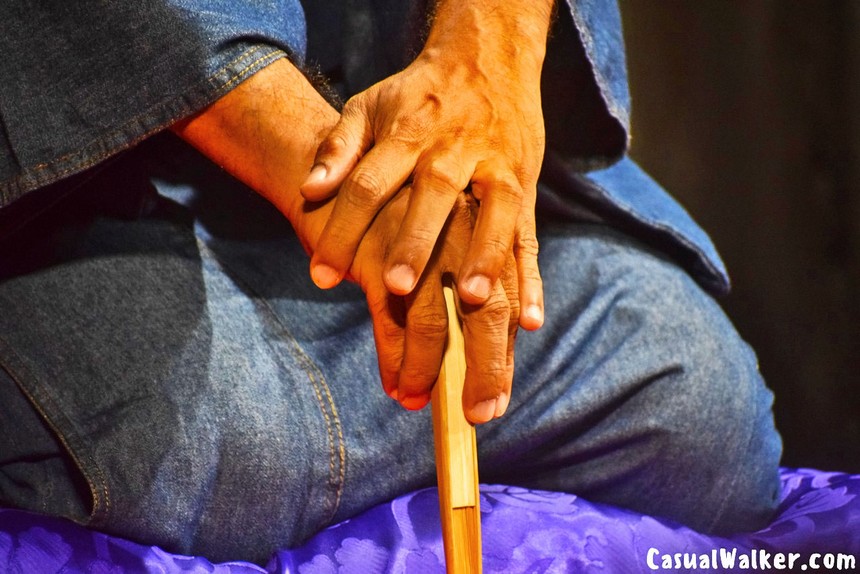
SanQ hopes to take Rakugo to global audiences the way manga and anime have travelled. He believes Indians, who love listening to stories, have many opportunities to embrace it, since most of our traditional art forms are rooted in storytelling.
Rakugo reminds us that the simplest forms of art can leave the deepest impression. With nothing more than a fan, a hand towel and the power of imagination, a single storyteller can make a whole room laugh, reflect and feel connected. Whether you love Japanese culture, storytelling, music or the traditional arts of the world, a Rakugo performance is a joyful experience that is well worth our time.

Thanks for exploring this Casual Walker photo guide — India’s most visual cultural travel guide and a curious discovery journal finding authentic photo stories, guides, and tips across travel, culture, arts, temples, heritage, and food.
- Keep exploring: Browse 650+ Travel & Culture Photo Guides
- We’d love to hear your feedback, stories, corrections, and updates — Email us.
- Follow our photo walks on Instagram: @hicasualwalker