


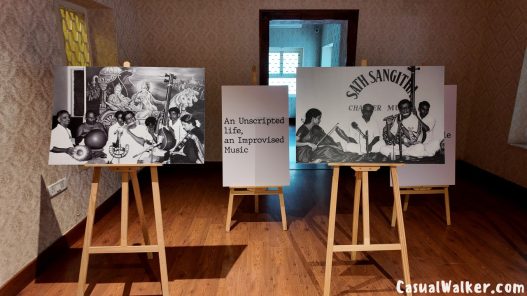
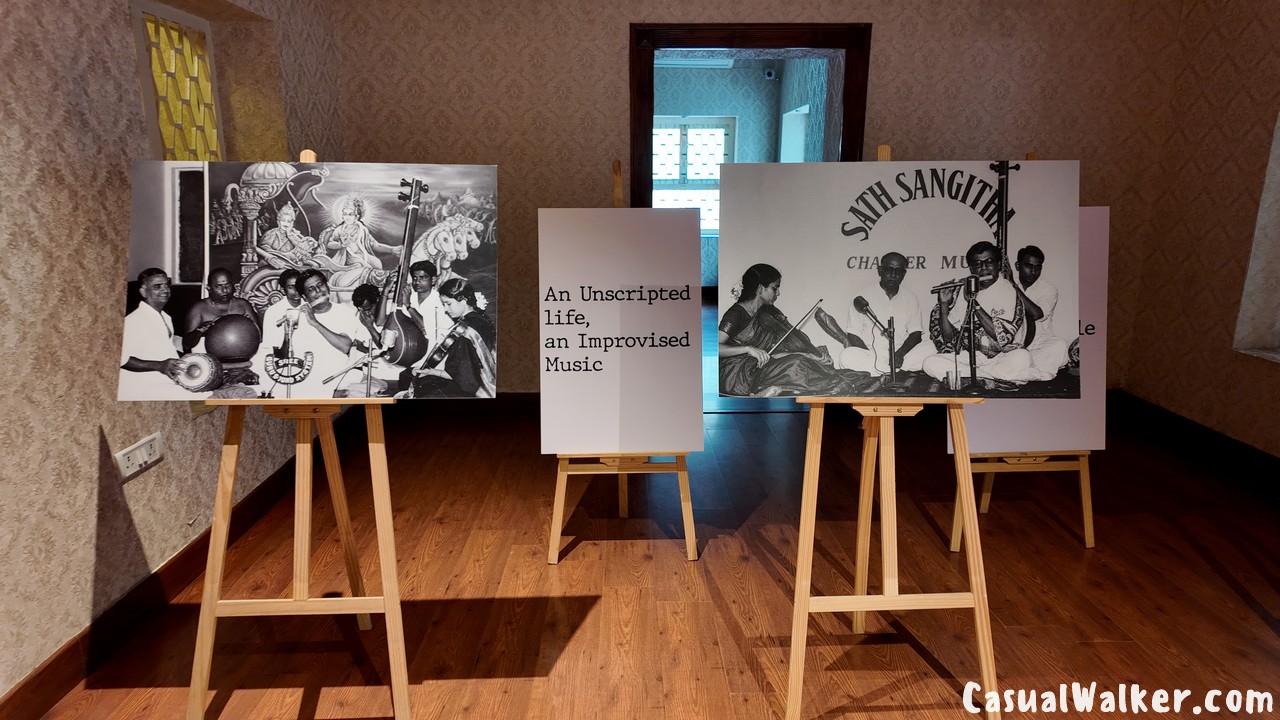



The Wind Walker : A Centennial Exhibition on the Life & Music of Legendary Flute Maestro T. R. Mahalingam (Mali), Curated by the Museum of Performing Arts (MOPA) at My Bungalow, Chennai — An Exhibition Dedicated to One of Carnatic Music’s Most Extraordinary & Enigmatic Geniuses of the Flute in the History of Indian Classical Music
– a hundred years of breath, bamboo and boundless music
| CasualWalker’s Rating for The Wind Walker Exhibition by MOPA: | |

9.9 – Enchanting, Soulful, Momentous |
|

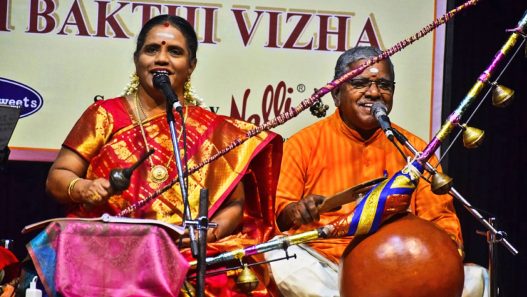
This year marks the birth centenary of the legendary flute maestro T. R. Mahalingam (1926-1986), fondly remembered by generations of music lovers simply as Flute Mali, and to celebrate this rare and extraordinary musical genius, the Museum of Performing Arts, popularly known as MOPA, hosted The Wind Walker, an exhibition dedicated to one of Carnatic music’s most extraordinary and enigmatic geniuses, exploring the music, that transformed the venu – the flute and the remarkable artist behind its magic, held at the charming My Bungalow venue in Chennai that added its own quiet warmth to the occasion. As someone who finds deep joy in exploring Indian classical music, Carnatic traditions, nada yoga and the cultural fabric of South India, I could not resist stepping into this tribute.
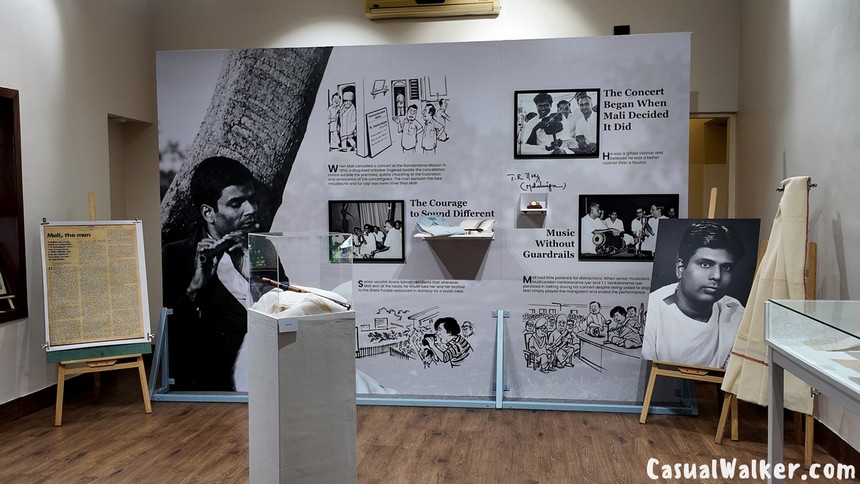
The Wind Walker
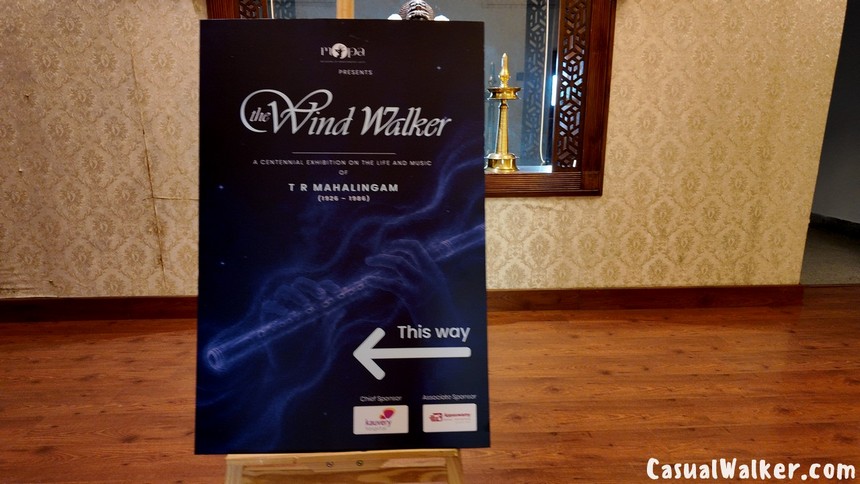
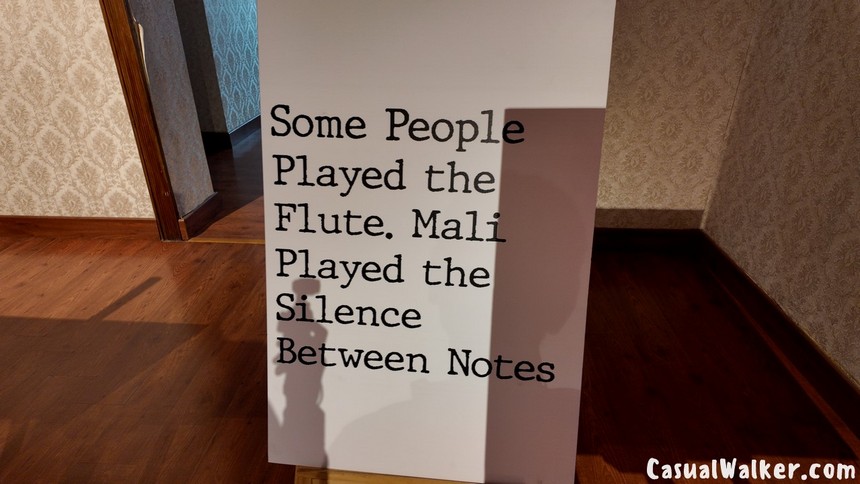
The Wind Walker was a centennial exhibition presented by the Museum of Performing Arts (MOPA) to honour the birth centenary of T. R. Mahalingam. The exhibition traced the story of the venu, or bamboo flute, in Carnatic sangeetham, showing how this simple instrument was transformed into a vessel of extraordinary emotional depth through the imagination and skill of a single artist. Walking through the space at My Bungalow, one got a sense of both the nada, the sacred sound, and the man behind it, presented not as two separate stories but as one continuous, moving narrative of art, discipline and sadhana.
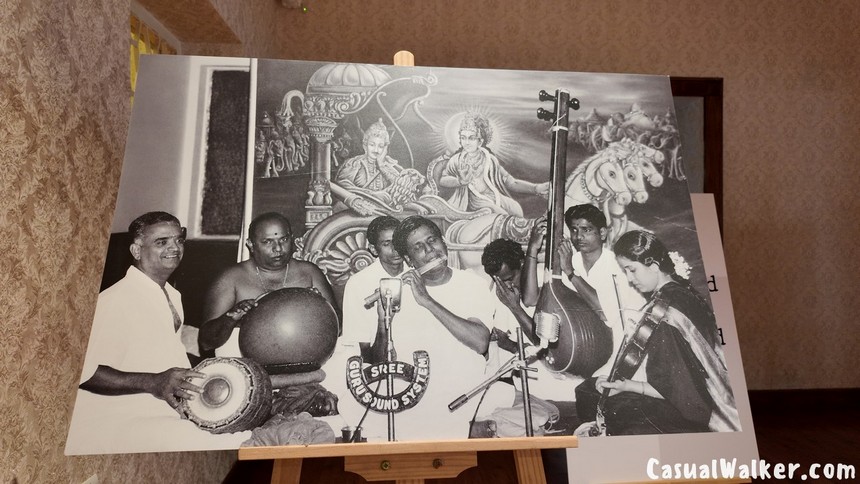
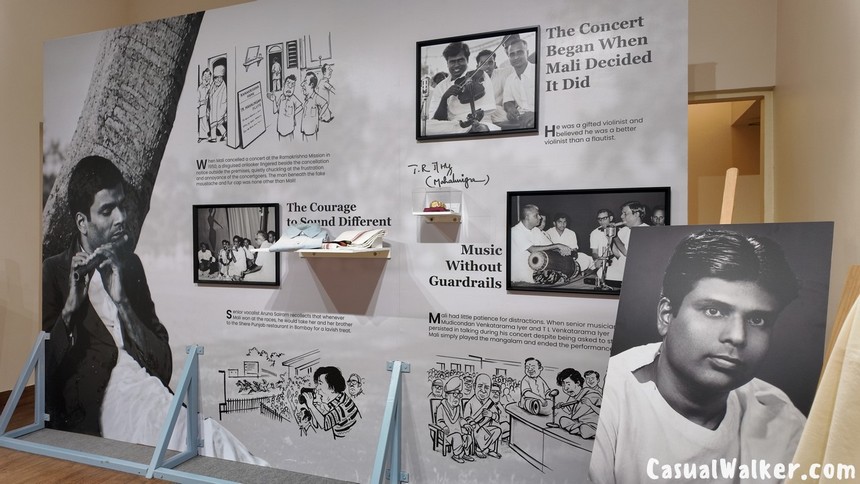
The Museum of Performing Arts Foundation curated this as a centennial tribute celebrating the life, music and legacy of the legendary Carnatic flautist T R Mahalingam, who lived from 1926 to 1986 and remains one of the most original and influential musicians in the history of Indian classical music. Drawing from rare archival material, personal memorabilia, photographs, letters, recordings and first hand accounts, the exhibition offered a genuinely intimate portrait of the man behind the music.
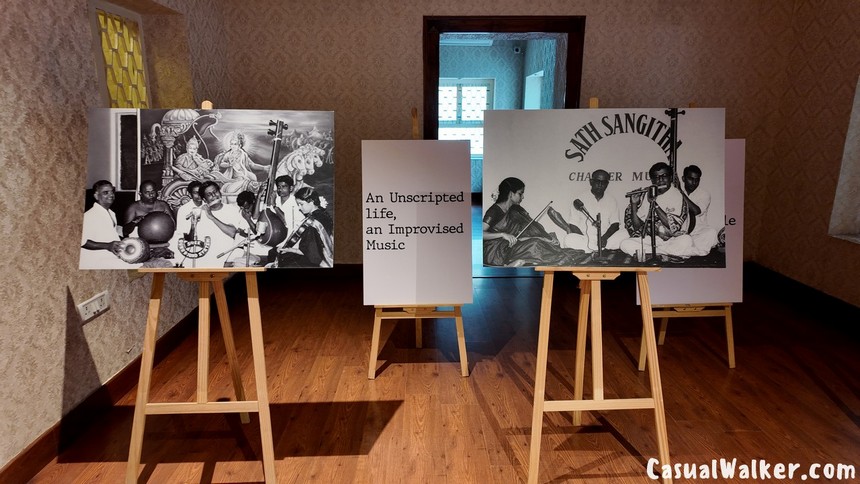
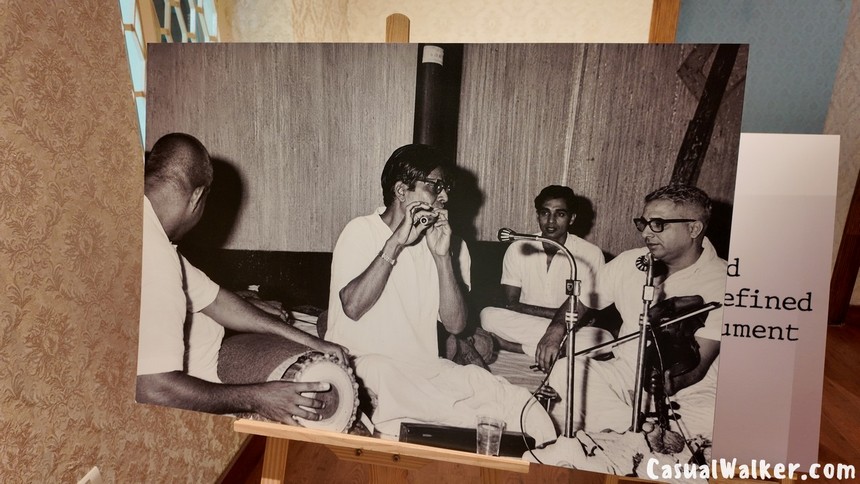
Among the highlights on display were rare handwritten documents, including personal letters written by Mali to his disciple, or sishya, Professor T S Sankaran, an eight point autobiographical note written by Mali himself, a collection of archival photographs, and a specially recorded talk by historian V Sriram, each adding another layer to the story of this remarkable vidwan.
MOPA also warmly acknowledged the generous support of J. A. Jayant, whose personal collection and shared exhibits made this exhibition possible. It is this kind of collaborative spirit between institutions and individuals who care deeply about preserving art that keeps our cultural memory alive for the generations to come.
MOPA Foundation, The Museum Of Performing Arts
MOPA, the Museum of Performing Arts Foundation, was established in 2017 with a simple yet powerful vision, to document and celebrate the history, evolution and cultural influences shaping South India’s performing art forms. Through carefully curated exhibitions, documentaries, lectures, concerts and related events, MOPA works to place South India’s rich artistic legacy on the global cultural map.
MOPA is also working towards developing a full fledged museum in Chennai dedicated entirely to the performing arts of South India. Once realised, this space will offer both casual visitors and serious scholars a complete artistic and cultural orientation, a bird’s eye view as well as an in depth understanding of South Indian performing art traditions, all under one roof. As a travel and heritage blogger who loves discovering spaces that celebrate art, music and culture, I found this mission genuinely inspiring, and it feels like exactly the kind of institution Chennai and South India deserve.
Mali’s Birth Centenary
Birth centenaries hold a special place in Indian classical arts. They are not simply anniversaries, they are moments for entire communities of musicians, students and rasikas to pause, reflect and rediscover the contributions of a master who shaped the very vyakarna, or grammar, of an art form. In Mali’s case, this centenary carries even greater weight, because so much of what we now consider standard technique on the Carnatic venu, including gamaka, sruti, breath control and tonal richness, can be traced directly back to his innovations. Celebrating him is really celebrating the evolution of an entire instrument.
T. R. Mahalingam, Fondly Called Flute Mali
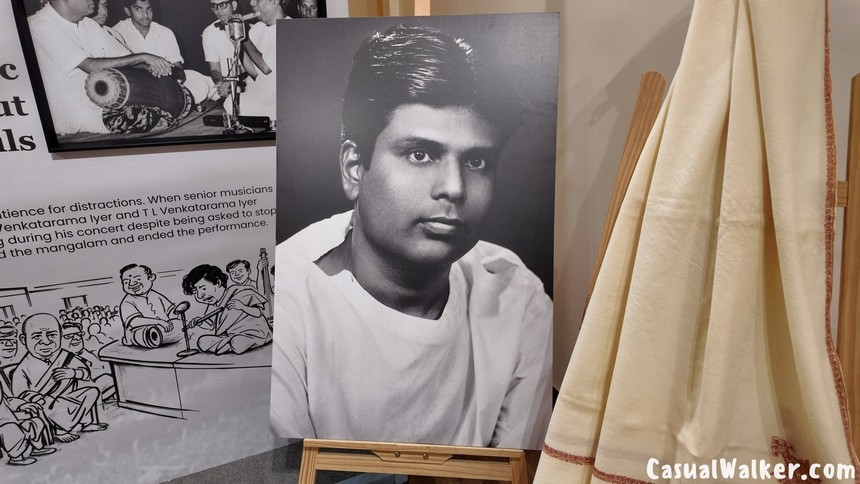
Tiruvidaimarudur Ramaswami Mahalingam, born on the sixth of November 1926 in Tiruvidaimarudur in the Tanjavur district of Tamil Nadu, was named after Mahalingaswamy, the presiding deity of Shiva at the village temple. He was one among six siblings in the family of Ramaswami Iyer and Brahadambal. When he was about three years old, the family moved to Trichy, where all the children were placed under the guru shishya parampara of their uncle and music teacher, Jalra Gopala Iyer.
Considered too frail in health to learn the flute, young Mahalingam was instead put on vocal training. But the venu called to him, and he began practising it secretly, teaching himself with a rare and instinctive gift, the ability to reproduce any piece of music after hearing it just once. When his father eventually heard him play the intricate Viriboni Varnam in Bhairavi raga fluently in three speeds, all doubts vanished, and the boy was allowed to pursue the flute formally. He made his debut in 1933 at the Thyagaraja festival of the Rasika Ranjani Sabha in Mylapore, Chennai, at the age of just seven, and from there his journey into legend began.
What made Mali truly revolutionary was his reimagining of what the venu could do. Before him, flute playing in Carnatic sangeetham, as practised by giants like Palladam Sanjeeva Rao and Sarabha Sastri, was largely staccato, built on discrete, separated svaras.
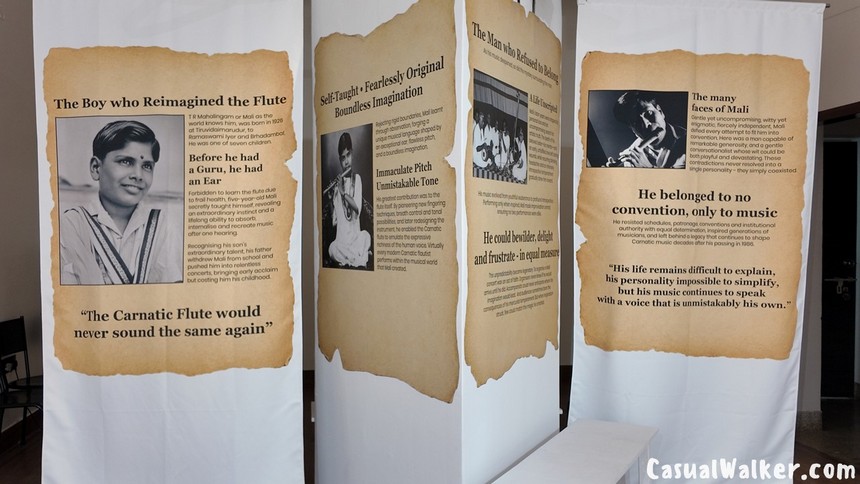
It was widely believed that the flute simply could not reproduce the gamakas, the delicate oscillations and ornamentations, that the human voice or the violin could achieve. Mali shattered that belief entirely. He pioneered continuous playing techniques that let the flute glide, bend and curve through notes exactly as a vocalist would, bringing an emotional intimacy to the instrument that audiences had never experienced before.
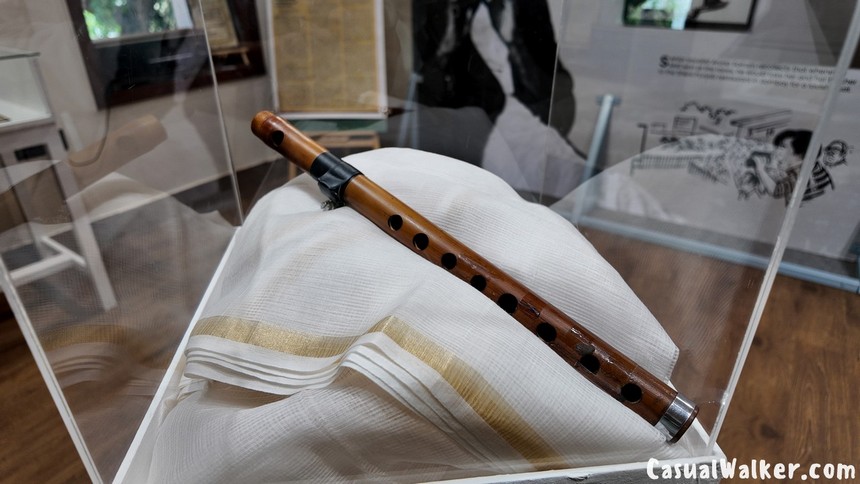
He also physically redesigned the flute itself, using a thicker reed and smaller bore for a richer, fuller tone, and added an eighth hole where the traditional flute had only seven. His famous left hand grip, later called the parrot clutch, along with new fingering and lipping techniques, gave him extraordinary control, and his breath control was so remarkable that he could sustain a single note for over forty seconds without a break. He experimented with mandara sthayi or lower register playing long before it became common practice, giving his renditions a depth and gravity rarely heard on the instrument before him.
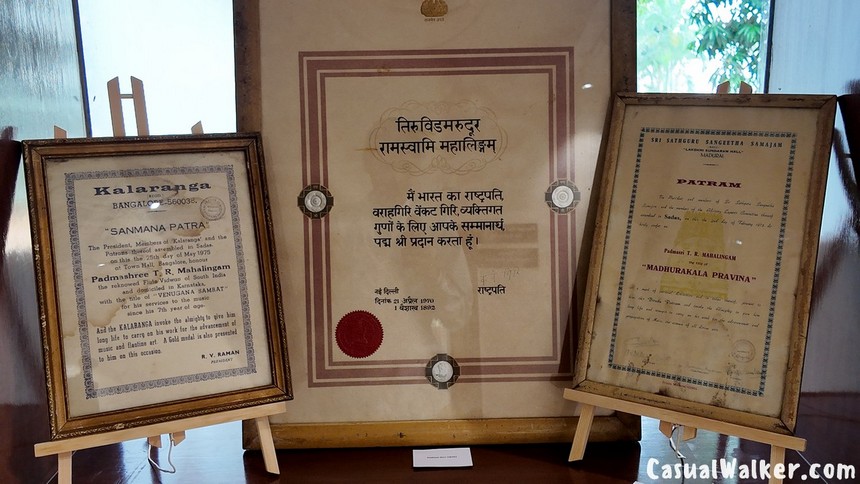
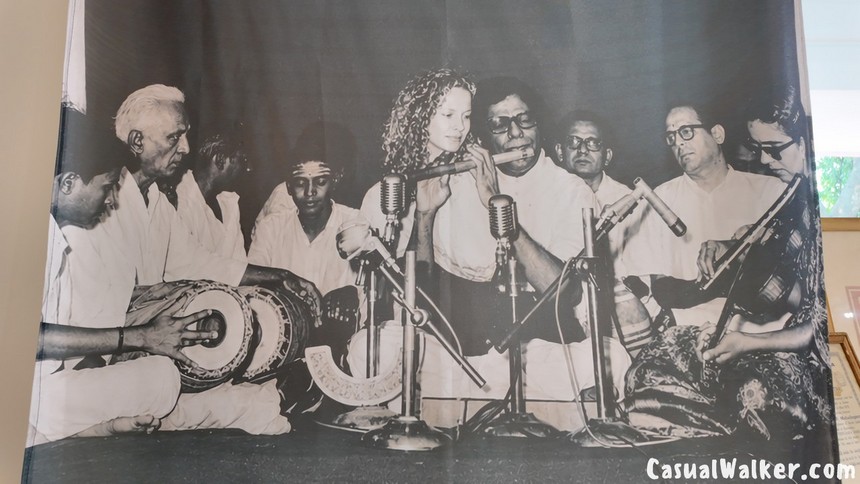
Musically, Mali possessed raga bhava and perfect sruti almost instinctively, and his sense of laya was sharp enough to impress even a rhythm genius like Palghat Mani Iyer, with whom he shared a long and celebrated musical partnership on stage in many a memorable kutcheri. Mali went on to influence virtually every flautist who came after him, whether directly through disciples like Sangita Kalanidhi N. Ramani, T. S. Sankaran and Prapancham Sitaram, or indirectly through the sheer weight of his innovations becoming the new vyakarna of Carnatic flute playing.
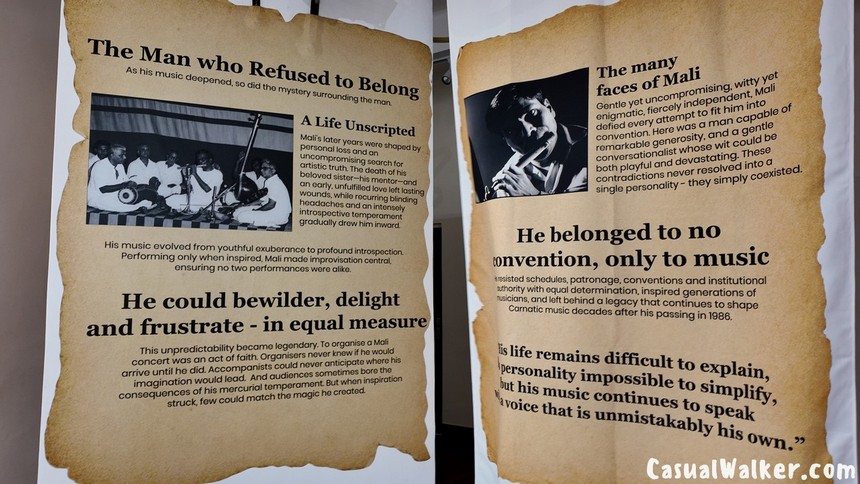
He lived for a time in the United States with his wife Ellen Chadwick before returning to India, and passed away in 1986 at the age of fifty nine, having shortly before been offered, and famously declined, the Padma Bhushan. He remains, without exaggeration, one of the most singular and influential musicians Carnatic music has ever produced, a phenomenon, a cult figure and a maestro rolled into one.
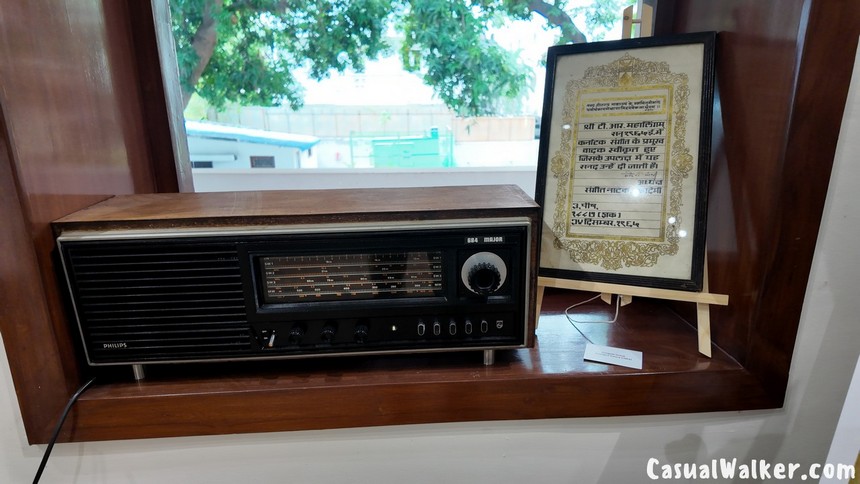
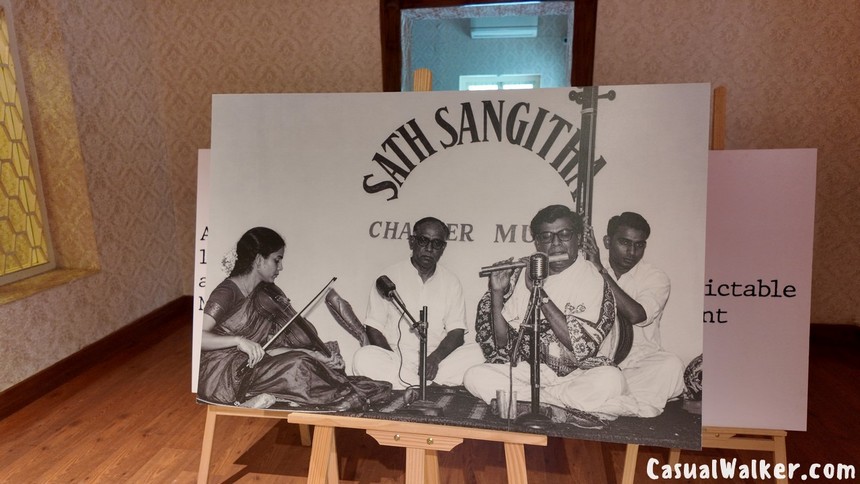
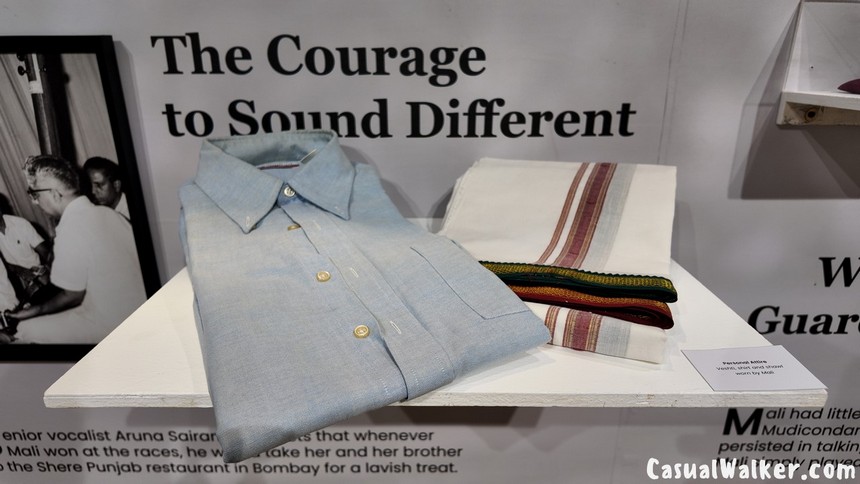
Stepping into the exhibit, I found the space thoughtfully arranged, with photographs, personal memorabilia and rare artefacts giving visitors a genuinely intimate window into Mali’s life and nada. I spent a quiet while standing before an old photograph of him with his venu, trying to imagine the sound he must have coaxed out of that instrument, and I left with a renewed appreciation for how one artist’s imagination can reshape an entire tradition. This was a fitting tribute to a musician whose spirit still lingers in every note played on the flute today.

Thanks for exploring this Casual Walker photo guide — India’s most visual cultural travel guide and a curious discovery journal finding authentic photo stories, guides, and tips across travel, culture, arts, temples, heritage, and food.
- Keep exploring: Browse 650+ Travel & Culture Photo Guides
- We’d love to hear your feedback, stories, corrections, and updates — Email us.
- Follow our photo walks on Instagram: @hicasualwalker