




Singaperumal Koil / Sri Padalathri Narasimhar Thirukovil (Padalathripuram), Chengalpattu: A 1,500 Year Old Rock Cut Temple Dedicated To Lord Narasimha / Lord Narasimhar Temple With Unique Third Eye & One Of The 108 Abhimana Kshethrams Of The Vaishnava Tradition – History, Contact Details, Temple Architecture, Deities, Temple Timings, Festivals, Ugra Narasimha, Chittirai Brahmotsavam, How To Reach And Complete Pilgrim Travel Guide (Updated)
– pallava cave temple & enriched by chola grants, where lord narasimha sits carved in living rock

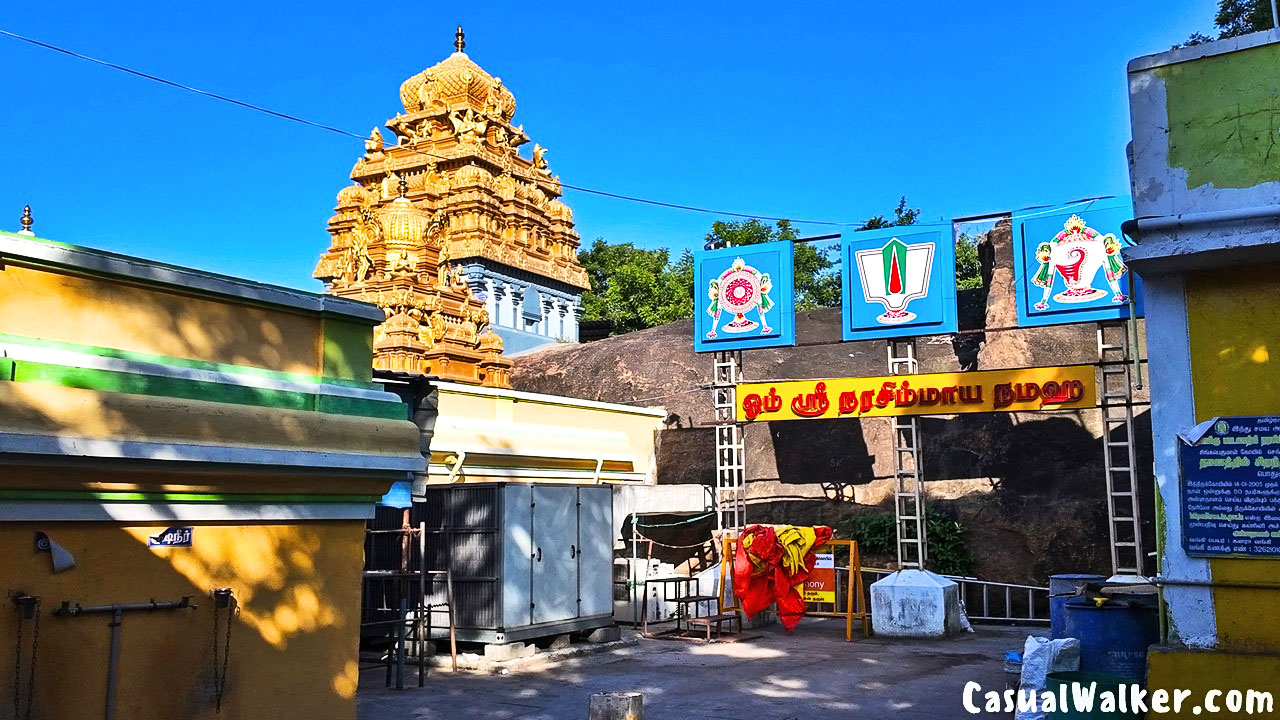
Chengalpattu, a temple town not far from Chennai, is home to a quiet little settlement called Singaperumal Koil. The name carries real meaning, as “Singa Perumal Koil” translates to “the temple of the Lion God” in Tamil, a fitting title for a town built around one of the most powerful Lord Narasimha shrines in South India. 
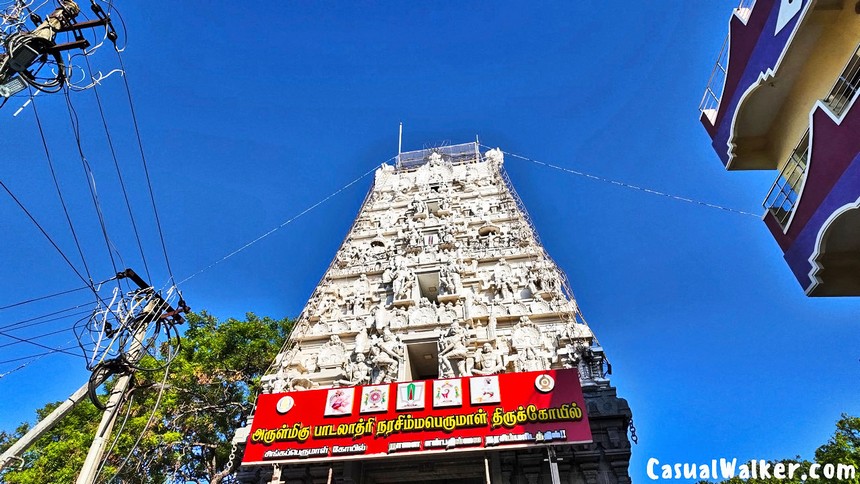
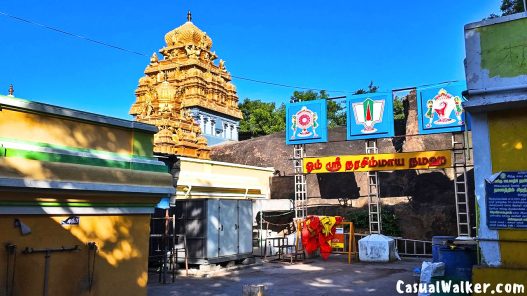
The town’s heart and identity come from the Singaperumal Koil Pataladri Narasimha Temple, a nearly 1,500 year old shrine carved directly into a small rocky hill. The temple honors Lord Narasimha, one of the fiercest and most revered avatars of Lord Vishnu.
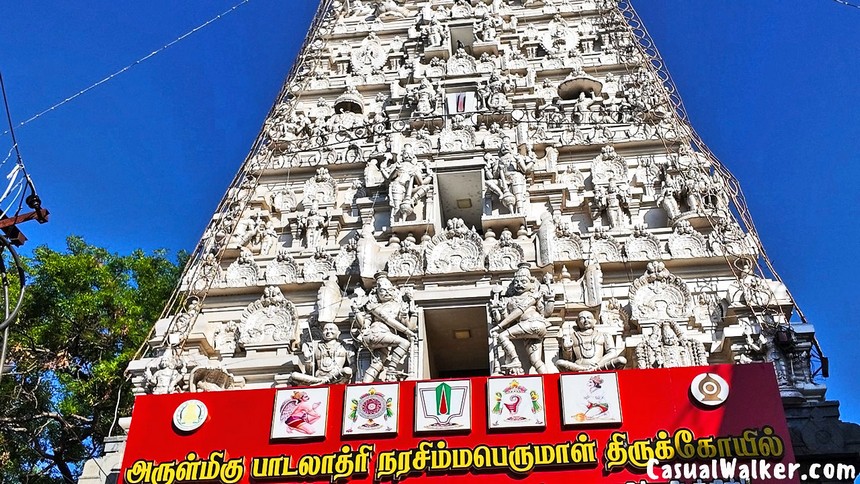
History of Singaperumal Koil / Pataladri Narasimha Temple, Chengalpattu
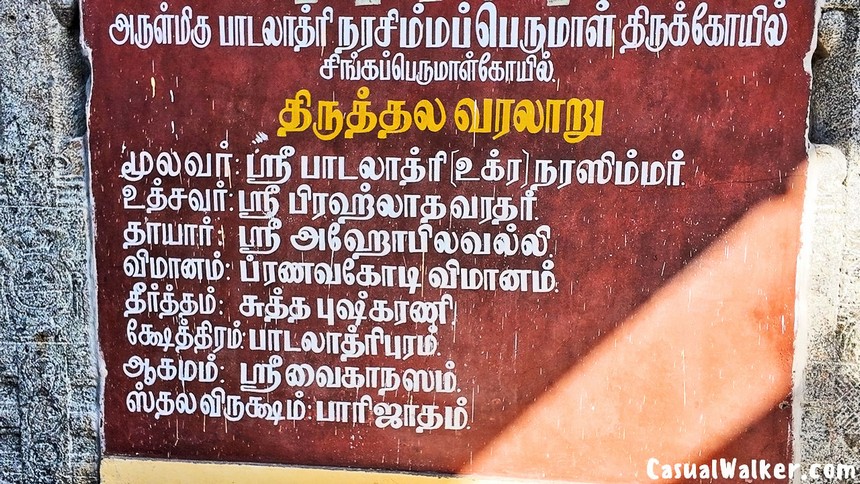
The temple, officially known as Pataladri Narasimhar Temple, is dedicated to Lord Vishnu in his Narasimha form, along with his consort Goddess Lakshmi, worshipped here as Ahobilavalli.
What makes this temple architecturally fascinating is that it was carved directly into rock, a hallmark of Pallava era construction. Historians and epigraphists generally agree that the original cave shrine dates back to around the 7th to 8th century CE, built during the reign of the Pallava kings, who were known for creating similar rock cut temples across the region.
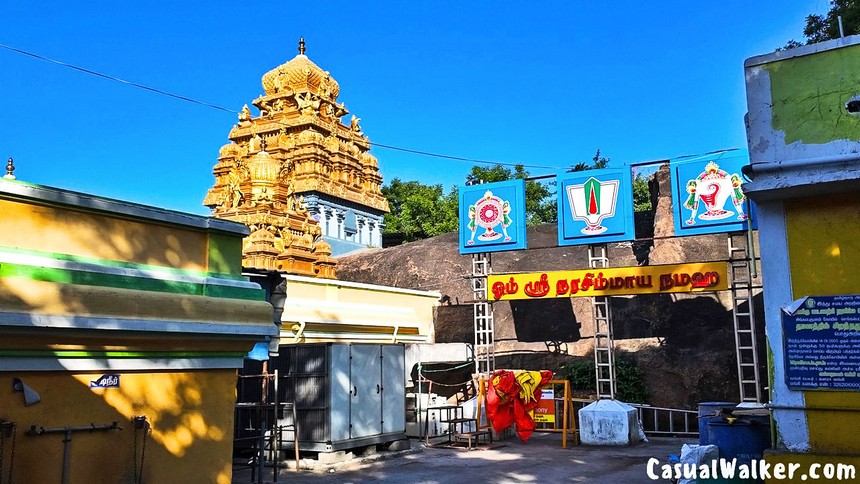
Scholars hold differing opinions on the exact period. Some considered it a Pallava monument outright, while others attributed it specifically to the era of Mahendravarma Pallava. The temple was constructed somewhere between the reigns of Narasimhavarma Pallava and Paramesvaravarma Pallava.
The inscriptions on the temple walls, however, come from a later period, the Chola dynasty, specifically the 10th and 11th centuries CE. These are written in Grantha Lipi, Tamil script, and a few in Telugu. The oldest of these inscriptions dates to the reign of the legendary Raja Raja Chola (985 to 1014 CE), one of the most celebrated Chola emperors, and records a gift of twenty six sheep meant to fund ghee for the temple’s perpetual oil lamps.
Another inscription near the Andal shrine, though partly damaged, mentions a donation to the presiding deity, and a third, also from around the 11th century, records further temple grants.
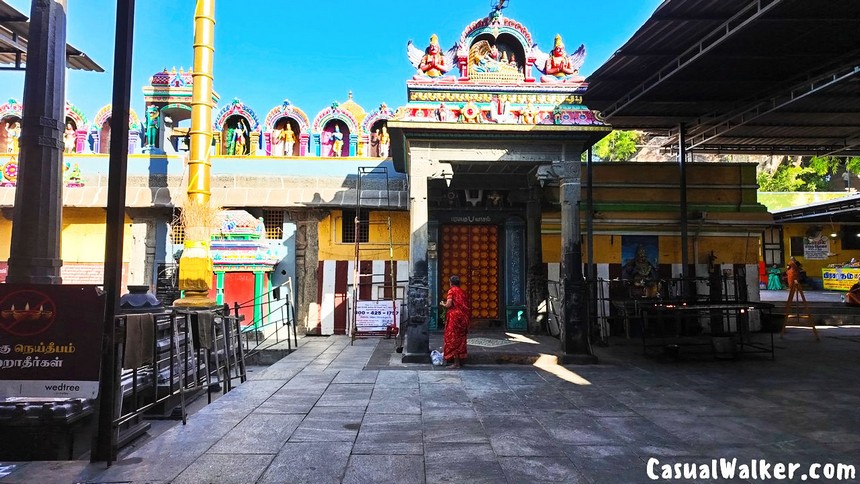
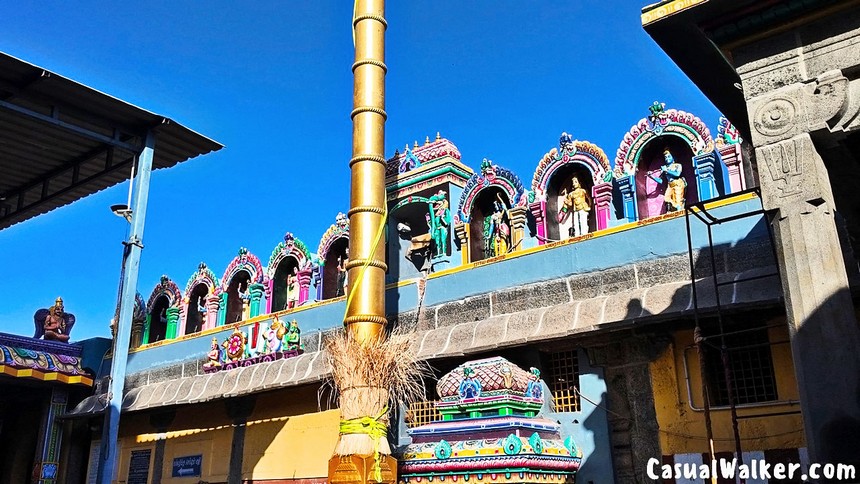
Later, the temple saw architectural additions during the Vijayanagara period, and further contributions continued right up to the 19th and 20th centuries. A stone deepasthamba, or lamp pillar, near the temple’s flagstaff is a clear marker of its Vijayanagara era patronage.
There is also a fascinating local belief that the temple fell into disuse after the Chola period, buried under sand dunes, until it was rediscovered and restored by Swami Annavilappan, a direct descendant of Mudaliandan Swami, who was the nephew of the great Vaishnavite saint Sri Ramanuja.
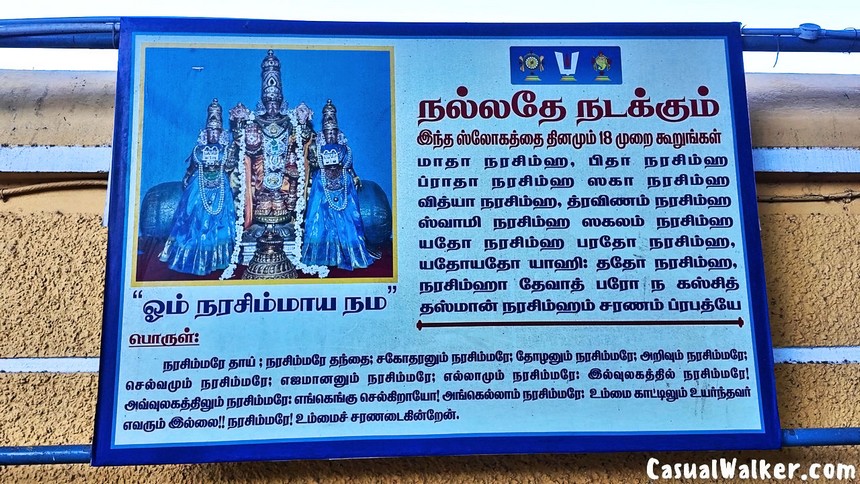
This temple is also counted among the 108 Abhimana Kshethrams of the Vaishnava tradition, which adds another layer of spiritual weight for devotees who follow the Divya Desam and Abhimana Kshethram pilgrimage circuits across South India.
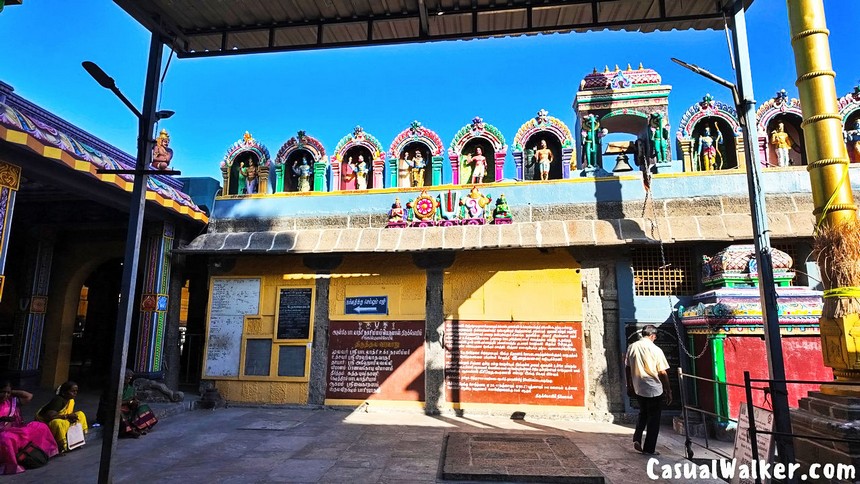
Lord Narasimha At Singaperumal Koil / Pataladri Narasimha Temple, Chengalpattu
Every ancient temple has a story, and this one is rooted deep in the Brahmanda Purana. When Lord Vishnu took the form of Lord Narasimha, half lion and half man, to destroy the demon king Hiranyakashipu, it was to protect his devoted son, Prahalada. Hiranyakashipu had earned a boon from Lord Brahma that made him nearly invincible.
He could not be killed by man or animal, indoors or outdoors, during day or night. Lord Vishnu found the loophole in typical divine fashion, emerging from a pillar as Narasimha and slaying the demon at twilight, in a doorway, neither fully indoors nor outdoors, and neither day nor night.
Even after killing Hiranyakashipu, the Lord’s fury did not subside. It was young Prahalada’s devotion and prayers that eventually calmed Lord Narasimha’s rage. As per local legend, this very place is where the sage Jabali was performing intense penance, hoping for a glimpse of the Lord in this powerful form. Pleased with his devotion, Lord Narasimha appeared before him here, right after slaying the demon, and is said to have cooled his anger by bathing in the temple’s sacred tank.
Locals believe the water turned red following this event, which is also why the site came to be called Pataladri, meaning “the red hill,” from the Sanskrit words “Patala” (red) and “Adri” (hill). Interestingly, the nearby village of Sengundram, meaning “red hill” in Tamil, is thought to echo this same legend, and was once part of the historic Sengundra Nadu region under Kalattur Kottam during Chola rule.
Because of the fierce mood in which the Lord appeared, the deity here is worshipped as Ugra Narasimha, the intense, wrathful form, as opposed to the calmer depictions found in many other Vishnu temples.
Temple Architecture And Deities
Walking into this temple feels different from most South Indian temples, largely because the main sanctum is not built, it is carved. The temple spans roughly 1.5 acres and consists of two main precincts. The presiding deity, Lord Ugra Narasimha, is a massive rock cut image, seated with his right leg folded and left leg hanging down toward the pedestal, a striking contrast to most Narasimha temples, where the left leg is typically folded instead.
The idol has four arms, with the upper two holding the sacred conch (Shankha) and discus (Chakra), while the lower right hand shows the Abhaya Mudra, blessing devotees with protection, and the lower left rests on his thigh. One of the most remarkable and rare features of this idol is the presence of a third eye on the Lord’s forehead, typically associated with Lord Shiva rather than Lord Vishnu. During certain rituals, the priest lifts the sacred Naamam on the deity’s forehead to reveal this third eye, and devotees consider it deeply auspicious to catch a glimpse of it, believed to dissolve miseries and misfortunes.
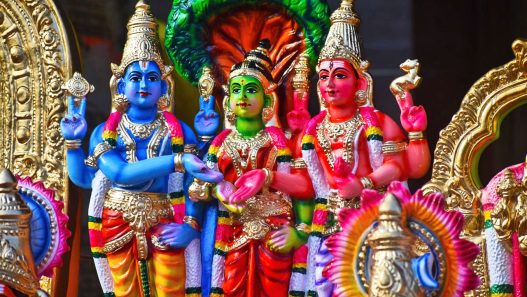
Below this grand image sits a smaller Narasimha idol seated on Adi Sesha, the divine serpent, known as the Kautuka Bera, used for daily rituals. There is also a unique standing four armed Panchaloha idol known as Pradosha Narasimha, brought out in procession on Pradosha days (the 13th day of the waxing moon). The regular processional deity is referred to as Prahalada Varadar, depicted standing alongside his consorts Sridevi and Bhoodevi under the Pranavakoti Vimana.
Since the main sanctum is literally part of the hillock, devotees performing Pradakshina (circumambulation) have to walk around the entire hill rather than just the sanctum. This practice is locally known as Giri Pradakshinam and is especially significant on full moon (Poornima) days.
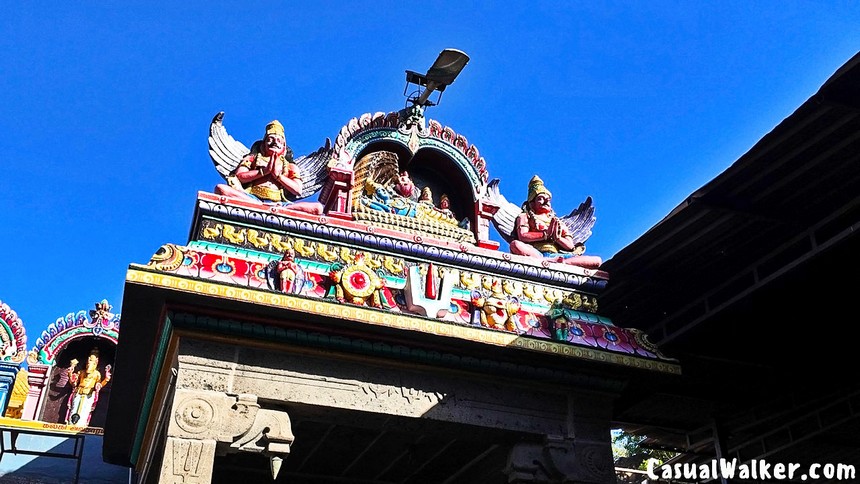
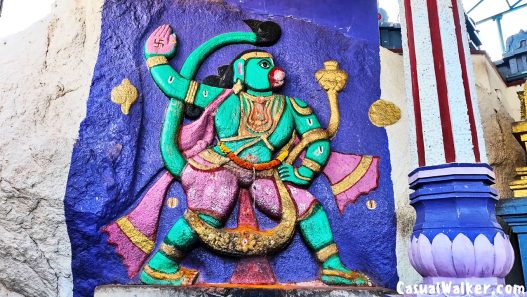
Around the main shrine stand separate shrines dedicated to Goddess Ahobilavalli Thaayaar (the presiding deity’s consort), Goddess Andal, Lord Vishvaksena, and Lord Lakshmi Narasimha. The shrines of Goddess Ahobilavalli and Goddess Andal face east, while those of Lord Vishvaksena and Lord Lakshmi Narasimha face south. There are also dedicated shrines for Lord Garuda, Vishnu’s eagle mount, positioned axially facing the main sanctum, and for Lord Anjaneya (Hanuman), near the temple’s Dwajastambha (flagpost), where devotees light ghee lamps as an offering.
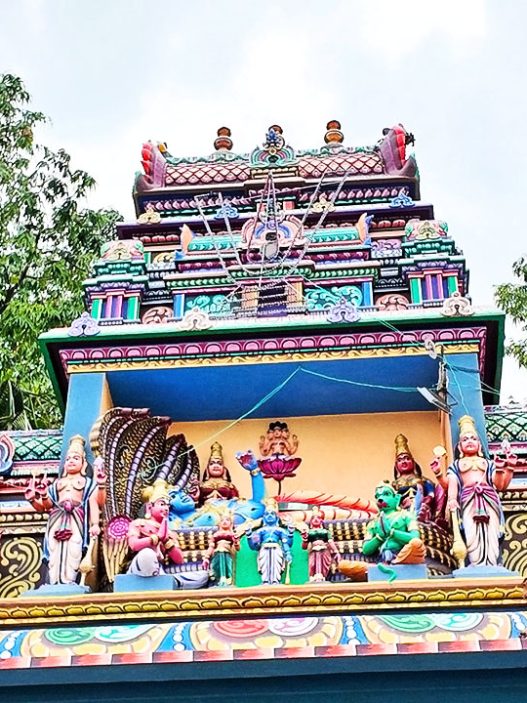
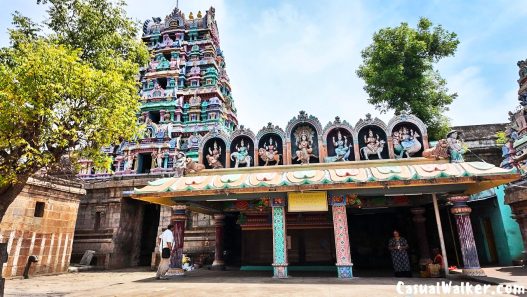
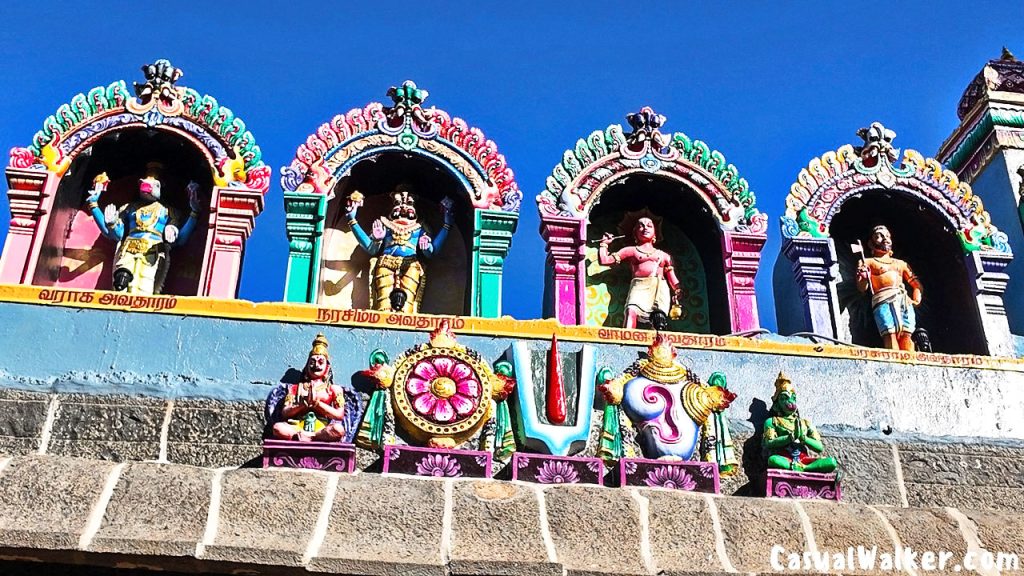
The main worship hall, or Mahamandapa, features carved images of all twelve Alwars, the Vaishnavite poet saints, both as fixed deities and processional idols. The ceiling of this mandapa is particularly interesting, with rough carvings depicting the Kurma Avatar (tortoise form) of Lord Vishnu, along with images of Rahu attempting to swallow the sun and moon, a detail temple historians find quite unusual and worth noting. The temple’s vimana, the tower above the sanctum, is adorned with stucco figures representing the various avatars of Lord Vishnu, and the entrance itself features carved depictions of the Dasavatharam, the ten incarnations of Vishnu.
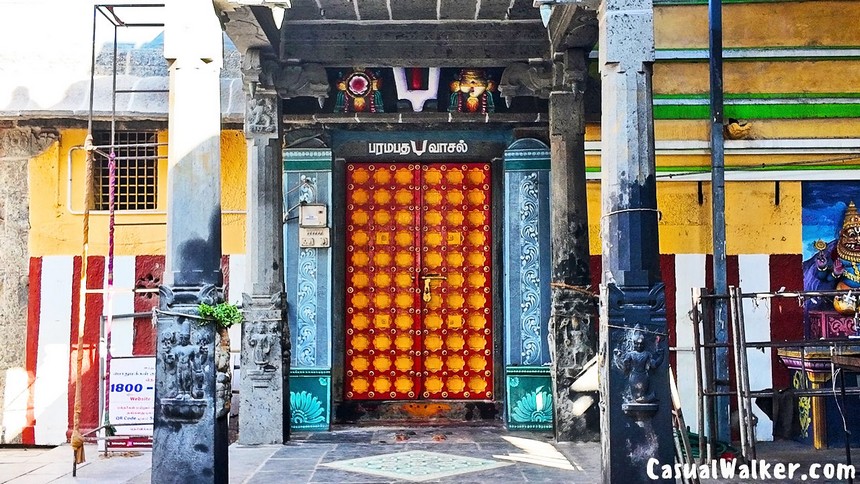
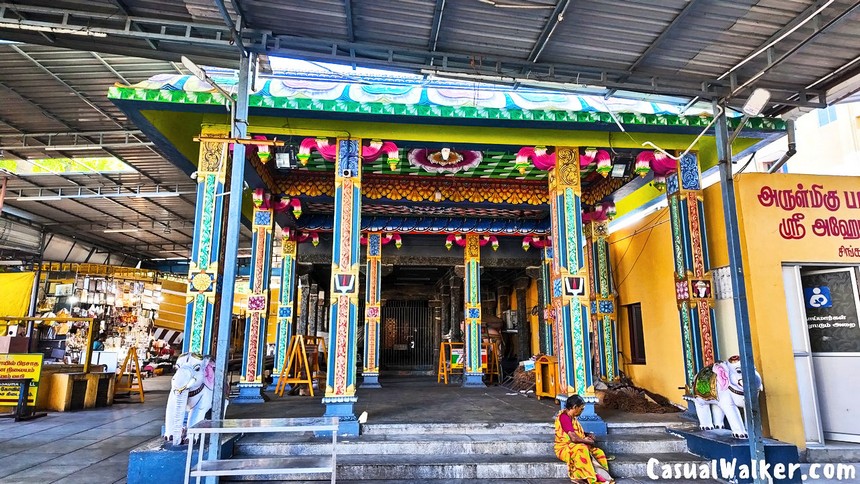
Just outside, at the row of shops near the temple entrance, stand two carved pillars from the Vijayanagara or Nayak period, believed to be remnants of an unfinished gopuram or mandapam that was never completed. A separate four pillared mandapa, carved with Dasavatara imagery, appears to be from the late 18th or early 19th century and stands just before the temple entrance, complete with a relief of an unnamed patron and his wife.
Azhinjal Tree : Sacred Tree And Local Beliefs
Behind the temple stands an Azhinjal tree, considered extremely sacred by devotees and locals alike. It is believed to be mentioned in Aandaal’s own Naachiyaar Thirumozhi, which gives it a certain literary and spiritual weight beyond the ordinary. Devotees seeking marriage, a child, or academic success visit this tree, tie a small thread from their clothing onto its branches, apply sandalwood paste and kumkum, and light ghee lamps while making their wish. It is a quiet, deeply personal ritual that is often performed here.
Devotees dealing with debt problems, prolonged litigation, adverse effects of Mars on marriage prospects (Chevvai Dosham), those born under the Swathi or Tiruvadirai stars, or those going through a challenging Rahu or Saturn period often specifically pray to Lord Pataladri Narasimha for relief. This temple has built a strong reputation over generations as a place of refuge for exactly these kinds of struggles.
Festivals At Singaperumal Koil / Pataladri Narasimha Temple, Chengalpattu
The temple calendar here is quite vibrant. The most significant celebration is the Chittirai Brahmotsavam, held during April and May, drawing devotees from across the region. Narasimha Jayanthi, marking the Lord’s appearance day, is celebrated with great devotion, as is the Pavithra Utsavam during the Tamil month of Aani (June and July).
The Maasi float festival, or Theppam, held during February and March, is another major draw, along with the special solar alignment during Margazhi (December and January) and Thai (January and February), when the sun’s rays are believed to fall directly on Lord Narasimha’s feet, an event considered especially sacred on Rathsapathami day.
Singaperumal Koil Prasadam
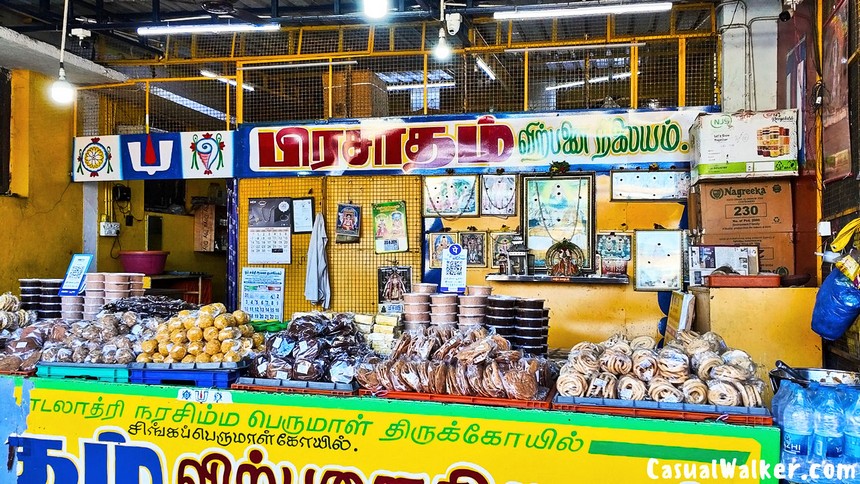
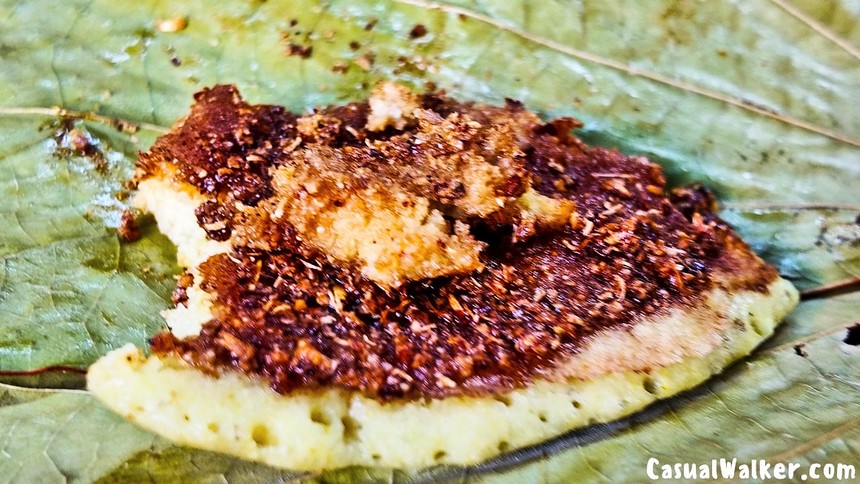
Visitors should not skip the prasadam stall near the temple. The dosa prasadam here has quite a reputation among regular devotees, served with a distinctly spicy powder that pairs perfectly with it. The stall also offers a good variety of other temple food, and it is genuinely one of those small pleasures that make a temple visit memorable.

Travel Tips for Visiting Singaperumal Koil / Pataladri Narasimha Temple, Chengalpattu
Singaperumal Koil / Pataladri Narasimha Temple, Chengalpattu Address:
NH 45, Pataladhripuram, Singaperumal Koil, Chengalpattu,
Tamil Nadu 603204
Phone: 0413-2618755
Temple Timings And Daily Rituals: The temple is open to devotees from 7:00 a.m. to 12:00 p.m. and again from 4:30 p.m. to 8:30 p.m., with four sets of daily rituals conducted at different times through the day. On Pradosha days, special poojas are performed in the evening twilight hours, echoing the very moment Lord Narasimha is believed to have appeared before sage Jabali.
How To Reach Singaperumal Koil / Pataladri Narasimha Temple, Chengalpattu
By Road: Driving down from Chennai is by far the easiest and most popular way to reach Singaperumal Koil, with the temple located roughly 45 to 52 km from the city depending on your starting point. The most convenient route is via the GST Road (NH 45, also known as NH 32), heading straight through Tambaram and Chengalpattu, with clear signage leading to Singaperumal Koil along the way. The journey typically takes about an hour to an hour and a half depending on traffic, and since the temple sits right at the center of the town, you can drive almost up to the entrance and park nearby without needing any additional local transport. This route also makes it easy to combine your trip with other nearby temples and heritage sites in the Chengalpattu district, so it is worth planning a full day if you want to explore beyond just Singaperumal Koil.
By Train: For those who prefer public transport, taking a suburban train from Chennai is a comfortable and budget friendly option. Frequent EMU local trains run from Chennai Beach, Chennai Egmore, and Tambaram stations towards Chengalpattu, and Singaperumal Koil actually has its own dedicated railway station on this very line, making it one of the most convenient temple towns to reach by rail. The journey from central Chennai takes approximately an hour to ninety minutes depending on where you board, and once you step off at Singaperumal Koil station, the temple is just a short walk or a quick auto rickshaw ride away, usually taking no more than ten minutes. This option works especially well if you are travelling solo or want to avoid the hassle of city traffic and parking.
By Flight: If you are travelling from outside Tamil Nadu, the nearest airport is Chennai International Airport (MAA) in Meenambakkam, which is conveniently located only about 30 to 35 km from Singaperumal Koil, making this one of the more accessible temple destinations for out of town pilgrims. From the airport, you can hire a taxi or use app based cab services directly to the temple, with the drive taking around 45 minutes to an hour depending on traffic along the GST Road. Alternatively, if you would rather avoid a long cab ride, you can take a short local train or bus from Tambaram, which is much closer to the airport, and then continue on to Singaperumal Koil from there. Either way, landing in Chennai in the morning gives you more than enough time to visit the temple comfortably within the same day.

Thanks for exploring this Casual Walker photo guide — India’s most visual cultural travel guide and a curious discovery journal finding authentic photo stories, guides, and tips across travel, culture, arts, temples, heritage, and food.
- Keep exploring: Browse 650+ Travel & Culture Photo Guides
- We’d love to hear your feedback, stories, corrections, and updates — Email us.
- Follow our photo walks on Instagram: @hicasualwalker