




Sri Aadhi Thiruvarangam Perumal Kovil / Old Srirangam Ranganatha Perumal Temple in Kallakurichi – Oldest & Largest Known 29-Foot Navapashanam Deity of Lord Ranganatha : One of the 108 Abhimana Kshetrams of the Vaishnavite Tradition, Temple Dating Back to Kretha Yugam & Matsya Avatharam of Lord Vishnu | Prarthana Sthalam for Devotees Seeking Relief from Doshas Linked to Moon (Chandra Dosha), Blessings for Marriage Proposals, Progeny, & Ancestral Peace – History, Contact Details, Temple Architecture, Temple Timings, Festivals, How to Reach & Complete Travel Guide
– lord vishnu temple built by cholas & expanded by vijayanagara rulers


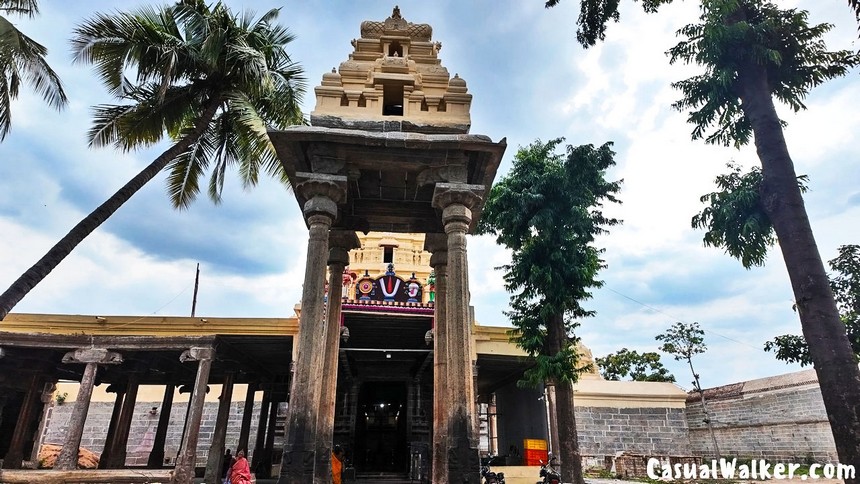
Sri Ranganatha Perumal Temple at Adhi Thiruvarangam, located in Sankarapuram taluk of Kallakurichi district on the banks of the South Pennai river, about 60 kilometres southwest of Villupuram, is also known as the Adhirangam Ranganathaswamy Temple or the Old Srirangam Ranganatha Perumal Temple. This temple is dedicated to Lord Ranganatha, the reclining form of Lord Vishnu, and is believed by devotees and local historians to predate even the celebrated Ranganathaswamy Temple at Srirangam.
The Adhi Thiruvarangam temple’s very name, “Adhi” meaning first or original, points to its belief as the earliest seat of Lord Ranganatha, dating back to Kretha Yugam and the Matsya Avatharam of Lord Vishnu.
This temple is considered one of the 108 Abhimana Kshetrams of the Vaishnavite tradition, and its towering 29-foot reclining Deity of Lord Ranganatha is unlike anything found among the 108 Divya Desams. Adhi Thiruvarangam offers a rare combination of mythology, antiquity, and architectural grandeur.
History of Sri Ranganatha Perumal Temple at Adhi Thiruvarangam
The temple finds textual reference in the Skanda Purana, Uttara Kandam, chapters 301 to 306, under the section known as Uttara Ranga Mahatmiyam. This scriptural mention lends weight to the belief that the temple’s origins go back to the very first Yugam and the first incarnation of Lord Vishnu, making it older in legend than Srirangam itself.
The temple is at least 2,000 years old, though some devotees believe it stretches back several thousand years further, tied to the dawn of Kretha Yugam itself.
A demon king named Somukan once stole the Vedas from Lord Brahma and imprisoned him, forcing the sages and celestial beings into servitude. Unable to bear his tyranny, the Devas and sages appealed to Lord Vishnu for help. Lord Vishnu waged a fierce battle against the demon, who eventually fled and hid within the ocean.
Lord Vishnu then took the form of Matsya, his fish incarnation, defeated Somukan, and retrieved the sacred Vedas, later teaching them to Lord Brahma at this very spot. It is this episode that gives the temple its name, Adhi Rangam, the original Rangam, and its link to the first avatar of Lord Vishnu.
Another popular history connects the temple to Lord Chandra, the moon god. Cursed and stripped of his brightness, Lord Chandra was advised by Sage Narada to perform penance at this site. He created a sacred tank and worshipped Lord Ranganatha with its holy waters, eventually being freed from his curse and restoring his glow.
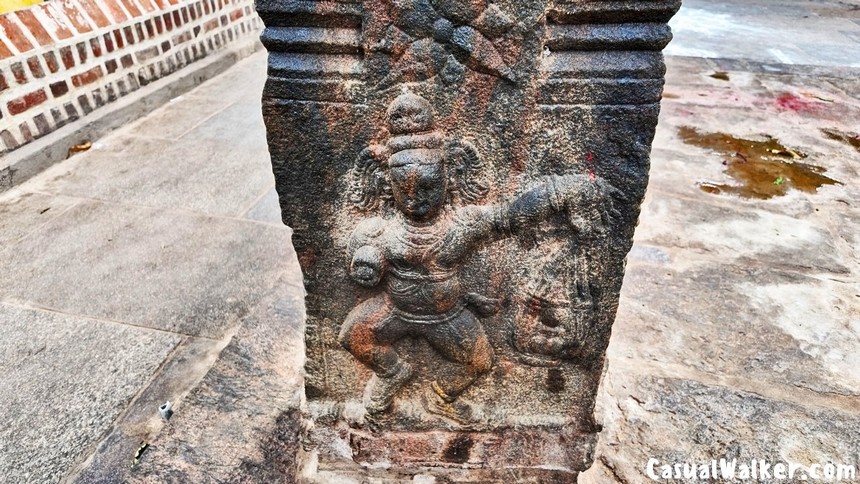
This tank survives today as the temple’s Chandra Pushkarani, one of its most sacred water bodies. A separate legend recounts a childless king named Shrutha Keerthi, or Surakeerthi in some tellings, who performed penance here and was blessed with children. Yet another tradition speaks of Lord Ranganatha appearing before King Mahabali and the Alvars at this sacred ground.
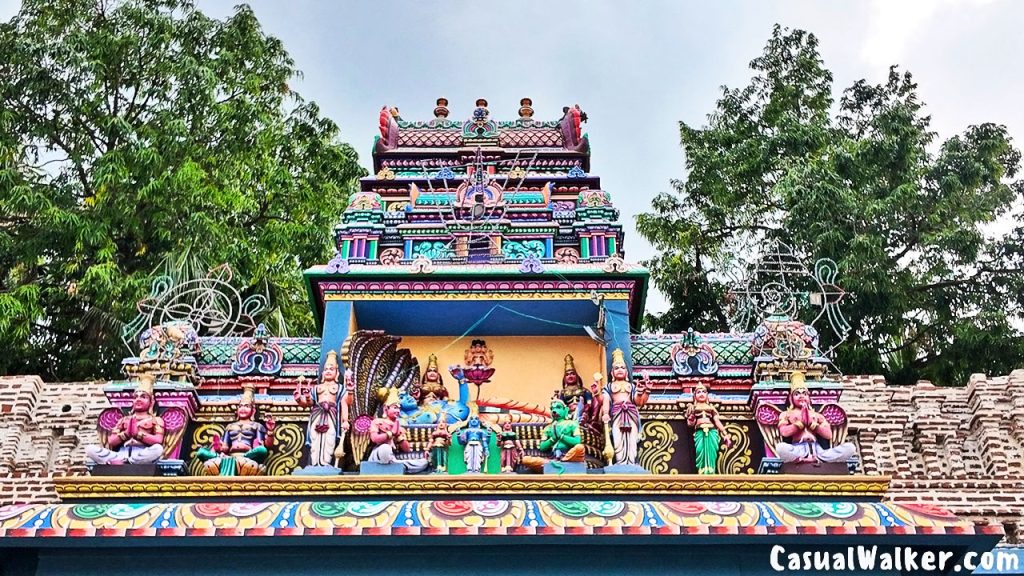
Deity of Adhi Thiruvarangam
The presiding deity of Adhi Thiruvarangam is Lord Ranganatha Perumal, seen here in his majestic reclining form, stretched out in eternal repose atop the coils of the five-hooded serpent Adisesha, whose hood forms a natural stucco canopy above him. At nearly 29 feet in length, this Deity is the largest known depiction of Lord Ranganatha anywhere, larger even than the celebrated moolavar at Srirangam, earning him the affectionate title Sri Periya Ranganathar, the “Great Ranganatha.” Fashioned from the sacred herbal composition Navapashanam, the same rare material associated with the revered Lord Murugan idol at Palani, the deity exudes a soft, almost living presence quite unlike stone or metal images found elsewhere.
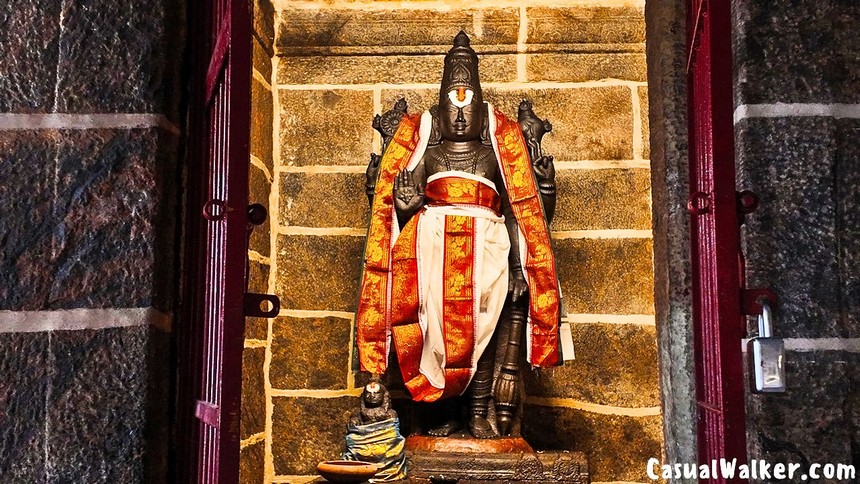
Goddess Sridevi rests near his head and Goddess Bhudevi near his feet, completing the timeless iconography of Vishnu’s reclining form, while a silver mace stands sentinel by his arm and Lord Garuda kneels in eternal prayer at his feet. Facing east yet oriented north to south, the Lord gazes upon his devotees with a serene, unhurried grace, as though the very act of creation and dissolution unfolds gently within his slumber.
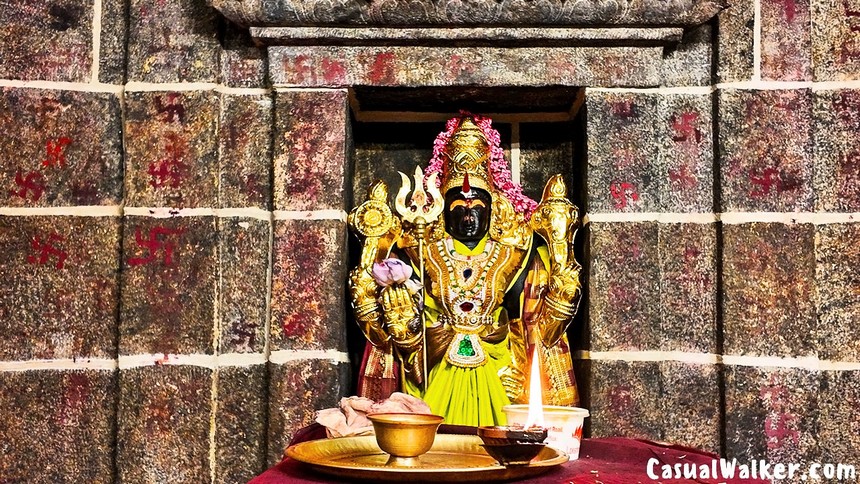
Architecture Of The Sri Ranganatha Perumal Temple at Adhi Thiruvarangam
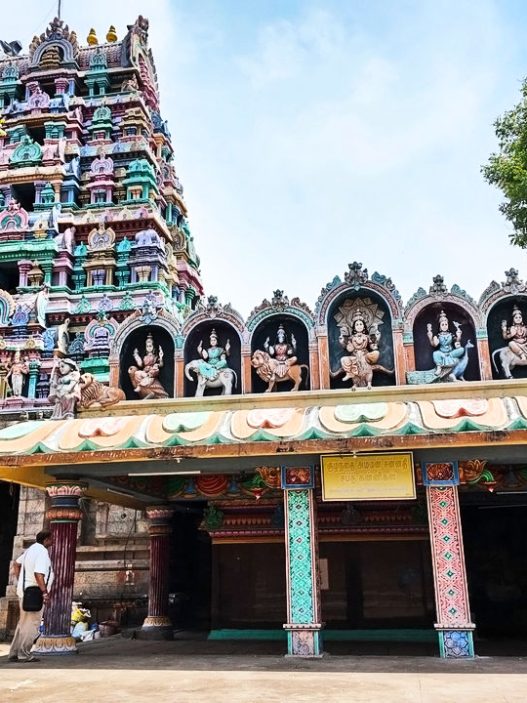
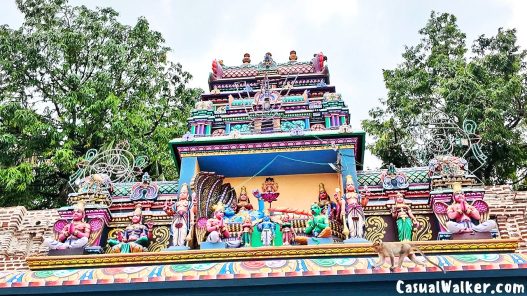
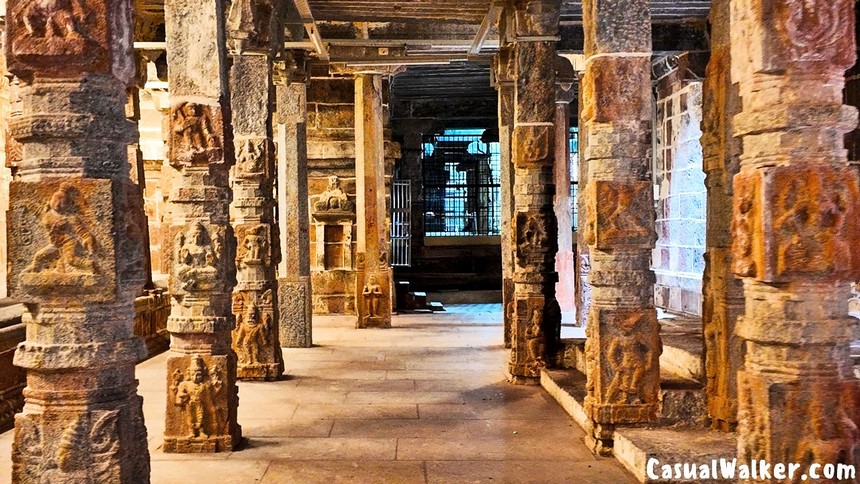
Built largely in the Dravidian style, the temple is believed to have been constructed by the Medieval Chola kings and later expanded and supported by the Vijayanagara rulers. Spread across roughly 5 acres, the temple complex is enclosed by tall granite walls with watchtowers at the corners, giving it a fortress-like character rarely seen in temples of this scale.
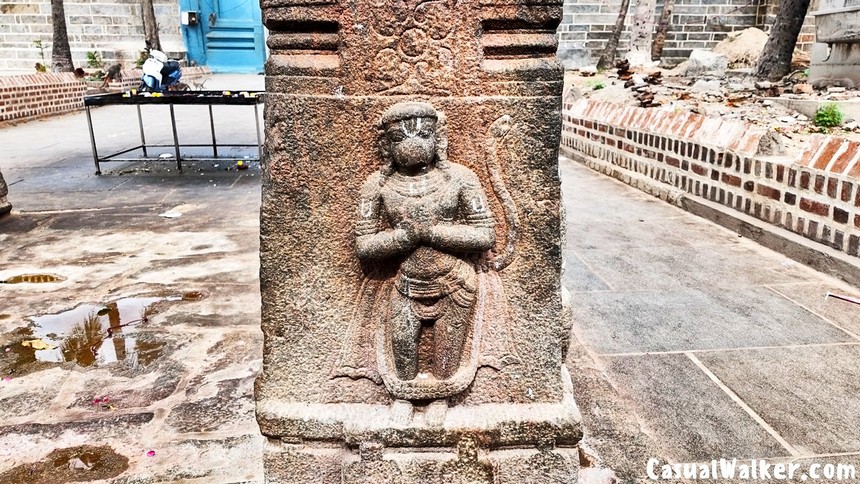
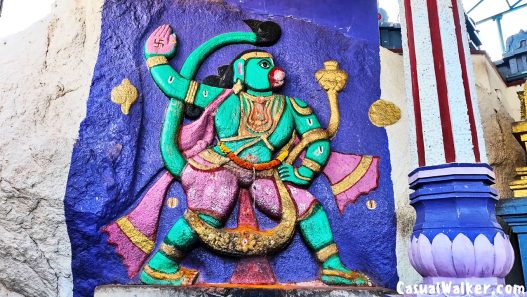
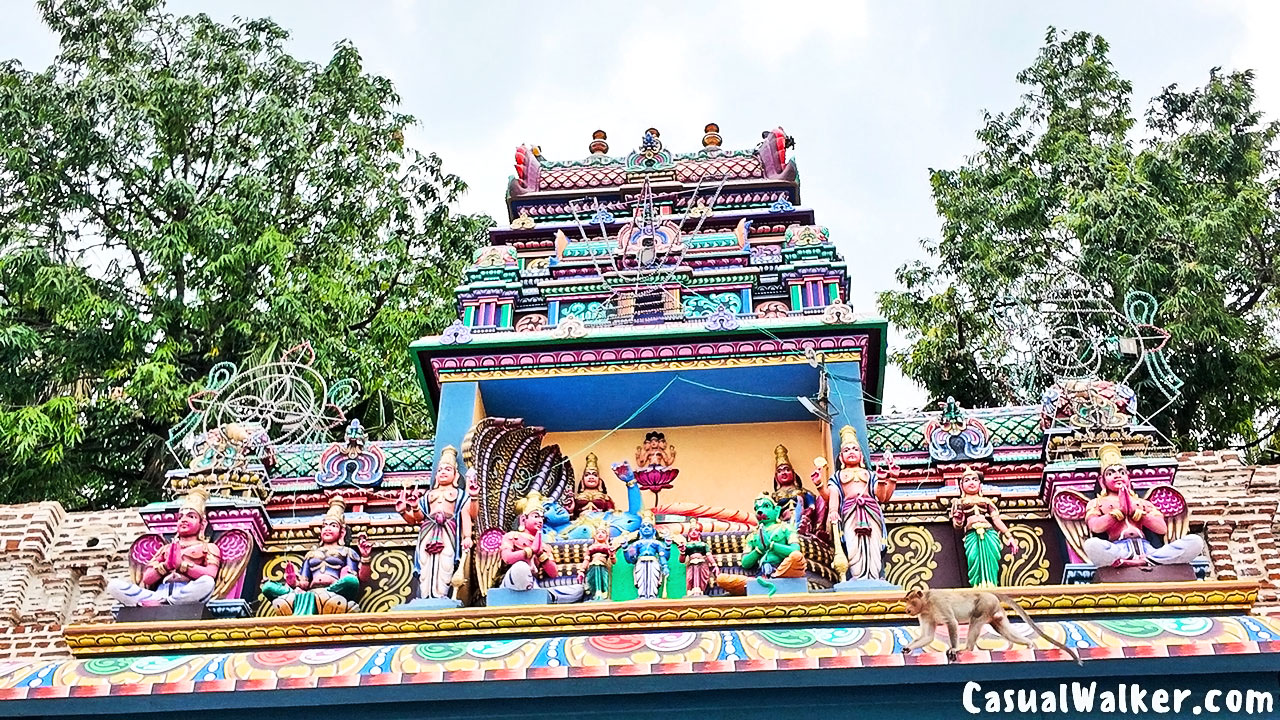
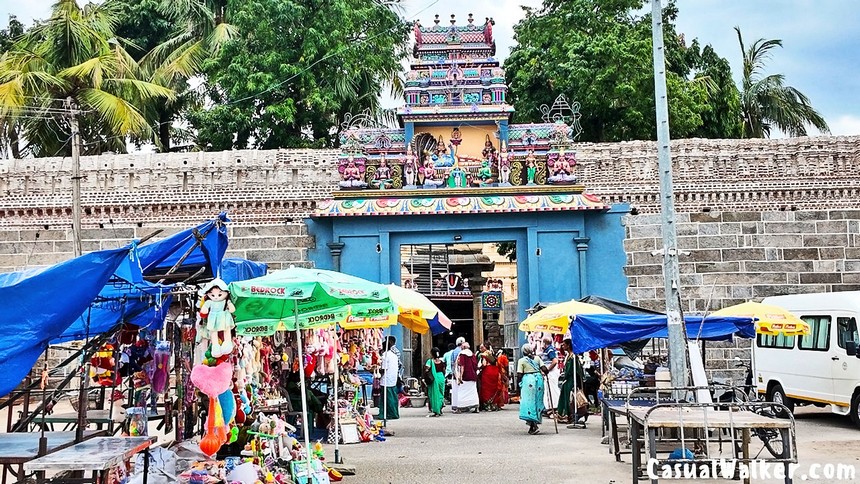
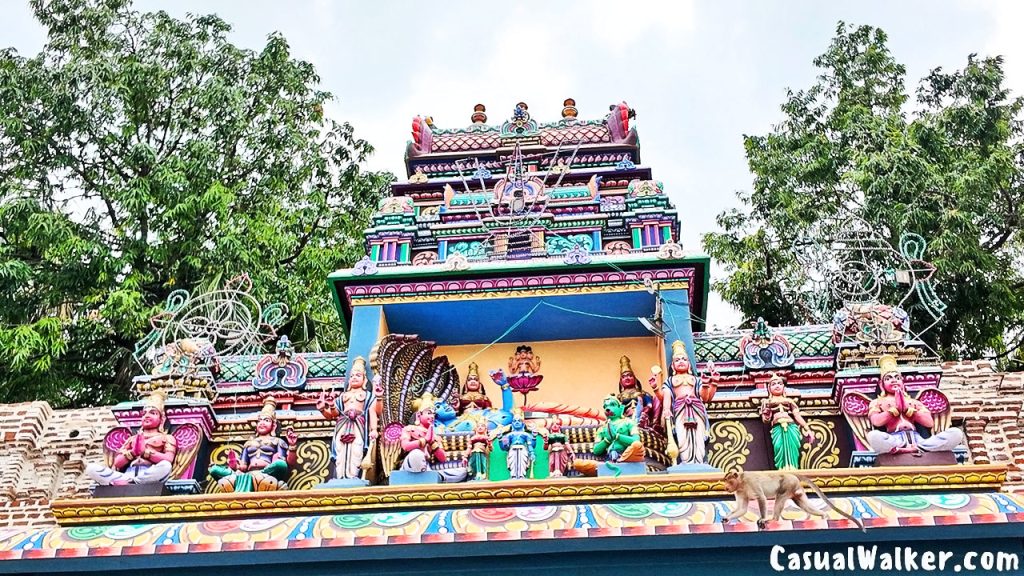
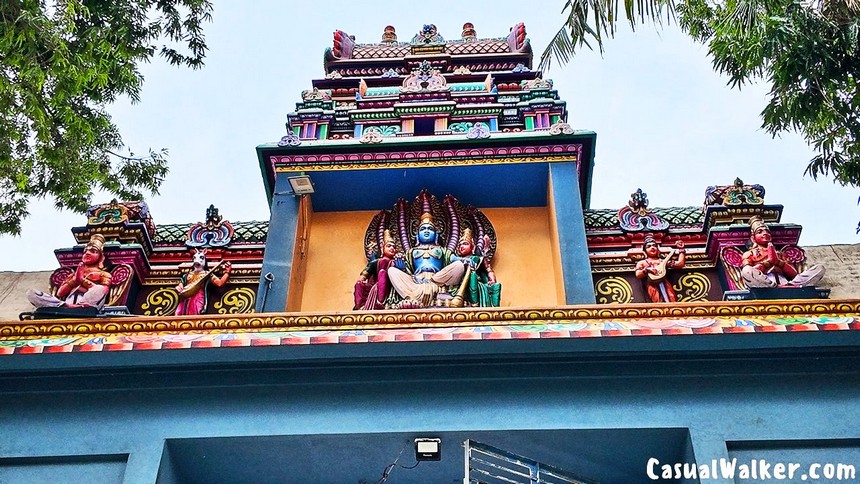
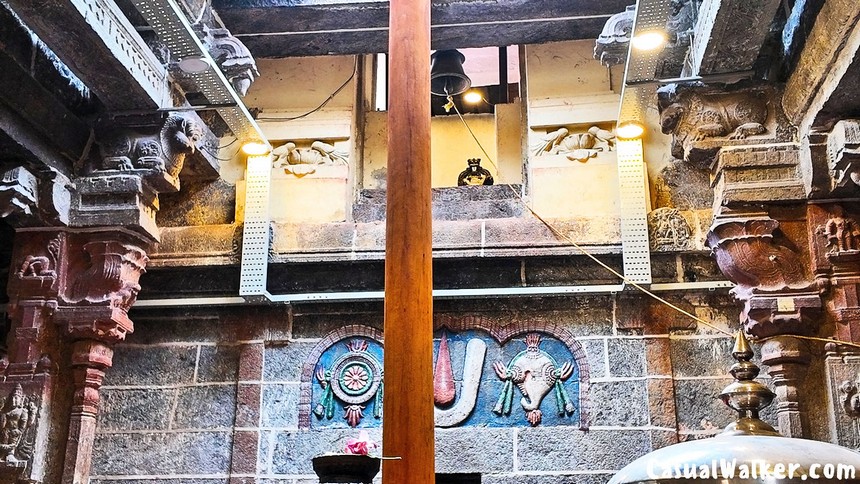
Unlike most Vishnu temples, the Rajagopuram here is distinctly flat rather than tiered, and its surface carries painted figures of Thirumann, Srichurnam, Sangu, and Chakkaram, flanked by images of Lord Garuda and Lord Anjaneya on either side. Near the entrance stands a Dwajasthambam, along with a Bali Peedam topped with a colourful idol of Lord Krishna that greets devotees as they step inside.
The sanctum houses the true highlight of this temple, the presiding deity, Lord Ranganatha Perumal, in a majestic reclining posture facing east, oriented north to south. The idol measures close to 29 feet, making it the largest known depiction of Lord Ranganatha anywhere, larger even than the one worshipped at Srirangam. Because of this, the deity here is popularly referred to as Sri Periya Ranganathar.
The idol is fashioned from a sacred herbal composition known as Navapashanam or mooligai silai, a rare and revered material also associated with the famous Lord Murugan idol at Palani. Since the moolavar is made of this delicate herbal stone, ritual ablutions are not performed directly on the deity, a distinctive practice compared to most Vishnu temples.
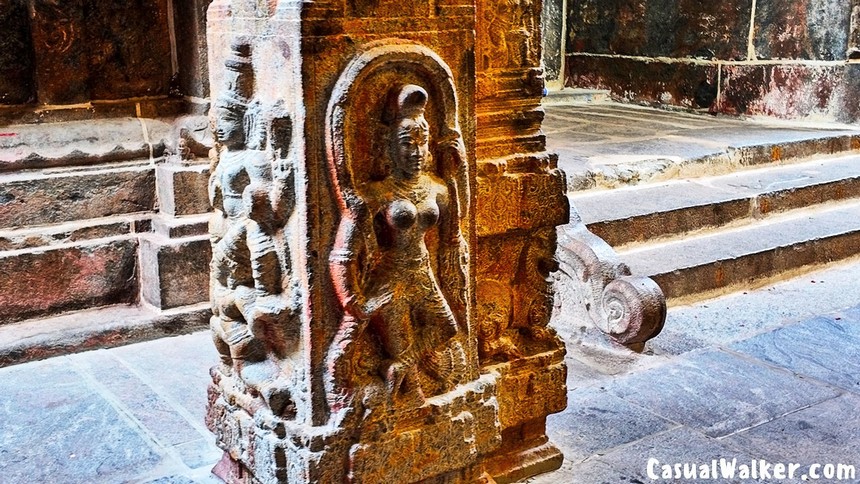
Sheltering the presiding deity is a stucco umbrella formed by the five-hooded serpent Adisesha. Goddess Sridevi is seen near the head of Lord Ranganatha, while Goddess Bhudevi rests near his feet, both integral to the iconography of the reclining form. A silver mace stands near the Lord’s arm, and an image of Lord Garuda is seen in a posture of prayer near his feet. Nearby, devotees can also spot a four-headed idol of Lord Brahma, believed to depict the moment Lord Ranganatha taught him the four Vedas, a detail said to be symbolised by four fingers raised on the Lord’s hand facing Brahma.
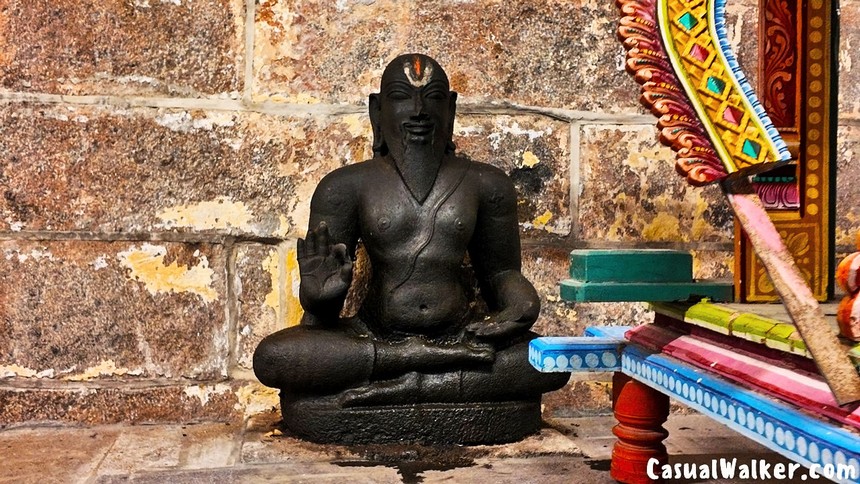
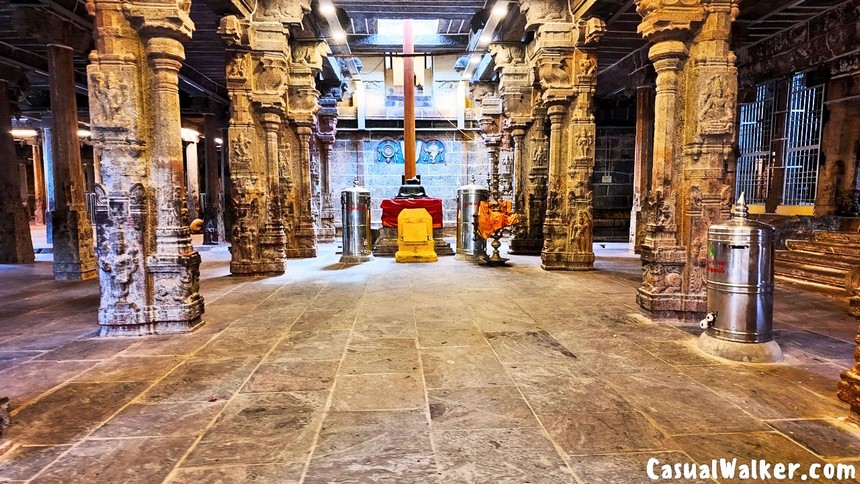
The sanctum is approached axially from the gopuram through a four-pillared Mani Mandapam, followed by the pillared halls of the Mukha Mandapam and Artha Mandapam. Entry into the moolasthanam, despite the temple’s east-facing orientation, is typically through a southern entrance. Along the way, shrines dedicated to Lord Rama, Goddess Seetha, Lord Lakshmana, and Lord Anjaneya line the path, along with a sub-shrine for Sri Desigar within a multi-pillared mandapam close to the sanctum.
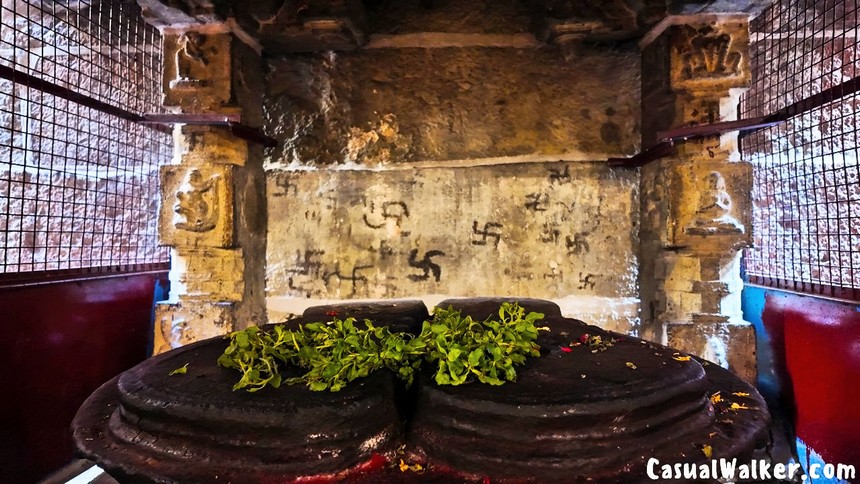
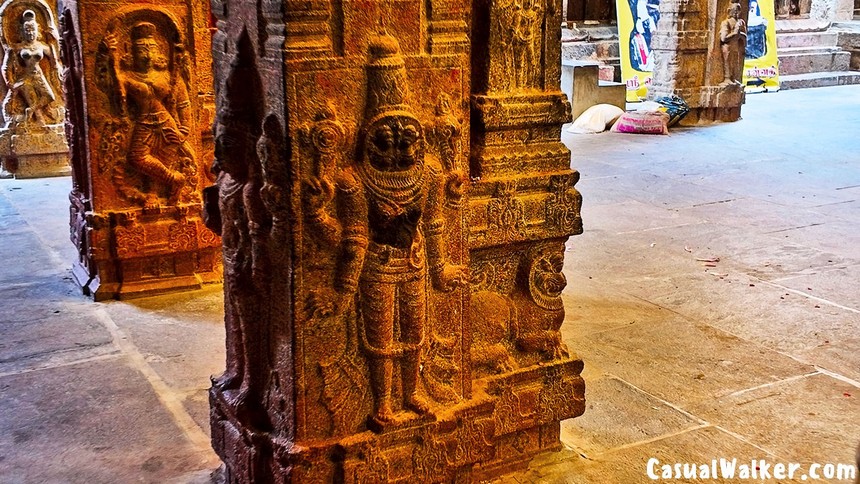
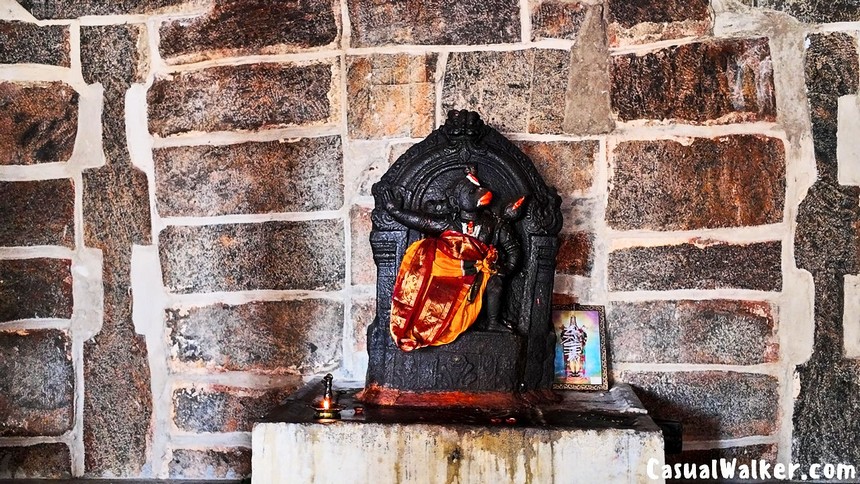
Goddess Ranganayaki, the consort of Lord Ranganatha, is enshrined in a separate shrine parallel to the main sanctum, seated gracefully within a mandapam adorned with sculpted pillars in the distinctive Vijayanagara style. Additional shrines dedicated to Lord Kodandarama, Lord Hanuman, and Lord Krishna surround the main sanctum, while a large carved foot of Lord Vishnu can be seen in the western section of the first precinct.
Ancient Grain Storage Silo
One of the temple’s most fascinating architectural features is its ancient grain storage silo, a brick granary tucked into the southeast corner of the complex, still remarkably intact. Comparable granaries exist only at a handful of temples, including Srirangam, the Jambukeswarar Temple at Tiruvanaikaval, and the Palaivananathar Temple at Papanasam.
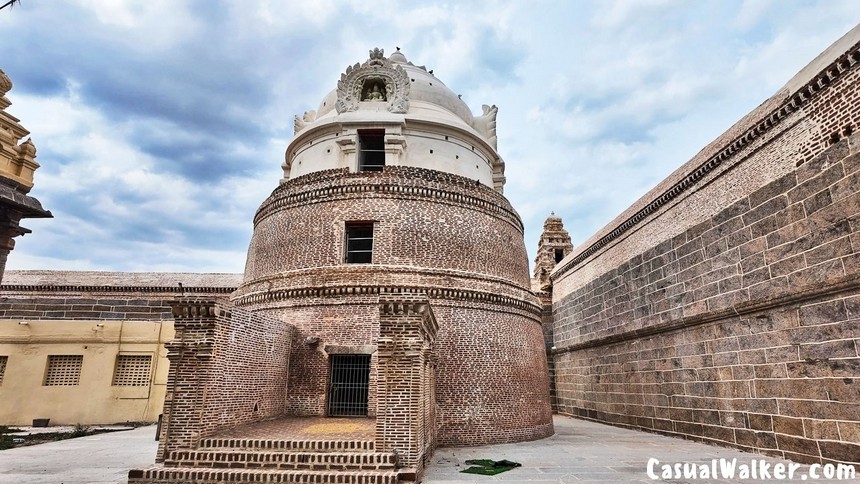
Historically, farmers from the surrounding region stored their harvest here, and the granary also held grain contributed by temple donors. Nearby, two mandapams rising nearly 25 feet, each supported by massive single-stone pillars, stand as a genuine testament to the engineering skill of their era.
108 Abhimana Kshetram
As one of the 108 Abhimana Kshetrams revered in Vaishnavite tradition, Adhi Thiruvarangam holds a special place in the spiritual geography of Tamil Nadu. Temple records and local belief maintain that this shrine predates the Ranganathaswamy Temple at Srirangam, earning it the title Adhi Rangam, the original or first Rangam. Interestingly, the Ranga Vimanam gifted to Vibhishana and later installed at Srirangam is believed to have originally taken shape here, naturally formed and later transferred. The vimanam of this temple itself is said to resemble the sacred syllable Om, symbolising an amalgamated form of Vaishnavism.
Devotees believe that a visit to this temple and darshan of Lord Ranganatha and Goddess Ranganayaki bestows knowledge, wisdom, and the same spiritual merit as visiting all 108 Divya Desams. The temple is also considered a Prarthana Sthalam for devotees seeking relief from doshas linked to the moon (Chandra Dosha), as well as blessings for marriage proposals, progeny, and ancestral peace. The festival deity is periodically taken to a nearby hill called Maiyanoor, about 30 kilometres from the temple, where legend says the Kedilam river was formed when Lord Garuda scratched the hillside with his beak.
Festivals & Daily Rituals
Temple priests conduct rituals here six times a day. These include Ushathkalam at 7 am, Kalasanthi at 8 am, Uchikalam at 12 pm, Sayarakshai at 6 pm, Irandamkalam at 7 pm, and Ardha Jamam at 10 pm. Each ritual follows three stages: alangaram or decoration, neivethanam or food offering, and deepa aradanai or the waving of lamps, performed for both Lord Ranganatha and Goddess Ranganayaki. During the concluding rites, temple musicians play the nagaswaram and tavil while priests recite Vedic verses and devotees offer their prostrations.
Beyond the daily schedule, the temple observes weekly, fortnightly, and monthly rituals, along with major Vaishnavite festivals such as Vaikunta Ekadasi, Krishna Janmashtami, Ramanavami, and Adi Pooram. Special celebrations are also held on all Ekadashi and Pournami days, and throughout the Tamil months of Purattasi and Margazhi. The temple’s chariot festival, traditionally celebrated during the Tamil month of Chittirai in March–April, remains one of its most prominent events, although the larger Brahmotsavam has reportedly been suspended in recent years due to limited patronage and resources.
Sthala Vriksham, Temple Tank
The temple’s sacred tank, Chandra Pushkarani, is directly tied to the legend of Lord Chandra regaining his lost brightness, and it sits in the southeast corner of the complex. The Then Pennai river, largely dry today, serves as the temple’s Theertham.
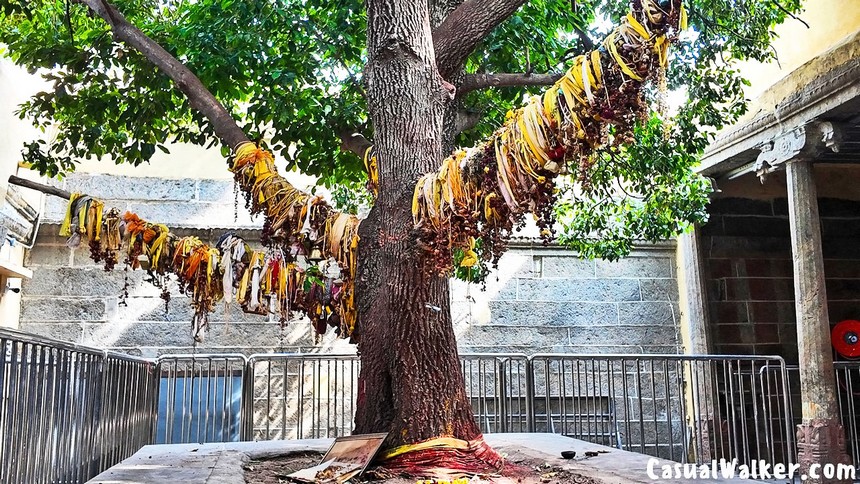
The Sthala Vriksham, or sacred temple tree, is the Punnaga tree, and a well-tended Nandhavanam or temple garden adds to the serene atmosphere within the complex. The temple also maintains a Goshala for cows, and Mahishasura Mardhini is regarded as the Kaaval Deivam, or guardian deity, of this sacred site.

Travel Tips for Visiting Sri Ranganatha Perumal Temple at Adhi Thiruvarangam
Sri Aadhi Thiruvarangam Perumal Kovil Address: Sri Aadhi Thiruvarangam Perumal Temple, Aadhi Thiruvarangam 605 802, Kallakurichi District
Thiruvarangam is between Thiruvannamalai amd Manalurpet. It is also between Thirukoilur and Manalurpet. From Manalurpet, mini bus, auto, van can be engaged. Government buses are also available.
Temple Timings: 6.00 am to 8.00 pm
Main Deity: Ranganatha Swamy(Lord Vishnu).
Ambal: Rangavalli Thayar.
Holy Water: Chandra Pushkarani, Thenpennai river.
Temple Festivals: Saturdays of Purarttasi, pournami and Vaikunda Ekadasi
How To Reach Sri Aadhi Thiruvarangam Perumal Kovil
The nearest town to the temple is Villupuram, with Adhi Thiruvarangam situated between Thiruvannamalai and Manalurpet, and also accessible between Thirukoilur and Manalurpet. The full postal address is Sri Adhi Thiruvarangam Perumal Temple, Adhi Thiruvarangam 605 802, Kallakurichi District, Tamil Nadu.
By Road: The temple is well connected by road and can be approached from several directions. Pilgrims coming via Salem can take the Kallakurichi–Sankarapuram route through Pagandai Cross Road to reach Thiruvarangam directly. The temple is also easily approached from the south via Kallakurichi or Salem on the Ulundurpet–Salem highway. Kallakurichi itself enjoys strong road connectivity with major cities such as Salem, Coimbatore, Tiruppur, Villupuram, Chennai, and Bangalore, with National Highway NH 79 linking the district to several major regions.
By Bus: Frequent buses run every half hour between Thirukoilur and Manalurpettai, from where pilgrims can hire mini buses, autos, or vans to cover the remaining stretch to the temple. Government bus services also connect directly to the temple town. Buses reaching the northern bank require crossing the Pennai river on foot to reach the temple, while buses to the southern side bring devotees directly without needing to cross the river.
By Train: The nearest railway station is Thirukoilur, located about 20 to 21 kilometres from the temple, followed by Villupuram Junction at around 55 to 57 kilometres. Pilgrims travelling from Chennai can take a train to Villupuram, and from there a connecting train service is available up to Thirukoilur. From Thirukoilur, local transport such as buses or autos can be taken to reach the temple.
By Flight: The nearest major airport is Chennai International Airport, roughly 201 kilometres away, while Trichy Airport lies about 172 kilometres from the temple. Salem Airport, around 126 kilometres from the district, is another option for those approaching from the west. From Chennai Airport, pilgrims can avail bus or train facilities to reach Thirukoilur, and from there take a local bus onward to the temple.

Thanks for exploring this Casual Walker photo guide — India’s most visual cultural travel guide and a curious discovery journal finding authentic photo stories, guides, and tips across travel, culture, arts, temples, heritage, and food.
- Keep exploring: Browse 650+ Travel & Culture Photo Guides
- We’d love to hear your feedback, stories, corrections, and updates — Email us.
- Follow our photo walks on Instagram: @hicasualwalker