




Chenda Melam: Kerala’s Traditional Temple Percussion Instrument | Complete Guide to Chenda Melam Origin, History, Panchari Melam, Pandi Melam, Thayambaka & Shinkari Melam | Legendary Chenda Melam Artists | Where to Watch Chenda Melam in Kerala – Thrissur Pooram, Arattupuzha Pooram, Uthralikkavu Pooram, Peruvanam Pooram, Guruvayoor & Vadakkumnathan Temple Festivals
– a instrument dating back over 300 years, originated as a temple ritual (kshetravadyam)

Kerala’s temples are far more than places of worship, they are cultural institutions where art, architecture, ritual, and community life converge. Among all its musical traditions, the Chenda Melam stands apart as the most powerful. It is a form of percussion built around the Chenda, a cylindrical drum that has been central to Kerala’s temples, festivals, and classical art forms for more than three hundred years. Visiting Kerala temple during festival season is to witness centuries old customs performed exactly as they were generations ago, with the Chenda leading every procession.
Origins and History of the Chenda
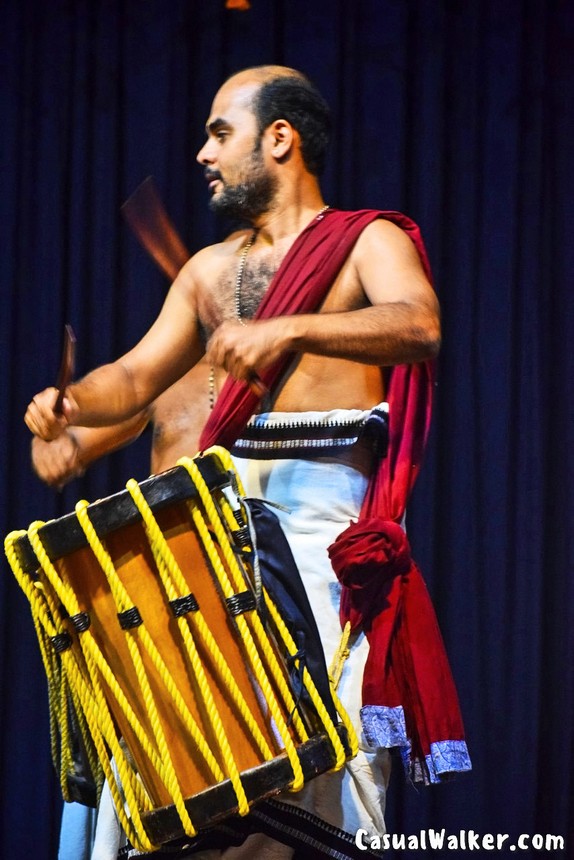
The Chenda is a cylindrical percussion instrument, traditionally carved from the wood of the jackfruit tree and covered on both ends with treated animal hide. It has remained an inseparable part of Kerala’s cultural landscape for well over 300 years, and many art historians believe its roots stretch back even further. Historically, the instrument was closely guarded by temple communities, particularly the Marar and Poduval communities, who were entrusted with handling sacred musical instruments during rituals. Ancient texts such as the Tantrasamuchaya, a treatise on temple rites, speak of the importance of drumming during sacred ceremonies and festivals, which tells you just how deeply this tradition is woven into Kerala’s temple history.
While the Chenda belongs to Kerala, its influence has travelled beyond state borders too. It is widely played in parts of Tamil Nadu and Karnataka, where in the Tulu language it goes by the name Chende, and it also features prominently in the Yakshagana dance drama tradition of coastal Karnataka. 
Sacred Bond Between Temples and Chenda Melam
In Kerala, temple festivals and Chenda Melam cannot be separated from one another. The instrument belongs to a larger musical tradition called Kshetravadyam, the percussion arts associated with temple worship. These performances fall broadly into two categories.
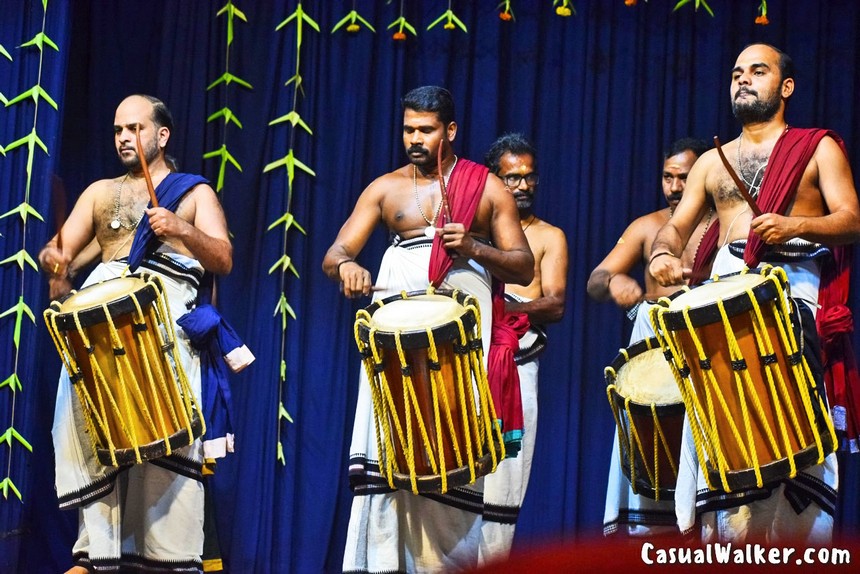
Anushtanavadyam is ritualistic, performed within the temple as part of sacred rites with little room for improvisation. Aghoshavadyam, on the other hand, is performed outside the temple purely to entertain devotees and lift the festive spirit, and this is where the artist’s individual flair truly shines.
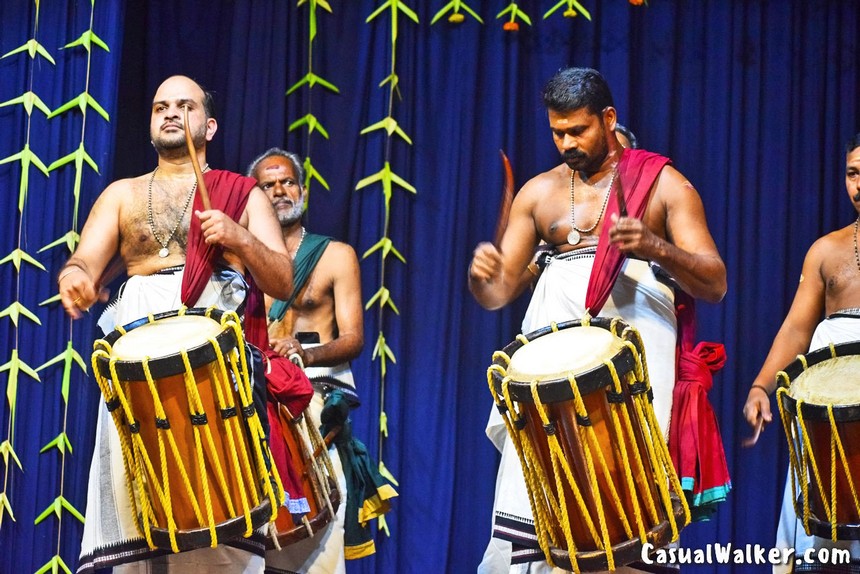
Anatomy of the Chenda
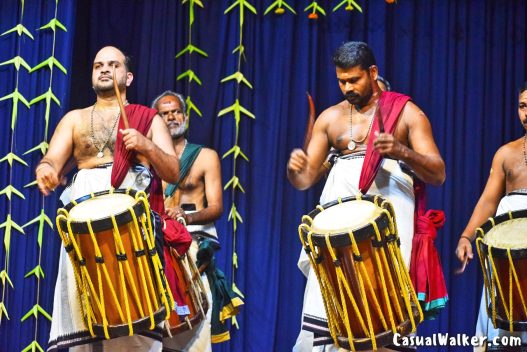
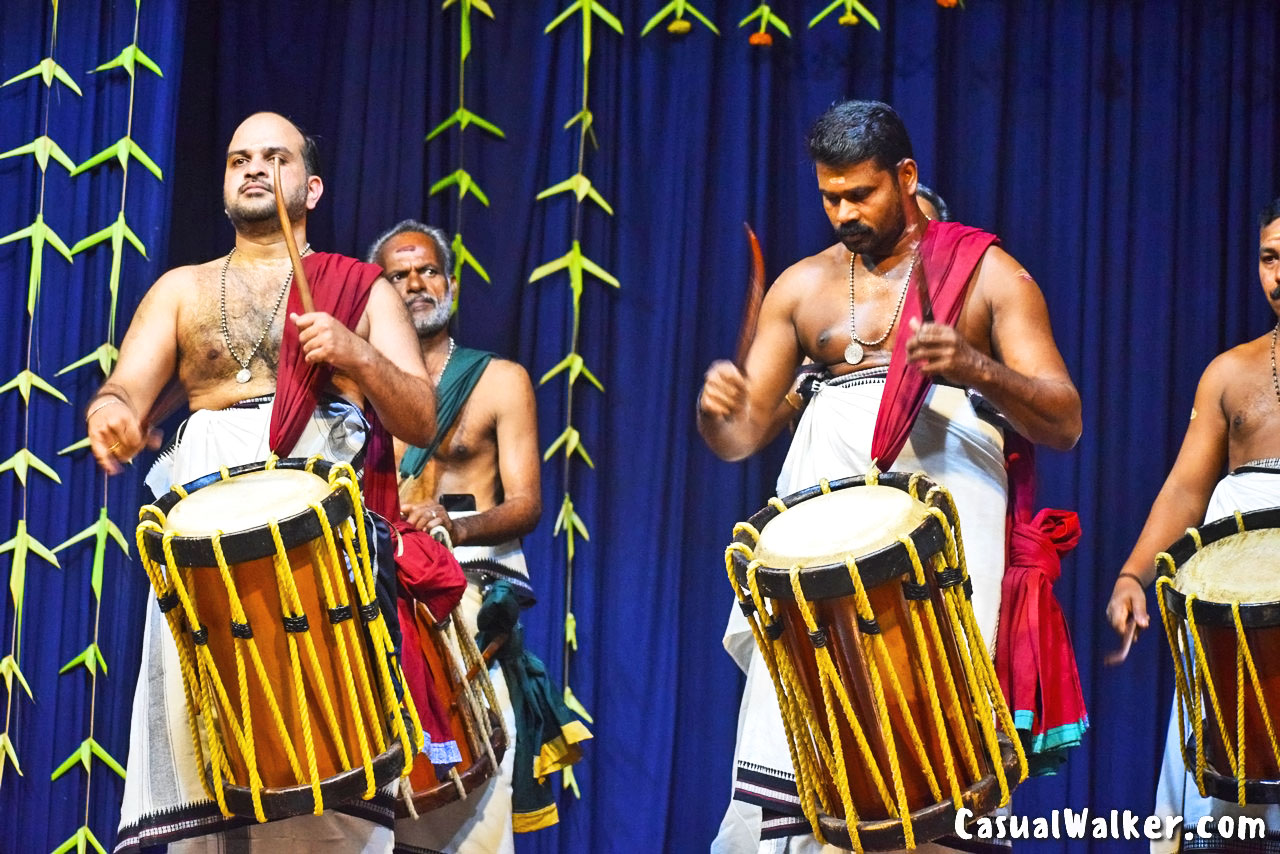
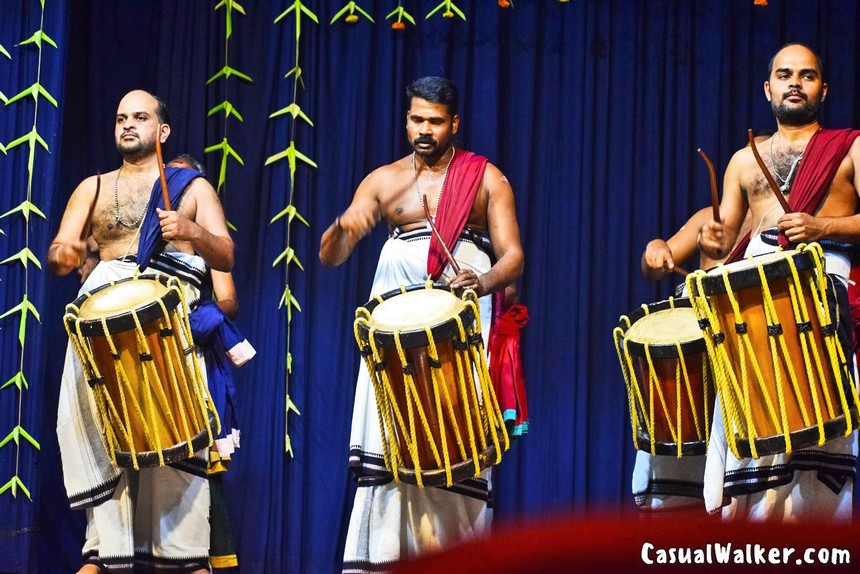
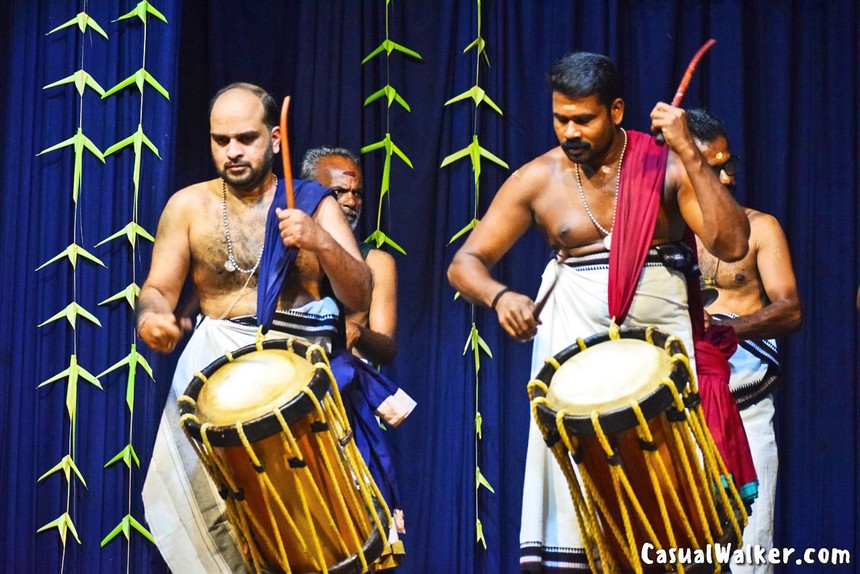
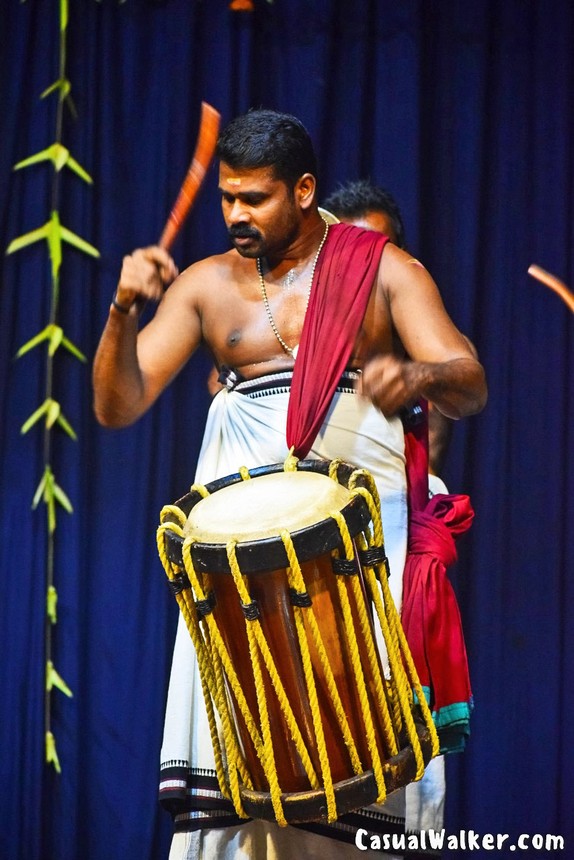
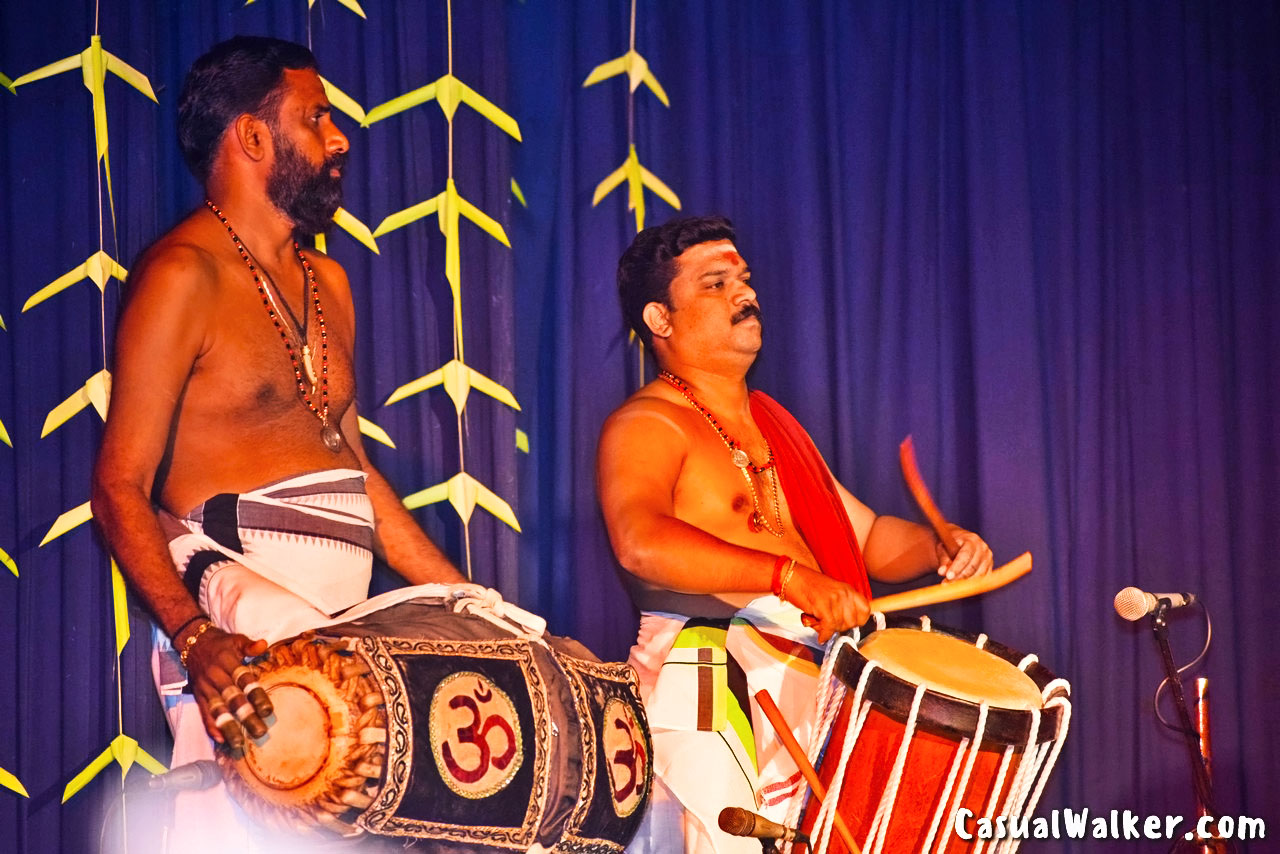
Building a Chenda is a craft passed down through generations. The wooden body is carved from jackfruit tree wood into a cylindrical shape roughly two feet long and about a foot in diameter. Both ends are covered with tanned skin, most often taken from a cow’s abdominal region for its superior tonal quality. The two faces of the drum serve entirely different purposes. The left side, called Edamthala or Uruttu Chenda, carries a single thin layer of skin and produces a sharp, cutting treble. The right side, called Valamthala or Veekku Chenda, holds multiple layers of skin, sometimes five to seven, giving it a deep bass growl.
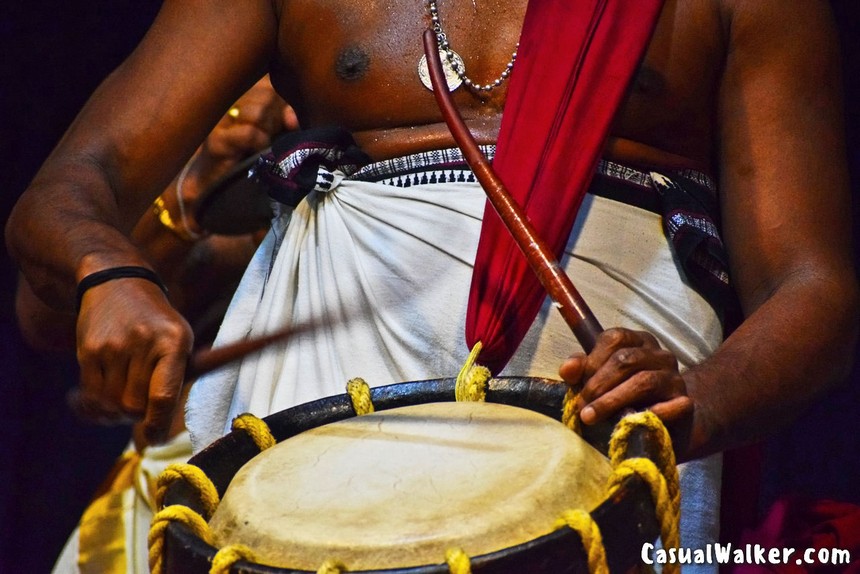
The skin is stretched over rings made from bamboo or the trunk of a local palm tree, and a rope woven from flax fibre is threaded through holes along these rings to control tension. Tightening this rope is how the instrument gets tuned. The sticks used to strike the Chenda are typically carved from sappanwood, bamboo, or tamarind, tapering gently toward the striking tip. A long cloth strap called the kacha slings the drum across the player’s shoulder, letting it hang vertically so both hands are free to strike the upper surface.
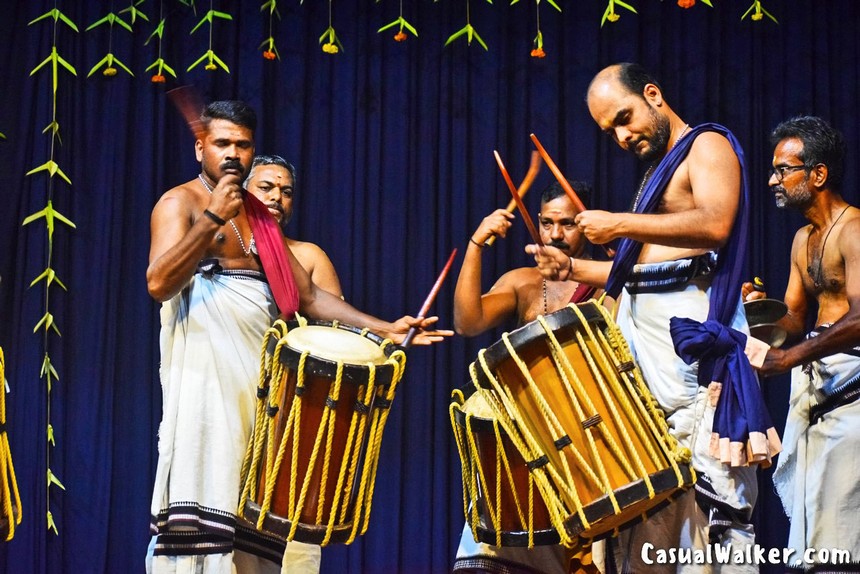
Traditionally, the Chenda has been described as an Asura Vadyam, meaning a wild, untamed instrument whose raw power is never meant to sit quietly in harmony. That fierce, commanding character is exactly what gives Chenda Melam its unmatched intensity.
Chenda Melam: The Rhythm Ensemble
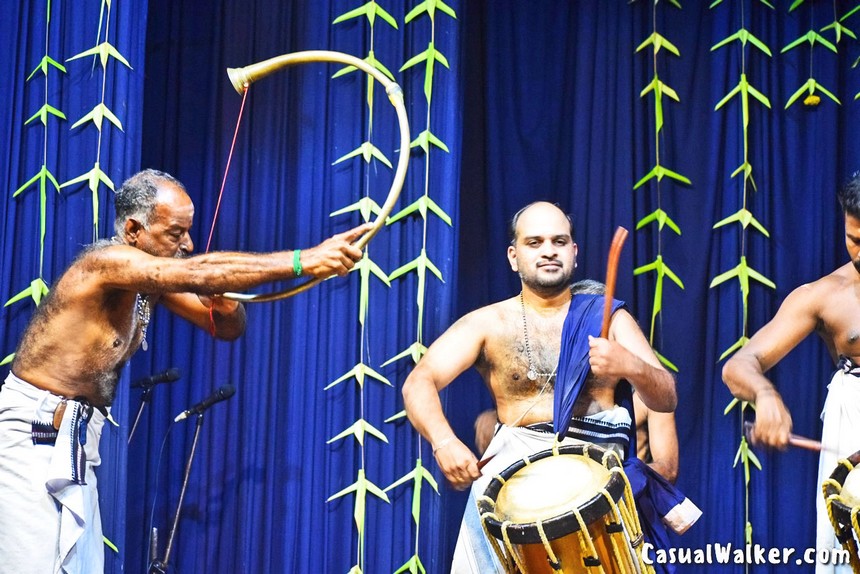
The word melam simply means an ensemble or concert, and a Chenda Melam is essentially a grand percussion orchestra built around the Chenda. A traditional melam is a disciplined formation of five instruments, the Edamthala and Valamthala Chenda, the Kombu which is a curved horn, the Kuzhal which is a wind instrument, and the Elathalam, a pair of small hand cymbals. A large scale melam can involve anywhere between 110 and 130 performers, all playing in flawless synchronisation for hours without a single break.
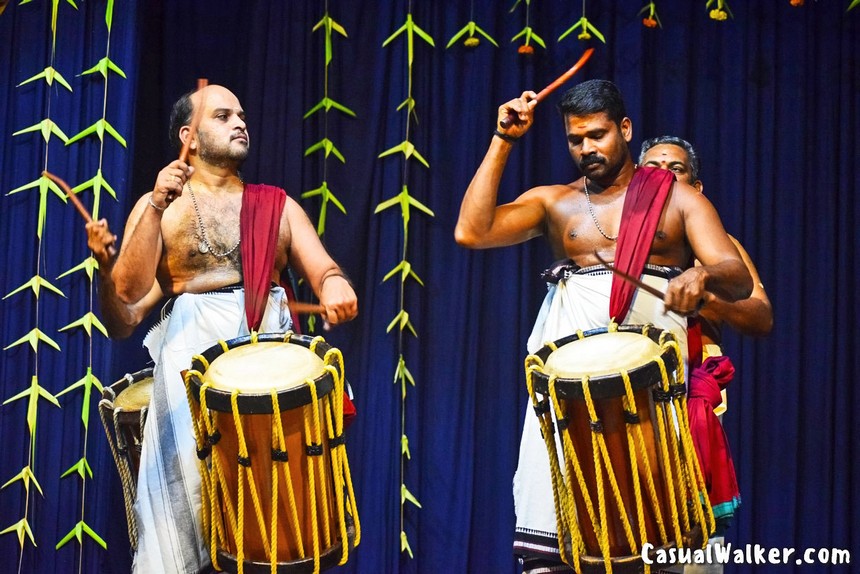
What fascinates me most as an observer is how the entire performance is conducted without any visible conductor. Instead, the senior most players of the Chenda and Kuzhal, known as the Pramanakkar, stand facing one another and steer the whole ensemble through subtle head movements and gestures, a silent language that somehow keeps hundreds of musicians locked in perfect rhythm.
Seven Traditional Forms of Melam
Kerala’s percussion heritage recognises seven classical forms of melam, namely Panchari, Champa, Chempada, Adantha, Anchadantha, Druvam, and Pandi. The first six are collectively known as Chempada Melangal, while Pandi stands entirely on its own with a unique structure. Beyond these seven, two further forms called Navam and Kalpam also belong to this rich tradition.
Panchari Melam
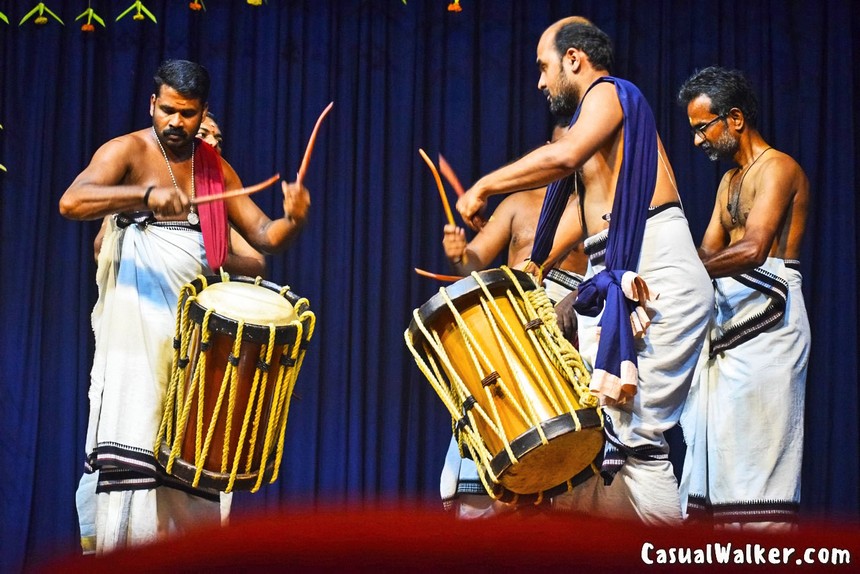
Panchari Melam is considered the most classical and widely performed form, and every other melam is judged against it as the benchmark. Built on a seven beat cycle, it is performed at almost every temple festival across central Kerala and is best experienced there in its purest, most disciplined form.
Pandi Melam
Pandi Melam is longer and more elaborate, usually performed just outside the temple premises. A complete rendition can run beyond two and a half hours across four distinct phases, with rhythmic cycles gradually reducing from 56 beats down to just seven. The Pandi Melam staged at the Vadakkunnathan temple during Thrissur Pooram remains the most celebrated example of this form found anywhere in Kerala.
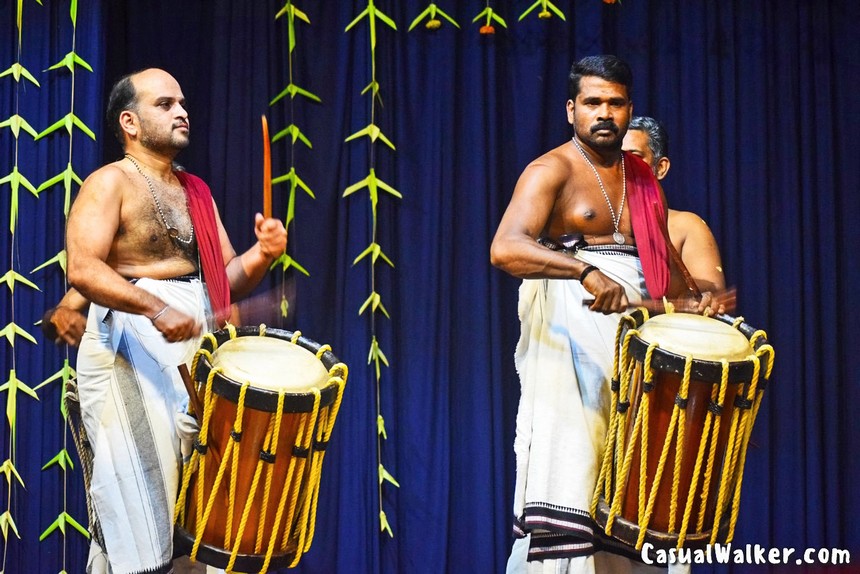
Then there is Thayambaka, a solo showcase where a lead Chenda artist improvises freely over a steady rhythm laid down by supporting players. Starting slow, it builds gradually into a frenzied, high energy climax that reveals the sheer individual mastery and creativity of the lead performer.
In recent years, a lighter, faster version called Shinkari Melam has grown popular, especially among younger performers and visiting tourists. Unlike the classical forms, Shinkari Melam uses a Chenda with a harder, cheaper skin and needs far less formal training, making it approachable even for beginners with basic rhythm sense. While it does not carry the classical weight of Panchari or Pandi, it has injected fresh energy into the tradition and encouraged growing participation from women performers, gently breaking long standing gender norms in this art form.
Which Festival Is Best to Watch Chenda Melam?
If there is one festival every art lover must witness at least once, it is the Thrissur Pooram, held at the Sree Vadakkumnathan Temple in Thrissur. This is widely regarded as the mother of all poorams and the single grandest stage for Chenda Melam anywhere in the world. The temple hosts the legendary Ilanjithara Melam, where more than 250 seasoned artists perform in perfect unison, their combined rhythm rolling through the temple grounds like a wave. For decades this extraordinary display has been led by the maestro Peruvanam Kuttan Marar, and standing in that crowd as the beats reach their peak is an experience unlike anything else in Kerala.
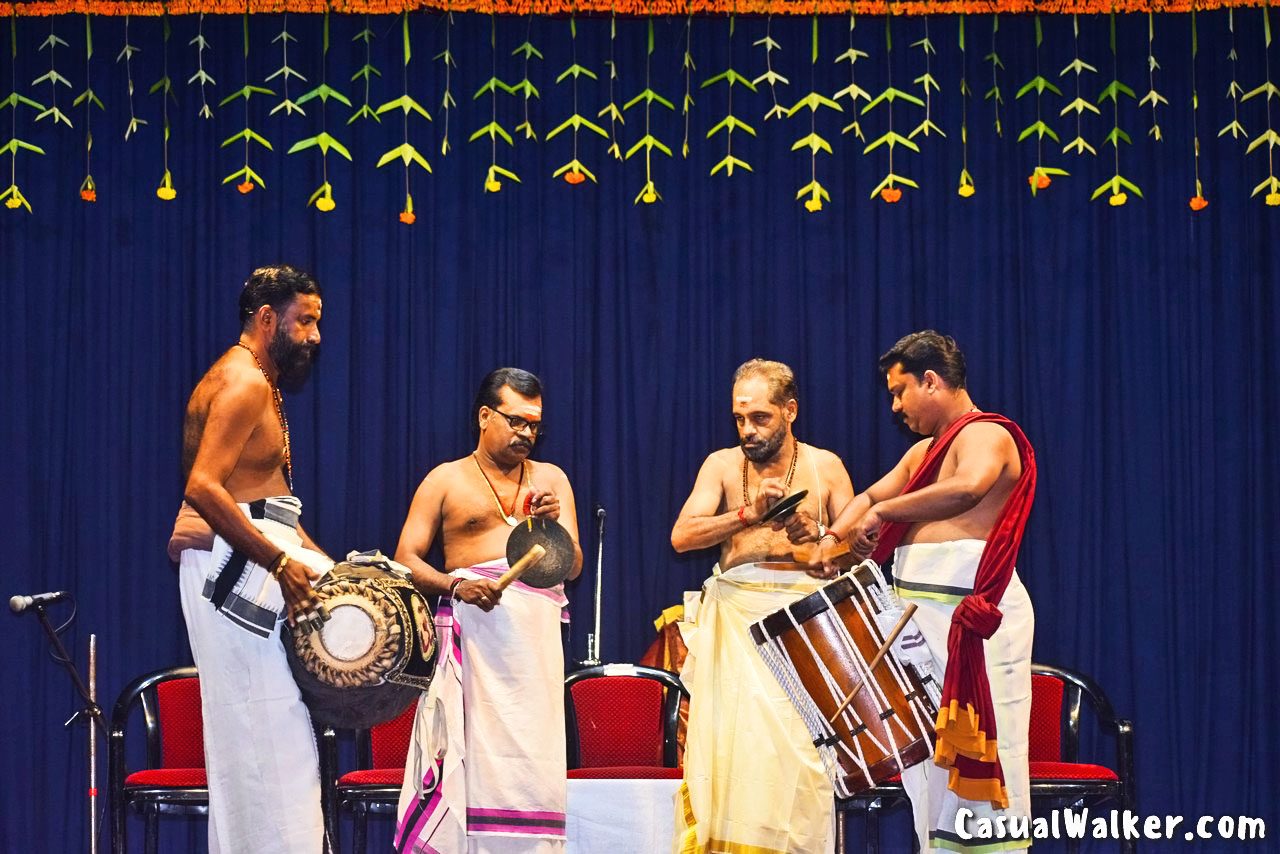
That said, Thrissur Pooram is not the only place to feel this magic. The Arattupuzha Pooram, often called the grandfather of all poorams for its antiquity, also features outstanding Panchari and Pandi Melam performances. The Uthralikkavu Pooram near Wadakkanchery is known among connoisseurs for its raw, high energy Pandi Melam, while the Peruvanam Pooram is a favourite among purists who want to see Panchari Melam performed in its most classical, unhurried form. If your travel dates do not line up with Thrissur Pooram, which usually falls in April or May, any of these festivals will give you an equally authentic and unforgettable introduction to the art. My honest suggestion to any traveller planning around this is simple, check the temple festival calendar for the Malayalam months of Medam and Meenam, since this window holds the highest concentration of major poorams across central Kerala.
Chenda in Classical Art Forms
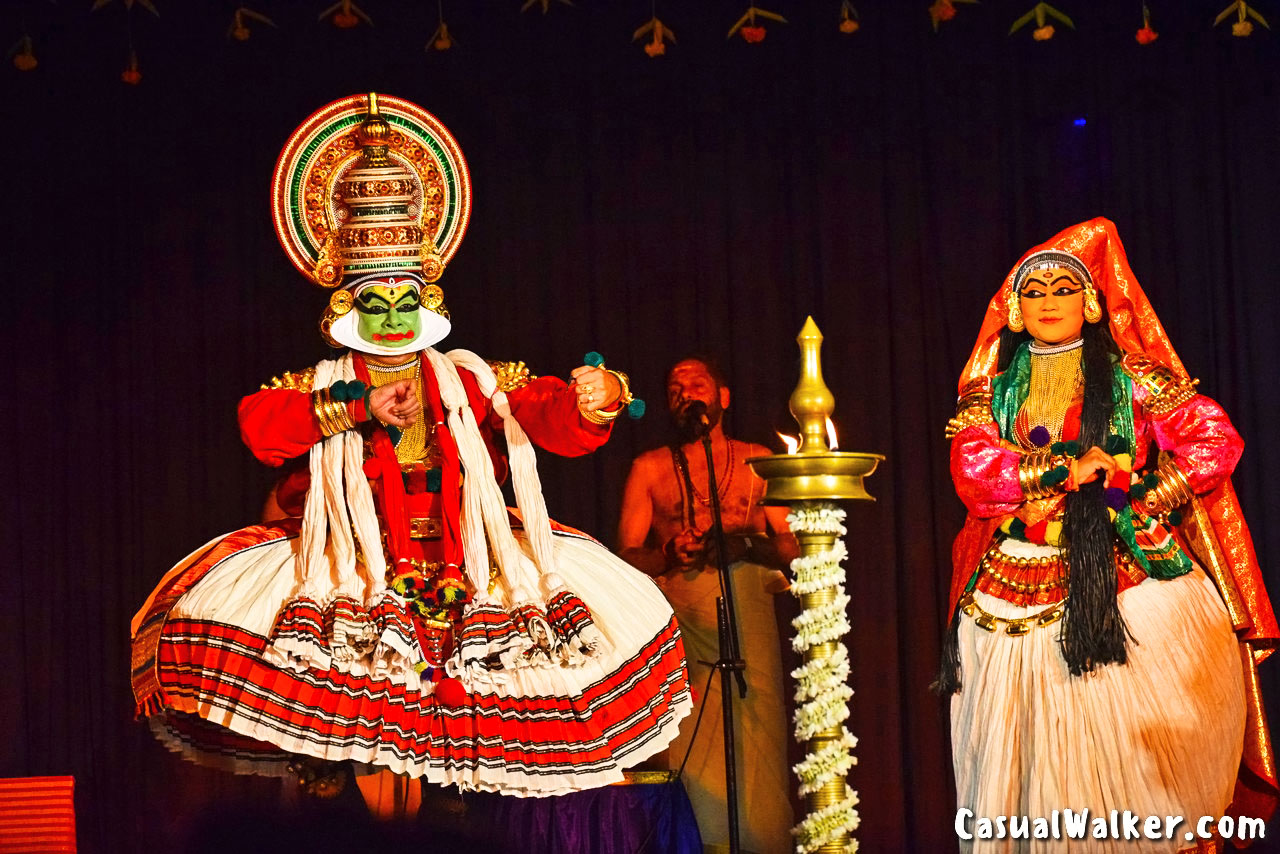
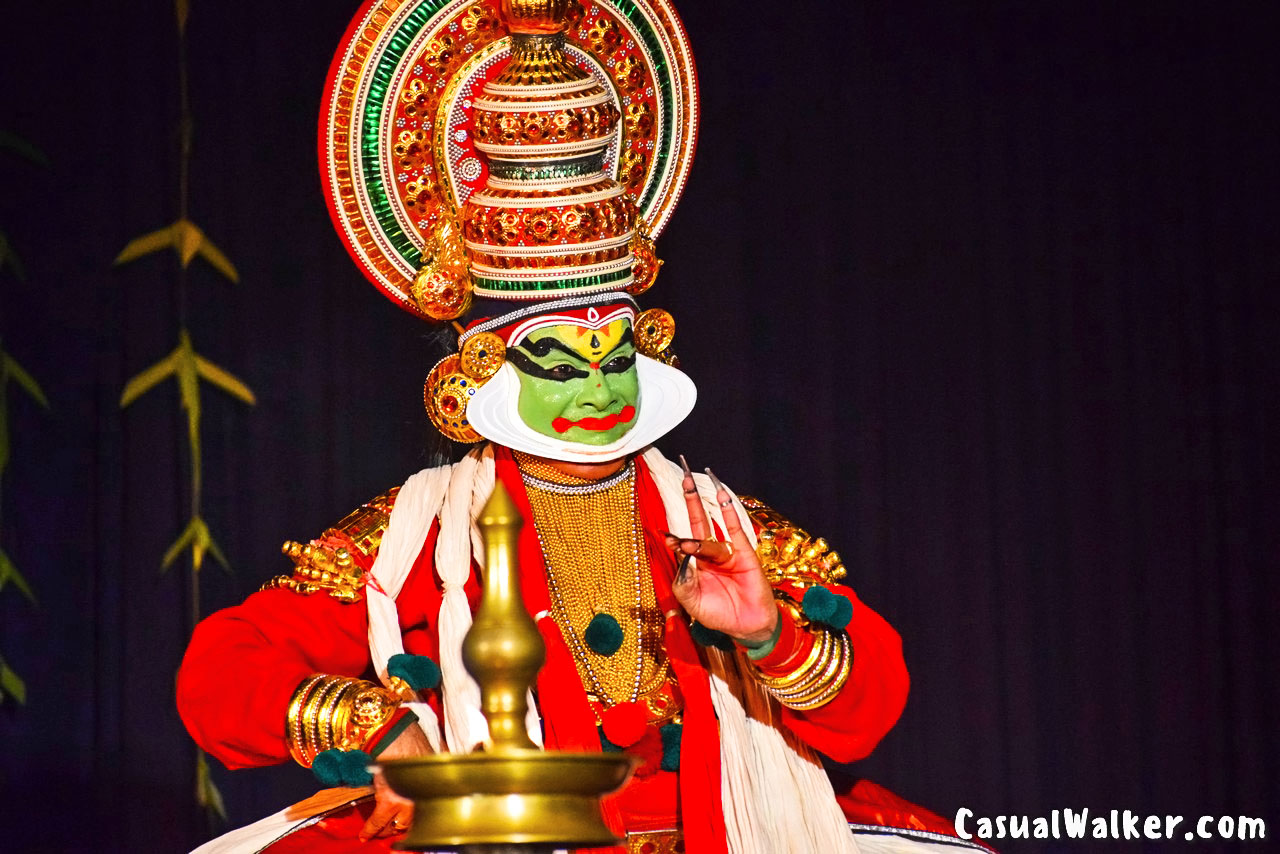
Beyond temple festivals, the Chenda holds a central place in Kerala’s classical performing arts. In Kathakali, the grand dance drama of Kerala, the Chenda sets the emotional pulse for dramatic scenes, syncing precisely with the actor’s expressions and movements. It was the king of the Vettathu province who first brought the Chenda into Kathakali performances, and since then it has become indispensable to the art form. During intense battle sequences, multiple Chenda players often perform together to heighten the sense of chaos and drama on stage.
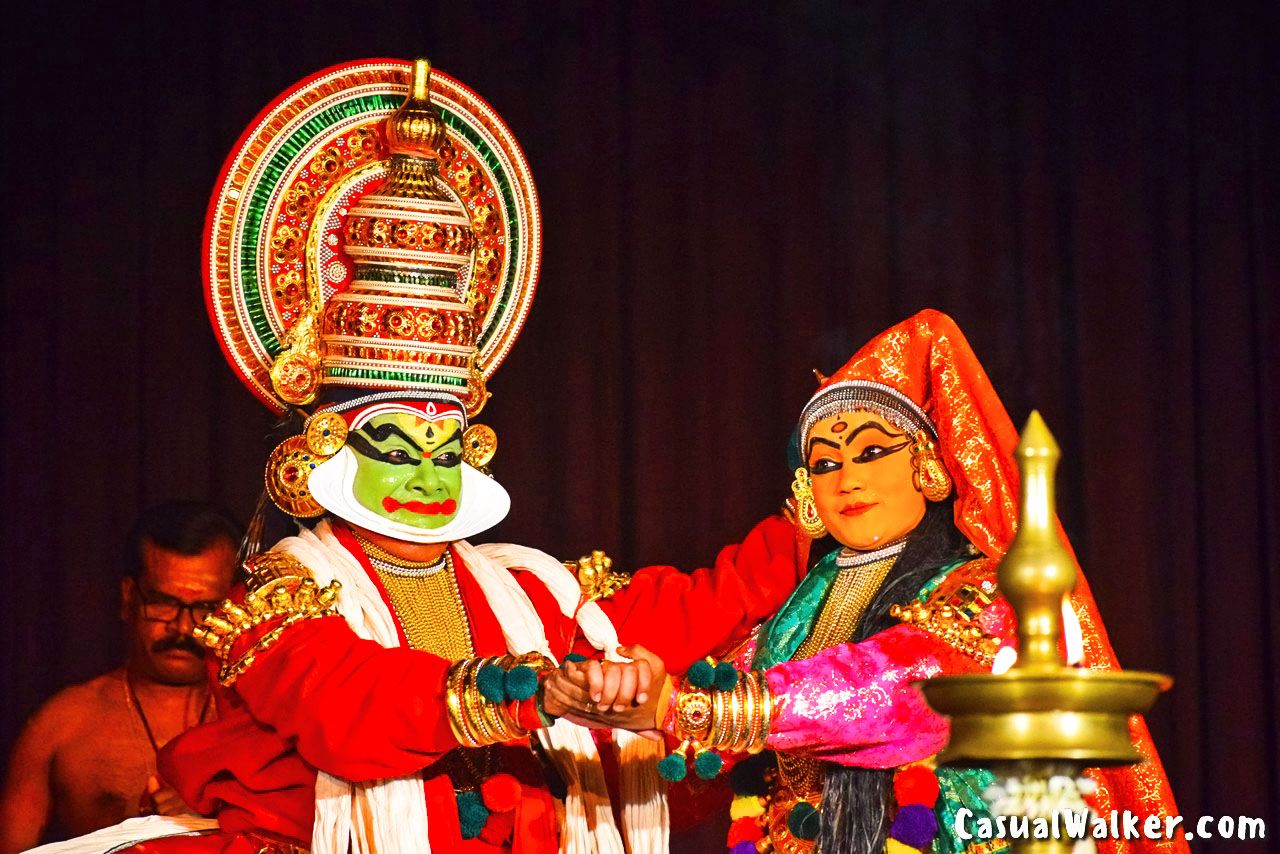
The instrument is equally vital to Koodiyattam, the ancient Sanskrit theatre tradition recognised by UNESCO as an Intangible Cultural Heritage of Humanity. It also accompanies other traditional art forms such as Theyyam and Kannyar Kali, which shows just how deeply the Chenda is stitched into Kerala’s artistic fabric.
Legendary Artists Who Shaped This Tradition
Peruvanam Kuttan Marar, fondly called the Chenda Maestro, received the Padma Shri in 2011 for his lifelong contribution to this art form. Other deeply respected names include Mattannoor Sankarankutty Marar, Kizhakkoottu Aniyan Marar, Pallavoor Maniyan Marar known for his command over the thimila, and his brother Pallavoor Kunjukuttan Marar, celebrated for his mastery over thimila, Chenda, and edakka. Kuzhur Narayanan Marar and Cherussery Kuttan Marar are also names spoken with great reverence among true lovers of Kerala’s percussion tradition.
Chenda in Modern Times
While deeply rooted in tradition, the Chenda has never stood frozen in time. Today’s young musicians in Kerala are experimenting with fusion music, blending its powerful beats with rock, jazz, and electronic sounds. The instrument has also found its way into regional and national films, lending authenticity and intensity to pivotal scenes.
Preserving a Living Tradition
For the people of Kerala, the Chenda is far more than a musical instrument, it is an emotional and cultural anchor. Families have passed this art down across generations, and dedicated institutions such as the Kshetrakalapeetam in Vaikkam and the Vadyavidyalam at Guruvayoor Temple now formally train the next generation of artists. Chenda teachers, respectfully called Chenda Ashans, are held in high regard, not only for their skill but for the role they play in safeguarding a tradition that defines Kerala’s very identity.
Best Time and Festivals to Witness Chenda Melam in Kerala
For travellers planning their trip around this art form, the golden window falls between February and May, when Kerala’s temple festival calendar is at its busiest. Most major poorams and utsavams, including the grand ones featuring full scale Chenda Melam, are packed into the Malayalam months of Kumbham, Meenam, and Medam, roughly mapping to mid February through mid May in the Gregorian calendar. This is peak season for temple percussion, and travelling during these months practically guarantees you will stumble upon a melam somewhere in central Kerala, even in smaller village temples.
Among the many festivals to choose from, a few stand out as essential viewing. Thrissur Pooram, usually held in April or May, remains the undisputed crown jewel, featuring the legendary Ilanjithara Melam with over 250 artists performing together at the Vadakkumnathan Temple. Arattupuzha Pooram, held slightly earlier in March or April and often called the grandfather of all poorams, offers a quieter but equally authentic experience of Panchari and Pandi Melam.
Uthralikkavu Pooram near Wadakkanchery, typically in March, is known for its raw and intense Pandi Melam, while Peruvanam Pooram, held around the same time, is treasured by purists for its classical rendition of Panchari Melam performed without the crowds of the bigger festivals. Guruvayoor’s Ekadasi festival in November or December, and Kodungallur Bharani in March, are also worth noting for those who want to see the ritualistic side of temple percussion up close.
You could plan around Thrissur Pooram if you want scale and spectacle, but if you prefer a more intimate setting to actually study the rhythm and structure of the melam, the smaller poorams in the Thrissur and Palakkad belt during March and April will reward you far more.

Thanks for exploring this Casual Walker photo guide — India’s most visual cultural travel guide and a curious discovery journal finding authentic photo stories, guides, and tips across travel, culture, arts, temples, heritage, and food.
- Keep exploring: Browse 650+ Travel & Culture Photo Guides
- We’d love to hear your feedback, stories, corrections, and updates — Email us.
- Follow our photo walks on Instagram: @hicasualwalker
Also, check our Similar Photo Stories on Dance & Culture