




Sri Ulagalantha Perumal Temple / Sri Thiruvikrama Swamy Temple, Thirukovilur (Tirukkoyilur), Kallakurichi & Villupuram District, Tamil Nadu : One of the 108 Divya Desams Dedicated to Lord Vishnu as Vamana Avatara (Trivikrama) & Panchakanna Kshetrams | Complete History, Temple Architecture, Legends, Timings, Poojas, Festivals, Contact Details & How to Reach from Chennai by Road, Train & Flight – A Complete Travel Guide (Updated)
– a divya desam & panchakanna kshetram on the banks of the thenpennai, where the 3 alwars attained mukthi

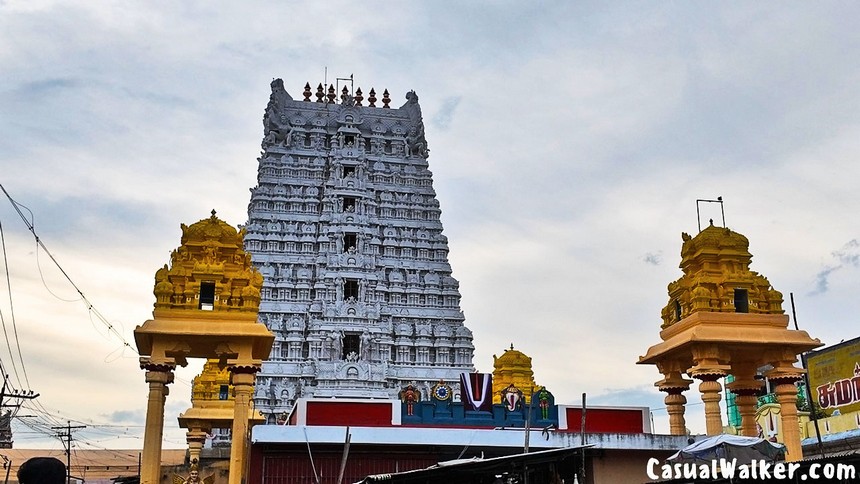
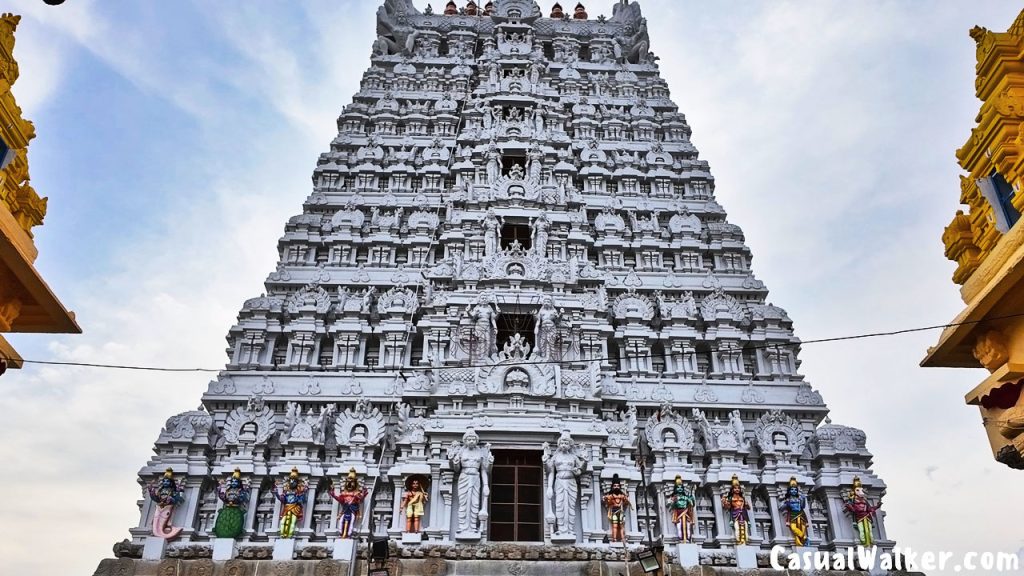
Sri Ulagalantha Perumal Temple, also known as Sri Thiruvikrama Swamy Temple or Trivikrama Temple, in Thirukovilur (Tirukkoyilur and Thirukkoilur), on the southern bank of the Thenpennai river in Kallakurichi District. Many travellers still search for it under Villupuram District, since the region was part of it before the districts were reorganised. This ancient Lord Vishnu temple is dedicated to Lord Vishnu’s Vamana Avatara (the dwarf incarnation), who grew into Lord Trivikrama and measured the whole universe.
Spiritual Significance of the Temple
This temple is one of the 108 Divya Desams (the holy abodes of Lord Vishnu praised by the Alwars) and is glorified in the Naalayira Divya Prabandham (the four thousand verses of the Tamil Vaishnava canon, composed by the Alwar saints between the 6th and 9th centuries). Mangalasasanam (the divine hymns of praise) was sung here by Poigai Alwar, Bhoothathalwar, Peiyalwar and Thirumangai Alwar. Some accounts also credit one hymn to Thirumalisai Alwar.
It is one of only three Divya Desams where Lord Ulagalantha Perumal is the presiding deity. The other two are the Ulagalantha Perumal Temple at Kanchipuram and Kazheesirama Vinnagaram at Sirkazhi. The temple is also one of the Panchakanna Kshetrams (the five sacred Krishna sites, also called Krishnaranya Kshetrams), and it is believed to be the place where the first three Alwars attained salvation. The temple follows the Thenkalai Sampradayam (the southern Vaishnava tradition), and its Sthala Vriksham (sacred tree) is the Punnai tree.
Why Thirukovilur Is Called a Panchakanna Kshetram?
In Tamil, Kannan means Lord Krishna, pancha means five and Kshetram means a holy place. Four of the five temples lie in the Chola region around Kumbakonam and Nagapattinam, and Thirukovilur is the fifth. In none of them is Lord Krishna the main deity. His processional deity gave these places their names. The five temples are:
Lord Loganatha Perumal Temple at Thirukannangudi, Lord Gajendra Varadha Temple at Kabisthalam, Lord Neelamegha Perumal Temple at Thirukannapuram, Lord Bhaktavatsala Perumal Temple at Thirukannamangai, and Lord Ulagalantha Perumal Temple at Thirukovilur. North India has a similar set of five temples called the Pancha Dwarakas.
History and Inscriptions
The temple is mentioned in Sangam literature, which dates from the third century to the third century. Works such as Agananuru, Purananuru, Natrinai and Kurunthogai refer to this place, and they praise Malayaman Tirumudikari, the ruler of Thirukovilur, for his generosity to religious institutions. No one knows exactly when or by whom the temple was first built, though it is believed to have been built by the Medieval Cholas, with later contributions from the Vijayanagara kings and the Madurai Nayaks.
The region was first ruled by the Malayaman Malayarayan chieftains, then passed to the Miladudaiyars, and later returned to the Malayamans. Both families were closely linked to the Cholas. Sembian Mahadevi, a princess of the Malayaman family, married Gandaraditya, and Vanavan Mahadevi married Sundara Chola and gave birth to the great Rajaraja Chola I.
The first temple was built of brick. When the old structure developed cracks, the chieftain Ranakesari Raman rebuilt the whole sanctum in granite during the reign of Virarajendra Chola (1063 to 1070). He also built five pinnacles, the veranda and the hall in front of it. Narasimha Varma raised the other shrines in granite as well. An inscription of Rajendra Chola II shows that the temple was once known as the Thiruvidaikali Alvar Temple.
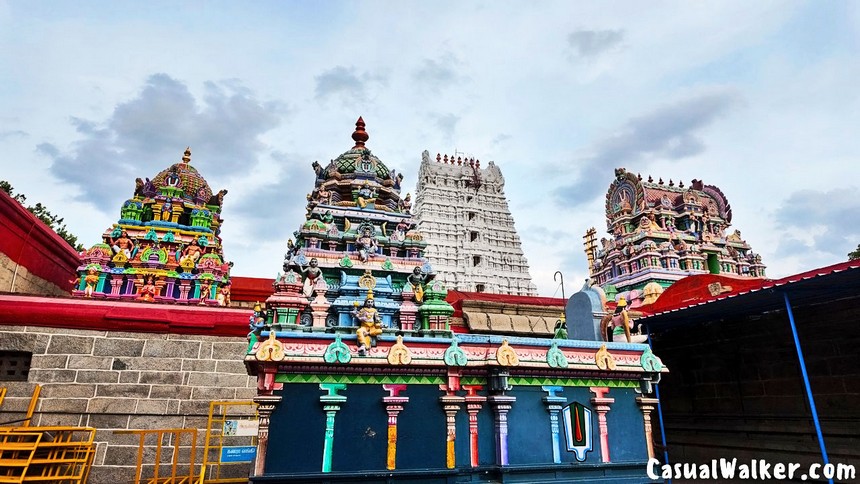
Inscriptions here belong to the Chola kings Rajadhiraja (1018 to 1054) and Rajendra Chola II (1051 to 1063), the Pandya king Vikrama Pandya, the chieftain Koperunsingan, and the Vijayanagara rulers Saluva Narasimha Devaraya (1485 to 1491) and Sadasiva Raya (1542 to 1570). They record donations, the building of shrines and grants for poojas and festivals. One inscription records a gift of seven kalanju (an old unit of measure) by a woman for the Vaikasi and Aippasi festivals and for the recitation of Thiruvaimozhi, the verses of Nammalwar. The Vijayanagara kings and the Nayaks later expanded the temple.
Origin of the Name Kovilur
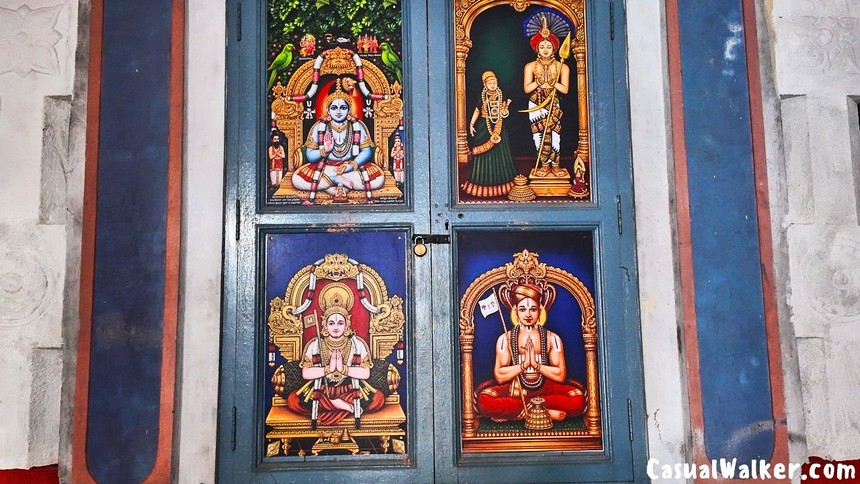
According to one tradition, the temple was originally a Krishna temple. The name Kovilur is said to refer to the original deity Gopalan, which points to Lord Krishna. This is why the Krishna shrine and the Panchakanna Kshetram connection are so important here.
Architecture of the Sanctum
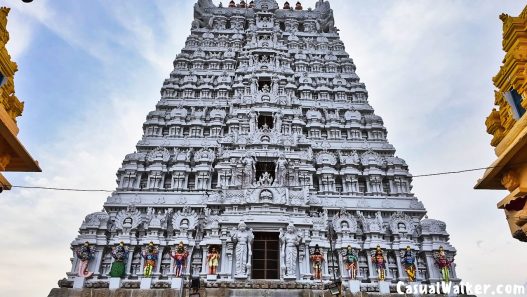
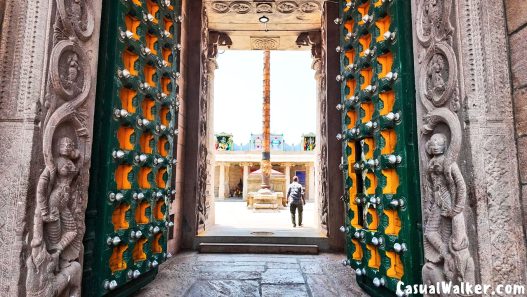
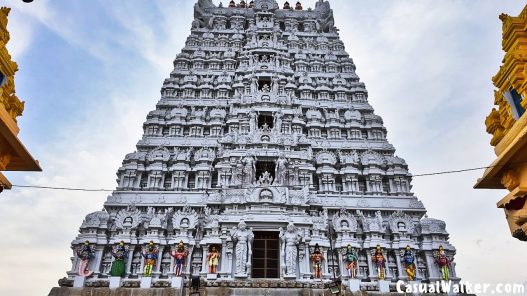
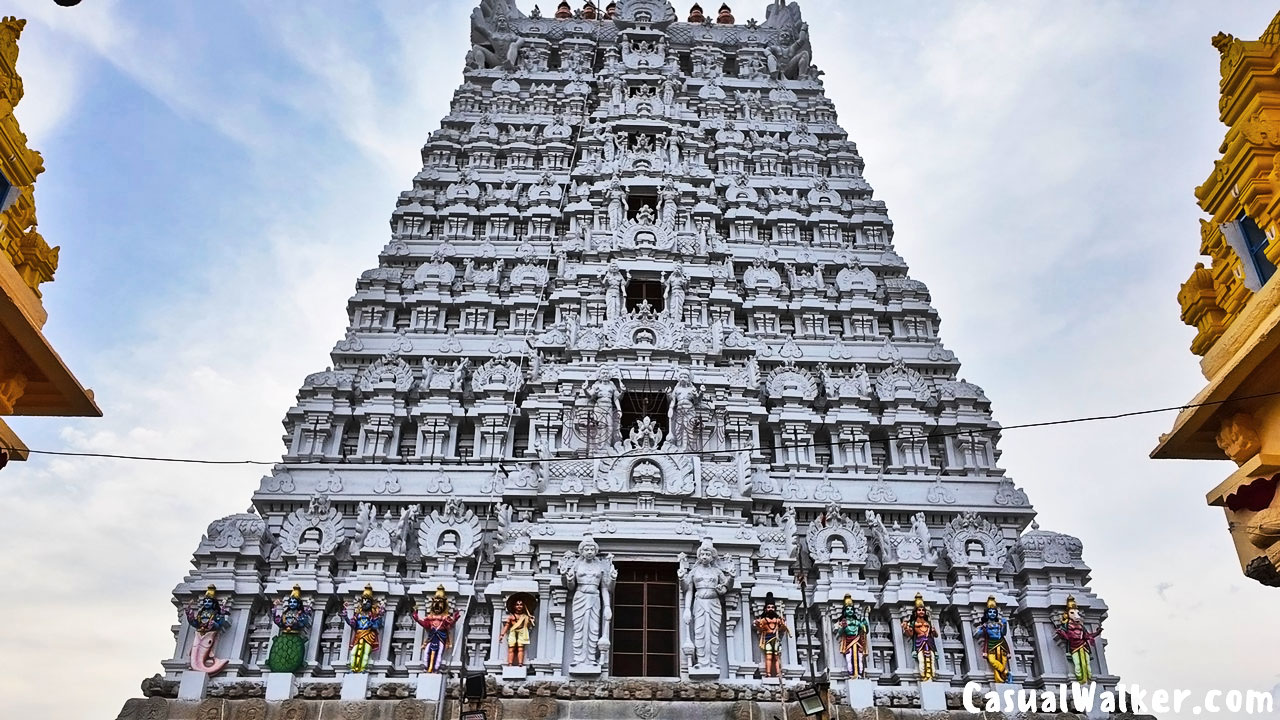
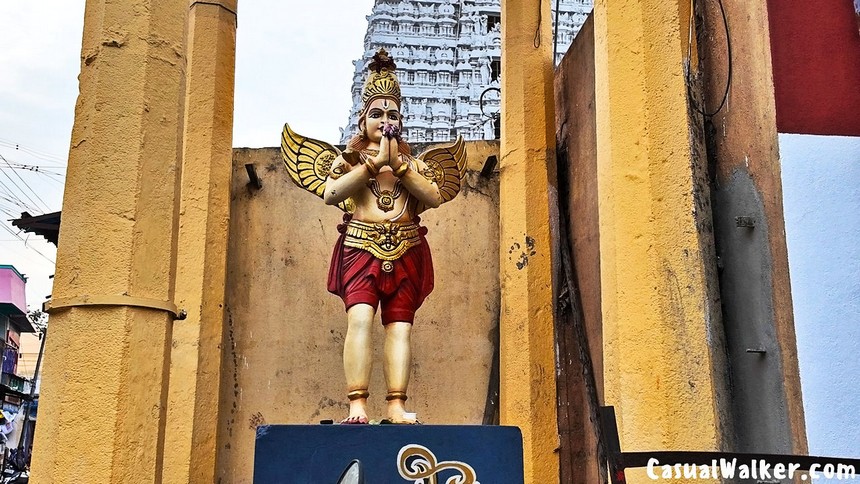
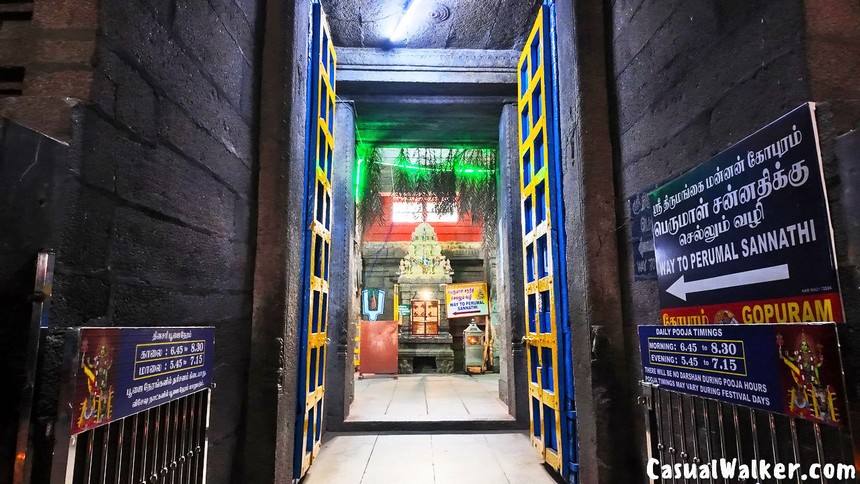
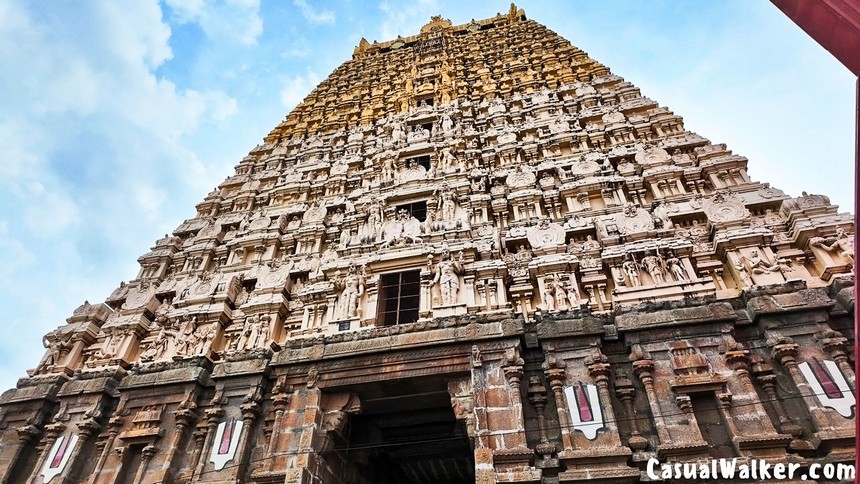
Built in the Dravidian style of architecture, the sanctum has a garbhagriha, an antarala (the vestibule), an ardhamandapam and a mahamandapam. It has eleven tiers and stands 192 feet (about 59 metres) tall and faces east. The vimana above the sanctum is called the Srikara Vimana. It has eleven tiers and stands 192 feet (about 59 metres) tall and faces east. Facing the sanctum are the Dwajasthambam (the flag mast), the Balipeedam (the offering altar) and the shrine of Lord Garuda. The images of the Alwars are kept in the hall just before the sanctum.
Lord Ulagalantha Perumal and Goddess Poongothai Nachiyar
The moolavar (the main deity) is Lord Ulagalantha Perumal, also called Lord Thiruvikrama Perumal. Standing before the Lord, I understood why this deity is so special. The idol is made of Tharu wood and is so tall that few others can match it. Lord Thiruvikrama holds the Sangu (conch) in His right hand and the Chakram (discus) in His left, which is the reverse of the usual posture in Vishnu temples. His right leg is lifted high, as if about to take the third step. The Rig Veda speaks of Lord Vishnu’s three strides across the worlds, and in this form that ancient vision seemed to come alive in front of me. When the lamp was shown, I chanted a few verses of the Vishnu Sahasranamam (the thousand names of Lord Vishnu) in my heart.
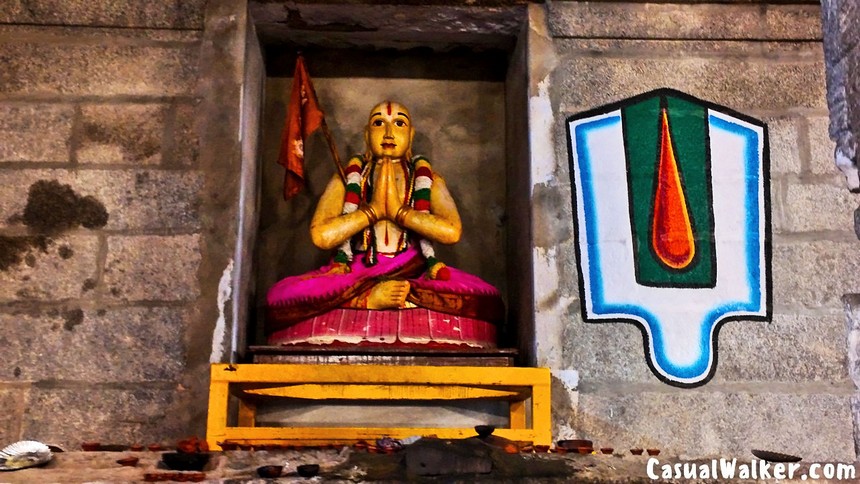
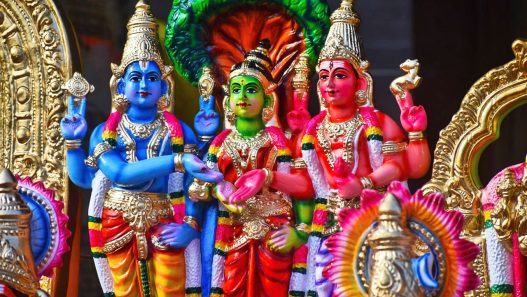
Inside the sanctum, to the right of the Lord, are the images of Goddess Mahalakshmi, Lord Prahlada and King Mahabali. To His left are the images of Sukracharya, Sage Mrugandu and the three Mudhal Alwars, Peiyalwar, Bhoothathalwar and Poigai Alwar. The image of Lord Vamana stands behind the sanctum. The festival deities, the metal images of Lord Koovalan and Goddess Poongothai Thayar, are also housed here.
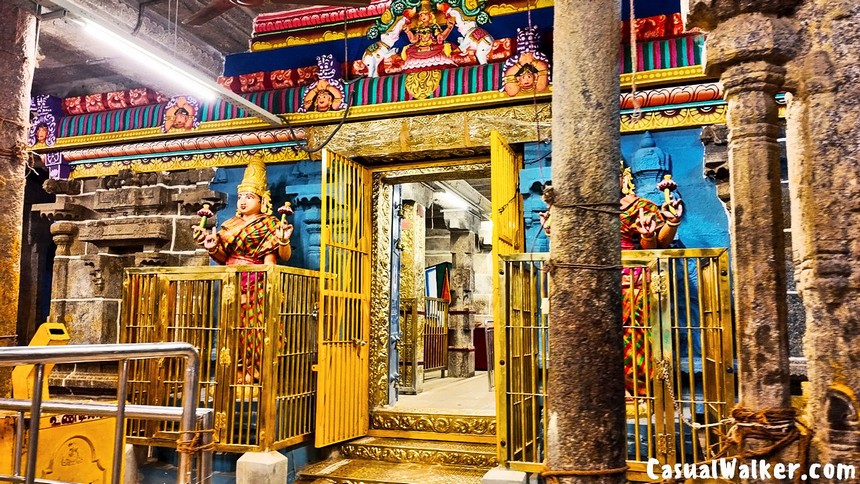
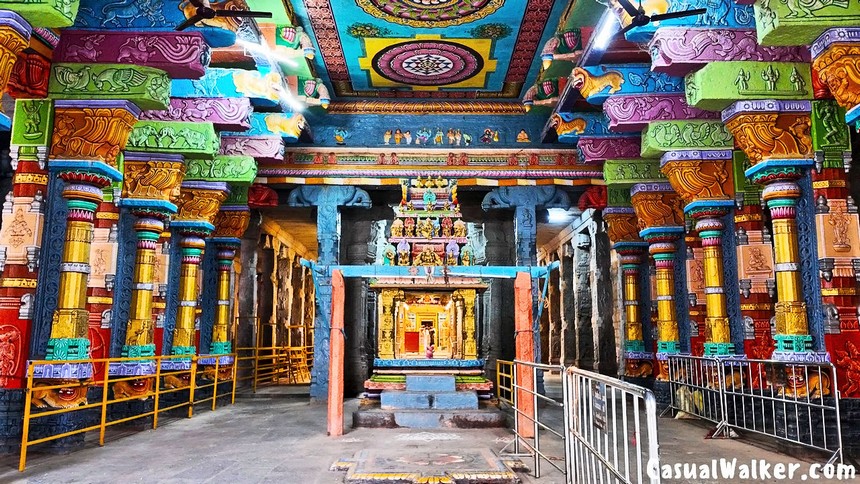
The Thayar (the divine mother) is Goddess Poongothai Nachiyar, also known as Goddess Pushpavalli. She has a separate temple like shrine, and the painted ceiling and pillars of the passage leading to her sannadhi (shrine) are lovely.
Sub Shrines in the Prakara
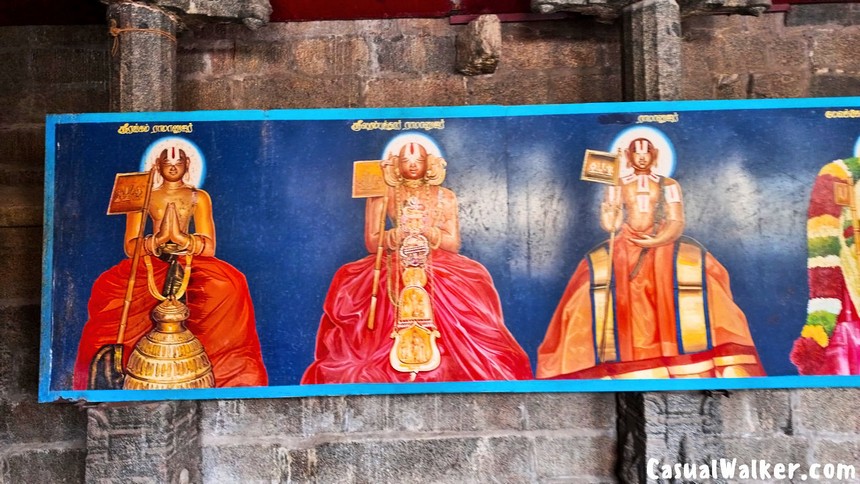
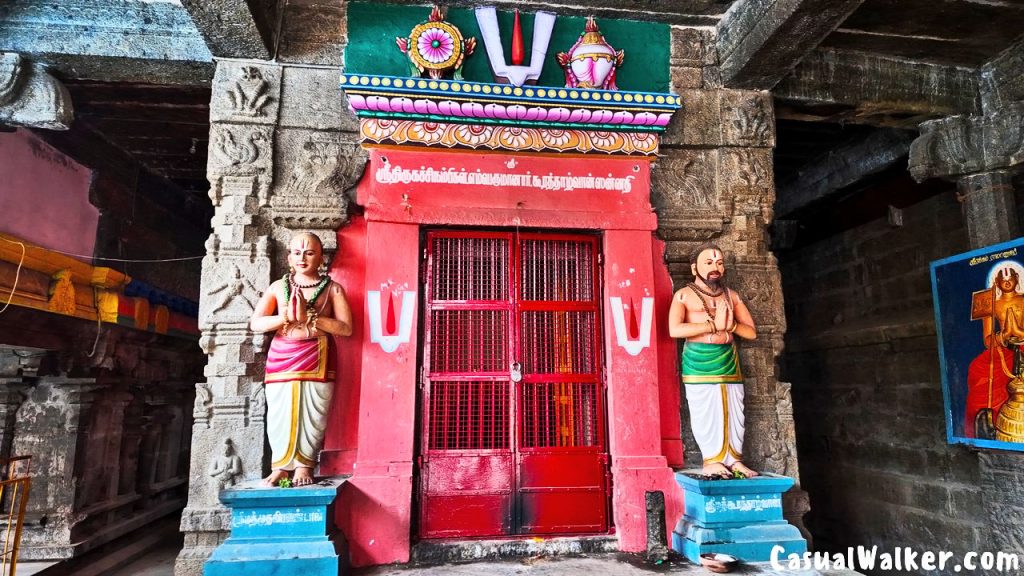
Around the sanctum and in the first prakara (the circumambulatory path) there are shrines for Lord Venugopala, Lord Krishna carved from Saligrama stone with Goddess Rukmini and Goddess Sathyabama, Lord Lakshmi Narayana, Lord Lakshmi Varaha, Lord Lakshmi Raghava, Lord Lakshmi Narasimha, Lord Varadaraja, Lord Rama, Lord Veera Anjaneya, Lord Chakkarathalwar, Lord Vishvaksena, Goddess Andal, Sri Thirukachi Nambi, Sri Desikan, Sri Manavala Mamunigal and Sri Ramanujar (also called Emberumanar). There is also a shrine for Sukracharya, the guru of the Asuras.
One rare feature is Goddess Vishnu Durgai, a swayambu (self manifested) form of Durga, who is normally seen only in Shiva temples. Devotees can also make offerings through the Thulabharam (the weighing scale offering).
Sacred Theerthams
Sixteen temple tanks are linked with this temple. The most important is the Chakra Theertham outside the temple, which is believed to hold the water Lord Brahma used to wash the feet of Lord Vamana. It is also believed to be a source of the Pennar river that flows nearby. Other tanks include the Chank Theertham in the east, Akasha Ganga, Varava Theertham and Kalava Theertham.
Legend of Lord Vamana and Mahabali
According to the Bhagavatha Purana, King Mahabali, the generous grandson of Prahlada, won great praise through austerities and charity, and then seized Indraloka by force. To restore it to Lord Indra, Lord Vishnu took the form of Vamana, a young Brahmin dwarf carrying a wooden umbrella, and asked the king for three paces of land. Mahabali agreed, even though his guru Sukracharya warned him not to.
The little Vamana then revealed His Vishwaroopa (the cosmic form) and, as Lord Trivikrama, measured the heavens and the earth in two steps. When He asked where to place the third, Mahabali bowed and offered his own head. The Lord placed His foot on it and blessed him with immortality for his humility, and he was granted rule over Patala, the netherworld. This legend is also linked with the Thrikkakara Temple in Kerala and the Ulagalantha Perumal Temple at Kanchipuram. It is the heart of Thirukovilur’s story, a lesson in surrender, or Saranagati.
Legend of Sage Mrugandu
According to the Brahmanda Purana, Sage Mrugandu (Mrikandu) heard about the Vamana Avatara and longed to see it. Lord Brahma told him to go to Thirukovilur and perform tapas (penance). The sage came here with his wife Mithravathi and fed Brahmins in their ashram every day. To test their devotion, Lord Vishnu came as a hungry Brahmin and asked for food when everything had already been served.
Mithravathi was worried and prayed to the Lord, and the empty vessels filled with food. Pleased by their devotion, the Lord appeared before them with the conch and the discus and then showed Himself as Lord Vamana Trivikrama. The sage begged Him to stay at Thirukovilur forever, and that is how this temple came to be.
Legend of the Three Alwars
On a dark and rainy night, Poigai Alwar found a small hideout with room for only one person to lie down. Bhoothathalwar arrived and the two sat together. Then Peiyalwar came, and the three stood close in the tiny space. In the darkness they felt a fourth presence pressing against them, and a flash of lightning showed a face that was sublime and divine. They realised that Lord Vishnu Himself was standing among them.
Poigai Alwar longed to keep seeing that face, but the light came only in flashes. So he sang a hundred verses, imagining the earth as a lamp, the ocean as the ghee and the blazing sun as the wick, offered at the feet of the Lord who holds the red discus, to end the ocean of sorrow. Some also read the verse as a prayer to remove the darkness of ignorance and receive the Lord’s limitless knowledge. Bhoothathalwar sang a hundred verses, lighting the lamp of love, and Peiyalwar sang a hundred more on the charming divine face and on Lord Narayana with the conch, the discus and Goddess Lakshmi.
These songs became the first three Thiruvandhadis (the Tamil devotional hymns that link end to start), part of the Naalayira Divya Prabandham. It is believed that the three Alwars attained mukthi (liberation) here. Standing in that same sacred space, I felt a deep stillness and gratitude. This is why Thirukovilur holds a special place in Sri Vaishnavism.
Sangam Poets
The Sangam poet Avvaiyar is said to have arranged the marriage of two chieftains here. The poet Kapilar found suitable grooms for the daughters of King Pari, Angavai and Sangavai, and then entered the sacred fire. The event is remembered every year at a huge rock called Kapilar Kal, where a small shrine still stands. Sage Parasurama and Sage Agastya are also said to have worshipped Lord Thiruvikrama here.
Daily Rituals and Worship
The priests belong to the Vaishnava community, as in other Vishnu temples of Tamil Nadu, and the temple follows six daily rituals. These are Ushathkalam at 7 AM, Kalasanthi at 8 AM, Uchikalam at 12 Noon, Sayarakshai at 6 PM, Irandamkalam at 7 PM and Ardha Jamam at 10 PM. Each has three steps: alangaram (decoration), neivethanam (food offering) and deepa aradhanai (waving of lamps), for both Lord Ulagalantha Perumal and Goddess Poongothai. During the last step the nagaswaram and the tavil are played, the priests recite the Vedas, and devotees prostrate before the flag mast. Weekly, fortnightly and monthly rituals are also held.
Festivals at Thirukovilur
The grand fifteen day Panguni Brahmotsavam in March and April is the most important festival, and it includes the Pushpavalli Thayar Oonjal and the chariot festival. During Maasi Magam in February and March, the festival deity is carried on the shoulders of devotees to Cuddalore. The other festivals are Purattasi Pavithra Utsavam, Navaratri, Sri Rama Navami, Sri Ramanuja Jayanthi, Vasantha Utsavam in April and May, Vaikasi Visaka Garudaseva, Nammalwar Sathumurai in May and June, Aani Periyalwar Sathumurai in June and July, the Adi Thiruvadipooram festival for Goddess Andal, Avani Sri Jayanthi and Uriyadi Utsavam in August and September, Aippasi Mudhalalwar Sathumurai, the ten day Manavala Mamunigal Utsavam in October and November, Karthigai Kaisika Ekadasi, Thirukarthigai, and Margazhi Ragapathu, Pagal Pathu and Vaikunta Ekadasi in December and January. Together with Krishna Jayanthi, these draw large crowds of devotees.

Travel Tips for Visiting Sri Ulagalantha Perumal Temple / Sri Thiruvikrama Swamy Temple, Thirukovilur (Tirukkoyilur), Kallakurichi
Sri Ulagalantha Perumal Temple / Sri Thiruvikrama Swamy Temple, Address: X683+P2W, Taluk St, Thirukoilure, Tamil Nadu 605757
Phone: 94862 79990, 96262 09622, 99448 87107
Temple Timings: The temple is generally open from 6:00 AM to 12:00 Noon and from 4:00 PM to 8:00 PM.
How To Reach Sri Ulagalantha Perumal Temple / Sri Thiruvikrama Swamy Temple, Thirukovilur (Tirukkoyilur), Kallakurichi
By Road: Thirukovilur is about 190 to 200 km from Chennai, and the drive takes roughly four to five hours. The usual route is the Grand Southern Trunk Road (GST Road, NH 32) from Chennai to Tindivanam, then on to Villupuram, and from there about 40 km to Thirukovilur. You can go by your own car, a hired taxi, or a TNSTC or private bus to Villupuram, with a change to a local bus for the last stretch. Leave early in the morning to avoid city traffic and reach in time for the morning darshan.
By Train: The easiest rail route is from Chennai Egmore to Villupuram Junction, which takes about three to three and a half hours on the express trains running through the day. From Villupuram, Thirukovilur is about 40 km away, and you can take a local bus, a taxi or an auto. Thirukovilur (Tirukoyilur) also has its own railway station on the Villupuram to Katpadi line, but fewer trains stop there, so check the current schedule on IRCTC before planning.
By Flight: The best option is to fly into Chennai and continue by road or train as above. The nearer regional airports are Puducherry and Tiruchirappalli, but they have limited flights, so Chennai is the most convenient gateway.

Thanks for exploring this Casual Walker photo guide — India’s most visual cultural travel guide and a curious discovery journal finding authentic photo stories, guides, and tips across travel, culture, arts, temples, heritage, and food.
- Keep exploring: Browse 650+ Travel & Culture Photo Guides
- We’d love to hear your feedback, stories, corrections, and updates — Email us.
- Follow our photo walks on Instagram: @hicasualwalker