




Sri Raghavendra Swami Temple / Shri Raghavendra Matha in Bhuvanagiri, Cuddalore, Near Chidambaram Temple : Sacred Birthplace (Avatara Sthala) Of Seventeenth Century Saint Sri Raghavendra Swami, Who Preached Madhwa Siddantha, Dvaita Vedanta & Tatvavaada, The Philosophy Established By Sri Madhvacharya – Temple History, Contact Details, His Teachings, Temple Timings, How To Reach & Complete Travel Guide
– temple & ancestral home of saint & madhwa philosopher sri raghavendra swamy

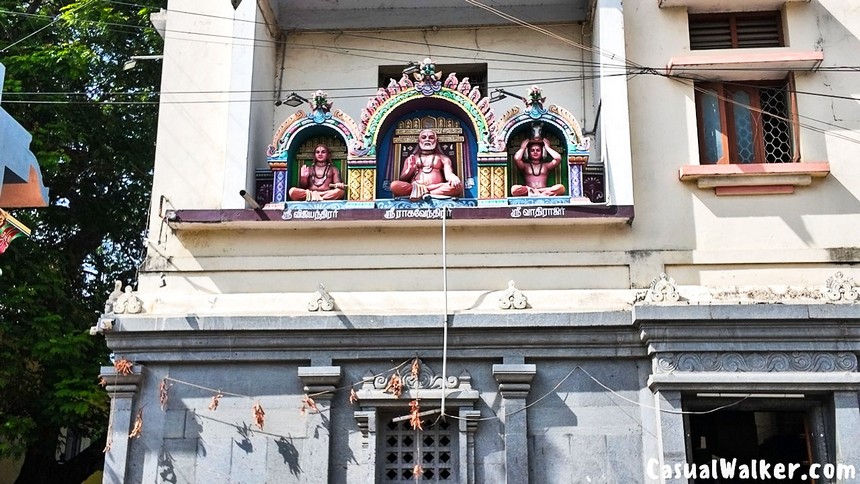
Bhuvanagiri is a small town in the Cuddalore district of Tamil Nadu, located about nine to ten kilometres from the temple town of Chidambaram. Bhuvanagiri holds a place of deep reverence as an important pilgrimage site, as it is marked as the sacred birth site, the Avatara Sthala, of the revered seventeenth century saint Sri Raghavendra Swami. 
The name Bhuvanagiri itself carries meaning. It comes from two Tamilised Sanskrit words, Bhuvanam meaning world and Giri meaning mountain or the unmovable. Put together, Bhuvanagiri can be understood as the place that does not move, a fitting name for the birthplace of a saint whose spiritual legacy has remained steady and unwavering for over four centuries. Locally, the town is divided into two parts known as Mel Bhuvanagiri and Kezh Bhuvanagiri, the western and eastern segments respectively.
Agriculture remains the primary occupation for a large section of the population here, with paddy, black gram, and green gram grown in the wetland fields locally called Nanjai, while ragi, kambu, corn, thoor dhal, and sesame are cultivated in the drier Punjai lands. The Vellaru river, a tributary that eventually joins the Cauvery system, irrigates these fields and flows close to the town. Bhuvanagiri is also known for its handloom tradition, producing lungis, sarees, dhotis, and handkerchiefs, with its silk sarees earning the name Bhuvanagiri Pattu among textile lovers and adding to the town’s cultural and heritage tourism appeal.
Birthplace Of Sri Raghavendra Swami – Bhuvanagiri
It is in this humble yet culturally rich setting that Sri Raghavendra Swami, born as Venkatanatha, took birth in the year 1595, and it is this small town that today draws pilgrims and devotees from across India on the Raghavendra Swami temple tour who wish to walk the same ground their beloved Rayaru once walked as a child.
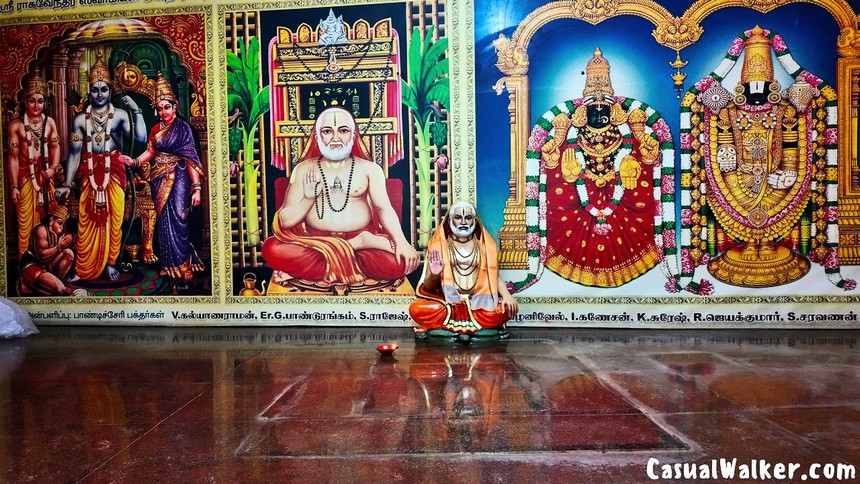
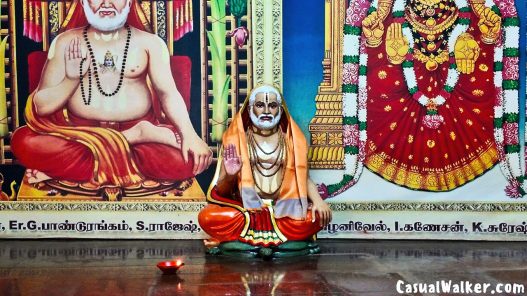
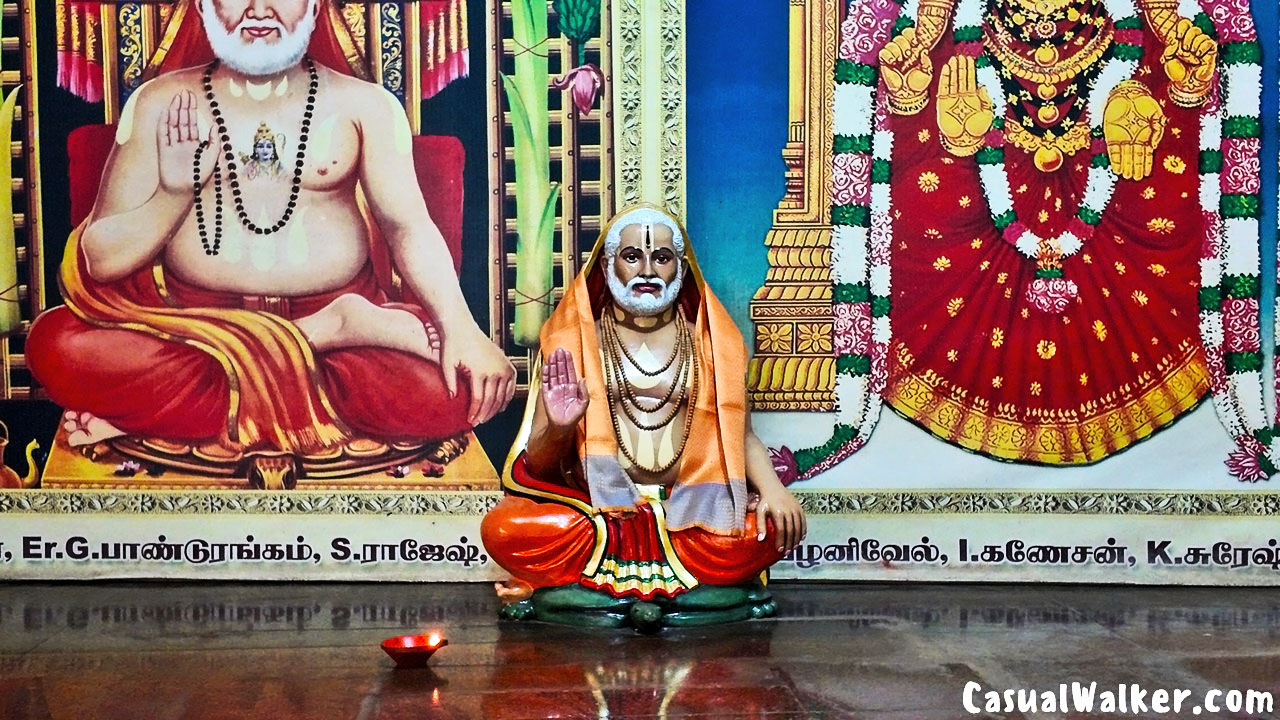
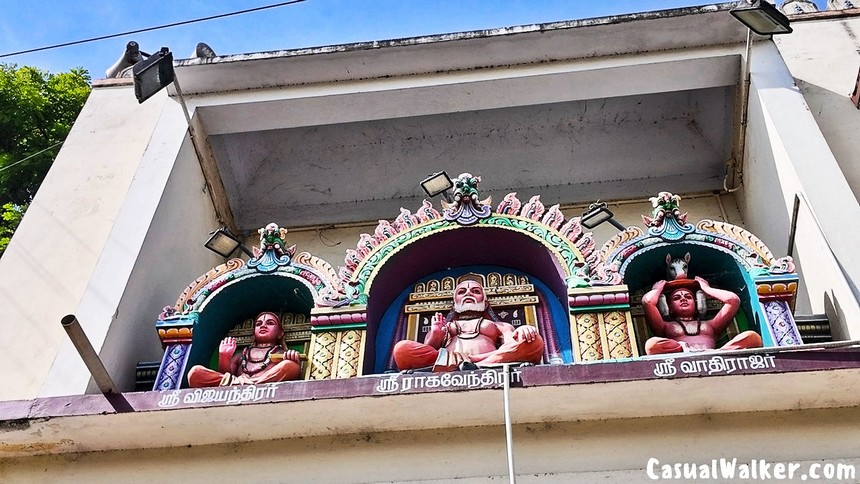
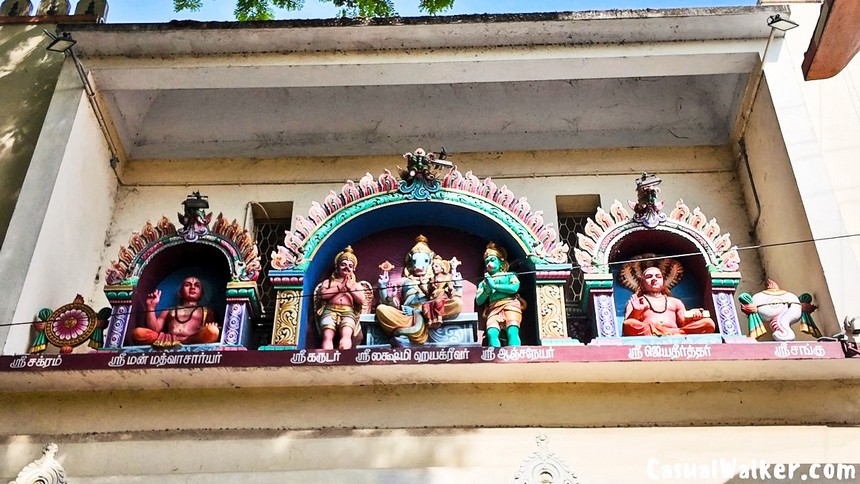
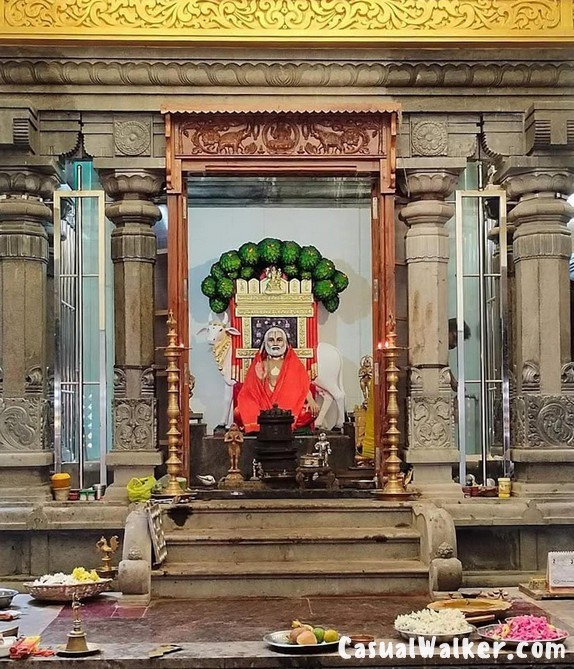
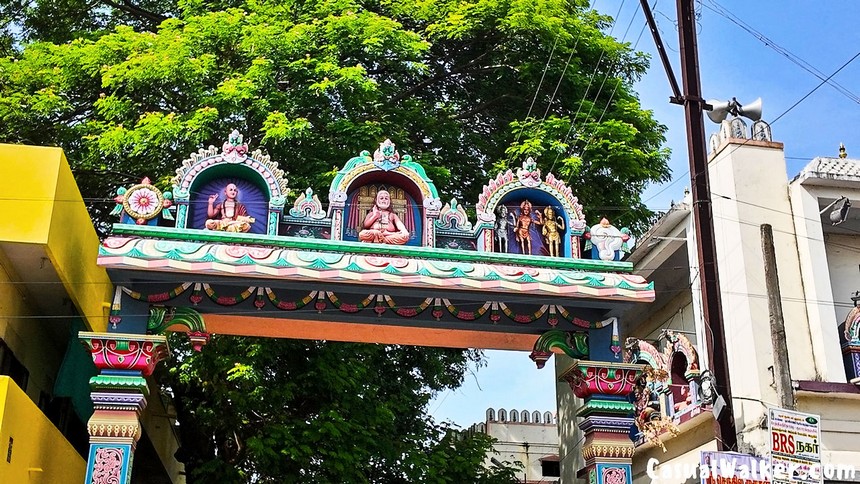
The house in which Venkatanatha was born has since been lovingly transformed into the Sri Raghavendra Swami Bhuvanagiri temple, and this is what pilgrims visit today when they come to Bhuvanagiri. The temple is compact, peaceful, and beautifully maintained, located on the 4th Patti Street, barely a ten minute walk from the Bhuvanagiri bus stand. One does not need more than ten or fifteen minutes to go around the sanctum, though most devotees find themselves lingering far longer, simply sitting in the presence of the saint and soaking in the quiet devotion of the place.
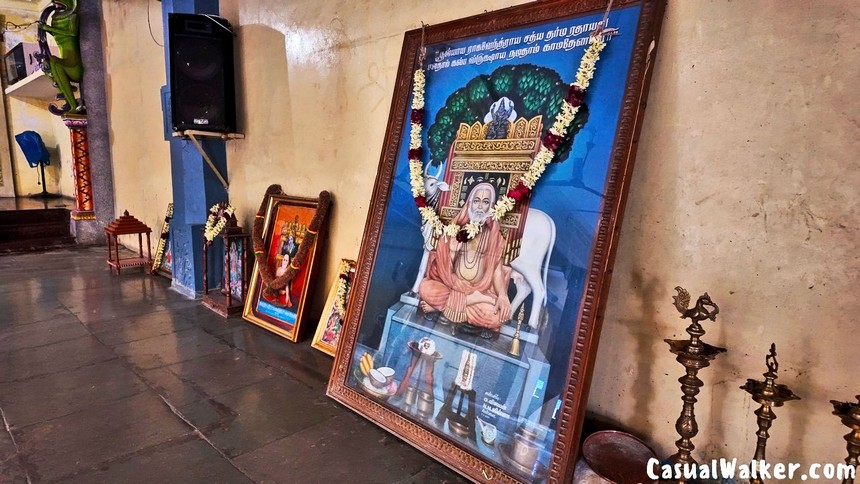
Behind the murti of Swamiji stands the figure of Lord Kamadhenu, the divine wish fulfilling cow, symbolising the boundless grace that Sri Raghavendra Swami is believed to shower upon those who approach him with sincere faith. Devotees believe that prayers offered here rarely go unanswered, which is why Bhuvanagiri remains one of the most sought after Raghavendra Swami temples for wish fulfilment and blessings.
A significant feature inside the temple complex is a granite slab that formally certifies this site as the authentic birthplace of Sri Raghavendra Swami. The inscription also notes that Swamiji himself worshipped the Sanjeevaraya, or Lord Hanuman, statue that still stands within the temple premises. This certificate was issued by the then Revenue Divisional Officer of Chidambaram, C Packianathan, dated 20th April 1984, following enquiries requested by the sitting MLA of Bhuvanagiri at the time, V V Swaminathan. This official verification adds historical weight and authenticity to what devotees have always known through faith alone.
As a young boy, Venkatanatha is said to have bathed regularly in the Vellaru river that flows past Bhuvanagiri before offering his prayers at the shrine of Lord Anjaneya nearby. Locals proudly say that this Anjaneya temple was consecrated by Raghavendra Swami himself, making the entire town a living memory of his early years before he left for Kumbakonam to pursue higher Vedic studies in the Shastras.
Life History Of Sri Raghavendra Swami
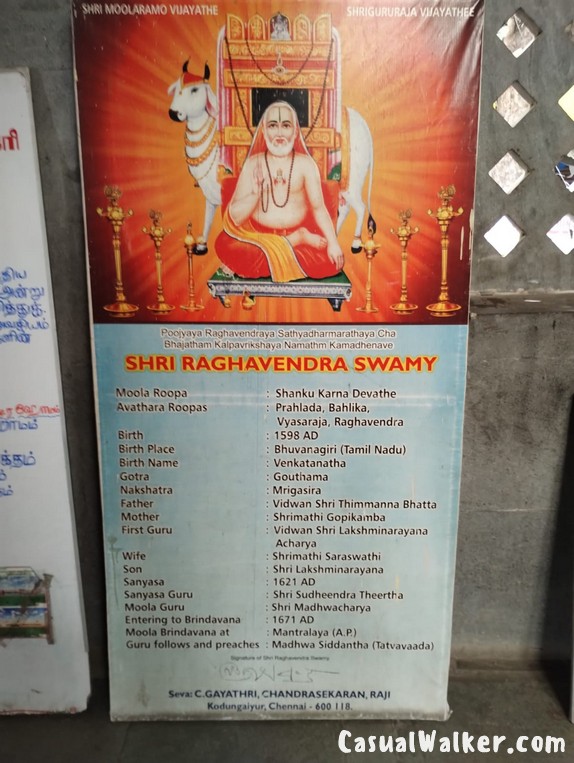
Sri Raghavendra Swami was born to Thimmanna Bhatta and Gopikamba in the Gautama gotra, under the Mrigasira nakshatra. His birth name was Venkatanatha, and he is regarded by many as an incarnation of Prahlada, the celebrated devotee of Lord Vishnu, as well as an avatar connected to Bahlika and Vyasaraja in the lineage of great Dvaita saints and Madhwa gurus.
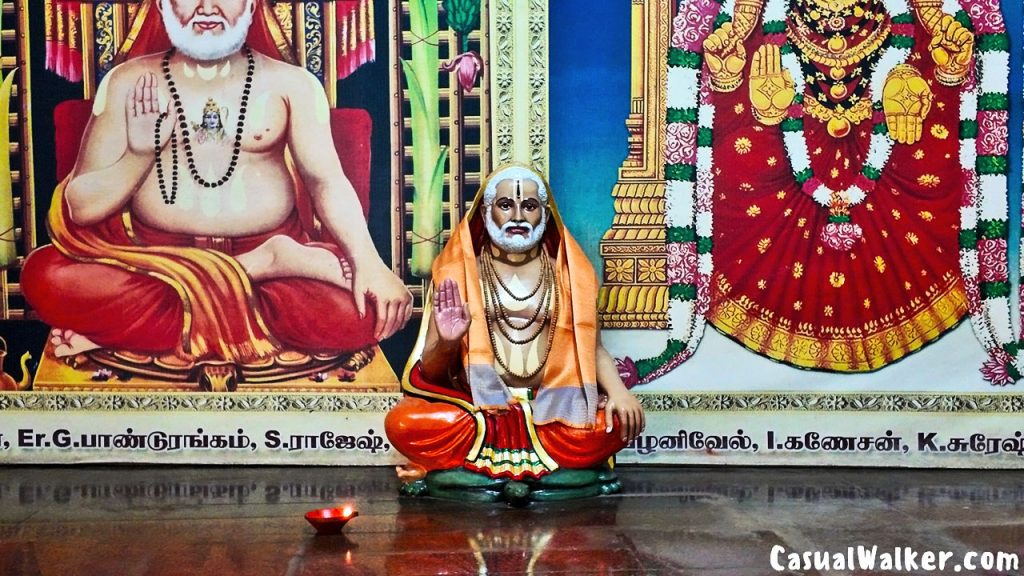
He received his early education in Madurai and later in Kumbakonam, where he mastered the Shastras, Rig Veda, Brahmasutra, Bhagavad Gita, and the Upanishads, interpreting them all through the lens of the Dvaita philosophy founded by Sri Madhvacharya. He was married to Saraswathi and had a son named Lakshminarayana. He was also, for a time, a teacher, passing on his vast Vedic knowledge to students in Kumbakonam.
In 1621, Venkatanatha renounced worldly life and took sanyasa under his guru Sumatheendra Tirtha, receiving the name by which the world would come to know and love him, Sri Raghavendra Swami. He went on to lead several mathas over the following decades, travelling extensively across Karnataka to places such as Srirangapatna, Hampi, Nava Brindavana, Anegundi, Chitradurga, Raichur, Bijapur, and Udupi, before moving into present day Andhra Pradesh through Adoni.
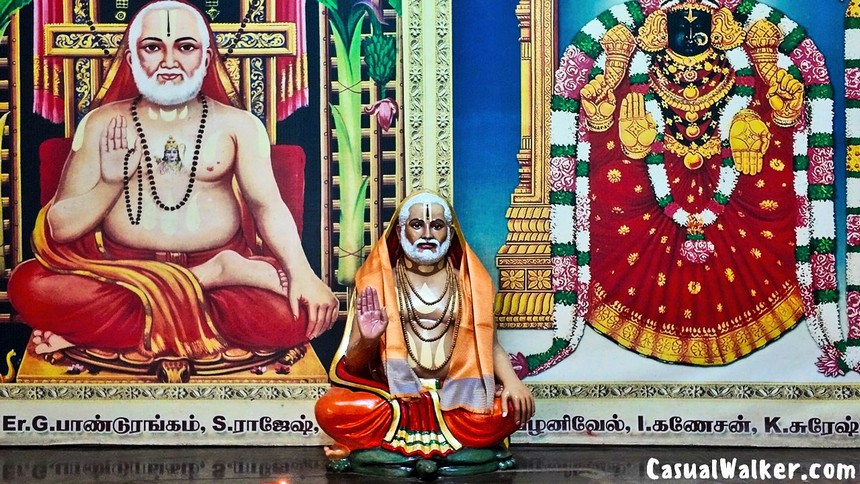
His final years were spent at Mantralaya on the banks of the Tungabhadra river, where on the Dwitiya day of Sravana Krishna Paksha in the year 1671, he entered Jeeva Samadhi, a conscious and living entombment, in front of hundreds of gathered devotees. Before doing so, he delivered a moving final sermon that continues to guide devotees to this day, reminding them that right living must come before right thinking, that service to worthy people is itself worship of the Lord, that one should stay away from those who merely perform miracles for show, that right knowledge stands above any miracle, and that devotion to the Lord should never be reduced to blind faith.
Even today, more than three centuries later, Mantralaya continues to be visited by thousands of devotees every single month, a testament to the enduring pull of Rayaru’s grace and his continuing spiritual significance in South Indian Hindu tradition.
पूज्याय राघवेन्द्राय सत्यधर्मरताय च
भजतां कल्पवृक्षाय नमतां कामधेनवेPujyaya Raghavendraya Sathya Dharma Rathayacha
Bajatham Kalpa Vrukshaya Namatham KamadehnaveSalutations to the venerable Raghavendra, who is devoted to truth and righteousness, who is the wish fulfilling Kalpavriksha tree to those who worship him, and the wish granting Kamadhenu cow to those who bow before him.
Teachings Of Sri Raghavendra Swami before Jeeva Samadhi
Before entering Jeeva Samadhi, Sri Raghavendra Swami delivered a final sermon to the hundreds of devotees gathered before him. Four of his most remembered teachings from that sermon are as follows.
- Without right living, right thinking will never come.
- Social work done for the good of worthy people should also be considered as the Lord’s worship.
- Always keep away from people who merely perform miracles.
- Right knowledge is greater than any miracle.
Miracles Associated With Sri Raghavendra Swami
Countless miracles, or leelas, are attributed to Sri Raghavendra Swami, both during his lifetime and after he entered Jeeva Samadhi. One well known account describes how the Thanjavur region was once suffering under a severe drought. Raghavendra Swami guided the local ruler through the proper rituals and fire ceremonies, and rain soon followed. When the grateful king offered him a priceless necklace, Swamiji offered it into the sacred fire as a gift to Lord Vishnu. The furious king accused him of disrespect, at which point Raghavendra Swami calmly retrieved the necklace from the flames, completely unharmed.
In Bijapur, during unbearable heat, a Brahmin collapsed from exhaustion. Raghavendra Swami chanted a mantra and water sprang up from the dry sand, reviving the man instantly. On another occasion, a crying child travelling through a scorching desert was shaded from the sun when Swamiji threw his own upper cloth toward the child, which stayed suspended above the child’s head for the remainder of the journey.
Another well documented incident took place in 1800, when Sir Thomas Munro, then Collector of Bellary, was instructed by the Madras Government to collect revenue from the Matha and the village of Mantralaya. When his officials failed to carry out the order, Munro personally visited the Matha to investigate, where he reportedly encountered a figure near the Samadhi who addressed him in English and explained the Matha’s position. Munro subsequently cancelled the order, and Mantralaya was exempted from taxation, a decision recorded in the Madras Government Gazette, Chapter XI, page 213, under the caption Manchali Adoni Taluka, an order still preserved today at Fort St George and at Mantralaya.
There is also the story of a gathering in Kumbakonam, where the hosts treated Venkatanatha and his family poorly and asked him to prepare sandalwood paste for the guests. When the paste caused a burning sensation on everyone’s skin, he explained that he had been chanting the Agni Suktam, dedicated to Lord Agni, while preparing it. Realising his spiritual stature, the hosts apologised sincerely.
In another account, a Nawab approached Swamiji in grief, saying his young son had died of a snakebite and been buried nearby. At Swamiji’s request, the boy’s body was exhumed, and when Raghavendra Swami sprinkled holy water from his kamandala over him, the boy rose as if waking from sleep. On a separate occasion, the Nawab of Adoni tested Swamiji by offering him a covered plate of non vegetarian food. Following his usual practice of purifying food before consumption, Swamiji sprinkled water from his kamandala over the covered plate, and when it was opened, it contained only fresh fruit. Moved and remorseful, the Nawab became a devoted follower and, when asked what he wished to offer in return, Swamiji requested only the land on which Mantralaya now stands.
House At Bichale
Among the lesser known sites connected to Sri Raghavendra Swami is a house in Bichale, where Rayaru lived for about twelve years. This house belonged to Appanacharya, a wealthy zamindar of the area who had started a patshala where hundreds of students came to study. These students would go around the village collecting alms for food, and the place eventually came to be known as Bhikshalaya.
For a long time this house was a place of pilgrimage in itself, until it was destroyed during severe floods when the Tungabhadra river inundated and washed away much of the original village. Today, Bichale stands largely deserted, with the newer township built a little away from the old site. Several old temples and structures remain in ruins there. The house where Rayaru once stayed has only its walls rebuilt, without a roof, though a descendant of Appanacharya is usually present to guide visiting devotees and share the history of the place. Inside, one can still see a small rectangular arrangement of mud lamps marking the spot where Rayaru is believed to have rested, a spot that was once cordoned off with a rope and a small Kannada inscription explaining its significance.
Key Details At A Glance
Moola Roopa: Shanku Karna Devathe
Avathara Roopas: Prahlada, Bahlika, Vyasaraja, Raghavendra
Birth Year: 1595 AD
Birthplace: Bhuvanagiri, Tamil Nadu
Birth Name: Venkatanatha
Gotra: Gouthama
Nakshatra: Mrigasira
Father: Vidwan Sri Thimmanna Bhatta
Mother: Srimathi Gopikamba
First Guru: Vidwan Sri Lakshminarayana
Wife: Srimathi Saraswathi
Son: Sri Lakshminarayana
Sanyasa: 1621 AD
Moola Guru: Sri Madhwacharya
Entry Into Brindavana: 1671 AD
Moola Brindavana Location: Mantralaya, Andhra Pradesh
Philosophy Followed And Preached: Madhwa Siddantha, Tatvavaada
Sri Raghavendra Swamy Mantralayam
While Bhuvanagiri holds the honour of being the birthplace, it is Mantralayam in present day Andhra Pradesh that devotees most commonly associate with Sri Raghavendra Swami, for it is here that he chose to enter Jeeva Samadhi and continues to reside in a living, conscious form even today. Situated on the banks of the Tungabhadra river, this small temple town has grown into one of the most visited pilgrim centres and spiritual tourism destinations in South India, drawing lakhs of devotees from Karnataka, Andhra Pradesh, Tamil Nadu, and beyond, all year round. The Moola Brindavana here is believed to be the actual seat of Swamiji, and devotees say that prayers offered before it are answered with remarkable speed and grace.
The daily rituals at the Mantralaya Raghavendra Swamy temple follow a set routine, beginning with the Suprabhata Seva early in the morning, followed by various poojas, the offering of Mahanaivedya, and the evening Palki Seva, when the utsava murti of Swamiji is taken out in a grand procession. The atmosphere through the day is filled with the singing of devotional songs in praise of Rayaru, and many devotees choose to stay for one or more days simply to soak in this bhakti filled environment. The temple also runs a large dining hall offering free meals to visiting devotees, a tradition that reflects Swamiji’s own emphasis on service to humanity as a form of worship. For anyone tracing the life of Sri Raghavendra Swami from his birthplace in Bhuvanagiri, a visit to Mantralaya naturally completes the pilgrimage, allowing devotees to move from the place where his earthly journey began to the place where his eternal presence continues to bless the world.
I spent close to half an hour at the Bhuvanagiri Sri Raghavendra Swamy temple, offering my prayers and speaking briefly with the priest. The temple was quiet, with only a handful of devotees present that day. The priest offered me akshata and teertham, and there is something deeply moving about standing in the very spot where a saint of such stature took his first breath, a stillness that stays with you long after you have left.
For devotees of Lord Raghavendra Swami, a visit to Bhuvanagiri is a pilgrimage to the very roots of their beloved Guru’s earthly journey. Standing before the granite slab that marks his birthplace brings a quiet, humbling sense of connection. Combined with a visit to nearby Chidambaram and its Lord Nataraja temple, and further afield to Mantralaya where Swamiji rests in Jeeva Samadhi, a pilgrimage tracing his life across Tamil Nadu, Karnataka, and Andhra Pradesh becomes a truly complete South India temple tour and spiritual journey.

Thanks for exploring this Casual Walker photo guide — India’s most visual cultural travel guide and a curious discovery journal finding authentic photo stories, guides, and tips across travel, culture, arts, temples, heritage, and food.
- Keep exploring: Browse 650+ Travel & Culture Photo Guides
- We’d love to hear your feedback, stories, corrections, and updates — Email us.
- Follow our photo walks on Instagram: @hicasualwalker